In conversation with... Jade Mellor
Words Augustine Hammond
Photographs courtesy of Jade Mellor
Taking inspiration from the earth, jewellery designer Jade Mellor explores natural history, geology and archaeology with her wildly unique designs. Part of the slow craft movement, each of her designs are handmade, one-of-a-kind and meticulously created using specially selected materials.
More miniature sculptures than traditional adornments, making her creations wearable is the only – albeit self-inflicted – restraint the designer faces. It is something that she believes makes ‘mind-blowing concepts more manageable’.
Coming from a long line of craftspeople on both sides of her family, Mellor grew up in a converted Victorian Chapel, where she was surrounded by antiques and unusual objects that her family members had made and collected over the years. A former 3D Design student at Manchester School of Art, Mellor combines her attraction to nature’s jewels and natural forms with something made by hand.
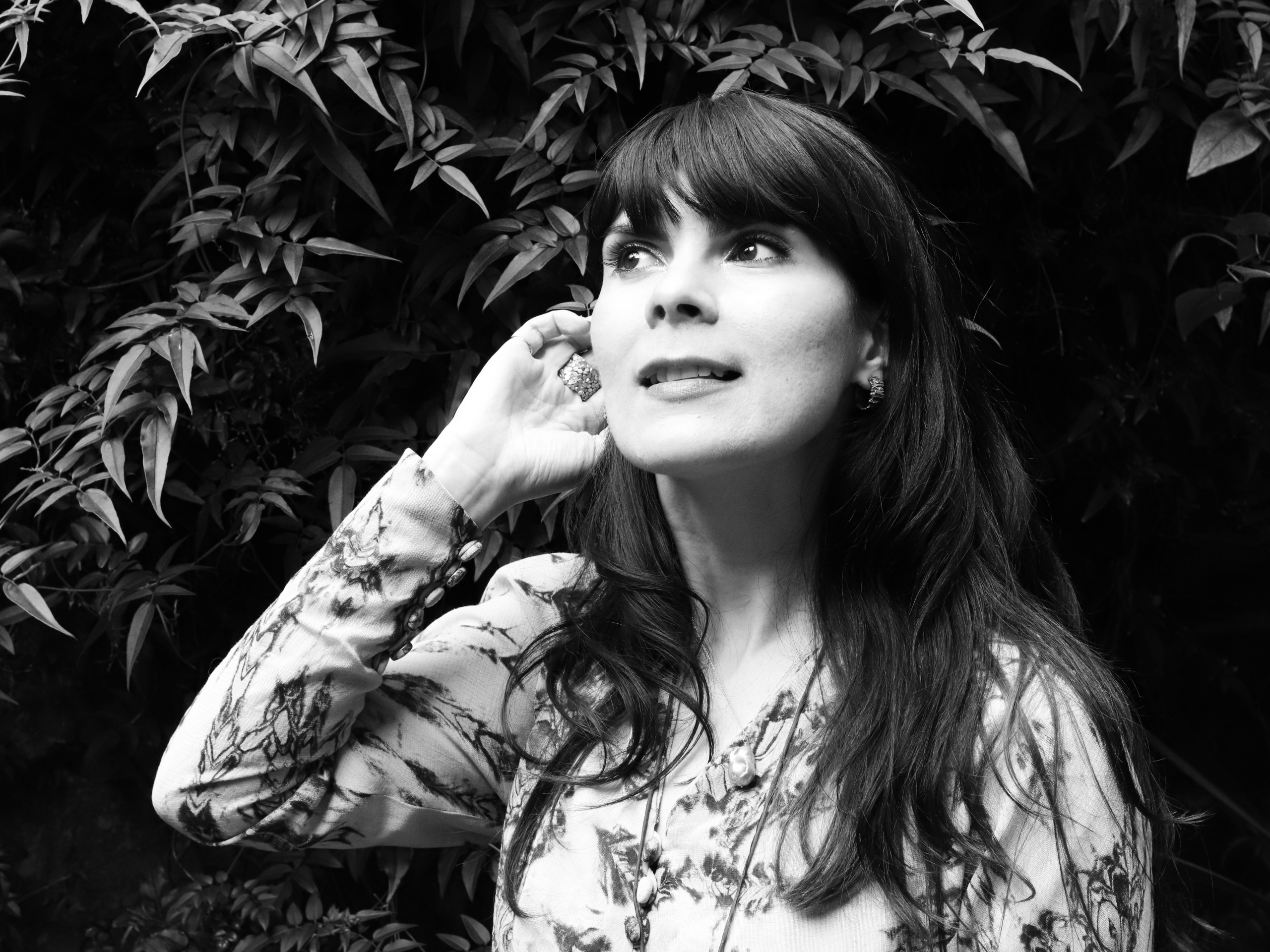
Jade Mellor
Curiosity and extensive research into new techniques and concepts warrant the designer’s constantly evolving oeuvre. From stone-based resin to recycled metal, the designer’s desire to play with materials is best demonstrated in her latest collection, titled Caddis.
You talk about how the word jewel originates from the Latin jocale, which refers to a plaything or object for entertainment. How did you end up becoming a designer of jewellery?
I have always been a maker, I get that from my dad who is a cabinet maker. From an early age, I used objects as a way of understanding or learning, which is why museum research is so important to me. For every school project, I would always make something to go with my written homework to bring it to life. I remember I loved learning about the Ancient Egyptians at primary school and I went home and mummified an old doll, tucking toys from crackers and 20p machines into the bandages as protective amulets. So I think for me jewellery is symbolic and evocative, something physical you can hold that can transport you to a time, place or feeling. Jewellery is a portable object so its meaning can be secret or you can share it; a bold piece can start a conversation or it can be small and worn close to the body and feel very private. I feel that I look for joy in life and I am naturally very curious, so jewellery is a pleasure to enjoy and also share with others in making, wearing or giving.
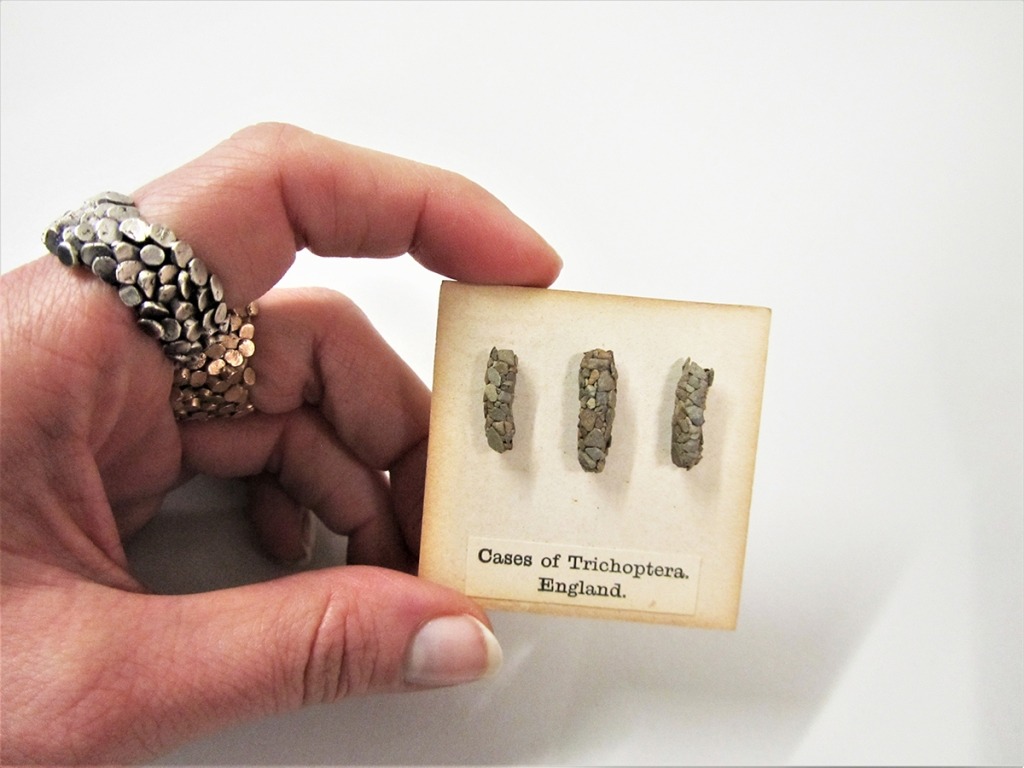 Natural History Museum Research | Caddis fly specimens
Nature is at the core of everything you do. How did your love of nature start?
I grew up in the countryside in the Victorian chapel my dad converted to our family home, alongside dogs, cats, rabbit and guinea pig but also quails, a polecat and pygmy goat, although not all at the same time! My mum’s upbringing was very rural, she lived in a tiny thatched cottage in the middle of the woods and my dad is mad about wildlife. I remember the two of us encountering a stoat in the middle of the road one day, doing a hypnotic dance to attract birds with his tail. It was also very normal for a shrew or a toad to have made its way into the house. For me, nature is home.
What materials are you attracted to, and why?
I began making my jewellery in resin and raw minerals as I was able to evoke different natural textures and colours like stone, marble, malachite and even lava. However, I found limitations in using an unconventional material for wearable jewellery and those who connected with my work often wanted to wear it all the time. Some even told me they felt protected by wearing the bold rings I made, so I wanted to bring in more durable materials which had material strength to manifest this armoured quality. Here is where I began transferring the sculpting skills and mould making I had already developed into the ancient lost wax method of metal casting. I currently work mainly in bronze and silver to allow both warm and cool versions of my designs. Bronze connects me to my favourite sculptors and also the jeweller and artist Line Vautrin, who has been a big inspiration to me with her beautiful, witty and poetic designs that gladden my heart whenever I see them. I wish I could travel back in time to meet her and discuss her pioneering making methods over some cheese and wine in 1930s Paris.
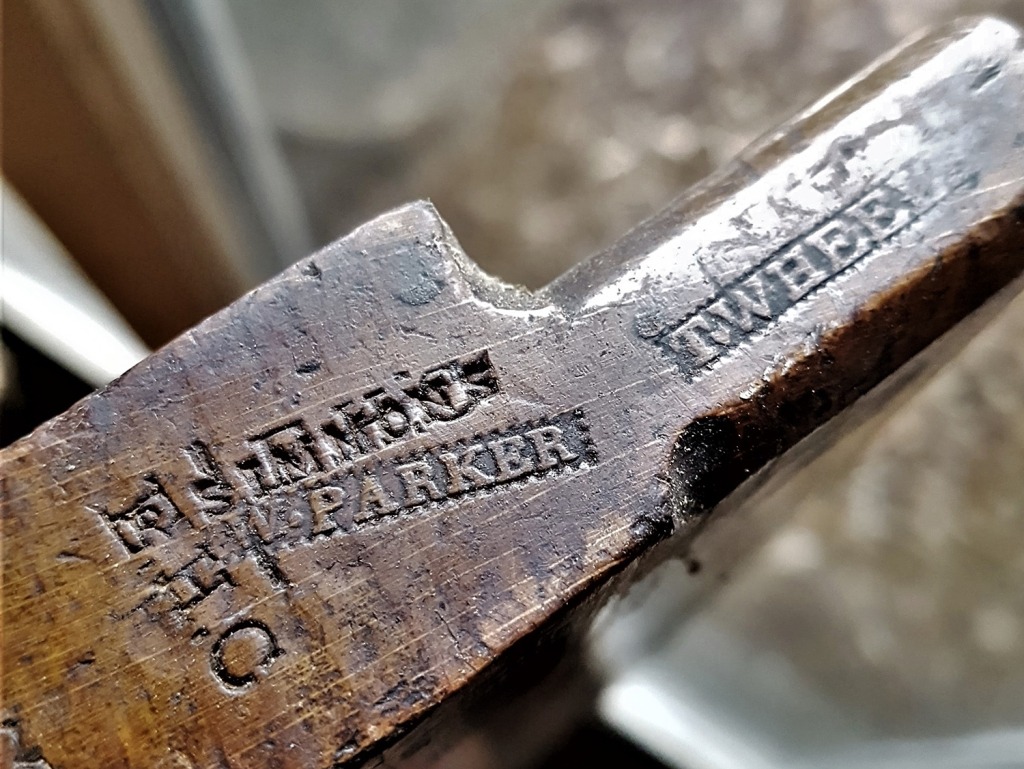 Historic Tool with previous owners' names
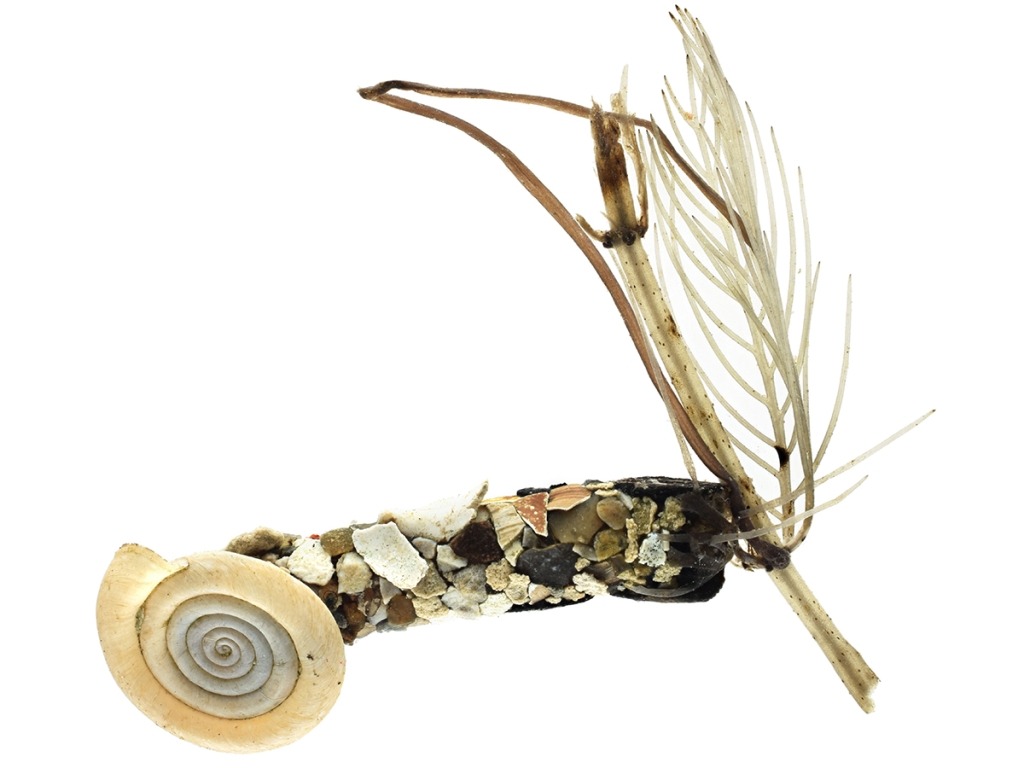 Natural History Museum Research | Caddis case with shell and plant specimen
What tools do you use most?
My hands are my most important tool. Mine are always cold which is perfect for working with soft wax with controlled pressure and using tiny components which would melt at my touch if they were too hot. If it’s a cold day and the wax is too hard I warm my hands up on a cup of tea so I can manipulate the material a little more. It is important to me that the fact these are metal objects is almost forgotten as I want the textures to be ambiguously organic, warm and inviting and above all comfortable. I mould the rings around my own fingers so they accommodate a natural shape rather than being perfectly round, and many pieces bear my fingerprints signifying a human touch.
I use traditional tools when I can like a bow drill and piercing saw and my dad has a museum-worthy collection of historic tools collected from his many years as a maker. He has given me and my sisters some beautiful tools to use. I love the patinas on the wooden handles and the names of the owners which have been stamped into the smoothed grain, passing through several hands before mine.
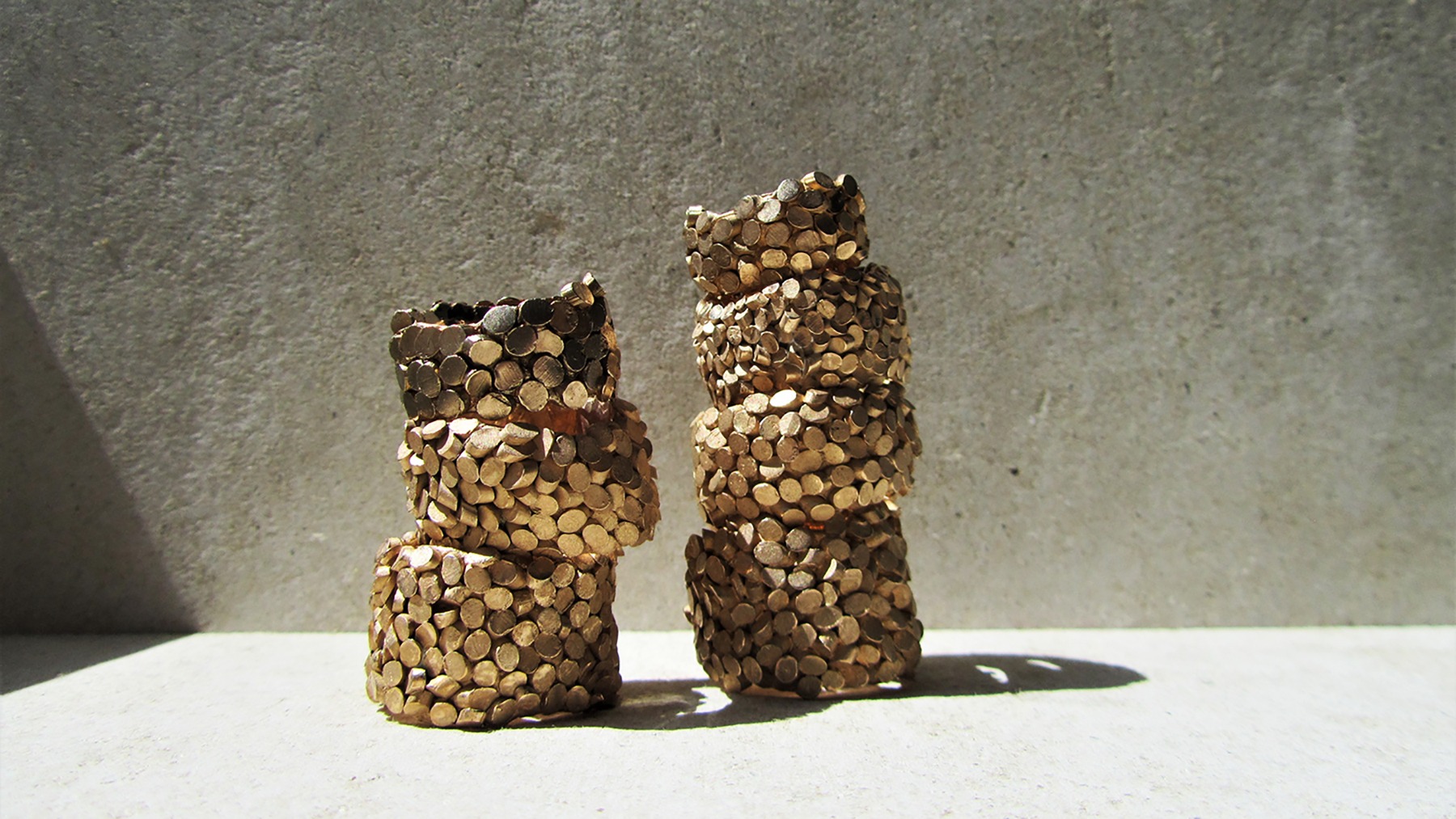
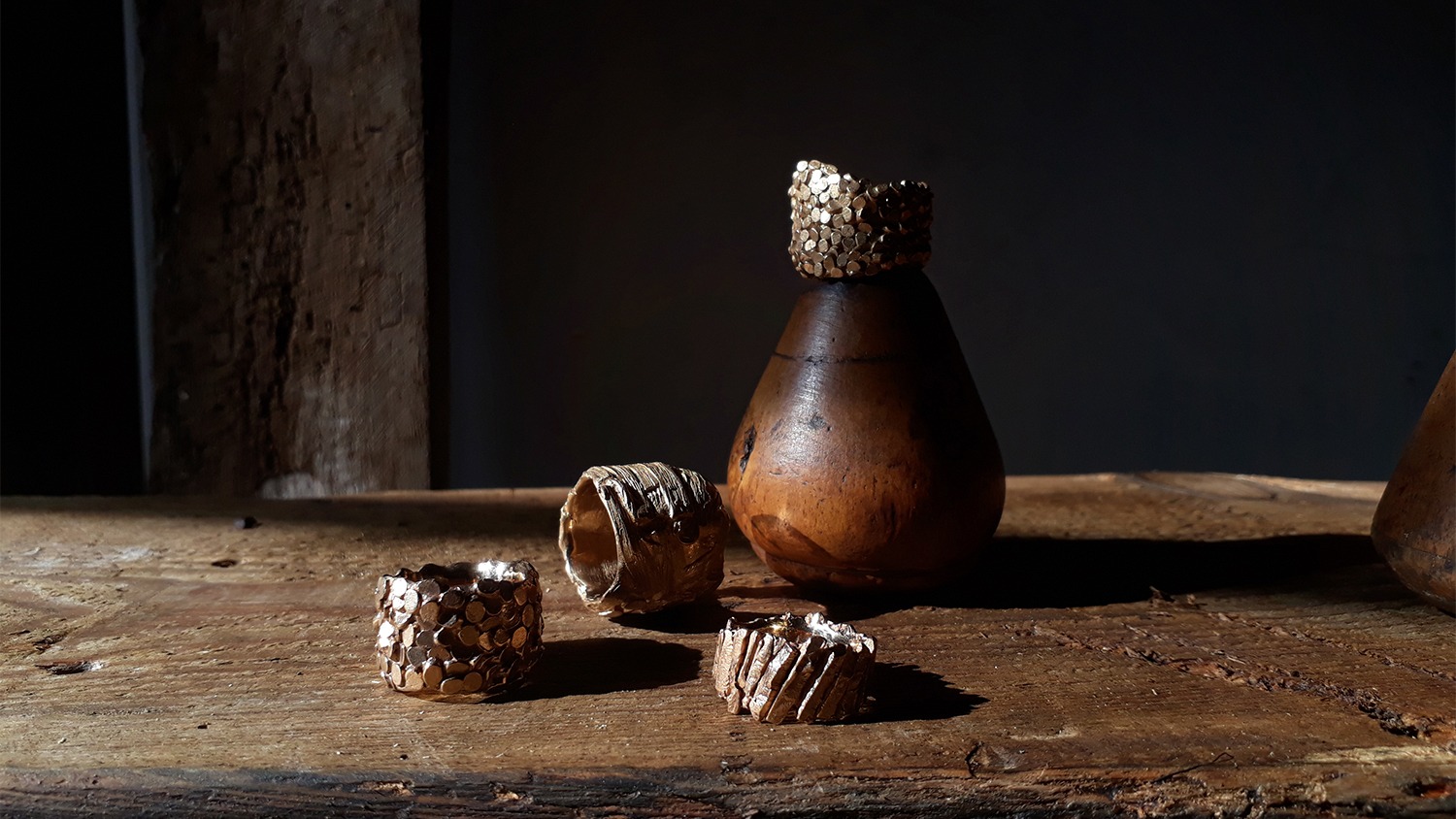
Caddis Ring Collection
Tell us about your new collection, Caddis?
The name Caddis comes from the caddis fly, or really the larvae of this moth-like insect. These can often be found in the bottom of ponds and streams where they bind organic materials around them to form protective cases using their own waterproof silk. Historically, caddis is also a type of worsted ribbon for binding garters and corsets, so there must be a shared meaning of bound layers. For me, I love how a certain caddis will have a preference in materials and patterns for making distinctive structures which is why I call them Nature’s architects.
 In conversation with Jade Mellor
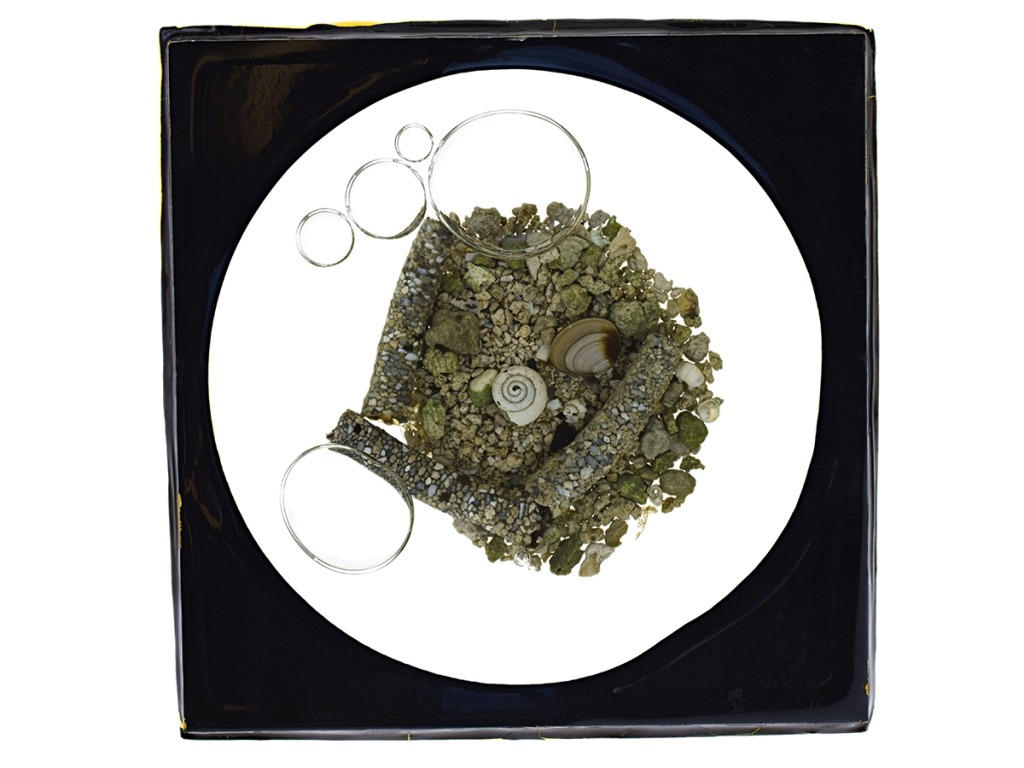
Pieces of jewellery can offer feelings of protection and comfort. How did you research the techniques and ideas for Caddis?
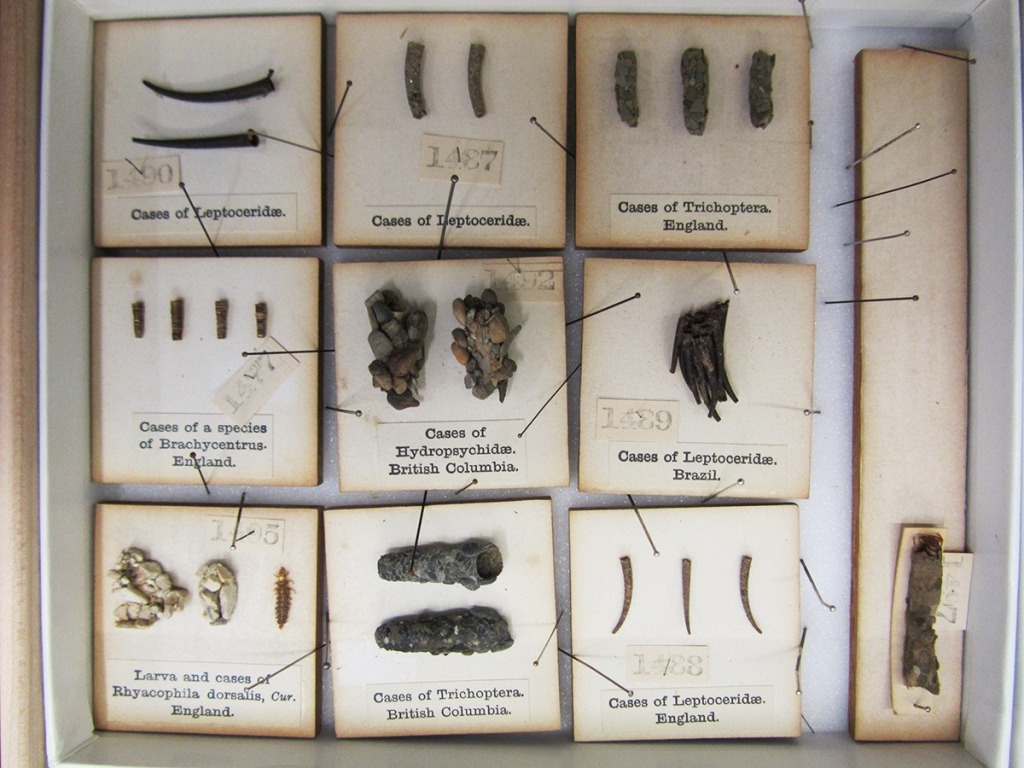
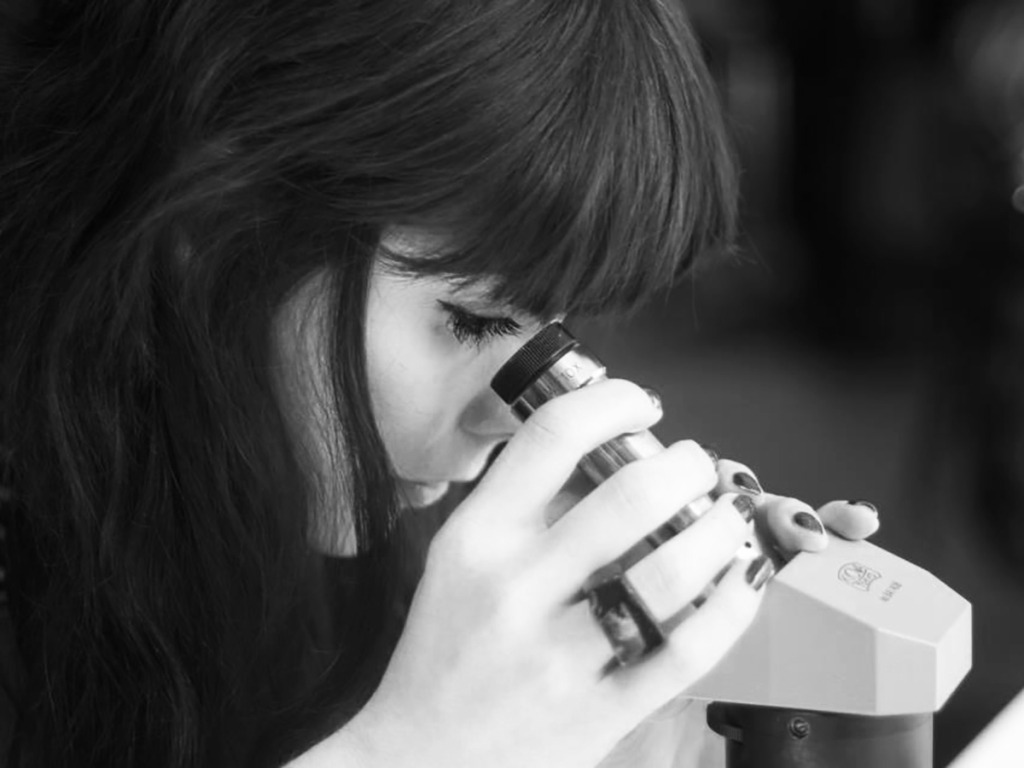
I had been enchanted by Hubert Duprat’s golden caddis structures I had seen in various exhibitions such as the V&A’s What is Luxury? and at the Decorative Art Museum in Paris. But I got up close to the huge variety of structures when I spent time in the stores of the Natural History Museum, with a microscope and sketchbook. This was just before covid forced museums to close, but luckily the NHM digitise project meant I could also access amazing photographs of these specimens too. My fascination with the caddis’ constructive methods crossed over with my other inspirations such as the textile sculptures of Olga De Amaral and monochrome assemblages of Louise Neveson. The more I look, the more I find, so I think this will be a collection I will be developing for life.
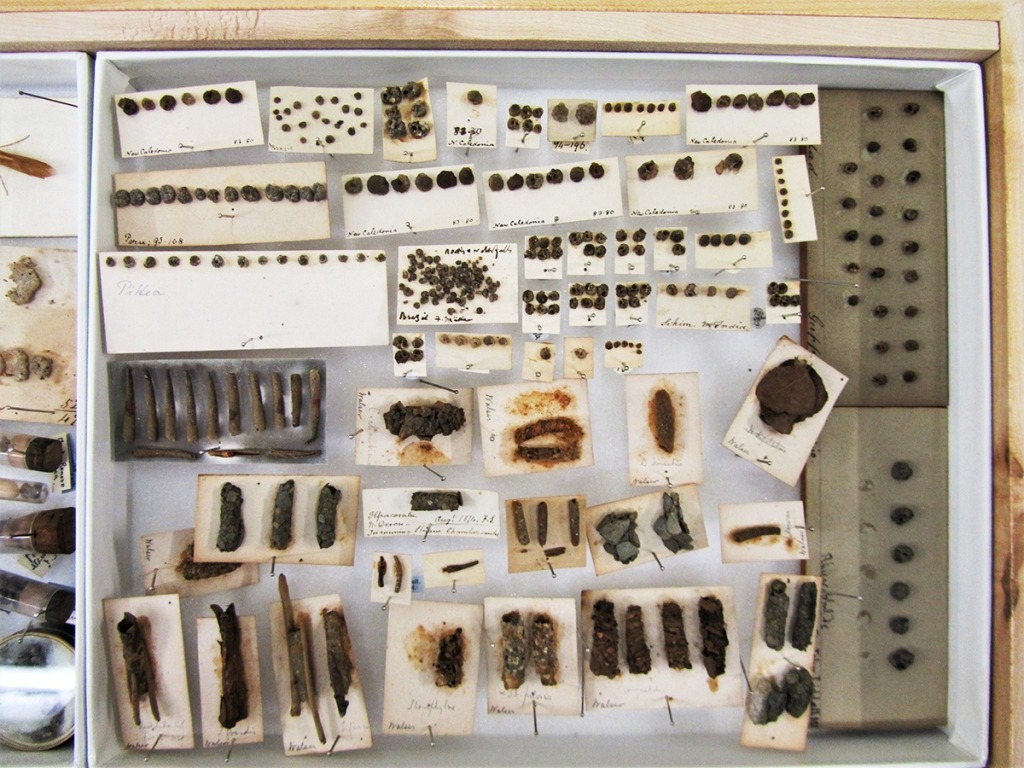 Natural History Museum Research | Caddis fly case specimens in tray
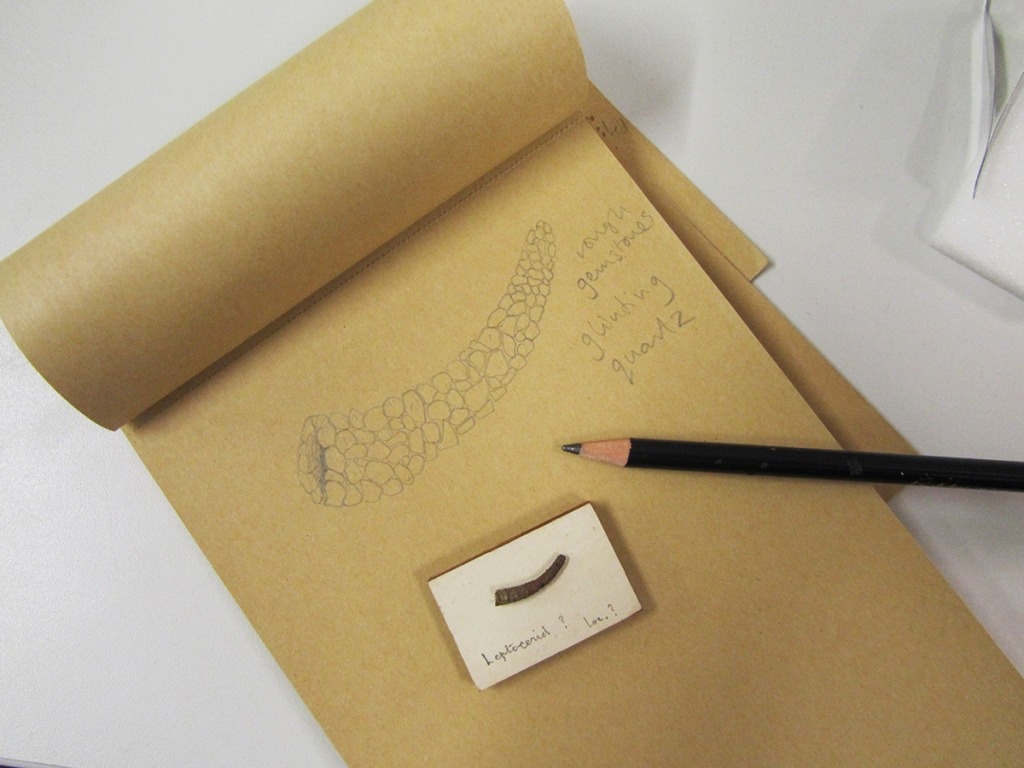 Natural History Museum Research | Sketches of Caddis fly specimens
Do you have a piece of jewellery, maybe something you’ve inherited, that inspires you?
Jewellery wasn’t actually a big thing in my family, so I don’t have those typical heirloom pieces. I do have my mum’s 70s green leather coat, which I have been wearing since I was 16. She still loves green and I think she named me more for the colour than the gemstone. My mum also made lots of her own clothes when she was younger as she was frustrated by the lack of choice or quality available locally, preferring to choose her own interesting fabrics, so actually, I think I inherited this desire to make things to have something unique and meaningful.