Hole & Corner Selects: Christina Martini
Christina Martini Founder & Designer, Ancient Greek Sandals
WORDS TAMSIN BLANCHARD
We’ve been fans of Ancient Greek Sandals for a while. This pioneering brand uses its boundless ancient history, mythology and wealth of gods and goddesses to inspire a collection of sandals that are hand-crafted using the traditions of Greek shoemaking. Launched when local industry was going through a very tough time after the financial crisis in Greece, AGS is the labour of love of Christina Martini, who trained in footwear design at Cordwainers in London, graduating in 2000, and Nikolas Minoglou, who took over his family footwear business in Greece before co-founding AGS in 2012.
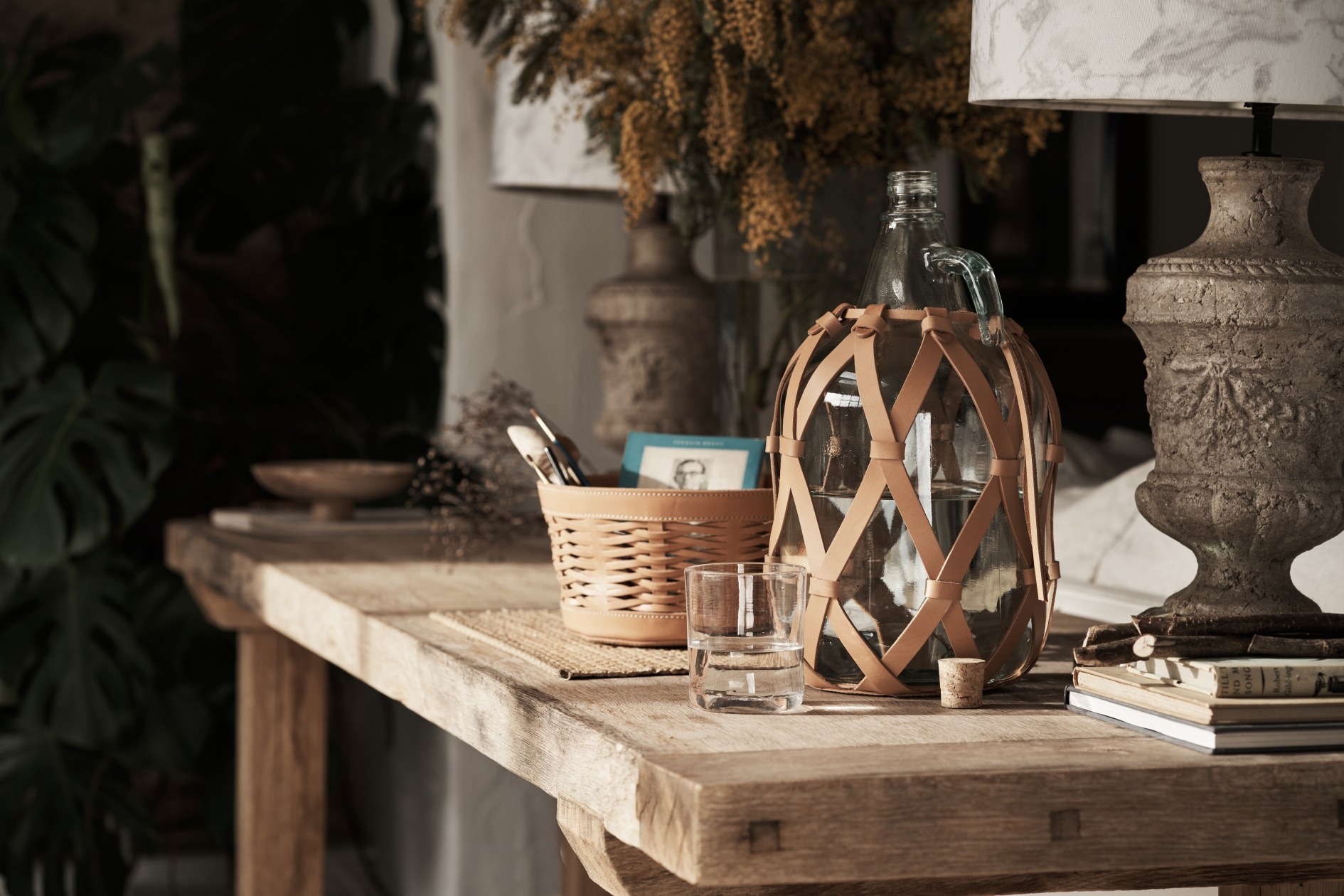
Celebrating its 10th anniversary this year, AGS proved itself a remarkable success story – in Greece where the company now employs around 30 people at the headquarters in Athens, and internationally, where the winged sandals inspired by the divine golden sandals worn by the god Hermes have taken on a life of their own. So it makes complete sense that this brand, which is built on local materials and craftsmanship, should develop a homewares collection of handwoven leather baskets, wine bottles, ouzo carafes and other useful traditional Greek objects that bring with them a little Ionian sun and warmth. The baskets use traditional basket weaving techniques as well as some of the same methods of construction used for the sandals.
This collection, in their signature naturally tanned, chemical-free leather, was developed by Martini and her husband, Apostolos Porsanidis Kavvadias, during the first lockdown, inspired by being at home on their olive farm in Corfu, and the new focus on alfresco entertaining for family and friends. Even if you don’t have an olive farm, (a single olive tree goes a long way in a London garden) a woven leather carafe can make all the difference to a summer dinner party.
Founded by Christina Martini and Nikolas Minoglou, Ancient Greek Sandals uses the same traditional artisan methods to create its new homewares collection as its footwear.
‘Memories of Greece usually involve long, leisurely dinners with good wine and good friends,’ says Martini. ‘We wanted to draw upon the essence of this, as well as our long- standing leatherwork traditions, to create good quality objects for the home, wherever that may be.’
Christina, why did you start AGS and how have you nurtured it over the years?
I always liked the leather sandals that are sold in tourist shops around the Acropolis in Athens and on the Greek islands. Being a shoe designer, I was always imagining making them in different colours, enhancing the designs and making them in a better quality.
Having studied business in the USA, Nikolas realised that his American friends were bringing back olive oil and sandals from their Greek holidays, so he had the idea of a brand of Greek sandals, handmade in Greece, that could be exported all around the world. Nikolas and I met through one of my best friends and, when we first met, we realised that we had the same idea, and decided that we should make it happen.
We had seen that there was a hole in the market for handmade sandals in a medium price range – you could easily find nice designer sandals at a really high price or inexpensive ones that didn’t look good, so we tried to fill this gap.
H&C is interested in the traditional heritage and craftsmanship that AGS represents. Can you tell us how the techniques and designs are rooted in Greek history and heritage?
The sandals are made using traditional, centuries-old methods. Basically, it’s the Mediterranean way to make sandals, where the upper of the shoe is inserted in the insole through holes. They are not lasted around the insole like you see on standard sandals and shoes. The idea was to use vegetable tanned leather with raw edges and no lining, using the minimum amount of stitching and fastenings.
So, we were aiming for a raw yet feminine aesthetic. Between the insole and the sole we have inserted an extra piece in order to avoid using the typical low heel, and an anti-slip heel is added underneath that.
The sandals are directly linked to our heritage not only because of the construction but also through our designs; a lot of the styles are inspired by Greek statues, so some are identical to what Ancient Greeks might have worn, while others are inspired by myths and archaeological finds.
What has been your proudest moment over the past 10 years?
We have had many great moments over the past years. I always feel really proud when I am travelling and see people wearing AGS. It is still quite surreal for me to see people in Tokyo for example, which is the other side of the world, wearing sandals made in Greece.
It makes sense to bring traditional homewares into your world. How do they reflect your own lifestyle and home life – which of the pieces do you use most often?
It was quarantine when we were all at home and we were brainstorming with the team about new collaborations and new things we could explore. I think because of the situation the homewares collection came naturally.
Also, my partner, Apostolos, is a product designer, so he offered to design the collection based on objects that are often found in households in the villages and islands of Greece. We live on a farm in Corfu, so the inspiration was right in front of us. The material for our first collection had to be leather in order to create a link with the DNA of the brand.
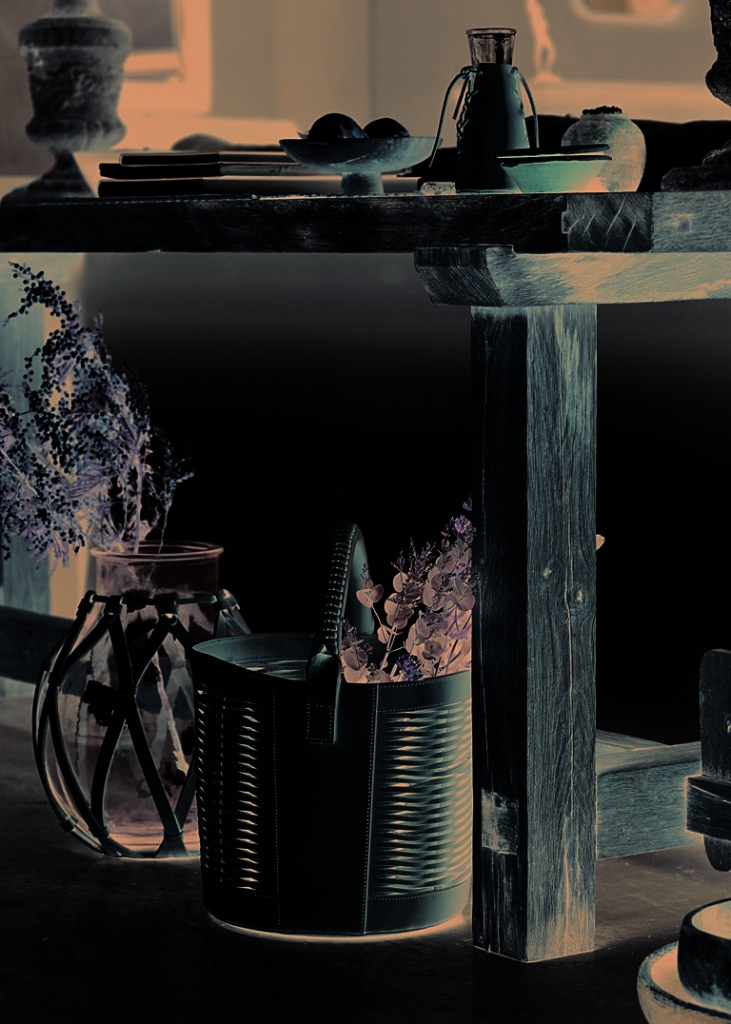
I know that most of the objects there aren’t commonly used, such as the demijohn, which serves to store olive oil or wine. This piece is so beautiful that it could also be used as a decoration in your living room. What we use most are the carafes for water and the smaller one for ouzo. In addition we have developed a range of vases for flowers, woven baskets that are used to hold bread or even toiletries in the bathroom. The larger baskets were originally used in order to keep wood logs next to your fireplace or you could use them to store throws next to your sofa.
Are there any local craftspeople / artisans whose work you collect or that you would like to recommend?
A very good friend of mine, Myrto Zirini, is also based in Corfu, and creates organic ceramics using different kinds of clay. These pebbled shaped ceramics with a different colour glazing inside are reminiscent of the summer in Greece.
Kourtzis pottery, from the island of Lesvos, is a heritage laboratory that has existed since 1820. I particularly love their animal-shaped vases and carafes, which were made in the Sixties. And now their granddaughter, Elpida, a collaborator of ours, is continuing her ancestors’ legacy by making jewellery.
Patounis, in Corfu, is one of the few remaining traditional soap factories, and Choé beeswax candles are also made in Corfu. In our shop in Athens you can find a selection of unique hand-painted tiles by the artist Fani. Finally, I love the goat paintings of my friend David Benforado.
While you have become an international brand, you seem to be very grounded in your home life in Corfu. How important is that balance?
I am really happy that I studied and lived in London and worked in Venice and Paris. I had the urge to come back to Greece when I had my first baby. I think because AGS is not a fashion brand but a sandal brand, it is ideal to be able to have a base in Corfu and travel from here when necessary. I think balance between family and work life is very important and I am working hard not to fall over.
Hole & Corner celebrates life away from the mainstream. Where do you go to get away from everything? What is your hole-and-corner?
My ultimate hole-and-corner is the sea. We have a small boat and when I am out in the middle of the sea, that is where I feel happy. My everyday hole-and-corner is my studio, which is located in the old town of Corfu, in front of the sea, and at least I can hear the waves and smell the salt from there.
Learn more about Ancient Greek Sandals, or shop their wares, here.