Dyed in the wool
WORDS TAMSIN BLANCHARD
PHOTOGRAPHS JOSS McKINLEY
Farming and fashion do not normally sit naturally together, but knitwear designer Harriet Miller and her partner, conservation farmer Will Lawrence, have combined their skills to create chemical free, naturally dyed and locally spun jumpers…
Imagine a sweater made of the most luxurious, locally bred British wool, dyed with flowers and plants grown on the same farm, organically scoured, locally spun, hand-knitted in the village nearby, and expertly crafted to last for decades. We are familiar with buying our fruit and vegetables this way. So why not adopt a similar chemical-free, local and regional approach to our clothes?
I am deep in green leafy countryside, near Hucking, a small village that sits in the North Downs area of Outstanding Natural Beauty in Kent, to see the early stages of a project setting out to do just that. Wheatsheaf Farm is idyllic, a picture-postcard vision of an English country farm, with hollyhocks growing on the driveway, a comfortable looking farmhouse, with a tempting blue swimming pool hidden away at the back. There’s a long table set up in the garden behind the house, laid out with baskets of yarn, samples of wool, and books about natural dyeing and plants.
I was invited by Deborah Barker, a soil-to-soil textiles specialist who runs her natural dye brand, Field & Folk, as part of a study visit of textile designers, dyers, and knitters, to learn about the farm’s pioneering food and fibre project. We are greeted by Harriet Miller, knitwear designer and sheep farmer, (we’ll come onto how that happy combination of jobs came about later) and her partner, conservation farmer Will Lawrence, who have been running Wheatsheaf Farm since 2019.
As a knitwear designer and consultant, Miller saw a chance to bring the farm – the soil and the sheep – much closer to the design studio. With more than 20 years’ experience in luxury fashion, Miller was used to feeling thousands of different and innovative new yarns at Pitti Filati, the textile fair held each year in Florence. There, the possibilities of yarn construction, colour and fibre combinations are endless. But she is equally acutely aware of the waste, the chemicals, the opaque and complicated supply chains, the greenhouse gases and the pollution that the fashion and textile industry creates.
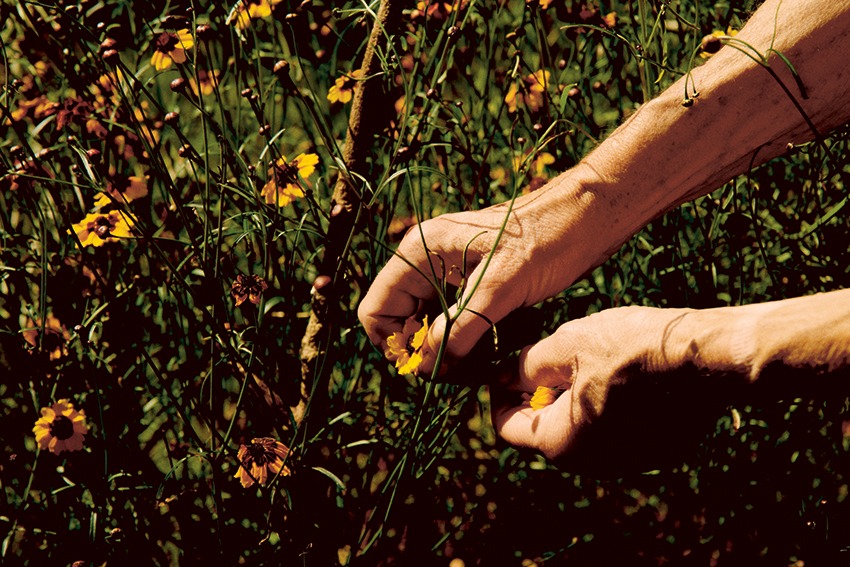
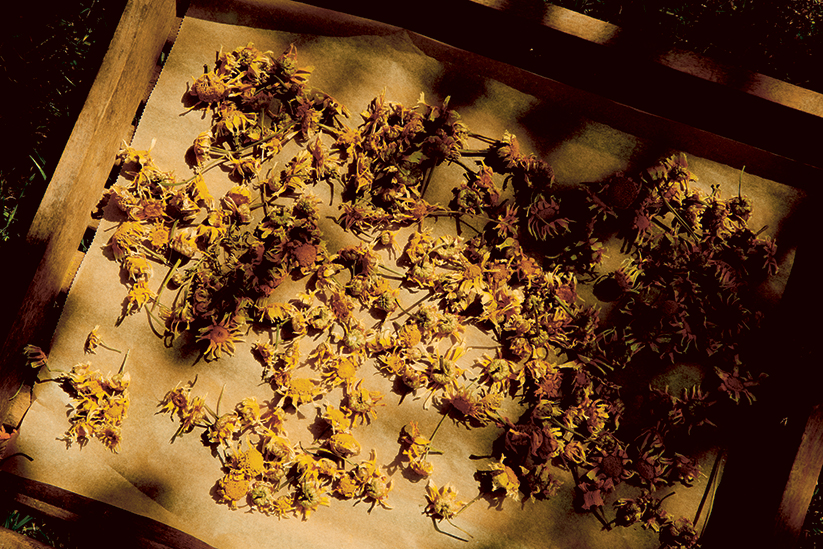
Run by knitwear designer and sheep farmer Harriet Miller, and conservation farmer Will Lawrence, Wheatsheaf Farm in Kent is part of the Fibershed movement started in California in 2010 by Rebecca Burgess, with a challenge to create a wardrobe grown, dyed, made and worn within 150 miles of her front door. Various plants, including chop suey (right), and dyer’s tickseed (left), are grown on the farm to produce the natural dyes to colour the wool from the farm’s Merino and Romney sheep
Rearing sheep has become as much part of her life as designing yarns. She was in a unique position to connect her farm life with her work in fashion, where there is little real transparency when it comes to raw materials. ‘What I find quite flabbergasting is when you go to the fairs, you can open up a yarn card, and it’s got 20 certifications on it,’ says Miller. ‘But where is the actual provenance of that fibre? How was it farmed? Where’s your measurability on that?’ She says the organic food movement is a lot simpler: ‘You grow a tomato, the farmer takes the tomato to the shop and sells it and the chef cooks it. With fashion there are 10 processes to get through, from sheep to shear to sort to bag, to factory to scour to comb. And then there’s all the processes within the spinning. It’s vast! Why did I start this project? It was really to have that control over every point.’
The idea is to make knitwear collections that are 100% traceable, using wool from the sheep on her farm that has been scoured, dyed, spun and knitted using a supply chain she knows inside out, using only natural ingredients along the way. She is working on making the whole process accountable through block chain documentation so that we don’t just have to take her word for it. Whoever buys the resulting pieces will have the ultimate luxury of knowing that the production of their garment has had a positive effect on the environment and at the end of its very long life could happily be composted back into the soil without adding any harmful toxins or chemicals.
They processed their first clip (batch) of native breed Kent Romneys in mid-2020 – just over 1.2 tonnes from which Miller created seven different yarns for machine knitting, plus numerous hand-spun yarns. They have produced a number of sample garments, experiments with different weights and gauges to test the performance and quality of the yarn. They are now at the point where they are ready to present samples to fashion brands to produce bespoke regenerative soil-to-soil capsule collections – the Holy Grail for any fashion house that wants to take a responsible approach. ‘When we embarked upon this project, I didn’t want to set up as a brand and make sweaters and sell them in my own right. I knew I was in a position within the industry to infiltrate it. And that was my main goal. And it still is.’ She is confident that her luxury fashion clients have a market for garments made from wool that can be traced not just to one farm, but to a particular flock of sheep; a single ram whose name you might even know.
The wool is part of the LAM project for a regenerative and regional food, fibre and fashion system. LAM is an amalgamation of Lawrence and Miller, which, according to Miller ‘kind of made sense because we are raising lambs’. The farm is run holistically, without any pesticide or inorganic fertilisers, and their livestock is managed in rotation across both pasture and arable ground to increase biodiversity, build soil health and draw down carbon. They grow their own forage and feed for their native breeds of cows, pigs and chickens, and currently have 400 Romney ewes and 50 Merino. For fodder, they grow radish, rape kale, beet, chicory, clover vetch and phacelia for the ‘high-energy sheep’ who graze this healthy mix over the winter months. Plants such as lucerne and red and white clover have tap roots up to a metre long to aid drawing down and storing carbon dioxide deep within the soil. Alongside this, they are preserving ancient meadow biodiversity on the historic chalk Downland, which also provides grazing for the sheep.
There are a whole range of other techniques including wildflower meadows and herbal grass leys, for grazing and hay. All their animals are allowed to ‘mob graze’, mimicking natural herd movements where possible. To measure their carbon footprint they will start to use a carbon farm calculator tool kit and Soilmentor app to monitor and give measurable results on soil health and bio diversity.
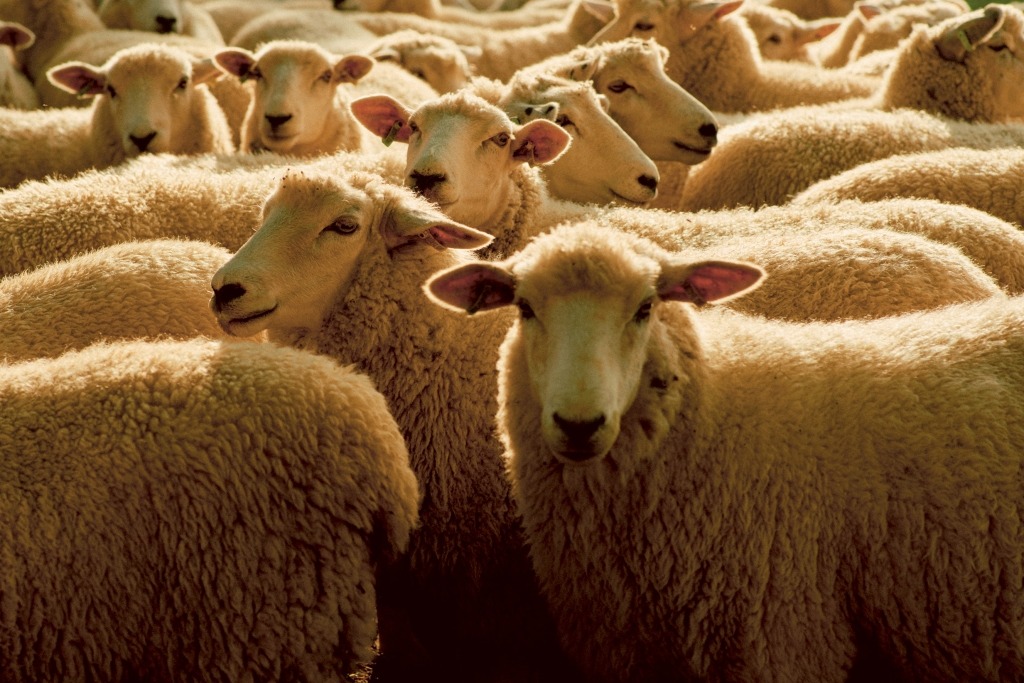
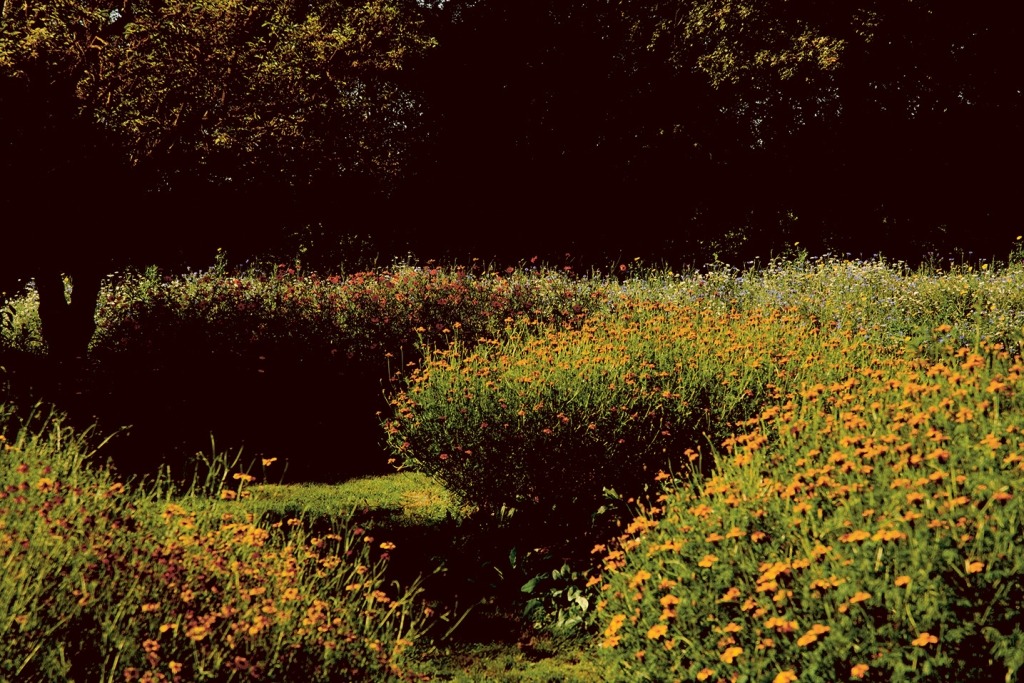
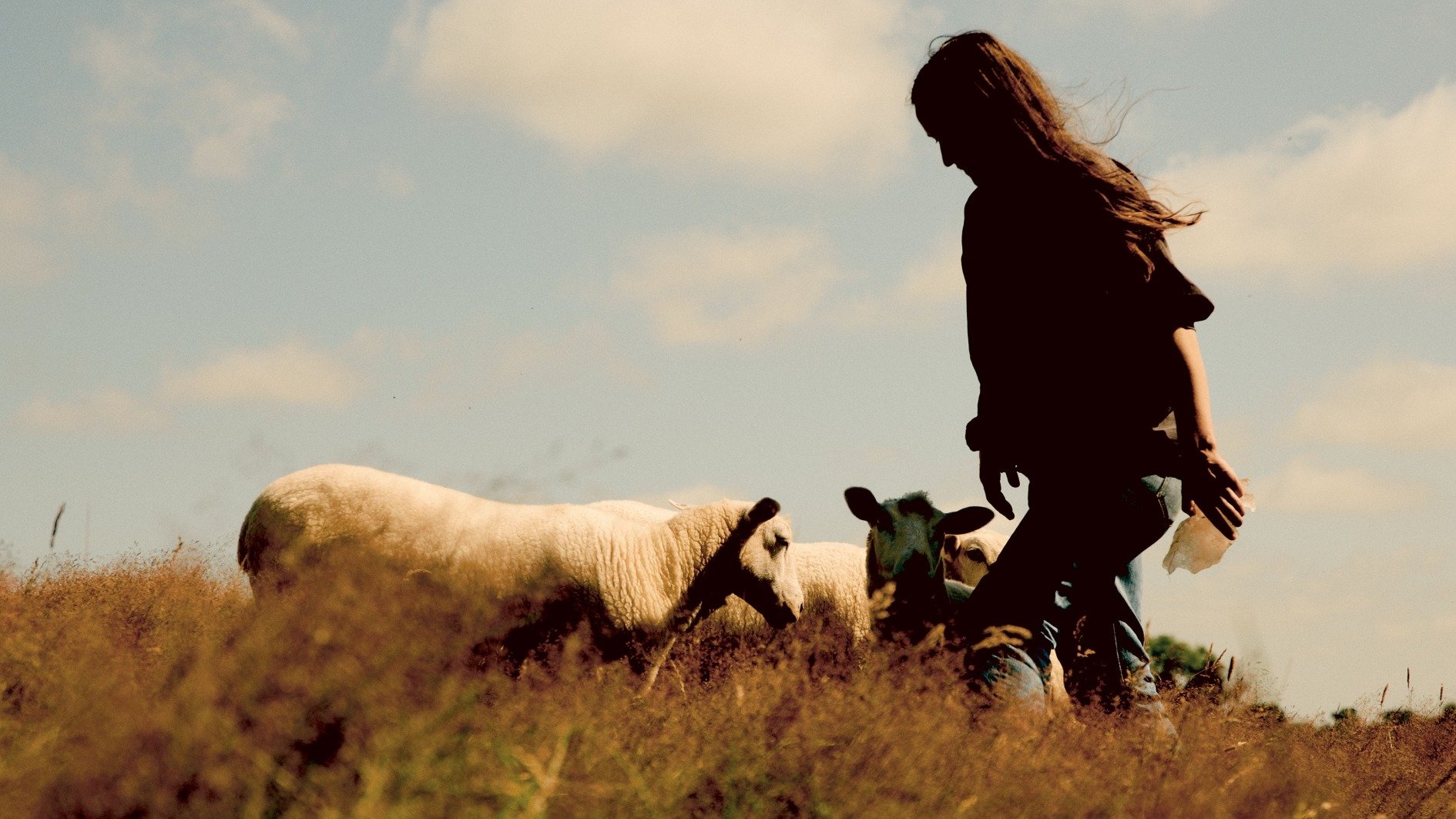
Left: some of the farm’s 400 Romney ewes. In winter, all the sheep are fed on a rich diet of radish, rape kale, beet, chicory and clover vetch, grown on the farm. Miller and Lawrence are also preserving ancient meadow biodiversity on the historic chalk Downland to provide good grazing. Right: the dye garden at Wheatsheaf Farm is a pilot project as part of Fibershed South East. Deborah Barker, a soil-to-soil textiles specialist who runs natural dye brand Field & Folk, has advised Harriet Miller on the best flowers – a mix of annuals and perennials – to be grown for dyes on the farm. LAM follows all the Fibershed principles and has been collaborating with Fibershed South East since it was founded. The pilot dye garden was funded by a micro grant from Fibershed
Alongside their Climate Beneficial (meaning they put carbon back into the soil) meat, eggs and wool, the dye garden will be used to make the dye for their own wool. This isn’t just about profiting from the land but investing in the land itself to ensure it is in good health for the future. Everything here is connected, whether it’s a ball of wool or a freshly laid egg. Miller has even looked into using the waste from the wool processing to make packaging for their eggs, but the packaging ended up costing more than the eggs. She is now exploring alternatives for garment packaging, growing mycelium onto the leftover wool from the combing process.
There is a misapprehension that knitwear is zero waste because, unlike with woven garments, there is no waste from the cutting table. But, Miller says, the various processes waste 10-30% of the fibre, something she does all she can to limit. ‘We’re very, very careful with everything,’ she says. ‘I gather every last scrap from the floor and put it in the wool sacks.’
Today is our opportunity to get out into the fields and see how closely our clothes are (or should be) connected to nature. The sun is shining and the flowers planted by Miller and Barker in the spring of 2021 are swaying in the breeze: a riot of orange marigolds, yellow dyer’s chamomile (Anthemis tinctoria), yellow cosmos (Cosmos sulpheurus), dyer’s tickseed (Coreopsis tinctoria), the green leaves of indigo that is yet to come into flower, and chopsuey (Chrysanthemum coronarium), which, as the name suggests, can be very tasty in a stir fry.
The dye garden at Wheatsheaf Farm is a pilot project as part of Fibershed South East, a regional approach to textile production. The Fibershed movement was started in 2010 in California by Rebecca Burgess, with a Kickstarter campaign that raised $10,000. The challenge was to create a wardrobe that was grown, dyed, made and worn within 150 miles of her front door. Her book, Fibershed, (Chelsea Green) published in 2014, is a blueprint for farmers, growers, composters, spinners, weavers, knitters, dyers and makers to set up their own systems to grow and make textiles and clothing within a restricted geographical area. This reduces the carbon used for transporting raw materials, and works in ways that increase biodiversity and enrich the soil, while creating respectful, connected communities along the way.
There are currently 45 affiliate community Fibersheds around the world. In the UK, there are three hubs in England (North West, South West and South East), one in Wales, and another in Ireland. It’s a movement that is growing because it offers a system of making textiles that gives back to the earth, generates fairly paid work, and results in clothes that are made with such love and care, that they in turn are valued and appreciated for generations.
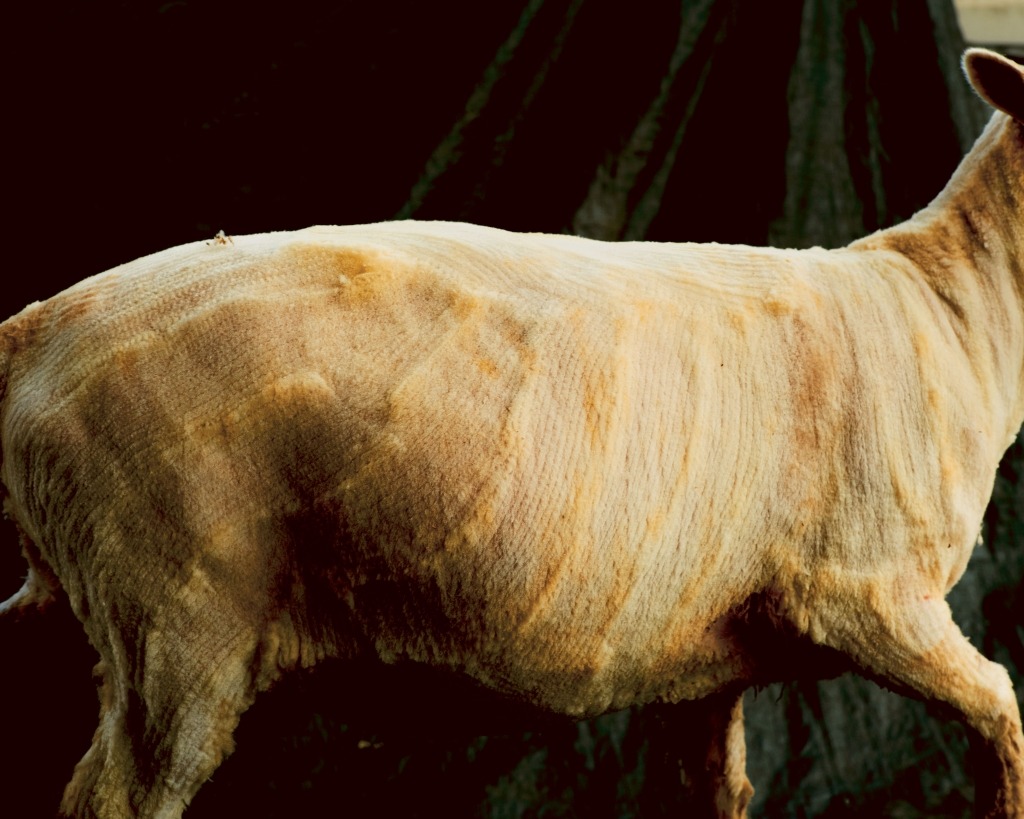
A Wheatsheaf Farm Romney ewe after shearing
Miller found Barker in 2019 after she started researching her idea of producing her own wool. Barker was just starting to build Fibershed South East with her daughter, Gala, a shepherd with a flock of Romney and Shetland sheep at the 200-acre community-owned Plaw Hatch Farm in Sussex. With Miller’s knowledge of the fashion industry and supply chains, Barker’s expertise as a natural dyer, Gala’s experience as a shepherd, Lawrence’s knowledge as a conservation farmer, and a shared set of values and ambition, they were a perfect fit. The network now includes farmers and makers in Berkshire, Buckinghamshire, Oxfordshire, East and West Sussex, Hampshire, Kent, Medway and London.
‘We’ve done talks at farming conferences, so it’s a way of farmers having an additional income from their wool, which everybody knows is zero,’ says Miller. ‘People are burning it and throwing it away as opposed to even taking it into the Wool Board. I think it’s also educating farmers about how to get more money from your wool.’ She’s the perfect bridge between fashion and farming – ‘tackling both sides of how we can promote British wool, encouraging farmers to use it and encouraging designers to connect with farmers.’ Already a few projects have come to fruition, including Phoebe English’s ‘An Alternative Route’, exhibited at the British Library in September 2021, which Miller and Barker were involved with.
The planning stage of the dye garden was completed in April 2021. Barker advised on the plant selection of tinctorial flowers – a mix of annuals and perennials – within metres of the grazing sheep, whose wool these flowers will eventually colour. There was a small grant from Fibershed to start the project, but it is Barker’s expertise that has allowed the garden to thrive. They worked together from a colour palette that Miller designed and the amount of wool she wanted to dye. The plants were grown from seed and planted out in May with the help of Miller’s green fingered father.
‘I’m learning on my feet, because I don’t have an indepth knowledge of dyeing, whereas in yarn I do,’ says Miller when I catch up with her again, over Zoom in early May, eight months after our visit to the farm. She commutes from Kent to her studio in Bethnal Green, London, when she’s not on one of her regular visits to Italy as knitwear director for Jil Sander.
Eventually, her hand-reared, naturally-dyed, locally knitted limited-edition collections will make their way into those for luxury fashion houses. ‘I’m working directly with brands as a consultant, to design a small range for them, whether it’s one product or five sweaters,’ she says. She will sell these companies both the fibre and the design. For the moment, the small scale of production means that knitwear like this is super expensive to produce, even without the mark-up of a luxury fashion house. A Fibershed accredited, undyed wool jumper by Loopy Ewes costs £315 if you buy directly from the website, 10 times what a lot of people have been led to expect to pay for a jumper, but a much more realistic reflection of the cost to the farmer, the land, the designer and the knitter.
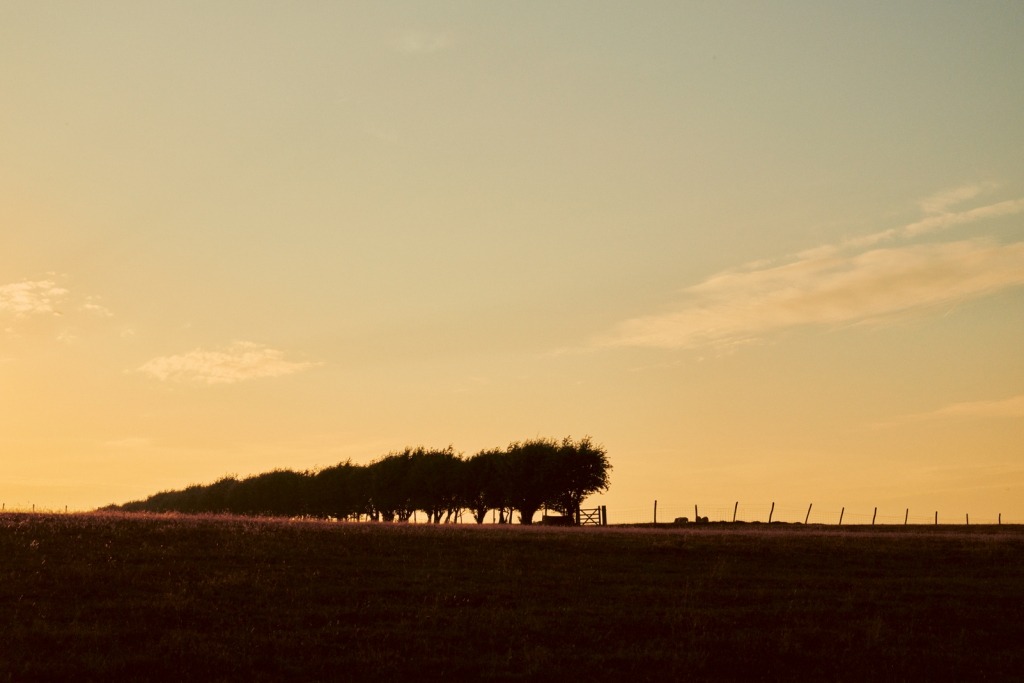
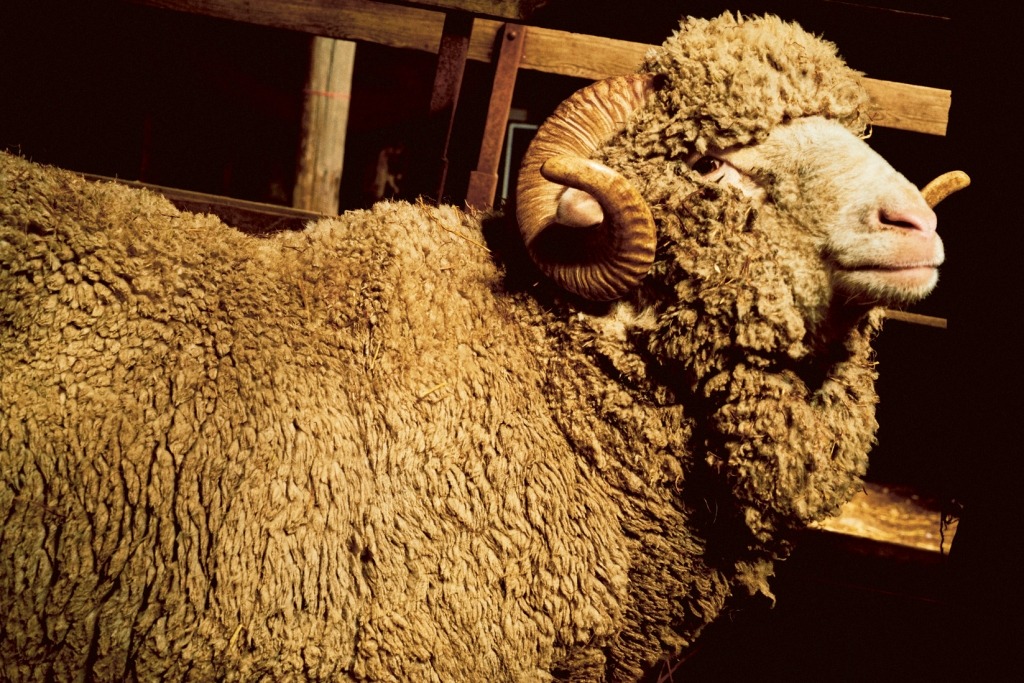
Left: the farm is set in the North Downs area of Outstanding Natural Beauty in the Kentish countryside. Right: Wheatsheaf’s Merino ram Freddie (as in Mercury, because ‘he sings all the time’). Choosing the right ram to give the flock’s wool a particular colour is an idea Harriet Miller is working on
There are many challenges to scaling up natural dyeing for a more commercial scale. A season’s flowers in this garden would only produce enough pigment for 15 kilos of yarn or say, 30 chunky sweaters. ‘We’re still in the very early stages from last year’s crop of working with this. And then the idea is to scale up. So the natural dye process is a step further – kind of a year and a half – behind the yarns,’ says Miller. ‘The whole focus for me was trying to make this project work on a small commercial scale. And doing it just with a natural dyer and a pot, I wasn’t going to get that result.’
For the first round of tests, she worked with a mill in Bradford, using organic dyes to run tests on spinning the yarn. Next step is testing with natural dyes produced on the farm, which is still a work in progress. Miller hand dyes all the handspun yarn, which will be made into handknit garments in shades of yellow and orange. There are plans to use blue and pink this year, too.
The dye garden is also a resource to show other farms, designers and yarn producers what can be done, and how to do it. ‘What we want to do is build the resource base,’ says Deborah. ‘We’ve got a bid with the Land Workers Alliance to try and provide resources to farmers.’ For example, Miller has discovered that she now can create the perfect grey melange by mixing the wool from one of her Romneys with a Hebridean from a neighbour’s farm. She can get a range of colours from ecru to different greys and browns. ‘It’s pushing your creativity in a different way, as opposed to just dyeing a solid colour,’ she says. Similarly, selecting the right ram to use to colour the flock a particular shade as a good basis to dye with, is something designers could work with famers on at the very start of their fibre sourcing journey, and that’s something she and Barker can offer guidance on through their own experience.
‘But you know, we’re a long way from that,’ says Barker. ‘What really needs to happen is that the bigger companies make an investment in the farmer support to share the risk, whether that’s a dye crop or clip [batch of wool] that they’re supporting, because otherwise it’s the farmers taking all the risk. And they get the smallest profit margin.’
Eventually, Barker hopes that their Fibershed will include an online (or physical) market place that will cut out the middle man and reduce prices, selling their yarns and garments direct to the consumer, which will create ‘that direct relationship with the people and the landscape and the way clothes and textiles are produced’.
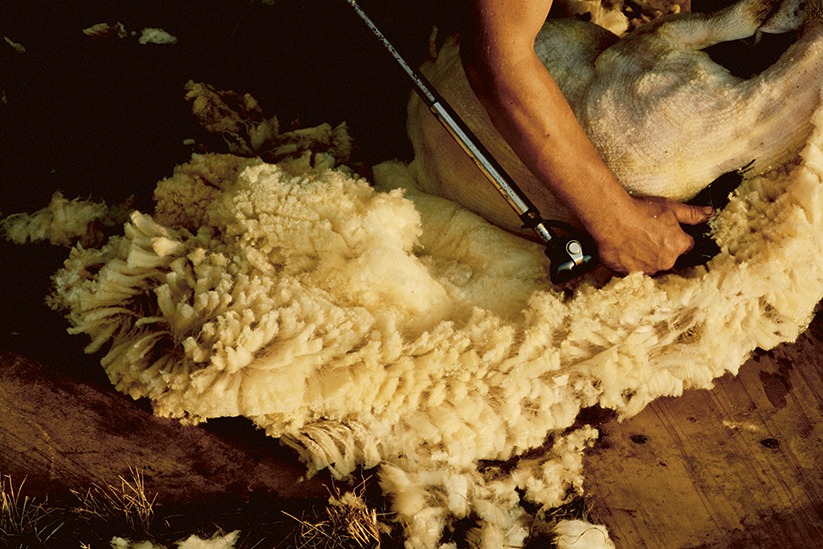
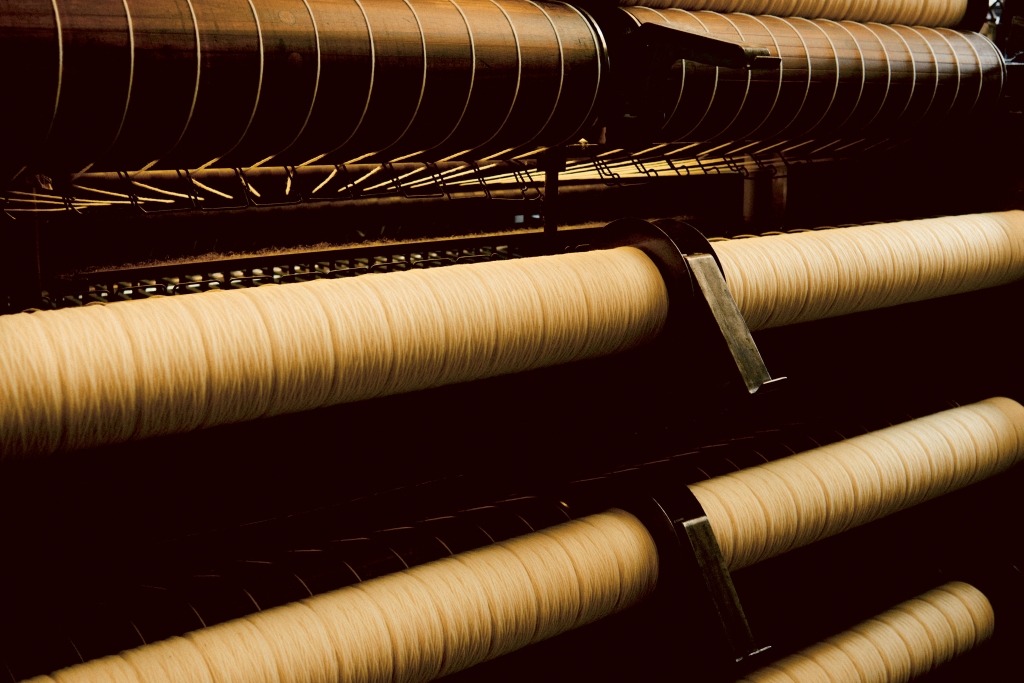
The farm’s 400 Romney sheep are sheared then the fleeces are sent to mills in Yorkshire to be organically processed
A year after the first round of planting, they have invested in turning one of the farm outbuildings into a drying shed. The madder (red), weld (yellow) and woad (blue) are perennials so didn’t produce any dye last year but will be harvested this year. In the summer, between the months of July to late September, the flowers need to be picked pretty much every day before they fade, and to encourage new flowers to bloom. This year, they will invite volunteers to stay on the farm to help pick, and will run more dye workshops. They’ve scaled up the garden to twice the size, with bigger beds for the perennials dyer’s chamomile and tansy – which both produce shades of yellow. They are also experimenting with putting Coreopsis tinctoria (warm shades of yellow, orange and brown) into rotation on the arable farmland, scattering the seeds on the soil rather than plug plants grown in a greenhouse.
As Barker talks us through the different properties of the flowers in the beds, she holds up jam jars with zingy yellow woollen yarn floating in a solution of water and yellow chop suey flowers. The process is called solar dyeing and the wool has taken on this bright shade of yellow after just 24 hours in the open air. We then take a walk in the fields to meet some of the softest, happiest sheep you are likely to see. Their nutrient-rich diet makes the healthiest of animals and the bounciest, most high-quality wool.
Heading up the Merino flock is Freddie, the all-important breeding ram they introduced in 2020, named after Freddie Mercury ‘because he sings all the time and we thought he was gay when we first got him’, says Miller, laughing. Lawrence takes hold of him and we are invited to feel his fleece. It’s ridiculously long and soft and looks as though he’s been given a pamper session with a very fine crimping iron. There are also eight Romney rams.
Back at the table, which has now been laid out with pots of tea and a prize lemon poppy seed cake, the whole picture of soil, land, sheep, yarn and natural colour is complete. ‘I don’t know it all, I’m just learning,’ says Lawrence, piling into a slice of cake before getting back to the never- ending job of farming.
He and Miller met at a pub in Kent after being introduced by friends. Knitwear designers don’t often meet livestock farmers, let alone marry them, but together, they bought Wheatsheaf Farm in September 2019, after a three-year search. ‘Not an easy process to buy a farm without being constantly outbid!’ said Miller. ‘We were very lucky that the couple who lived here believed in our future vision; they were sheep farmers and had lived here for 40 years.’
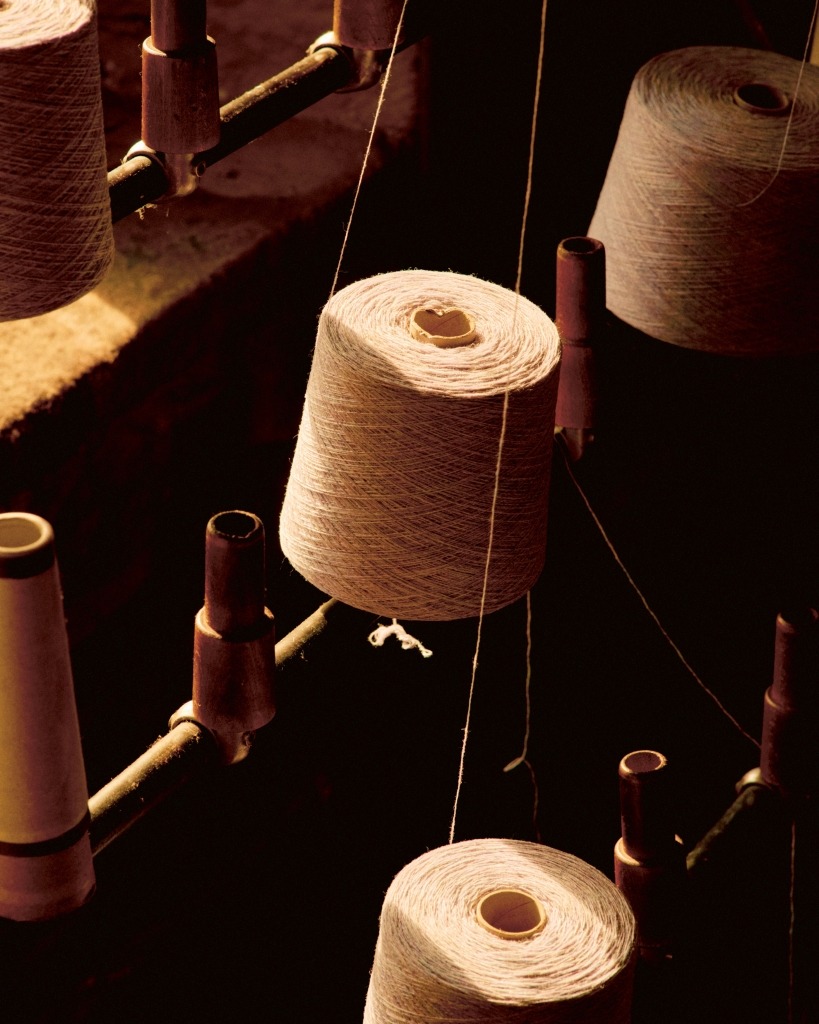
The farm grows its own forage and feed for the native breeds of cows, pigs and chickens, as well as the sheep. Investing in the land to ensure it is in good health for the future is a key part of the plan. Right: the wool is spun into yarn in Huddersfield
Miller and Lawrence started planning LAM five years ago, realising that their unique blend of skills was impossible to ignore. ‘Will and I are both extremely passionate about our vocations and conscious of the high impact both our entwined industries have on the environment.’
While Lawrence is a second-generation farmer who learnt all his knowledge from his father, it’s a whole new world for Miller. Since leaving the Royal College of Art in 2005, she’s been designing knitwear for a range of luxury brands, including Burberry, Louis Vuitton, Calvin Klein, Céline and Jil Sander. She has indepth knowledge of the whole process, encompassing supply chains, scourers, spinners, yarn suppliers, luxury knit factories, and the most skilled hand knitters. The knitter she works with lives 10 miles away from the farm, which is a happy coincidence. Together with a small team, they do all the hand-knitted development work. She also uses a garment manufacturer in Scotland, which has a seamless machine – the only electronic machine she is using – for the fine lambswool, and a hand machine knitting factory in Wales, where all the energy used is 100% renewable.
So far she’s produced some test jumpers from their own sheep and is working on her first major project for a brand. She wasn’t yet able to say who it was for, but once it is launched, the brand will doubtless be telling the story. ‘I’ve designed thousands of garments in my career,’ she says. ‘But when I received the first jumpers I made from here [the farm], it was a very different feeling.’ Eight hundred lambs produced a yield of 400 kilos of wool last year – she says she spun 250 kilos of yarn, which was knitted into 500 seamless, chunky garments or 1,000 more lightweight items. Once she has the quantity required, the Merino will be sent to Italy for their specialist scouring and spinning skills to ensure the best outcome for this precious yarn.
There are 10 processes to get from fleece to final product and some of these have been lost in the UK or the machinery is simply not as advanced as those in other countries like Italy. The mills that Miller works with in Bradford and surrounding area are brilliant at scouring coarser native wool including that of her Romneys, but they won’t touch finer wool like Merino for fear of felting it.
‘Because the microns are so fine and so soft,’ she explains, ‘and they’re used to scouring hardwearing, almost carpet-quality wool that can withstand a higher temperature without getting damaged.’ She is working with a Bradford mill that scours the wool organically rather than using chemicals (which make the process more efficient) and they dye her fleeces with natural dyes and store them for her, too.
For the Merino, she’s working with an Italian mill. Theirs is one of only a handful of flocks in the UK (Daylesford has a flock that is used to produce luxury knitwear for Bamford). When she has enough wool to hit the 200 kilo minimum after this year’s clip, she will send it to be scoured, dyed and spun. ‘The most encouraging thing through the whole project has been the support of the manufacturing side,’ says Miller. ‘People are championing it.’
The problem is that British wool has become a difficult sell. ‘All the buyers are like, “Oh, it’s itchy, it’s scratchy”, says Harriet. ‘I think everyone is so used to having that soft Merino wool next to their body.’ The Merinos at Wheatsheaf Farm will prove that British wool can be soft too. Most of the Merino we wear is reared on industrial-scale ranches thousands of miles away in Australia. We’ve also become quite blasé about wearing cheap cashmere, reared from intensively grazed goats in China, which results in a loss of biodiversity and environmental chaos. Just as bad, we are now used to wearing knitwear made with synthetics in the mix, which create a soft, fluffy feel, but those yarns are made using oil and fossil fuels that will never return to the earth and shouldn’t have been extracted from it in the first place.
It’s early days for the LAM food and fibre project, and the pilot dye garden is still a work in progress. But ultimately, these ways of farming and producing natural dyed textiles pre-date the industrial revolution, long before we got hooked on synthetics and a culture that promotes the cheap throwaway over something that will last a lifetime. ‘I thought a lot about the lifespan of a garment,’ says Miller. ‘I’m forever mending Will’s sweaters, and I’ve done big, colourful darns.’ She tells me how a fashion designer friend asked if his darned jumper was one of her designs, but it’s just his everyday work jumper that has been mended over and over to keep it in use. It’s a service that could be built in as part of this farm-to-jumper project.
‘I have garments that I made 10 years ago,’ says Harriet. ‘My mum still wears a jumper that looks impeccable, which I made when I was at Burberry.’ She sees jumpers from the Forties and Fifties that are still in great condition.
‘If you make a sweater in the right way, it will last for a very long time.’ And for the sake of Freddie, and these exceptionally well-looked after ewes, so it should.