Land Girls
Words Richard Benson
Photographs Julian Broad
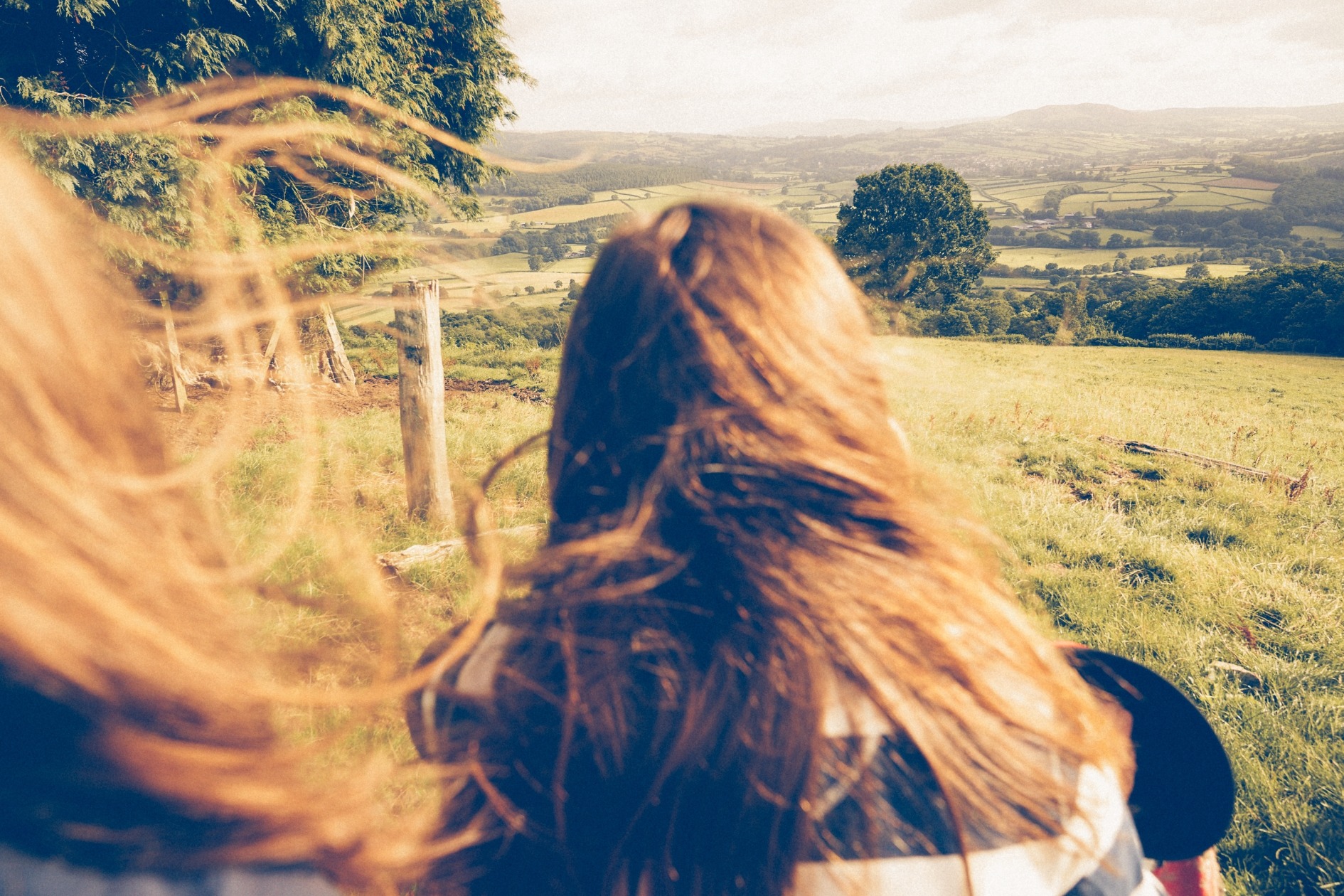
Molly and Bethan Lewis live and work on a remote and beautiful farm in Powys with their father, Robert. They describe why they love a job that means working 365 days a year come rain, sleet and snow.

Here is a story about Wales, Welsh children and sheep.
A young teacher from Birmingham takes a job at a village junior school in the Brecon Beacons. On her first day she begins by showing her class of seven-year-olds some pictures of animals as a conversation starter. ‘
Who can tell me what this is?’ she says, holding up a photo of a sheep.
The class studies the picture. No one speaks.
‘Come on,’ she says, thinking the country kids shy. More silence, furrowed brows.
Becoming frustrated, she picks on one of the boys. ‘Johnny,’ she says. ‘Surely you can tell me what this animal is?’
Johnny looks hard and takes a breath. ‘Is it a three-year-old Texel ewe, miss?’ he asks.
This story, told to me once at an agricultural show in Builth Wells, is almost certainly a bit of rural Welsh myth-making, but I find myself thinking about it quite often when I meet Molly and Bethan Lewis.
The two sisters, 18 and 16 years old respectively, farm with their father Robert in the great, green hills north of the Brecon Beacons in central Wales. They too have the intimate, detailed knowledge of livestock, and indeed Molly does her own experimental crossing of the family’s hardy Welsh Mountain flock with meatier Texels. And like the boy in the story, they see and feel things within outlines and under surfaces that outsiders do not – the inbuilt compass of a horse that means it can always find its way home; the character of sheepdogs, a dog always being either a labourer or rounder; the way that a sheep breed’s temperament attunes to its home.
‘Different breeds have different ways of giving birth,’ Molly tells me one autumn afternoon, sitting with the family in the kitchen with mismatched mugs of tea, and eating slices of fruit cake as thick as Bibles. ‘Some wait ’til the conditions are right, but a Welsh sheep will lamb without waiting in sleeting rain. A Texel is more likely to want closer attention; the Welsh prefer to be on their own.’
Perhaps most striking to the outsider is the way the sheep are hefted to the land, so they stay within their flock’s territory. It means that a flock belongs to the farm, rather than the farmer; remove it completely, and you would be removing years of inherited instinct, not just animals. Here, what belongs to whom, and how, can seem as complex, finely tuned and hidden as the precise characteristics of a ewe.
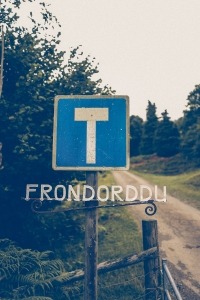
The Lewis’s farm, Fron-Dorddu, sits high on the hulking southern flank of the great Elan Valley in Powys. Robert Lewis, the girls’ father, farms it in partnership with his brother Stephen, who lives in a bungalow on the land. They own another, organic, sheep farm, a few miles away, and rent land in the Claerwen Valley, a tributary of the Elan. Robert’s grandfather first brought the family to Fron-Dorddu, but Lewises have been farming in the valley for 350 years. Currently, in this farm’s 250 acres of rough upland pasture, they graze the flock, and raise a few beef cattle that they sell to lowland farms for fattening in the autumn. By the time Molly and Bethan are in charge, the income sources will almost certainly have changed, but we’ll come to that in a minute.

Robert, in his early sixties, met Helen, Molly and Bethan’s mother, about 20 years ago. Her family were also farmers, so when she moved into the low stone-built farmhouse with him, she knew the life: the strange hours, the messy kitchens, the livestock market as a social hub. In the end it didn’t work out, and around 10 years ago they parted, amicably, Helen moving down to Rhayader, the local town, where she works as an agricultural advisor.
The girls split their time between Helen’s place and Fron-Dorddu and, says Molly, their love of farming was inspired by their mum as much as anything else. ‘She knew a lot about it, and we grew up seeing her making a living in agriculture. And in a lot of the other families we work with there are girls working on the farms as well. Some people ask me and Bethan about being girls in farming, but it never seemed unusual to us. There are more women working in farming now than there were. I think that’s a good thing, but I don’t think too much should be made of it. You know, we just think of ourselves as farmers, not, like ‘Woman Farmers’.
Fron-Dorddu has shaped Bethan and Molly and given them what could be called a destiny. As Stephen doesn’t have kids, the Lewis’s 350-year history once looked to be in danger of ending; it wasn’t that Robert or Helen doubted the girls’ right or ability to take over, far from it, just that tradition expected boys, and there were none. Still, the signs of their attachment to nature and the outdoors were there early enough. When Molly was two, she amazed a health visitor by calmly naming all of the many different birds she saw in the farmyard; Bethan had a similar ability at the same age with the names of Stephen’s 15 sheepdogs.
Not all kids born on farms instinctively cleave to the life, but you can tell the ones who do from their acceptance of the hard jobs. Anyone can love summer work, but something has to click inside for you to enjoy rising in the small hours of a February morning to hunt for new lambs on cold, sleety hillsides.
Bethan, for example, loved the first lockdown in 2020, not just because she could forget school and be on the farm all the time, but specifically because ‘it started right when lambing started. That meant I could get up at half five every morning to go lambing. I’d be competitive, trying to beat everyone out of the door.’
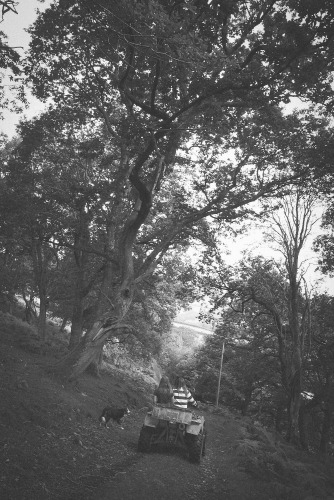
‘Yeah,’ says Molly, laughing, ‘She’d be trying to get up before me to get the best quad bike. We don’t mind getting up and working in the dark. You get into a routine and you don’t mind it.’
Their least favourite job? They can’t think of one. Probably tidying up when someone comes to visit, jokes Aunt Stella, their mother’s sister, who is visiting. Robert and the girls all laugh. It is sincere, but is nevertheless the laughter of people who would enjoy housework a good deal more if it could be done on a horse.
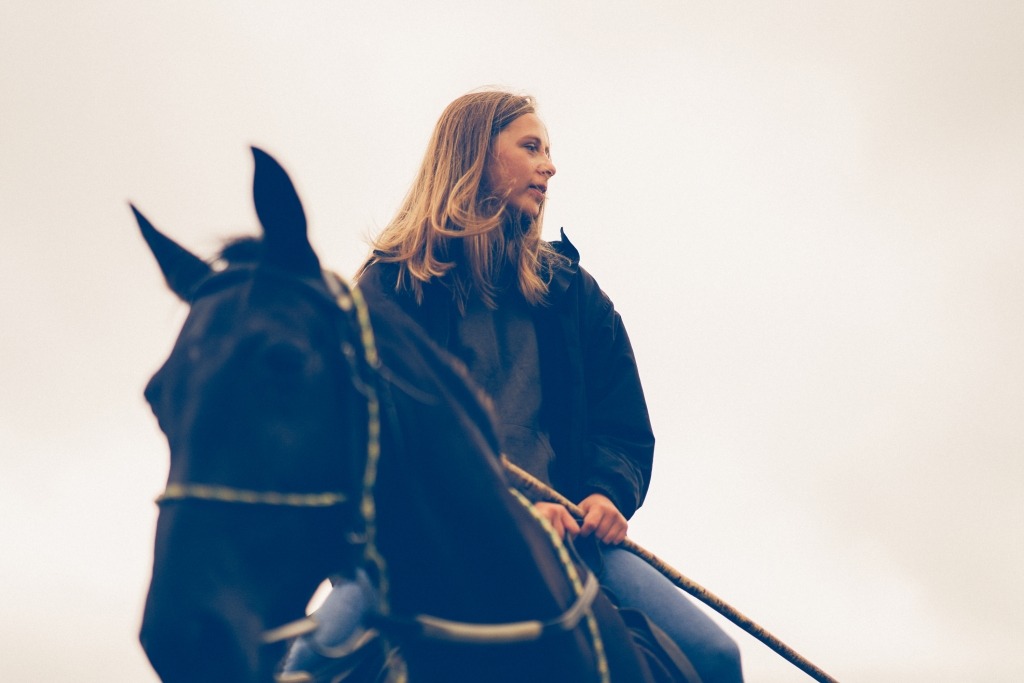
‘We usually meet on top of the hill about seven or eight in the morning. We go on the horses, it’s often easier on a horse than a quad bike.’
Between Robert and his daughters is the sort of laconic ease often found between people who work together, when they’re obliged to be inside. You sense they’re generally happy to have a reason to go outside again, and they’re comfortable talking about their love of the landscape and its traditions. They are not farmers who revel in the reduction of talking about landscape as commodity, and farming as ‘just a business’; Robert is proud of their continuing use of horses for getting around, for example, and of the old-fashioned laid hedges for their embodiment of old traditions being made newly valuable by their sustainability. When I ask if, having seen priorities come and go in government agricultural policy, he ever feels sceptical about climate change, he says yes, and I briefly think he might go a bit Clarkson. In fact, he says he just wonders if the Gaia Principle should be factored in more.
At work, Robert and Stephen are the bosses, but Molly and Bethan have their own clearly defined responsibilities. Bethan prefers caring for animals, and looks after the new calves; Molly likes a mix and is as happy fence-mending as tending to sheep. They argue now and again, says Bethan, of course they do, anyone who says they don’t argue at work is a liar, especially when it comes to family. Robert isn’t sure about some of the ideas Molly brought back from agricultural college. Bethan thinks her sister can be bossy. ‘We just have different ways of approaching some things,’ says Molly, with an elder sister’s diplomacy. ‘In other things we have the same mind.’
And the same experience. They chip in with the telling of each other’s stories, having lived them together, and they seem as aware as each other of being inheritors and bequeathers. Their ancestors were once here, new Lewises may come, and the work remains in essence the same. Does that make a difference to how they think about what they do? ‘Oh yeah, yeah,’ says Robert, as if it would be crazy to doubt it. ‘Yes,’ says Bethan. ‘Yes, it does,’ says Molly. I wait for someone to expand on that a bit. No one does; it’s a question both too inane or too serious to talk about. The sun sinks into the hills, and out in the yard, a sheepdog barks. ‘Shall I make another pot of tea?’ says Aunt Stella.
Outside of the industry itself, ‘farming’ is spoken of as if it were a single activity, but it isn’t. Arable farms in eastern England, say, with their new, £100,000 tractors, computer-measured chemical inputs and privately educated owners, could be said to have more in common with large plant nurseries than dog-and-stick enterprises like Fron-Dorddu. Welsh agriculture is distinct: 80 per cent of the farmland is in high hills and mountains, and about one in three of the UK’s sheep live on it. The farms are smaller than the UK average, but employ more people, relatively speaking, with almost one in 10 of the UK’s agricultural workforce being here.
That means there’s still the strong sense of community and culture rooted in farming that has been lost in many other areas of the British countryside. Did Molly and Bethan’s friends think it was strange, the two of them both going to agricultural college? No, because loads of them went as well. Do they ever get bored of it and yearn for a holiday somewhere with a beach? Not really, no. Well, maybe Australia and New Zealand one day. ‘So we could get a job with the sheep shearers, and see how they do it there. That’d be interesting.’
Because the margins are low, farms cannot afford to employ the workers they need and that means, as Robert explains, that, ‘unless we work together with our neighbours, we can’t survive. So when we need to gather our sheep, it’s a community effort. It’s not a cooperative, we’re independent, but you can’t do it alone.’ It might be the intensity of the immediate family life that strikes an outsider, but it’s the gatherings for which Molly and Bethan show the most passion. Livestock markets are social hubs too, but the gatherings order the year, each farm having its own weekend. ‘Look,’ says Bethan, jumping up to snatch from the wall a calendar that she shows me. ‘These are the gatherings we’ve been doing,’ through the year; there are names written beside dates like the names of saints.
There are four seasons of gatherings: marking, when the lambs are marked to show ownership, in May and June; shearing in July; weaning in September, and dipping for disease in October. The Lewises work with about 10 other farms, and each one has the same dates for the four jobs, although if there’s a problem they can change.
‘We usually meet on top of the hill about seven or eight in the morning. We go on the horses, it’s often easier on a horse than a quad bike. And then we go over to the farm where the gathering is, and we spend the day there, sorting the sheep and everything. We ride home for the evening, but when you finish depends on what you’re doing, and on the place.’
Stella finds some photographs that someone took of a gathering and shows them to me, Robert tries to describe the atmosphere at them. Molly and Bethan recall the time they set off at 2am to help get someone’s sheep under cover, because rain was forecast for the later morning. There’s a delighted pride in the shared urgency, in the comradeship of having no choice, of just getting on with it. And of course, there’s the connection with people through the physical. Unless we work with our neighbours, we can’t survive.
It is very easy to make the Lewises sound storybook pastoral; simple, kind people in a tough yet beautiful world, galloping their horses over the hills, and constantly uttering things over tea that sound humble yet profound. Obviously, this is ridiculously one-dimensional and patronising. Lest there be any doubt, they watch telly, use iPhones, shop on Amazon, and eat ready meals as well as lots of mutton (not lamb, they point out, mutton having the far superior taste). They are very interested in the possibilities of using drones in farming, and in other technological developments that I don’t fully understand. Since the 1960s, some commentators have said that such activities mean there is no longer a significant difference between rural and urban life. I’ll let you make up your own mind on that one.
The Lewises think that outsiders might idealise their way of life a bit, ‘but I think it’s not so much about romanticising it as not understanding,’ says Molly. ‘It’s not their fault. They don’t know, do they?’ Even at agricultural college, the tutors tended to overlook their way of farming as a bit irrelevant. ‘It wasn’t really talked about much, but I tried to relate what we do to the college work. I had the mickey taken out of me a lot because I rode a horse on the farm, and went round the sheep, you know. But because we had to talk about our own farms in class, I think the people in my class understood it more, but there’s only so much you can say. I think it would be better if it was included more.’
She sounds wearily bemused rather than annoyed, perhaps because she has confidence in what she has chosen as her life’s work. The point is, she explains with a clarity belying her 18 years, that climate change is gradually making them very relevant indeed. Grassland captures carbon, and while sheep stand accused of increasing atmospheric methane, there is plenty of evidence to the contrary. It’s possible that in 10 years’ time, the majority of their income will come from managing the environment and what are called ‘public goods’ – carbon storage, air quality and so on.
And what goes with that, adds Stella, is people becoming more interested in how their food is produced, and its authenticity. Stella, a writer and social entrepreneur, who moved away to found her own marketing agency in Cheltenham, can see how public taste is changing, and how her nieces will instinctively meet it. ‘Food production won’t just be a by-product; it will be part of the support for the natural environment. It won’t be about changing to compete with what’s already there; it’ll be about finding new markets that work with what you’ve got already.’ That, she says as Robert nods, is the significance of the girls trying their new ideas like the sheep cross-breeding, and working as contractors wrapping fleeces for shearing crews.
Molly thinks they might find ways to be even more sustainable in the future, but it won’t be anything sudden or radical. ‘Our way,’ she says, ‘is about long-term effort.’z The afternoon draws to a close, and light begins to fade outside the kitchen window. Robert leaves to drive down to Rhayader for a meeting with other local farmers about the Welsh government’s new environmental initiatives. Molly, Bethan and Stella take me for a tour of the farmyard and adjoining fields.
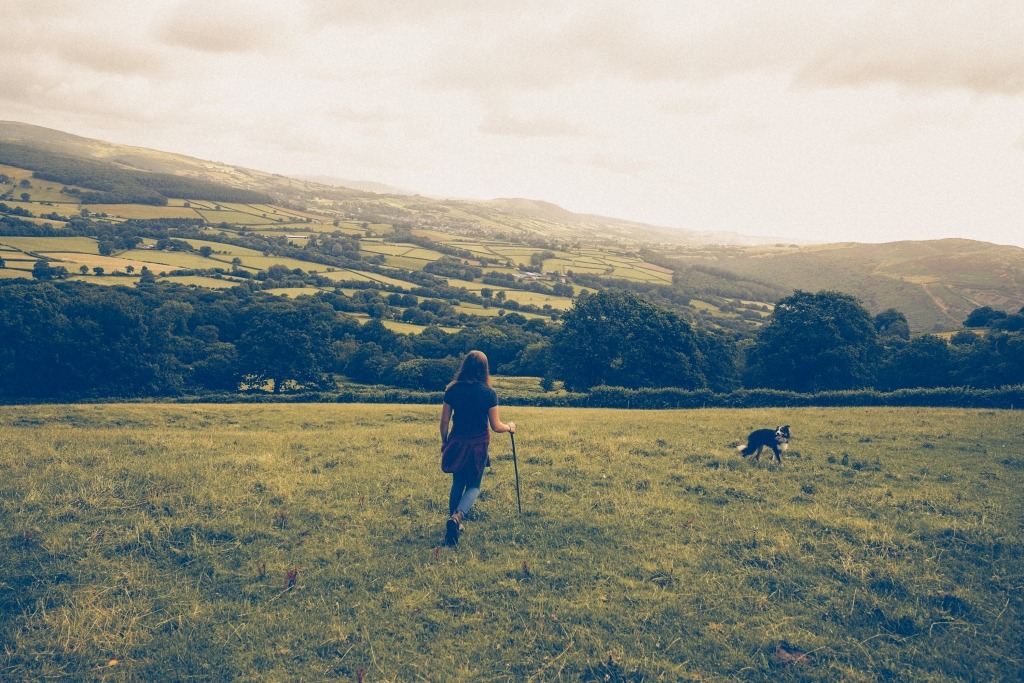
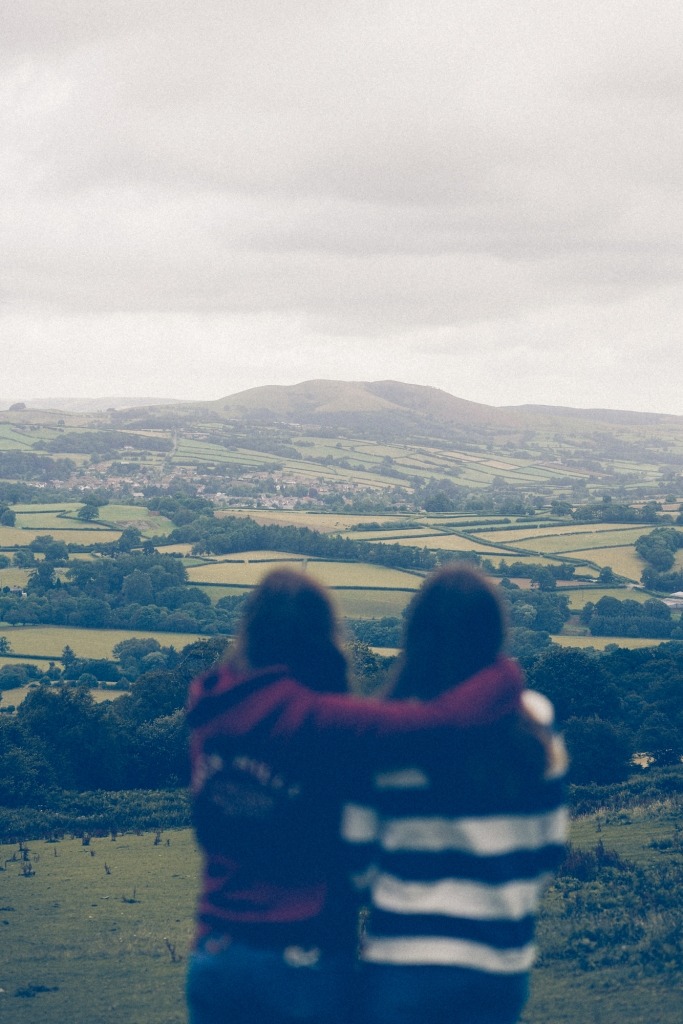
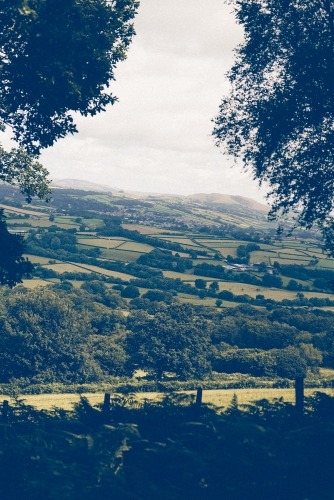
After the confines of the house, the scale when I step outside is suddenly disorienting. Looking down, the panorama of the valley is way wider than a human field of view, which makes you feel almost as if you’re falling into it; as you turn and look back, and the fields tilt up to the sky at green angles that make it hard to tell how far away the horizon is. As they labour up a sloping field towards their horses, the two sisters seem both tiny and yet important, as if the whole landscape is centred on them. In a way, of course, it is.
‘The thing I notice about those two compared to other kids I know,’ Stella tells me, ‘if something needs doing, they don’t sit around and watch you do it. They help, even if they’re not sure how to do it. They have a go. It’s a can-do attitude I suppose. They have such a broad skill set from being on the farm. Some of the skills might not be very useful in a town, but I can tell you that if the end of the world was coming and you needed to get somewhere, they’d be able to help you.’
They invite me to stay for tea (chicken Kievs), and fill the steamy kitchen with recounting story after story: dogs, sheep, horses, gatherings, cattle markets, old farmhands, the merits of quad bike versus horse. There’s a moment when the two girls are enthusiastically describing some unusual weather at a gathering that Bethan took a photo of for her Facebook header, and their clear, lilting voices are plaited together in the remembering. It was a November day, they say, which was unusual because we don’t usually gather as late as November, but it was really, really sunny, and when you looked down into the valley you could see white mist in the bottom, and we went into this bit of mist and it was freezing cold, and the land underneath was frozen over as we walked on it, and then we started to lose sheep in the mist, we were losing sheep because they walked into this mist and fog, so we sent the dogs in after them, because dogs, the older dogs especially, if you send them in a rough direction they can sense where a sheep is…
I don’t think any of the Lewises would want to discuss the idea that, somewhere beneath these stories and descriptions, there lies a sense of wonder and a set of mystic feelings. That, however, is very much how it seems to an outsider sitting there and listening to them, whether romanticising or not. I wouldn’t know how to begin to put the feelings into words, but they suddenly seem very important. And I think they’re what some Welsh children talk about when they talk about sheep.