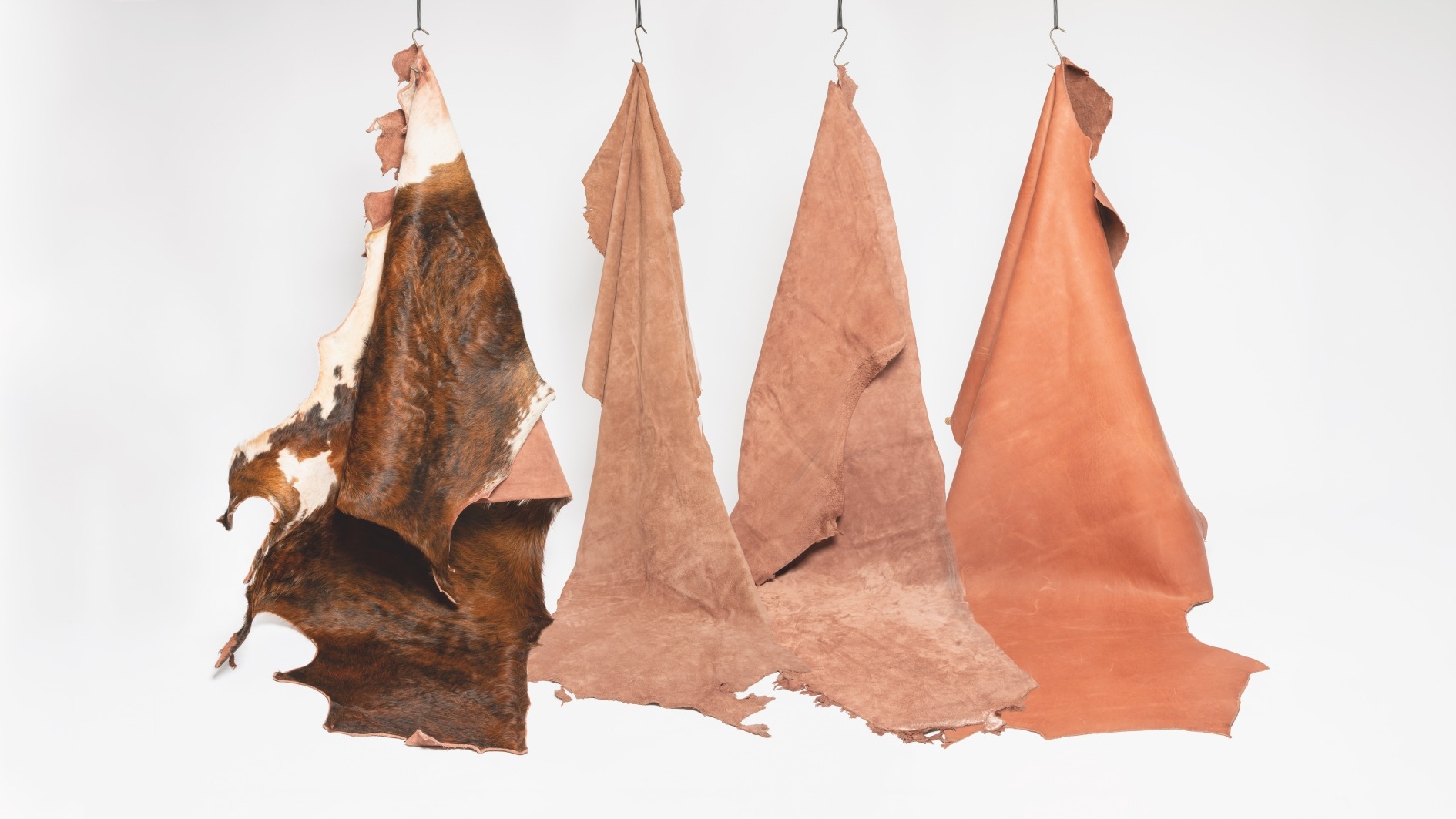
Field, Fork, Fashion
Words Alice V Robinson
 As a student at the Royal College of Art, Alice V Robinson’s quest to make a handbag took her right back to the farm. Here, Alice, the co-founder of British Pasture Leather, explains the extraordinary lengths she then went to, to explore the relationship between agriculture and fashion
In the beginning, I just wanted to make a handbag. But, after questioning what connections this simple item could hold, I became aware that I needed to see the bigger picture. So, on 9 October 2018, I bought a bullock.
Fashion is dependent on agriculture, and luxury fashion is especially so. In the case of leather, it begins as the skin of an animal that (with the exception of exotics) has been reared for food by a global meat industry. This inescapable link to animal agriculture, and the associated negative impacts on animal welfare and the environment, contribute to leather being one of the most controversial materials used in fashion today.
When I was studying for a degree in accessory design, leather was the most prevalent material used in the sector many of us endeavoured to become a part of. Its famed attributes in terms of beauty, durability and versatility are unparalleled. For all those reasons it was the material of choice for the high-quality accessories I intended to design. But, as I began to consider its use, I found myself asking questions, starting with: ‘Where has it come from?’
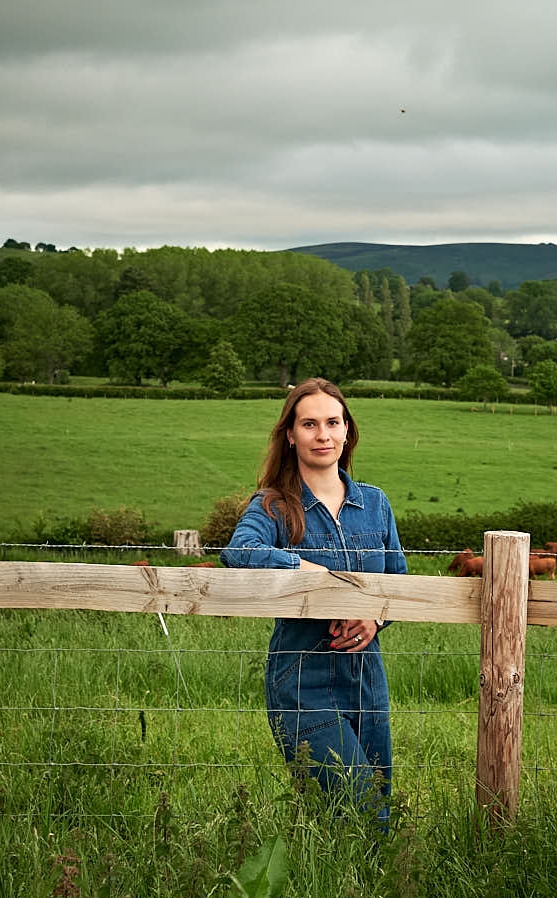
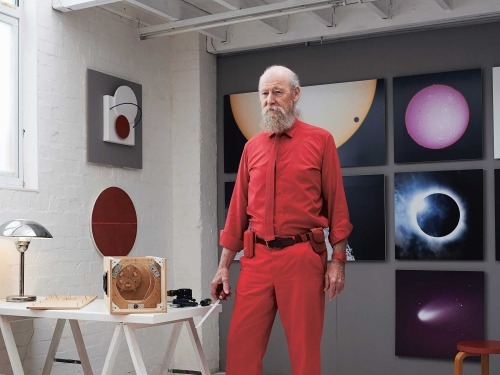
Alice V Robinson (above) went back to the farm to uncover the full story of leather. Photograph Jason Lowe. Main image: Longhorns in a field at Charity Farm. Photograph Alice V Robinson
I grew up in Shropshire, the daughter of a farm vet. I had been privileged to live alongside farmers and to experience the animals and places that produce our food. This exposure influenced what I chose to eat. Until I started working with leather, however, I had seen no relationship between my upbringing and my interests in fashion. I knew there must be a story to tell. The material’s connection to agriculture provided me with an opportunity to move from working as a designer in my own silo to learning from a local nature-friendly farmer.
I decided that in order to find answers to my questions, I’d need to follow it as a product from the field and confront its transformation into food and fibre.
‘You should meet Malcolm,’ said my uncle. He suggested there was no better person to learn from. A local farmer in Halghton, Malcolm Adams was the third generation to produce food from the fields of his farm.
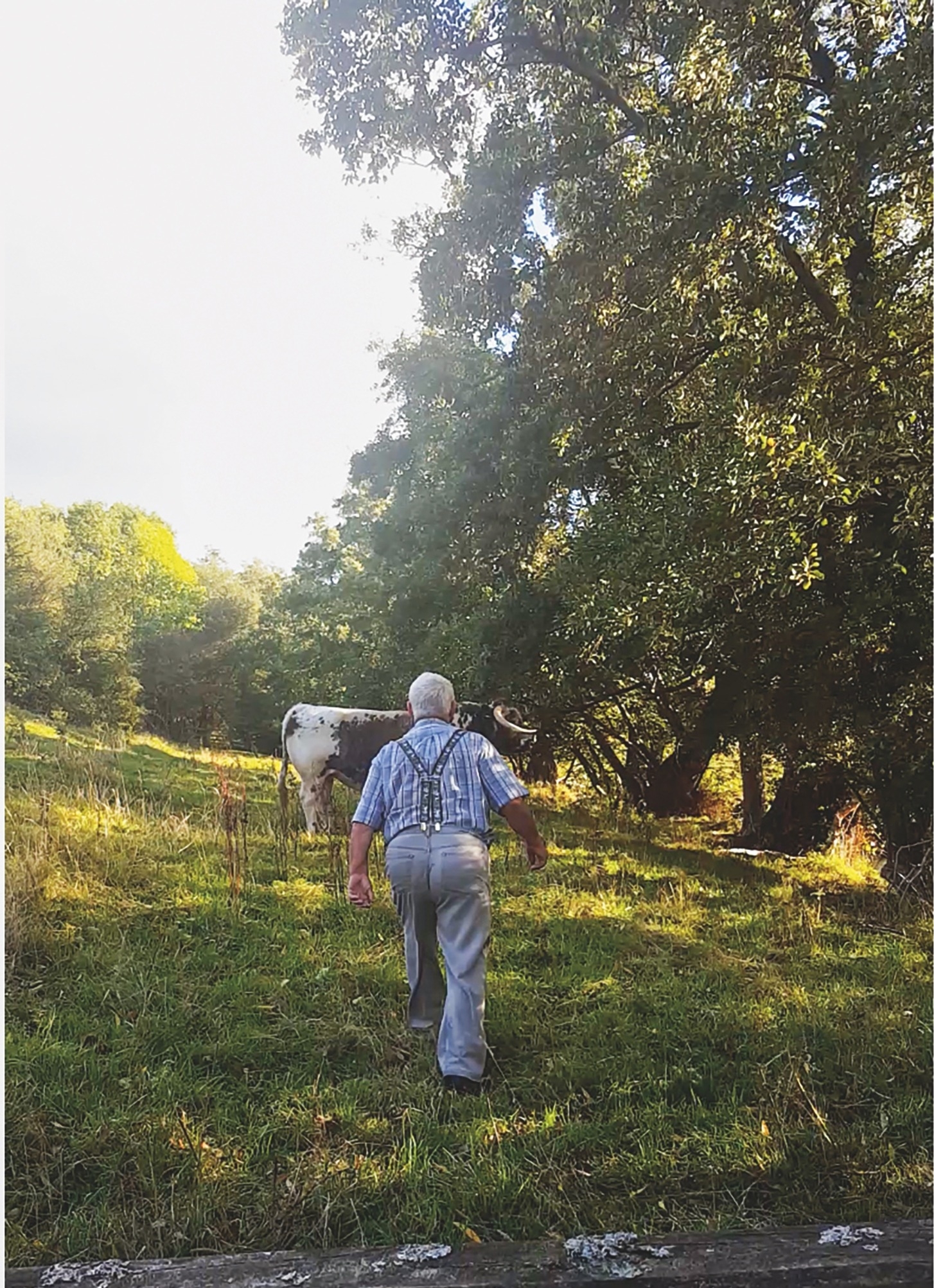
Malcolm leads Alice V Robinson on a tour of his farm. Photograph Alice V Robinson
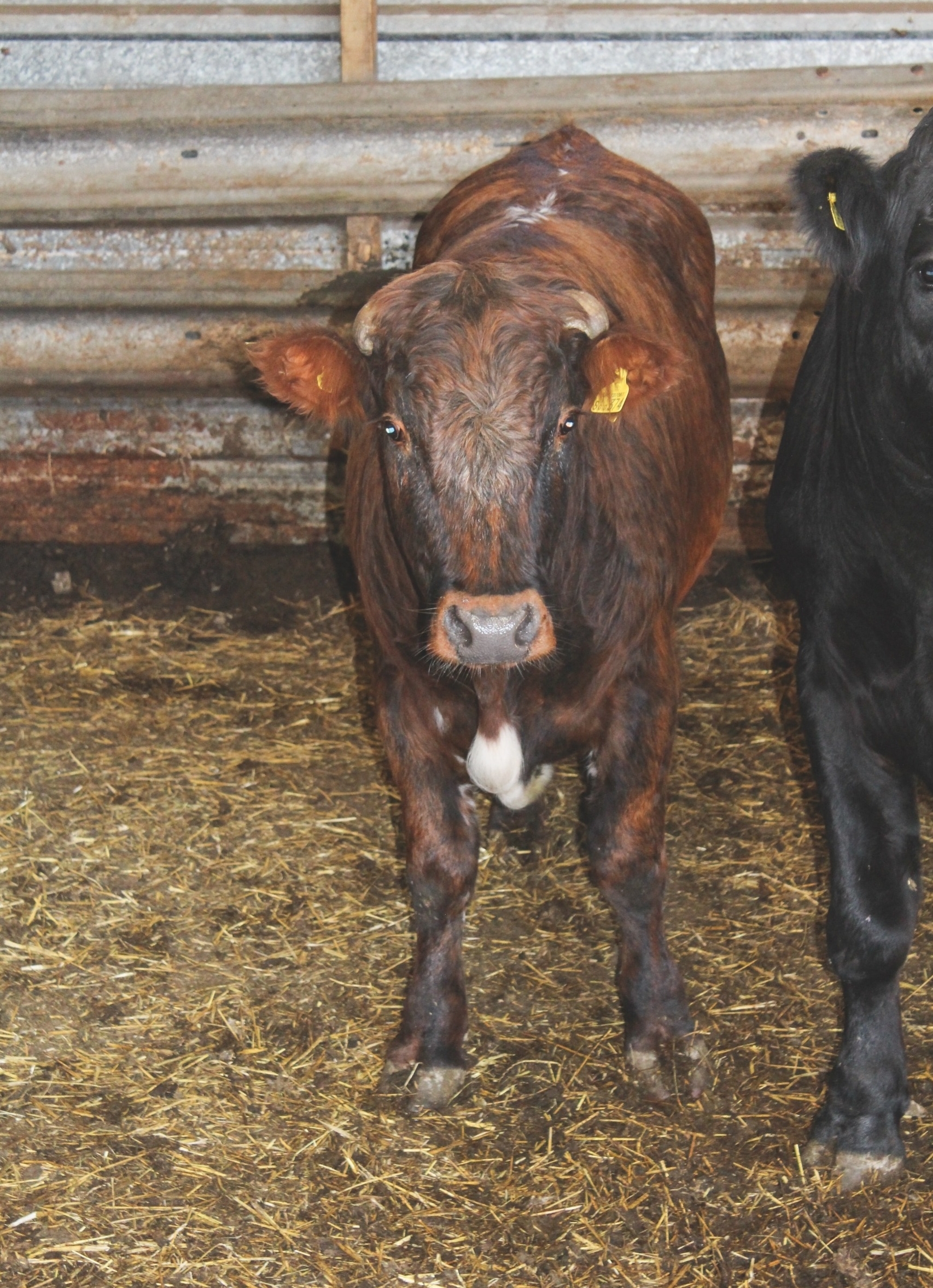
Bullock 374, reared on Charity Farm, and purchased by Alice. Photograph Alice V Robinson
*****
Beyond the market town of Ellesmere, where I grew up, is a protrusion of Welsh countryside and nestled within it is Charity Farm. The field Malcolm, my uncle and I were in was filled with native meadow grasses, containing wildflowers like yellow rattle and bird’s-foot trefoil. And, despite the months of scorching summer sun, the earth remained covered and cool. The field itself had never been ploughed due to its terrain and soil quality, which meant that it was unsuitable for growing crops but perfect for growing grass.
We approached a flattened plain near the end of the field and I saw horned heads begin to rise, curious about our approach but not startled by it.
‘There they are,’ said Malcolm. He began to point out members of the herd; the newest additions, calves only a couple of months old standing close to their mothers.
We continued our tour and found the herd dispersed in pockets throughout the field. Lining the perimeter were hawthorn hedgerows full of mature oak and ash and within them, every so often, towered trees offering pools of shade.
A crèche of mothers and their calves, this time of a different breed, had nestled near to the entrance of the field. Malcolm had both an English Longhorn and a Limousin bull on the farm. These calves were either pure caramel colour or pure black.
We reached the final group. ‘These are all steers, bullocks,’ Malcolm tells us. They’re more boisterous than the others and are intrigued by the truck. It feels as if we’ve reached the breakaway rebels. A few were approaching the 30-month age, and soon he would be taking three of them to the abattoir.
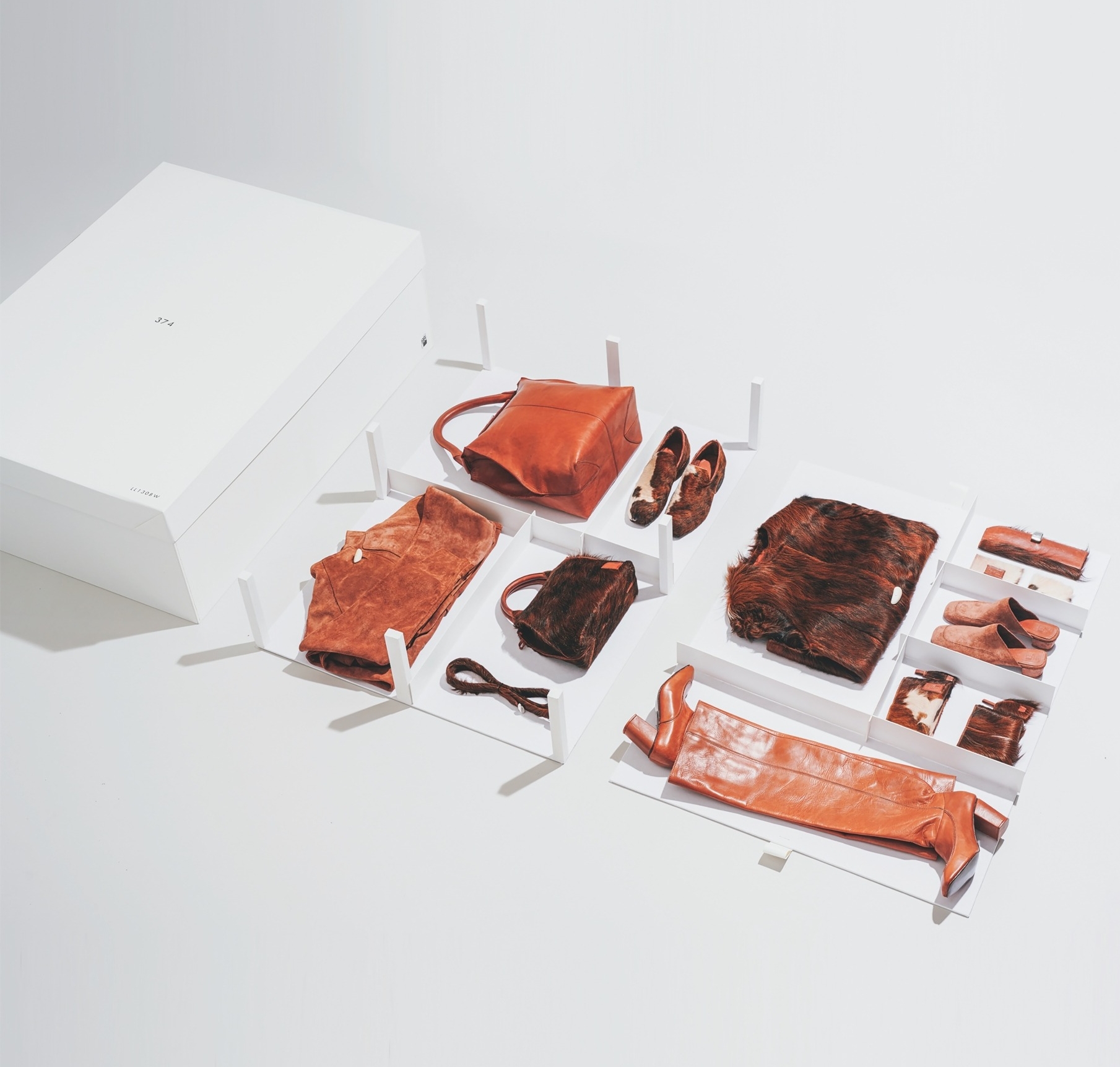
Alice V Robinson’s Collection 374, made using the hide and horns of one bullock. Photograph Joshua Fray
It felt clear to me that Charity Farm played a vital role in shaping the local rural landscape and culture. Both in my personal life through my food choices and in my professional capacity as a designer, I wanted to support this way of farming.
‘I’d like to purchase one of the bullocks you take to the abattoir next, please. Would you be open to that?’
It was a daunting request. We had, really, only just met. I was asking Malcolm to entrust me with a whole carcass of an animal that he had spent almost 30 months putting care and resources into rearing, with the intention that its meat would be sold and eaten by the local community. I promised that I would do the same with the majority of this bullock.
Back at the table of Charity Farm, we printed off a form provided by the Welsh government that, if approved, would give us permission to take away the hide and horns of one of the bullocks.
‘Nine am on the 9th then it is, Alice.’
Getting back into my car that day and pulling away, I remember feeling a swell of pride to have my name among the papers of Charity Farm. Bullock 374. They were the last three digits of one of the bullock’s ear tags.
Extracted from Alice V Robinson’s new book ‘Field, Fork, Fashion: Bullock 374 and a Designer’s Journey to Find a Future for Leather’, published by Chelsea Green (£27) on October 12, and reprinted with permission from the publisher; get your copy here