In Conversation with... documentary photographer Kiliii Yüyan
Interview Meena Sears
Photographs Kiliii Yüyan
‘I loved being up there with the musk ox, watching and learning from them… they’re true creatures of the winter’ – Kiliii Yüyan
Kiliii Yüyan is a documentary photographer whose work has been featured on the pages of National Geographic and TIME magazine. Although based in Seattle, it is rare to find him there, as Yüyan spends most of the year on assignments around the world, drawing from his own tri-cultural heritage as Nanai/Hèzhé (Siberian Native) and Chinese-American, to convey different world views on issues surrounding the environment through photography.
Yüyan came to this medium later than most, in his mid-30s, having spent many years building traditional kayaks. While kayak building and photography may seem a world apart to most people, for Yüyan they are a part of the same journey, a journey to understand his sub-Arctic roots better and get closer to his grandmother’s people.
Through his stunning photographic work, Yüyan tells the often under-represented stories of indigenous communities, documenting the ecological changes affecting them, but also showing us how they are adapting to those changes as they always have done, and how we might learn from their centuries-old knowledge of how to live in harmony with the land.
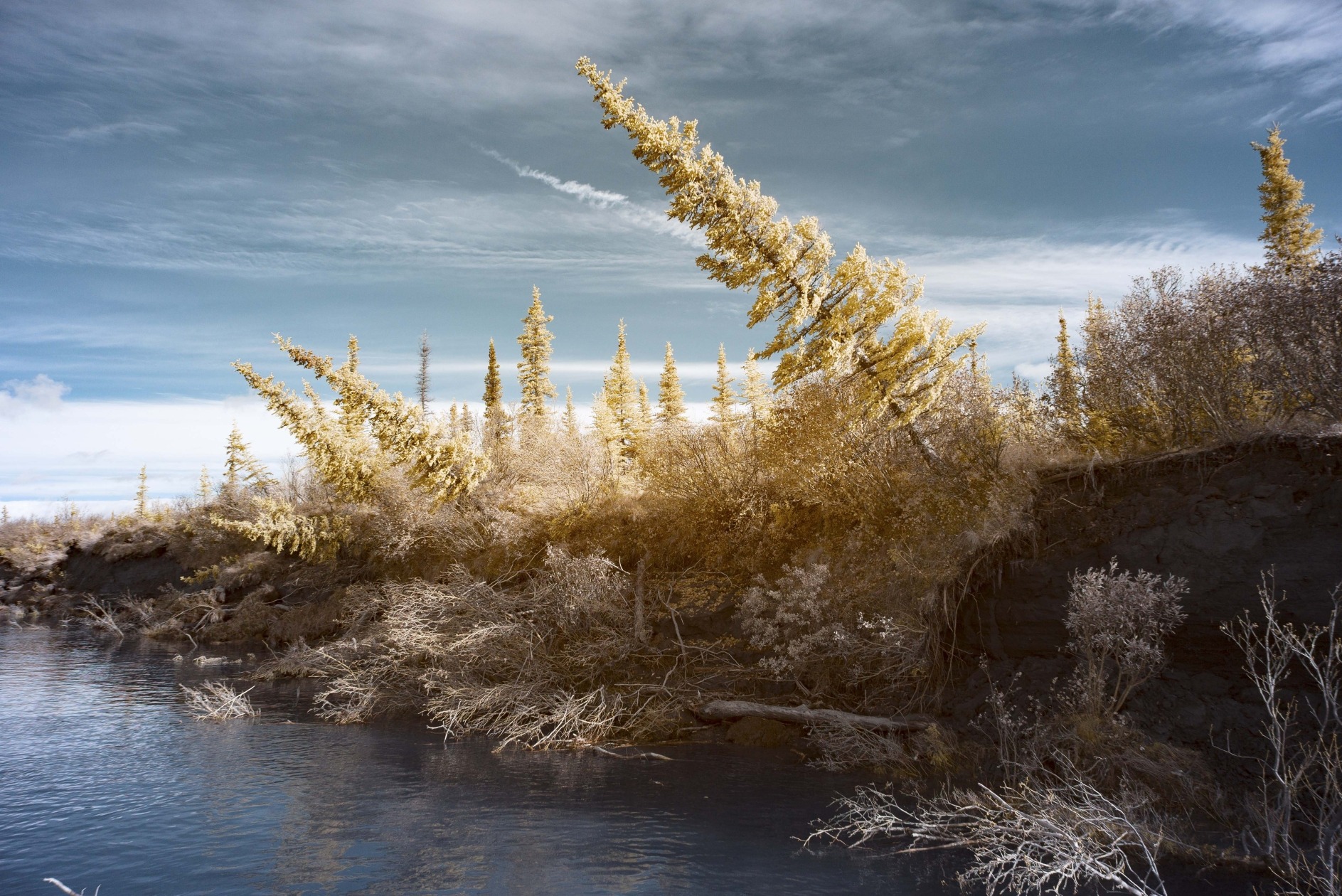
In 2019, Yüyan was commissioned by Emergence Magazine (a publication and creative platform dedicated to exploring the intersection between culture, spirituality and ecology) to photograph the effects of the climate crisis in the Alaskan Arctic tundra. ‘When it comes to climate change,’ Yüyan tells me over the phone from Seattle, a few days before he embarks on another photography trip, this time to Antarctica, ‘a lot of the people that report on the Arctic or the North in general, lack the indigenous perspective.’ Yüyan’s close collaboration with local communities, along with his own indigenous heritage, allows him to provide that perspective.
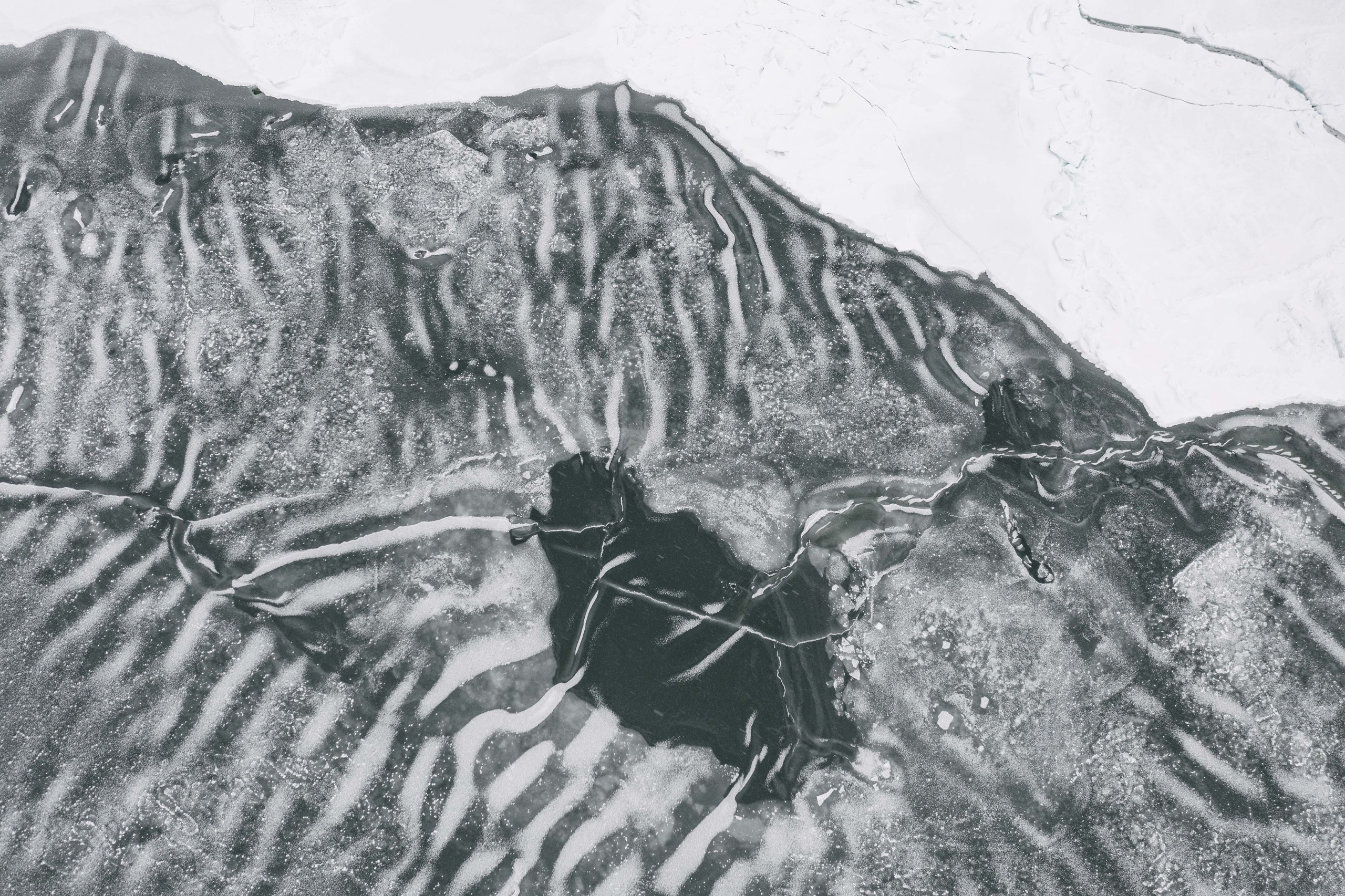
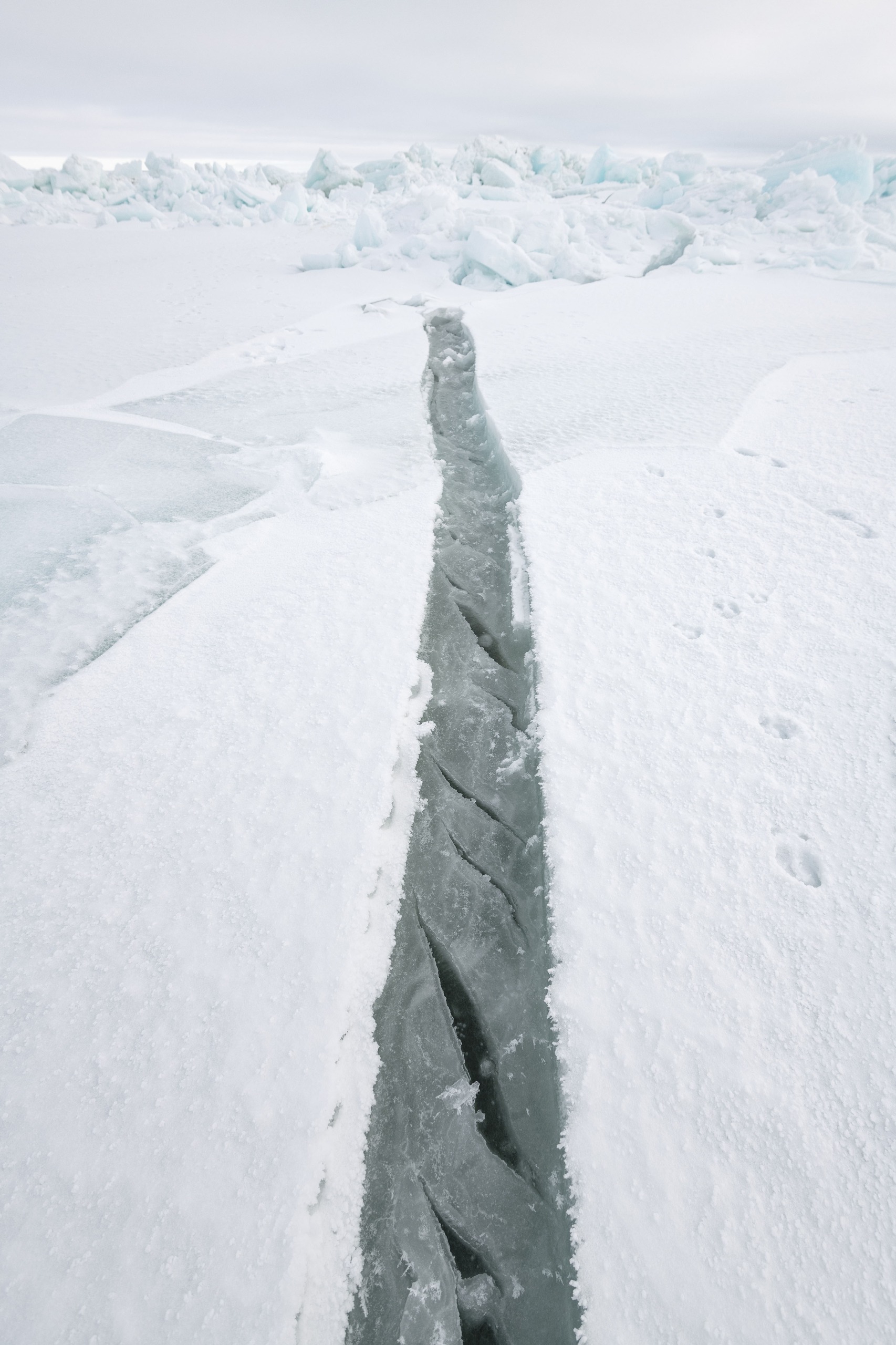
Beyond the Horizon, the photographic essay that resulted from this assignment, was taken over two seasons and in two locations in Alaska: Utqiagvik, in winter and Kotzebue, in summer. It is a striking and poignant series that illuminates the changes taking place in these regions from an indigenous point of view. In our brief conversation, Yüyan touches on some of these issues, eschewing the unrealistic objective of the West to return this land to an idealised state, pre-humans, for a view that embraces the ever-changing nature of the environment and looks at how we can move forward by adapting to these changes.
What does climate change in the Arctic look like from an indigenous perspective?
It’s complicated because, from an indigenous point of view, the land has always changed and the people of the Arctic are, and have always been, super adaptable; they’ve survived multiple ice ages. Climate change is serious, and there are some really big changes coming, but we’ve always gotten through these things. What’s making life hard for indigenous people now, is less about climate change and more about their lack of ability to adapt due to the effects of colonisation: people are no longer nomadic, they’re settled in places and can’t leave, which makes it harder to adapt.
Also, it’s the speed at which things are changing. A lot of these communities rely on both traditional knowledge and science put together, which is what the Mi’kmaq (people indigenous to Canada’s Atlantic Provinces) call ‘two-eyed seeing’: you see with one eye, science, and the other eye, traditional knowledge, and with both eyes you get something greater than the sum of its parts. But now, things are changing so quickly and so much, that elders’ knowledge is no longer applicable.
Is this what you want to convey in ‘Beyond the Horizon’?
Yes, the point of Beyond the Horizon was to refute this very basic idea in Western ecology that we need to restore the land to a sort of baseline state pre-humans – a time when things were perfect – because that never existed. There was no time when things were perfect and it was so long ago that places had no humans living there, it wouldn’t resemble anything we would recognise today. So it’s an impossible task; it’s like trying to restore the land to a magical, idealised state. With Beyond the Horizon, I am saying that we need to start embracing the fact that wild lands are constantly in flux – especially in the Arctic region.
In what ways did you see indigenous Arctic communities adapting to changes in the landscape?
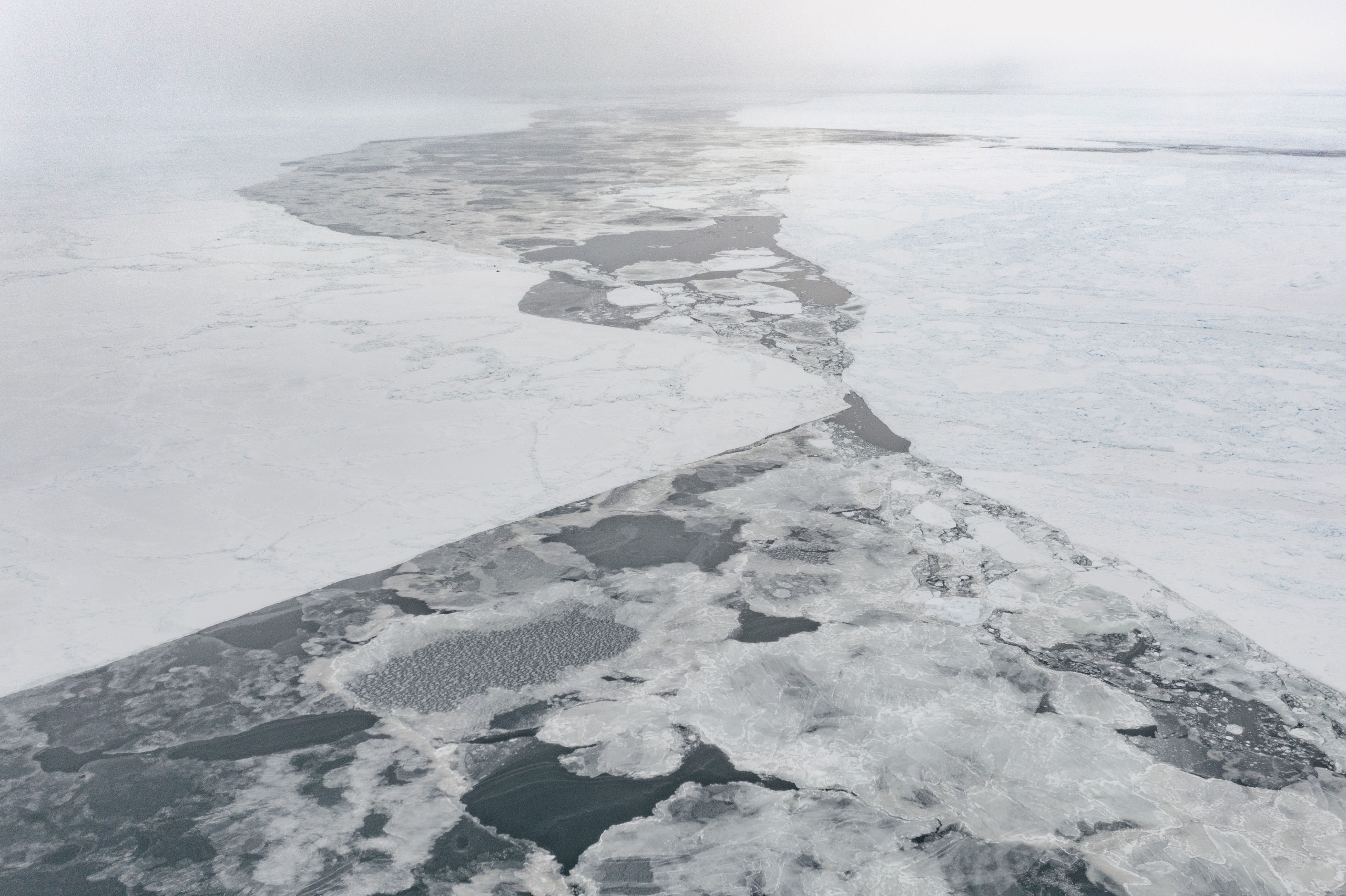
People are shifting what they’re hunting and how they’re hunting. A lot of people are moving from traditional technologies to more modern, globalised ones like using snowmobiles instead of dog sleds or motor boats instead of skin boats (because to hunt from a skin boat you need ice, but the sea ice is melting).
What would you say was the most memorable moment from both shoots?
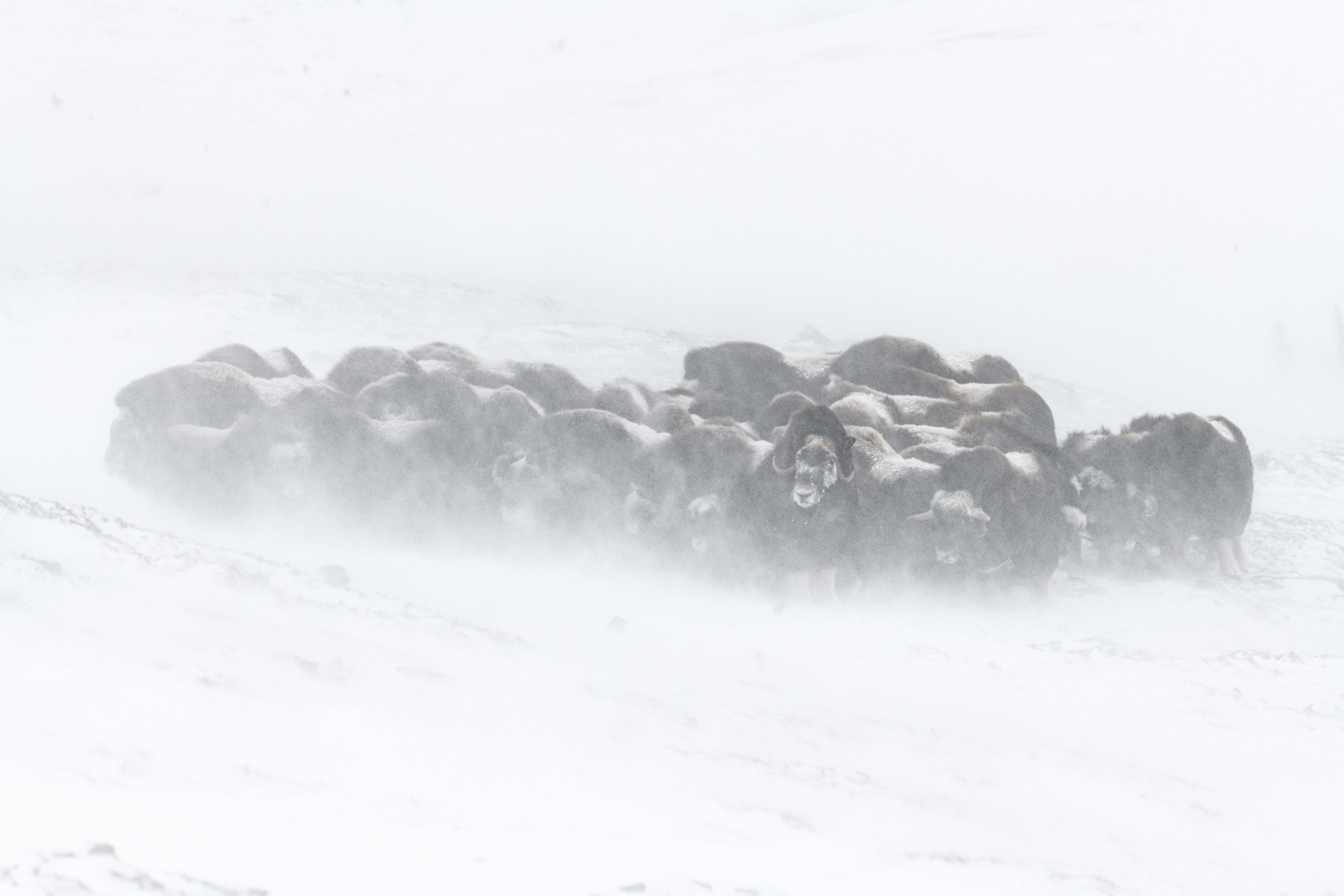
I think the most memorable moment was spending time with the musk ox. On the two days that I shot the herd, there was a whipping wind. It wasn’t that cold – minus 15 Fahrenheit or something like that – but the wind was 30-plus knots, maybe 35; so strong you could almost lean into it and stay standing. So that made the minus 15 feel very cold. But it was glorious too.
There’s something about being in those kinds of conditions that I just love – it makes me feel very alive. I loved being up there with the musk ox, watching and learning from them (you’re well protected of course – as people of the Arctic, we know how to live up there.)
What did you learn from the musk ox?
One of the most fundamental things I learned from the musk ox is that they stand facing into the wind; they just rest with their faces exposed to the cold. It’s like they are in standing hibernation; these are true creatures of the winter. And their faces become all encrusted in ice because they’ve been standing there for so long not moving and, while the snow gets blown off their bodies, their faces are where it’s warmest so it melts and then freezes into ice – it looks crazy. They’re very still – even the babies – complete badasses. I guess you could say stoic.
It reminded me of many things I hear from native communities, they even have a word for it in Greenlandic, naamagittarneq, which means ‘patience for the weather’. Elders often say it to young people when they are teaching them how to hunt. It’s like: you’ve got to have patience for the pace of nature, don’t go around trying to force things to happen on your schedule, you have to do things the way that nature has set it up.
And you think the musk ox is a good example of that happening in real time?
Yes, precisely. And I think it relates to the wider story as well because the musk ox is a great symbol of this changing wilderness. The musk ox has been around since the last ice age, but when Europeans showed up in Alaska, they killed them all so Alaska’s musk ox became extinct. Then, much later, when Europeans went to Greenland, they found musk ox there because the Greenlanders hadn’t killed them, so they imported the musk ox back to Alaska and reestablished them with strict protections around hunting and the musk ox have come back big time – so much so that they’re actually pests now.
So what does that tell us about how we can move forward and adapt to the changing wilderness?
It links back to this whole notion of how, as human beings, we manage the land. When we throw our hands up and say, ‘Let’s just restore it to this weird, idealised state before there were people.’ It’s pointless because it’s a fallacy. Indigenous people have been managing the land for centuries, and managing it really well. It’s about understanding that we’re a part of the ecosystem, and we can do a really great job managing it if we see ourselves as guardians and stewards of it.
It’s all these dominant global societies that throw their hands up in despair. I spoke to one indigenous elder who said, ‘Humanity has a self-esteem problem; it thinks it can’t live with nature and that humans will always destroy nature, but that’s ridiculous. We lived alongside animals and kept this place pristine for hundreds and thousands of years until the Europeans came along.’
I think people often hear this and think ‘that sounds nice but today is different’. But to that, I would argue, they are simply lacking the indigenous perspective because there are in fact all these small societies that have all of this deep knowledge and traditional technologies that help them to live very closely with, and manage, the natural world; they’re just not shouting about it.
So all the knowledge and information is there, it’s just about learning from these communities and implementing these strategies…
I mean, it took tens of thousands of years to develop these strategies, so I don’t think that the values of globalised societies are going to change quickly enough. I hope that they will eventually, but not in the next 50 to 100 years. So, in the short term, in the next 100 years or so, the best thing to do for conservation is to just trust the people that are actually doing it.
All of these indigenous communities are the ones that are still taking care of the land. Instead of pounding on everyone to change their values, why not simply empower the indigenous people who are already doing a great job of it, to do that job even better? There it is, a simple idea, but to some people it’s mind-blowing.
Going back to ‘Beyond the Horizons’, your photographs are so evocative, there is so much depth and story behind them, what is your secret?
I didn’t really pick up a camera until much later in life but it didn’t take long for me to start shooting for National Geographic, and I think that tells you a lot about the importance of story, versus the importance of technicality. Throughout life, as you gain experience, you learn to understand story. If you start shooting when you’re 20, you’ve hardly lived, whereas if you start in your mid-30s, you’ve got more life experience, so it’s going to be easier for you to make a photograph, or a series, go where you want it to go.
What three tips would you give someone going to the Arctic?
Go to Iceland first. Learn from local people. And then (for a small, concrete tip) find boots with interchangeable liners so you can pull them out and dry them overnight.
‘Beyond the Horizon’ will be shown as part of ‘Shifting Landscapes’, a multi-disciplinary exhibition taking place in London this December. Presented by ‘Emergence Magazine’, ‘Shifting Landscapes’ explores the changes taking place on our planet – from poisoned rivers to the threatened Amazon rainforest – through the eyes of nine international artists. Visitors will be encouraged to confront the reality of climate change and contemplate our position in relation to it, through a series of immersive works including film, soundscape and sensory installation.
Catch ‘Shifting Landscapes’ at the Oxo Tower Wharf, Barge House St, London SE1 9PH, December 1-10
Reserve your free ticket