(You Will) Set the World on Fire
Words Takamasu Kikuchi
Photographs Julia Grassi
Taki Nakazoto mixes the traditions of Karatsu ceramics with a thirst for both experimentation and discovery by accident, producing his unique, modern take on the Mingei folk art movement…
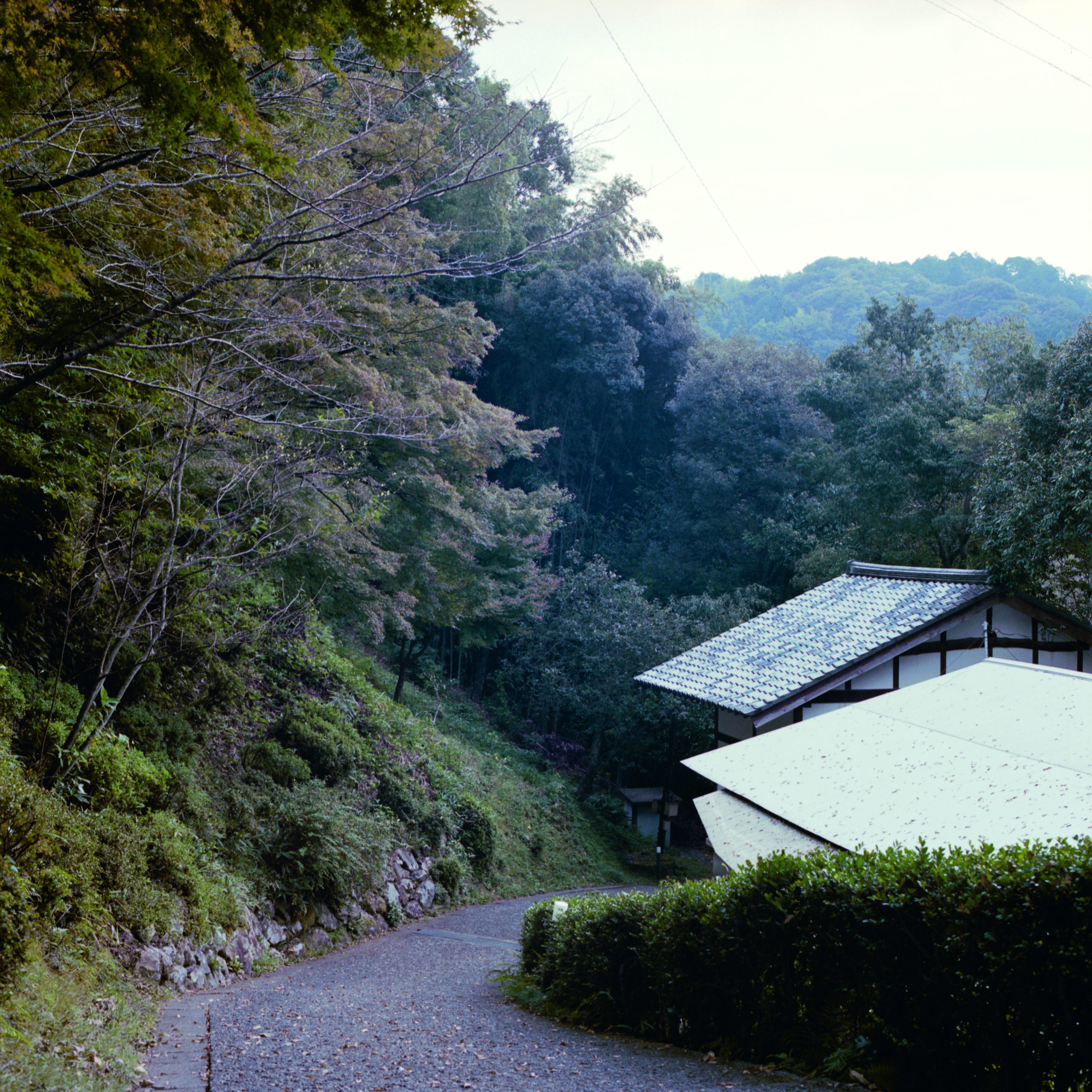
The Ryuta pottery lies among rice fields at the northern end of Japan’s Kyushu island, near the city of Karatzu – a historically important staging post for international trade between Japan, China and nearby Korea. It is a cosmopolitan area. Korean potters settled here over 400 years ago, establishing Karatsu as a ceramics centre – a status it enjoys to this day. It is perhaps only natural then that Taki Nakazato should have become a potter – he also comes from a family of potters – but it hasn’t been plain sailing, as he tells us from the pot bank at Ryuta, where he works alongside his father Takashi.
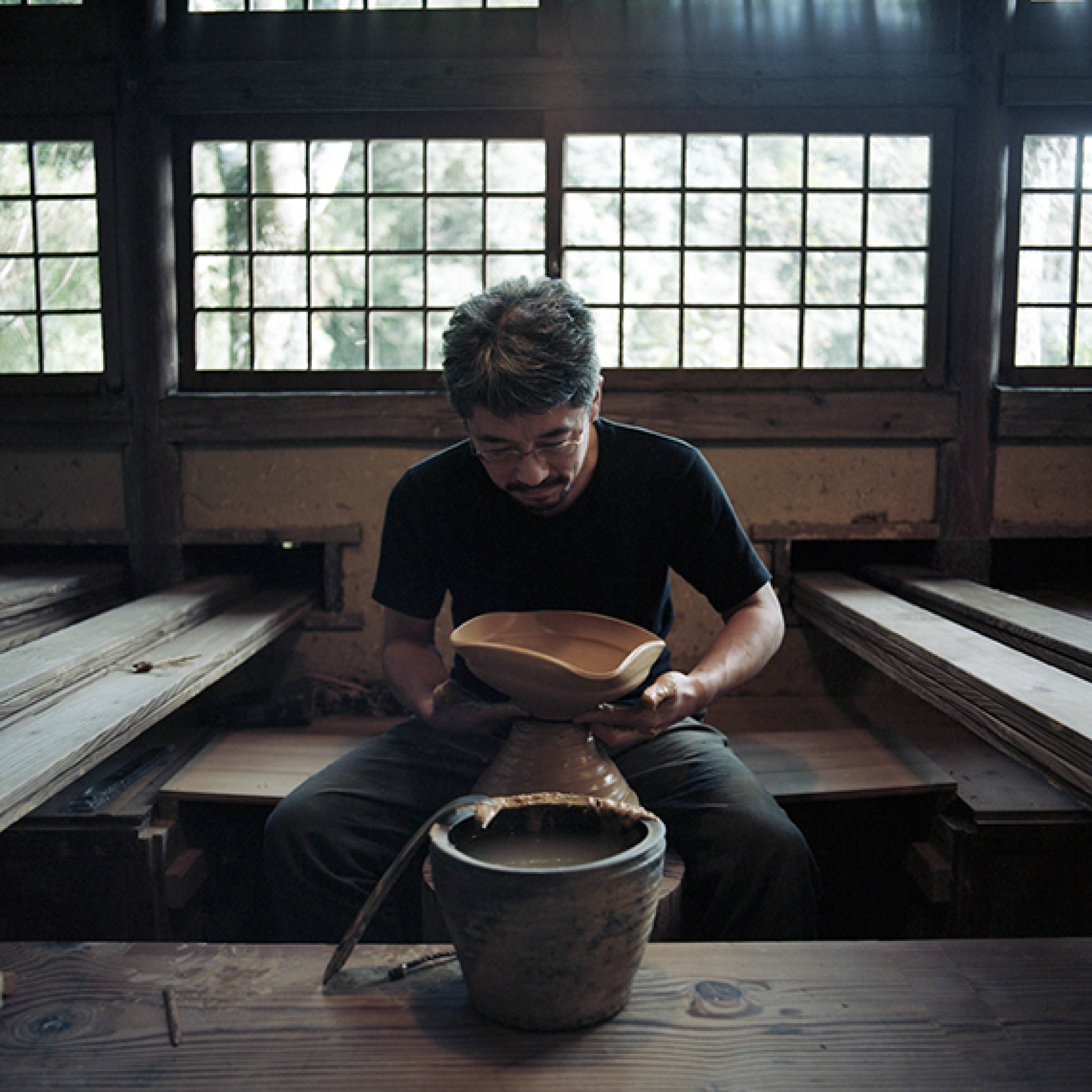
Was it an easy choice for you to follow in your father’s footsteps as a potter?
I simply did not enjoy life at home in Karatsu when I was young. My father invited his friends and assistants over for dinner at our home every evening, and I didn’t like watching them get drunk. I was into sailing and had the opportunity to go to university in Tokyo to continue my maritime studies. So I left Karatsu and was happy to get away from my family.
What made you come back?
My time away made me appreciate the high standard of life back home in Karatsu – I mean the importance of paying careful attention to everyday life. In Tokyo I was living in university dorms and eating tasteless food off plastic plates. In Karatsu, pottery is used for every meal, every day, and plays a central role at mealtimes.
So for you pottery is about eating? And vice versa?
Food served on beautiful pottery makes it look delicious. People who use high-quality pottery tend to spend more time and care over their cooking. Inn Tokyo, I started to think that perhaps pottery could effect change and actually enhance your life. So after graduating I went home and started my pottery career, taught by my father.
Was he a good teacher?
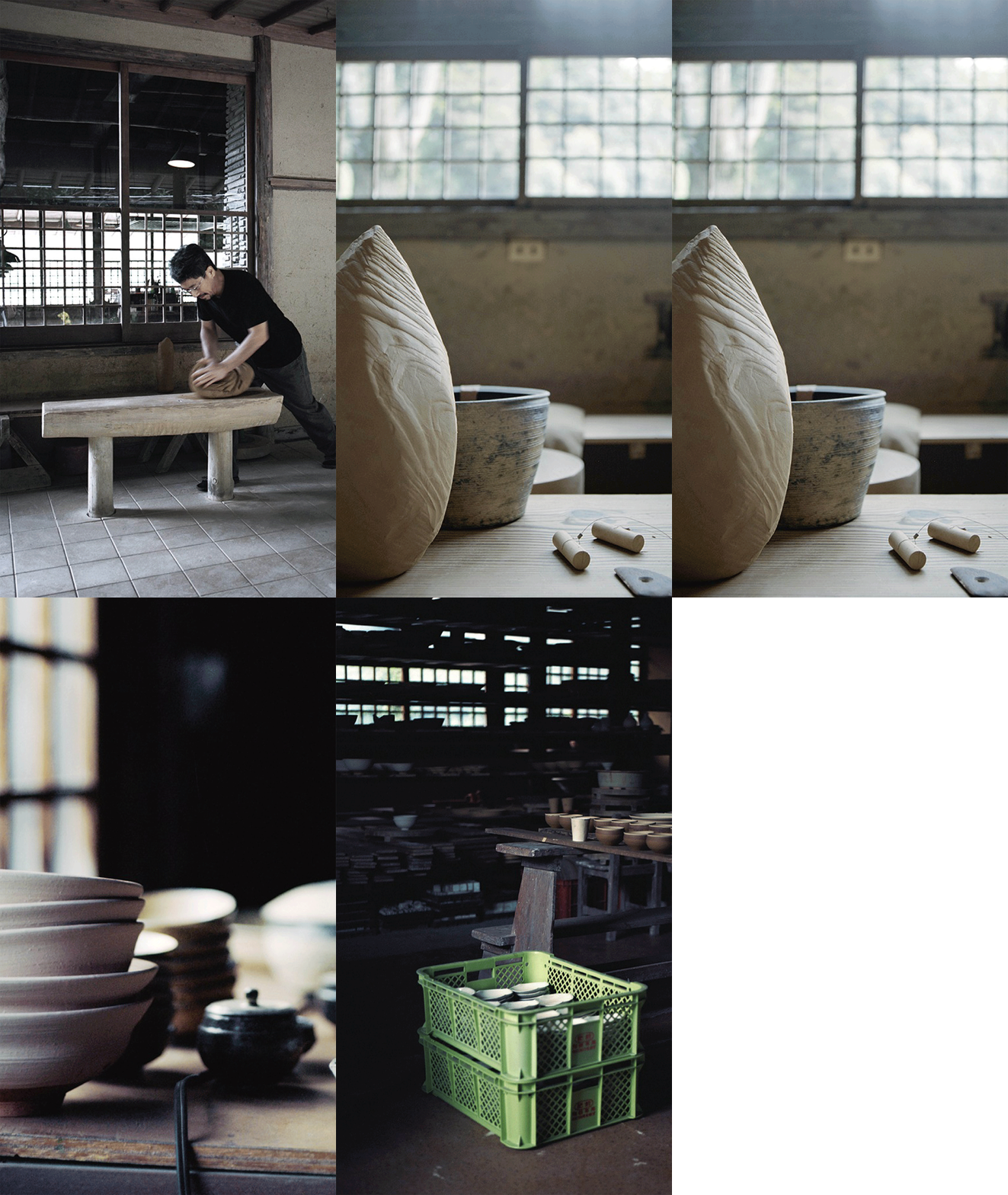
My father taught me to make a minimum of 500 pieces a day. This speed, achieved through the traditional Karatsu kick wheel, gives our pottery its dynamic, lively and efficient appearance. In Karatsu, the more pots you can make in a short period of time – and the faster the potter’s wheel rotates – the better. Elsewhere in Japan, potters tend to use a hand-operated wheel.
Would you say your pottery is typical to Karatsu?
My pottery is slightly thicker and is fired at a higher temperature than typical Karatsu-ware, so it’s more durable and practical for everyday use. One thing you can’t escape however is the soil. In general, Karatsu-ware employs a coarse soil, which contains little iron. But for me, it’s difficult to shape pots using this soil. I use soil from the hill behind my workshop, which has a greater iron content. I filter the soil and then leave it in a water barrel before pressing it into action.
Do you enjoy the physical processes?
Sometimes I’m frustrated by my inability to fully control what happens inside the kiln; but really the most exciting part of pottery is in the surprise and accident, so I’ve come to enjoy it. You can’t control the behaviour of fire in the kiln but I try to predict it by varying the space between pieces or by stacking the pieces on top of each other – experimentation manipulates the colours and patterns in the pottery. When you fire Aogaratsu (blue Karatsu), the kiln fills with monoxide, and the resulting lack of oxygen has an effect on the glaze, absorbing oxygen and creating a deep and saturated appearance.
Do you pay much attention to Japan’s Mingei (‘folk craft’) movement?
I often visit the Japan Folk Craft Museum set up by Soetsu Yanagi in Tokyo. Every time I go there I feel very calm, surrounded by these beautiful craft works. These objects were meant for every day life. I’m not sure exactly how the movement affects my pottery, but I respect it and feel sympathy with it.
Which qualities would you say define your work?
Ninety per cent of my pottery is tableware and the rest is vases. I’m not interested in making art pieces. I make pottery that is used and enhances everyday life.
Where will you be showing this year?
I recently started a collaborative exhibition project with a Japanese restaurant. I much prefer this to exhibiting in a white cube-type of gallery. We invited my customers to the restaurant and presented my pottery, paired with the restaurant’s food. Presenting my work in this way makes it easier for my customers to think how pottery should be used.
It seems that your work has a quietly political element.
I think the Japanese contemporary lifestyle offers a lower quality of living. People here say they have no time and money to make their lives more meaningful – these are excuses. People are careless and make little effort to find a deeper meaning to life. I believe that happiness comes from very simple things, such as enjoying a meal with family and friends. I hope that my pottery can contribute to an enhancement of the meaningful in everyday life.