Meet the Makers at Glastonbury's Greeencrafts Village
With sustainability at its core, the Greencrafts Village at Glastonbury Festival is underpinned by a passion for honouring traditional, natural, and holistic craft. The concept, centred around skill-sharing and making a positive impact for change, aims to reach people who might not usually align themselves with craft, or who might be newer to green thinking, in order to meaningfully expand awareness around sustainability. But it’s the makers themselves who make this place so special; each one dedicated to their craft and passionate about sharing their skills with everyone who visits. We caught up with Geoff Brown of Spinney Hollow and master blacksmith David Gregory, who has been part of the Greencrafts Village for over 20 years, as well as newcomers Melanie Louise (natural dyer) and Tom Evans (rope maker).
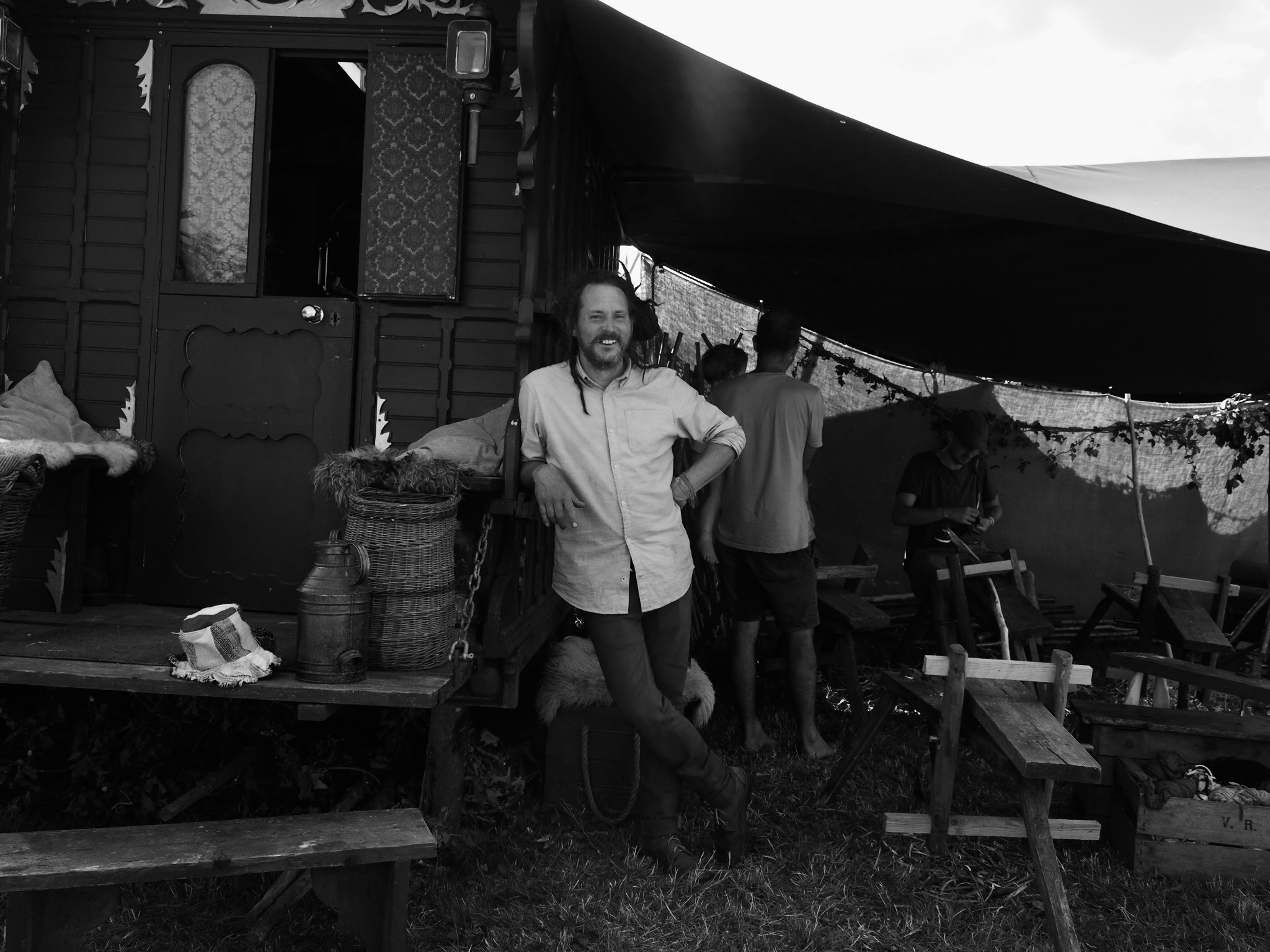
Geoff Brown, Woodworker, Spinney Hollow (@spinneyhollow)
Tell us a about the workshop you’re offering…
We’re offering an introduction to green woodworking. We’ve tried to devise a menu of engaging projects – most of which you can do within an hour. For some people, this is the first time they have been on a shave horse and used tools like these, so it’s less about the finished product and more about the process: engaging with piece of wood and using hand tools to shape it. It’s a mind-blowing experience for people who have never done it before and it’s actually very empowering. And a lot of fun too, of course!
What do people have the opportunity to make?
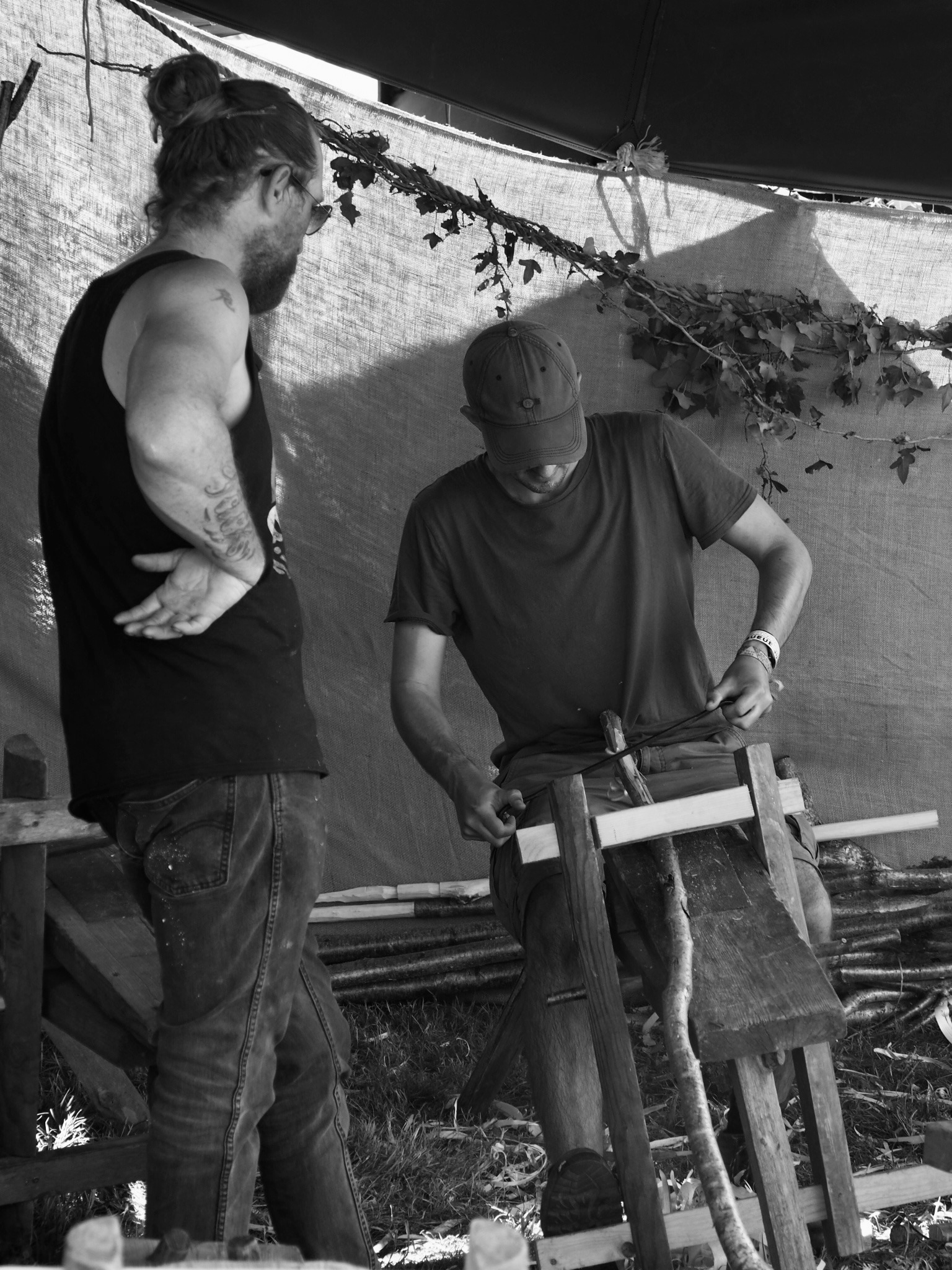
So these guys [currently sat on a shave horse] are making staffs, but you could also make a wooden sword, which is great because it goes through a process of cleaving wood: taking a log and breaking it down with different tools to create the end product. Some people like to make wands because it captures a sense of magic in people, others make a pipe – there’s a good crowd for pipe making at Glastonbury!
How does your business back home connect to what you do here?
We do a few festivals a year. Some we partake in (like this one) and others we curate from scratch. I also build wagons (I get one or two commissions a year), but I spend most of my time working as a gardener. I am head gardener at Wolsley Palace and I also look after a couple of private gardens.
How many years have you been coming to the Greencrafts Village at Glastonbury?
This is my 14th year! We started off small, with just one little wagon, one lade and a couple of shave horses. I’ve always liked to bring a little garden along, but now I bring loads of plants, as many plants as I can fit in the truck! We’ve brought all of the hanging baskets you see here – I’ve propagated most of them myself from seed or cuttings…
What does being part of the Greencrafts Village mean to you?
The Greencrafts Village organisers – Nic, Marie and Clodagh – have been amazing; they’re incredibly inspiring people, and have really nurtured our growth in this field. We’d definitely like to credit them with that because they’ve really given us a chance. I’ve been coming to the festival since 2000, and at that point, I’d just started living off-grid. When I came up to these fields, I was blown away by what they had built here.
How do you feel like the field has changed since you started coming, and what makes it so unique?
I feel like everyone has really upped their game. Everyone is here to genuinely engage with the public, and there’s an incredible atmosphere. We’ve seen people come and go and then there are some people, like Howard, who have been coming since the first year. He really welcomed us, and took us under his wing, so to speak, and we’re very grateful for that. The level of creativity here is awesome – everything from the workshops to the signage to the structures, is so beautifully and passionately created.
Melanie Louise, Natural Dyer, Crafts In the Valley (@craftinthevalley)
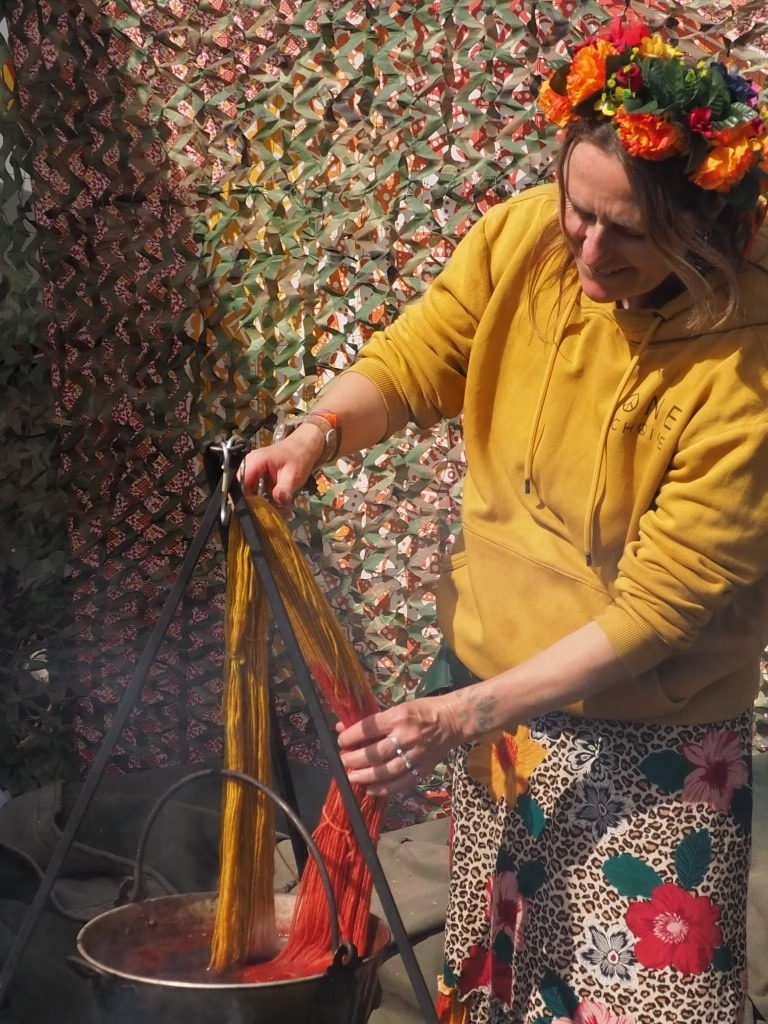
Tell us about what you do, and the workshop you’re offering here at Glastonbury…
I used to be an art teacher in mainstream education, but about 10 years ago I left to start my own business running art and craft workshops for adults. We’re based in Hebden Bridge in West Yorkshire. I was interested in how to make natural dyes with plants, so I created a little dyers garden at home, growing lots of different plants and flowers to make dyes with. Most things in nature tend to make a different tone of yellow, which is what inspired our workshop name: 50 Shades of Yellow.
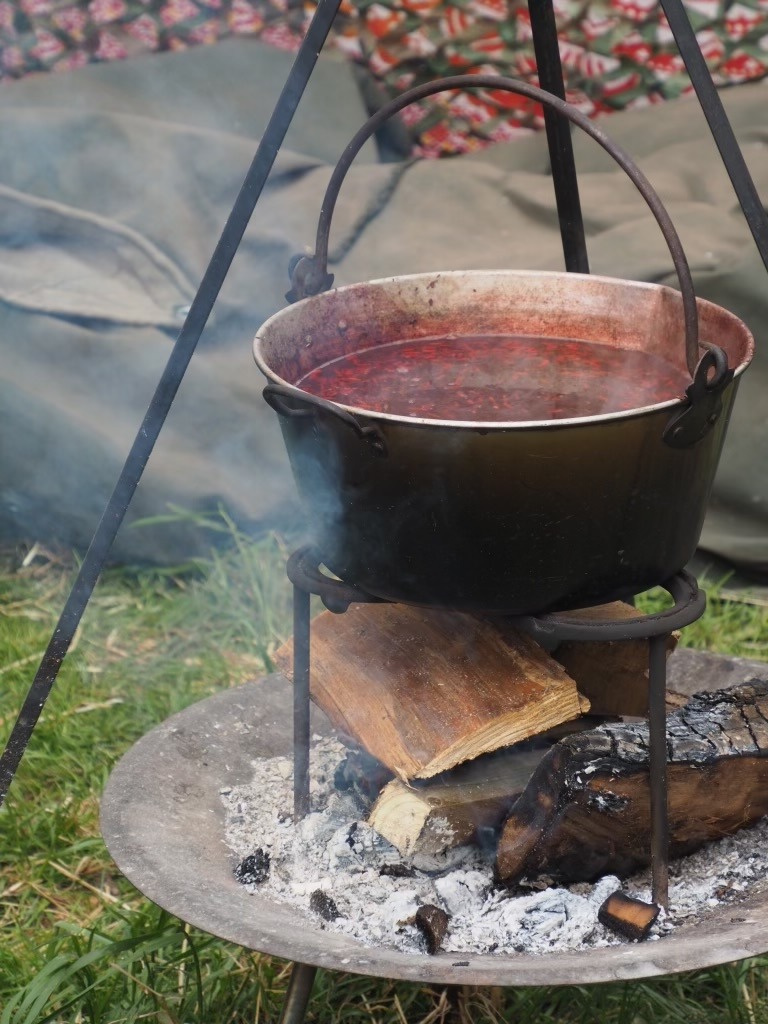
We’re doing some magical things with the dye pots where we add things called modifiers, which make the colours pop and change. It is real alchemy, the craft of dyeing wool with plants, and all sorts of crazy things can happen when you start experimenting with it. So that’s what we’re trying to share with people, as well as promoting sustainable textiles and British wool.
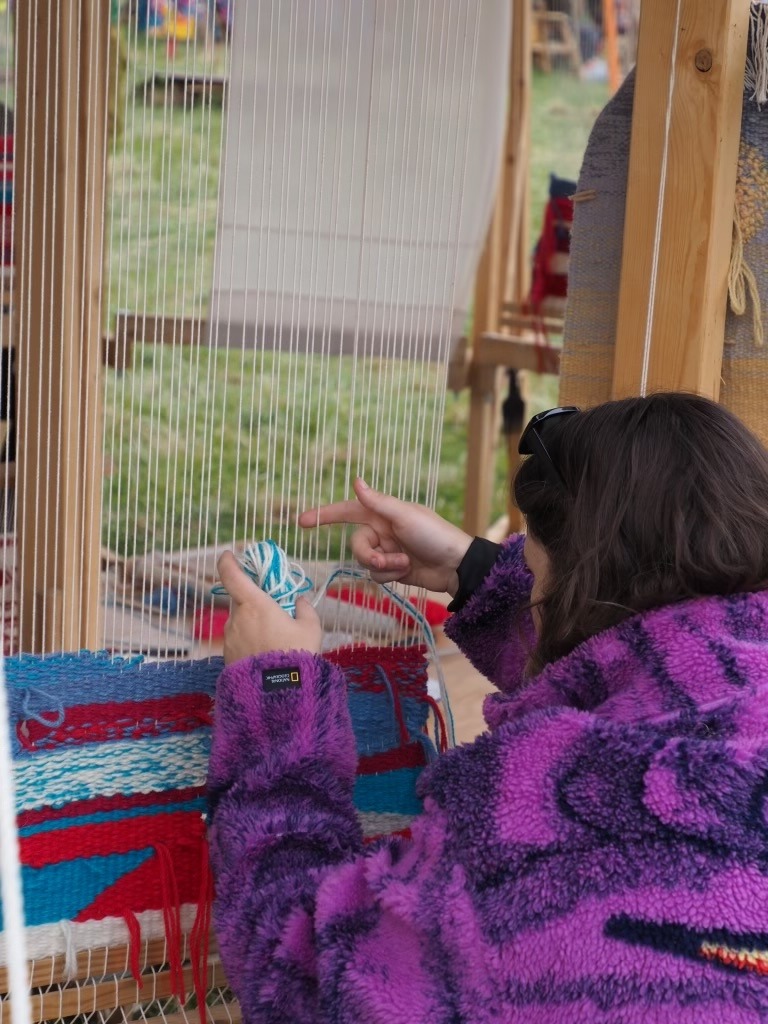
Tell us about the process…
We buy the wool from a supplier called World of Wool in Huddersfield; they sell hundreds of different types of yarns that haven’t been dyed yet. We have a super chunky soft yarn, and then some finer options too. What we’re finding is that lots of festival goers are keen crocheters or knitters, so they will have a type of yarn that they enjoy working with. When visitors come, they choose which yarn that they want – which I’ve pre-treated with a mordant solution to help the natural dyes bond to the wool fibres – before dipping it into the dye pots. We have a few different dye pots going on throughout the festival, and we heat them up on the open fire. When the yarns are dipped into the different dyes, we get these lovely variegated patterns – almost like a tie dye effect – from reddish-brown to soft yellow. We also love to use food waste, like onion skins, to create dyes.
How long have you been coming to the Glastonbury Greencrafts Village, and how are you finding it so far?
This is our first time – we’re really excited to be here, and delighted that Marie and Clodagh liked our application! We’re so impressed with the range of activities in this field, and how chilled the vibe is. It’s a really special place, so we’ll definitely be coming back next year (if they’ll have us!)
What else have you enjoyed at the festival so far, and what are you looking forward to?
We’ve given ourselves a 12pm curfew, which we’ve been sticking to. We enjoyed the opening night up on the hill, and last night we watched some nice folk bands down in the Green Futures area. We also had an amazing sauna, which has been quite a highlight actually… You can have a sauna, then a cold plunge and then a hot shower underneath an oak tree – it was amazing! We’re looking forward to going to the Arcadia opening ceremony later this afternoon.
David Gregory, Blacksmith, Cobalt Blacksmiths (@manovfire)
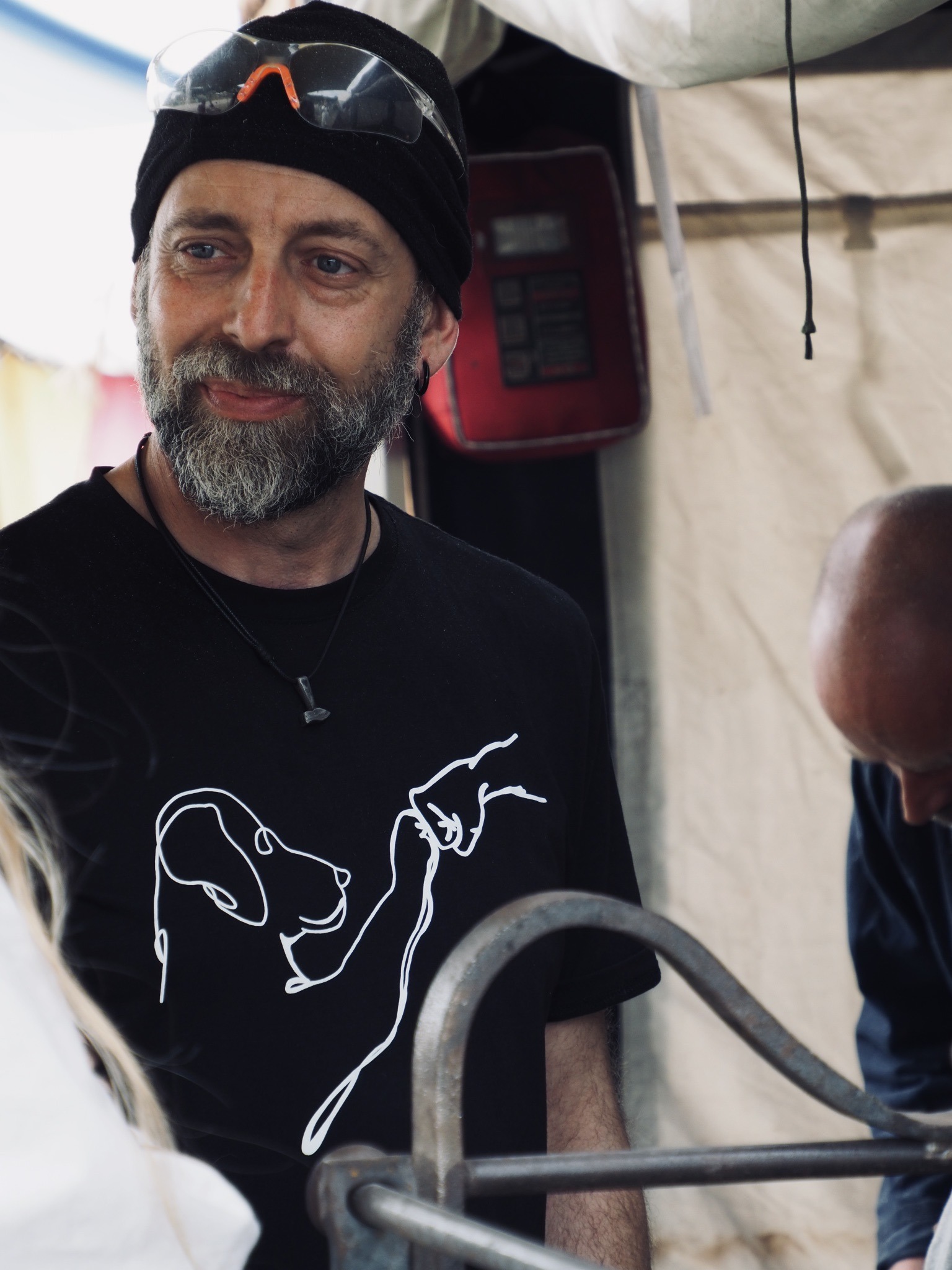
How long have you been coming to the Greencrafts Village?
Around 23 years! I first started coming to the Greenfield [as it used to be called] as a volunteer, making tools for self-reliance, then finally came to do my own thing in 2001. Back then I could get everything I needed in a Vauxhall Nova van. We have evolved since then, and we try to change up the offering every year, so we bring along different equipment etc.
Tell us a little bit about what you do…
We’re professional blacksmiths, so we make work for the film industry, private clients, government bodies or the national trust.
What sort of workshops are you offering here at Glastonbury?
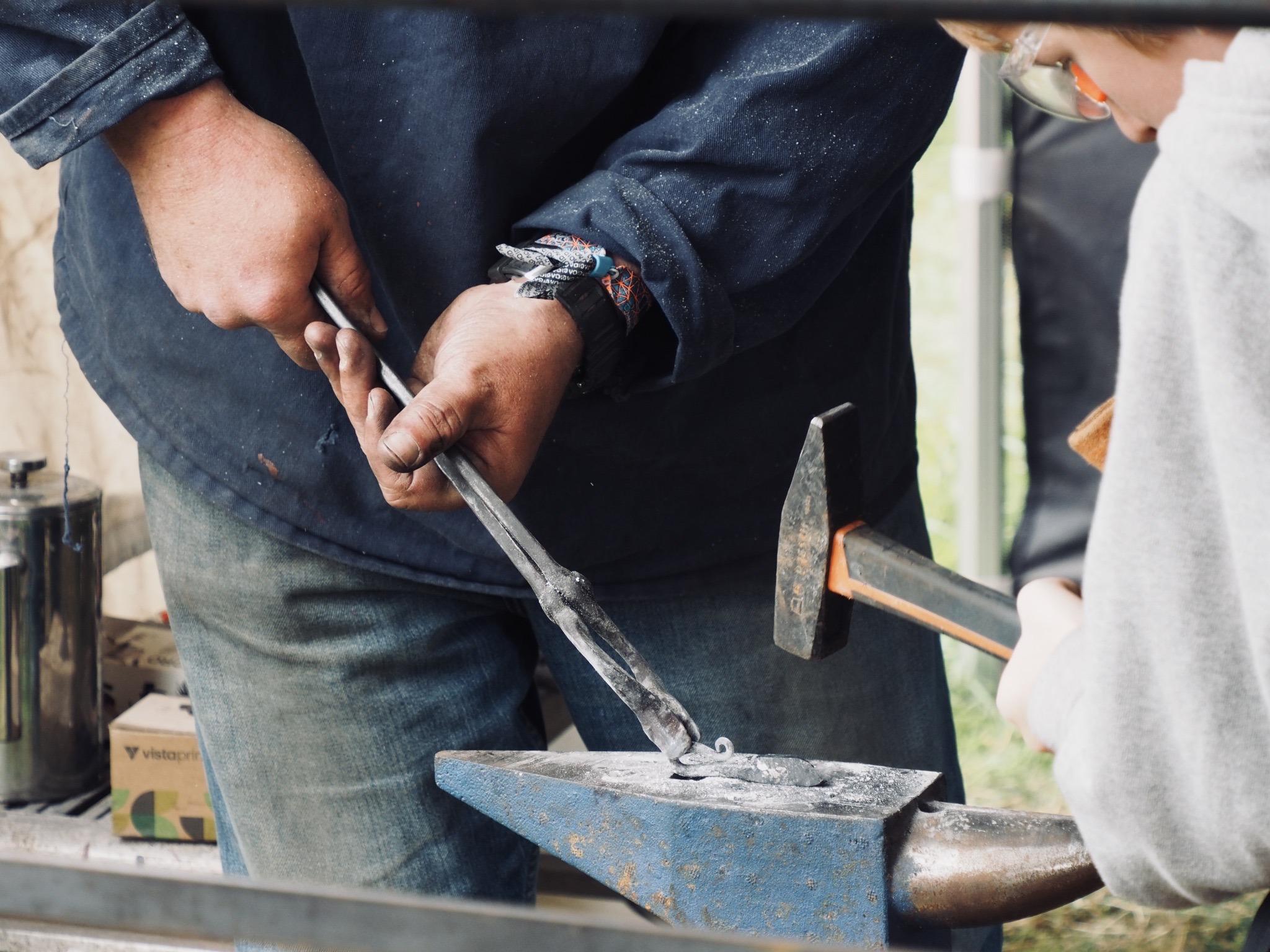
People often say to me: ‘If only blacksmithing was easier to get into, I would have had a go’ and I think: I don’t want to hear that, it’s so easy, you can make something in an afternoon! Here at Glastonbury, people can come to a workshop and make something small like a piece of jewellery – a pendant or a bangle for example.
Talk us through the process; from raw material to finished product…
We welcome the customer in, give them a quick health and safety, and then get them forging immediately. We start by taking a bar [of metal] and heating it up until it’s malleable. We then start forging it, until it becomes cold and hard, then repeat the process until you’ve got the shape you want. Mostly that involves drawing out the metal so we start with a piece of metal that is larger than the size of the product you want to make. You forge it down, draw it out, punch holes in it, and then we give it the shape before it’s finished. There’s a lot of work involved. We say our courses are from half an hour to an hour.
What’s the best thing about being here at the Greencrafts Village?
The sense of belonging. Everyone is so welcoming; it’s like seeing a sort of widely dispersed family. Nic and Marie have honed this field. They welcome new people every year, but once you’ve proved yourself to be part of the family, part of the ship, then you’re more likely to be invited back. But you have to work for it
What’s your best memory of being here, whether it’s in the craft field or elsewhere?
Oh wow – too many to mention. Just being here… some of the sights you see! You’ll be working away happily, and then look up to see someone parachuting out of an aeroplane into the festival! I’ve seen some of the most unlikely rockstars come up here and muck in, and then there was the time the Dalai Lama stopped outside my Forge, on his way back from giving a speech at the Stone Circle on his 80th birthday!
Tom Evans, Bespoke Cordage, Rope Maker
Can you describe your workshop at the Greencrafts Village?
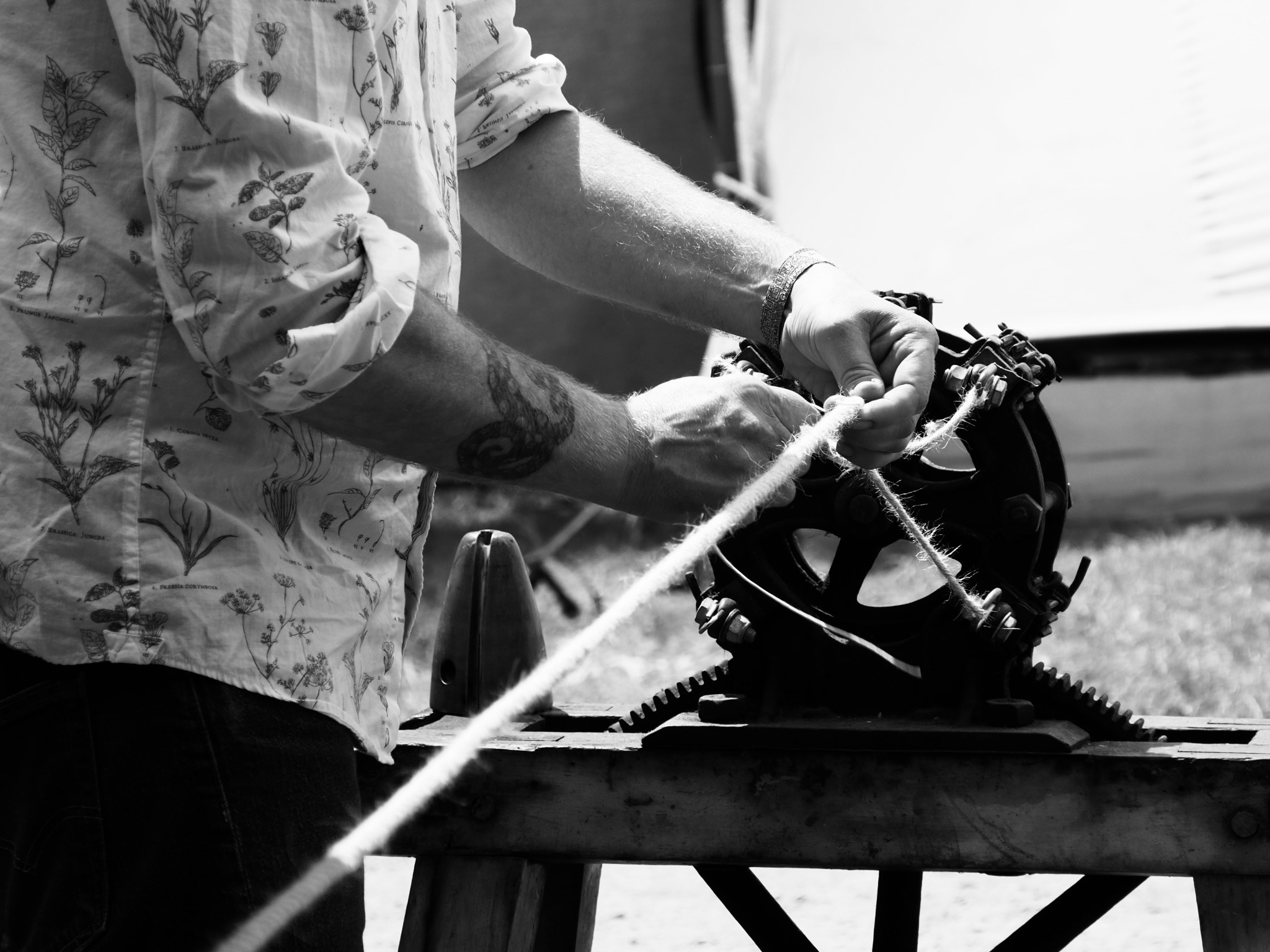
We make a traditional 3 strand twisted rope from natural fibre yarn – usually around six metres in length and four to 15mm in diameter. If you get involved, you get the opportunity to keep the peice being made.
What tools have you brought? Do any of your tools need power? How are you powering them?
The big tools are a Victorian twisting head (an aesthetic blend of cast iron and wood) and a trolly or jack. There are a couple of necessary hand tools. All power input is by humans, no other power sources are required. At one stage of the process, three pairs of hands are required, so that helps us draw visitors in. Traditionally, child labour would probably have provided the power input, even now kids seem to love turning old handles!
What materials do you use?
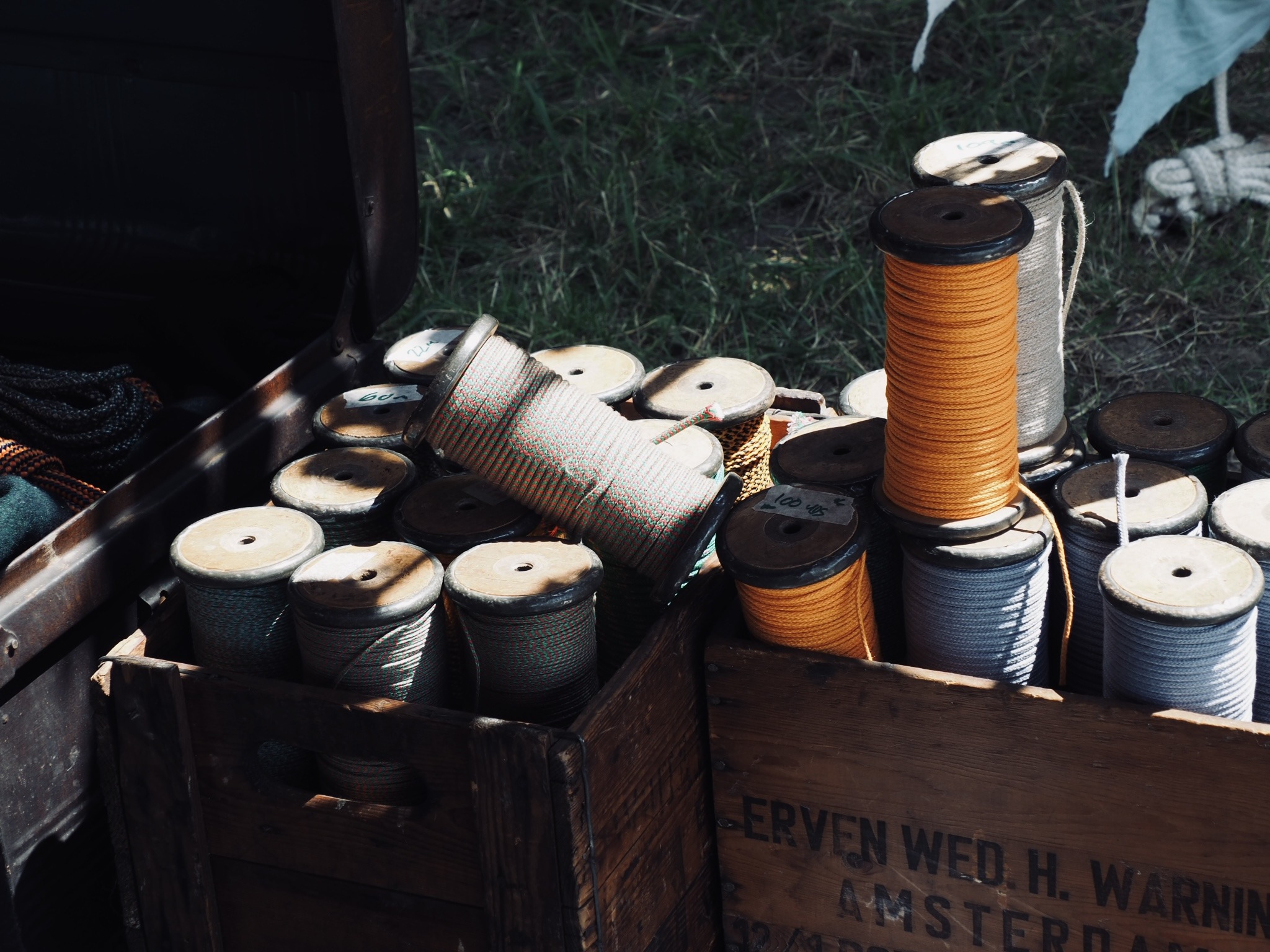
All natural fibres, mostly jute, and some flax/linen and cotton. Sustainable and or salvaged raw materials make this workshop a green activity
What do you hope visitors will get out of your workshop?
There’s a simple pleasure in making a traditional product. 15 minutes of mindfulness produces a complete thing. Explaining how the process works through demonstration and interaction is a pleasure when people connect with it.
What does it mean to be a part of the Greencrafts Village?
I love sharing the simple pleasure of making a piece of rope, while also enjoying the beautiful experience of Glastonbury. It’s also fantastic to catch up with old crafting friends and to meet new ones in such a welcoming environment. The level of skills exhibited are incredibly inspiring.
Can you describe the community at The Greencrafts Village?
There is a great sense of community at the Greencrafts village. As newbie, it could have been daunting, but the organisational crew and our neighbours (and the rest of the field) were friendly, welcoming and helpful. Everyone helps for the greater good, there can’t be a better place to spend the week of Glastonbury.
Mark Clarke, Stool Maker, Creativity Design & Productions (@mark.clarke.1232)
Can you describe your workshop?
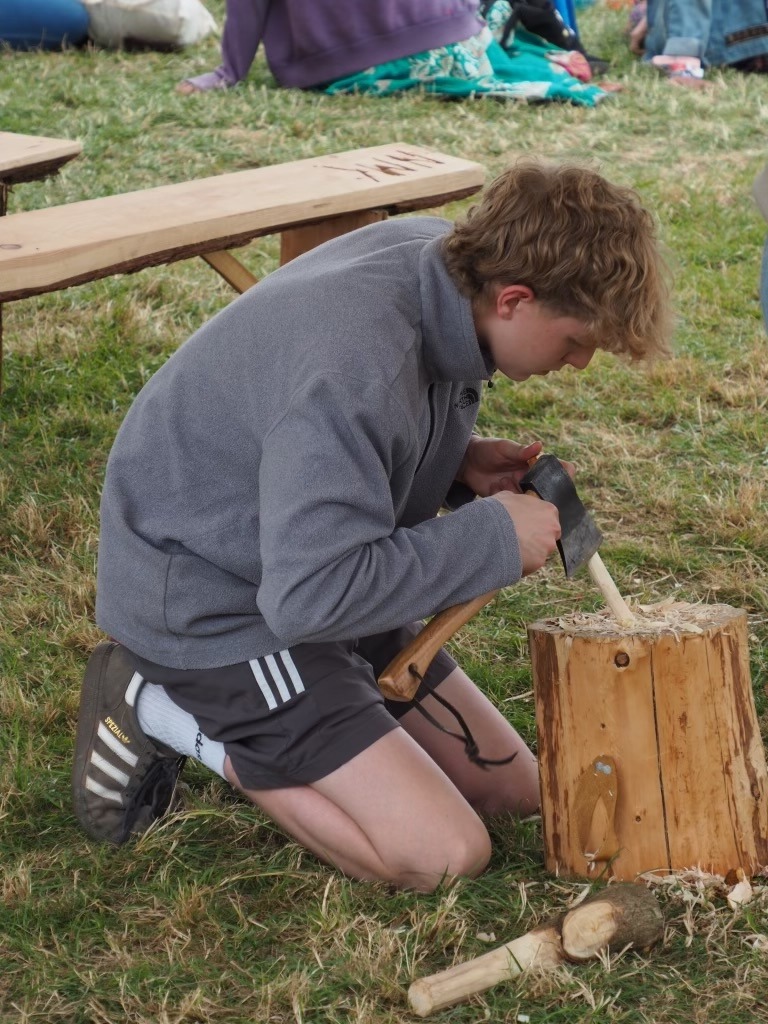
We make three leg milking style stools with removable legs for transport and storage. We like to investigate both traditional and more modern approaches to making including tools, methods and sometimes materials.
What tools have you brought? Do any of your tools need power? How are you powering them?
Tape measure, pen/pencil, pruning saws, hatchets, brace and bit, knives, saw horse, battery drill requiring power, power tenon cutter, drilling jig and clamps. The battery drill obviously requires charged batteries to operate; these are charged prior to being on site and kept charged with a solar panel.
What materials do you use?
I use mainly wood; coppiced hazel and sweet chestnut. Natural, sustainable, ethically managed, local materials with no waste! All the off-cuts are used for things like log pets, wood cookies, tinder and ultimately fire wood or charcoal.
What do you hope visitors will get out of your workshop?
I hope visitors will gain knowledge, skills and understanding of what I do, how I work and why I do what I do. They will take away a beautiful, handmade custom stool or other woodware item. They will have an understanding of the people and roles associated with making wooden items. My motto is make, learn, and have fun.
What does it mean to be part of The Greencrafts Village?
It is a privilege. I have never worked at Glastonbury before, but have thoroughly enjoyed every minute and would be very keen to return, It’s all very well organised pre-event, and cool, calm and considered on site. I’ve had a wonderful few days with the festival guests and other traders. It’s actually not a festival I have ever considered before, but I am very glad I applied and very happy to have been able to contribute to the Greencrafts Village.
What do you hope to get out of your time at the Greencrafts Village?
To share my knowledge and skills with visitors and other traders; help visitors learn the history and benefits of coppicing and green woodworking. To meet people, make contacts, develop my network, learn new skills and have fun.
Can you describe the community at the Greencrafts Village?
Helpful, supportive, friendly, lovely, kind, knowledgeable, non-judgemental and sharing.
Find out more about the people behind the Greencrafts Village here