A suitcase of curiosities
Words Tamsin Blanchard
Photographs Iringó Demeter
As a curator of craft, and co-founder of The New Craftsmen, Catherine Lock has spent years travelling the world in search of the finest craftsmanship. Here she shares some of her favourite pieces collected from her trips – from Ireland to Ethiopia and beyond.
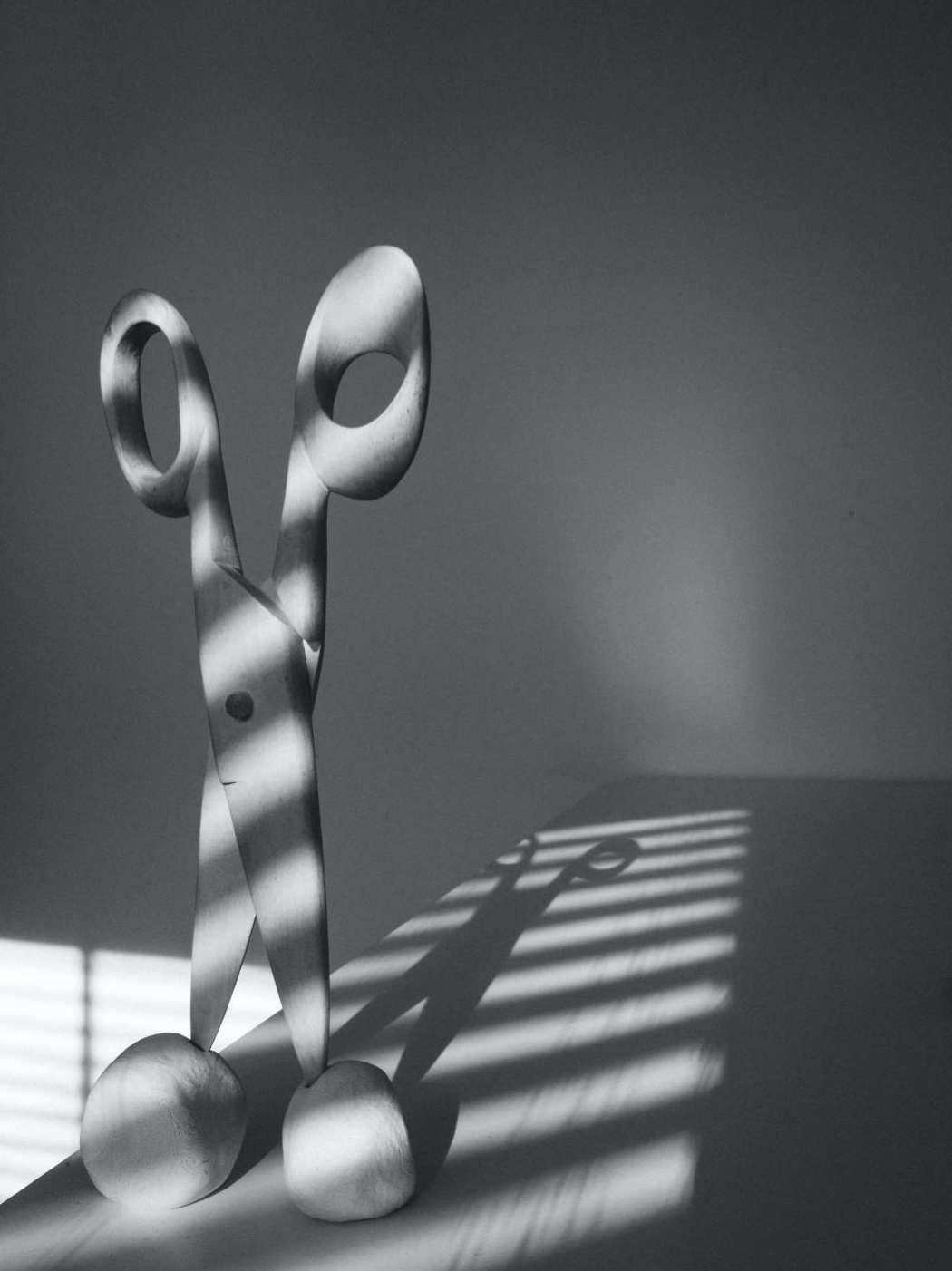 Above: orange wood pastry scissors from a souk in Morocco
Catherine Lock is a traveller and an adventurer. Over the past year, the co-founder and creative director of The New Craftsmen confesses to feeling a certain restlessness. Looking at some of the objects she has collected on her travels over the years, it’s not hard to see why. She keeps lists of her objects, which she describes as ‘ephemera that I’ve picked up from my travels’, and which give tantalising glimpses into other cultures, worlds, experiences, tastes and smells. Take the scissors photographed so dramatically here. Lock found them in a kitchen supplier in a souk in the backstreets of Marrakech. ‘They’re made out of orange wood for cutting pastry,’ she says. ‘Who would have ever thought of a pair of scissors made out of wood?’ Her thoughts then move to delicious rose-infused Moroccan pastries and she’s lost in another world.
Some things are incidental, she says, and some things she purposefully looks for, and ‘squirrels’ at the end of an excursion. The objects she’s picked up on her travels, either for holiday or for work, are not so much valuables, as curiosities that give a little window into the people and places she was visiting.
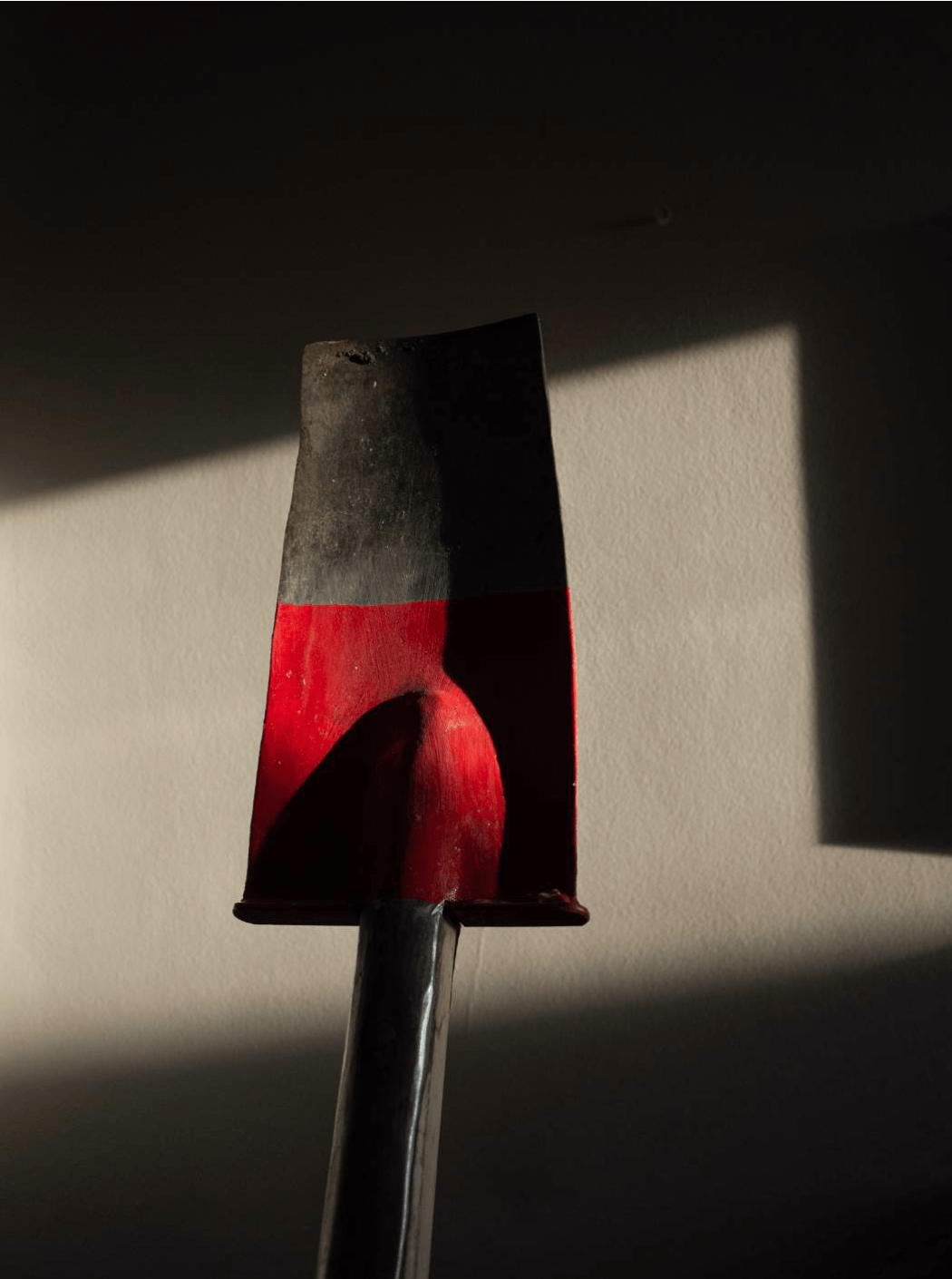
 Above left: handmade Irish spade from Patterson’s Spade Mill. ‘An amazing water-powered mill. Seamus Heaney wrote a poem called ‘Digging’ – supposedly the Irish were famous for their digging skills! Different shape spades used for different functions. I like the red paint!’ |
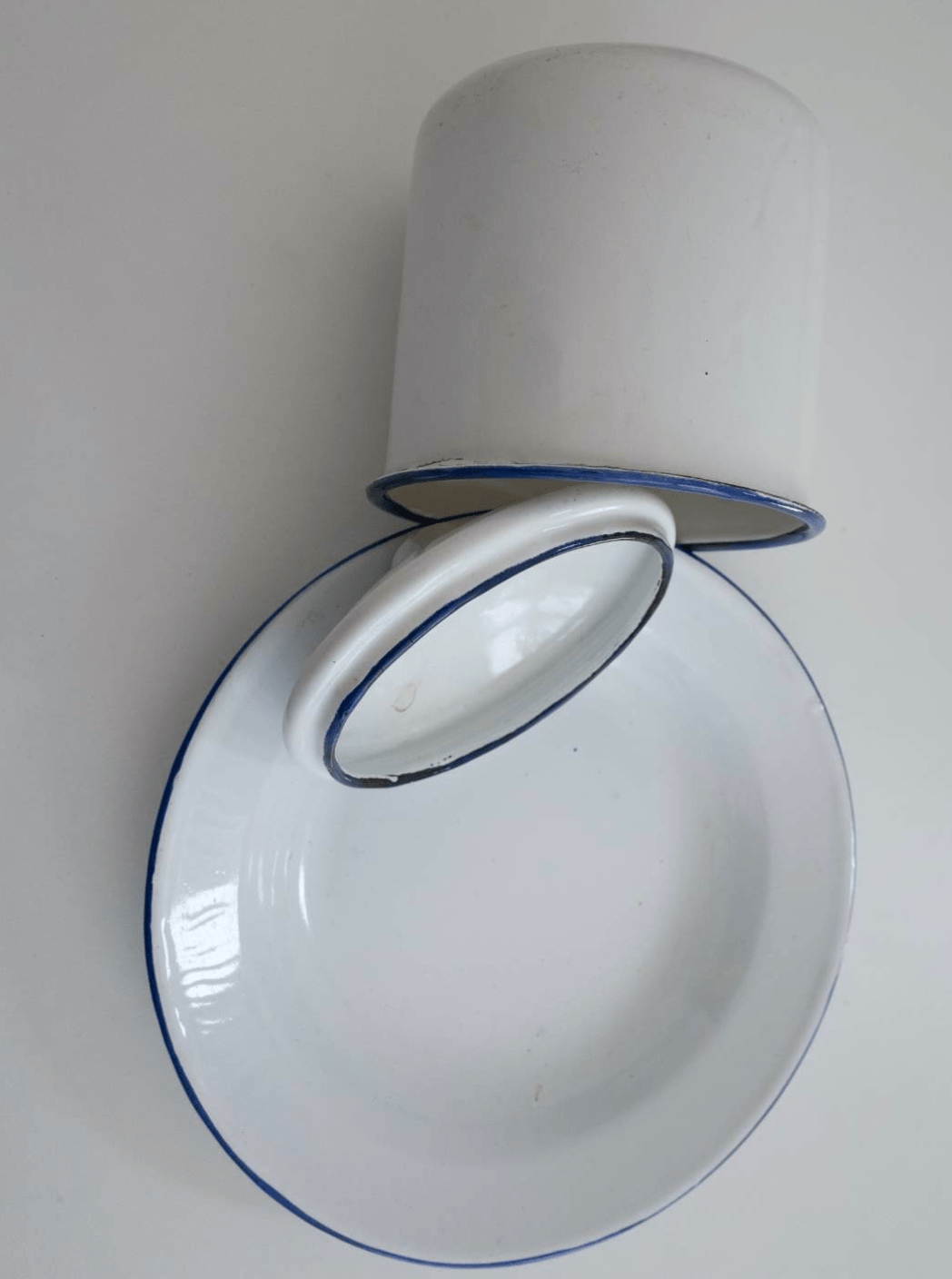
Above right: ‘enamel tea mug with lid and saucer bought in a street market near the factories I used to visit in southern China when I worked for high street retailers. Every factory worker, it seemed, had their own mug like this, and there is something about the utilitarian, mass-made nature of the pieces that seemed to reflect day-to-day life in the factories’
Lock describes it as a ‘sort of hunter gatherer mode of trying to find pieces that have a sense of place and purpose within a culture’. Like, for example, the enamel cup and lid she bought in China while on a trip for work in a previous life. She had observed that all the Chinese workers in the factories had one, the lid ensuring the tea stayed hot, and bought one for herself. Many of her objects have a functional quality, even though she may never have actually used them. Like the spade she bought back from Patterson’s Spade Mill in Ireland. She liked the way there were spades for many different jobs, and this particular one has a jaunty red stripe, making it a thing of beauty, as well as being a reminder of Seamus Heaney’s poem, ‘Digging’. So too, the little terracotta tea cup. In Calcutta, these were used to drink chai and were considered disposable, like a paper cup. Particularly partial to terracotta, she carefully packed hers up and brought it back in her suitcase.
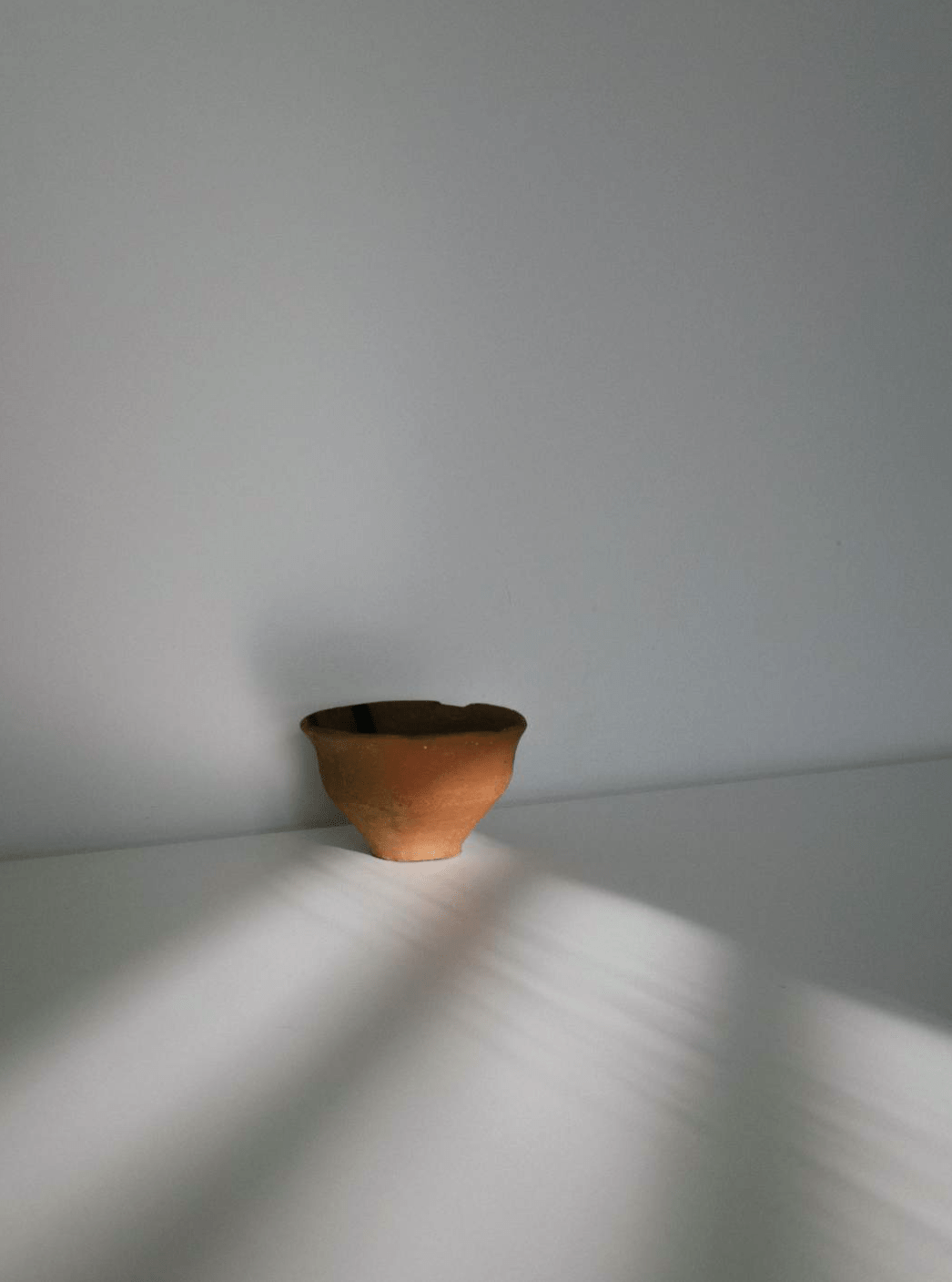
Above left:t
erracotta chai cup from Calcutta.
‘Little handmade works of art, normally smashed after finishing the sweet, spicy tea. I couldn’t bear to part with mine’ |
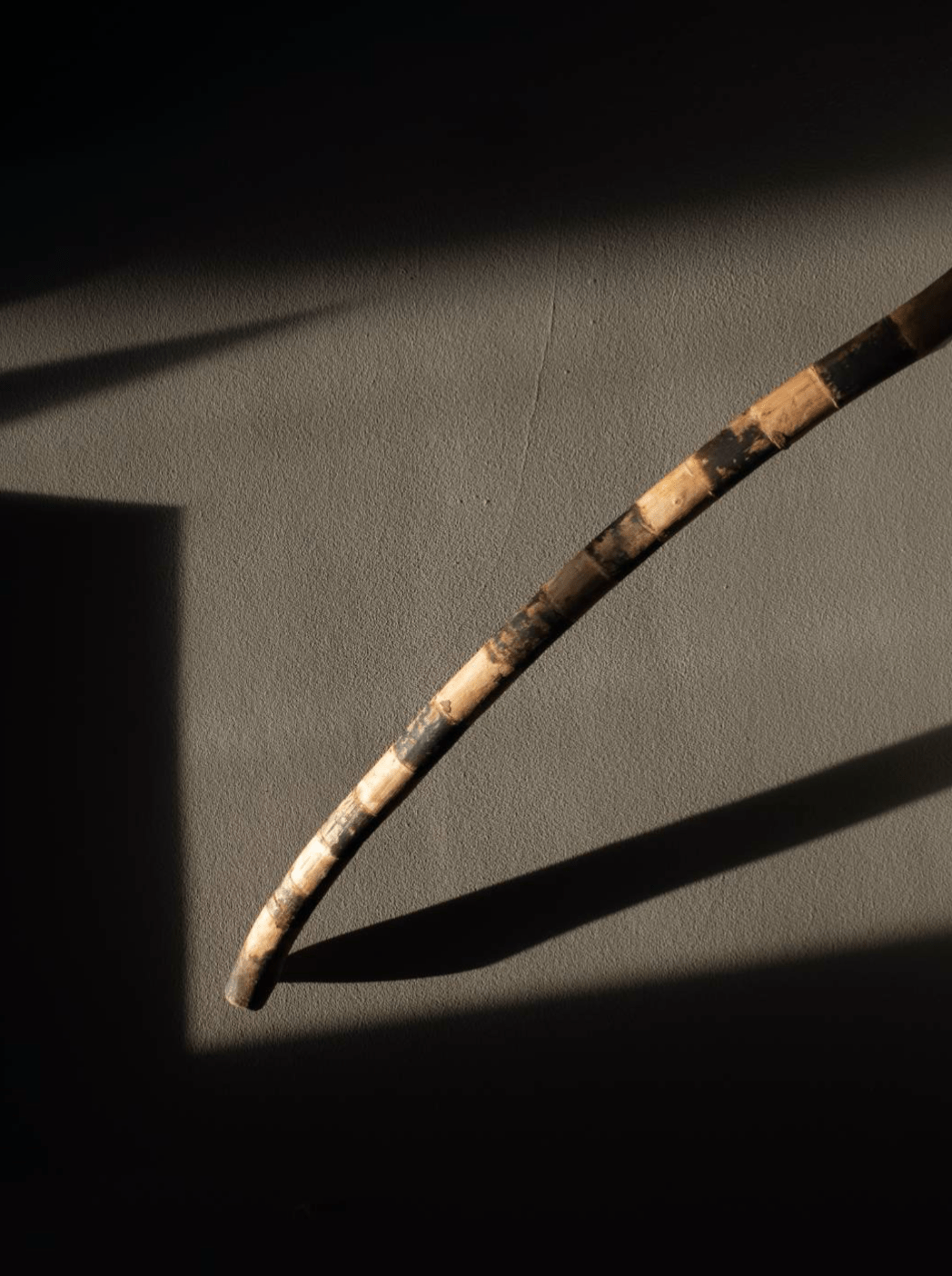
Above right: Ethiopian walking stick. ‘This was my companion around the villages (and bought from a villager) in the Simien Mountains. The Ethiopians are hardened walkers!’
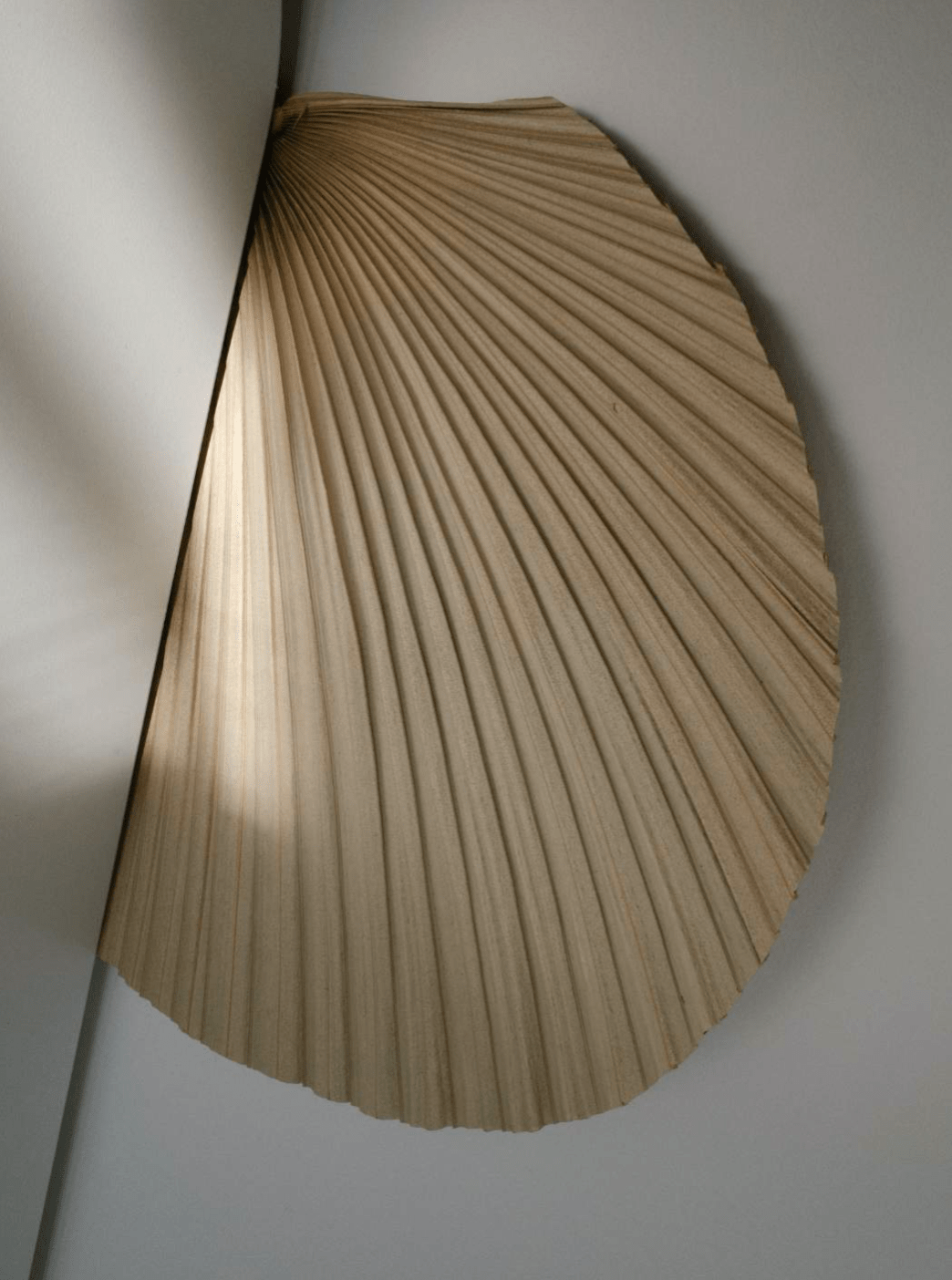
Above: fan from Okinawa in Japan (cleverly cut directly from one section of a palm leaf). ‘Much used in tropical weather, and steamy London Underground’
One object she did use was the walking stick she bought in Ethiopia. ‘When you get into the mountains in Ethiopia people just walk, that’s how they get around. The roads are impassible by cars, so it’s walking – donkeys and walking.’
Perhaps one of the objects that really sums up the essence of this most personal of collections is the Japanese fan made from a palm leaf. It embodies what Lock describes as the Japanese word katachi. It translates, she says, to ‘form telling an attractive story’. She brought it back from her first trip to Japan in 2016. ‘It’s that sort of sense of resourcefulness and imagination,’ she says. The fan, made from a simple but extraordinarily pleated palm leaf, is functional and beautiful, with a connection with nature and a very precise sense of place.
‘There’s something about the quality of those things that have that transportive power for me,’ says Lock. And right now, that’s about as much as anyone can hope for.