Street artist Andy Leek on the restorative power of being by water
interview meena sears
Photographs Alex Micu
There is something uniquely powerful in the way that street art can access an audience that conventional art cannot, an audience that might not usually see art. Plastered on walls or painted on buses, you can make your name, image or message see by anyone – even those who don’t want to see it. This is the essential concept to the work of Brixton-based street artist Andy Leek, who writes positive messages on posters and leaves them around the city in the hope that it might make a small difference to someone’s day – even those who didn’t know they needed it.
Leek’s practice was born out of his own need for a positive change following a period of mental illness in 2015. Having taken a month off from his demanding job in advertising, Leek came to the realisation that what he was missing in life, was art; a passion that had accompanied him since childhood was not being given a sufficient outlet.
Keen to act on this, but lacking in time, Leek saw a window of opportunity in his long commutes to work as a time when he could make art. This, combined with his awareness and experience of mental health issues, led him to start writing notes on little cards, hiding them within the folds of a Metro newspaper and leaving them on the Tube for someone to find; notes that, he hoped, would brighten the day of a complete stranger.
As his documented hobby amassed an increasingly large following on Instagram, Leek began to take to the streets, decorating the electricity boxes of south London first and then those further afield, in poster-sized ‘Notes to Strangers’, as his project was named. ‘A good CV is not worth unhappiness’; ‘The right move can often be the most scary’; ‘Avoid big decisions when horny’ – some of his notes give advice, while others reflect on the mysteries of this often bemusing world: ‘I wonder if a cow would try to eat astroturf’; ‘Some foods make excellent spoons’; ‘The unknown can be marvellous’.
What was once a commuter’s recreational pastime has become a fully-fledged career that has taken him worldwide, spreading his notes to the strangers of Malta, Buenos Aires and Panama City, to name a few. Leek dedicates his time to providing messages of affirmation, inspiration, insight, wisdom and humour, to anyone and everyone who passes them.
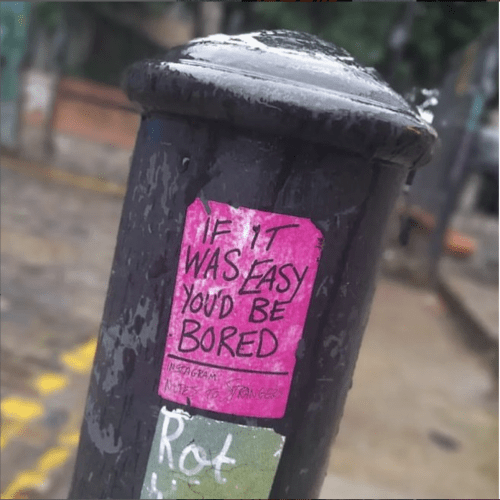
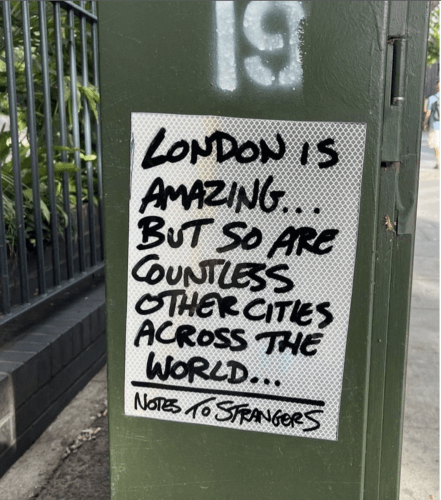
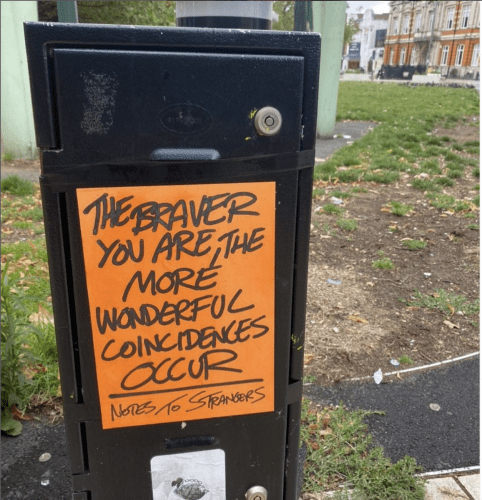
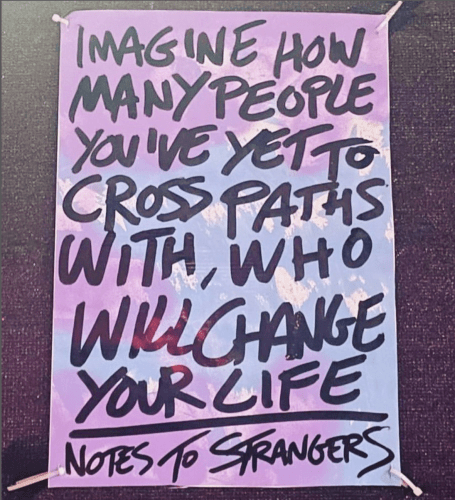
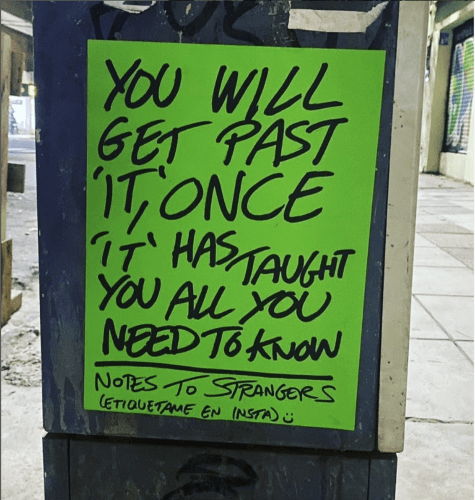
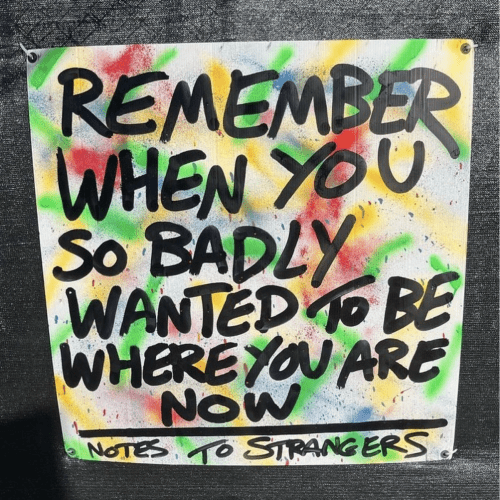
A selection of Andy Leek’s ‘Notes to Strangers’ from @notestostrangers Instagram, courtesy of the artist
So, who is the artist behind these words, and how does he come up with them? We chatted to Leek about how he finds the peace and quiet necessary to recharge his creative mind while fishing in the river near his home in south London.
A ‘hole-and-corner’ is an old English term meaning a secret place: somewhere you go to escape the world, to be inspired, and to contemplate and create. Where is your hole-and-corner?
Any stretch of water that contains fish. Fly fishing is such a wonderful hobby for so many reasons, one of the biggest being that I get to spend hours upon hours in utterly gorgeous places – places I would never otherwise go to.
While there are the obviously beautiful rivers and lakes of places like Wales, Scotland, Ireland, Hampshire and the Peak District, there is actually a wonderful river running right through the heart of London: the Wandle. A chalk stream full of wild, brown trout along with a whole host of coarse fish, it winds its way through industrial estates, parks and residential areas. Stand in the right spot, however, and it feels like you are by a Welsh mountain stream.
Fishing is my active rest: a way to switch off my mind from art and the world. A time to think of nothing other than trying to catch a fish, which I will then put back in the river, making it all wonderfully pointless.
What is the atmosphere like?
Being in, or next to, water has some sort of magical power: a power to calm the mind, nourish the soul and re-energise the spirit. The power to transport me to another world entirely within a few minutes of walking from the train station; it’s as if I step into a bubble where stress and negative energy can’t reach me.
But also, the power to just get on with things – kingfishers diving, herons stalking, trout catching flies from the surface – right in the heart of one of the busiest cities in the world. The Wandle is actually a spectacular example of nature’s resilience: declared environmentally dead in the 1970s due to pollution and neglect, it has completely rebounded with the help of a number of initiatives and projects and has become a hidden jewel.
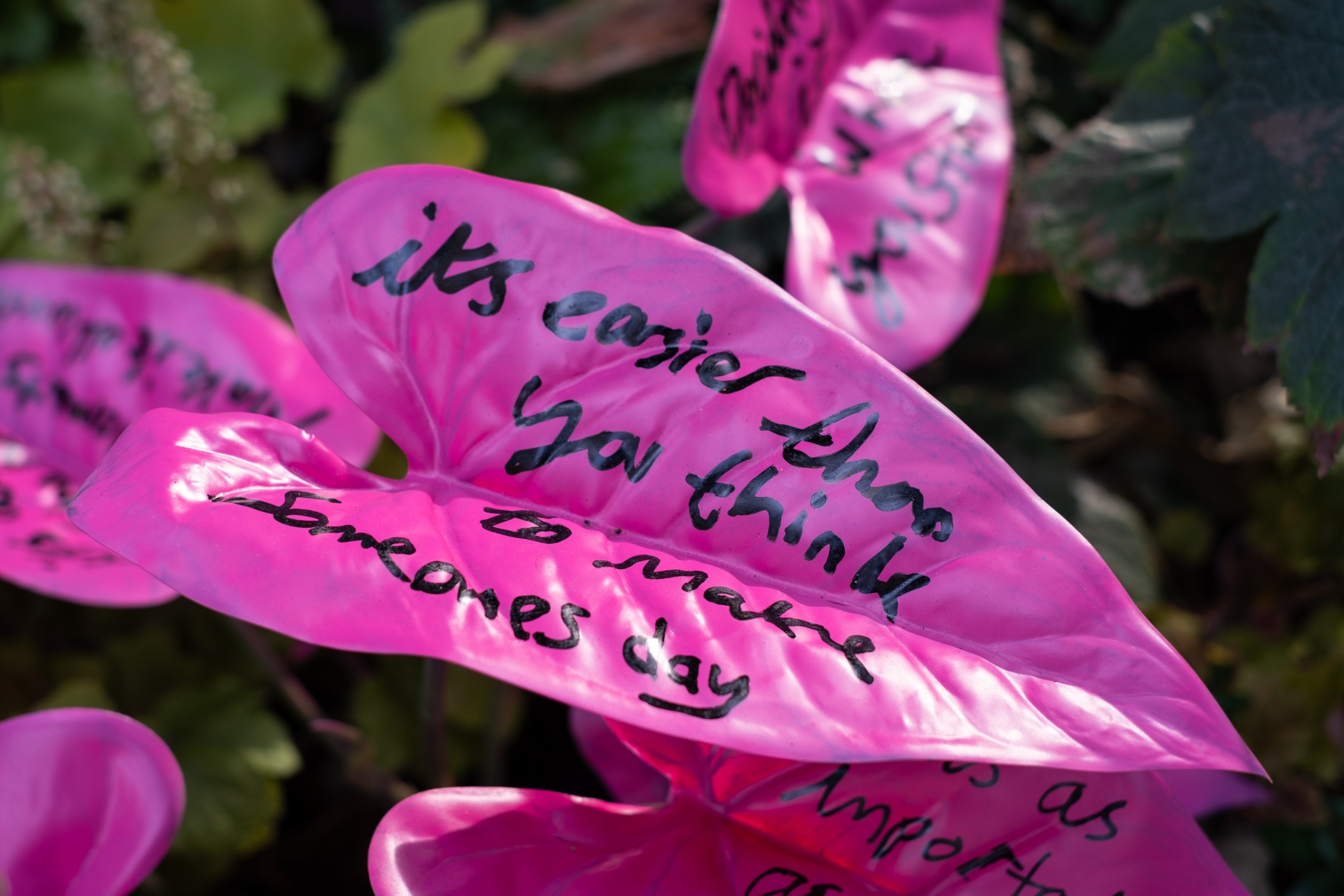
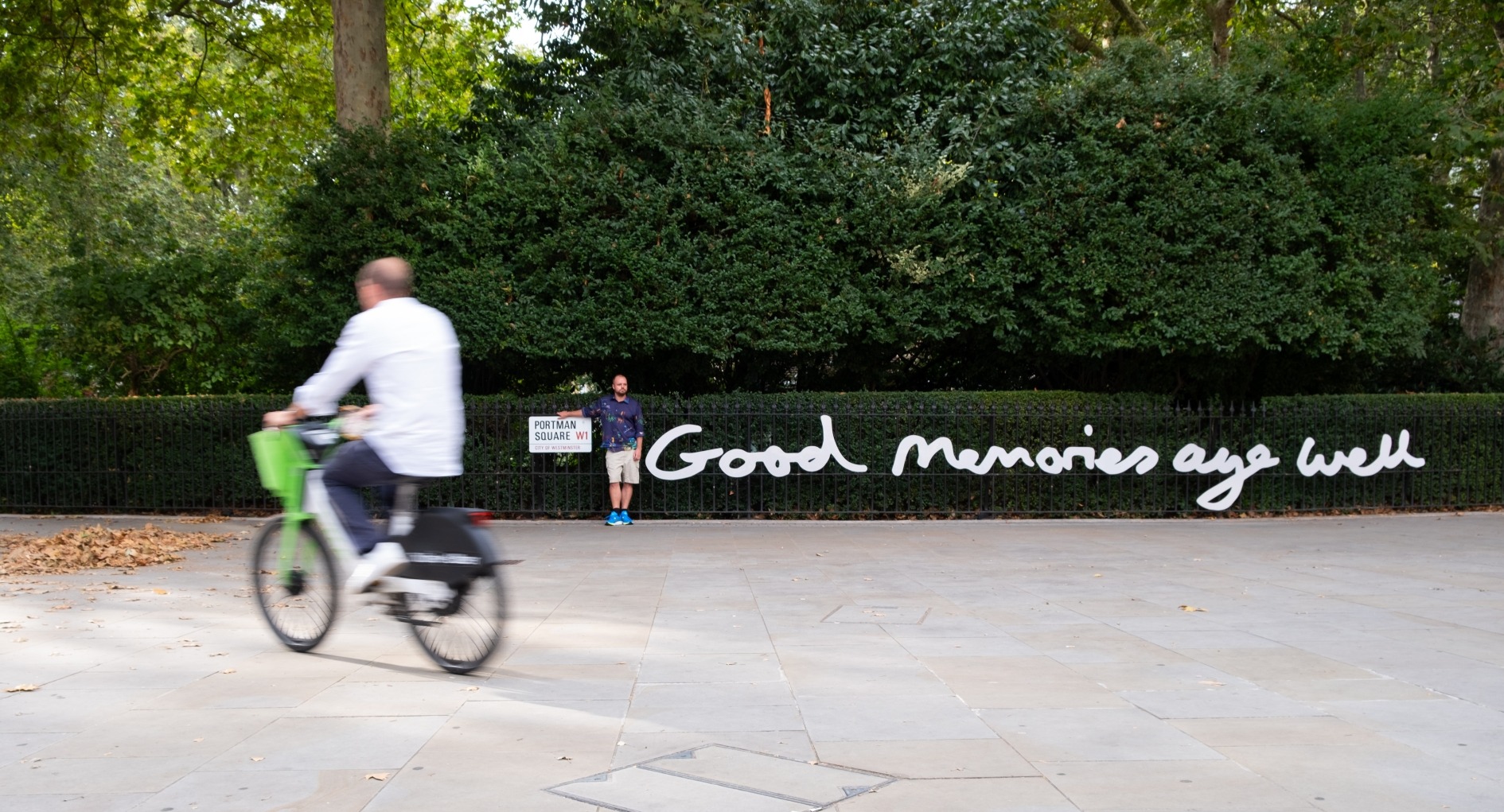
A piece from Find The Words, a free art trail by Andy Leek currently showing at Portman Marylebone. Photograph Alex Micu
How does your hole-and-corner make you feel?
It makes me feel blissfully empty of thought. Figuring out how to get my brain to switch off took around 32 years of my life. Being there creates space in my mind; space that allows new thoughts and ideas to enter. I don’t think I’ve ever had a creative idea while fishing, because my focus is on the task at hand, but in the days and weeks afterwards, I feel my creativity is stronger.
Is it important for you to have somewhere to escape from the hustle and bustle of life?
Extremely important. London is a city of adrenaline, ambition, hard work and hard partying. It’s wonderful, but it’s not sustainable to live constantly in the heart of chaos; I have to dip in and out to catch my breath, recharge my energy and plan my next step.
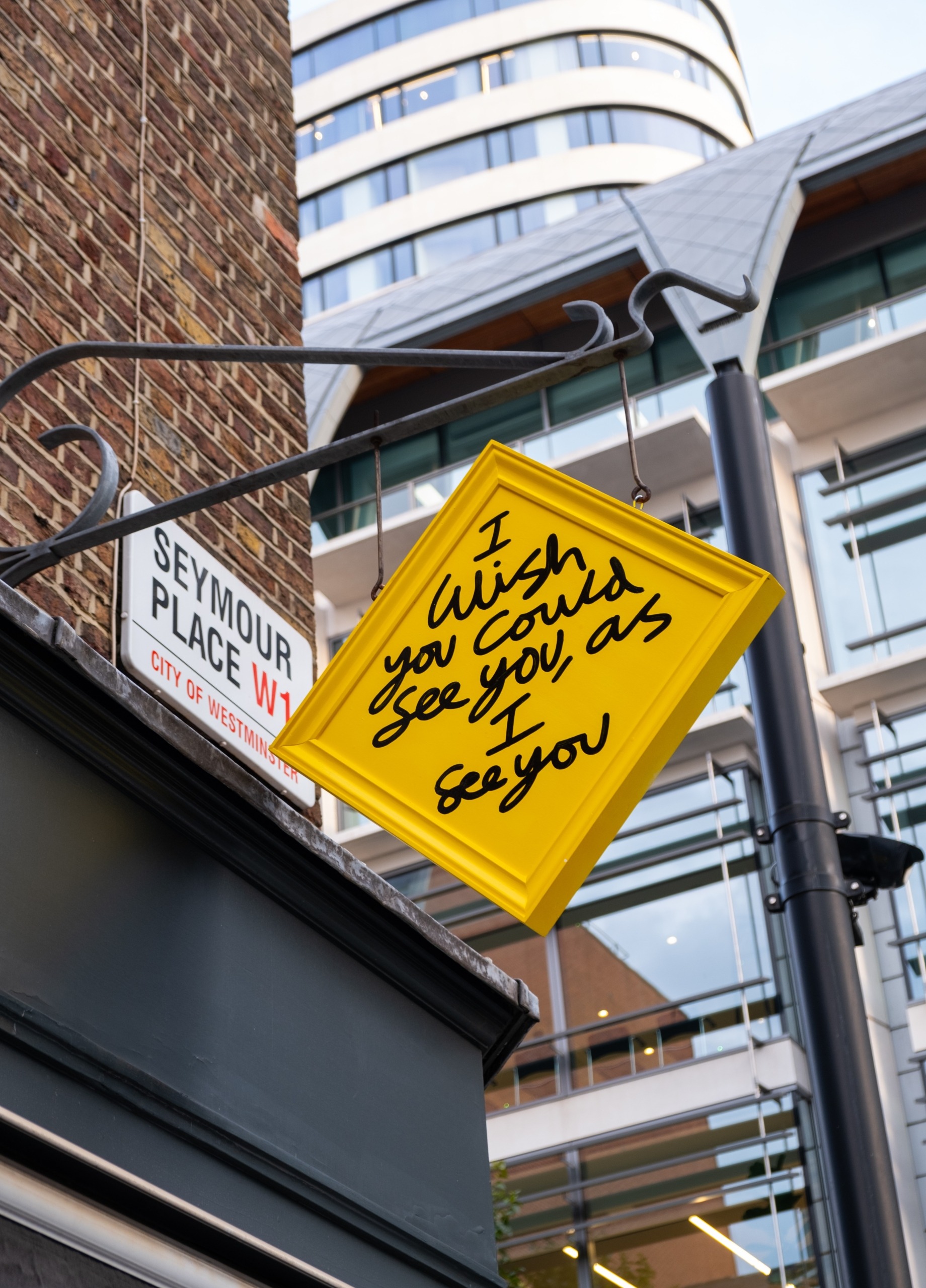
Another piece from Find The Words. Photograph Alex Micu
What elements do you think make the perfect hole-and-corner?
Close enough to get to by Tube, but far enough to create the separation I need; calm enough to rest my overstimulated mind, but exciting enough (filled with fish) to prevent me from ever getting bored there.
Where do you get the words for your ‘notes’ from? Do you come up with them all yourself?
I write them and yes, they are all my own words. Occasionally I collaborate with people – sometimes even my followers – but when I do that, it still has to be in my voice.
As for what inspires them: life and everything in it. Music, comedy, films, food, travel, people I walk past on the street, dogs, cats, rats, hats; I could go on listing, but it would get very long and very tiresome.
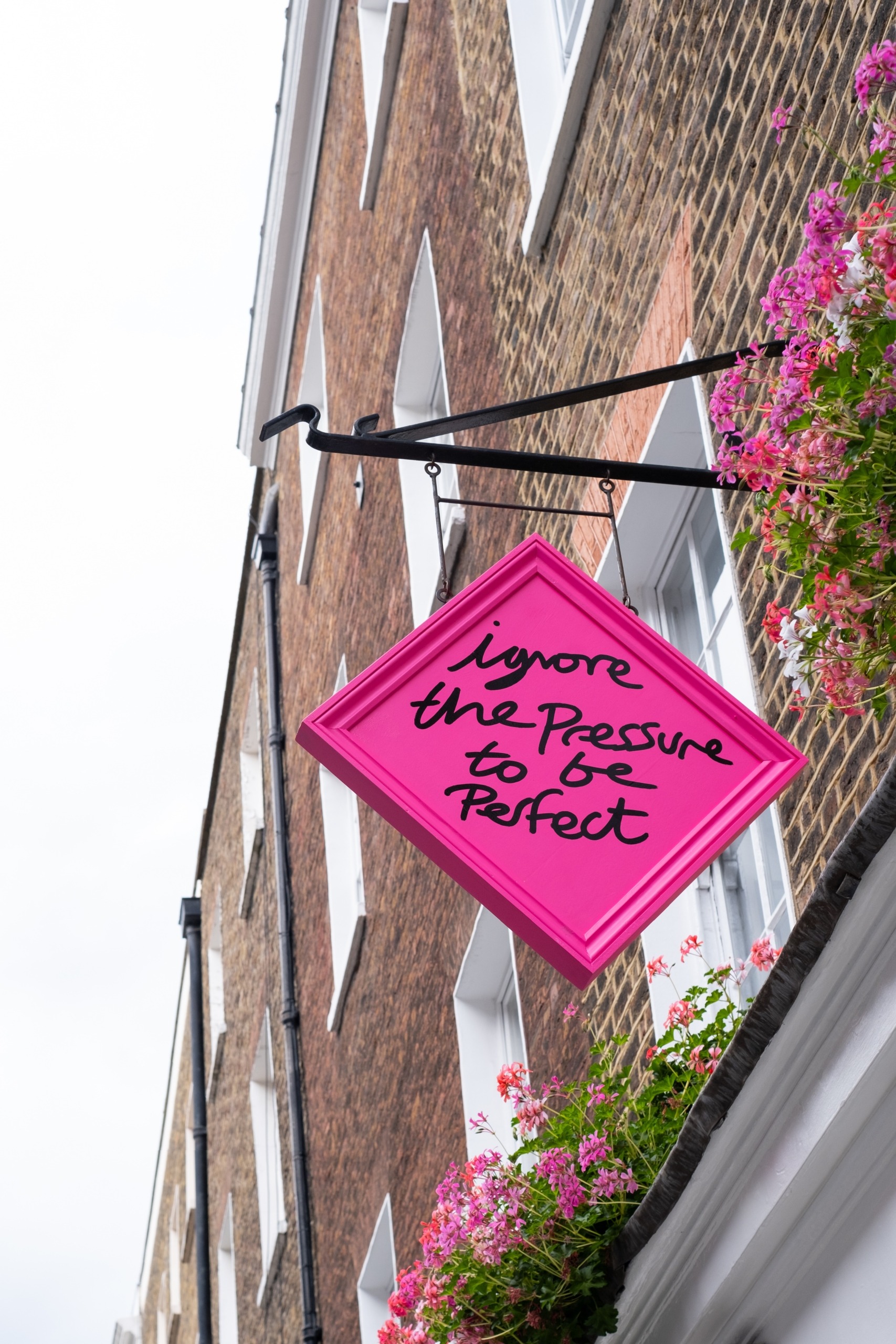
Another piece from Find The Words. Photograph Alex Micu
Do you think of yourself as an inspirational person?
No. I try not to think about things like that. I just focus on living my life as best I can, without harming anyone and making as much art as possible with the little time I have.
When is the optimum time to put up your street art? Do you like doing it when other people are around?
In London, I put them up whenever; it doesn’t really matter. However, when I’m in a more dangerous city, such as Medellín, Mexico City or Rio de Janeiro, I have to be much more strategic and careful. Often the police can be just as, if not more, dangerous than anyone on the streets, so I tend to go either very early in the morning or late at night, to draw less attention.
Do you have a favourite ever ‘note’?
‘Good Sh*t Happens.’ It was the note that a BBC journalist spotted back in 2020, which resulted in my ‘big break’ by way of a feature on the BBC homepage. I’d just turned down a lucrative job offer having chosen to focus on my art, and instead of going out to celebrate, I went out sticking up notes. ‘Good Sh*t Happens’ was one I stuck up that day; I wrote it asking for some ‘Good Sh*t’ to happen – and it did, the very next day.
What do you hope to achieve through your art?
To live my life with the freedom to choose what I do with my time and hopefully to help others in some small way.
Spot some of Andy Leek’s ‘Notes to Strangers’ on a free art trail at Portman Marylebone, in central London. From large-scale reflective lettering to more discreet messages, this area-wide installation will be showing until October 29 with a chance for you to take home your own limited-edition note, handwritten by Leek himself.
Find out more and access Leek’s map to help you on your search