Artist duo JamesPlumb design Aesop Cambridge
Words Meena Sears
Photographs Oskar Proctor
Renowned for its high-quality range of plant-based beauty products, it is not surprising that Aesop takes great pride in designing the interiors of its shops. For its latest project, a shop in Cambridge, Aesop has collaborated with the artist duo Hannah Plumb and James Russell of JamesPlumb.
Having designed two other Aesop stores, one on London’s Lamb’s Conduit Street (2015) and one in Bath (2018), the pair are experts at incorporating the essence of the physical site and the ethos of Aesop in their designs. In this case, JamesPlumb drew from Cambridge’s academic history and its geographical location on the River Cam to design the shop’s interior. ‘We were increasingly drawn to the River Cam during the design process and felt strongly that it sets the pace and the pulse of the city,’ the designers explain. The shop is a reflection of these amalgamating factors; while the exterior front is painted in the dark hue of a well-worn leather book, the inside is inspired by nature, its grassy tones illuminated by natural light that floods in through large, curved windows.
Working from their studio in South London, Plumb and Russell create objects and environments that blur the line between art and design, in the sense that a table might become an artwork and a sculpture a chair. Featured in publications such as The New York Times, The Wall Street Journal, Casa Vogue, Dezeen, and The World of Interiors, their objects range from sculptures to furniture and fine art installations, while their environments include interiors, events, architectural structures, and creative direction. When designing, Plumb and Russell are less concerned with the aesthetic surface of their work – although the results are beautiful nonetheless – and focus more on creating experiences of living and being. By actively engaging in each project, learning new skills where necessary and working closely with clients and craftspeople, the designers cultivate depth and authenticity in their work.
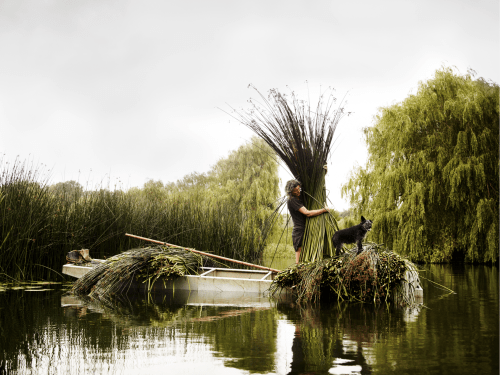 JamesPlumb collaborates with craftspeople such as rush weaver Felicity Irons
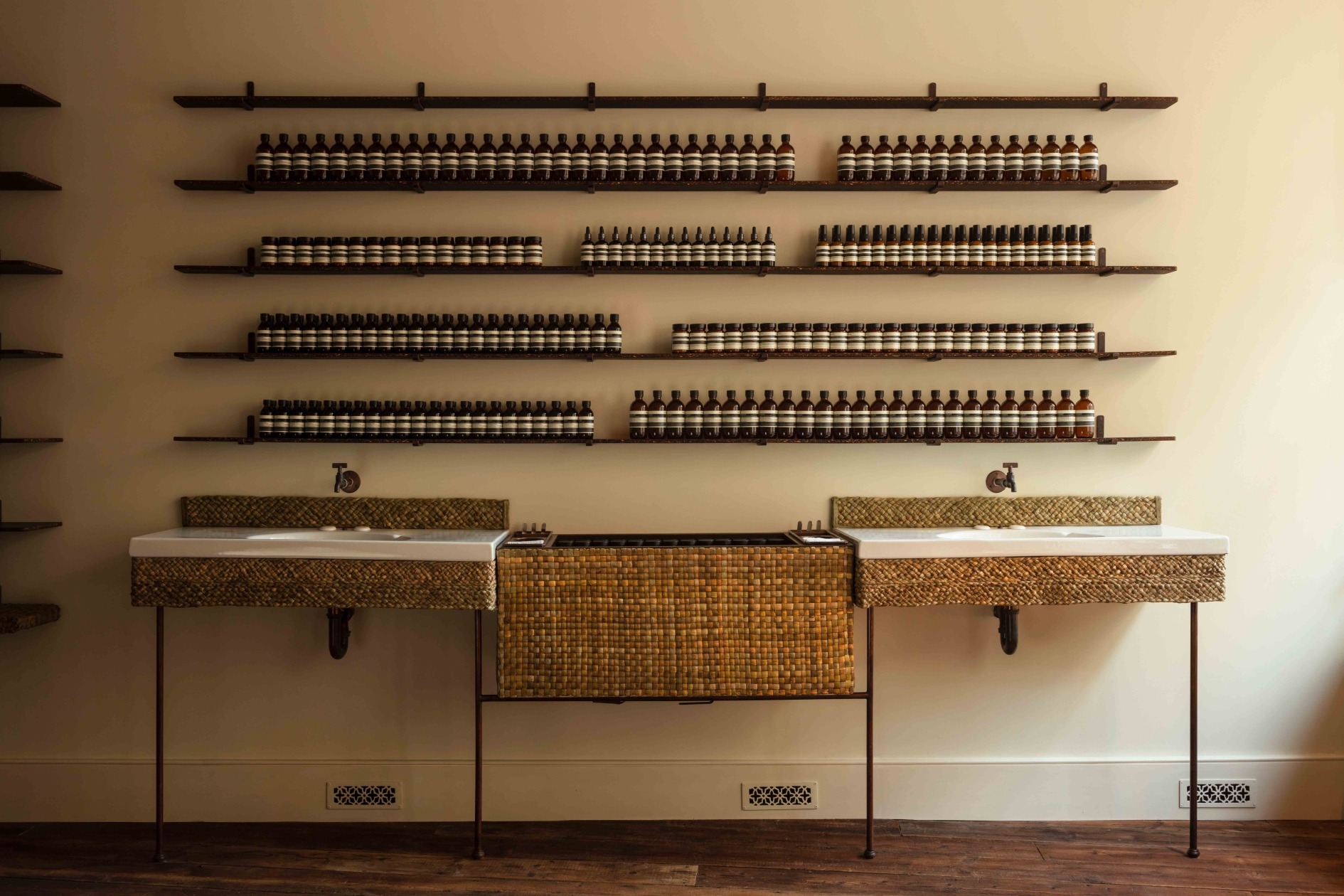
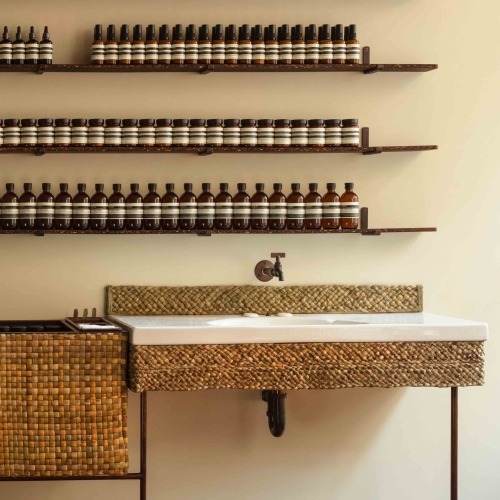 Woven rush shelves were made for the shop by Felicity Irons
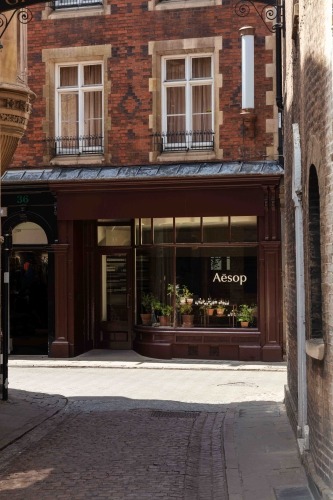 The shop front
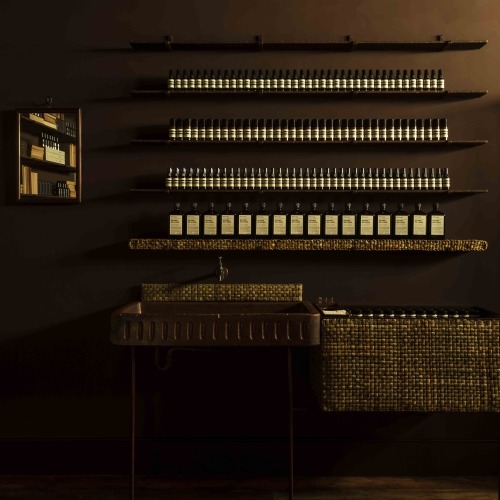 The back room is darkly painted and dimly lit
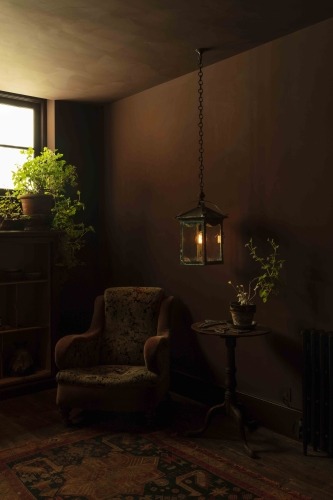 The antique chair, sunken from years of use
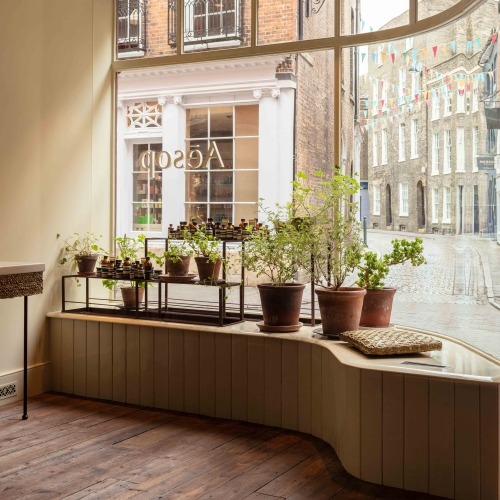 Large curved windows let in natural light
One such craftsperson that JamesPlumb collaborated with for Aesop Cambridge was Felicity Irons – one of the last English rush weavers keeping alive a craft that remains unchanged since Anglo Saxon times. In keeping with the theme of nature and in support of sustainable business, JamesPlumb commissioned Irons to weave some shelves for the shop out of freshwater bulrush harvested from the River Great Ouse in Cambridgeshire. The large scale of the task was a challenge for Irons and she admired the ambition of the artists’ vision. ‘They saw the use of our rush and weaving in such a different and imaginative way,’ she says. The shelves, which were air-dried and braided by Irons and her team at a local workshop, add to the shop’s grassy aesthetic, further immersing visitors in the plant-orientated world of Aesop’s vegan products. Additional details, such as a display of pelargoniums in the window and shelves made from hemp grown just 20 miles from Cambridge, help to transport customers to the rush-lined meanders of the River Great Ouse.
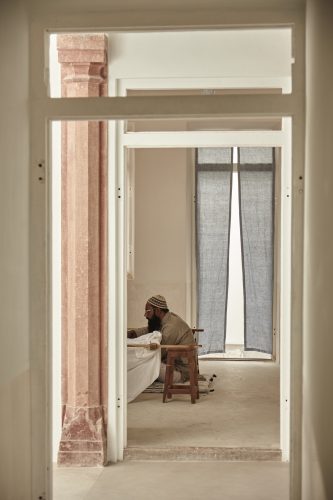
As customers venture further into the shop, they stumble upon a cosy back room. Darkly painted and dimly lit by a hanging lantern, the room has a distinctly tranquil and studious atmosphere evocative of a library. The chair in the corner – which Plumb and Russell found when scouting antique shops and markets – is one of JamesPlumb’s favourite touches. ‘We particularly like its seat, slightly sunken from years of use. Rather than reupholster it, and risk losing that history and personality, we just gave it some TLC and a really good clean.’
We spoke with Plumb and Russell to find out more about how they work.
Why is it important for you to create lasting connections with builders, craftspeople and neighbours?
Our process is one of collaboration because projects are most successful when all contributors are engaged, and all people affected are considered. We don’t like to work in a vacuum.
How does this benefit the process?
A collaborative practice, shared vision, and good communication help to make the process smooth by ironing out the inevitable bumps that arise during any project.
Are there any custom-made details you’d like to bring attention to in the Cambridge Aesop shop?
There are several, but a very small detail that might go unnoticed is the bespoke plug holes that we made for the sinks. Because all the sinks in the shop are reclaimed, many of the existing plug holes were damaged or missing. To replace them, we got round brass plates and added draining holes so that the sinks could be emptied without the risk of customers losing jewellery down them! Small meaningful details like this can go a long way.
The taps were also custom-made in our London Studio – we wanted an uncomplicated, unfussy design, which included a quarter-turn valve.
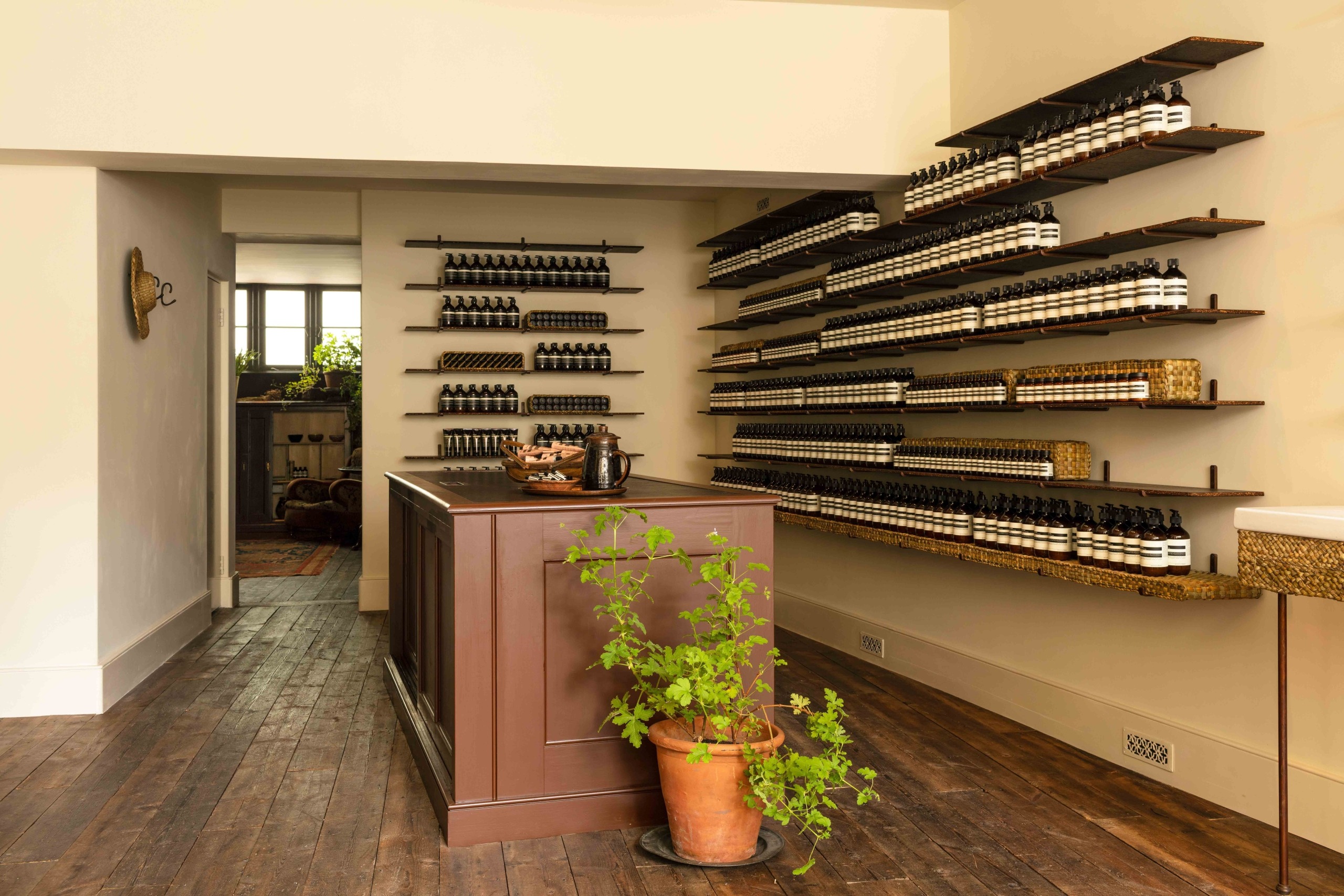
The floor of the Cambridge shop was created from reclaimed boards to look like the original
Can you tell us about the floorboards?
The original shop floor had sadly been removed several years ago. In essence, we wanted to put back what would have been there so that it felt like it had never gone. We worked closely with LASSCO to source some floorboards of a similar age and style but the batch we found was filthy, having come straight out of a factory. We laid them all out in the studio and gave them a good scrub (but not too much; so often boards can be over-restored and over-cleaned, and you lose what drew you to them in the first place), and then waxed them individually. They were waxed again on site and, where necessary, cut to size. The edges were burnished and darkened.
All of this took time and patience and, although a floorboard enthusiast would probably be able to tell that the floor has been reinstated, we worked side by side with carpenters to ensure it came as close in appearance to the original as possible. Small details such as reusing existing nail holes, filling redundant holes, and using hand-painted, antique nails that aren’t shiny, added to this effect.
Visit Aesop Cambridge at 35 Trinity Street, Cambridge CB2 1TB
To see more work by JamesPlumb visit jamesplumb.co.uk
To read more about Felicity Irons and find out how she got into the ancient craft of rush weaving, purchase Hole & Corner Issue 10: Form or visit rushmatters.co.uk