Kirsteen McNish on how gardening has helped her grieve
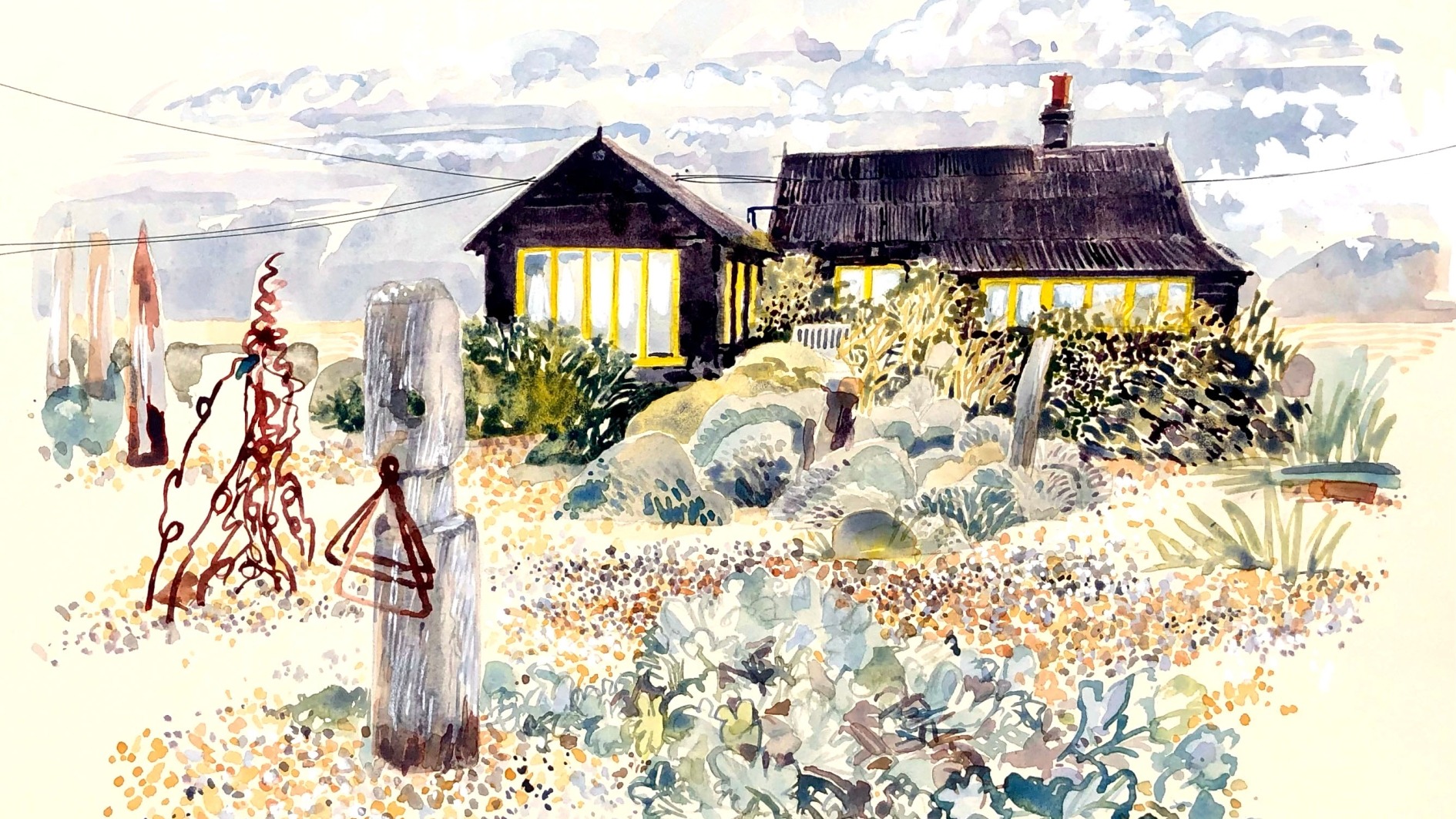
Illustration Stewart Walton
Gardening happened to me unexpectedly. Like a love affair that develops from deep friendship, it crept up on me gradually and before I knew it, I was thinking about it all the time.
Pre-kids and living in North-East London, I would enjoy walking in an overgrown cemetery in the dancing, dappled light or surfing the slow wave of the bustling, shuffling crowd on Columbia Road’s Sunday flower market. I knew I liked flowers, but I simply took the passing pleasure. I’d occasionally plant the odd window box, forget to water it and then feel slight irritation before its contents hit the bin. But then things started to shift.
Five years ago, my sister unexpectedly became very sick overnight and died. She may as well have fallen down a well the shock was so great. I started to stand on the back step late at night, letting the ooze of red wine and cigarettes smudge out the searing pain, watching the sway of the willow tree waving at me in the obsidian darkness, pushing me to retire to bed. It was here I started to listen – to really listen – to the creak of the sycamores, to watch the foxes fight with the neighbourhood cats, and a cacophony of crows caw and twitch in the skeleton trees against the grey of early spring mornings, waiting for the swifts’ screams to arrive. Day by day I started to feel myself slowly reaching, tendril-like, towards the garden and it felt like somehow it reached towards me …
Buying paint in the local hardware superstore three months after her death, I wandered out into the garden area and grabbed trays of herbs, soil and pansies. I planted them out and thought that would do. But within weeks I found myself constructing cheap click clack raised beds and my then four-year-old son enthusiastically helped, with the vigour and freedom that children enviously possess, and we sadly unlearn as adults. We filled the beds, and he waved his watering can over them like the arc of a spouting whale in unselfconscious glee.
I started to buy gardening books, but I was either too busy or just too lazy to read them, preferring instead to choose young plants like a pick’n’mix. The palette was both satisfying and sickly. The red-brick terraced street we live on in East London is made up of houses and flats that are pocket-handkerchief small, juxtaposed with gardens as big as cruise ships, and so I’d often find myself out at sea planting until the moon hid behind the clouds.
Soon the borders were dug and re-dug and bursting forth in Jackson Pollock splatters of glory. I re-read my treasured copy of Derek Jarman’s garden (bought while studying literature at university), about his final years in his pebbly Kent desert – but now I was relishing replicating much of his planting selections. I ordered many of the flowers he grew at Dungeness from Beth Chatto’s garden, a gardener he became dear friends with. Frustration, sadness and circular thinking were being absorbed by the earth. On some level I was planting as a subconscious act of hope and resilience.
In January this year, my mother died in her seventies, which still felt too soon. As a teenager I smirked at her obsession with her garden. She brought up eight children and spent every spare minute creating a well-balanced arrangement of flora and fauna as respite and passion. In her council house garden, she built cold frames from discarded wood and old plastic sheets, re-using plastic pots time and again and held seedlings in her hands as delicately as rare birds’ eggs. I remember her on her knees as she turned the earth with compost she had made in barrels that attracted the wasps. She came indoors aching and sated.
We didn’t always see eye to eye – our relationship was often fraught with frustrations or periods of silence and misunderstanding; however, in later years she would occasionally send me the odd gardening book with handwritten tips nestled quietly between the pages, emphasising sentences by underlining them like undulating waves.
Her illness was swift and brutal and after two years of not seeing her due to the pandemic, shielding my daughter and her hospital confinement, it was a shock to finally find her in the centre of a huge raft of a bed at home as tiny as a broken bird. In the awkward lumpen-throated of the bleak unsaid, we talked gardens, my heart diving, knowing she would not ever visit mine again. As I showed her pictures on my phone screen of last summer’s blooms and my children, she reached and softly squeezed my hand. I struggled not to weep as we had finally found common ground. It was when I left, quietly via the back door, I noticed a tiny gathering of little stone fairies and angels under the arch of a bush, smattered with bits of moss. Somehow this small scene made my chest snap like a guitar string. It would be the last time she and I spoke.
Weeks later my father relayed at her funeral that when my mother was still able to sit upright, she asked to be taken to the window to look out at her favourite rose bush. He smiled as he said she had scolded him for not having deadheaded it properly. I got home in a haze and ordered a ‘Blue Moon’ hybrid from a farm in Norfolk, despite having no taste for roses.
Like many do in the ebb and flow of grief, I had found myself searching for signs and been left wanting. These past few months I wake in the dark listening to silence, talking out loud to my mother when cooking or looking in the hedges for the wrens I learn she loved – but nothing. I berate myself for the lack of logical thinking. I get swept up in the news and a bout of Covid. Things feel turbulent and yet strangely still.
However, last Sunday, after a trip to buy pots with packets in hand, determined to try to nurture my own seeds from scratch for the first time, I drop my keys on the doorstep. As I stand, I look up and gasp. The wisteria I planted upon moving in seven years ago, that had never flowered despite my insistent coaxing, was suddenly sprouting the distinctive silvery purple flower buds. I smile as the door swings shut. Sign or not of my mother – I’m going to take it as such anyway.