The Weaver's Tale
WORDS KATE FINNIGAN
PHOTOGRAPHS EDD HORDER
Former primary school teacher, Annemarie O’Sullivan is now an internationally renowned basket weaver, a craft she has honed using age-old skills gleaned from all over the world. ‘Humans have forever gone outside and cut whatever was there and made from that,’ she says. ‘It’s so simple…’
A sunny East Sussex spring afternoon. The doors are thrown open in Annemarie O’Sullivan’s slant-roofed wooden studio, just a step across a gravel path from her Tudor cottage and the converted outbuildings that make up her idiosyncratic and utterly serene home. On a tall table, one of her handmade willow baskets is in progress, skinny spokes rising. Other completed vessels, in varying shapes and sizes, stand against a black painted wall, waiting for dispatch to a distinguished store on Long Island.
Outside, a green grass field stretches away towards trees. O’Sullivan’s husband, Tom McWalter, and assistant, Matilda Grover, sit at a table sewing leather handles onto two of O’Sullivan’s market baskets, their low chat vying with birdsong. It is April and drying season, and in locations around the garden, bundles of harvested willow rods, sorted into heights and types, and labelled: green dicks, Lancashire dicks, long thin green – just some of the 20 types she grows on her land – huddle in the sun like groves of druids about to start up an ancient ritual. There’s something folkloric about them, about the whole set up, something old and mystical that draws you in and makes you wonder why you don’t live like this, in a Tudor cottage with outbuildings, making beautiful objects from the materials of the land.
Annemarie O’Sullivan, 49, a softly spoken woman with a dry sense of humour, was born in Ireland and moved to the UK aged 17. A competitive swimmer in childhood, she became a primary school teacher and mother to two young boys and had no idea that a willow basket weaving class would change her life. But 14 years ago, when she saw an ad for a class in Brighton, she felt an excited pull and suggested to her friends that they all sign up. She laughs about that now. ‘Of course, none of them did.’
For Annemarie O’Sullivan, weaving is akin to the swimming she loves: ‘…the strokes, the shape that you make with your arm, doing that over and over again. When I first touched this material and had to take these lengths around in strokes, it was like, oh, I remember this…’
So she went alone and when she laid her hands on the willow and followed the instructions of her teacher, something inside O’Sullivan clicked. ‘It was like swimming for me,’ she says. ‘All my life I would have got into any water and found total solace in that kind of movement, the strokes, the shape that you make with your arm, doing that over and over again. So when I first touched this material and had to take these lengths around in strokes, from one point to another, without them kinking, it was like, oh, I remember this.’
Today, O’Sullivan is an internationally renowned basket weaver, creating domestic objects – beautifully useful vessels, trays and bags – larger scale sculptures and avant garde lighting, sold in high-end outlets, such as The New Craftsman, Tiina the Store (the Long Island retailer), March in San Francisco, and supplying bespoke pieces to interior designers.
Her designs are inspired by the ancient tradition of basket making. ‘I love the history, the vernacular baskets of Britain and Ireland and Europe,’ she says. ‘I do a lot of research, going to museums and looking at catalogues and books, collecting as much visual information as possible. That’s where the work emerges from. So I don’t feel there’s any radical, contemporary approach. Nothing is new. It’s all ingredients which are borrowed and maybe just reworked.’
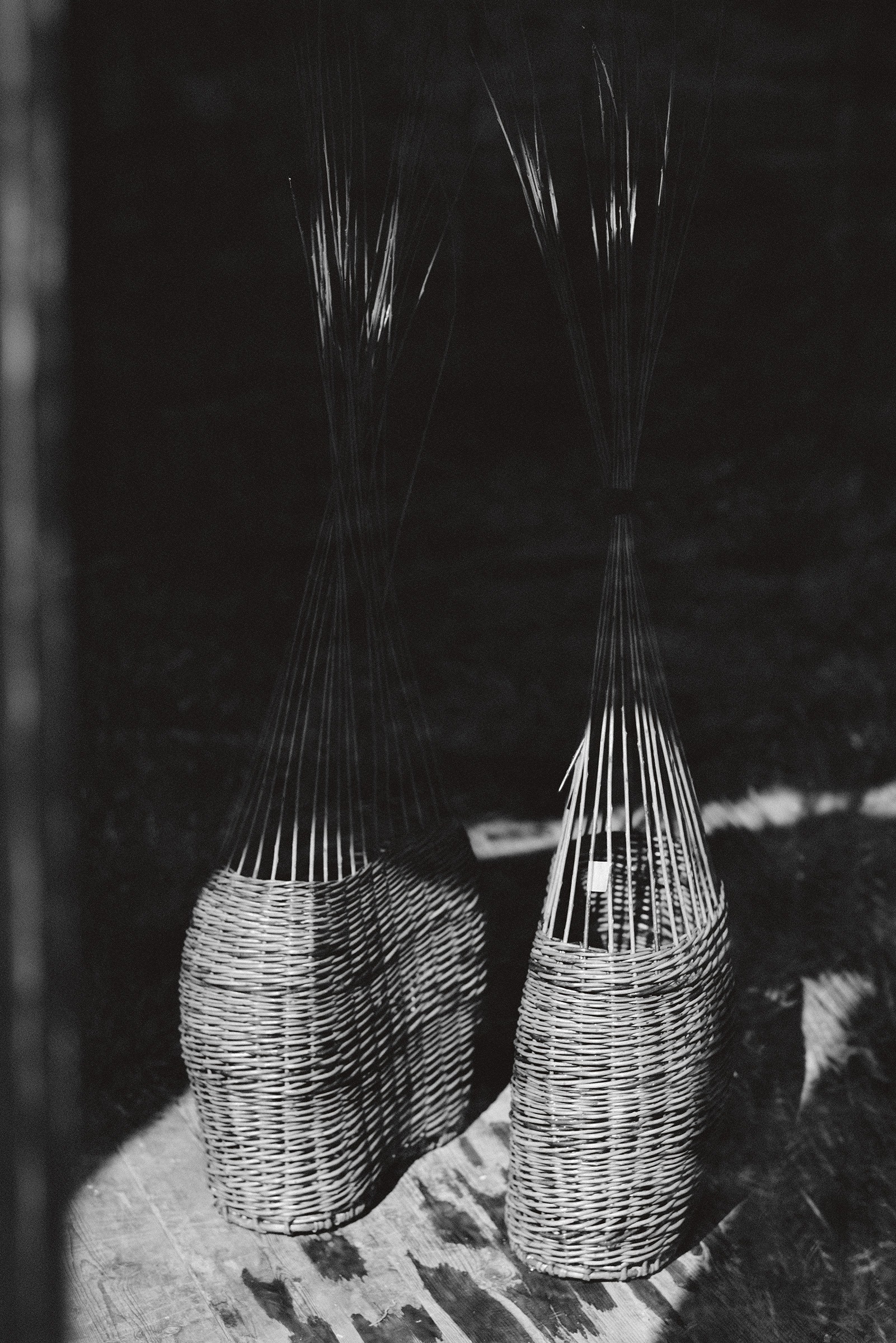
Basketry is thought to be the oldest craft in the world, 10-12,000 years old, pre-dating pottery and found, in some form, in almost every country. ‘That’s the privilege I think,’ says O’Sullivan. ‘Feeling like my hands are doing the same thing that humans have done for thousands of years. Humans have forever gone outside and cut or picked whatever was there and made from that. It’s so simple.’
The usefulness of her creations is important. ‘Oh, I really want people’s hands on them and I want them to get filthy. I don’t mind if someone just wants to look at it, but I really feel like they’re vessels.’ She picks up one of her round baskets, a design inspired by two different traditions, a quickly made potato carrier from Northern Ireland and a more refined style of weaving from Wales, and holds it against her hip. ‘It’s just the right size and weight, so balanced, and fits together with another easily or hangs on a wall. I need them to be functional, but I do really need them to be beautiful. I don’t want to make a basket that isn’t beautiful.’
Although O’Sullivan had found a craft that she wanted to dedicate herself to, she wasn’t able to take it up immediately. In some ways it was a painful process, like those dreams where you’re trying to reach out for something but just can’t grasp it. She and McWalter were living in Brighton at that point and had two small children, no time, not a lot of money. But after a couple of years of frustration, she began a City Lit course in London, one day a week for five years. It seems funny, I say, to have to go to London to learn basketry, a craft so rooted in the countryside. ‘It was ridiculous! Ridiculous. But an amazing course and it made me realise that I wanted a connection with the material and the land. To see the whole process through.’
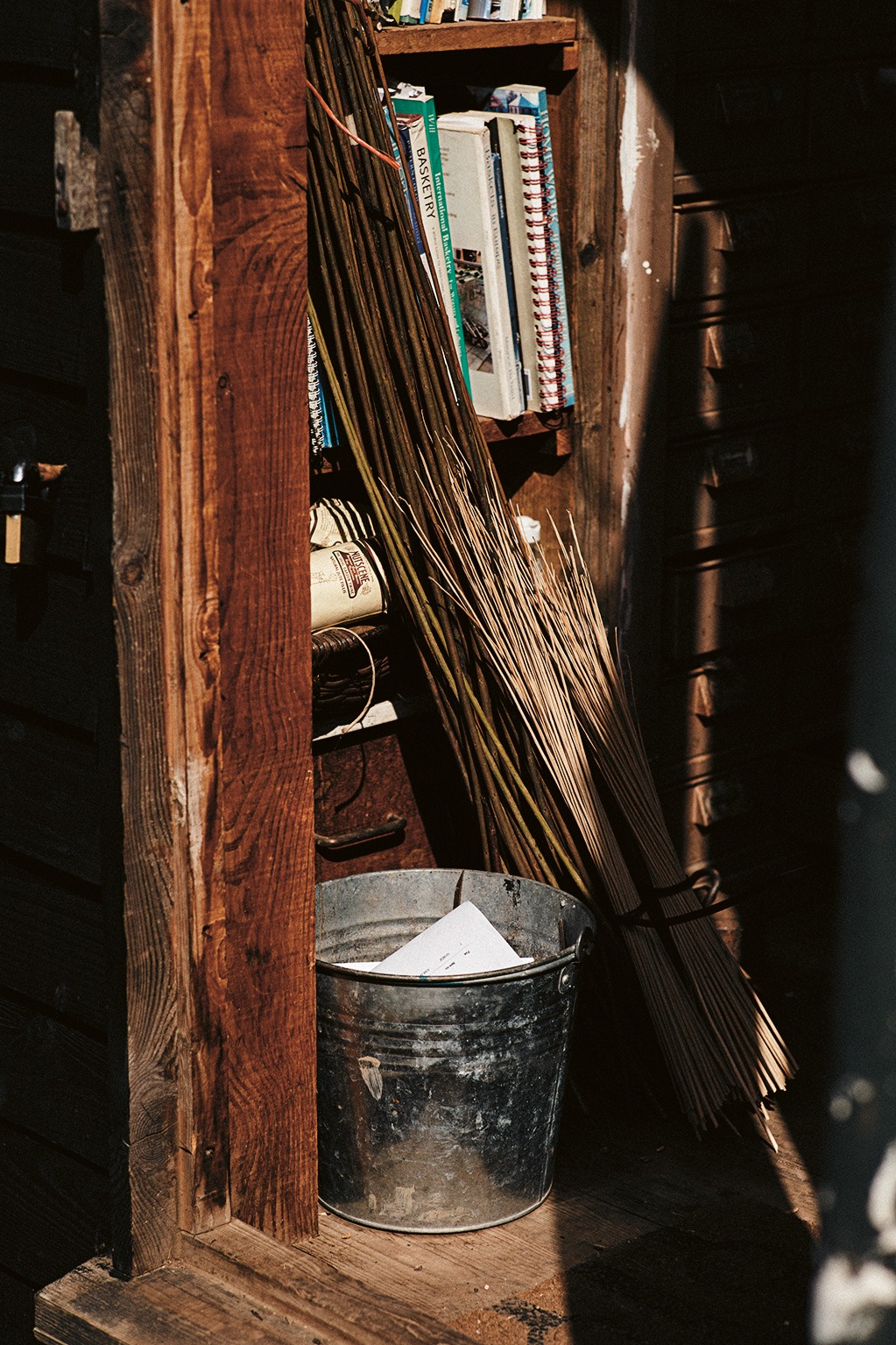
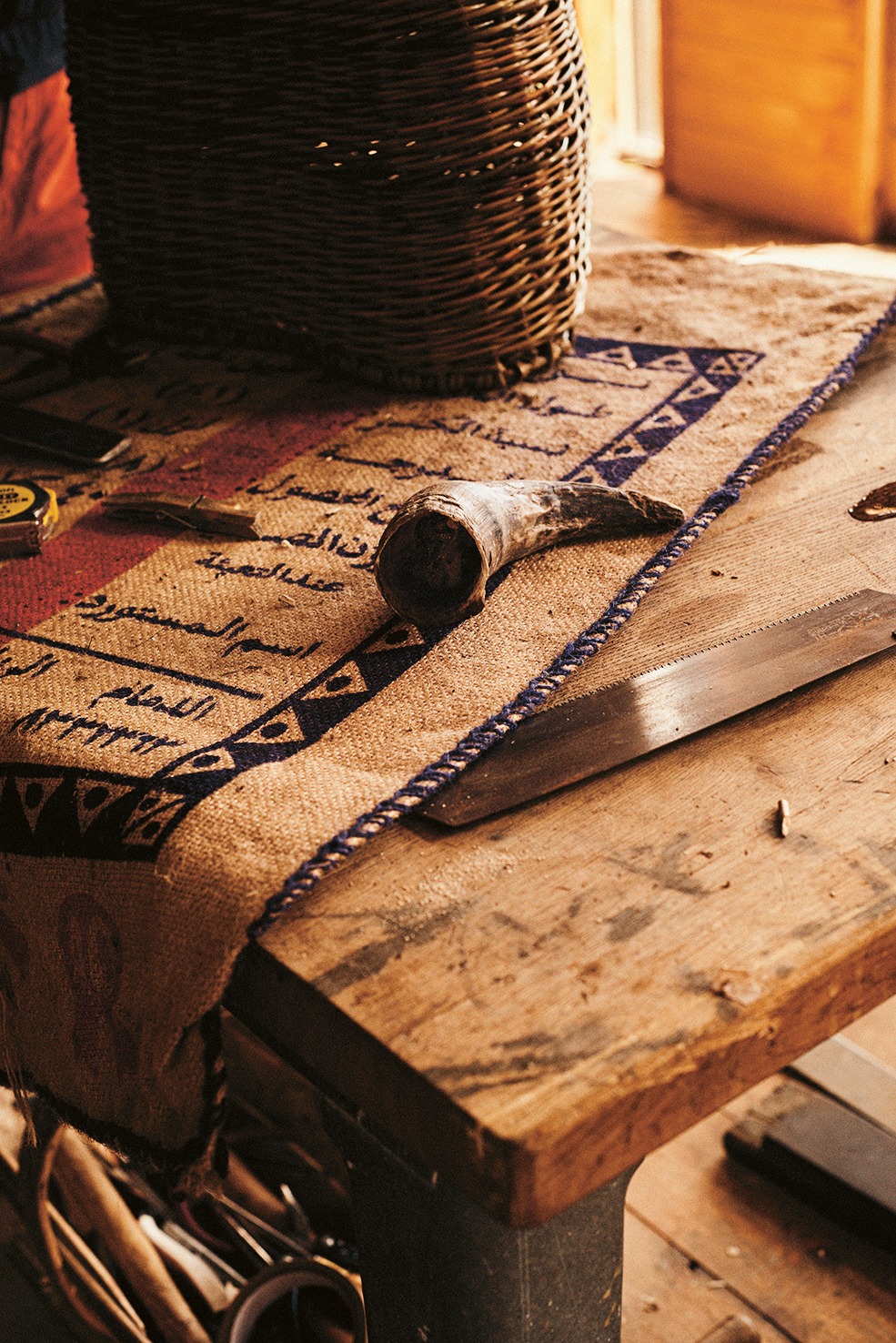
Until recently O’Sullivan has used willow from Somerset as well as her own – now she intends to focus on making smaller batches using only her own crop, which she grows on a nearby community piece of land owned by the Biodynamic Land Trust. Overleaf: the willow is soaked in a trough in the studio to make it malleable enough to work.
Nine years ago, the family moved to this house in a village outside Lewes, so O’Sullivan could begin that connection. Now she grows her own willow on a community piece of land owned by the Biodynamic Land Trust, 20 minutes away from the house. The willow is planted as a 30cm cutting, in close rows, at the beginning of the year. It’s harvested at the same time, starting in January, every year. ‘We bundle it up there, it stands on the land there for another couple of months. We’ve just brought it back.’
We go outside to see the bundles, arranged in their various heights – four, five, six feet. Some of the branches have little catkins. ‘And actually you can feel already that it’s quite dry,’ says O’Sullivan, rubbing one of the twigs between her finger and thumb. ‘It’s got a little crunchiness to it. I need it to be completely dried and then we soak it again before we work on it. You saw the trough in the workshop. It’s soaked there for a day per foot. Then it’s mellowed, which means it stands and fully hydrates. Oh, it’s nice to see it drying! It’s only been here 10 days or so.’
I say it’s like having all your children out here and she laughs. ‘I do feel quite precious about them. It’s quite a process to come out and keep checking on them. If there’s rain coming, we have to bundle them up and put them in storage.’
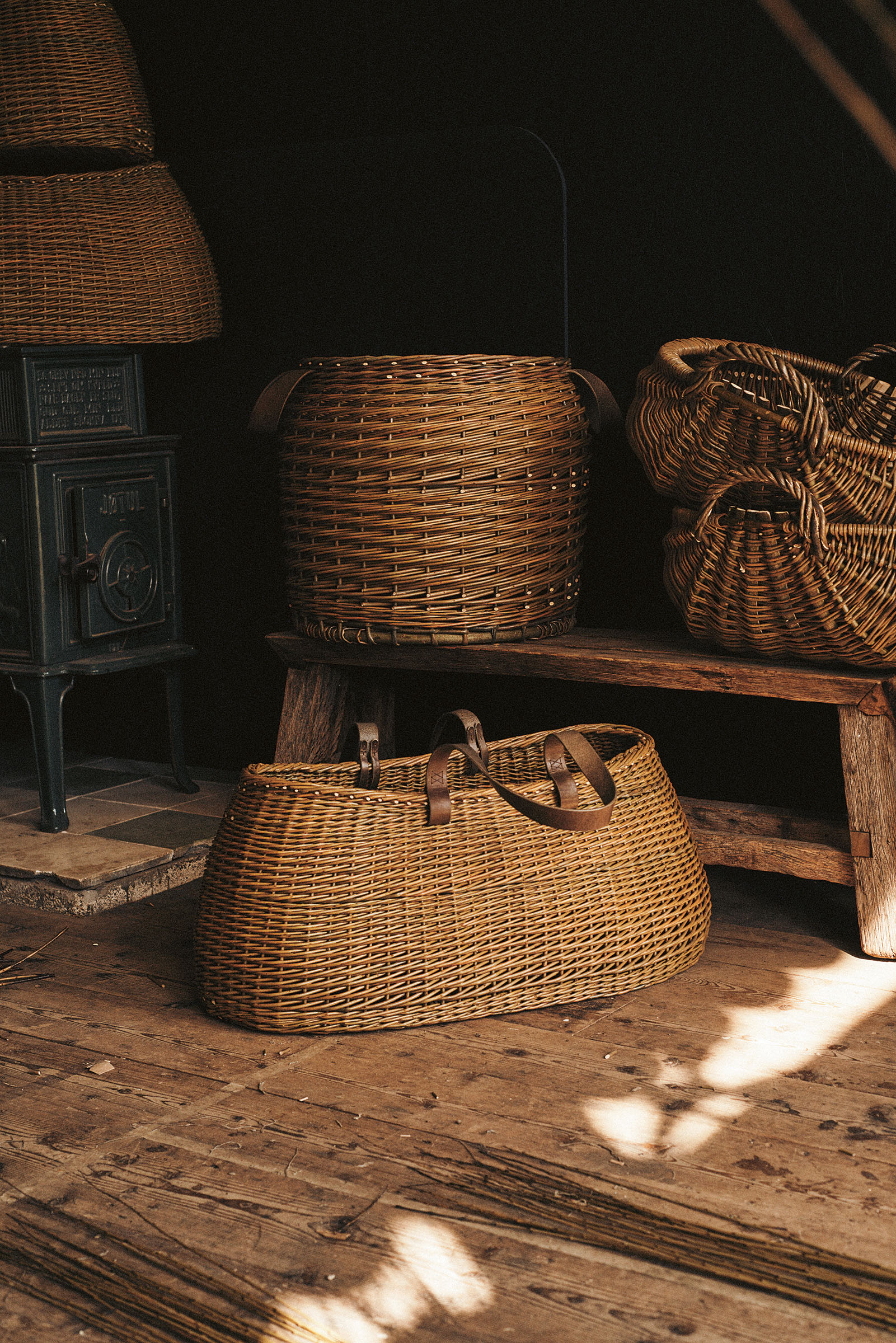
Some willow species will grow 10 feet in a year, but O’Sullivan has less use for them. ‘I grow types that are finer and denser. The spokes for a basket are usually six feet high and the weaves are four or five.’
She shows me her ‘drying room’, a horse box converted by McWalter into a sauna – an actual sauna that the family uses. Inside are some of her big trays, in progress, their wood still a foresty dark green. ‘Get a sniff of that,’ says O’Sullivan, opening the door wider. It’s the most pure kind of healthy, herbal smell. ‘This is a new, express drying regime.’
Until recently, O’Sullivan had used her own willow for only 50 per cent of her output, supplementing it with willow bought from another grower in Somerset. Now she’s decided to concentrate on making entirely from her own crop. ‘We’re going to really celebrate the willow we’re growing and do small release batches with it,’ she says. ‘When we get repeat orders we have to use a lot of the Somerset willow, because all the pieces have to be exactly the same. In terms of process it’s lovely for me to make just four of something. Making eight or 10, I lose faith.’
IT’S THAT SIMPLE THING OF, IMAGINE YOU WANT TO MAKE A BASKET AND YOU’VE GOT A PILE OF STICKS, HOW DO YOU STRING THEM TOGETHER?
She weaves for around four hours a day, standing up at the table. ‘The flow can last forever. The problem is the body,’ she says. ‘It’s really physical and four hours is the healthy version. But a big order might push it to eight and that’s not great. It’s the back and wrists. I had a period two years ago where I really overdid it and I wasn’t able to make for about three months. So now we get up every morning and the yoga mat is rolled out. That’s a fundamental part of how we work now.’
She shows me some of her techniques, pointing out a slath base, a technique of beginning a round basket, where four rods of willow cross another four in a square at the centre of the base and then more willow is weaved around. ‘No one’s ever found a better way. I think this is the oldest technique that’s been found. It’s that simple thing of, imagine you want to make a basket and you’ve got a pile of sticks, how do you string them together?’
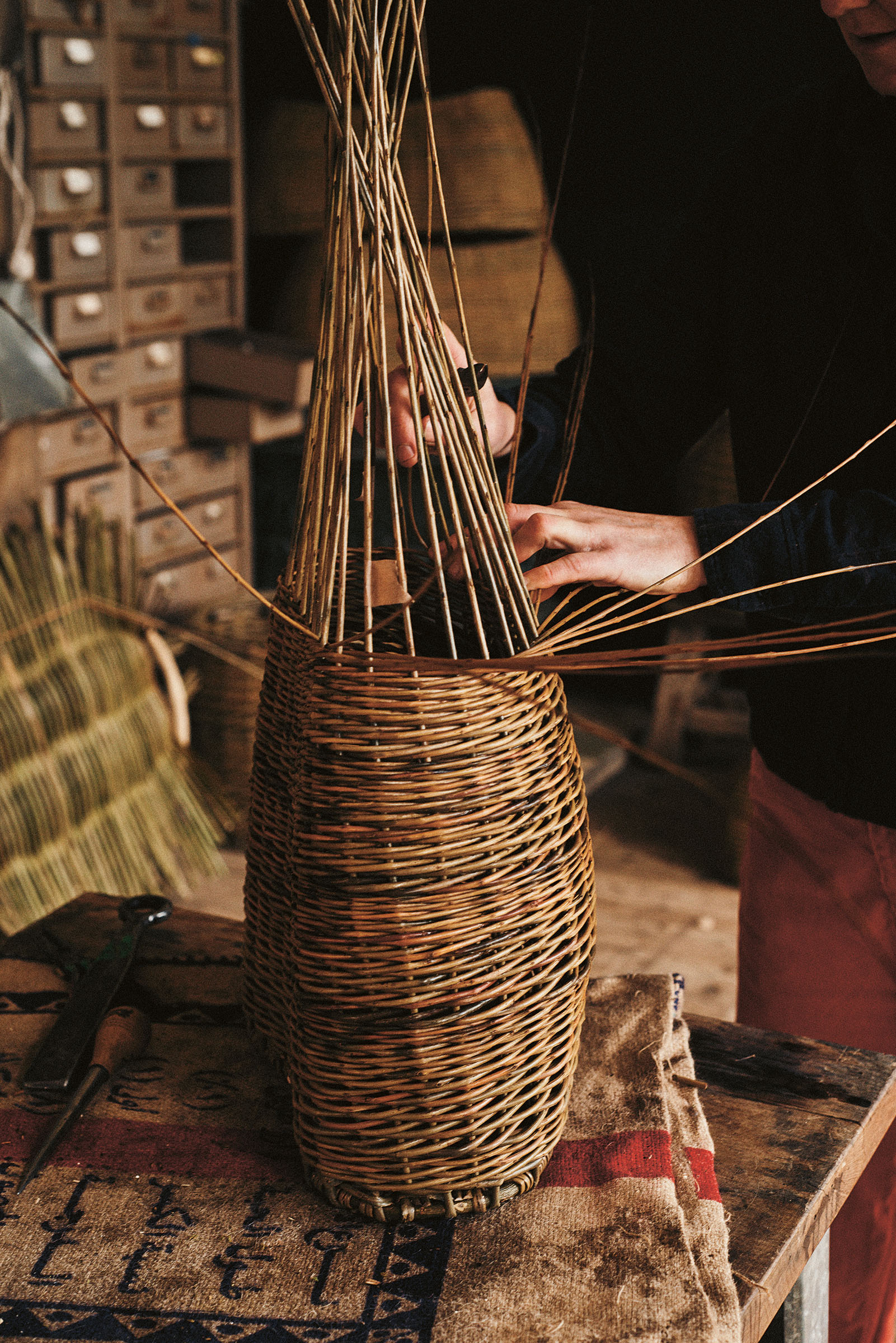
O’Sullivan has worked in Poland, Spain, the Azures and the Middle East – where she learnt to weave with date palm. ‘That’s what is so amazing about this craft. I’ve learnt one tiny sliver of it, and everywhere you go there would have been regional ways to do it, and regional materials. Even in the British Isles’
Most of the pieces, she says, begin with a hoop. She says she goes through phases, trying to perfect different techniques and is in ‘a scalloming phase’ at the moment. ‘It’s just the method of attachment at the bottom. You weave the base and then attach these stakes. I’ll give you a little demo…’ She takes a long willow rod. ‘So I want to produce a really long ribbon that is going to wrap around the hoop and back around itself. I’m cutting a little scoop into it and that really rounded profile there is going to sit on the edge of the hoop. So I’m cleaving away allowing it to get thick and then get thin again. And that will wrap around the hoop and fold up and around… It’s a more refined method of attachment. I really love it.’
Through funding and mentoring, from the likes of the Crafts Council Hothouse scheme and a QEST (Queen Elizabeth Scholarship Trust) award in 2016, O’Sullivan has been able to receive more training and make a viable and thriving business, on which McWalter, a professional builder, now works with her full time. ‘QEST gave me the opportunity to go and visit other makers and learn from them,’ she says. ‘I went to Ireland, Italy, Poland and then I spent a considerable amount of time with Mary Butcher [the British basketmaker]. A lot of opportunities have come through that.’
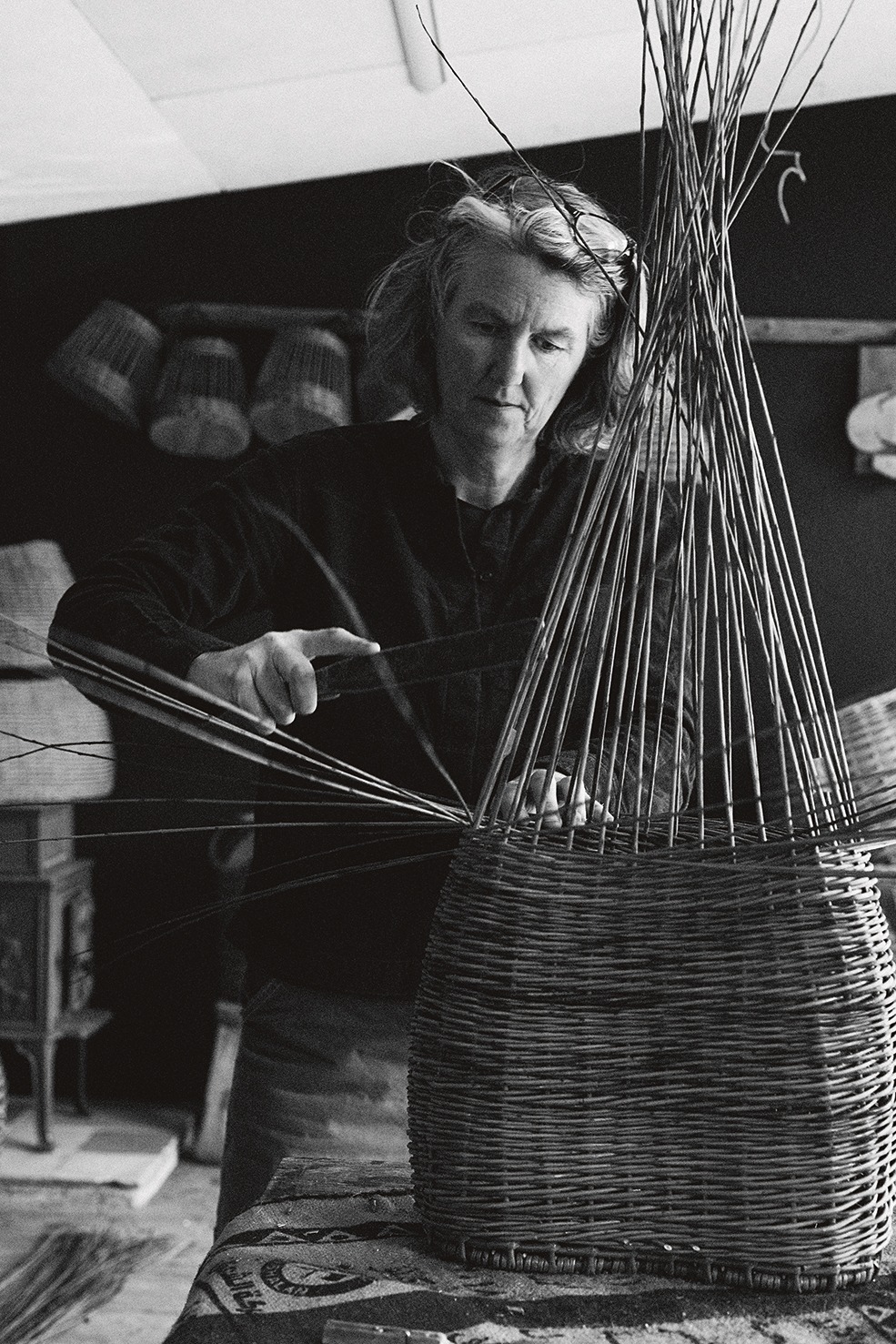
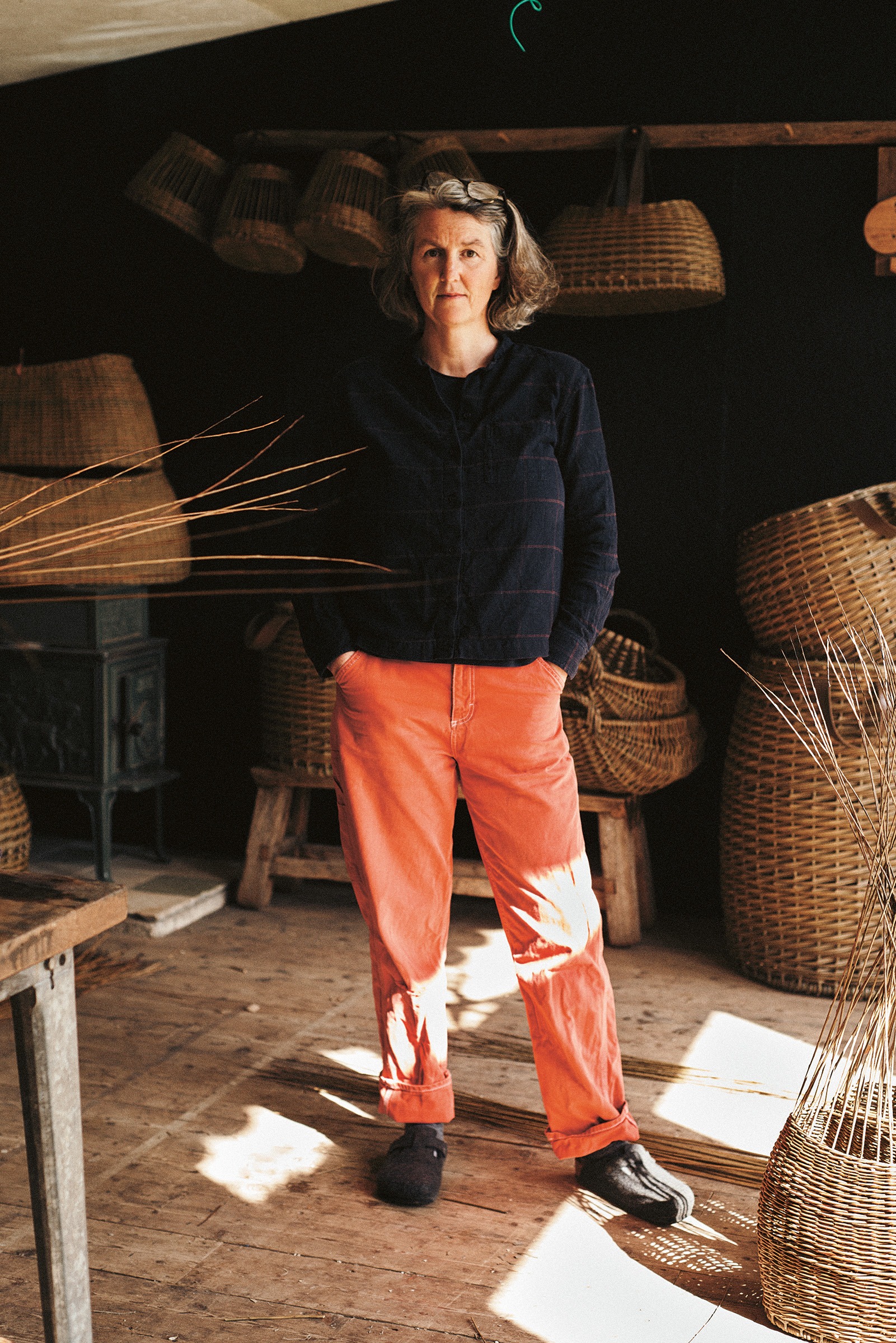
Annemarie O’Sullivan at work – her baskets are designed to be as functional as they are beautiful: ‘I really want people’s hands on them and I want them to get filthy. I don’t mind if someone just wants to look at it, but I really feel like they’re vessels’
Before the pandemic she had taught in Poland, completed projects in Spain and the Azures and worked in the Middle East (Al Ula, Saudi Arabia) at the Princes School of Traditional Arts, learning how to weave with date palm. ‘That’s what is so amazing about this craft. I’ve learnt one tiny sliver of it and have perfected a miniscule amount of it and everywhere you go there would have been regional ways to do it and regional materials, even in the British Isles. Since I’ve become a maker, the travelling I’ve done has become much more interesting. I have this great sense that I’m welcome everywhere.’
More than that, finding her craft in adulthood entirely changed the way O’Sullivan perceived and experienced the world. ‘I didn’t grow up with a sense of or any understanding of beauty. I grew up in a very functional environment. There was a beautiful landscape out there, but it was kind of denied. I almost can’t believe that it wasn’t shared with me,’ she says. ‘But I made this discovery that beauty brings so much wellbeing. It’s really simple. It’s about appreciating the way things grow, what you live around and what you touch. It is about what is in your hand on an everyday basis.’
A truth discovered, that Annemarie O’Sullivan weaves into and passes on in every piece she makes.