A series of radical acts designed to make the world a better place
WORDS TAMSIN BLANCHARD
PHOTOS EDVINAS BRUZAS AND CHARLOTTE GRAHAM
Craft can be a wonderful vehicle for protest, activism and a little gentle subversion. It can also be applied to projects with a strong sense of purpose, or to bring communities together in an act of solidarity and inclusivity.
For Hugo Macdonald, curator of the 2022 Harewood House Biennial, Radical Acts: Why Craft Matters, currently showing until the end of August, craft is all about context and its relevance depends on what it is saying about the maker, or how the maker uses it to address some of the numerous challenges facing society and the environment. Macdonald has used the splendid 18th-century stately home as a stage to present some of the ways in which craft can make the world a better place, or at least encourage us to think about things differently.

The Old Library and Celia Pym’s installation of repairs
Radical Acts brings together 16 makers who make use of the house and the grounds in ways that create conversations with their surroundings, and make you look at the rooms and the grounds with new eyes. Celia Pym’s artful clothing repairs and colourful darns take centre stage in the Old Library. Of her radical act of care, Pym says, ‘Mending is not just about fixing something in need of repair, it is also an act of care. Care is applicable to everyone and of value to all of us.’ The exhibits are the result of a series of conversations and interactions with members of staff from Harewood House, from the head gardener to the director. Each of them brought an item of clothing to be repaired and talked about the lives they lead in those clothes and how they became damaged or worn. What is lovely is that these are everyday items of clothing, nothing special or precious, and while Pym’s handiwork has rendered them all wearable works of art, once the exhibition is over, they will be returned to their owners to continue to be worn and loved.
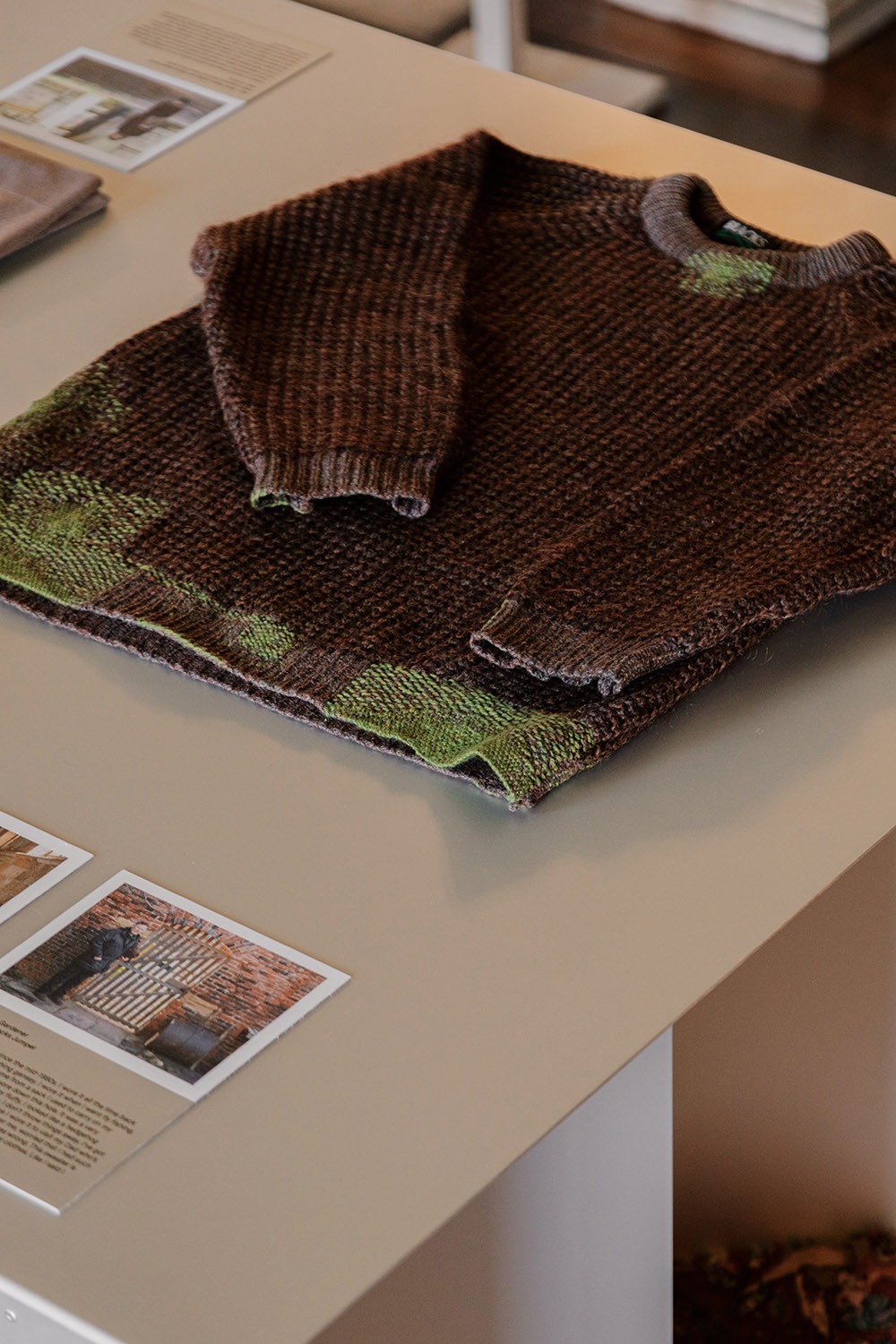
Visible mending by Celia Pym

Eunhye Ko’s ceramic hairdryer in The China Room
In the China Room, there is a hairdryer and a vacuum cleaner that represent the radical act of value and waste. Korean designer Eunhye Ko graduated from the Material Futures MA at Central Saint Martins in 2019 and created these domestic appliances using ceramics, basketwork and wood, questioning the disposability and the amount of plastic used in our everyday lives. ‘I want to challenge how we take for granted so many things we use every day,’ she says. You can read more about Ko’s ideas and her extraordinary gadgets in Hole & Corner Issue 19: Making Good.
If Ko sets out a provocation with her work, Good Foundations International is an example of craft enabling a better world. While clean water should probably never be seen as a radical act, but rather a human right, but Good Foundations has been working with communities digging clay, building kilns and creating ceramic water filters using ancient techniques that filter out water-borne diseases in places where there is no access to clean water. Aptly, the work is shown in the Watercolour Room.
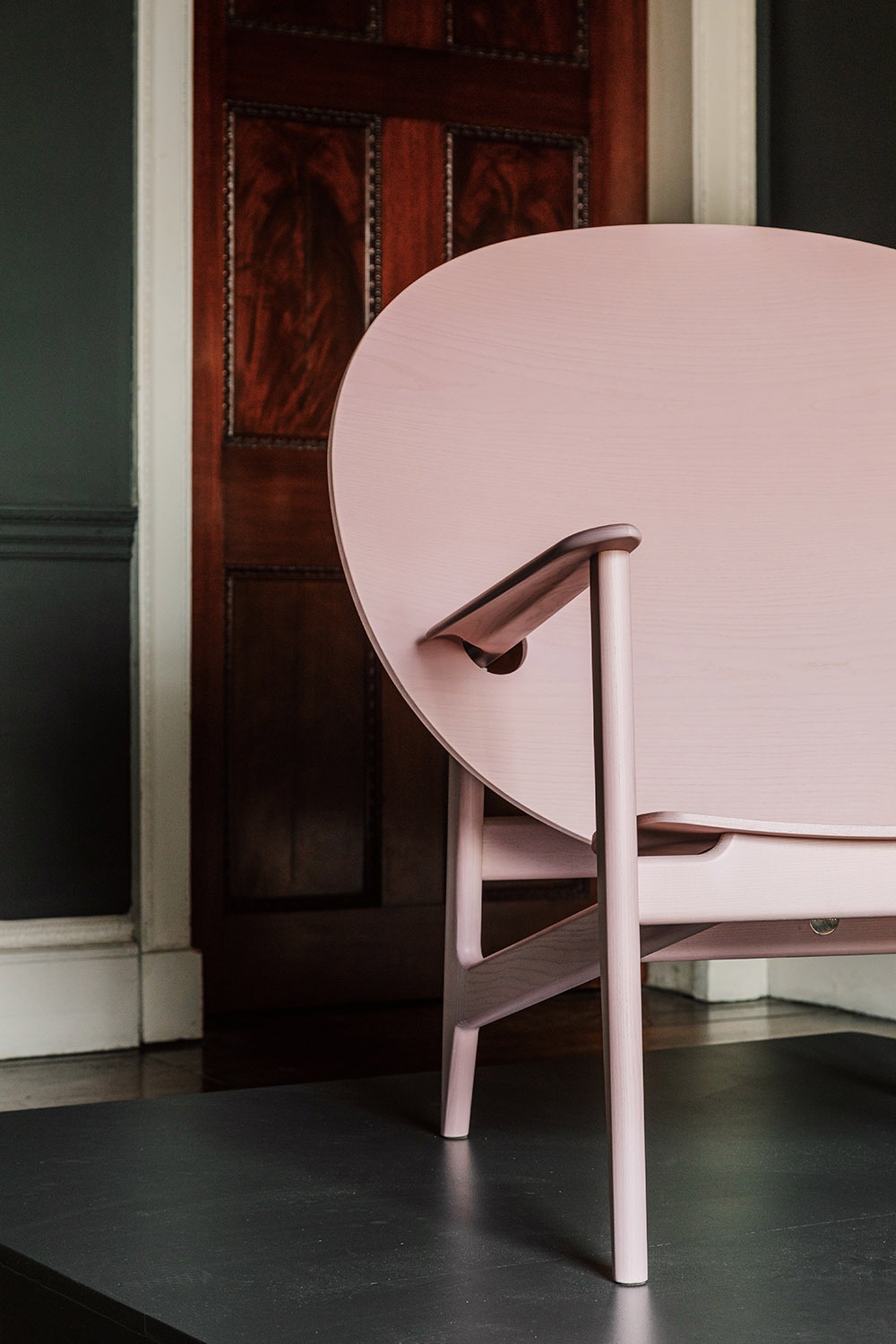
Ash Chair by Mac Collins – a moment to pause and think about our history
For Mac Collins – an artist and designer of Jamaican descent whose work tells stories that resonate beyond the materials and the form – taking part in an exhibition at Harewood House, an 18th-century home built on the income derived from sugar and the Transatlantic slave trade of the West Indies, is an opportunity to ask visitors to take stock and consider the impact of colonialism, as well as the ongoing racism and inequalities still ingrained in our society. His contribution to the Biennial seems quiet and unassuming, but is powerful and profound. He has placed his Ash Chair on a raised platform in the Ante Room, and unusually for an exhibition, visitors are invited to sit in it to take part in his radical act of contemplation. ‘I want to invite everybody to sit down and to pause,’ he says. ‘Consider the environment you are in, and how history informs contemporary society… acknowledge how the wealth of this estate was amassed from the West Indian slave trade, and respect the significance of the Caribbean community in our British story.’
Each of the rooms at Harewood includes a surprise, and part of the joy of visiting is to discover some of the objects and installations for yourself. You will be highly entertained by Michael Marriott’s radical act of resourcefulness, his wonderful collection of useful objects and materials, many of which will be familiar and others just intriguing. You will be absorbed by Francisca Onumah’s radical act of imperfection, a quiet moment shared between two oxidised copper and silver vessels. You will be inspired by the slogans and hopes for a better fashion industry in the room of banners made by students of Blackburn College, under the guidance of Patrick Grant and Community Clothing. And you will be changed by the acknowledgement of the Unnamed Women of Clay, a collection of work by female ceramicists who have been forgotten by this patriarchal, colonial dominant narrative that has so long trampled over all manner of craftspeople but particularly those from the global south. It’s particularly poignant that this installation by Bisila Noha is set in Princess Mary’s Dressing Room. Noha points out, sadly, that her project celebrating women and particularly African women is still a radical act, even in the summer of 2022.
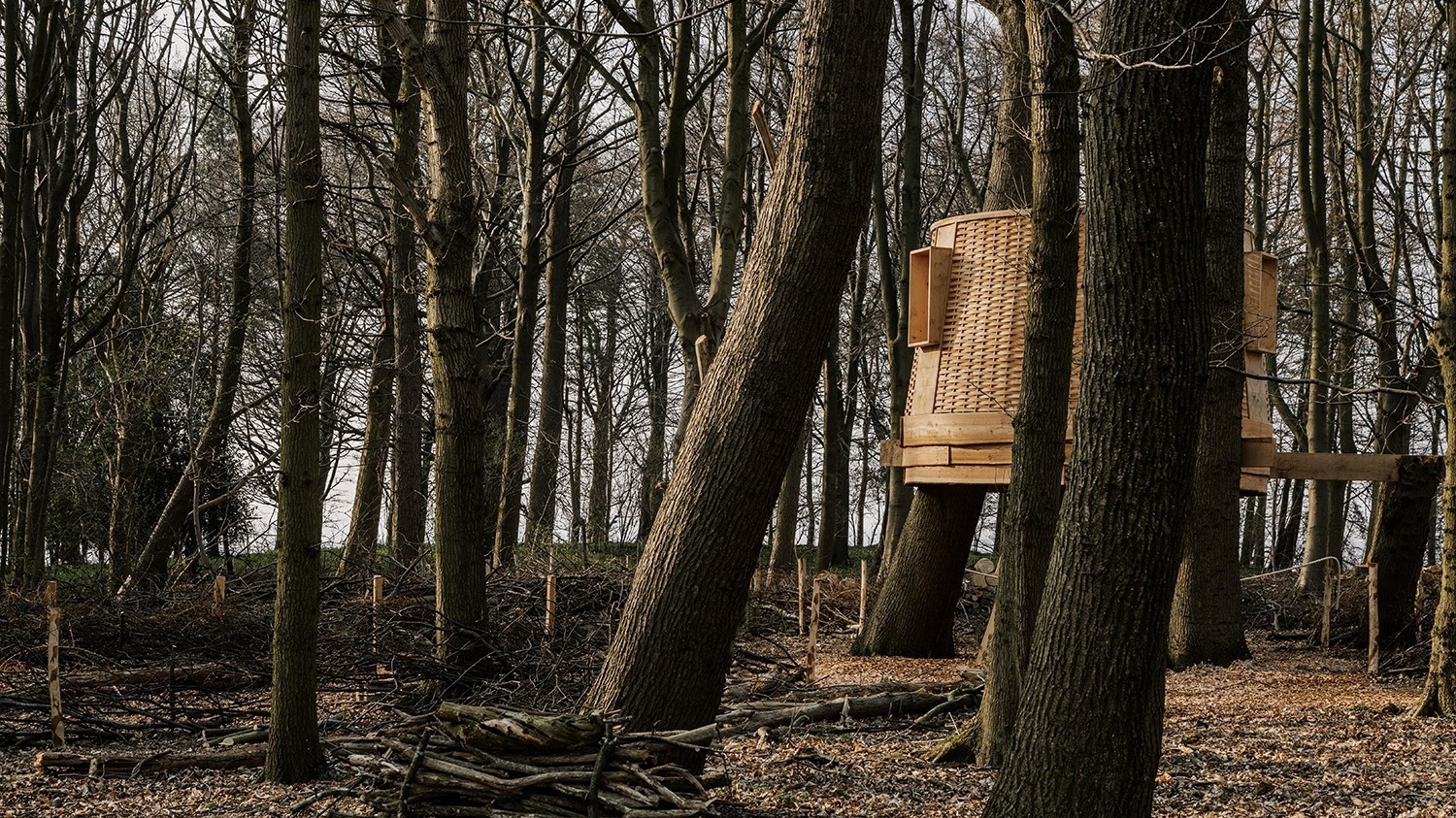
There is so much to see and think about at this Biennial, which has been so sensitively curated, with each of the makers talking about their work in their own words in the programme. When I visited on the opening weekend, I didn’t manage to see it all, so I am looking forward to going back for a second trip. I’ll be particularly interested to see the evolution of Sebastian Cox’s Sylvascope, a tree house that was more of a bird’s nest when I saw it, a raised viewing platform built from coppiced trees from Harewood’s own woods. This is Cox’s radical act – of cutting down trees, an opportunity for him to celebrate the importance of not just planting trees, but managing them, which means cutting them down to nurture the ecosystem on the woodland floor and allowing other trees to grow in the spaces, sustainably replacing those that have been felled. ‘When we fell trees and let light in to the woodland floor, other plants, insects, mammals and birds can thrive,‘ explains Cox. Cutting trees can be more useful than planting them.’
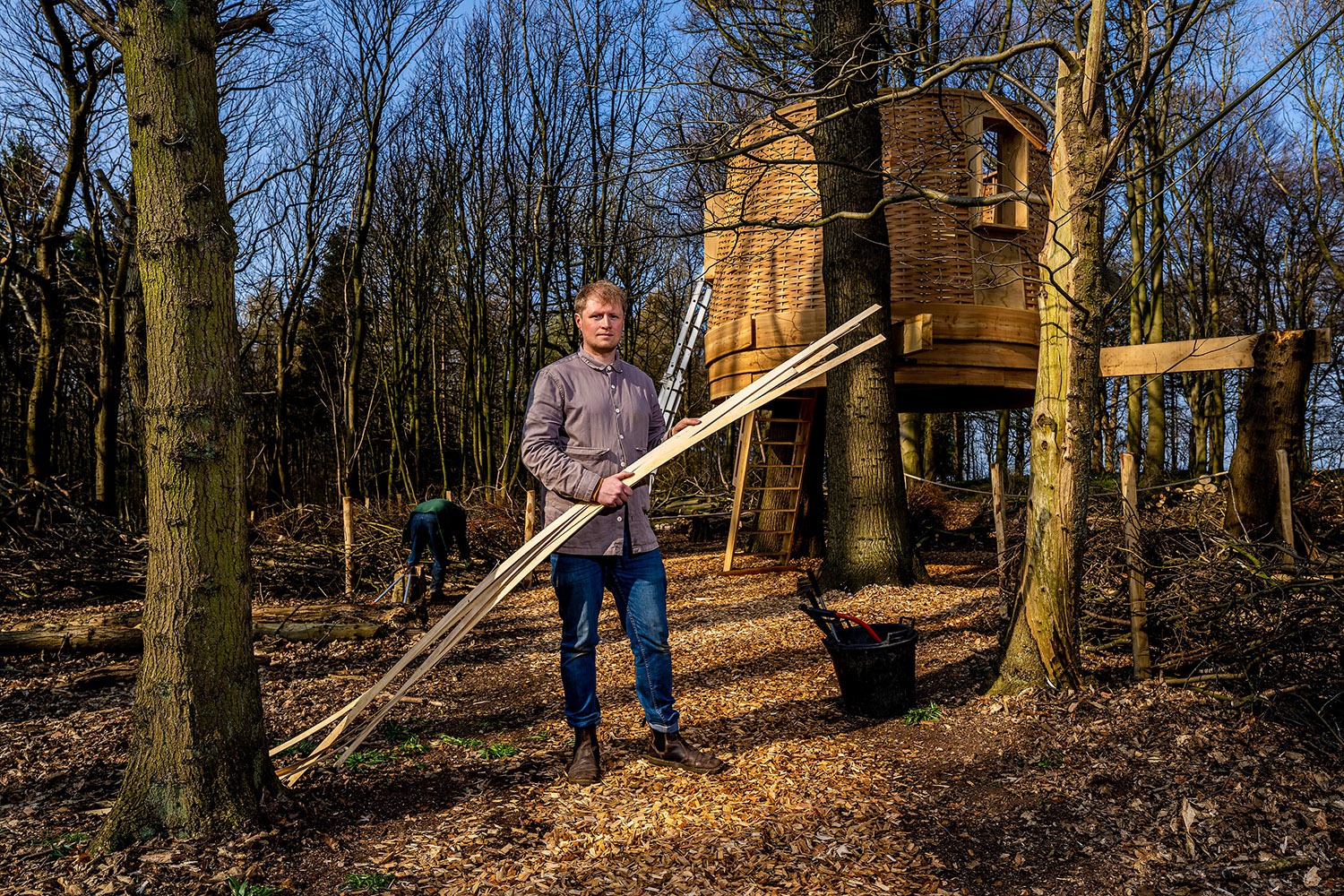
Sebastian Cox and Sylvascope
A sawmill was busily working its way through some recently felled trees, supplying the Sylvascope next door with wood to complete its construction. ‘One of the things that I’m trying to do is also show the estate that there’s another use for its timber,’ Cox told me. ‘So at the moment they use a lot for biomass, and then they sell some for timber but only the high quality. With a small sawmill, you can convert lower-quality material into product, which you can retail yourself. The trust has 100,000 people through the door a year, so you can have some sort of direct retail.’ In effect, he would like the Trust to have a side shuffle as a wood merchant, allowing local people to have access to better quality timber for their garden or other projects than the soft wood they might buy at ordinary DIY stores. This creates what Cox described as ‘a better wood culture’, which is really needed so that we create greater understanding around how and where we plant trees and how we manage them. ‘We need radical acts to address the situations we are in – small changes to what we’re doing as individuals, or large scale changes such as defining governmental policy… we need racial ideas in order to make change.’ Hear, hear.
And the perfect way to start taking those small steps is by visiting Radical Acts, and leaving inspired and hopeful and confident that the simple act of mending a hole, or taking a moment to think can lead to bigger change.
Harewood House will be hosting a two-day symposium for the Biennial with key notes by some of the exhibitors, including Mac Collins and Sebastian Cox. For more information on the programme and how to book, click here
And why not make a weekend of it and come to Hole & Corner’s Make It festival at Harewood, with a makers’ market and an exciting programme of workshops and talks. Find out more and book here