Cast No Shadow
Words Richard Benson
Photographs Alan Clarke
For Laurence Edwards, the idea is only the start of his art: unusually for a modern sculptor, he casts his own work using a self-built foundry – an approach that, for Edwards, results in ‘magic, engineering and art in a unique combination’…
Laurence Edwards’ sculptures have been written about very seriously and respectfully by critics (‘They remind us of the comfortless immortality that comes from knowing our bodies are matter,’ Robert Macfarlane said, for example, ‘and as such belong to a cycle of dispersal and reconstitution that far exceeds the human lifetime.’) So it’s a bit of a relief to meet him in his studio and ask how he got interested in art, and be told actually it began with him walking down Lowestoft High Street with a cardboard box on his head.
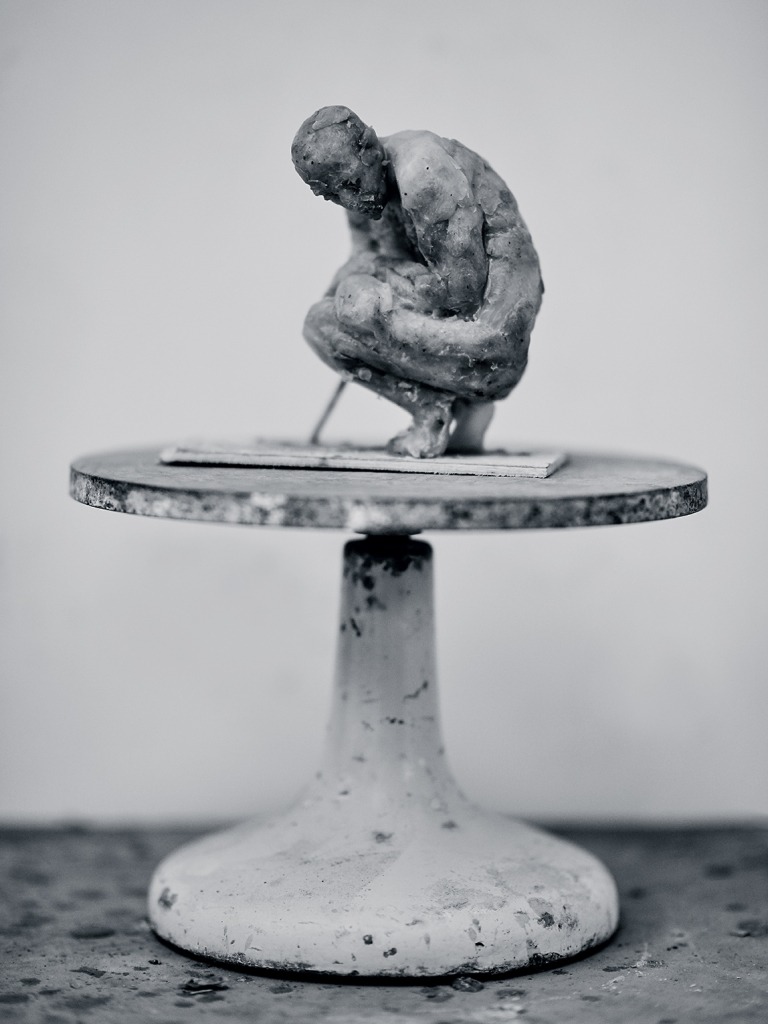
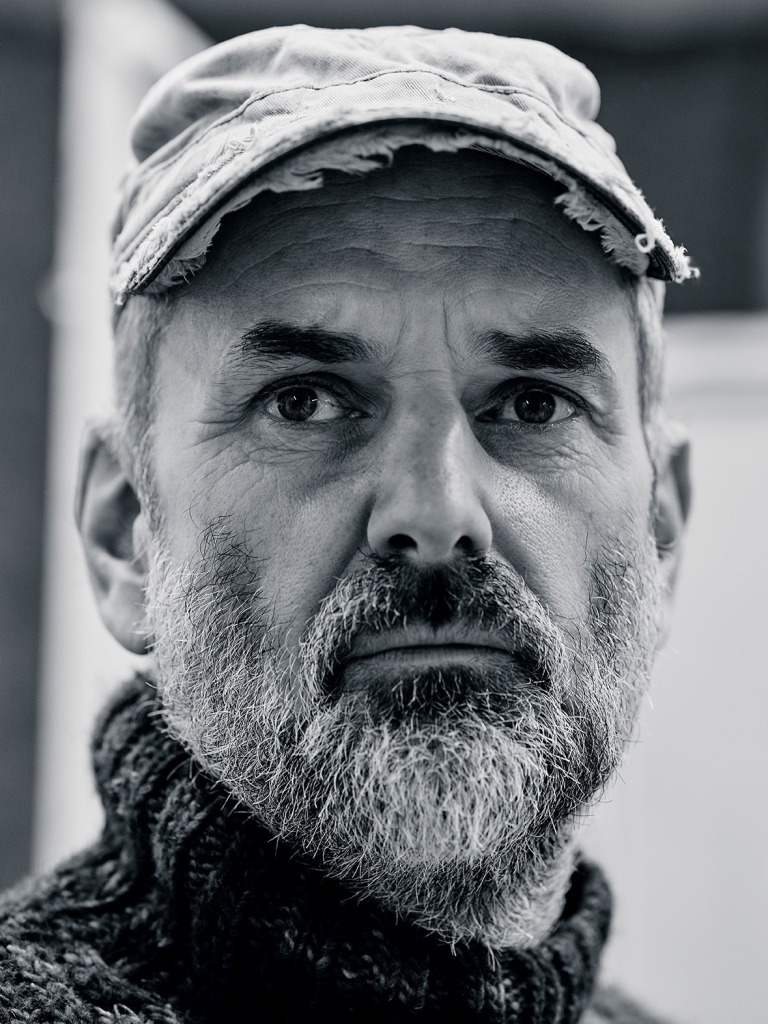
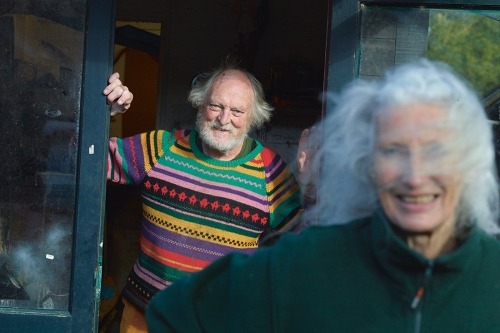
A maquette for Crouching Man II and Laurence Edwards in his studio.
To be fair it wasn’t meant to be just a cardboard box, but more of an art statement. It was the 1980s (obviously) and he was studying for his A-levels at a college in Lowestoft (he’s from nearby Snape, as in Snape Maltings, Benjamin Britten etc). He’d been ‘crap’ at his comprehensive school in Leiston, but found college brilliant, ‘because we had these hard Left Marxist lecturers who were working under the radar somehow.’ The lecturers built on the one school experience he had enjoyed – the alternative scene based in a youth club in the playground, with its fanzines and bands and political campaigning. ‘They gave us this fantastic, radical education in art history. It’d be lectures on Ingres, then Cubism, a film every Friday, a lot about Dada… It was when we did Dada that me and my mate went walking down the street with the boxes.’
In some ways this is just a serious-artist-once-did- ridiculous-thing type anecdote, but in another it’s not unlike what he does with his figures now. His most famous work, the 2008 Creek Men, consisted of three eight-foot bronze giants, some limbs missing or replaced by branches, standing on a raft in the marshes near Snape Maltings. He didn’t have permission to put them there (the raft sat on the exposed mud at low tide, and no one was sure whether the exposed mud counted as the water passage, owned by the Queen, or the surrounding land, owned by a farmer) so you see the link – both the Creek Men and the teenage Lowestoft Dadaists are/were weird figures that appeared from nowhere in a mundane setting, making you look.
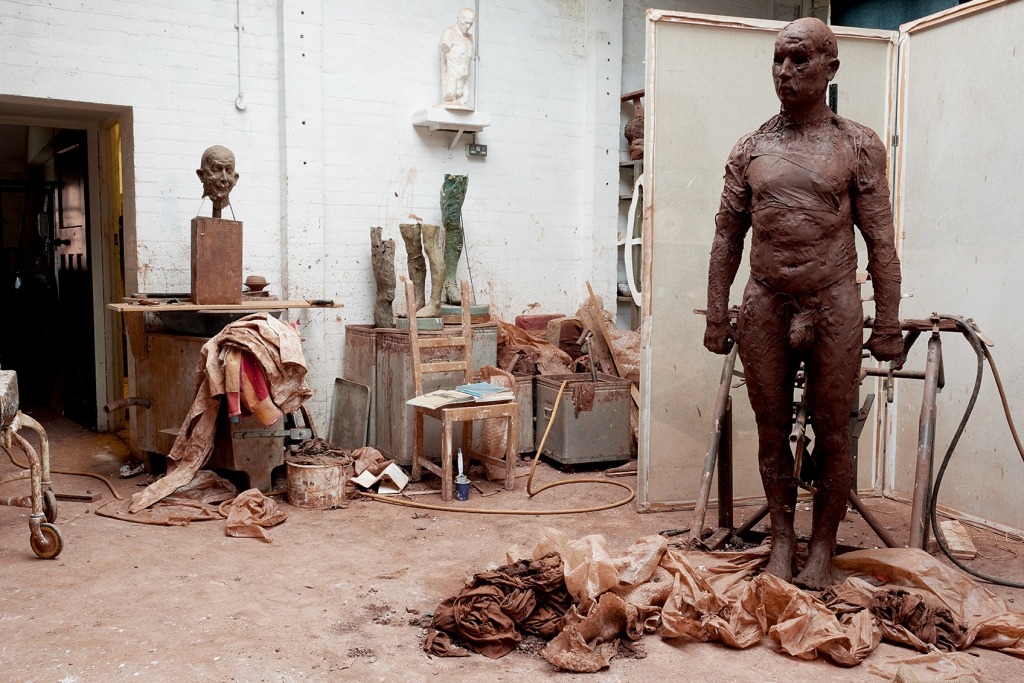
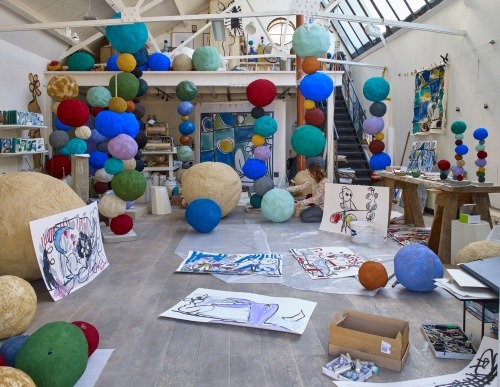
The many stages of Edwards’ work are scattered throughout his studio, with
its clay-coloured floor.
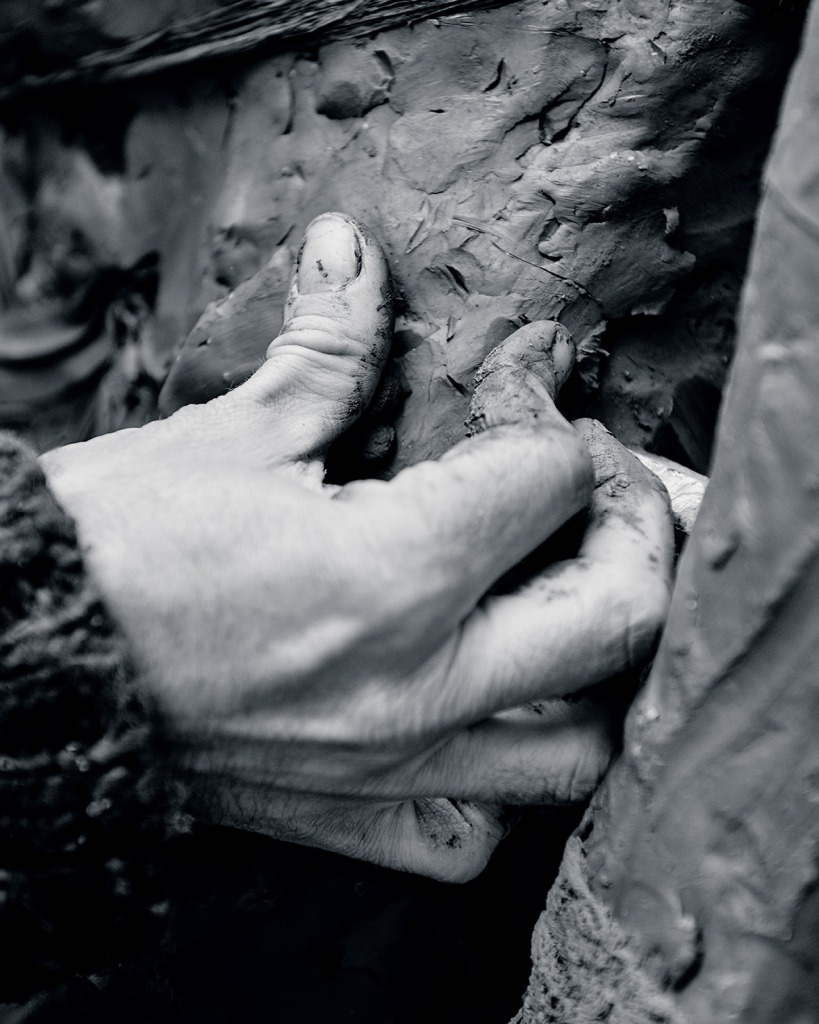
Edwards works in various forms including clay sculpture and oil painting, but he is best known for his bronze figures, which are castings of originals made from clay and, in many cases, natural materials such as tree branches, sedges or leaves. Some of the figures are only recognisable as human forms, others resemble a body being dispersed, like reflections deliquescing on troubled water-surfaces. He likes to sculpt a figure, then take it apart to find the point at which it ceases to be recognisable and becomes an abstraction or, as he puts it, ‘a man becomes leaves coming out of a cloud, and just evaporates’.
‘AS AN ARTIST, YOU ALWAYS FEEL SHORT OF YOUR EXPECTATIONS. IT’S HORRIBLE’
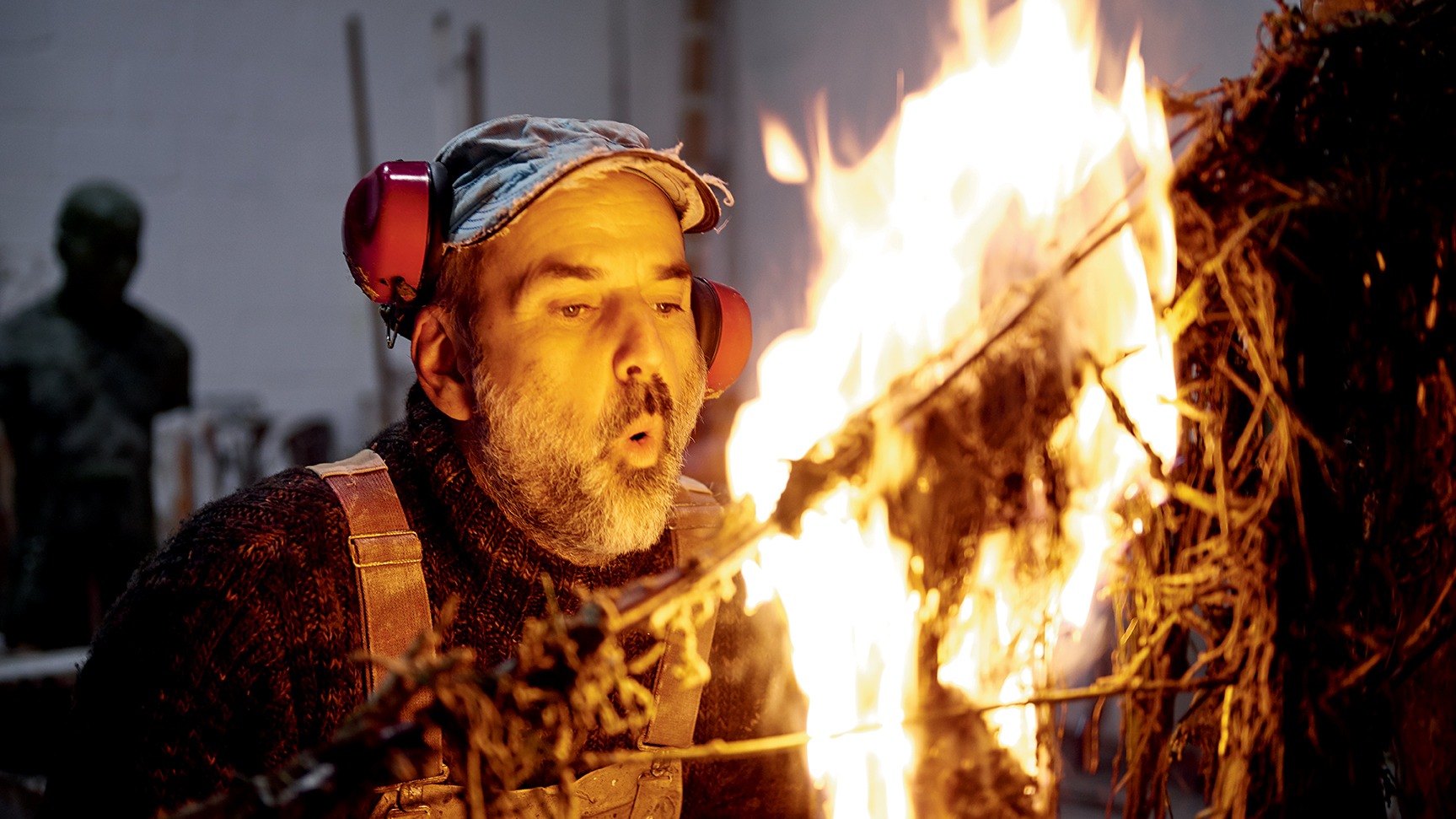
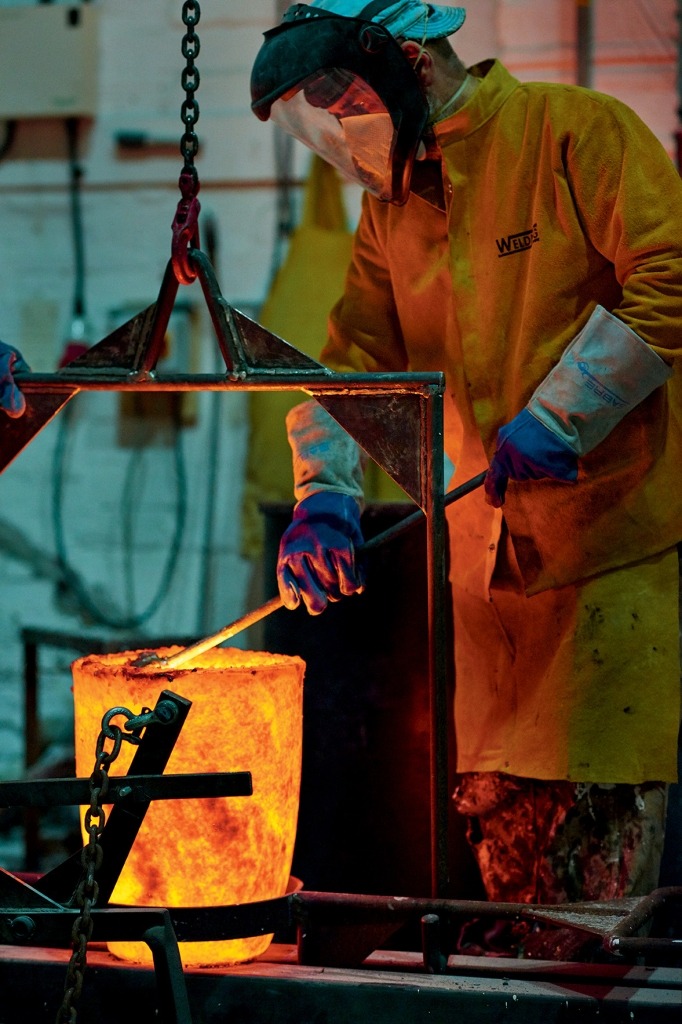
He is unusual in that he does the casting himself. Most sculptors working with bronze make the originals and then have them cast by a foundry, but Edwards executes and orchestrates the entire process, operating his own foundry in Halesworth, a small market town nine miles inland from Southwold. It is a big, raw, spattered space of cranes, barrows, bulky moulds, dirty tea mugs, men and women in overalls, and the burnt, oily odours of hot metal. In contrast his studio, in an old fire station in Saxmundham, is a place of dens, nooks and workshop-sanctums where ivy grows in through cracks and you might find a toad squatting beneath a half-clad armature, or a clay body suspended from the ceiling by old sisal and polypropylene ropes (he is working with rope a lot at the moment).
What links the spaces also links Edwards to sculptors going back through history to almost 7,000BC – ie the technique. He uses the lost wax method, also known in contemporary industrial settings as investment casting and, in France, as cire perdue. First the original clay models are made, built up gradually and experimentally over weeks rather than being shaped into something imagined – progress dependent on atmosphere, temperature and the dryness of the clay. He enrobes the clay in plaster to make a mould comprised of several sections, and then pours wax into the mould; the wax coats the mould and sets in a hollow copy of the original.
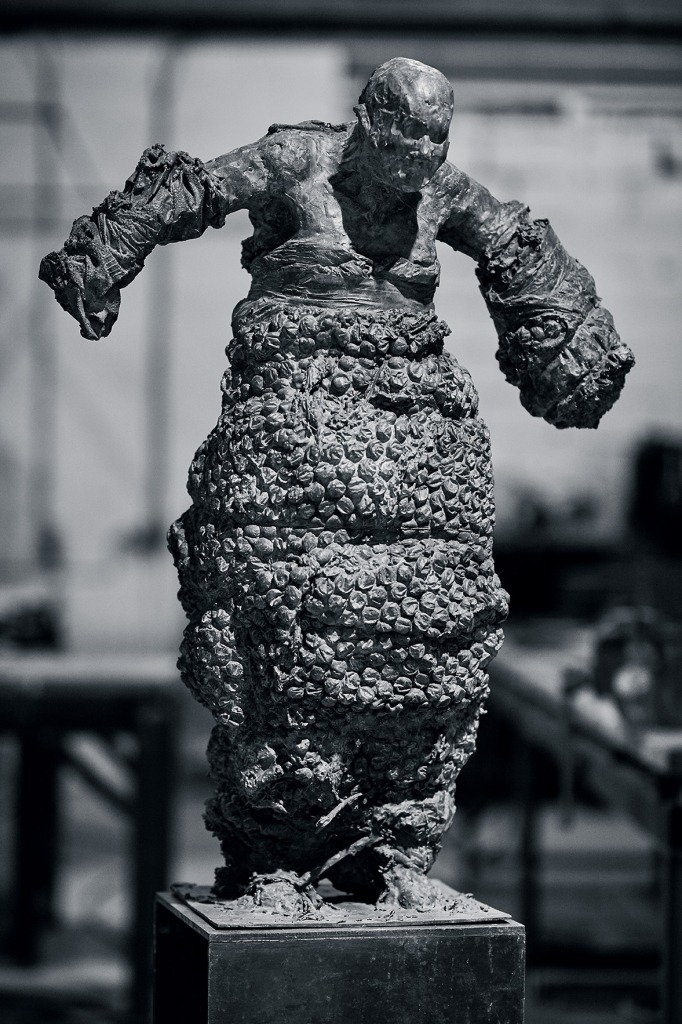
Next, the hollow wax copy is covered in fireable plaster, and placed in a kiln. The wax melts and drains out, leaving plaster moulds that can be used for casting the bronze. The molten bronze is poured and, when it is set, the plaster is broken away to reveal the bronze sculpture, or, more likely, a part of the sculpture. After that, the parts must be joined, sprues trimmed, and seams filed to remove the outward signs of the casting process.
Of course, all that gives you a sense of the physical experience of casting in the same way that, say, a set of IKEA instructions tells you how it actually feels to assemble a Malm chest of drawers. Edwards has this big problem with the bundles, twigs and grasses that he incorporates in the figures; their shapes in the moulds are long, thin and vinous, so the wax and bronze don’t always run down the channels. You can’t tell until you take away the plaster if it’s worked or not; you need only look at a work like The Catcher, in which a man seems fused with a ragged winter hedge – or is it a net? – to imagine the difficulties. He says he has learned to accept whatever happens as part of the process, which seems right; many of the figures look as though they have abruptly awoken from the earth or hedgerow leaf-trash, so some random roughness, breakage and discontinuity makes sense. The unpredictable tricks of air pressure, gravity and temperature are instances of the same strange, recalcitrant natural processes depicted in the sculpture.
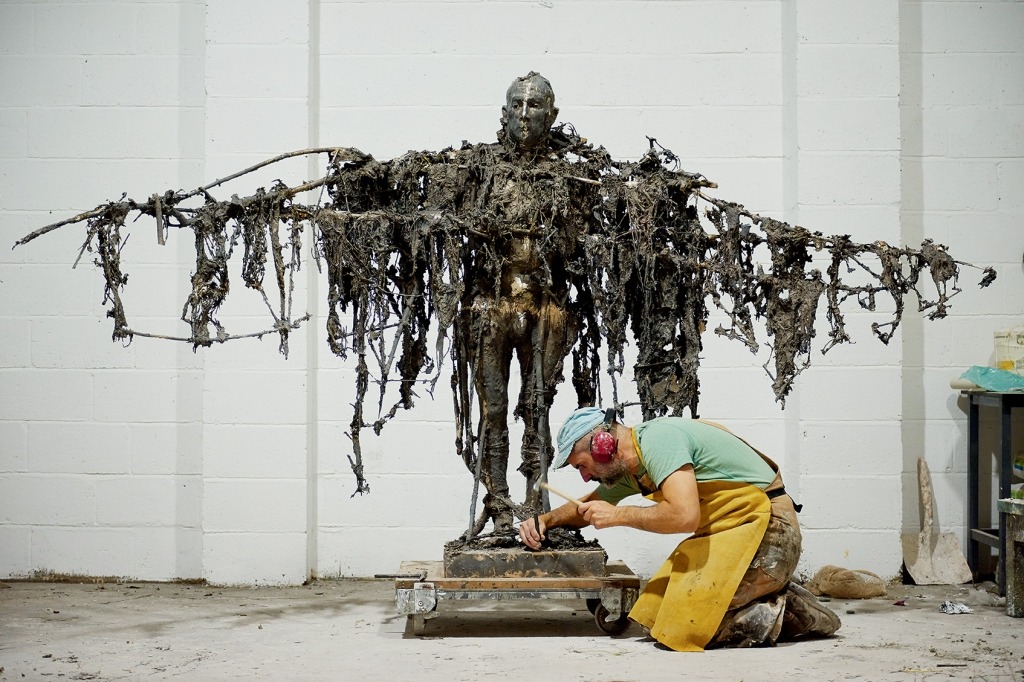
Edwards in his studio, fine-tuning the detail of his 2015 bronze, The Catcher.
Now, we need to talk about bronze. In the contemporary art world, bronze is almost certainly the least hip material you could choose to work with. Probably the only way an artist could make sculpting bronze less trendy is by casting the sculptures themselves (brief explanatory note for people not up on art hipness: in the contemporary, post-modern scene, art is all about having an idea. Fashionable post- modern artists have ideas for things, and then get someone else to make them, ideally pushing said someone to the limits of what they can do. Edwards’ art isn’t about ideas: it comes of the process of working the clay). But Edwards is the sort of bloke who has to go with what he feels, and his work grew out of a revelatory feeling he got during a project in his second year at art school in Canterbury, where he studied sculpture under Anthony Caro. He had just made a plaster head, and suddenly felt, ‘This is it, this is real. The whole experience was there, in that head; it wasn’t about illusion, I didn’t have to worry about spatial planes, or describing space as you do with painting, say. I liked the fact that it wasn’t illusion, it was direct.’
He discovered the college had a foundry, and the permanence of bronze, the combination of skills used to make the castings, the journey of the object through different moulds and materials, just caught him. ‘It was,’ he says, ‘magic, engineering and art in a unique combination.’
‘WHEN YOU BUY BRONZE, THERE’S A GOOD CHANCE IT’S GOT OLD SCULPTURES IN IT’
He did a foundry course at the Royal College of Art, where he learned the lost wax technique, and went to India and Nepal on a scholarship, working with traditional casters. In Nepal, he deepened his growing sense of the tradition that connects lost wax casters of the ancient past with the British artists like Henry Moore, and the 1950s Geometry of Fear group, who also used the method.
‘Bronze is this wonderful material that was great for military weaponry, yet was also soft enough to be worked on, and had a flow to it. It gives you incredible detail, fluidity, and flexibility, and it has a low melting temperature. Its history is about art and war and, because it’s a strategic metal, thousands of sculptures have been melted down for weapons, and then melted down again, so there’s this notion of a big family pool. When you buy bronze, there’s a good chance it’s got old sculptures in it; there could be some of the Saddam Hussein statue in some of mine! Every time I touch it, I am touching a whole history I want to be a part of, a tradition going back to the Greeks. I like being part of a story, a narrative.’
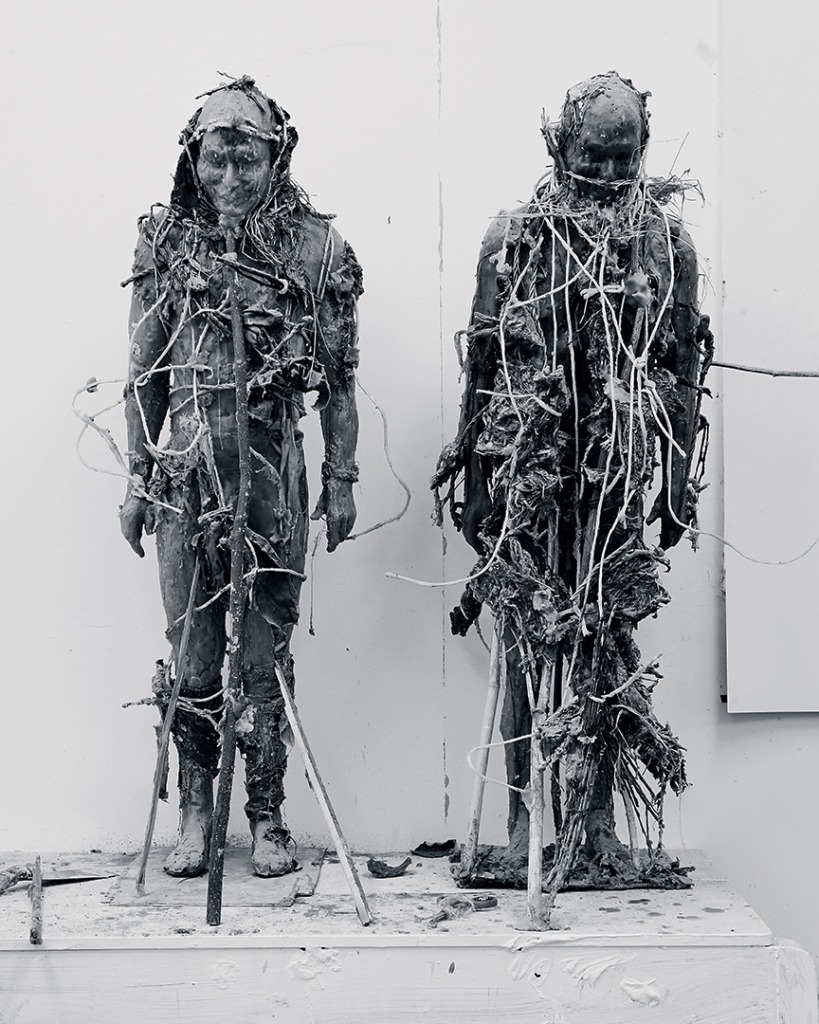
The organic nature of Edwards’ making process – as well as that of many of his chosen moulding materials – means that the final form his sculptures will take is never certain.
After returning from Nepal he set up a foundry, first in London, then back in Suffolk. He cast other people’s sculptures and worked on his own, and it was fine, though he sometimes felt on the edge of things and had a bit of a chip on his shoulder about ‘being out of my time.’ He was changed by a book: W.G. Sebald’s The Rings of Saturn, an account of a journey on foot through coastal East Anglia that draws stories of people, cultures and profound meditations of the nature of time and change out of the obscure landscape. Sebald showed Edwards that his own experience of that land, the place where by now he had begun raising a family with his wife (they have two sons, now aged 17 and 14), could have value. The Creek Men came out of this: he located them at Snape Maltings during the Aldeburgh Festival because it was the major arts centre in Suffolk that, until that point, had ignored him. No one in Suffolk ignores him now; since the Creek Men, his work is held in high esteem and affection by the general public as well as the arts establishment.
He has peopled the landscape with other figures, including one that lies in the mud at Butley Creek, near the site of his former foundry. Titled A Thousand Tides, it’s covered at high tide and exposed when the water recedes – the muddy liminality is typical. He knows many of his men occupy nameless states – conditions somehow between life and death, animal and vegetable, aggression and fear, and he links that to the marshy, fluid, shifting Suffolk shore. ‘It’s that sense of erosion changing the landscape constantly. You can’t trust it. You trust your feet, in a sense.’
‘IT’S ONLY 20 YEARS LATER YOU SEE SOMETHING YOU DID AND THINK, ACTUALLY THAT’S GOOD!’
Perhaps even more important to him than the shoreline is the county’s Saxon archeology, the most famous example of which, the Sutton Hoo cemetery, is only a few miles from where he grew up. As a boy Edwards used to go on digs, and noticed how ‘the bodies were never real, but just stains on the earth. I’d brush away the black sand to get to the yellow sand, and it always struck me that I was making sand men, not finding bodily forms. My work is partly about trying to put bodies into our landscape, trying to give us something to dig up, to get hold of. My ‘permanentising’ of the body is about being very aware of my temporal nature, being made aware of it by the archeology in the landscape.’
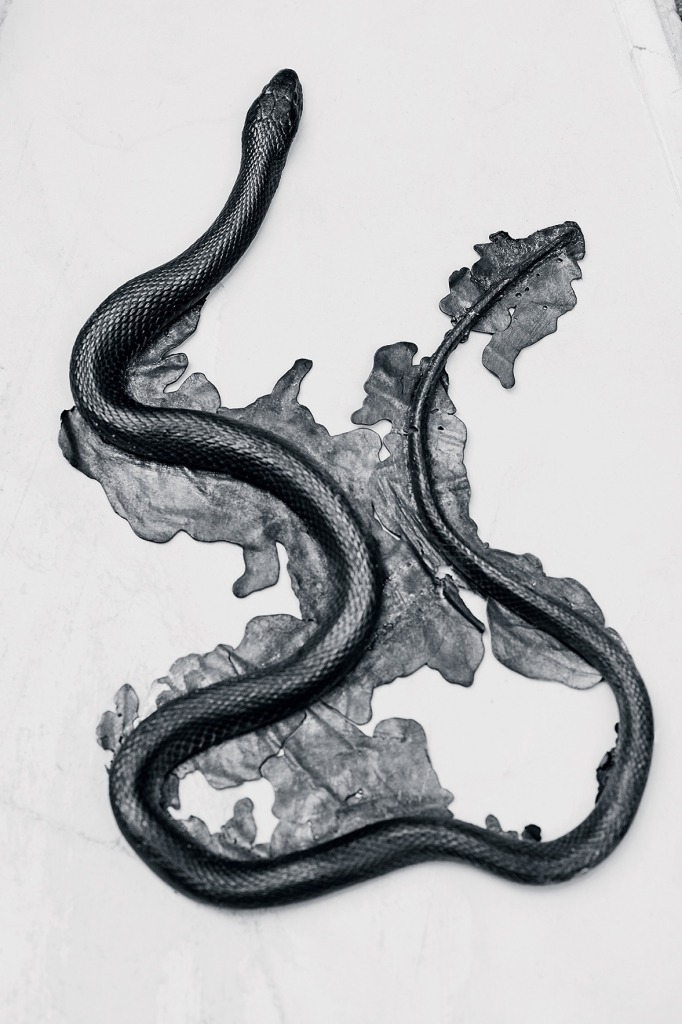
A sort of reflection, then; art for the negative spaces in landscape and history, space and time. Far from being an outdated practice, Edwards’ work seems more like a deconstruction of ideas about the bronze figure, a pushing and pulling at the edges. He thinks his men reflect him too, because ‘as an artist, you always fall short of your expectations. You imagine work, and then in reality you make it and it isn’t what you expect it to be. It’s horrible, it’s only 20 years later you see something you did and think, actually that’s good! I think that feeling might explain these rather sullen characters, with their pathos. Pathos is a term coined to describe how we are never going to achieve the enlightenment, never going to attain the grace we thought we would.’
Seeking grace on the shifting shore: it sounds like a feeling many of us will feel we know something about in this dark winter of 2016-17. It is hard to know whether there is something beleaguered about some of these men that resonates strongly in these bewildering times, or if they somehow reflect back at us whatever we choose to project. Either way, in their own way they are magnificent; heroes for our time and their place.