Amigos de Santa Cruz; a community-led charity on the edge of a volcanic crater
Words Meena Sears
Photographs Jimena Peck
A community-led charity set on the volcanic crater of Lake Atitlán in Guatemala, Amigos de Santa Cruz is keeping local traditions in food and craft relevant for a new generation
I arrive off the boat in Santa Cruz at around 9.40am on a warm day in March. The clouds are perched just below the peaks of the mountains surrounding the lake, ready to sink lower as the day goes on. For now, I appreciate the morning sun.
I had travelled from San Pedro, one of 12 towns that line the shores of Lake Atitlán. Formed 84,000 years ago, after the Los Chocoyos eruption, Lake Atitlán sits in a volcanic crater, flanked by three more volcanoes. It is the most impressive lake I have ever seen, not least for its fiery origins, but also its size; even when the haze has cleared it is difficult to see the other side.
San Pedro is known to be more touristy than the other towns, with weekly pub crawls and Western food options; its selection of budget-friendly hostels is what enticed us. Santa Cruz is another town on the lake, about an hour’s boat ride from San Pedro. It is a little larger, made up of seven communities spread over the mountainside, with a population of about 9000. You can also find backpacker hostels and fancy restaurants here, but these are mostly closer to the shore. A 10 Quetzal tuk-tuk will take you up to the centre of town where locals are going about their daily lives.

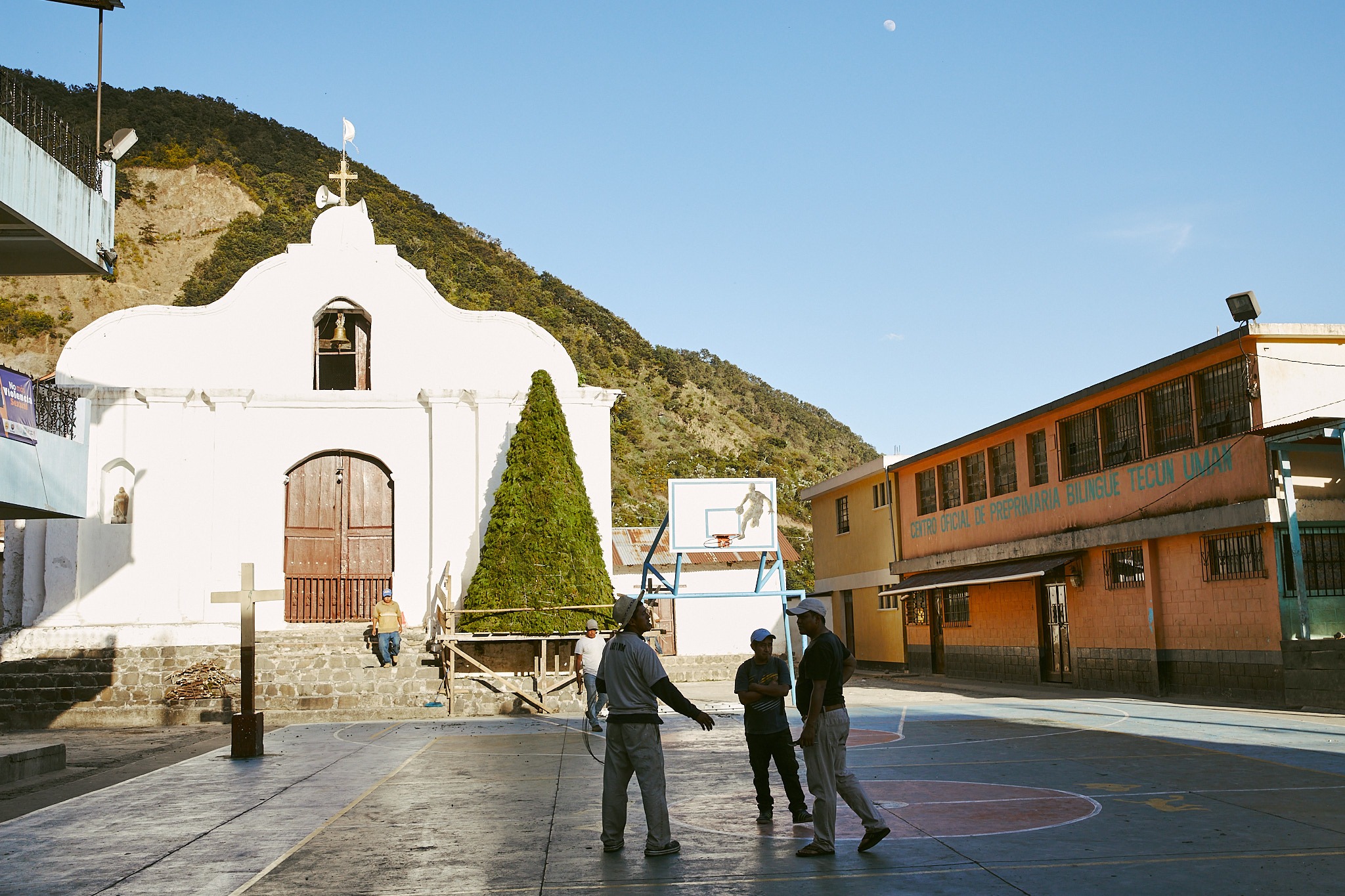
A 10 Quetzal tuk-tuk (left) will take you up to the centre of town where you’ll find the local school (right)
There are around 21 different Mayan groups in Guatemala, with two on Lake Atitlán alone. The people of Santa Cruz belong to the Kaqchikel group. As you walk around town you will notice the locals switching between Spanish and Kaqchikel as if they were one and the same. Women wear the traditional Mayan huipil and corte, an elaborately embroidered blouse and skirt combination that contain the colours and symbols closely associated with Santa Cruz and the Kaqchikel group.
I had come to Santa Cruz to meet Pablo Hernández, the communications and operations manager of the non-profit organisation Amigos de Santa Cruz. Founded in 1998 by Pat Torpie, a tourist from the US, Amigos works to improve the lives of local, indigenous people through education and sustainable economic empowerment.
The story of Amigos began when Torpie raised enough money through friends and family to provide books for all the first graders [six-year-olds] in Santa Cruz. In the 20 years since then, the charity has expanded, incorporating more substantial initiatives into its repertoire such as a reading programme, which aims to engage children in literature through discussion, song and theatre, and high school or university scholarship support. Amigos is now run by local Cruceños and Cruceñas – people from Santa Cruz – with 80% of its staff coming from the town.
 Lake Atitlán at dusk
 Children playing in Lake Atitlán
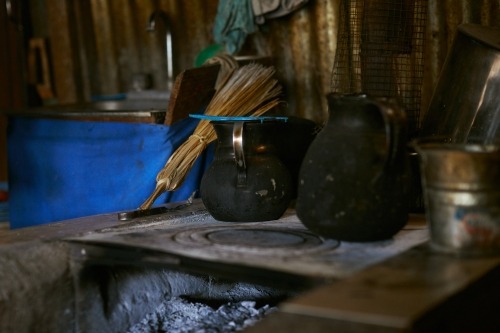 Amigos de Santa Cruz is keen to preserve traditional Mayan cooking techniques
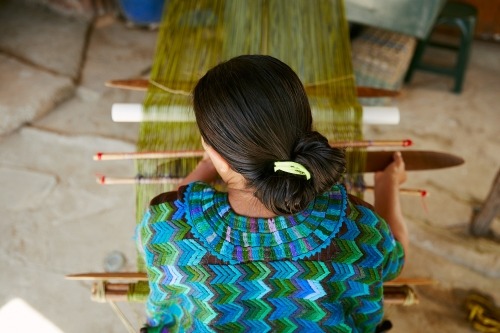 Traditional Mayan huipil



In 2010, responding to calls from the community for more direct economic support, the organisation opened the CECAP Vocational Training Centre, which provides courses in trades such as weaving, carpentry and the culinary arts. The whole town helped to build it. ‘Women could be seen balancing bricks on their heads as they carried them up the hill,’ Hernández tells me as we sit down for a chat in Café Sabor Cruceño, a cafe situated on the top floor of the CECAP Centre and run by graduates of the CECAP Culinary Program.
The menu varies from grilled chicken sandwiches and teriyaki tofu, to more traditional dishes such as pepiάn, a thick blend of seeds, cacao and spices, and pulique, a herby, corn-based stew popular during Santa Cruz festivals. While it is necessary to train students in international cuisines to increase employability, Amigos is keen to preserve the heritage of Santa Cruz by maintaining an equally strong focus on traditional Guatemalan food in their culinary courses. The cafe’s roof terrace looks out across the vast expanse of Lake Atitlán. Directly opposite us, Volcán San Pedro protrudes upwards, its crest poking out through the now sunken fog.
Hernández is a smiley man; passionate and full of enthusiasm. ‘What you have to understand,’ he says, ‘is that the lanchas [small public speed boats] you came on today did not exist 20 years ago. And, as for the road that leads here, that’s only eight years old. So, until very recently, Santa Cruz was an isolated community and no one had really heard of it. While public schools were here before Amigos came to Santa Cruz, most children would drop out of primary school after only a year or two, so education wasn’t really a priority, and the only jobs available were low-paying and manual labour, and almost entirely for men.’

View from a lancha (the small speed boats that transport locals and tourists around the lake)
Now, the Reading Program flourishes in Santa Cruz, with 141 participants in 2021, while seven children graduated from high school and two from university as a result of the Amigos scholarship programme that same year. Success stories include Paulina Tepaz, who studied as a bilingual secretary in high school on an Amigos scholarship and now works at the Manos Cruceñas Artisan Store, a shop selling handmade products made by women trained at the CECAP Centre. She is also completing her Master’s in Business Administration at the university in Sololá, with scholarship support from Amigos.
Part of what makes Amigos unique from other non-profit organisations in Guatemala is its direct connection to the local people. The two directors, Rosalia Simón Pérez, and Estela Simaj, were two of those first students that received the donated books from Amigos back in 1998. Pérez and Simaj are proof that early intervention and support can have a sustainable impact on the future of young Cruceños and Cruceñas.
Raquel Santos Ujpán, who graduated from one of the CECAP training programmes, also now works in the Amigos team. Her oldest daughter, Irma, is currently enrolled in the CECAP’s Culinary Programme, and her two youngest, Gladys and Pablito, are participants of Amigos’ Early Education Reading Program. Ujpán’s family is one of many whose lives would not be the same if it weren’t for Amigos. Her innate flair for entrepreneurship has been nourished by the support of the organization – as well as running her own sewing business, she now plans to open a restaurant in Santa Cruz.
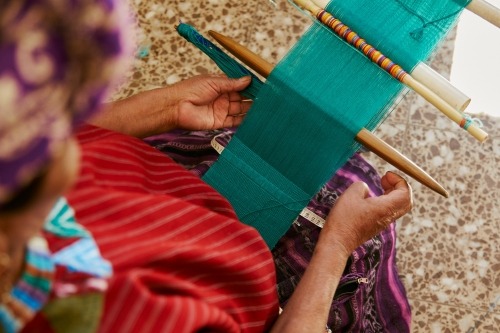
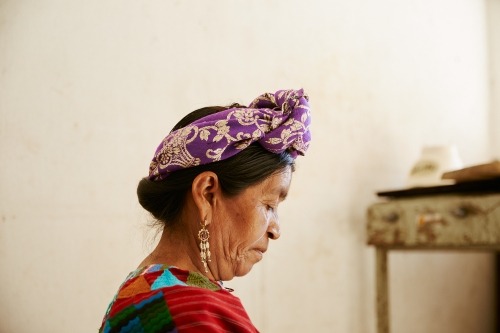
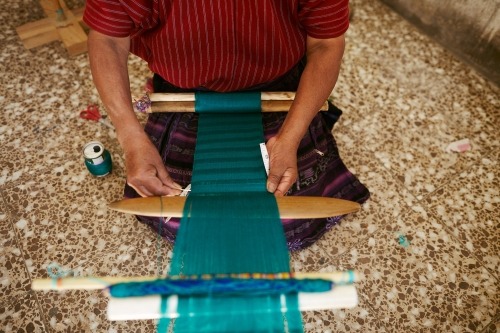
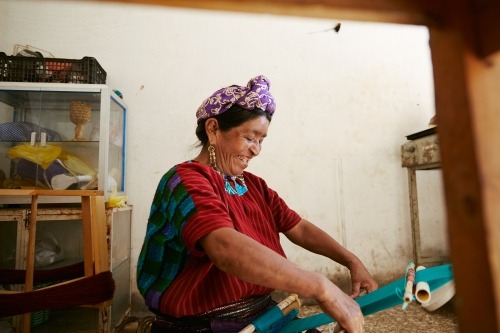
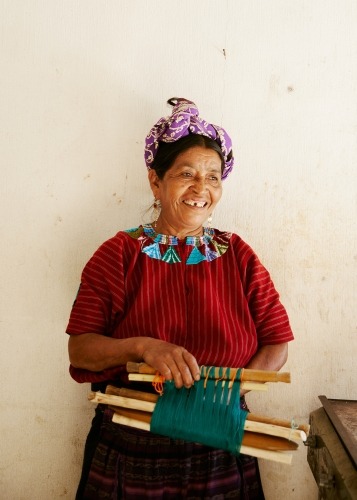
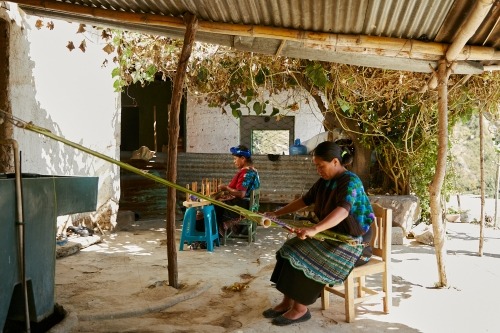
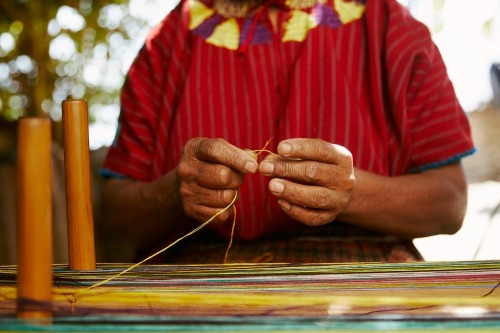

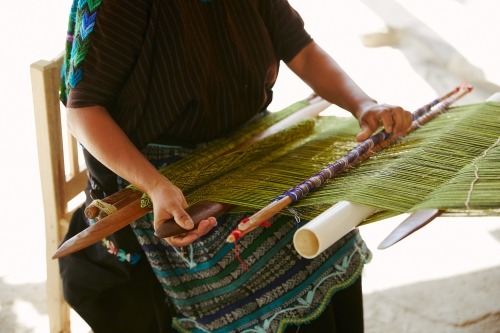
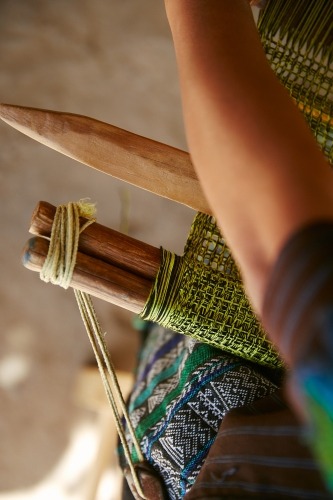
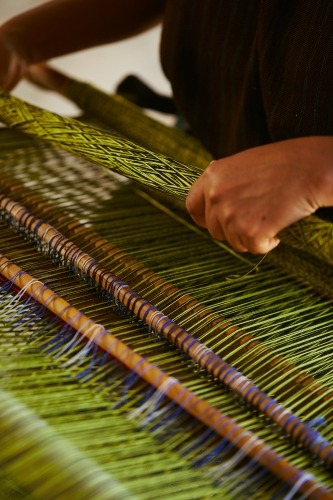
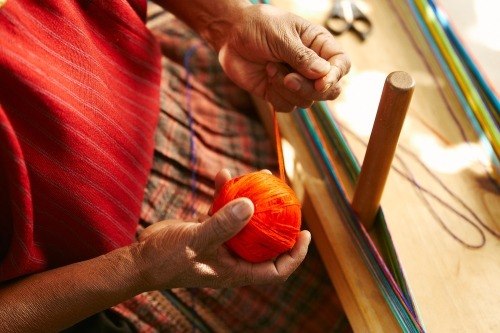
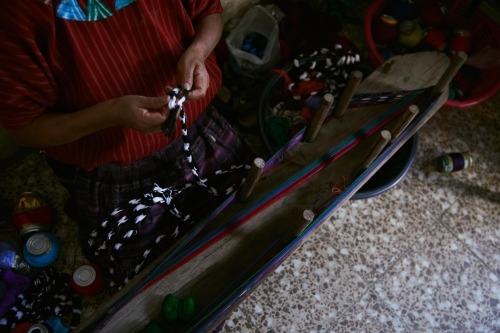
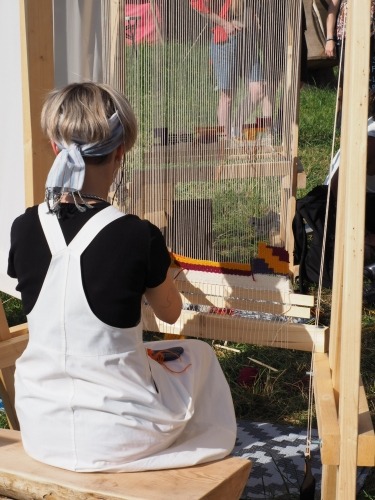
Local women weaving for the Manos Cruceñas Artisan Store
Female-owned businesses are a new and rapidly growing phenomenon in Santa Cruz. Hernández points at some products being sold from a shelf in the corner of the room. ‘From organic eggs to honey to soap, there are now nine local businesses in Santa Cruz owned and run by women as a result of support and training provided by Amigos, such as seed capital and information on how to create a budget,’ he says.
The Manos Cruceñas Artisan Store is on the floor below the cafe and, before I leave, store manager Ricardo Aceituno shows me around. There are about 65 women working with Amigos to produce the shop’s range of handmade goods, which includes bags, cushion covers and jewellery. They can choose to work from home or come into the CECAP Centre to use the sewing machines, which allows them the freedom and flexibility to fit their work life around their home life.
The handwoven shawls catch my eye. In various shades of purples, oranges and blues, they combine traditional Mayan patterns (such as a volcano pattern symbolic of Lake Atitlán) with modern designs. ‘Weaving is, of course, a tradition here. The women learn it when they are kids – it is like learning to cook,’ Aceituno explains. ‘When we create a new product, we give them a rough idea of what we want, and they do the rest; they have creative licence.’
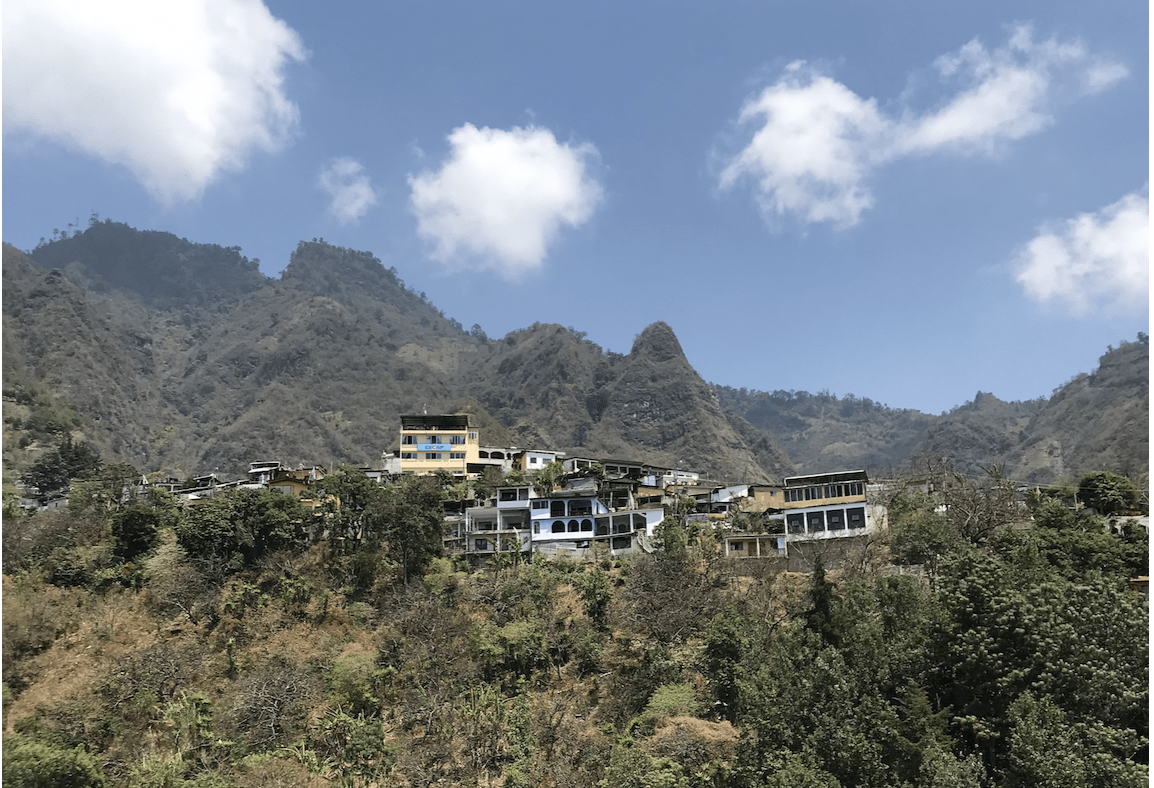
Painted yellow, the CECAP Vocational Training Centre shines out among the other buildings. Photograph Meena Sears
Aceituno also tells me that Amigos is planning to open its own school in Santa Cruz within the next two years. ‘We hope that by opening our own school, we can have more control over teaching quality and curriculum. We are currently in the process of deciding what age group would benefit the most. It’s hard because, if you take young kids, you can form them, right? But you won’t see the results for another 15-20 years. Whereas if you take teenagers, you can see results in the next five years.’
Either way, Amigos will undoubtedly continue to change lives in Santa Cruz by lighting the path towards university degrees, employment and female empowerment. As I walk back down to the lakeside, I look up from the winding road beneath the town. The CECAP Centre stands tall among the other buildings. Painted bright yellow, it shines like a beacon of light, a fitting description for something that gives so much to the people of Santa Cruz.
You can follow Amigos at @amigosdesantacruz, or donate through their website
The Manos Cruceñas Artisan Store is also online; all proceeds directly benefit the artisans and their families