In the Studio with… Emma Louise Payne
interview meena sears
photographs Louise Yeowart and Kristy Noble
Emma Louise Payne is a ceramicist from Henley-on-Thames. She works with a number of clients to create ceramics-based commissions for interiors, including tiling and lighting, as well as teaching pottery workshops at her home studio. Payne has spent time in Norway, China and Denmark to learn more about the world of ceramics from different cultural perspectives, and completed an MA in Ceramic Design at KADA (Copenhagen architecture and design school). In 2017, Payne moved back to her family home, a small farm in the countryside near Henley-on-Thames, setting up her studio and workshop at the end of the garden. ‘Ceramics can be a fine art or an inexact art form,’ she says. ‘It’s so versatile and I love experimenting and finding new processes and outcomes.’
This month, Payne launches London Plane, a ceramics collection ranging from plates and bowls to candle holders and vases, all of which have been inspired by the distinctive markings and colours of London plane trees.
Tell us about your studio… where is it, what is it like, and how long have you been there?
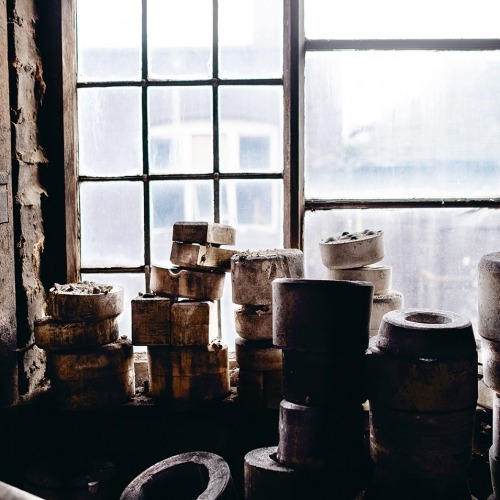
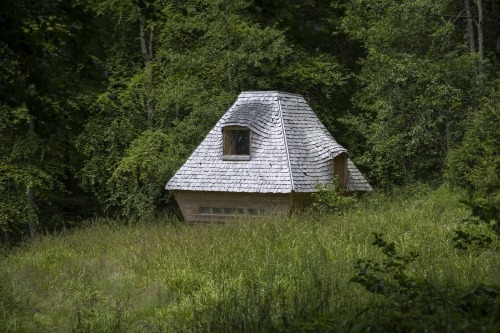
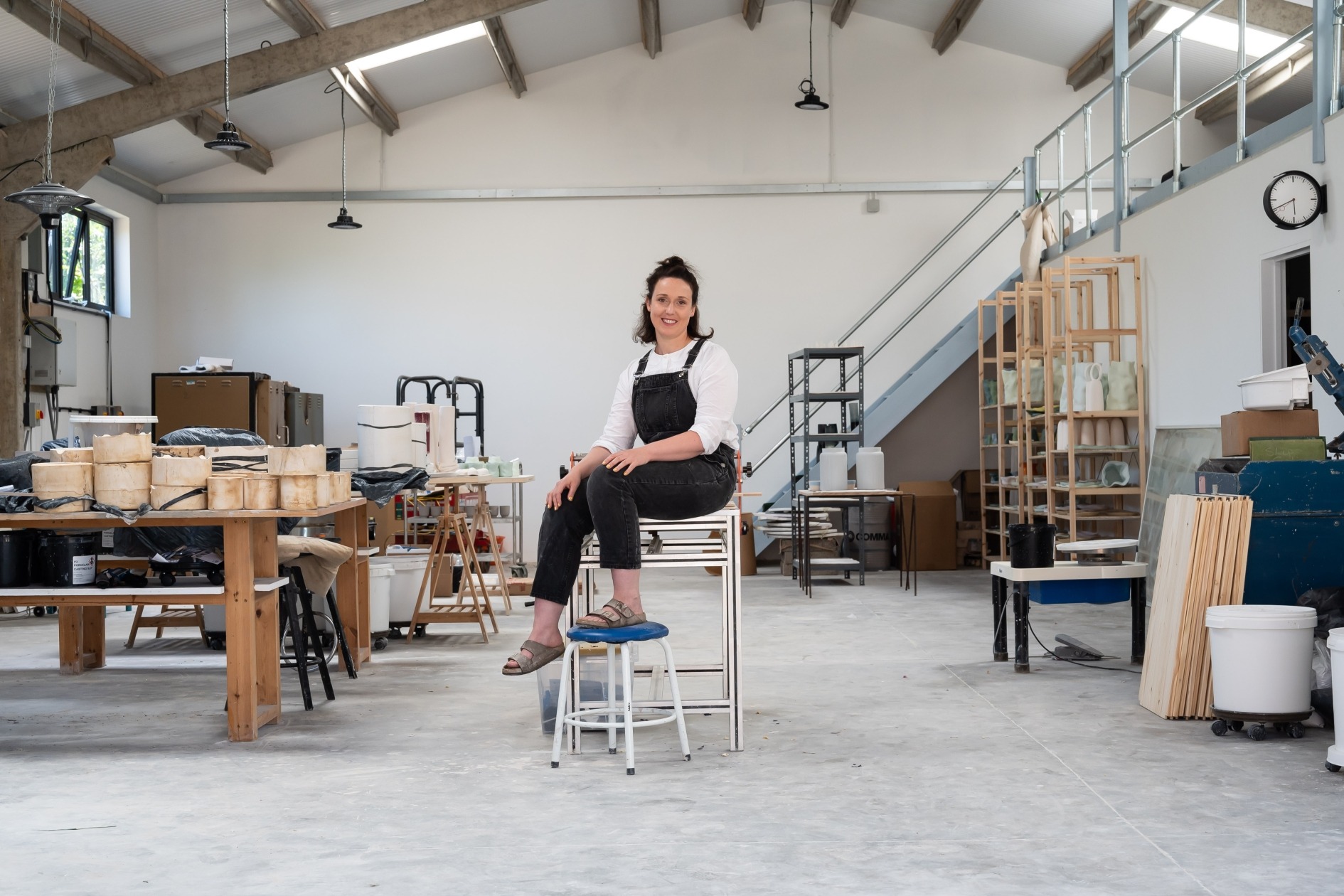
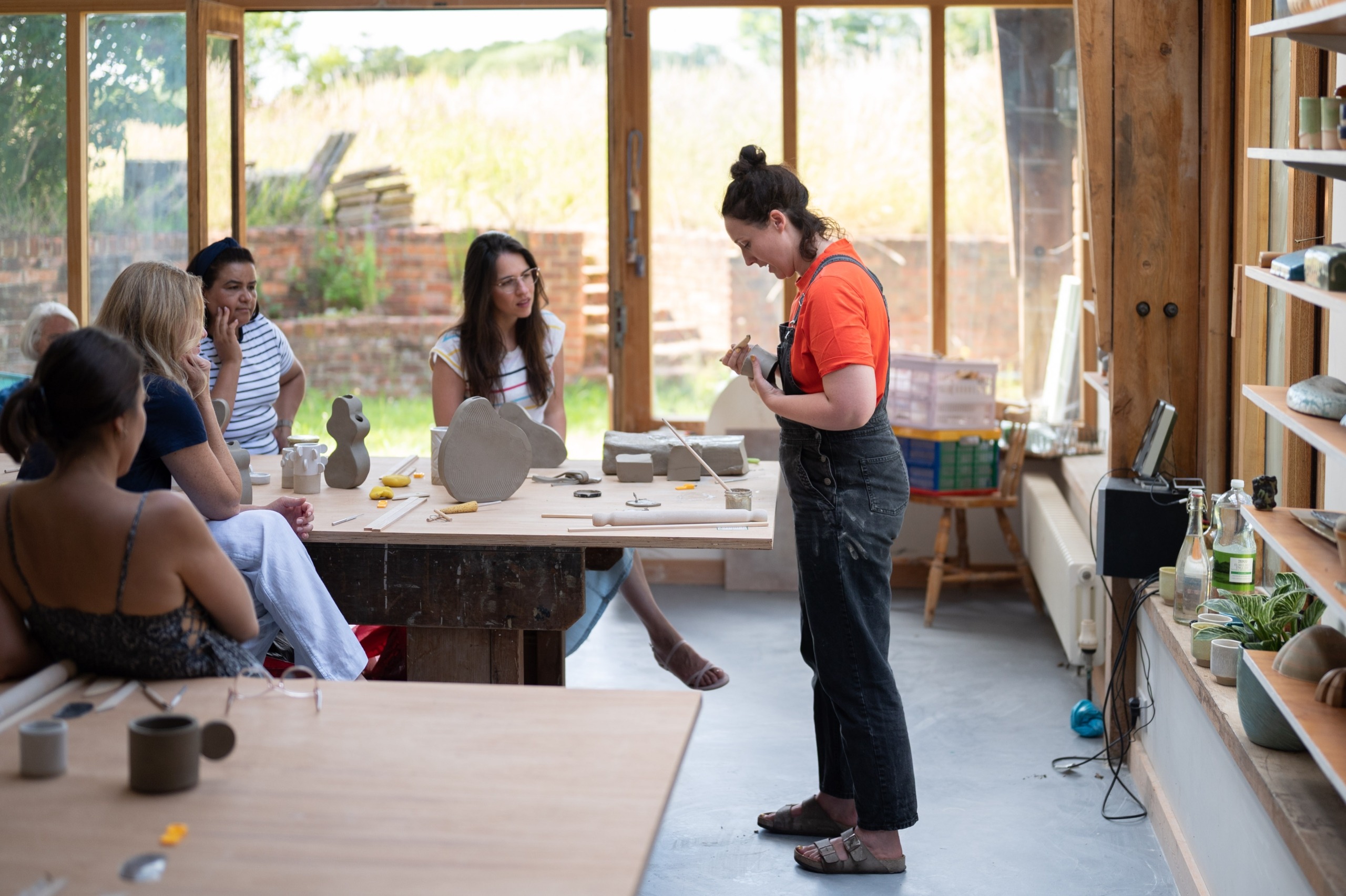
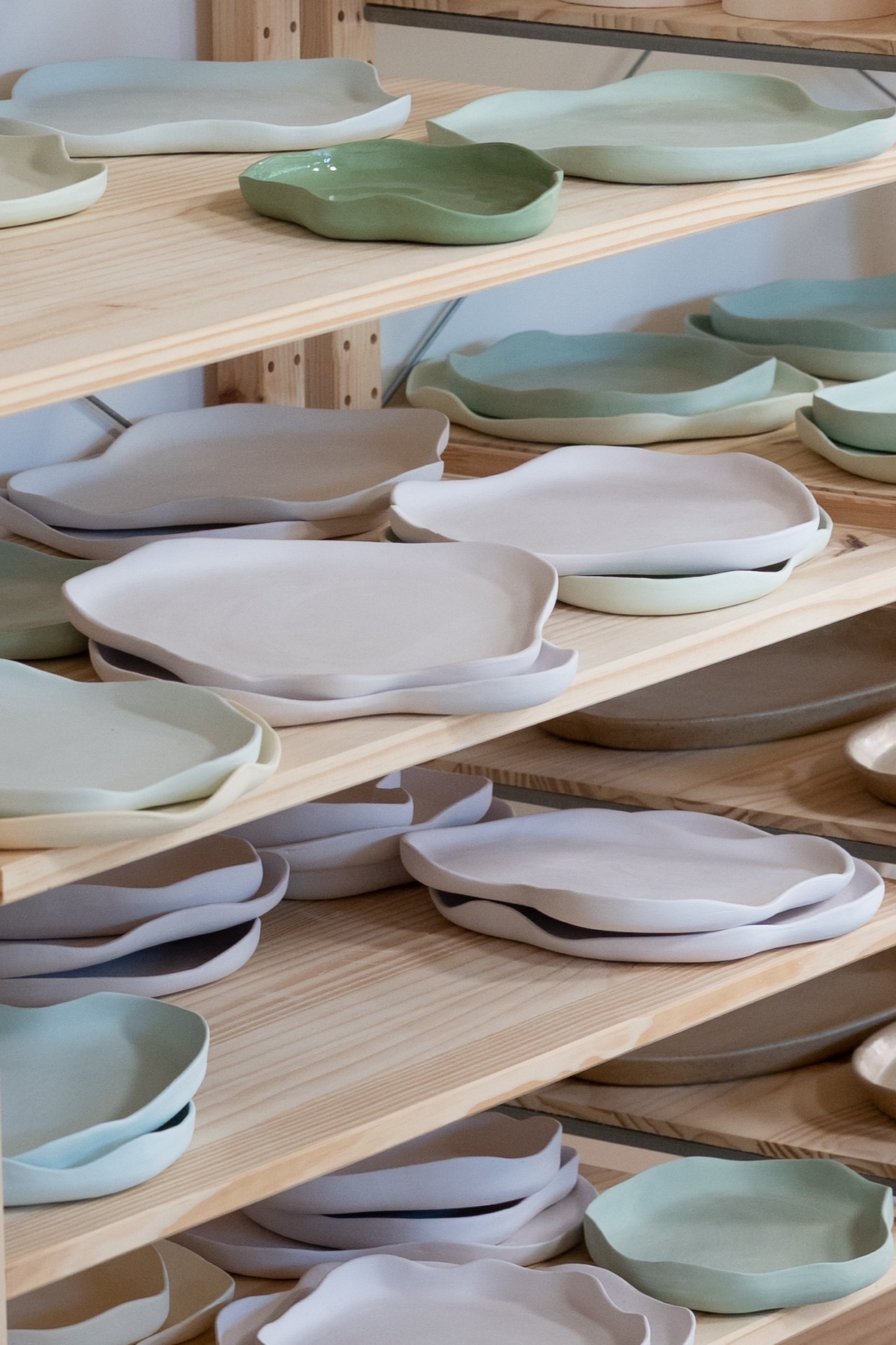
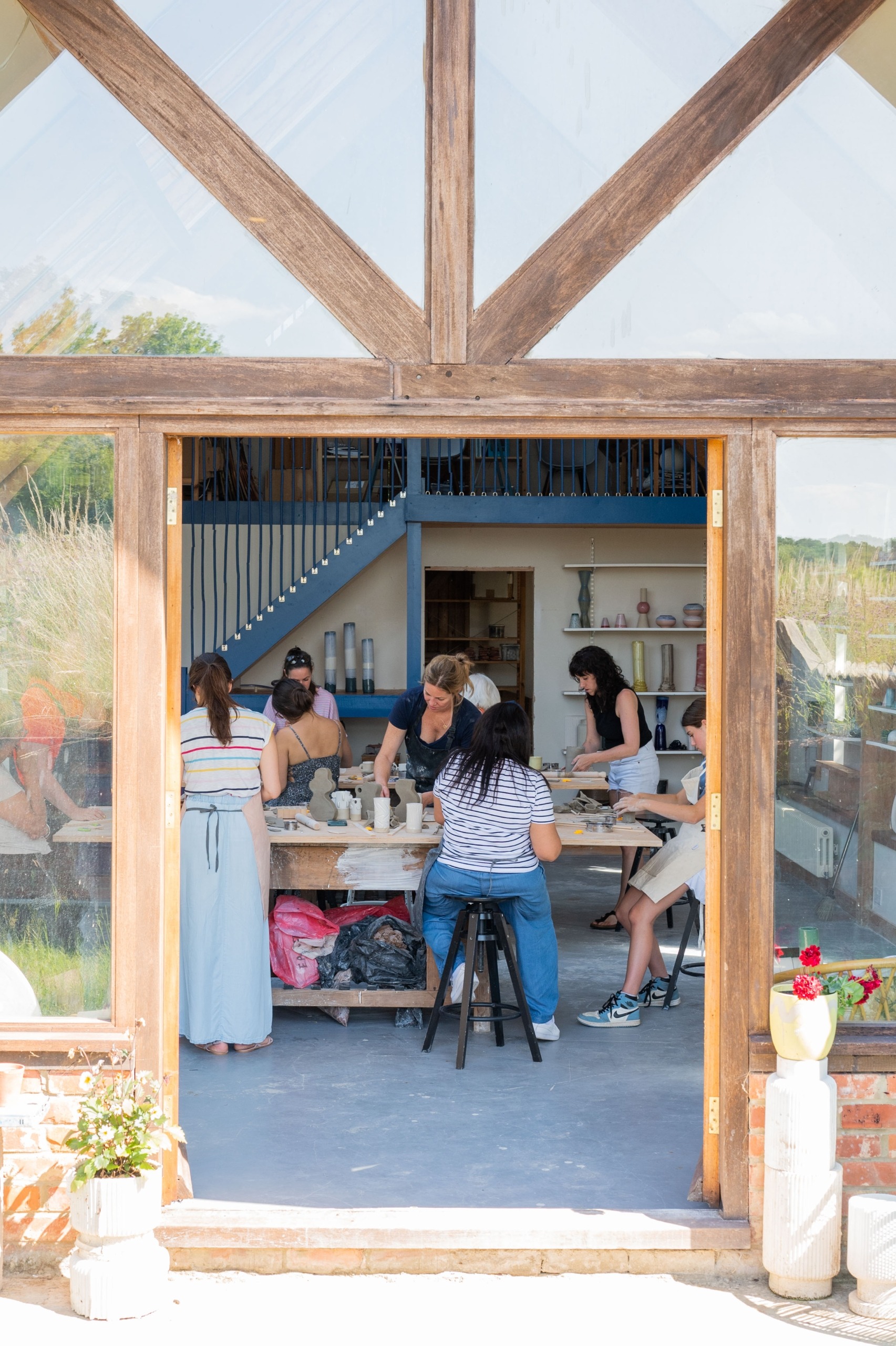
On the site of my parents’ farm, there are two beautiful, oak-framed outbuildings that had been unused until I moved back. I turned the smaller one into my new studio, where I hold classes and workshops; I had been teaching at the Birch hotel in Cheshunt (I set up their pottery studio), but it’s been amazing to teach in my own space. The other, bigger site – an old grain store – is my new workshop, fit for purpose. The right-hand side is divided into four sections: a glaze room, a plaster room, a plaster store/library and the kitchenette and toilets. There is also a storage ‘archive’ mezzanine above.
The whole renovation process has been a labour of love. From learning how to accommodate deliveries and machinery, to storing large orders until they are required and making the workshop structurally sound – nothing has been straightforward, but it’s been an amazing experience.
What’s the best advice you’ve ever been given?
‘Toutes en passe’, which means ‘everything passes’. It wouldn’t have made sense when I was younger but, with age, the pain, embarrassment and stress that I felt at one time has washed away from my memory. Ceramics has also taught me that shit happens; no one will die if they have to wait an extra month for a pot, and if it’s not worth the wait then it’s not worth the stress. Ceramics, especially the experimental projects that I do, will go wrong, but that’s got to be part of the fun!
Describe a typical day in the studio
6.30am: wake up and head to the gym or on a dog walk with my friend. This allows me to be social before I enter work mode.
8am: breakfast with two filter coffees – essential. This is an opportunity for me to catch up on admin, emails, social media etc.
9am: get cracking with slip casting, throwing, trimming, mixing glaze – all the physical work.
Midday: break for lunch; the mornings can be physically exhausting so a break is required, but if I’m alone in the studio and ‘in the zone’’, it can sometimes get to 6pm before I even think about food.
1pm: if I’m nearing a deadline then I’ll return to physical work. Otherwise, I’m emailing clients and putting together design proposals. For every five projects I pitch for, I get about one.
4pm: cleaning the workshop. There is endless cleaning of floors, surfaces, buckets – you name it. The worst cleaning job is the trap under the sink that filters glaze particles and clay out of the water – I clean that once a month, and it smells like rotten eggs.
5pm: call it a day and snuggle with my dog on the sofa, head out paddleboarding, or have dinner with friends and family. I’ll do a bit of admin on my phone if needs be.
What do you listen to?
A local radio station that plays my brother’s concrete company adverts, which always makes me laugh. It also does the five o’clock news, which is my sign to start winding things down for the day. I feel that headphones are dangerous and anti-social so I don’t wear them, and I wouldn’t want to subject anyone to my podcasts or music. However, when I’m alone, I usually pick an artist and listen to them on Spotify; at the moment it’s Young Fathers and Sampha.
Which three words best describe your studio?
Chaotic, organised, dusty
What is the view from the window?
There is an orchard outside the studio that creates the most tranquil work environment; I’ve seen deer wander through this peaceful space. The workshop is very different; the windows are seven feet high, so you just see sky, or a glimpse of my cockerel roosting in a branch. The front glass doors look over my parents’ farmyard. It’s not part of the working farm anymore, but there are always people coming and going – animals too. Jaffa the dog is usually in her basket, with the cats taunting her through the glass.
How do you get into the creative zone?
I think I’m always in the creative zone. For me, it’s more about managing things when I’m not in it; the days I’m off seem to be when anything I touch gets ruined. Then, I focus on admin work, or I get creative in other ways such as putting together design proposals. There is always so much work to do and so many different avenues I can be creative; it’s just about knowing what my capabilities are that day and not forcing a job if it’s going badly.
If I’m not in a patient mood, I might set about doing something mindless but productive, such as recycling clay. If I’m stressed, then I throw, as you can lose yourself in throwing. And then there are always some projects that I have to force myself into.
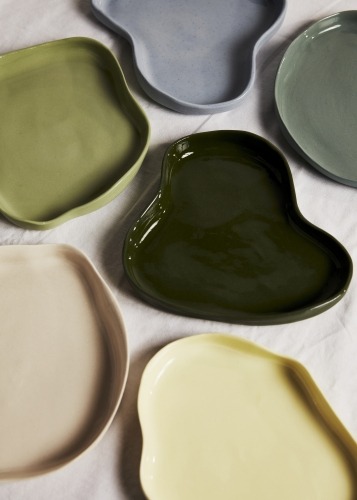
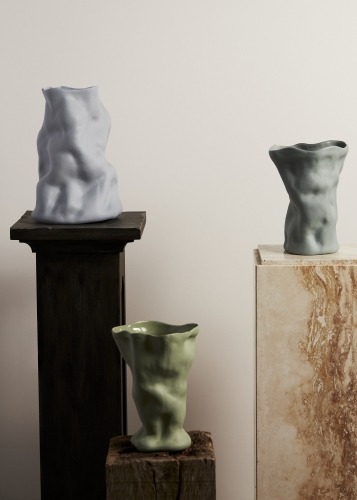
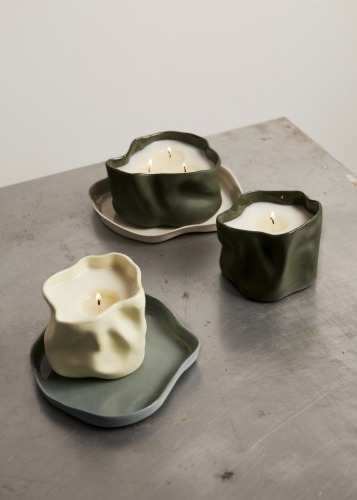
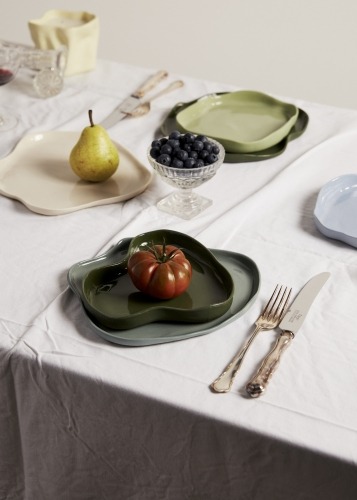
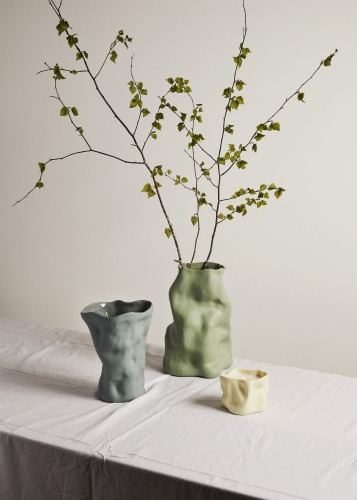
A selection of pieces from Emma Louise Payne’s new collection, London Plane
To what extent is your making process experimental?
I use electric kilns as I work in industries that require a certain level of consistency and electric kilns are the most reliable in terms of outcome. Making functional pieces means I need to make sure they are robust, dishwasher-safe and, sometimes, frost-proof, so there is often a formula to guarantee these qualities. However, as much as I follow the same plans, recipes, firing schedules etc, sometimes things just go wrong – perhaps when I’ve angered the kiln gods.
In addition to this, there is the design development. Variables including shape, colour, glaze and texture can create any number of outcomes that might still make the collection consistent in terms of functionality, but the finish or decoration unique due to the nature of hand crafts. When I throw on the wheel, I don’t use guides, I weigh the clay, so there is consistency at the beginning, but each bowl or plate or whatever, will come out slightly wider, taller, or narrower than the last. But I like that; you end up with a herd of objects that, if looked at individually, you would presume were exact copies, but when seen en masse you notice the slight variations.
The London Plane series by Emma Louise Payne is available here