Home is Where the Kimchi is
Words Jainnie Cho
Hero Image Luis Mulet
The way to Jainnie Cho’s heart is through her mother’s traditional homemade Korean comestible…
Of all the things I look forward to eating during my annual visits back home in Seoul, it’s a humble jar of homemade kimchi that makes my heart flutter the most. It’s custom-made by my mum using my favourite ingredients like radish, oysters and fermented shrimp. She calls it the ‘Jainnie Batch’. And for me, it’s the ultimate homecoming.
The significance of the Jainnie Batch is that my mum rarely makes her own kimchi – partly because there are so many good kimchi makers for her to buy from and partly because she’s a perfectionist who gets nervous about its fickle nature. Depending on several variables, from the temperature and length of fermentation to the freshness of the cabbage, no two batches of kimchi are ever the same.
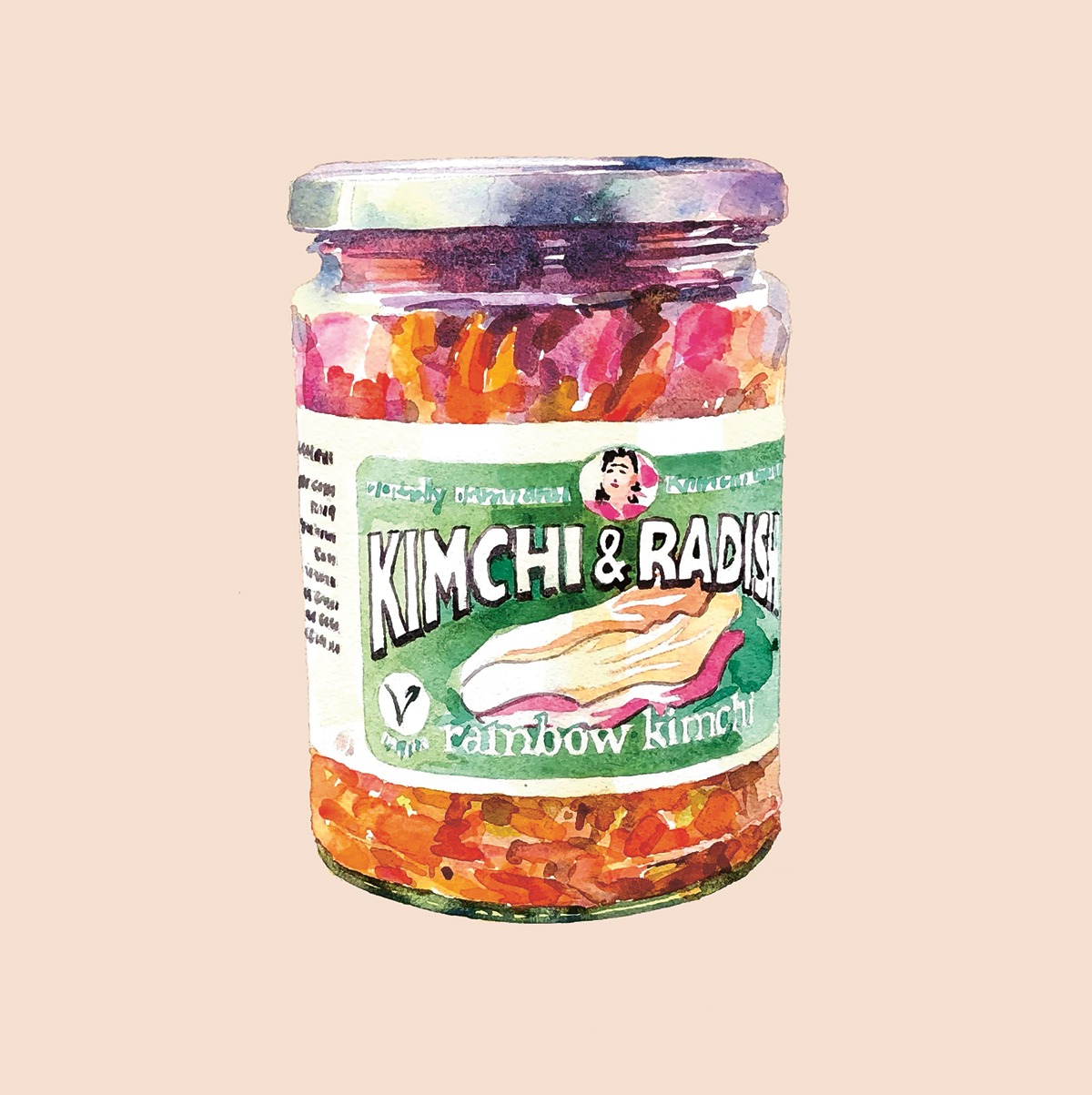
Koreans started making kimchi as early as the Three Kingdoms period (57BC – 668AD) | Illustration Stewart Walton
This unpredictability can make the idea of making kimchi quite daunting, even for a seasoned cook like my mum. The process itself looks deceptively simple – brine the main vegetable (this can be anything from cabbage and celery to salad onions), squeeze out the moisture, flavour the vegetable, then leave to ferment.
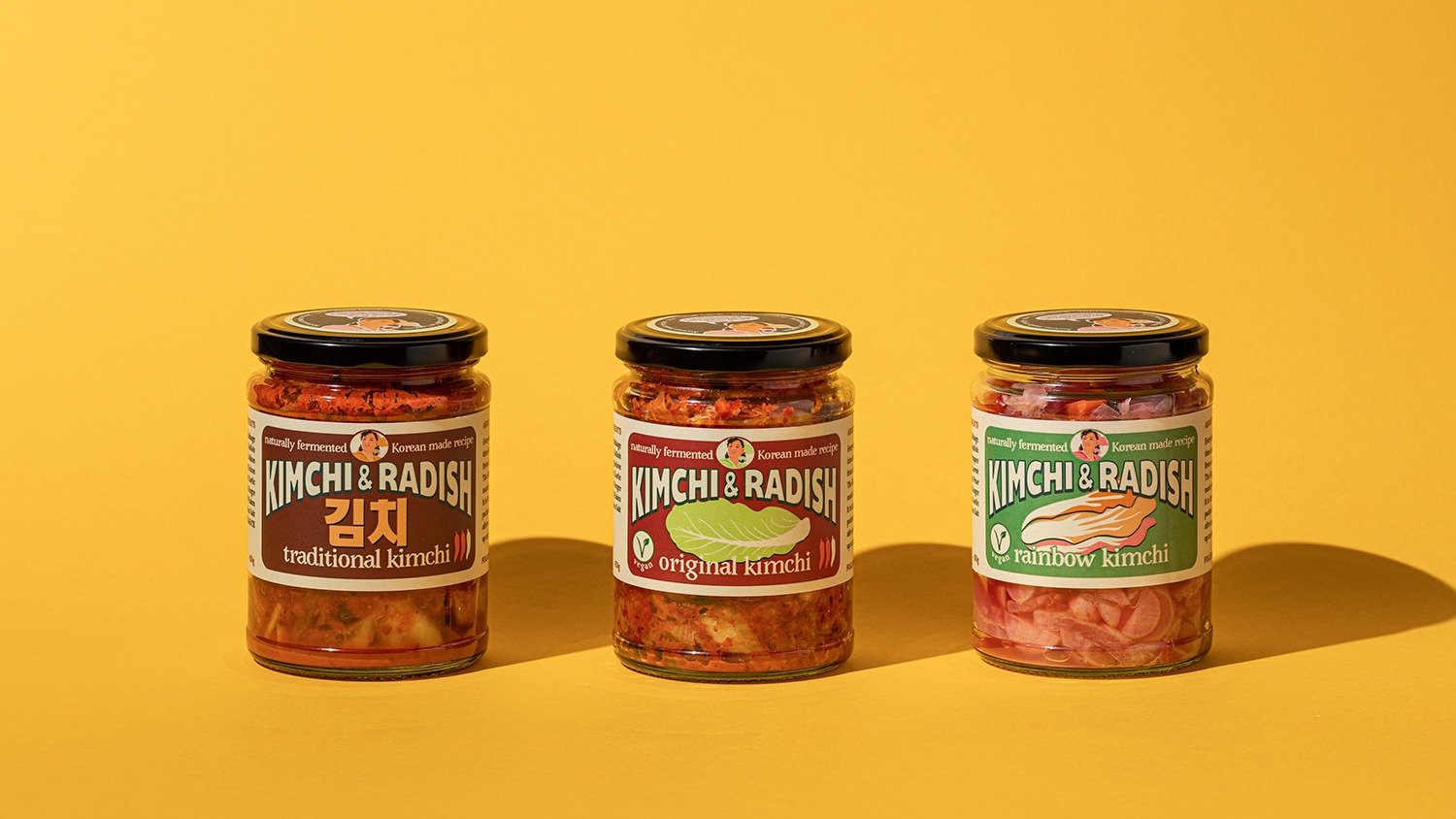
But the ‘art’ comes in after the human touches are made, when the brined and flavoured vegetable is left to its own devices to interact with the air, temperature and time. ‘There’s a sweet spot between fermenting [kimchi] at room temperature and transferring to chilled storage, ideally below five degrees but above freezing,’ explains Jihyun Kim, founder of the London-based artisanal kimchi brand, Kimchi & Radish. ‘The flavour profile can vary immensely based on this.’ Its range of flavours includes Rainbow (with ginger and garlic), Beetroot, Traditional (medium to hot) and Daikon (crunchy and slightly sweet).
But the unpredictability also makes kimchi exciting. It shows the dish’s dynamic, ever-changing, ‘live’ nature. If you ask Koreans about their family recipe for kimchi, many will tell you they don’t have one – not an exact one anyway. And there are as many ways to enjoy kimchi as there are to make it. Its versatility as a cooking ingredient means it can transform dishes as diverse as pork stew, fried rice and cheese toasties. In this way, the joy of kimchi is in its democracy – something that anyone can make with inexpensive, accessible ingredients, in a way that fits their lifestyle and tastes.
Perhaps it’s this quality that led to kimchi’s ubiquity in Korea. Like most dietary staples, kimchi was born out of necessity, as a means to survive the brutally cold Korean winters when fresh vegetables were hard to come by. Along with other fermented foods like rice wine and doenjang (soybean paste), Koreans started making kimchi as early as the Three Kingdoms period (57BC – 668AD), according to the first records of Korean fermentation methods featured in the Records of the Three Kingdoms, a historical Chinese text.
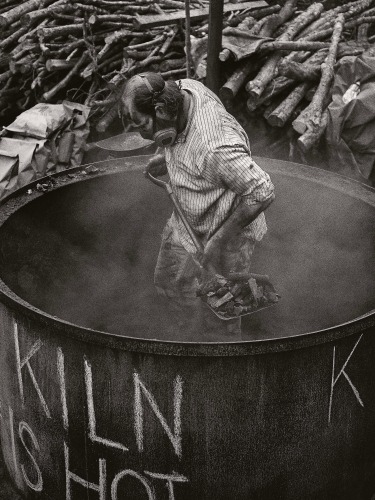
Photograph Luis Mulet
As Korea modernised, kimchi-making changed too. Traditionally, kimchi is stored inside onggi (Korean clay jars), which have pores that help the fermentation process, and buried in the ground. Nowadays, Korean households use special kimchi refrigerators that do this in a similar way.
But while the tools may have changed, the culture around kimchi-making remains. During gimjang (the process of preparing and preserving kimchi), when Koreans make large quantities of kimchi to last through the winter, family, neighbours and friends will often make kimchi together. ‘There was a real sense of community, neighbourliness and bonding,’ says Kim, as she recalls these yearly gimjang gatherings at her childhood home.
Gimjang was a ritual in my family too. When my grandmother was still alive, she’d come to our house to help my mum and me make kimchi. Afterwards for dinner we’d usually have some boiled pork (traditionally what Koreans would have on the gimjang day) with hot sticky rice and a side of ‘salad’ kimchi we made that day, that had yet to ferment.
And maybe that’s what I look forward to most in the Jainnie Batch — the memories of my grandmother’s bright red cheeks as she painstakingly squeezed water out of the cabbage, my mum handing me the fattiest, most unctuous slice of boiled pork before anyone else got to it, the warmth of the room heady with spices, family and laughter.
Kimchi Pancake Recipe
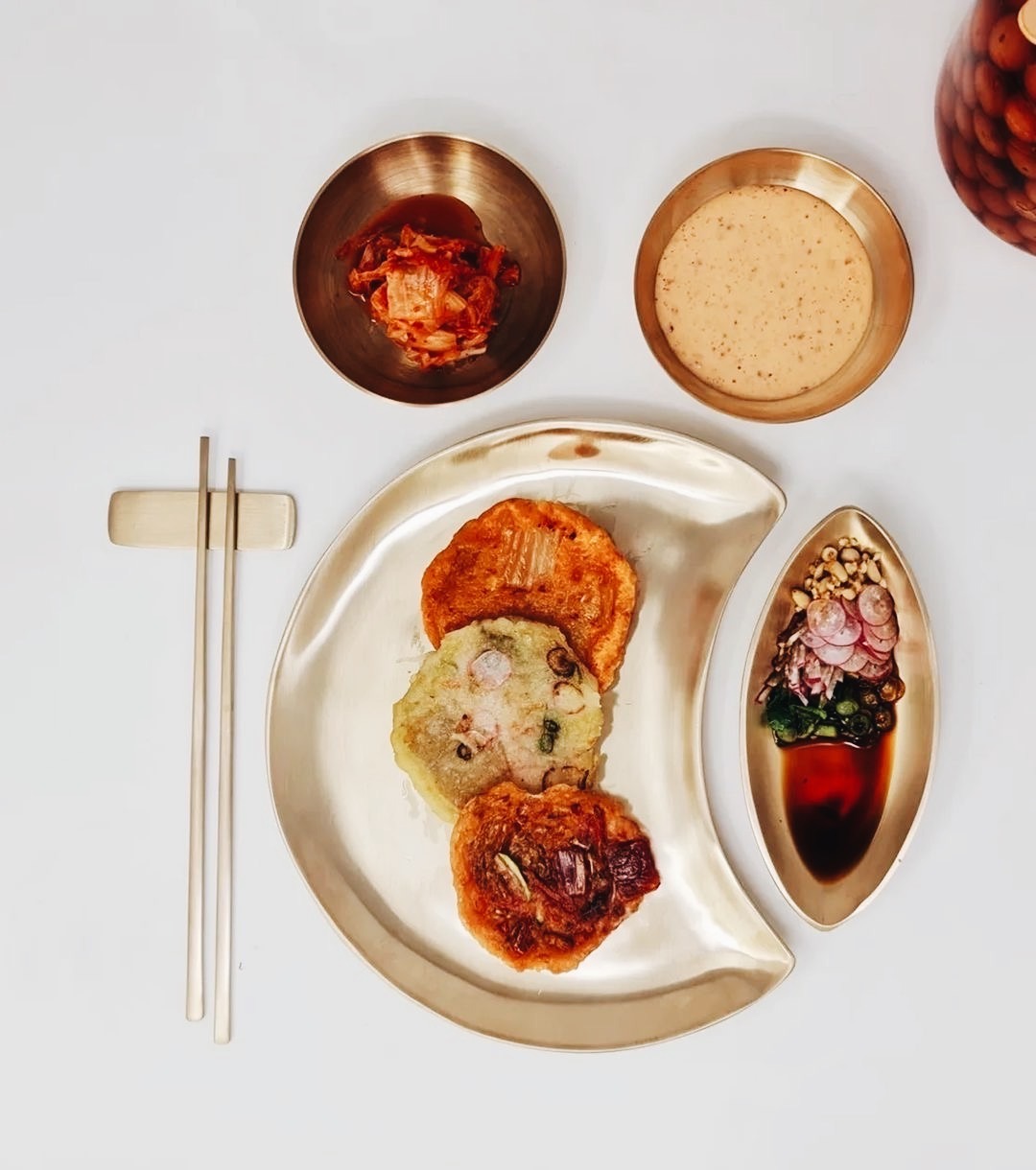
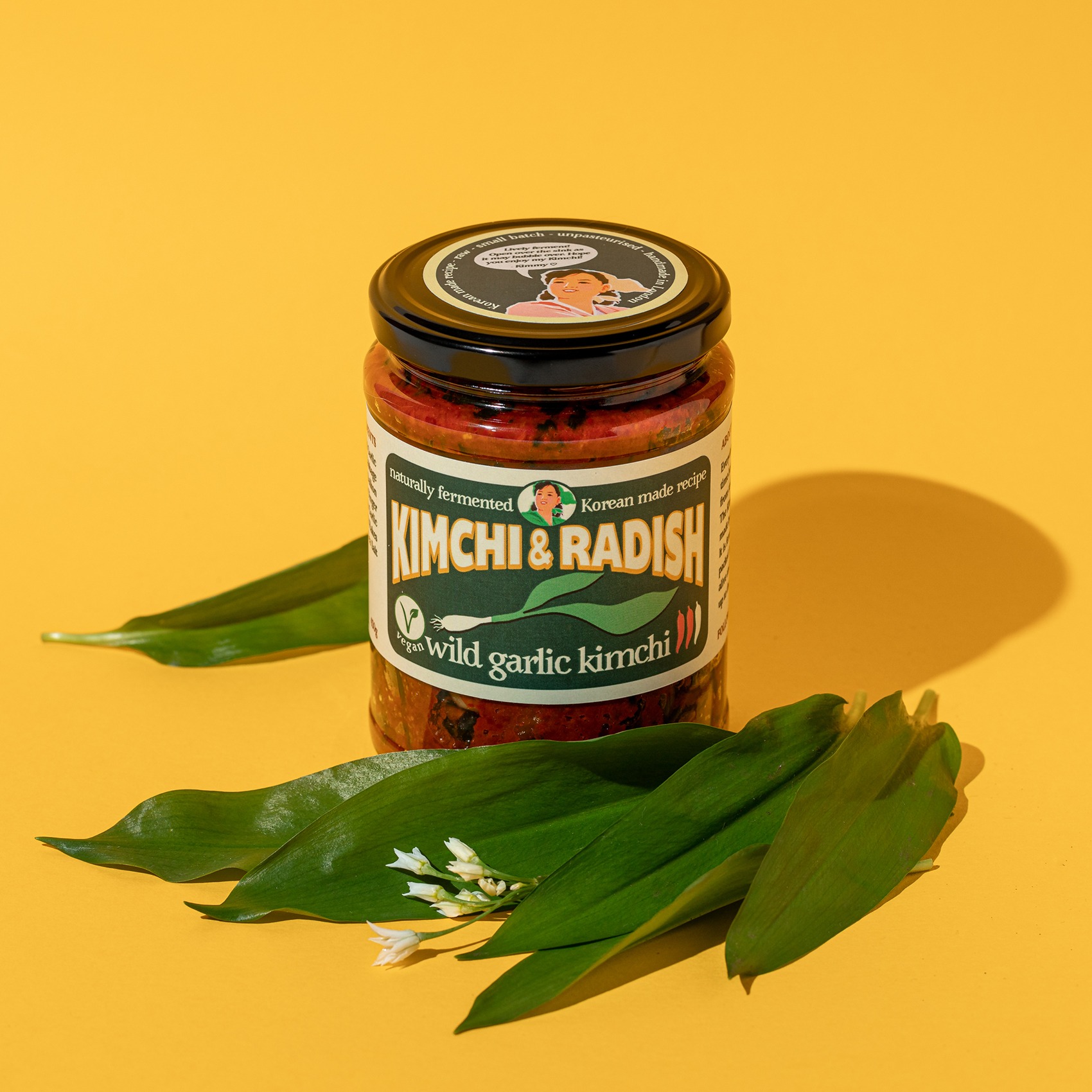
Photograph courtesy of Kimchi & Radish
Pancake Ingredients
1 cup of original kimchi or beetroot kimchi or extra hot kimchi.
1 spring onions
1 courgette
vegetables oil
For kimchi pancake Batter
1 cup of plain flour or buchimgaru (Korean pancake premix) and 1/2 cup of rice flour or potato starch
Dipping Sauce (Combine all the ingredients)
1 tablespoon soy sauce+1 teaspoon ricewine vinegar+(1/2 teaspoon sugar)
vegan kimchi mayo
Mix a table spoon of Kimchi & Radish original kimchi juice and two table spoon of vegan mayo ( shop bought) then mix in a bowl and enjoy.
Tips for making kimchi pancakes
– Use well fermented kimchi
– Use juice/liquid from kimchi if at all possible and use icy cold water than coldwater..( using icy cold water make kimchi pancake more crispy)
– The batter should be thin enough to flow easily from a spoon.
– Spread the batter thin when pan frying and use a generous amount of oil.
– Increase the heat a little to crisp up the pancakes at the end of pan-frying.
– Buchim garu (Korean pancake premix) is always good for any savory pancakes. ( I sent you a bag of buchim garu )
Kimchi pancake
– Thinly slice the kimchi, about 1/2-inch thick. Cut the spring onions into about 1cm pieces.
– In a large bowl, combine the flour (or pancake mix) with the liquid from kimchi and water, a little bite at a time. Start with water, and mix everything together. Do not over mix.
– Add a little more water if the batter is too thick. The batter should flow easily from a spoon.
– Stir in the kimchi, spring onions, courgette
– Heat one tablespoon of oil in a non-stick pan over medium heat. Ladle the mixture into the pan, and spread it evenly into a thin round shape. Cook until the edges turn light golden brown, about 3 minutes. Turn it over, and add more oil to the sides of the pan. Press the pancake down with a spatula. Cook until the other side is nicely browned and crispy, 2 to 3 minutes
@kimchiradish
kimchiradish.com