Winemakers
Words Aimee Hartley
‘We all make wines pretty similarly, yet wines can be so different. So much of that is more than just terroir or place – it’s the thumbprint of the winemaker,’ says Scott Shultz. ‘You just hope that the thumbprint is light and deft and that the winemaker lets the inherent qualities of that grape and place shine through.’
Shultz found his way into wine by working in restaurants in Chicago. ‘I was pretty different as a kid – a crazy, tattooed punk skater who didn’t play team sports. My friends used to make fun of me for liking and drinking wine. Chicago was a beer and whisky town in my circles.’ In 2007 Scott found himself in Napa, buying wine for one of Thomas Keller’s fêted restaurants, Bouchon.
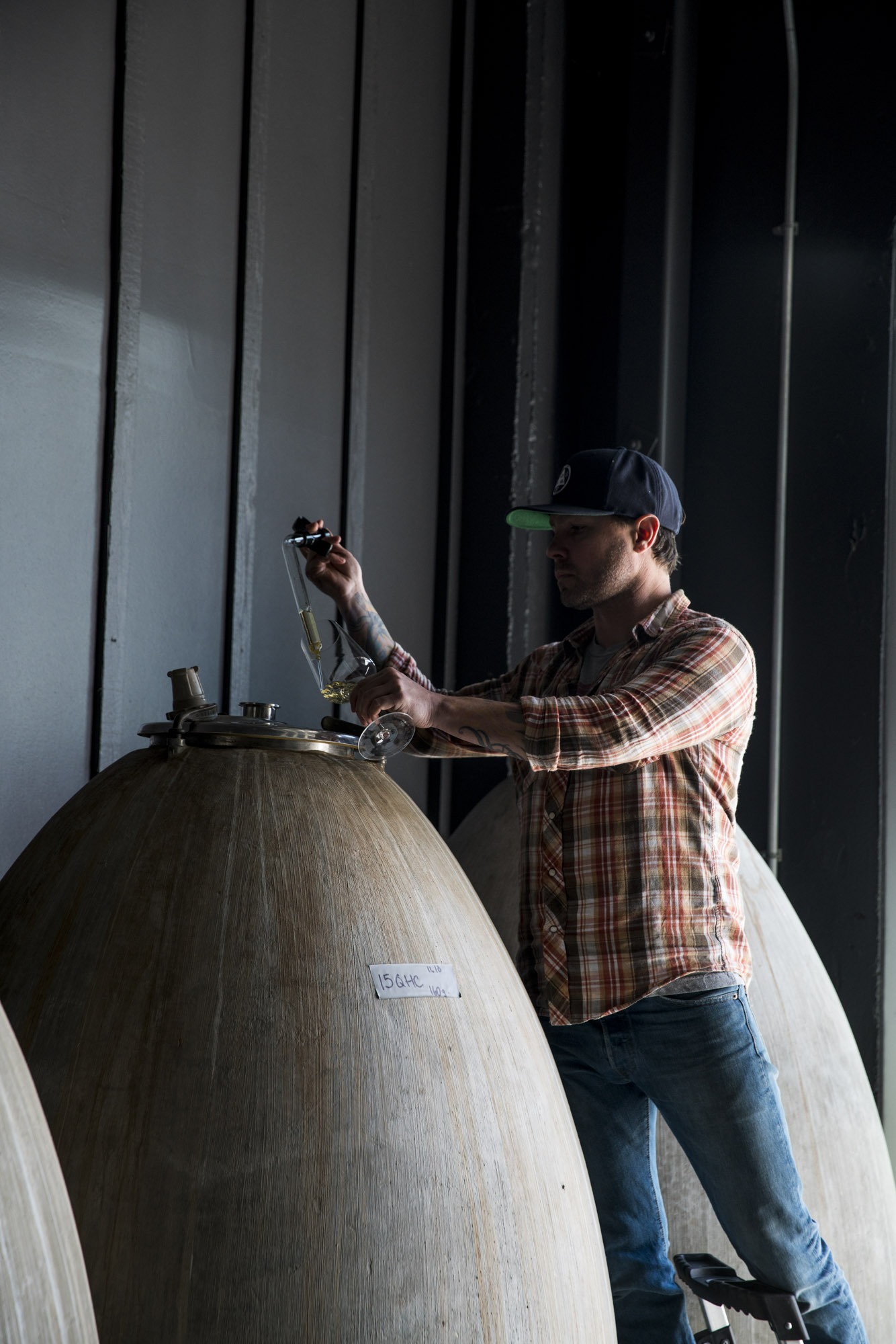 Schultz works with harder-to-find grapes like Syrah, Gamay and Trousseau at Jolie-Laide, and voices his frustration that people tend to stick to their comfort zones when it comes to their wine choices. Photograph courtesy of Wind Gap
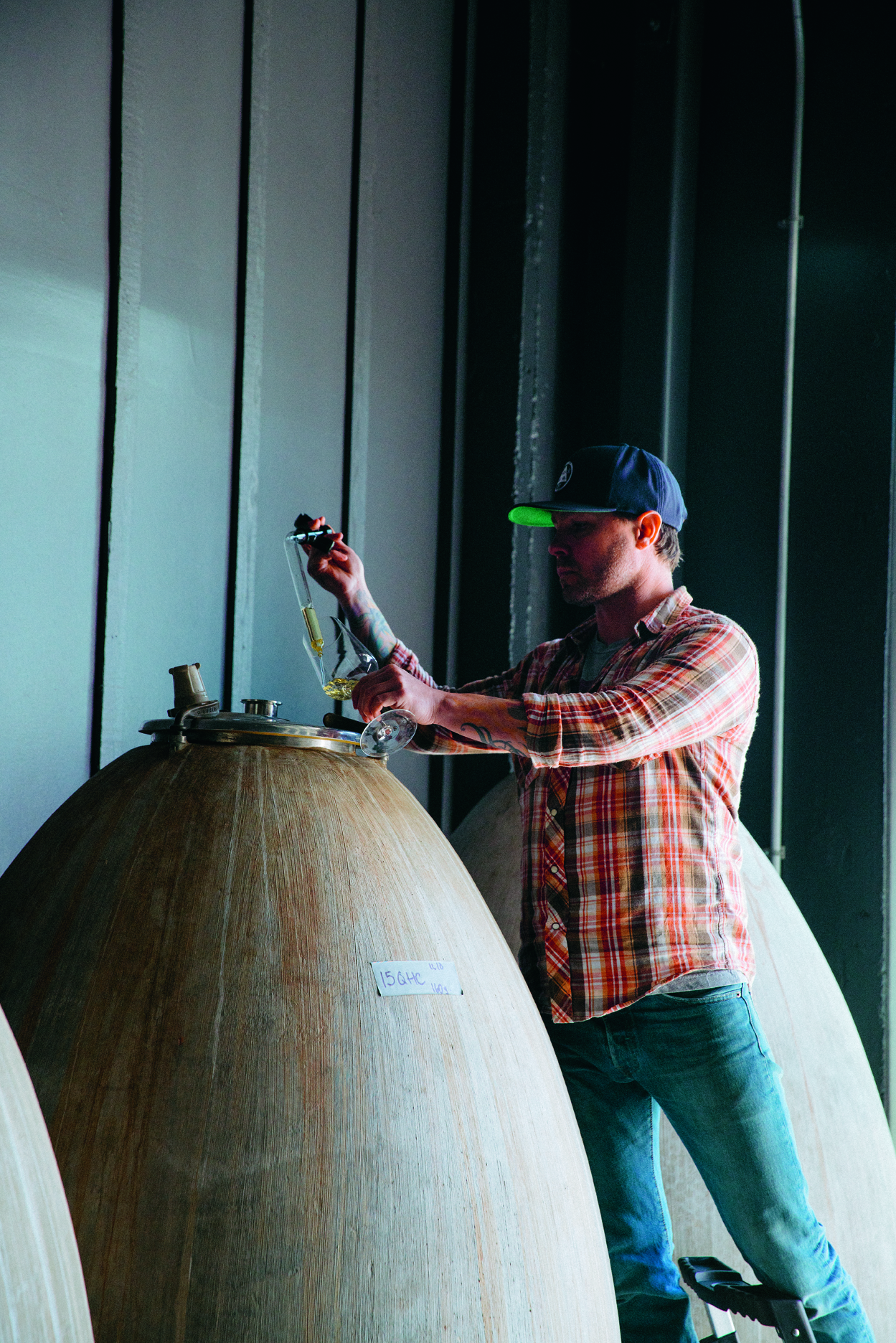
It was here that he became exposed to a new style of Californian wine: ‘Getting to taste, and work with producers like Wind Gap, Arnot-Roberts, Peay and Copain blew me away. These didn’t taste like the Californian wines I had known, they were super old-world in style and I loved it’. Shultz now works full time as assistant winemaker for Wind Gap, and at evenings and weekends makes wine under his own label, Jolie-Laide (‘Just myself – out of my own pocket, to keep the growth slow and manageable’). Scott finds his grapes from the lesser-known corners of California, working with harder-to-find grapes like Syrah, Gamay and Trousseau: ‘It’s hard work not making Chardonnay or Pinot Noir in California,’ he says. ‘I find it strange that we demand so much diversity in almost everything, yet people settle for what they know with wine. I don’t really care if people know what Trousseau Gris is – but if, when you taste it, it becomes something visceral and thought-provoking, then that makes me happy.’
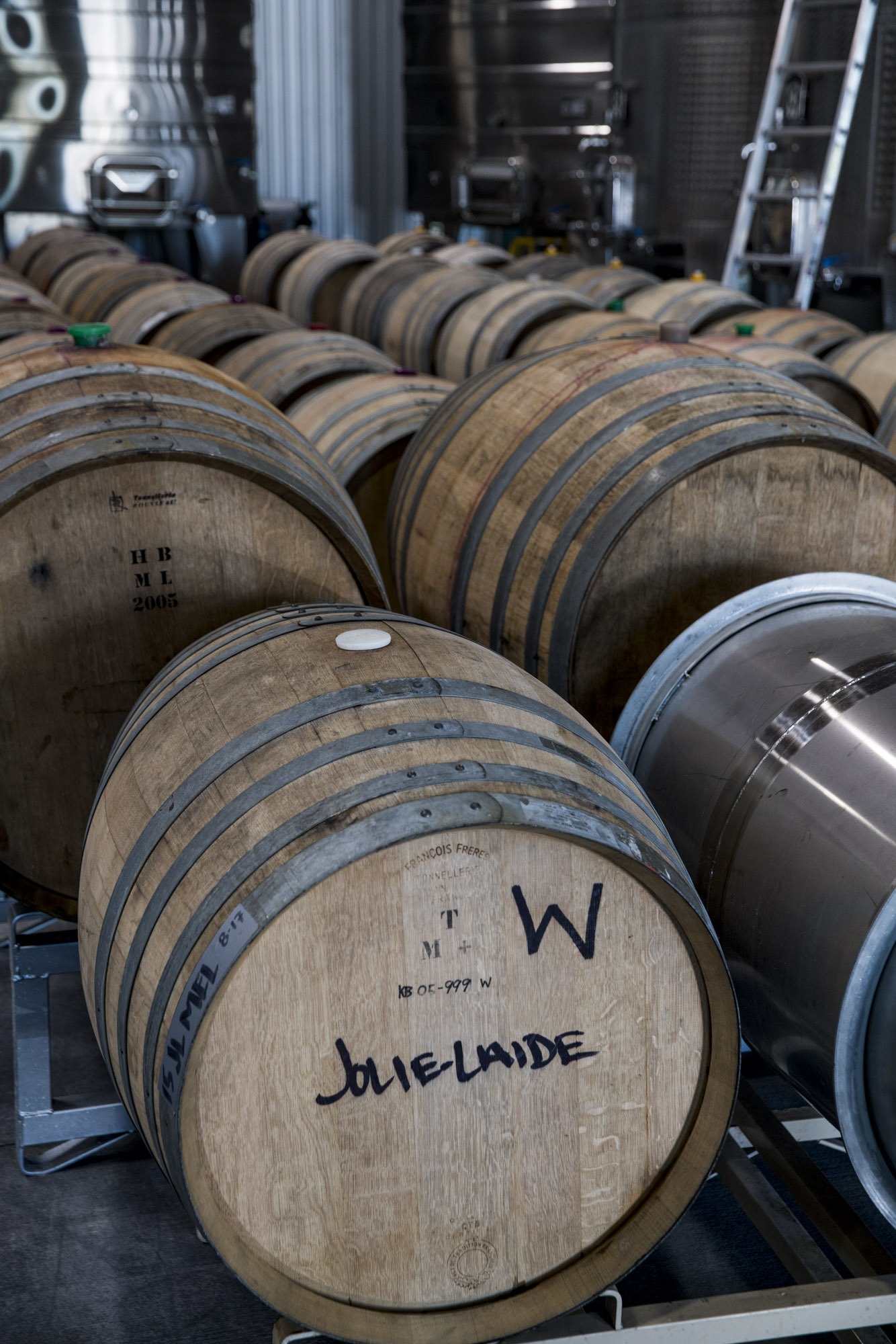
Photograph courtesy of Wind Gap
Much like the man himself, there is a physicality and freshness to Schultz’s wines. They are unapologetically themselves, commanding your full attention with their honesty and vibrancy. Jolie-Laide is a French term that translates roughly into ‘pretty ugly’. For Schultz, it is about finding beauty in the unconventional, something that is also reflected in the changing artwork on his bottles: ‘The labels are the visual, tangible clue that this wine will never be the same as another one you have had, even if I made it,’ he says. ‘The weather and growing season is different, meaning the grapes are different. I am different. I might even make them differently. I see them more like album art – do bands ever have the same sleeve art? Of course not. And even with your favourite band, there are albums or songs you liked better than others, but you still come back for more to see what they’re doing because you love them. For me, wine works in the same way.’