Hole & Corner x Marfa Stance: Orsola de Castro
Photographs Sam Walton
Published in partnership with Marfa Stance
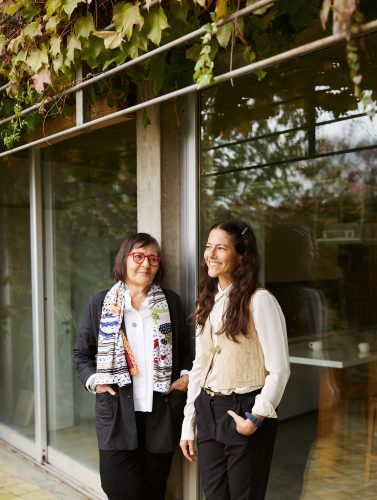
Orsola de Castro is an opinion leader in sustainable fashion, a mentor, curator and author. She is the founder of Estethica, the sustainable fashion showcase she started in 2006 and recently relaunched as a creative consultancy and education platform. In 2013 she co-founded Fashion Revolution, now the world’s largest fashion activism movement with teams in over 80 countries. She is a lecturer at Central Saint Martins, Middlesex University and University of East London. De Castro’s first book, Loved Clothes Last, was published by Penguin Life in 2021 and has been translated into Italian, French and German.
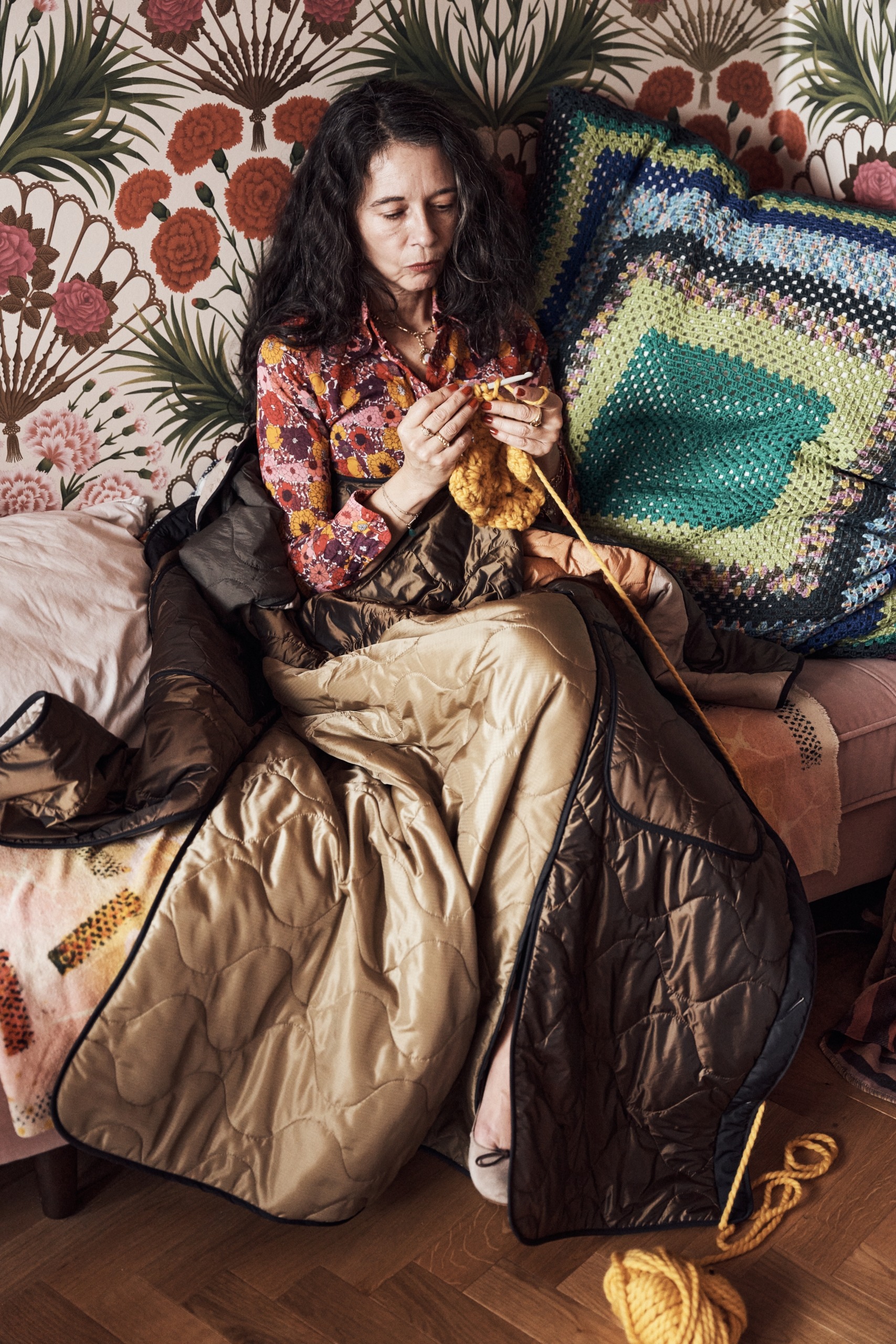
Tell us about your background and your work?
So, I call myself a recovering fashion designer. I had an upcycling label between 1997 and 2014, very much a pioneering label, we used pre-consumer waste at scale. I was also the co-founder and curator of Estethica at London Fashion Week, between 2006 and 2014, which was recently relaunched, and I’m the co-founder of a global movement called Fashion Revolution with a presence in 84 countries – well, let’s say more than 84 countries. I’m also an author; I’ve written a book called Loved Clothes Last, which has been now published in Italian, French, and German. I have also a nickname, I’m known as ‘Fashion Mum’ because of the work that I do mentoring young designers from all over the world. And I spend an awful lot of time wearing clothes and talking about them. This is what I do.
What has been the proudest moment in your career to date?
My career is a bit too long to identify one proud moment, you know, I’ve been very lucky, I guess; proud moments have been coming throughout. I guess what I do need to clarify though is that very often for me proud moments aren’t the winning of an award or the speaking to a crowd of thousands of people. I find pride in things that are smaller, in maybe changing one mind rather than a hundred, or feeling that what I’m saying has been really relevant and life-changing for somebody. I don’t look for size. I look for things that warm me up inside, and I’ve been very lucky, very very lucky, because there have plenty.
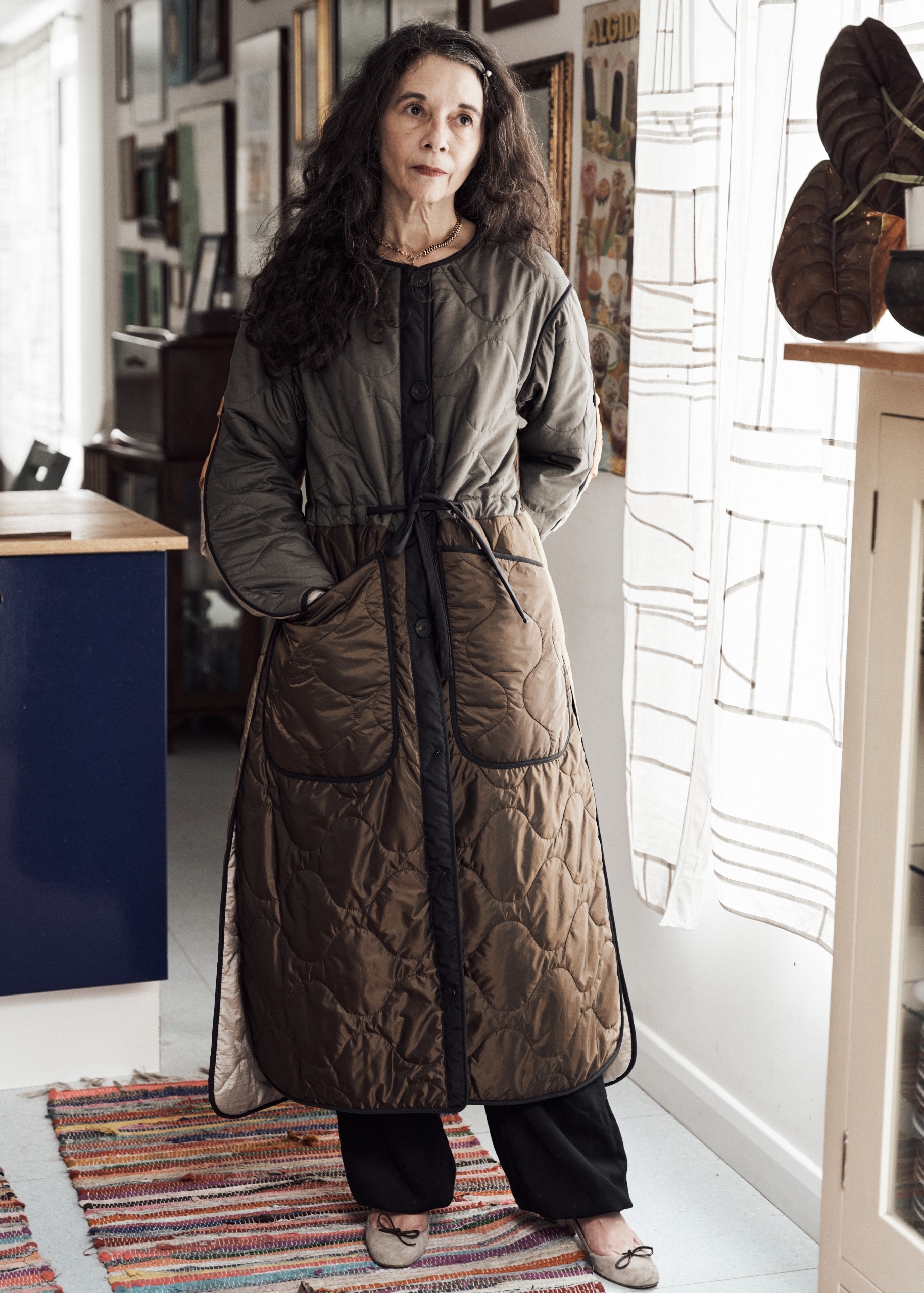
Orsola wears Patchwork Quilt by Marfa Stance
What is the best piece of advice you have been given, that you’d pass along to fellow artisans and makers in the world of craft?
I cannot answer this question because I’m not an artisan, so the type of advice that I receive would not necessarily provide benefit for people that are living a life that’s very very different to mine. The best advice I’ve ever been given, however, is sometimes you need to let go to get a better hold. This is something I was told many many years ago and that I keep practising. And I have passed it on to an awful lot of people to whom I think it could be relevant because maybe their lives are similar to mine or maybe this saying can have resonance for that but it’s definitely not necessarily for artisans or craftspeople.
Why is craft important to you?
So I don’t consider myself a craftsperson. I have a huge admiration for those who are, and I use my hands, I’m good at crochet, I love to sew, I love to draw – but I certainly wouldn’t consider myself in the realm of being a craftsperson or an artisan. For me, those people are to be revered. They are the holders of ancient skills and traditions, and I wouldn’t consider myself in that league, although I still work the same threads to a certain extent that my grandmother used to work when she taught me how to knit and crochet, my mother is a great knitter. And I speak a lot about craft in my book, Loved Clothes Last, the importance of crafts, how crafts represents its area, the folklore of that area, and the people that live in that area, so craft really is not just history, but the evolution of our manual intelligence.

Maybe I can elaborate a little bit about this manual intelligent concept, because it’s something I very much believe in. I do believe that as people, we probably learnt how to make and used our hands before we became fully verbal, and certainly before we learnt how to write, or we discovered writing, or we invented writing. The concept of a manual intelligence, this desire to make and to innovate via making, I believe is truly instinctive in us humans, and craft derives from that. So, although we can see craft as art and applied art, we also carry potentially that gene, that wanting to make. That’s the one that I feel inside of me. Wanting to use my hands, wanting to feel fabric being made from my fingers.
A ‘Hole-and-Corner: adj, a secret place or a life lived away from the mainstream’. How would you describe your ‘hole-and-corner’
Oh, my hole-and-corner is my bed. Absolutely no doubt about that.
You can order ‘Loved Clothes Last’ by Orsola de Castro here
Published in partnership with Marfa Stance
This story was brought to you by a valued Hole & Corner Partner.
Hole & Corner works with Partners to tell stories of dedication from makers, brands and institutions.
Our Partners allow us to continue to celebrate makers and artisans, as well as support the writers and photographers who create such impactful and beautiful work together.
To find out more about becoming a Hole & Corner Partner, email jade@holeandcorner.com