In Conversation with… Jacob Monk
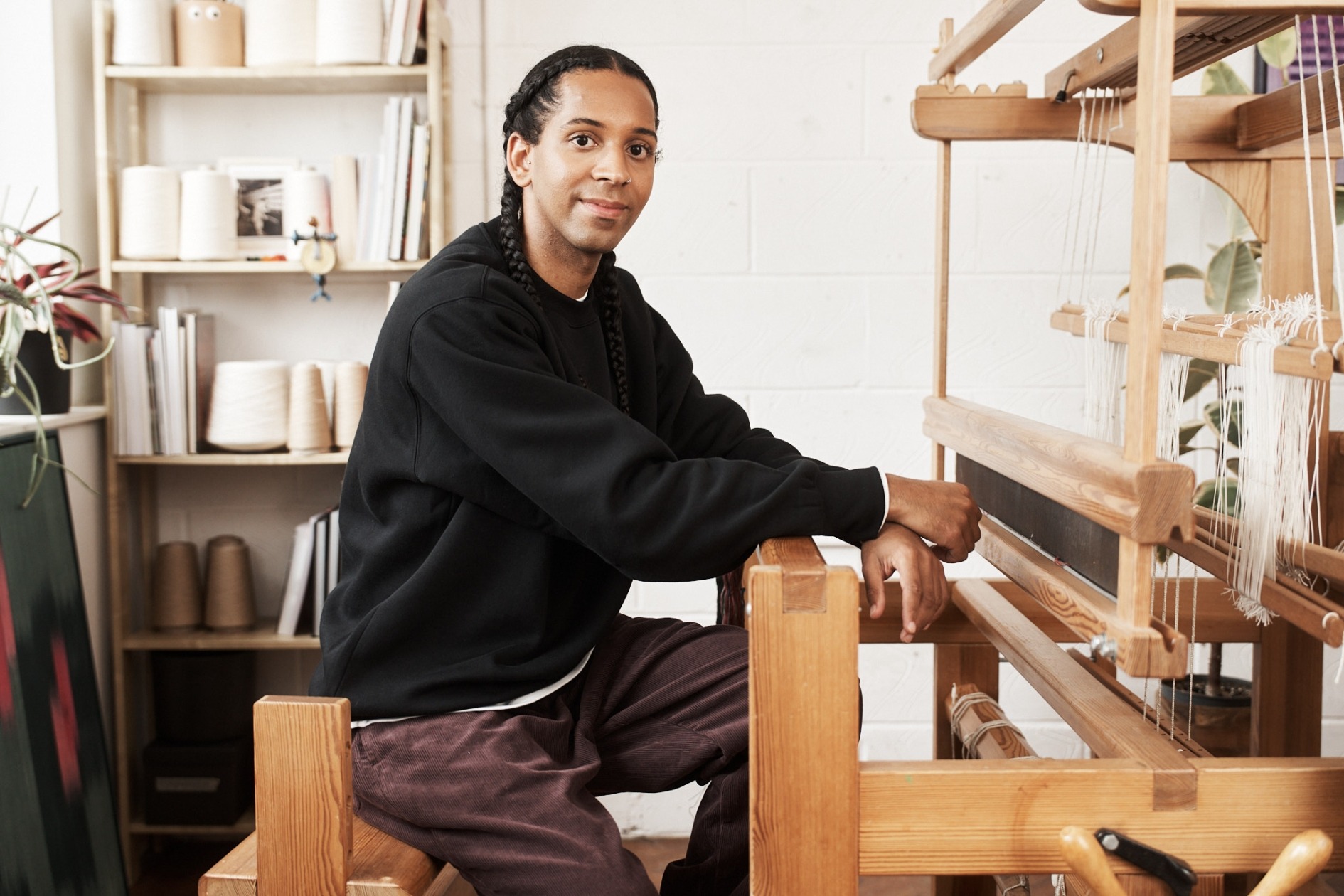
Above: Jacob Monk wears MUJI AW23
photographs sam walton
Interview Meena Sears
This conversation is part of an autumn/winter series created in partnership with MUJI
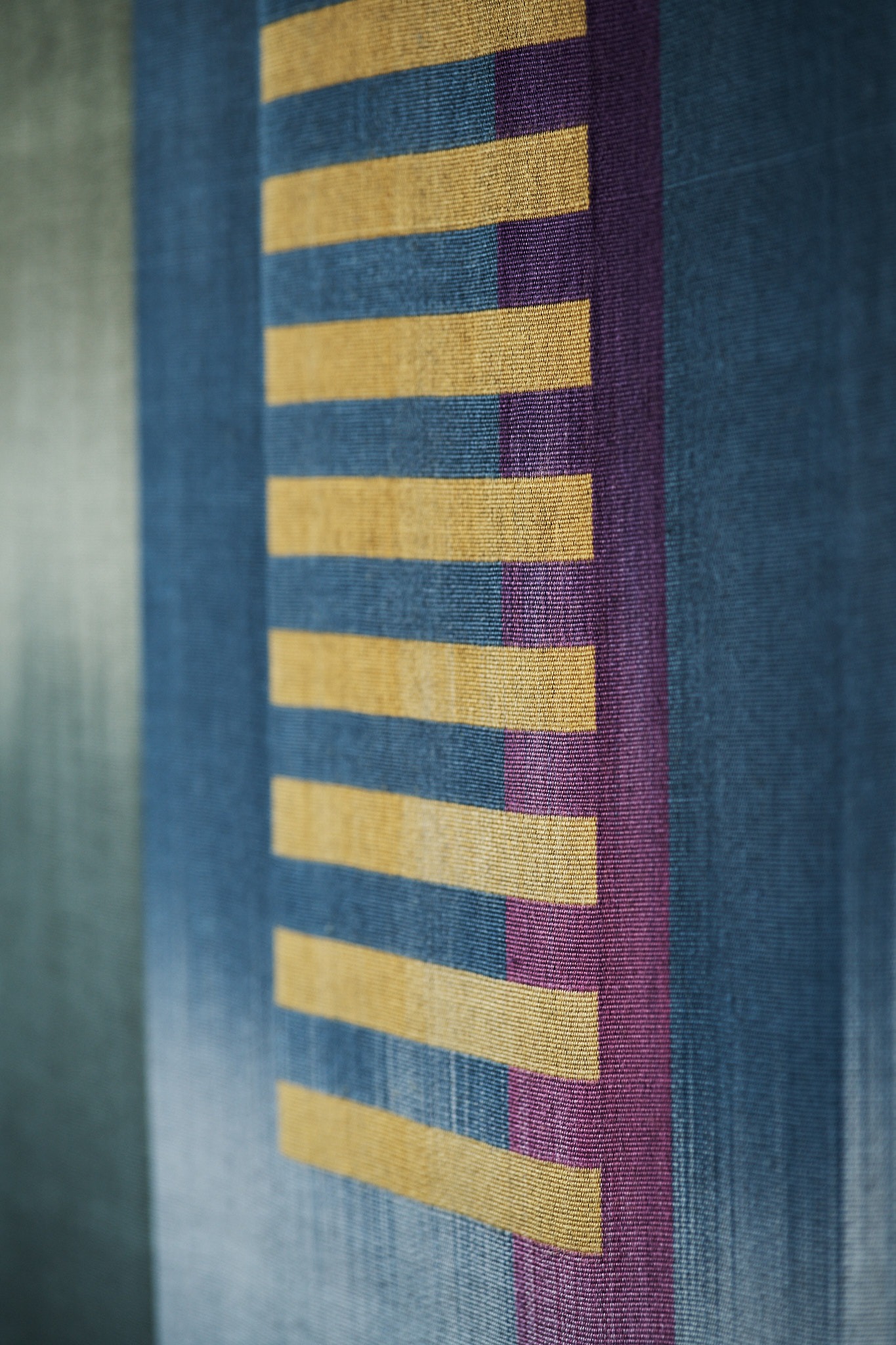
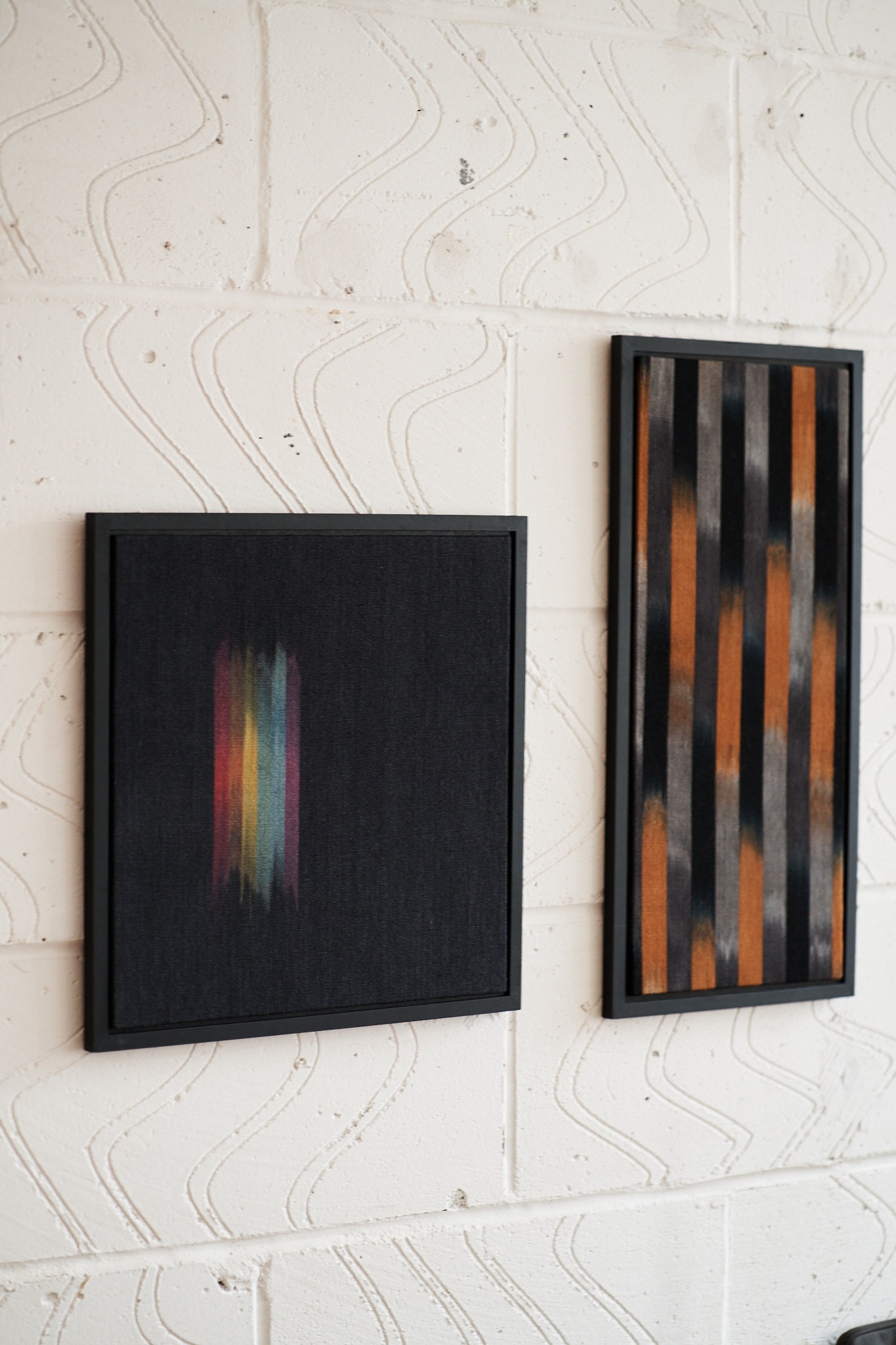
Jacob Monk is one of a few textile artists in the UK practising the ancient craft of ikat weaving, a technique that involves creating a pattern through the binding and dyeing process as opposed to the weaving process. Having come across ikat while studying Textile Design at Central Saint Martins in London, Jacob quickly became enchanted by the glorious displays of colour he could create using a practice that was steeped in history and, eager to explore the technique further, bought his own table-top loom to experiment with different dye combinations and more complicated designs.
Since finishing his degree in 2016, apart from a brief return to his home in Manchester during the pandemic, Jacob has remained in London, settling at a shared studio space in Deptford, where he creates his abstract, woven wall art and frames to be displayed in domestic or public spaces. While his designs are often inspired by traditional ikat fabrics, such as those found in Turkey and Malaysia, Jacob updates them to create something that reflects his own personality and is unique to what is already out there.
H&C: Can you take us through the experience of creating an ikat fabric?
Jacob Monk: There are many stages to the process. I do all of the dyeing myself, and this can be very satisfying (it can be nice to create your own unique colour palette), but also a little frustrating because there’s always an element of the unexpected. Then from there, I go into the weaving process, which is a very slow and meditative experience. I really enjoy it because I can just stick on some music or a podcast and relax.
What’s particularly nice about this technique is that, as you’re weaving, you can see when you’re coming up to a colour change and that’s a really exciting moment. It keeps the momentum going because you’re eager to see how the next part is going to turn out.
H&C: Where does the inspiration for your designs come from?
JM: Colour is a really important part of my practice and a lot of the colours I use are based on my emotions. As the years have gone by, and my designs have developed, the colour palettes I use have become more vivid; I’m using more clashing colours, creating more contrast, more drama.
I also get a lot of inspiration from bird feathers. I’ve actually built up an archive of found bird feathers ranging from parrots to ducks. I try to reflect how the colours blend together within a feather, to how the colours blend within my ikat fabric.
H&C: What makes you feel relaxed?
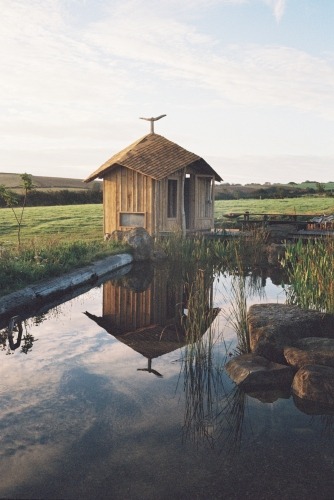
JM: Swimming is my number one way to relax. I find that when I’m in water, I’m not thinking about the outside world or day-to-day tasks, I’m just concentrating on my breathing.
H&C: How will your day-to-day habits change as we approach the winter season?
JM: I’m looking forward to things slowing down, getting cosy, and having a bit of time to reflect on the past year and plan for the year ahead.
I can’t wait to get my hands on one of the MUJI 2024 planners so that I can start writing down all the exciting events to come.
H&C: How do you dress to be comfortable?
JM: To feel comfortable, I love to wear a jumper that is one size too big and a pop of colour always improves my mood.
H&C: What is the best piece of advice you’ve ever been given?
JM: I had this one tutor at Central Saint Martins who would always say: ‘Don’t think, do.’ and it’s stuck with me ever since. I think it’s such good advice for all aspects of life becuase we can often overthink things.