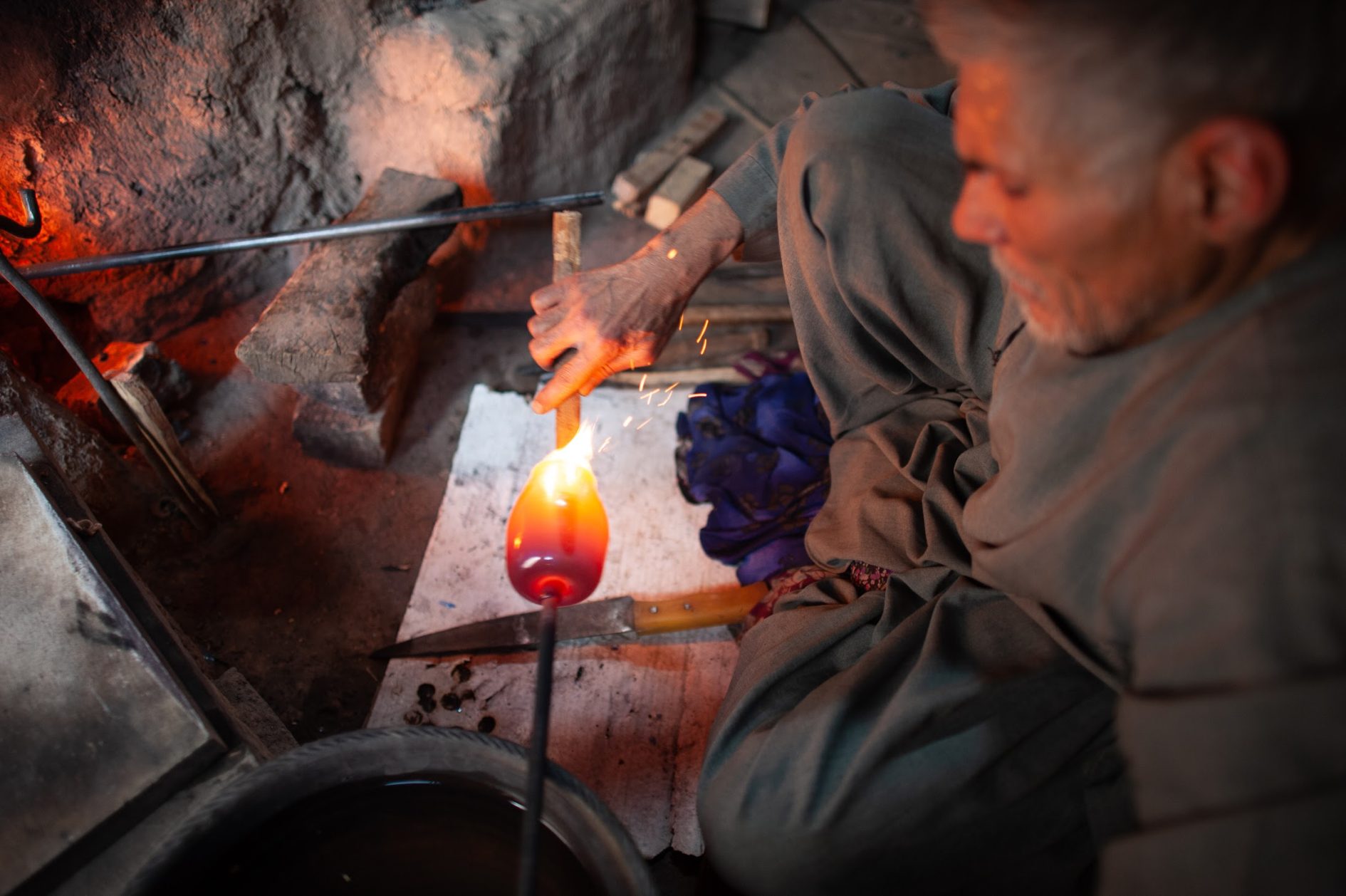
Keeping an ancient tradition of glassblowing alive in Afghanistan
INTERVIEW MEENA SEARS
PHOTOGRAPHS Morteza Herati
For its latest collaboration, the social impact retailer ISHKAR has worked with Dutch designer Boris de Beijer to produce a capsule collection of glassware by artisans in Herat, Afghanistan
The practice of glassblowing in Herat dates back more than 2,000 years when the city’s distinctive coloured glassware was traded along the Silk Road. Today it is at risk of becoming extinct. While the presence of cheap glassware manufactured in China was already making it difficult for Herati glassblowers to keep their tradition alive, a series of deadly earthquakes in October 2023 has made it even harder, with the emotional and financial affects still being felt.
In spite of this, glassblowing families such as Nasarullah Faizi and his son continue to practise their trade, using the very same techniques passed down to them by their ancestors all those generations ago. Grinding down raw materials such as recycled glass, quartz and natural oxides, the artisans reproduce the vibrancy of the colours that made Herat glassware so famous. Blowing bubbles in the molten glass and rotating the blowpipe with unrivalled skill, they create undulating shapes, before firing the pieces in a traditional mud-brick kiln. Each one is different; the unique result of a distinct moment in time and the story of its maker.
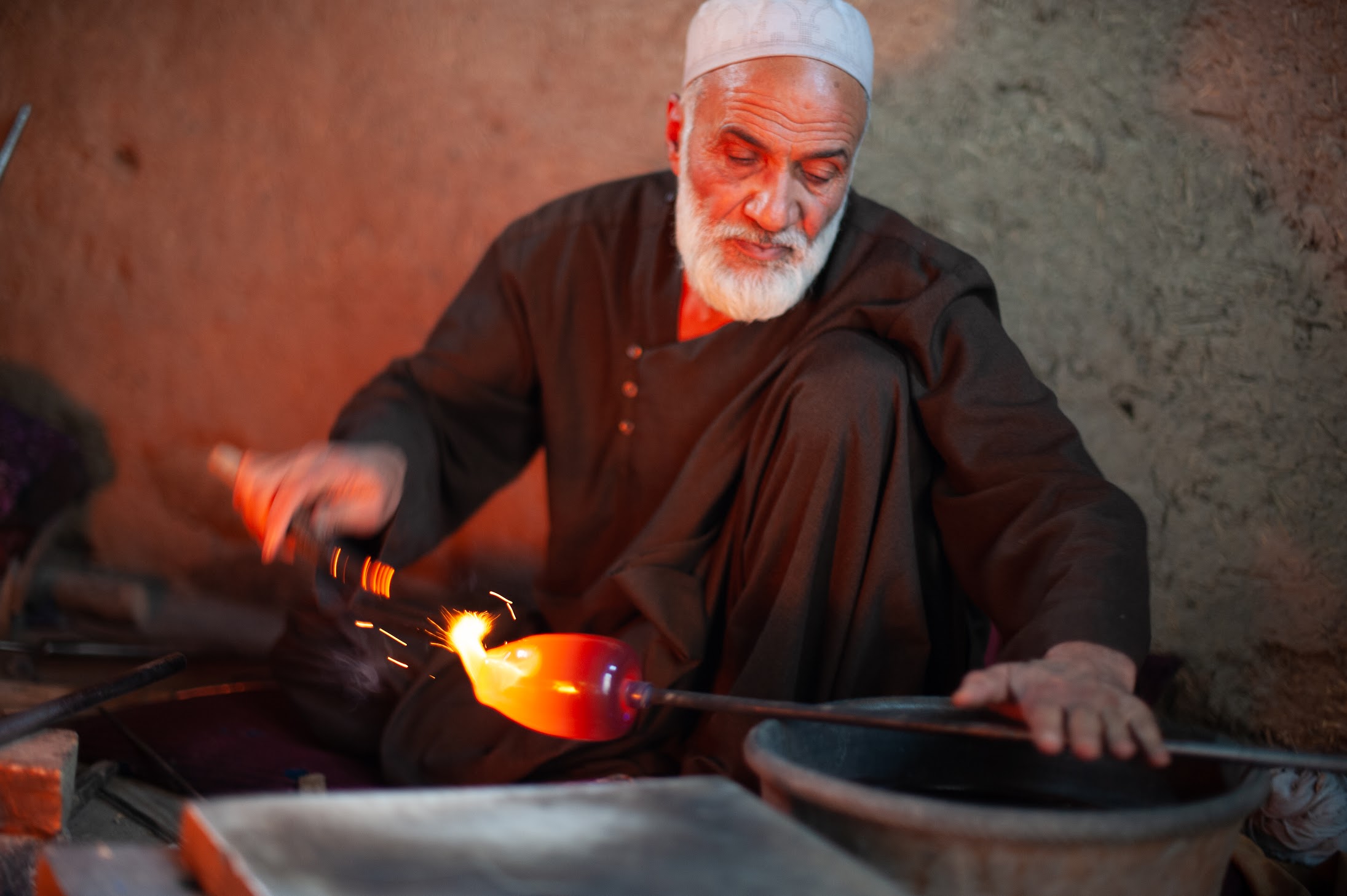
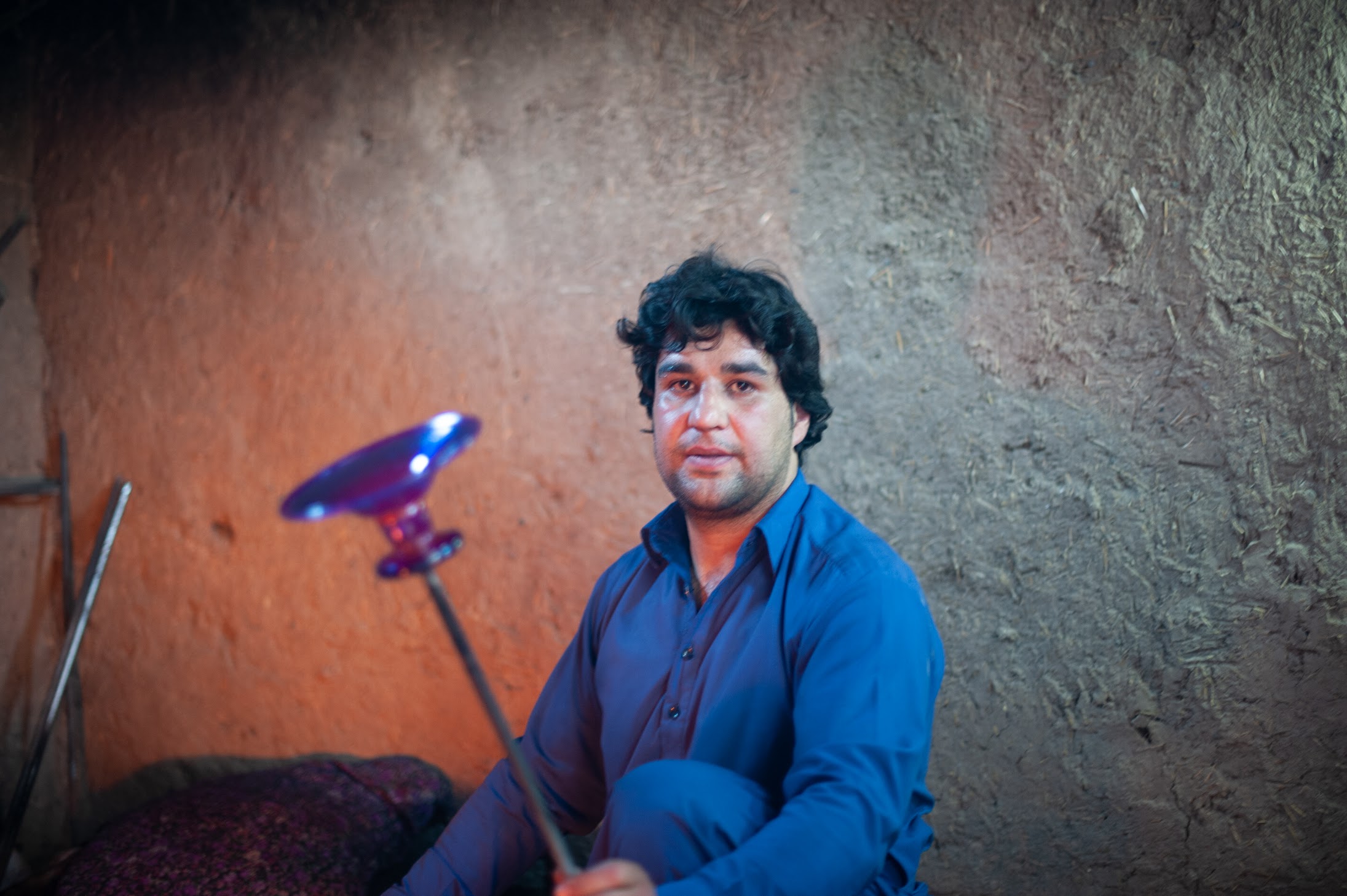
Nasarullah Faizi (left) and his son use the same tools, techniques and materials that would have been used by their ancestors more than 2,000 years ago. Their workshop is situated near Herat’s ancient citadel
With a mission to protect heritage crafts and break down the barriers that have isolated artisans working in countries like Afghanistan, ISHKAR is helping the Nasarullah family to maintain their ancient business by introducing them to a global marketplace.
To do so, ISHKAR called upon the celebrated multidisciplinary artist Boris de Beijer, who has previously worked with the likes of Jacquemus and Ace & Tate, to design a capsule collection of glassware that would be translated by Mr Nasarullah and his son at their workshop in Herat. Sharing ISHKAR’s passion for artisan techniques, de Beijer was keen to honour the ancient skill of the glassblowers through his designs and pay homage to their resilience in times of hardship.
The resulting collection features four different shapes – the bonbon dish, dessert coupe, dotted bowl and jug – all available in different colour combinations. We talked to de Beijer about how he drew from the history of glassblowing in Herat to come up with his designs, and his admiration for the artisans in refusing to succumb to the advances of modern technology.
 The new collection features four different shapes: the bonbon dish, dessert coupe, dotted bowl and jug. All shapes are available in different colour combinations
Your designs are beautiful; where did the inspiration come from?
I took a close look at what the glassblowers in Herat have been doing for centuries and designed glasses with their tradition and history in mind. I didn’t want to force my ideas onto the glassblowers, but to come up with designs that they are somewhat familiar with. The same goes for the colours; in Herat, they have been using the same raw materials to colour their glass for centuries. I let their history dictate my choices in the design process.
Did the glassblowers interpret your designs as you imagined them to be? Or was there an element of surprise?
There was definitely an element of surprise, but I was expecting that and embraced it. I had studied what the glassblowers were capable of, so I had a pretty good idea of what my designs might become.
Why do you feel it is important to keep traditional artisan techniques alive?
It is vital in this day and age when fewer people have mastered manual crafts or have any real expertise in traditional techniques. Besides my glass designs, I tend to make everything myself in the studio. I couldn’t imagine having a design practice without having a deep interest in artisan techniques.
What do you admire about how Mr Nasarullah and his son work?
I strongly admire their high levels of craftsmanship; they still use the same basic tools, techniques and ingredients that glassblowers would have used centuries ago. I also admire how they’ve passed down the craft for such a long time. I know some glassblowers who have access to all the modern tools but don’t manage to make products that come close to what Mr Nasarullah and his son are capable of.
Do you have a personal favourite piece from the collection?
I like the bonbon dish the most because of its indefinable purpose. I think this specific shape is playful and leaves quite a bit to the imagination.
What would you use the bonbon dish for?
Probably bonbons, but I could also put jewellery in it.