A room of one’s own
words mark hooper
photographs susan bell
Every winter, one of the most remarkable interiors in England is closed to the public and wrapped in acid-free tissue paper to protect it from the elements. This is Charleston Farmhouse as few ever get to see it…
The rain isn’t so much falling as hanging in the air in a frozen mizzle as I pull my car off the steady stream of traffic winding its way alongside the South Downs. A concreted-over and patched-up farm track winds its way towards a series of farm buildings. Men in hard hats and fluorescent coats busy themselves around the barns, but it’s the picturesque farmhouse that I’m heading for. Once the unofficial rural HQ and ‘art wing’ of the Bloomsbury Group – a loose affiliation of literary figures, artists, aesthetes and thinkers that formed in the early 20th century – this is Charleston Farmhouse, just outside Lewes in East Sussex.
Home to the artists Duncan Grant, David Garnett and Vanessa Bell from 1916 – plus a constant stream of influential visitors – Charleston was first discovered by Virginia Woolf, Bell’s sister, who wrote to say she had found a perfect farm for them where they could both paint and work the land (as conscientious objectors to the Great War, Grant and Garnett needed to find work of ‘national importance’). ‘It will be an odd life,’ she wrote, ‘but it ought to be a good one for painting.’
In the intervening years, Charleston has become famed not just for the art that hung on its walls, but for its famous inhabitants’ unique approach to home decor. Every available surface – from the walls to the furniture, the mantelpieces to the door panels – were decorated by the artists. Their archetypical, bohemian style is still an influence today – almost to the point of pastiche (talking at the annual Charleston Festival, the Turner Prize-winning artist Grayson Perry once described it as ‘the house that launched a thousand kitchen makeovers’ to gasps of middle-class horror). But in their blurring of the applied and high arts, their revolutionary and riotous use of colour and their embracing of new European styles, Grant, Bell and Garnett were undeniably ahead of their time. They were among the first British to recognise the importance of Picasso, Cézanne and Matisse. Indeed, it was the critic Roger Fry, part of Charleston’s ‘inner circle’, who organised the first exhibition of Post-Impressionist art in London, in 1910. (Fry also launched Omega Workshops, the short-lived furniture, textiles and household accessories brand that he envisioned as a rival to nearby Heal’s, and for which Grant and Bell provided designs.)
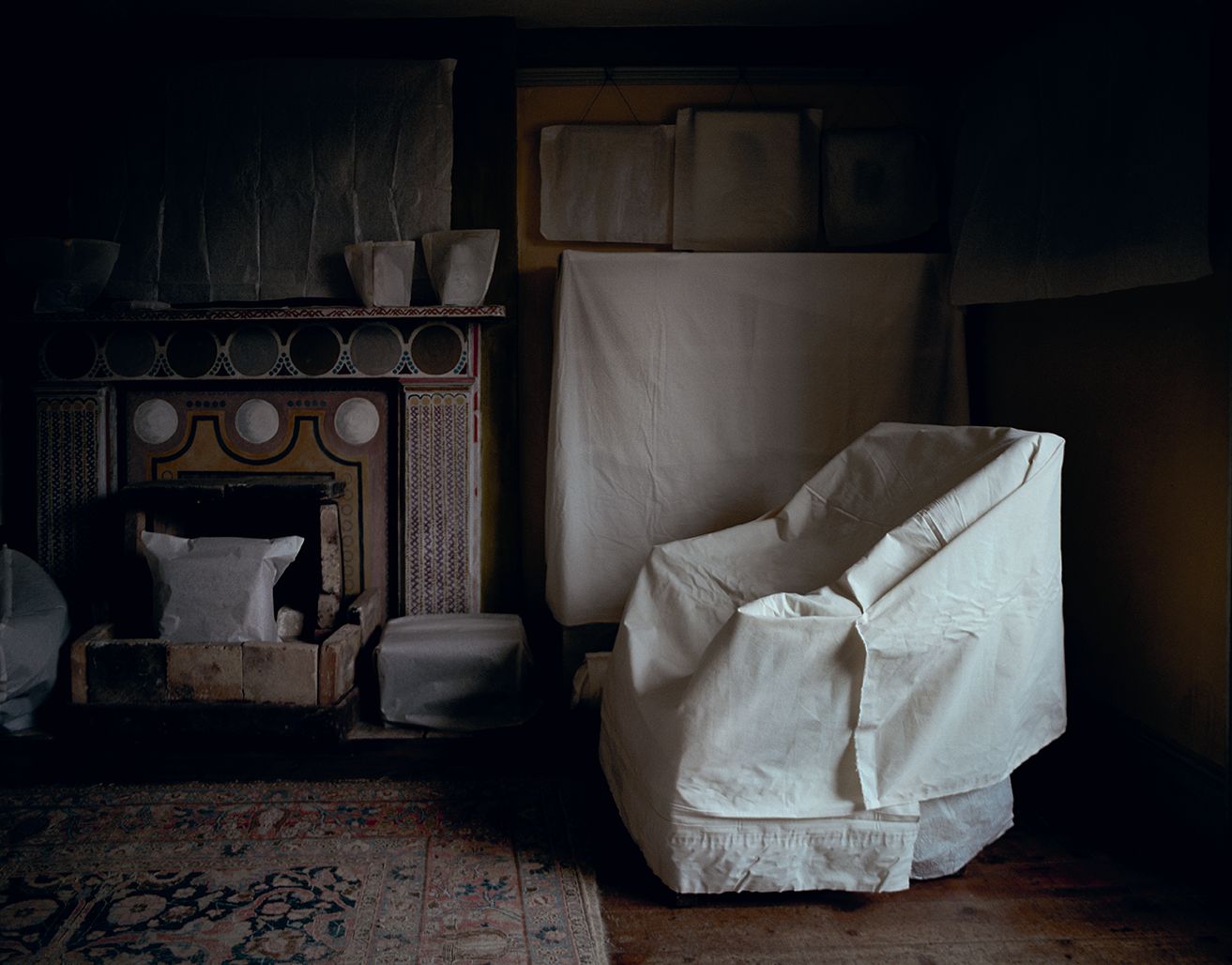
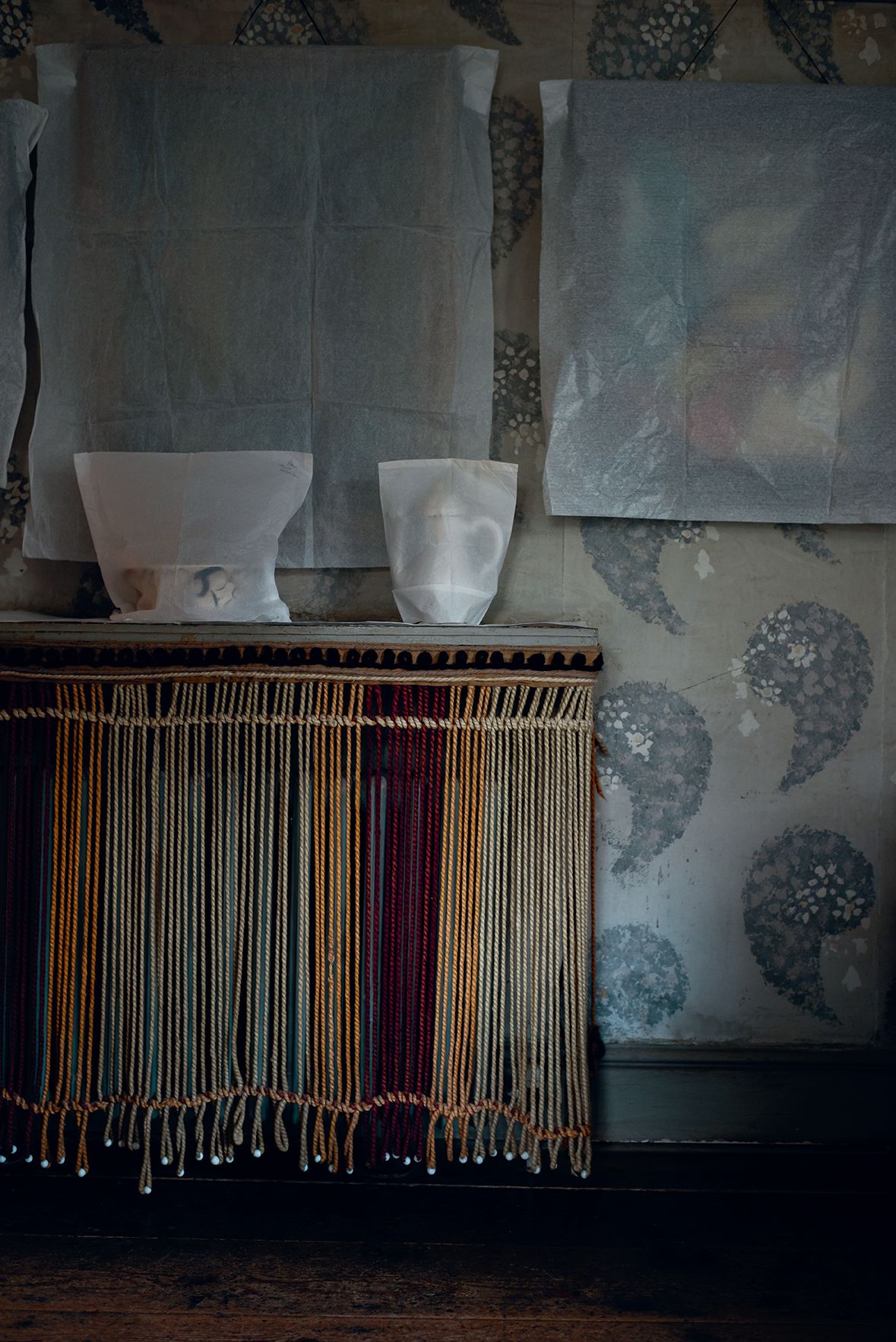
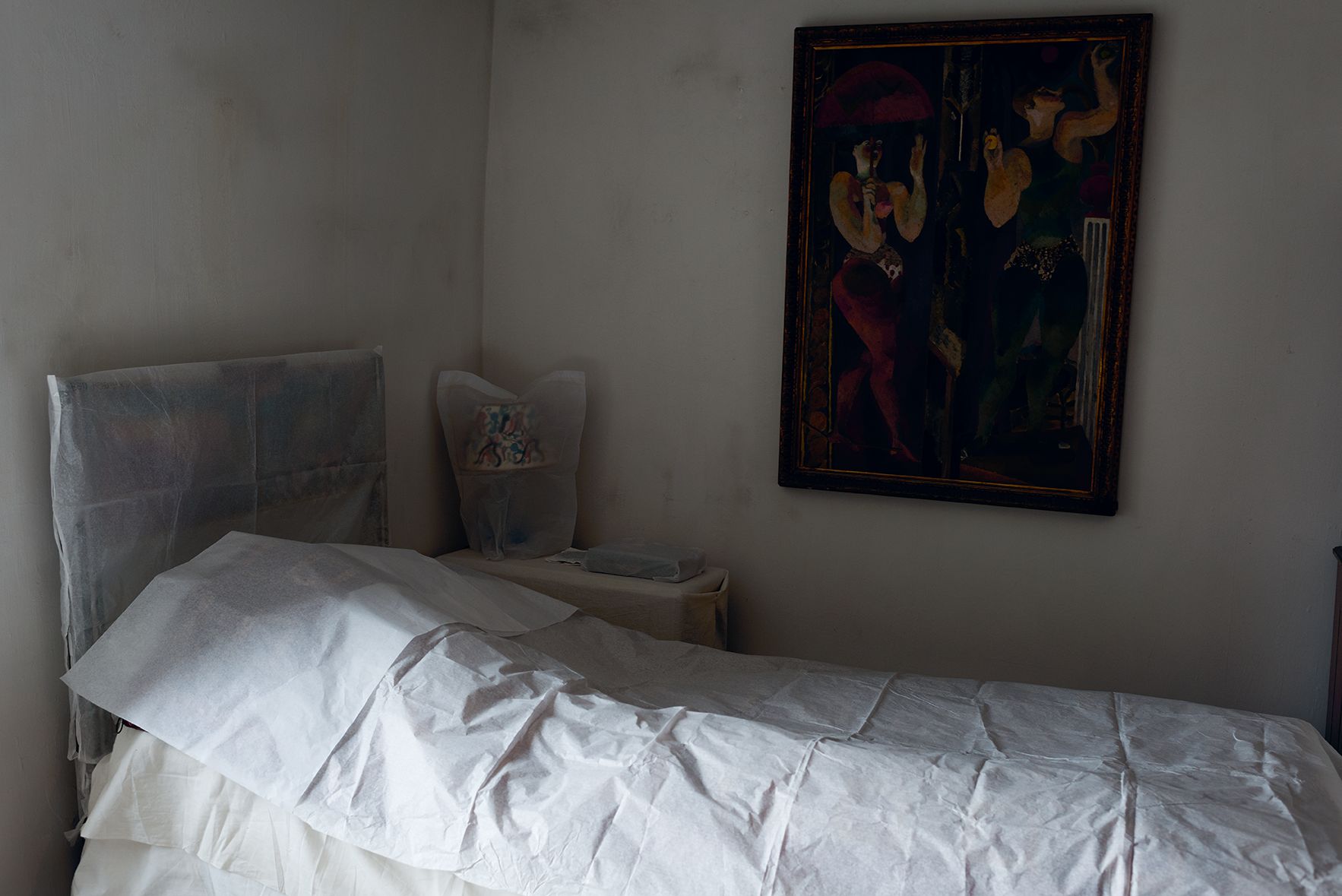
But for today’s visit, things are very different. Offered the rare chance to see behind the house’s locked doors, we are visiting in the off-season, when it is closed to the public for winter. Which means seeing it in a state that most never do – wrapped up for conservation, with acid-free tissue paper and cotton drapes covering everything: the paintings, the furniture, the objets d’art reduced to ghostly shapes, with only the merest hint of colour emerging.
‘It supresses all that colour, and even the shapes,’ says Darren Clarke, head of Collections, Research and Exhibitions for the Charleston Trust. ‘So everything takes on the same shape and colour – every painting becomes a blank canvas again.’
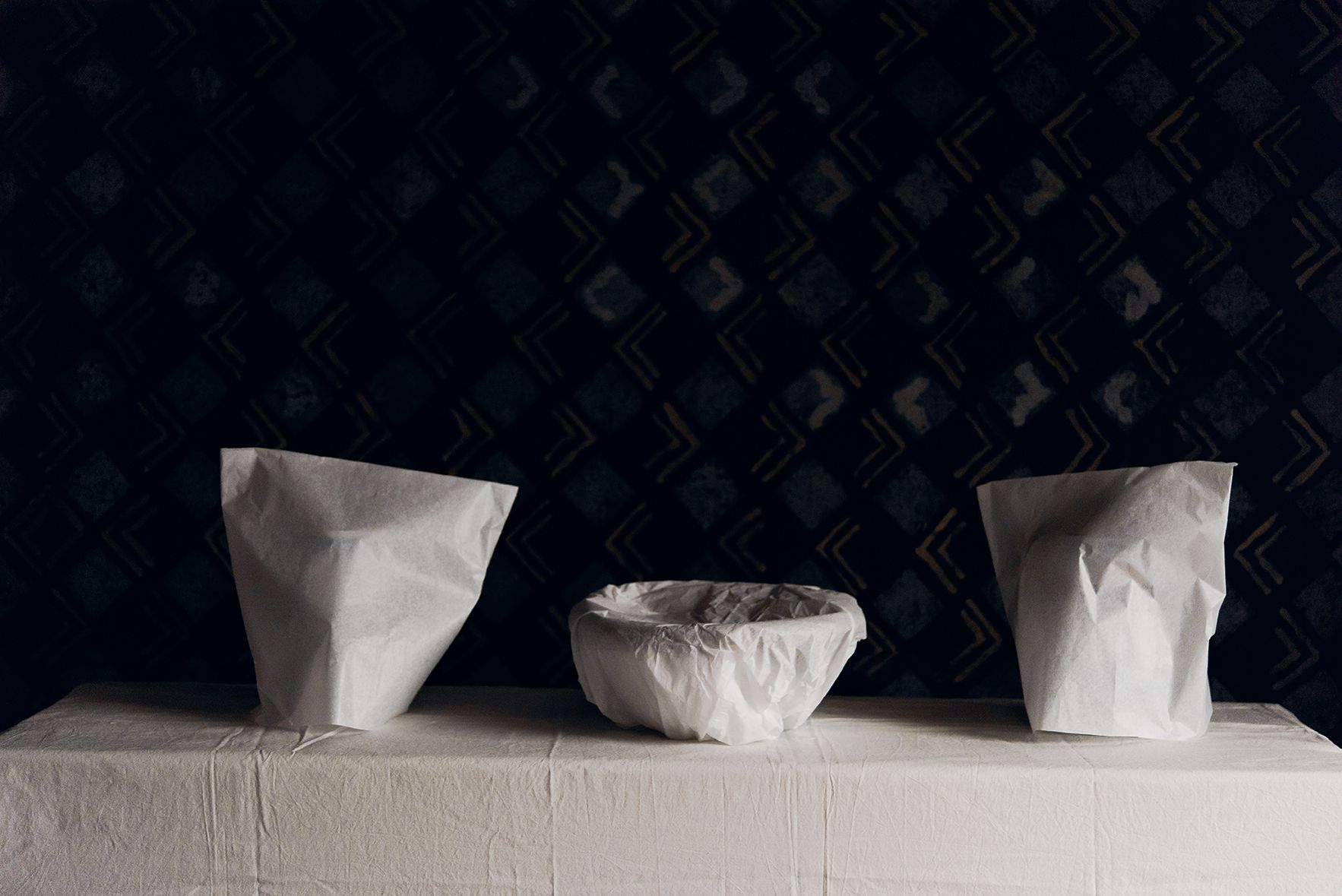
With every piece of value obscured by these opaque coverings – even down to the square bags made of tissue paper that cover all the ceramics – the rooms take on the appearance of an alternative kind of art installation. There is a funereal aspect to these silent, silenced spaces – not surprising given the process of wrapping up, shuttering down and cataloguing that takes place here.
‘All the furniture loses any painted detail because it’s covered in cotton or tissue paper,’ says Clarke. ‘So suddenly you get a very Scandinavian aspect to it. Especially with the carpets all rolled up and the bare wooden floors, you get this frugal impression: a sense of what the house might have been like when they moved in; that very cold, basic existence they had at the start.’ What it also provides is a dramatic backdrop for the few uncovered items that remain – sudden explosions of colour and pattern framed by the eerie stillness that abounds.
As beautiful as it all looks in Susan Bell’s stunning photographs here, there is practical, prosaic point to it all, of course. ‘Throughout the year we’re obviously doing ongoing conservation cleaning,’ says Clarke. ‘Our conservation assistant, Hilary Masters, has a team of volunteers who clean the house and will do all the vacuuming and the dusting as well as specific conservation tasks. But in the winter we get the opportunity to really go deep and concentrate on specific areas of the house; make sure there’s no damage; take beds apart, get to any of those corners that can lay undisturbed during the season and thoroughly inspect them to make sure no pests have secreted themselves in there over the year.’
It’s a vital process in the management of the collection and the building, and the stillness of the rooms belies the activity that happens in the ‘down’ season, working through everything that there isn’t the time or space to do while the house is open.
One of the many unique challenges to the conservation team at Charleston is the fact that artwork can’t simply be removed for treatment, as much of it is part of the very fabric of the house itself. ‘We have to dust the walls, and a lot of them are decorated walls with painted surfaces, so we have a conservator who comes in with a huge, long, very soft brush that she cleans the walls with and inspects them to ensure no damage has occurred over the season.’
Damp is also a constant worry, especially when damage to the walls means damage to the art itself. ‘We’re in a very damp area, on the South Downs,’ Clare points out. ‘There are natural rivers and springs that run under the house: it’s always had a problem with damp, so it’s maintaining that and ensuring it doesn’t take a hold.’
Pest management is also a constant issue: moths, carpet beetles, mice and rats all pose a threat. Clarke singles out spiders and flies as the bane of the conservator’s life. ‘The first thing you learn when you work in a house museum is to tell the difference between fly poo and spider poo,’ he says. ‘Spiders will eat all the flies and then poo them out all over the collection, and that’s really difficult to remove. That’s lesson number one!’
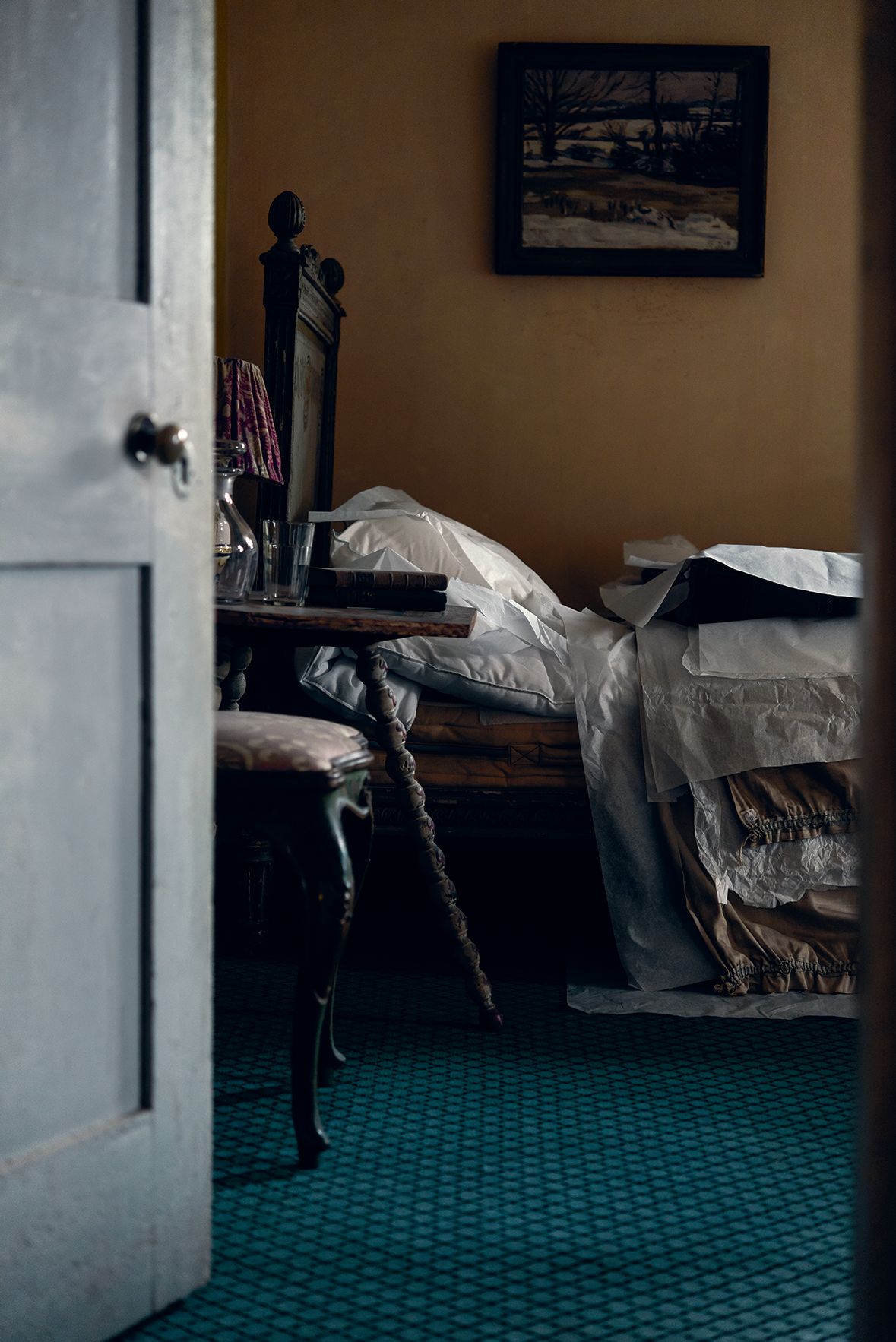
All of the above are part of everyday life in a farmhouse of course – and the 16th-century original part of the house is a wooden-framed building, itself prone to various hazards, while simultaneously offering plenty of little alcoves and voids for pests. Dressing up an empty house as a home also poses problems. ‘The beds are unslept in of course, so you don’t have that constant changing of sheets and of space that you’d have at home, where you’d be moving things around. So you need to keep on top of that: to go through drawers and check there’s nothing hiding in the corners, go under beds, to make sure there’s nothing lurking.’
For a house that was once full of secrets, however, there is sadly little left still to discover these days. ‘Everything has been inspected and catalogued over the years, so it’s rare to find any secrets,’ says Clarke. ‘We do have a policy of leaving any enclosures we find in books though – because it’s part of the history of the book. So you might pick up an old book and find a photo in it or a newspaper cutting or a shopping list, and they’re all still there. So if you’ve got a new volunteer they might discover these things without knowing they were there. But there’s been such a long period of conservation over the years – the whole house was emptied and taken apart and put back together, so everything in the house is intended to be in there.’
The books are a repository for other, less exciting flotsam too: ‘Books tend to accumulate a lot of dust, much of which will come from visitors,’ says Clarke. ‘We had 27,000 visitors last year; all of them exfoliating, leaving bits of clothing and lint all over the house, and that accumulates on any flat surface.’
In the front of the house, taking the door on the immediate left as you enter, stacks of furniture fill what was once the dining room, around which fascinating conversations on art, politics, religion and sex once flourished. In the closed season, this room contains what are known as the ‘Grab this’ items. These are the precious pieces that have been earmarked for immediate saving by firefighters or volunteers. Obviously, deciding on such priorities is not so simple when the rare artworks aren’t all conveniently hanging by hooks on the walls but are often part of the walls themselves. ‘If you went into the room and were unaware of the collection, it would be hard to know what is important to us and what isn’t, so it’s vital to have these sings up that literally say “Grab me, I’m important” – rather than that lot over there that can go up in flames,’ says Clarke.
Perhaps rather counter-intuitively, among the ‘Grab this’ items are the doors, with their rare panels painted by Grant and Bell, which are still attached by their hinges. ‘You would literally just have to rip them off,’ explains Clarke. ‘Imagine the building is on fire and there are flames licking at your backside: if you’ve got an opportunity to rip that door off and chuck it out the window, that’s what you do – and hopefully they’ll be a chance for them to be conserved later if possible. Practical matters have to be taken into consideration of course. Doors are obviously pretty easy to rip off. And we’ll prioritise things that are on loan to us, that we don’t actually own…’