The London Orchestra from Waste Materials
Words Verity Elliott
Images courtesy of The London Orchestra from Waste Materials
For most, the events in 2020 heightened our attention to issues our world is facing, in our environment, society, work and health.
‘Design in an Age of Crisis’, an online offshoot within this year’s London Design Biennale’, invited the world’s design community to react to these subjects with an aim to turn these notions into design ideas that could inspire policy initiatives. A selection of these projects will be physically exhibited at London Design Biennale at Somerset House in 2021, which will have ‘Resonance’ as a theme this year.
The global open call created in partnership with Chatham House was issued in the summer of 2020, since then it has received 500 submissions from 50+ countries over 6 continents. These submissions from individuals and groups of creatives all explore the notion of how design can benefit these areas of discussion and assist in transforming our world to harness a brighter future for all.

From the wide range of projects available to view now via the London Design Biennale’s online gallery, one particular submission left us smiling with its radical approach to design executed in an uplifting and ingenious way: ‘London Orchestra from Waste Materials’; Established by RCA’s Design Products MA student Andrew Scott in collaboration with Royal College of Music composer Hangrui Zhang.
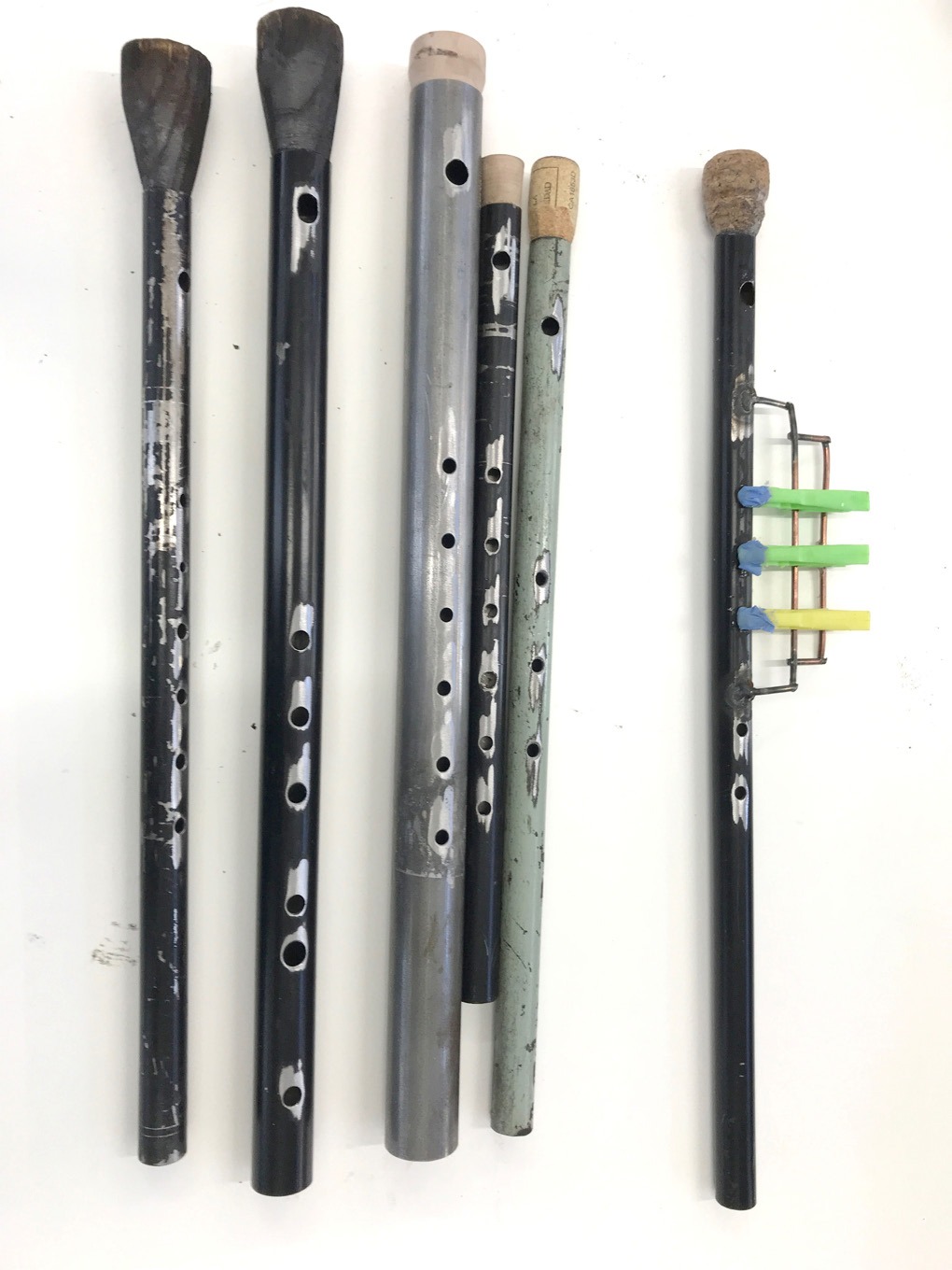
It’s a project designed to engage and entertain. Scott has reimagined what we deem to be waste, turning discarded materials and objects no longer fit for purpose into fully functioning musical instruments. ‘By making the instruments out of found materials we aim to reframe what is considered trash,’ he says, ‘and also show that with some design thinking, making, and iterating, one can create not just noise but music from the overlooked and bountiful material landscape around us every day.’

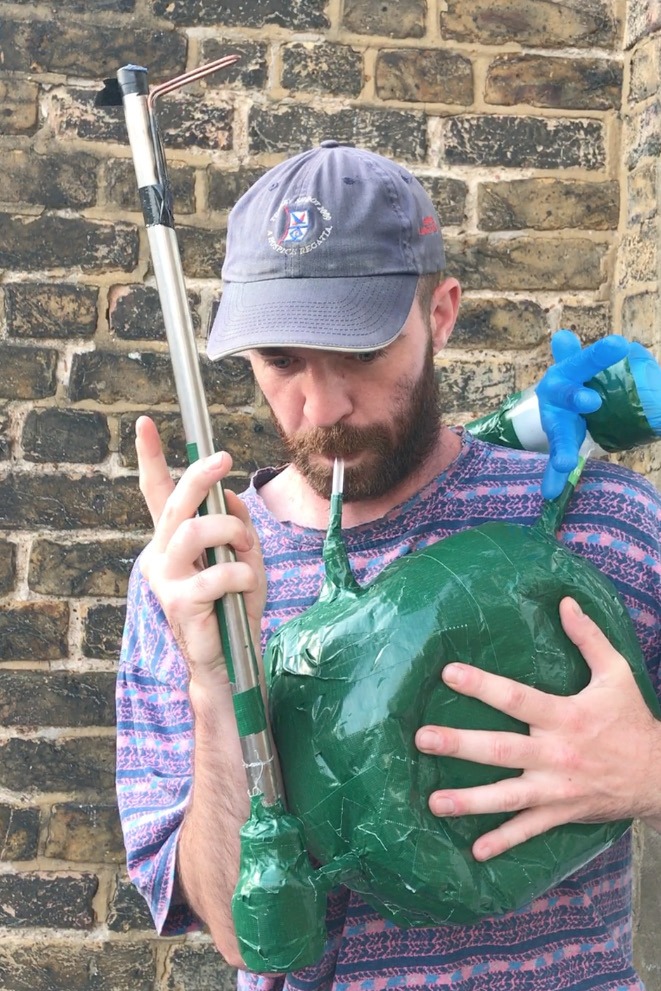
From the materials used to the instruments themselves, many levels of experimentation have gone into Scott’s work, with some of the pieces taking on more recognisable forms than others such as an expertly engineered steel guitar made from cooking oil drums and discarded metal hardware. There’s also an unidentifiable but fully functioning woodwind instrument made of PVC pipe and electrical wire, but the pièce de résistance in the orchestra may have to be the bagpipes – made using a vast array of waste including a supermarket carrier bag, a broken crutch, discarded metal, water bottles, PVC pipes and latex gloves, all strapped together with gaffer tape to create that unmistakable Scottish drone.
In these transformations, these instruments have the ability to bring joy to an audience, viewer, and the player; when tested on the streets of London the unique sounds of the Waste Orchestra drew a lot of positive interest, elevating the mood of the audiences in the shared experience of witnessing something special, addressing the issues of mental health and loneliness – two problems the pandemic has heightened. Through a teacher-friend in the US, the project was also able to form a connection in New York City, using Andrew Scott’s instruction manual of making methods to create his own instruments to inspire his students.

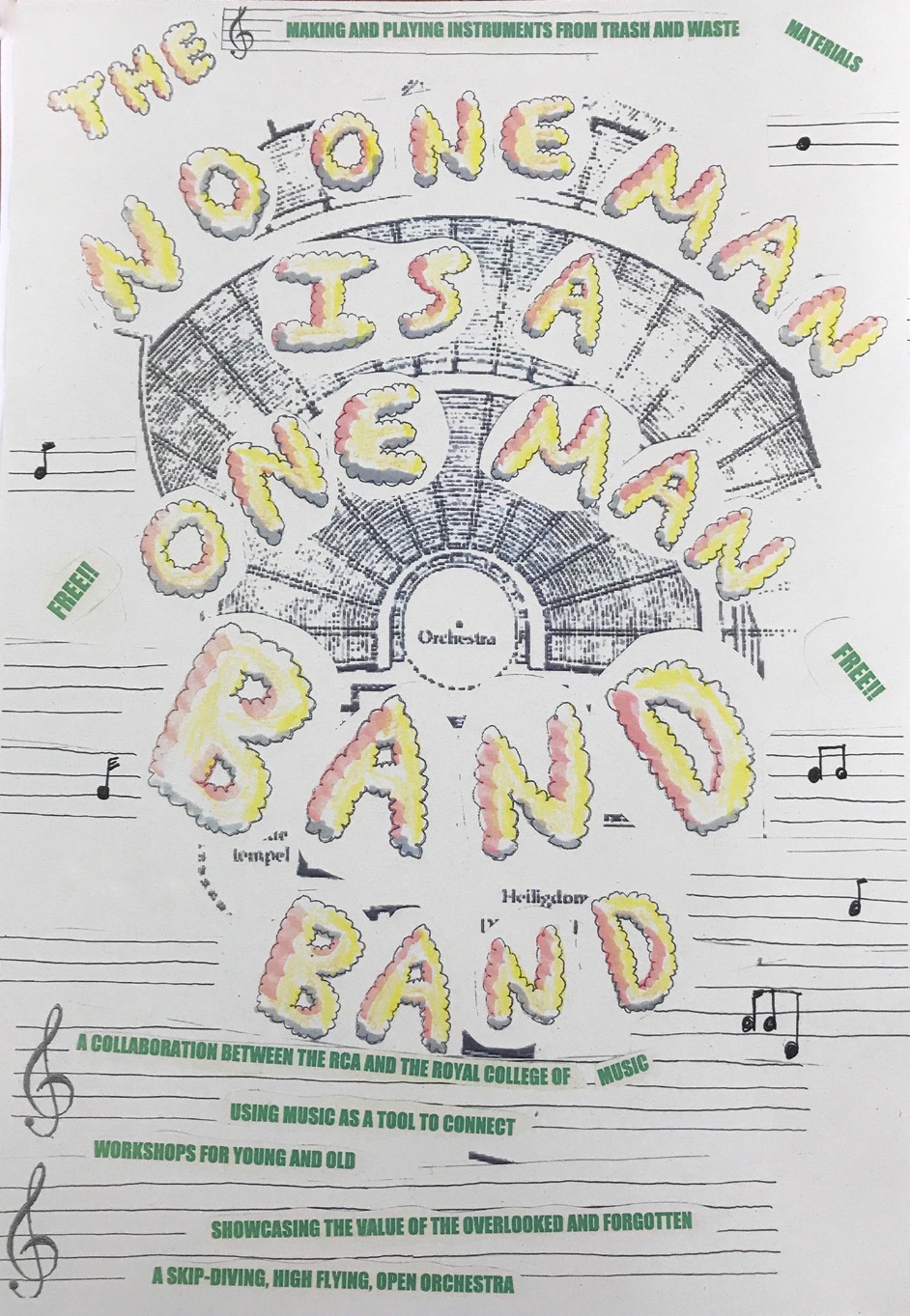
Working with the musicians at the Royal College of Music, composer Hangrui Zhang put each instrument to the test, offering a vital opportunity for feedback on Scott’s inventions. Measuring the tonal range of a broomstick, clothes rack or piece of discarded metal proved to be an exciting experiment for the musicians, and resulted in some surprisingly distinctive sounds depending on the material and composition in play. With testing complete, Zhang also proved his ingenuity by creating sheet music for each of the instruments, writing in such a way that could be read by any musician that came to play it.
‘Music is an integral and timeless feature of humanity and society and it uniquely enables us to connect with one another, and share in a collective moment,’ says Scott. Robert Browning wrote that ‘Who hears music feels his solitude peopled all at once.’ The Waste Orchestra project offers the opportunity for musical instruments to reach all corners of society, not just the elite, with the use of materials eliminating the hefty price tag that comes with most instruments. It also instils the notion that music can be found just about anywhere and enjoyed by anyone; even if it turns out that music was made by nothing more than a load of old rubbish.
To see more designs in an age of crisis go to www.londondesignbiennale.com