In the Studio with… Annie Morris
Words Tamsin Blanchard
Hero photo Jonty Wilde, courtesy Yorkshire Sculpture Park
Annie Morris is having quite a moment. Annie Morris: When A Happy Thing Falls is her first solo show at the Yorkshire Sculpture Park, running concurrently with an exhibition of selected works at Timothy Taylor gallery.
You might also have seen her gravity defying sculpture among the trees in Regent’s Park as part of Frieze Sculpture 2021, and she has been commissioned to create this year’s Christmas tree for Claridge’s – all 10 metres of it. Morris’s exuberantly textured and colour-drenched sculptures and tapestries bring a sense of joy, delight and optimism wherever they go, despite the fact that they originated from a period of darkness after the artist suffered the tragedy of a stillbirth.
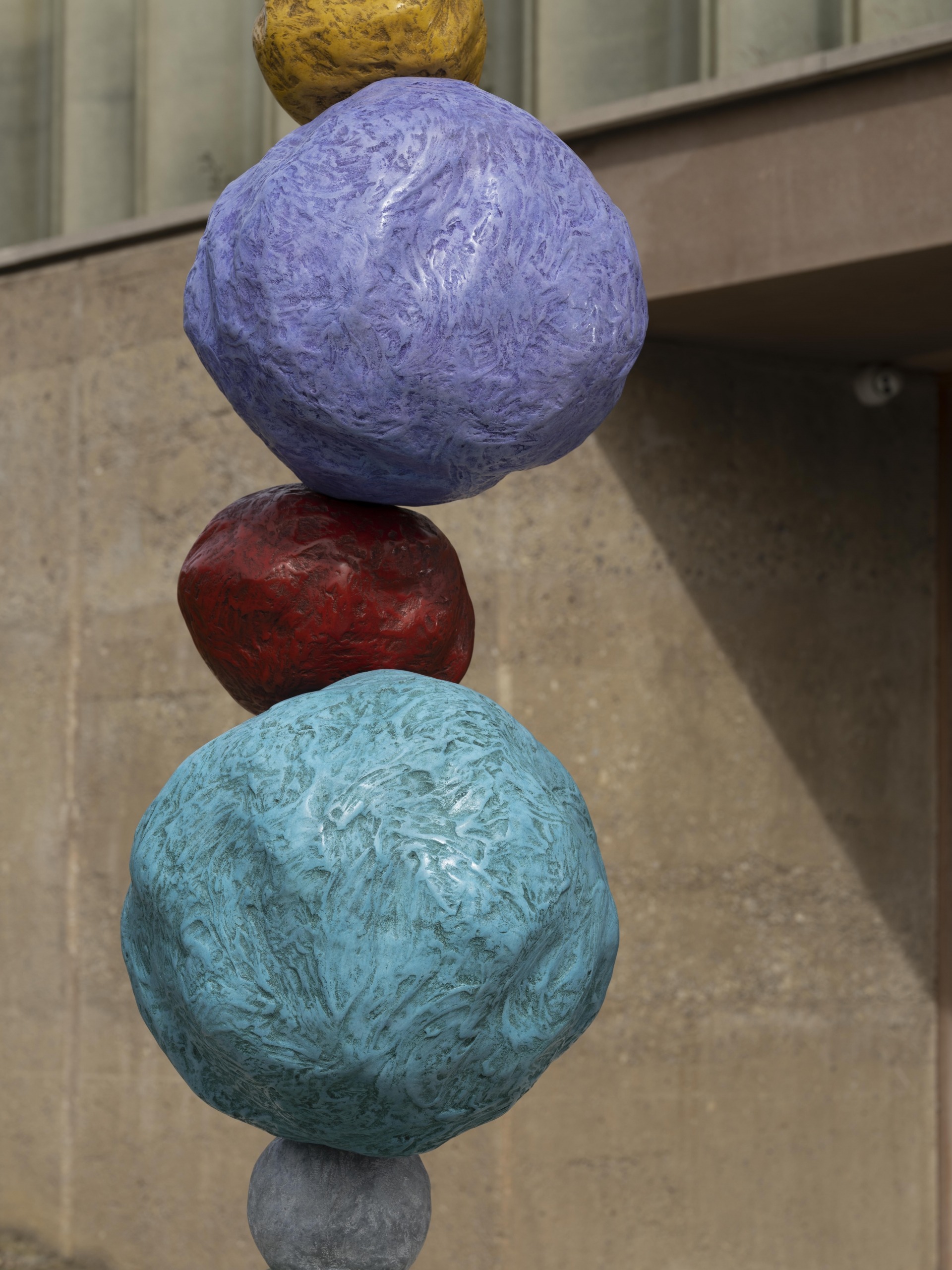
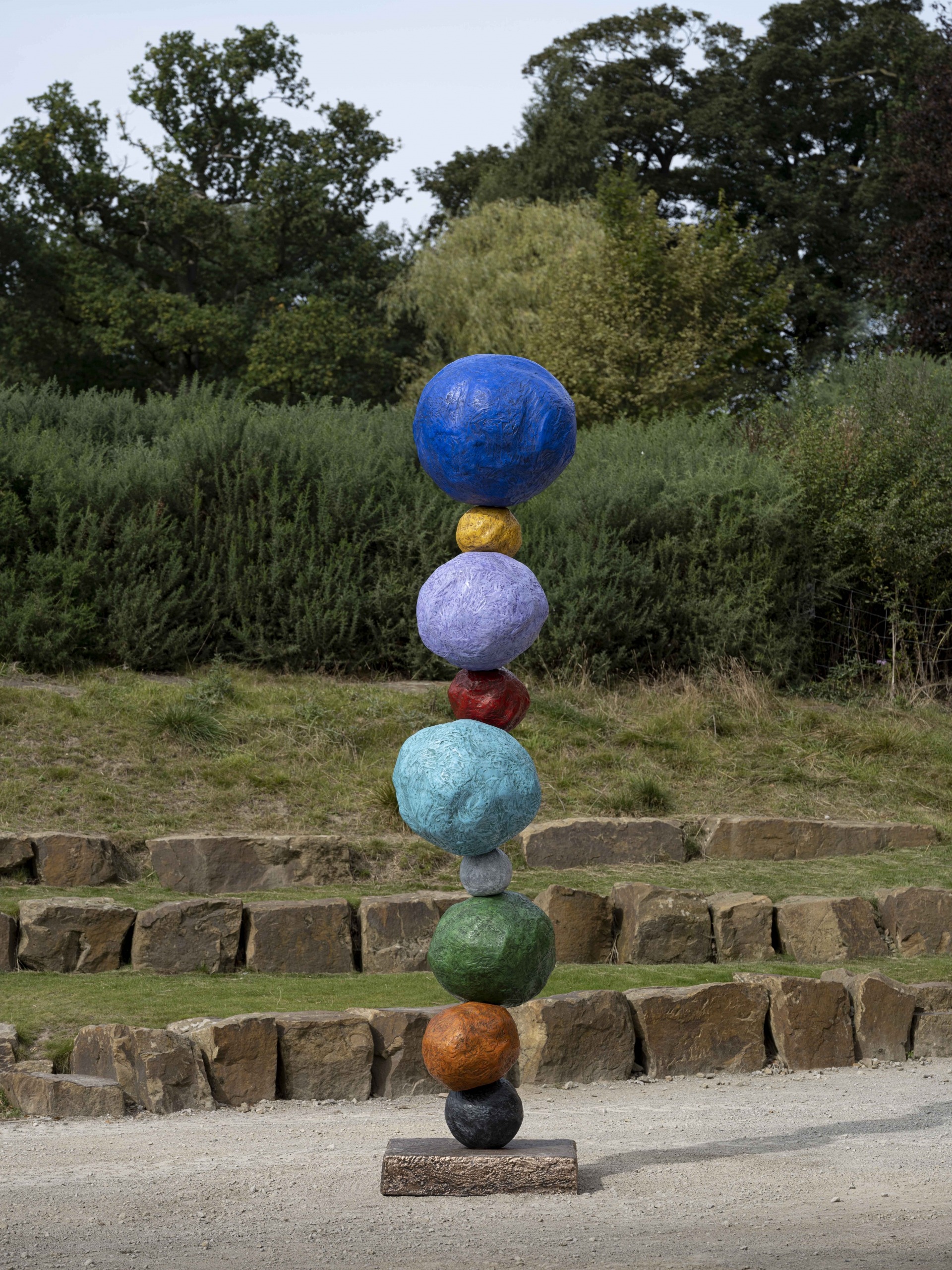 Stack 9, Ultramarine Blue, 2021. Photo by Jonty Wilde, courtesy of Yorkshire Sculpture Park
Hole & Corner was privileged this week to spend a morning with the artist at her north London studio, which she shares with her husband, artist Idris Khan, where she was in conversation with YSP head of curatorial programme Helen Pheby, and director of the Timothy Taylor gallery, Tarka Russell. ‘My sculptures are about holding onto something that’s fallen, and to express the hope and defiance of life,’ says Morris. What more can anyone ask for right now?
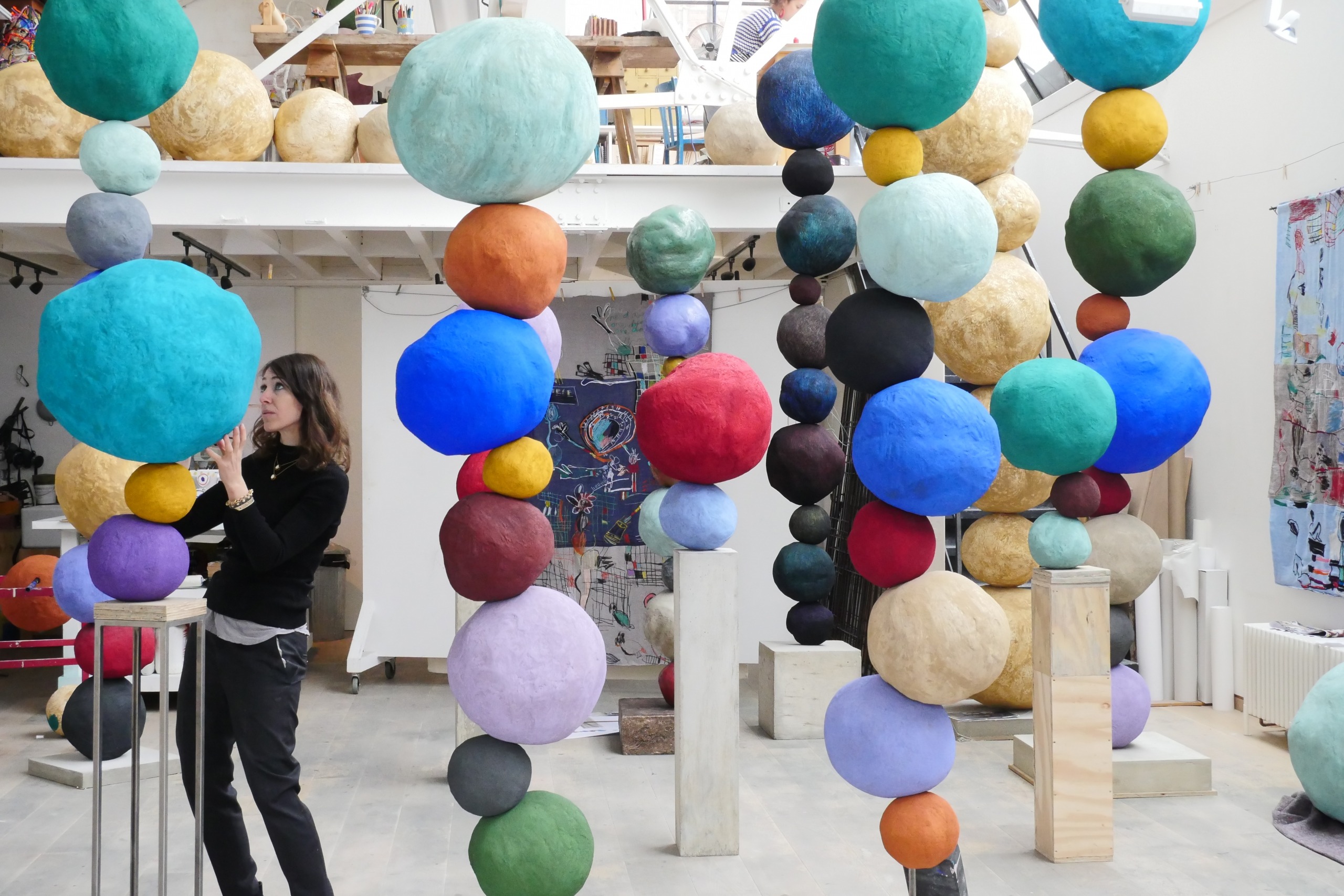
Annie Morris in her studio. Photo by husband and artist, Idris Khan
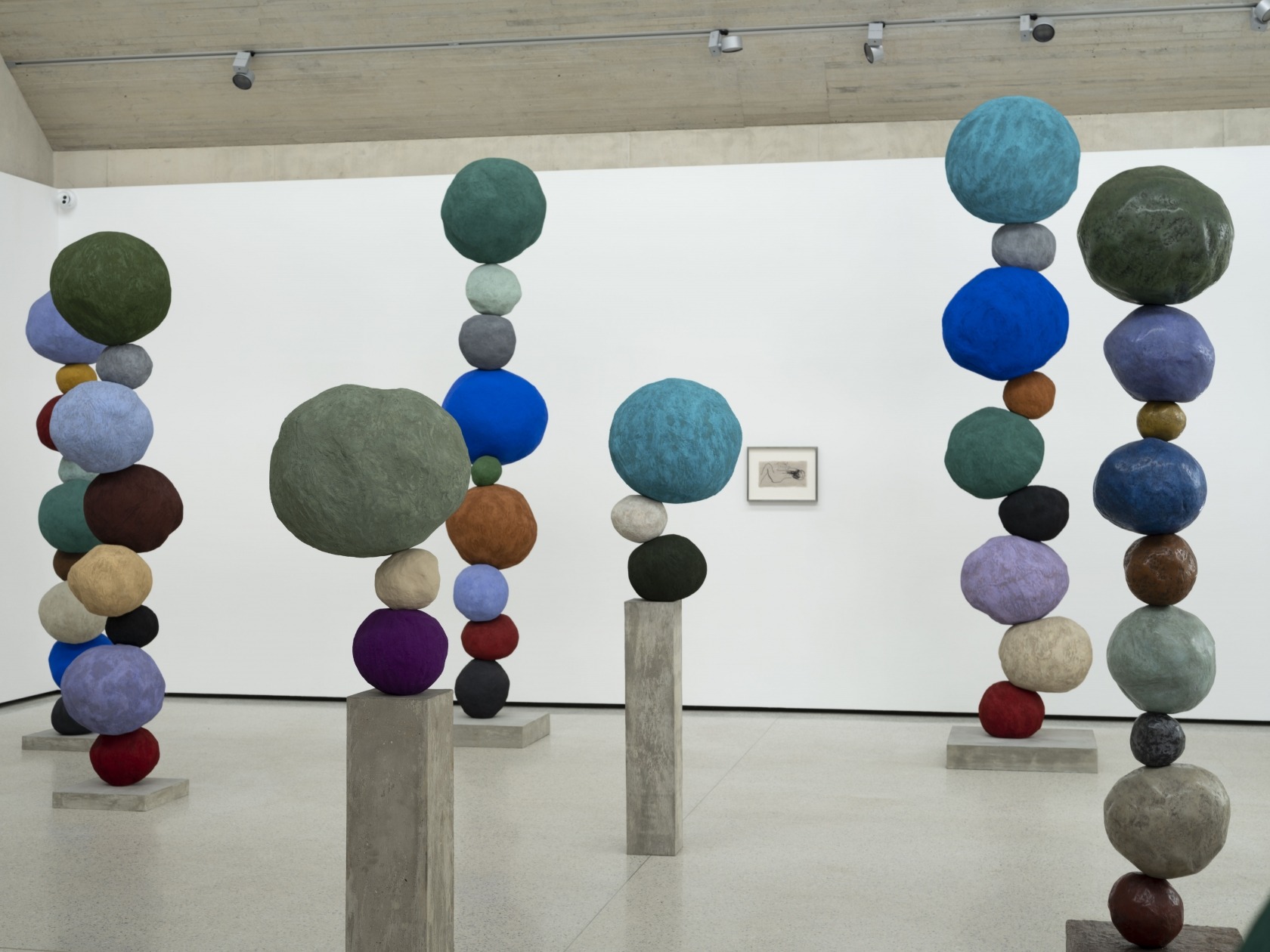
Morris is known for her gravity-defying colourful Stacks, towers of pigment-packed, organically crafted balls, are each placed onto a supporting metal thread – almost as a child might stack building blocks. They look precarious but they are quite stable (a relief for anyone planning to visit the exhibitions with small children in tow). ‘They’re just individual balls, no matter what size, they all connect, they come apart,’ Morris explains. ‘You can build them in the way that a child might and I quite like that about them.’ The bronze pieces she has made could have been built as one piece, but she says, that would take away the magic. ‘There’s a real simplicity to them, but they shouldn’t really be standing.’
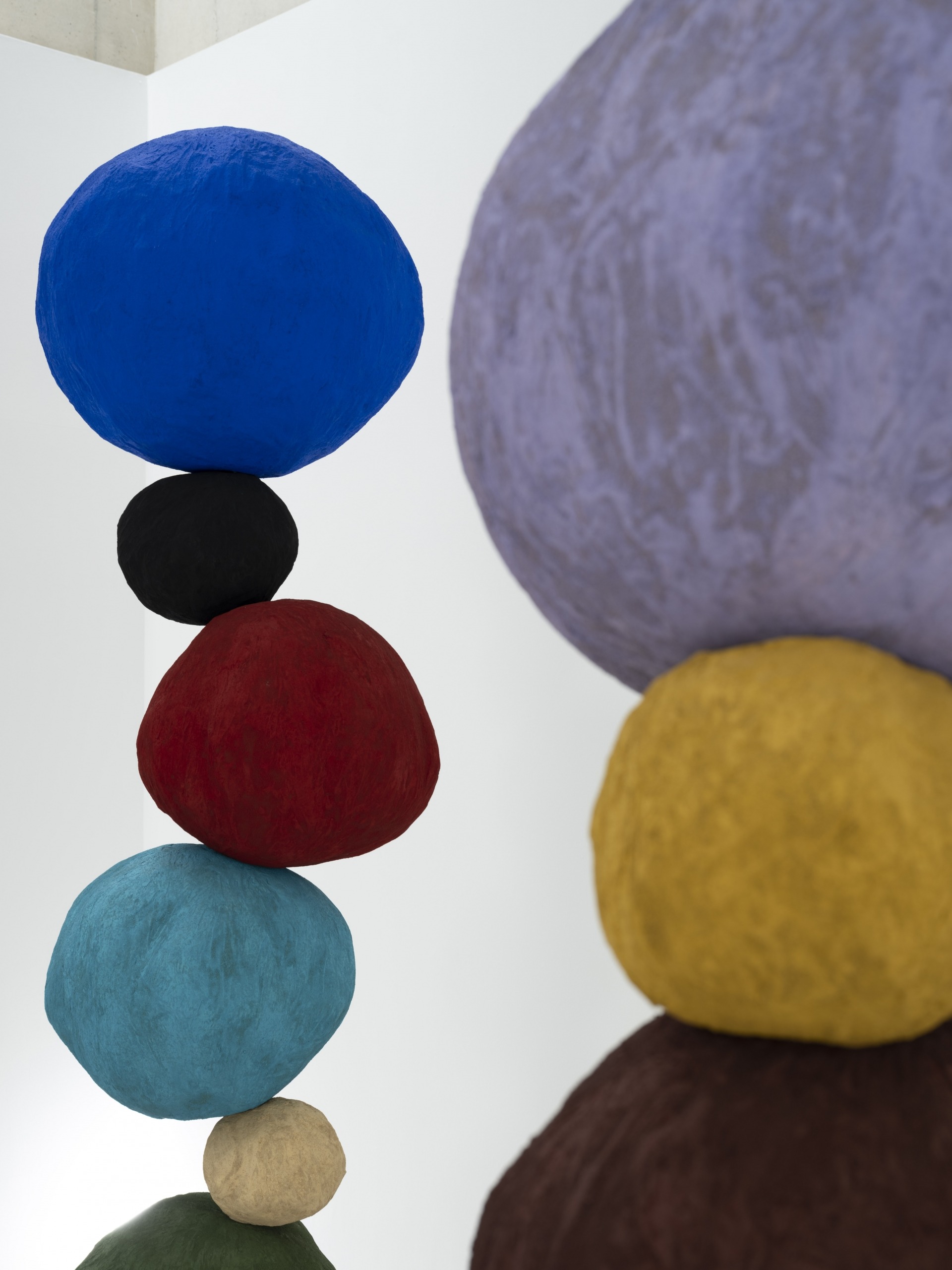 Gravity-defying colourful Stacks from When a Happy Thing Falls, 2021. Photo by Jonty Wilde, courtesy Yorkshire Sculpture Park
Morris has also been working on a series of tapestries on show at the Yorkshire Sculpture Park, which are a result of a series of drawings she did during lockdown. At first glance, the tapestries look like paintings, but when you look closer, you see that the thick brush strokes of paint are actually stitched in thread. ‘I had lots of time on my hands,’ she explains. ‘I wanted to kind of explore how to make sewing look like oilstick and vice versa – making drawing that has a sculptural quality to it. So there was an intense amount of time to do this because it was a very slow process to make them.’
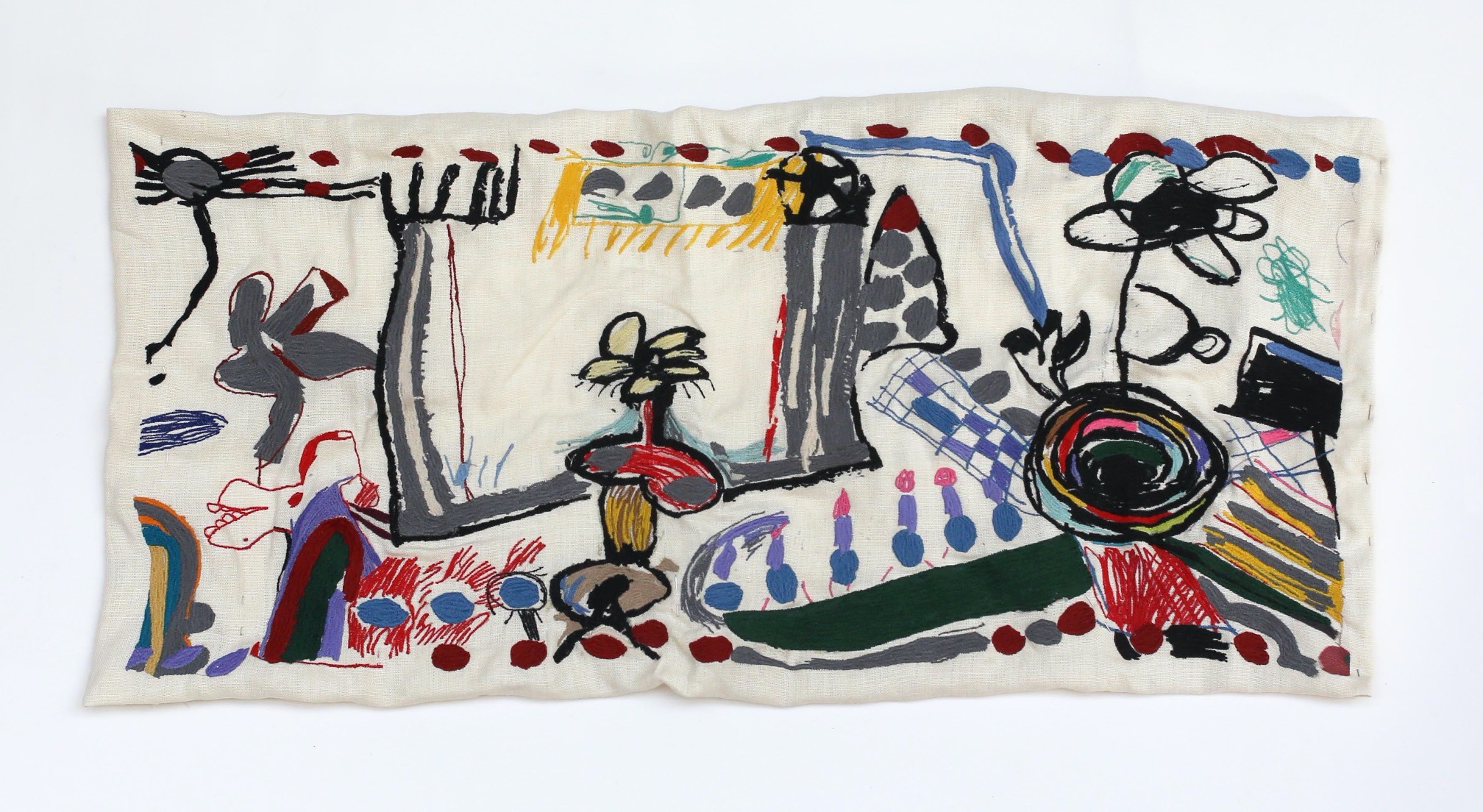 Annie Morris, Long Tapestry 2, 2020. Photo courtesy of Annie Morris Studio
‘I’ve been stitching works for many years,’ she said. ‘If you sew, it creates this sculptural drawing, and you get all these amazing lines that make up the work, so you get this kind of quality that something isn’t flat. I think that somewhere between painting and drawing and stitching. I call them thread paintings because they kind of are like paintings. And I always draw on big pieces of paper really fast. I love to draw something quickly, subconsciously, automatically. And then I spent a long time sewing them.’ She uses a sewing machine to go back and forth over and over again to build up intense layers of thread resulting in a globby, paint-like quality. ‘It’s like going over something that you did quickly,’ she says. ‘And you’re thinking. It’s a lot of time to think.’
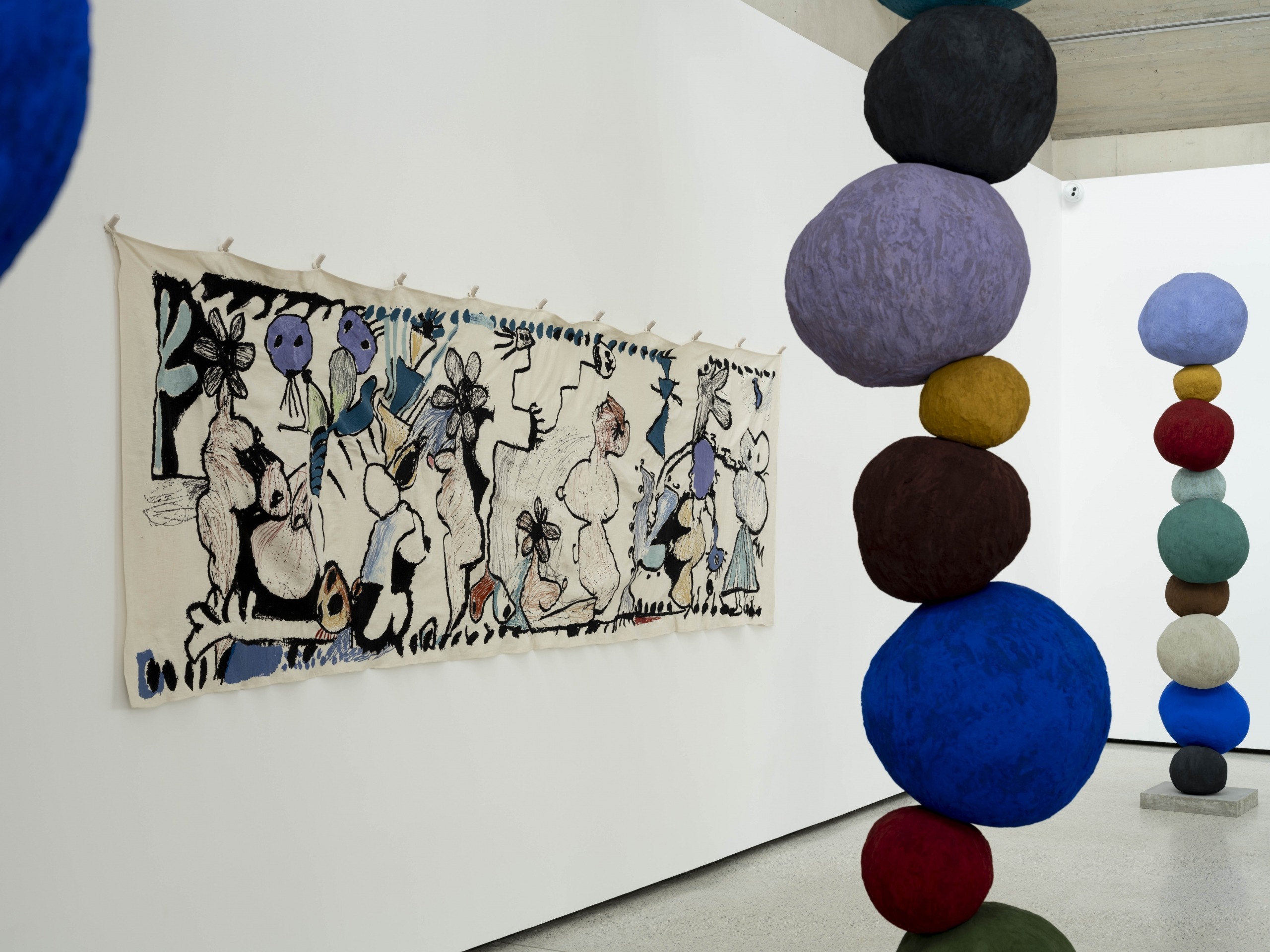
Tapestry at When a Happy Thing Falls, 2021. Photo by Jonty Wilde, courtesy Yorkshire Sculpture Park
There’s a fierce intensity about Morris’s use of colour, as though she can’t get the pigment to be deep enough, alive enough. For the Timothy Taylor show she says she became obsessed with a particular cadmium red, a turquoise and black. ‘It’s that essence of before paint dries,’ she says. She uses pigment in its rawest form, layering it up to build up a surface on the balls which are made of hardened foam covered in plaster. Some of them contain Jesmonite or sand. There are balls all around the studio, some in finished stacks, others on shelves ready to be integrated into a work, others lying on the floor in different states of progress. She has also started working in bronze, which she colours by burning it. ‘Bronze is such a beautiful material, I didn’t like the idea of painting it,’ she says. So she has developed a process of burning different nitrates, sulphates and pigments that react with the bronze rather than coat it. There are some miniature bronze stacks lined up on a table in her studio and Stack 9, Ultramarine Blue was part of Frieze Sculpture in Regent’s Park (which ran until September 17).
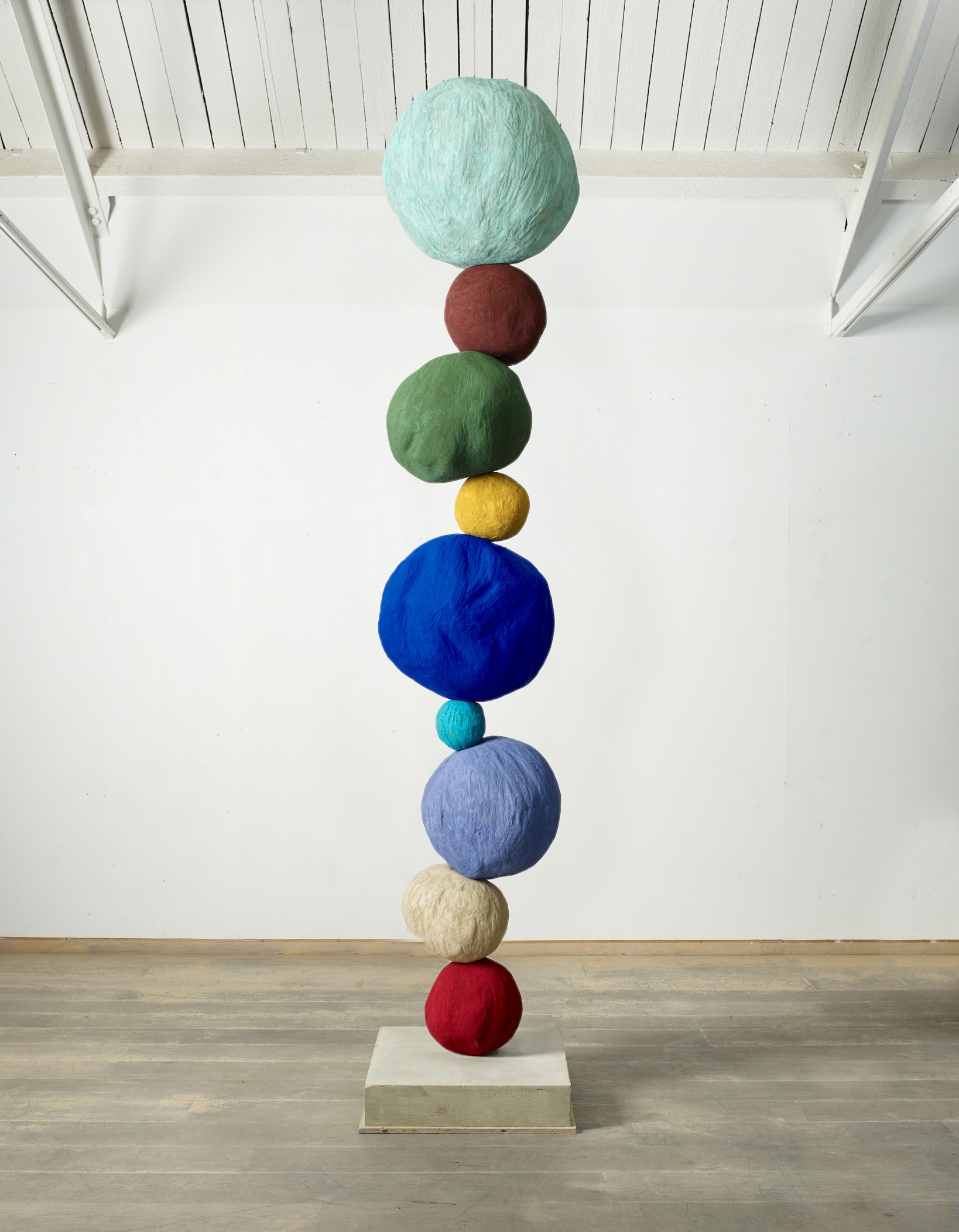
Stack 9 Ultramarine Blue was part of Frieze Sculpture in Regent’s Park. Photo by Stephen White
If you didn’t manage to get to Frieze, there is plenty of time to see her work at the Weston Gallery at YSP or the Timothy Taylor gallery in London (until November 13). You can also enjoy the vibrancy of Morris’s work in glass if you happen to be in Claridge’s Painter’s Room bar for a cocktail. ‘I was able to make a stained glass window, which is the first time I’ve ever done that,’ she says. ‘It’s a great exciting new material to work with, beautiful hand-blown glass.’ The glass sections contain less lead than is traditionally used, which proved a challenge for the glass maker. But the effect is typically intense.
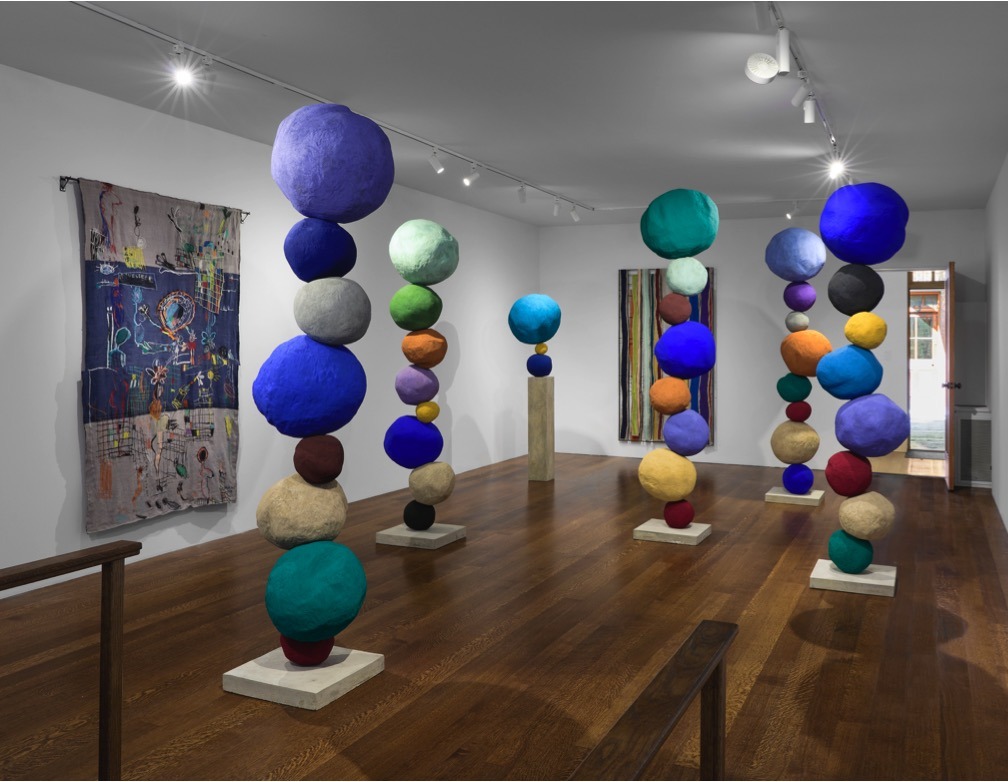
Annie Morris installation at Timothy Taylor, New York, 2019. Photo by Matthew Kroening
During the studio talk, Tarka Russell asked Morris about the influence of Morris’s stillbirth on her work. ‘I’ve talked about that so much but I also think with these works, they somehow represent to me that how we all experience grief is such a huge part of living. And obviously death is such a huge part of living. And it’s something I certainly think about too much. Since going through this horrible tragic time, I feel there’s a lot of fear attached to life in some way.’
While people don’t have to know the background to the work, there’s an optimism and a sharp sense of being able to overcome the worst adversity that shines through. ‘One always worries about these little details in life, everyone’s life is so complicated, and there’s so much going on for all of us. And yet, you know, when you actually break it down, there is that moment where really important things are very simple. So I just learnt a lot from that extremely tough time.’
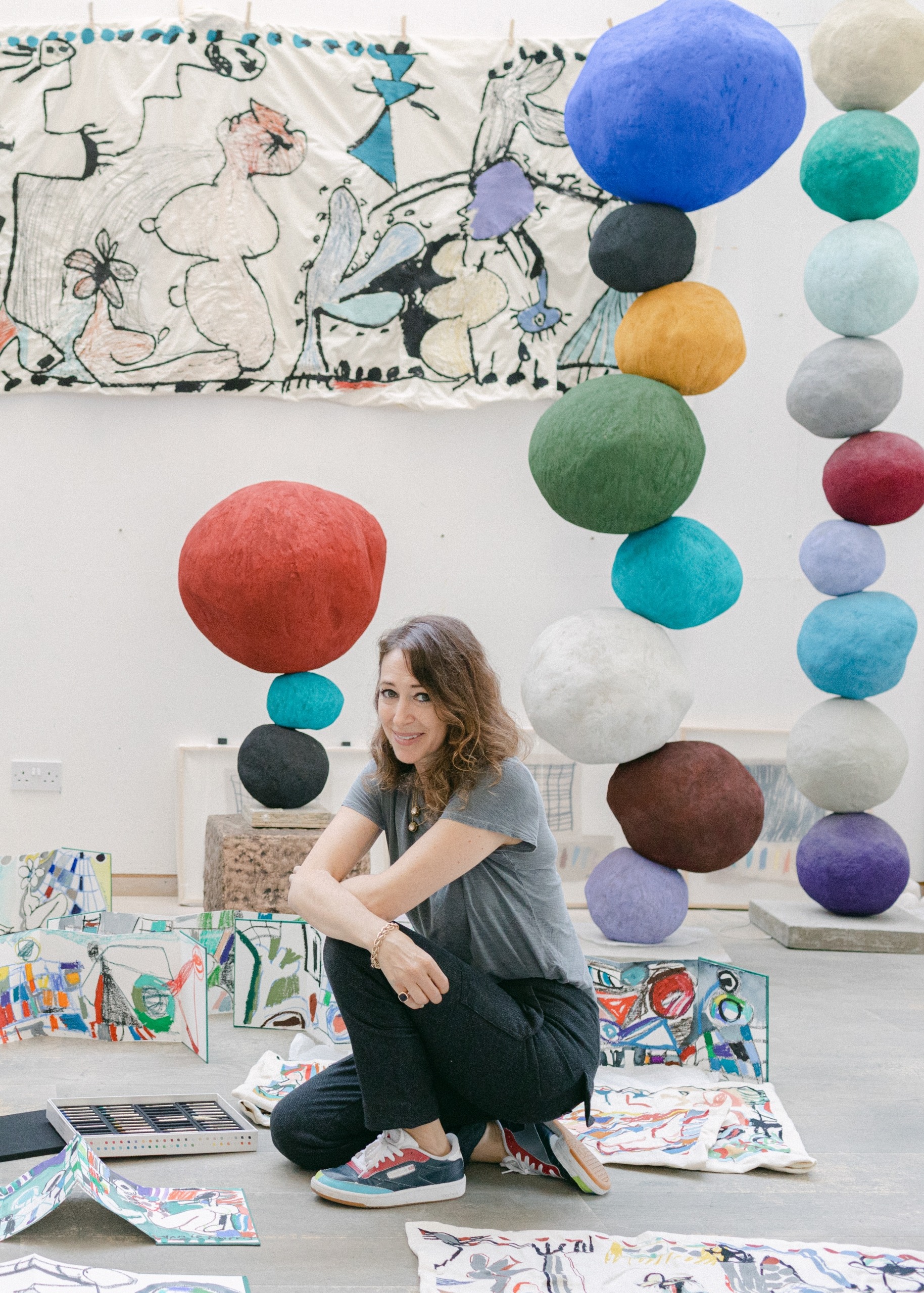
Portrait of Annie Morris, 2021. Photo by Holly Clark
Annie Morris: When A Happy Thing Falls runs until February 6, 2022, The Weston Gallery and Open Air; The Weston is open Tuesday-Sunday and Bank Holidays, 10am-5pm.
Yorkshire Sculpture Park, West Bretton, Wakefield WF4 4LG; near Wakefield and Barnsley – M1 Junction 38; 01924 832631; @YSPsculpture. Open seven days a week, except Christmas Eve and Christmas Day.
Booking essential, via ysp.org.uk
Annie Morris is also on show at the Timothy Taylor gallery until November 13