Heaven’s In Here...
Words Peter Lyle
Photographs Amber Rowlands
Perched up ‘in the gods’ at St Paul’s in London, a dedicated team of embroidery experts do their vital work. It’s invisible mending in every sense. Meet the cathedral’s self-styled valkyries…
When the authorities at St Paul’s were planning events to mark the tricentenary of its opening, there was one set of VIPs they knew they needed to invite, and needed to invite early. They just couldn’t guess who they might be yet.
For all its staff and resources, it had been years since the cathedral had had a dedicated group of in-house embroidery experts. But that was what was needed to create the majestic embroidered vestments that would be worn and exhibited for the 300th anniversary.
In 2006, with the anniversary a little over three years away, an ecclesiastical tutor from the Royal College of Needlework was recruited to start a group to that end, and notices seeking applicants were placed in church newsletters. ‘Experienced embroiderers’ were invited to volunteer their rare talent, and time, to the St Paul’s cause.
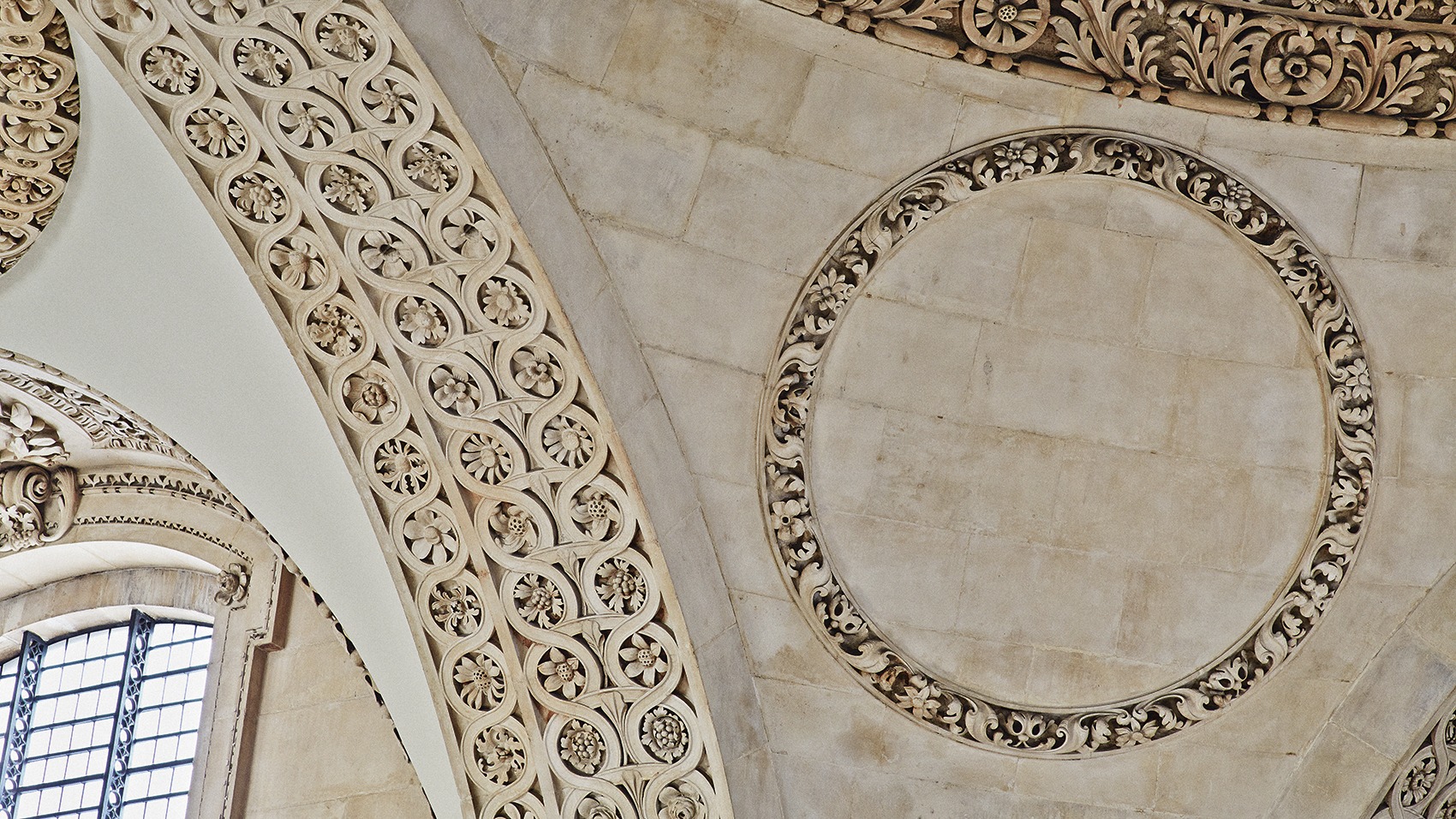
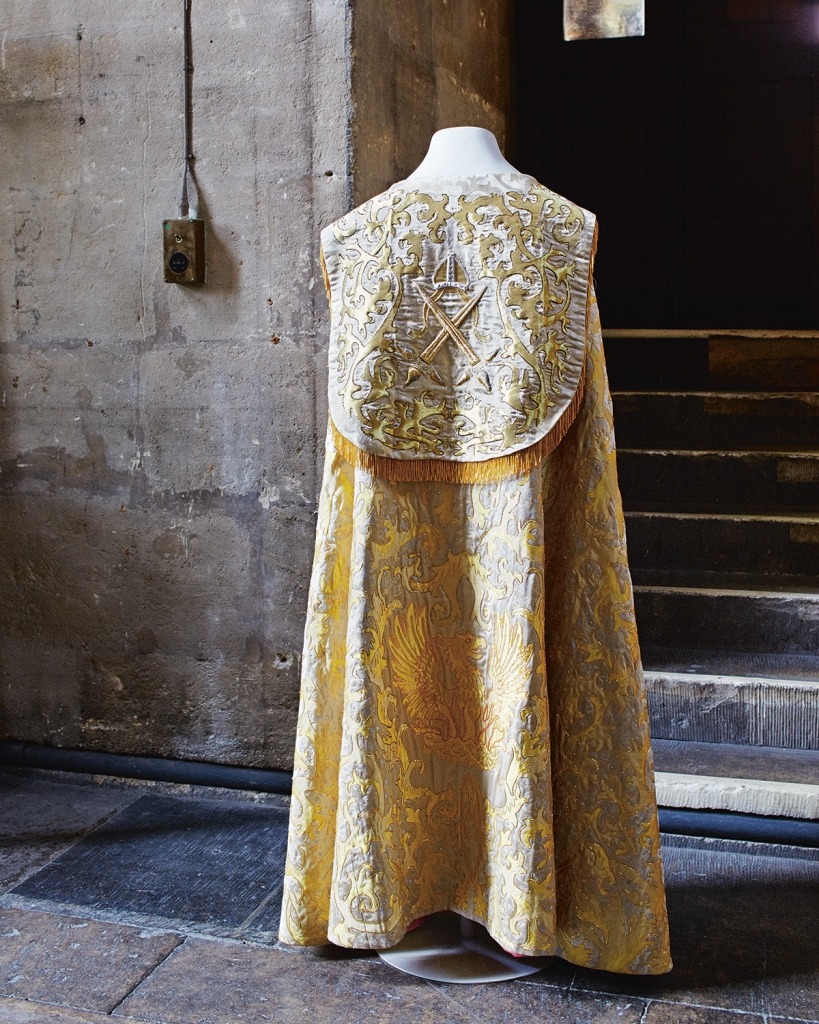
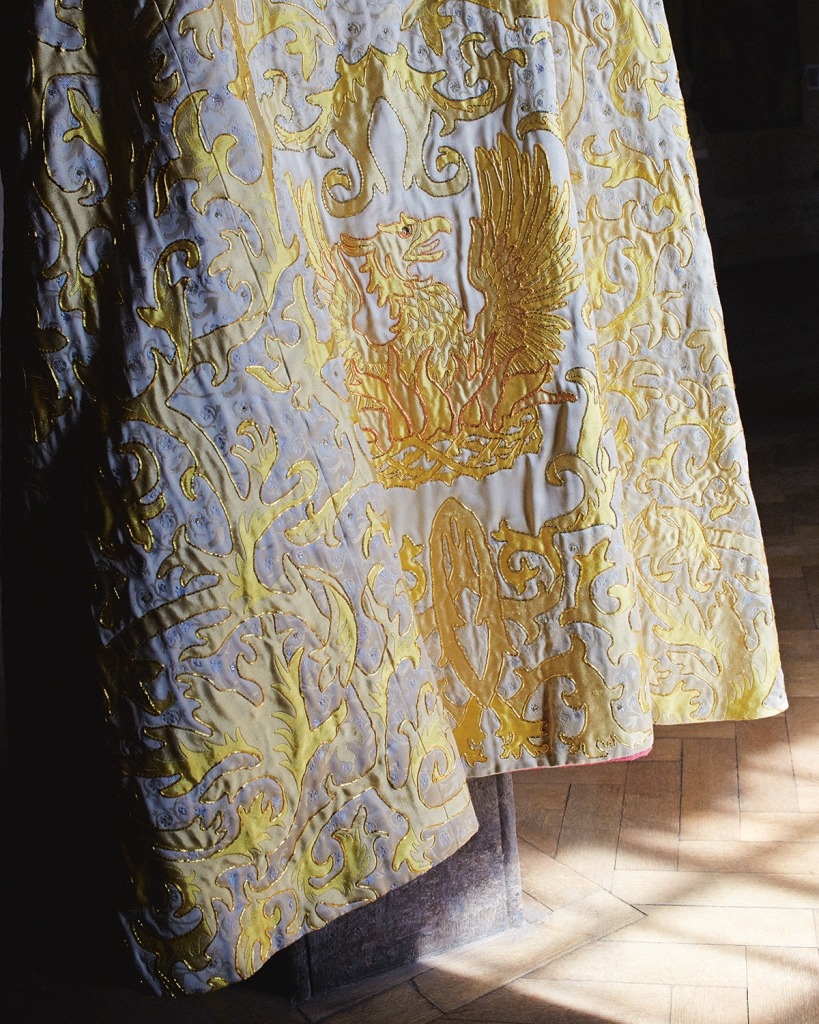 The Bishop of London’s cope, made for the 300th Anniversary of St Paul’s, echoes the detail of the cathedral's triforium ceiling (see main image, top)
Anita Ferrero became a founding member of that group in October 2006. A former primary school teacher with a lifelong interest in sewing, she trained in ecclesiastical embroidery at the Royal School of Needlework after seeing an especially beautiful example of the art on display at Hampton Court, where the School is situated. Lately, with work on the new vestments just entering its intense final year, she has abruptly found herself leading the whole endeavour at St Paul’s. ‘The girl who got the group together left to have a baby, rather suddenly,’ she explains, ‘so I’ve been in charge of it since then.’
‘We do an awful lot of creating new robes, and we also work on repairs’
Ferrero explains all this one Tuesday before Easter, as she walks purposefully through the gloriously gloomy corridors, capricious staff lifts and worn stone stairways that lead to cathedral’s heights. Up in the belfry, the St Paul’s Broderers, as they are now known, are finalising work on 25 sets of robes for a remembrance service attended by the Queen and the Archbishop of Canterbury.
‘The main project was to get the vestments done in time for the 300th anniversary and then the Golden Jubilee,’ Ferrero says. ‘We continued maintaining these beautiful robes, and then we’ve taken on other work within the cathedral as well. So we do an awful lot of creating new robes and other items, and we also work on repairs.’
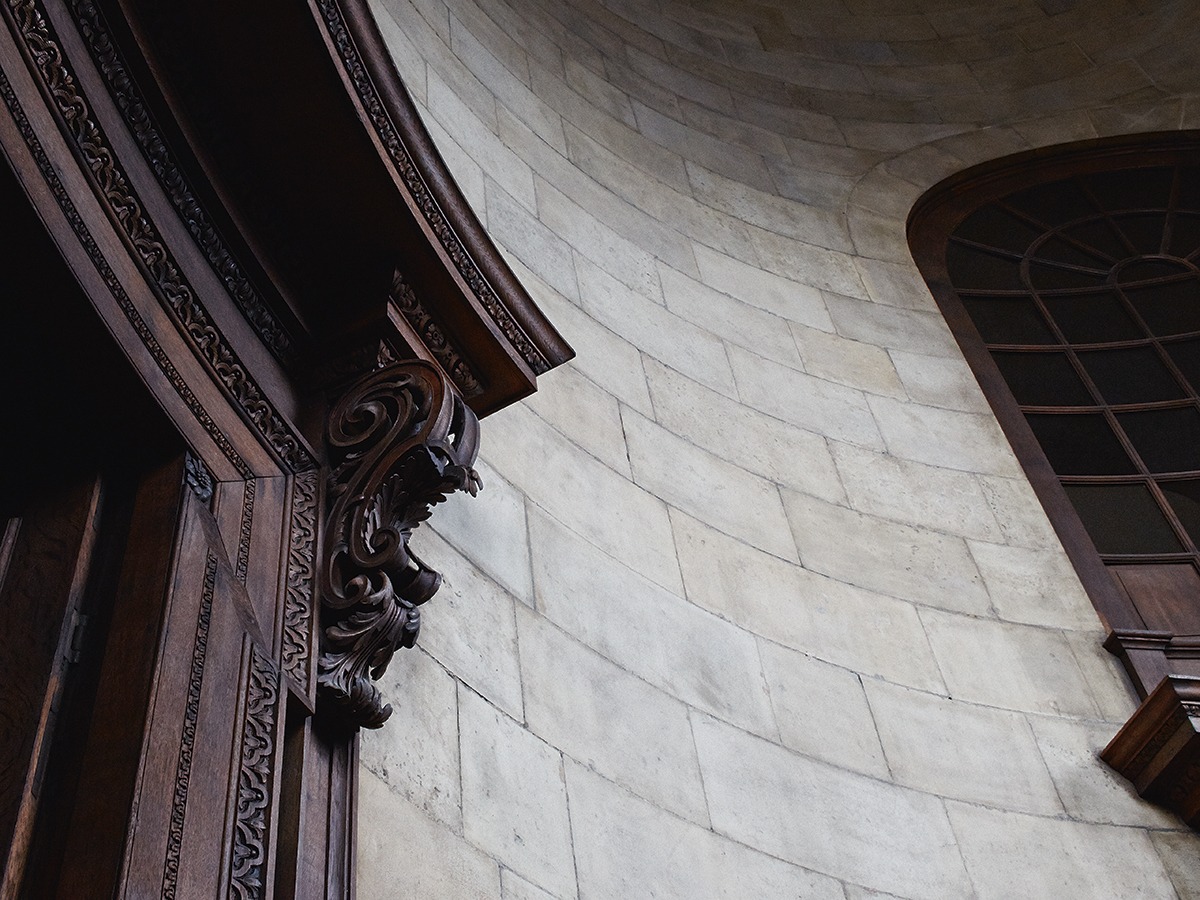
Though the Broderers’ primary mission has always been to make new work, the repair jobs come thick and fast, especially in a building like St Paul’s, and especially when ‘everything’s got to look spruce for the Queen’. Ferrero singles out the famous forms that Grinling Gibbons sculpted in stone and wood for the Cathedral’s interior as fray hazards: ‘beautiful carving, but it doesn’t work well with pure silk’.
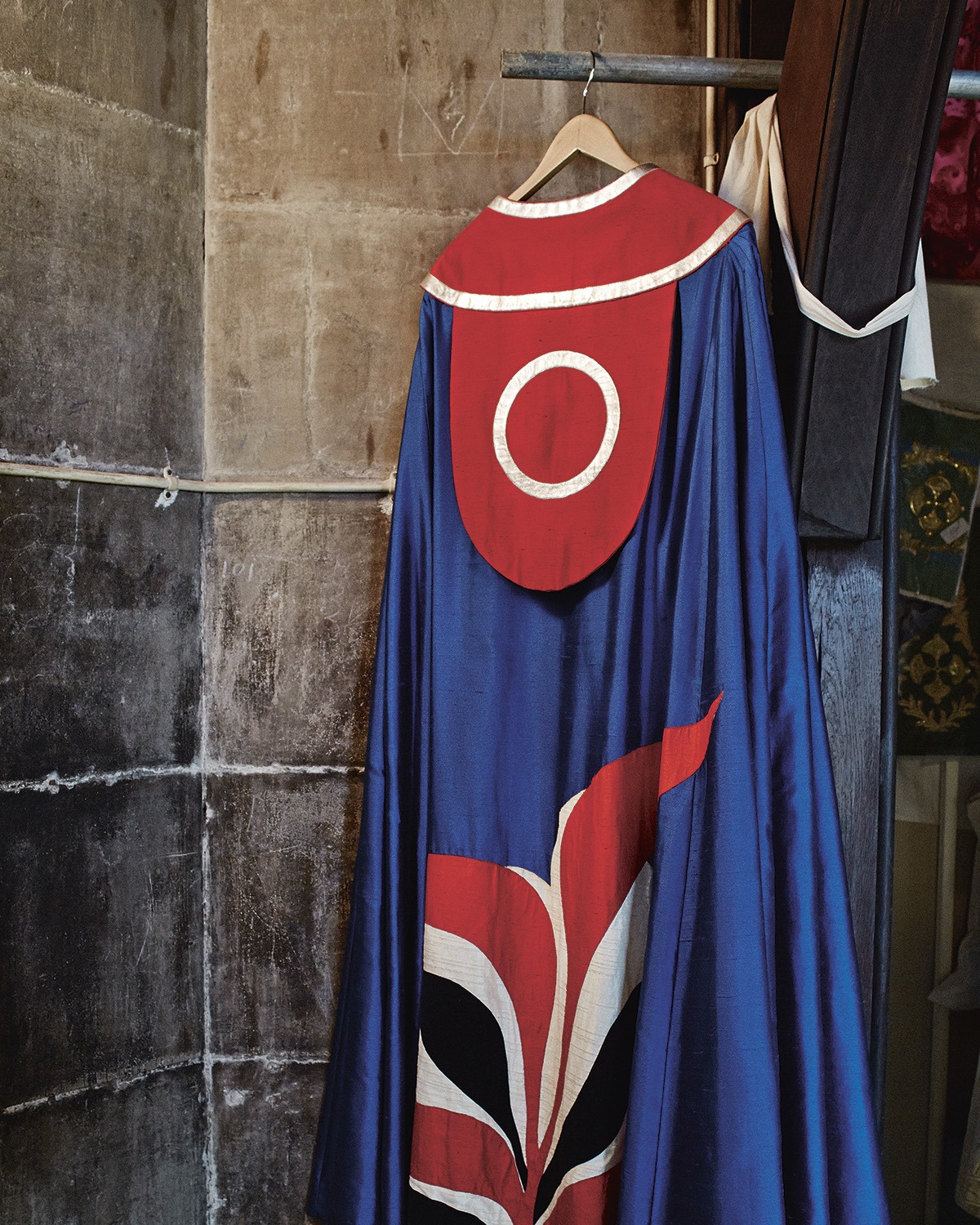
A cope designed by John Piper in the 1970s awaits repair
Perhaps you need that kind of understated stoicism if you’re to repair the same garments that, almost a decade ago, you first came to help make, and do it with all the care and dedication such fine needlework demands. It’s not a quality lacking elsewhere in the group, either. There are currently 14 members of the St Paul’s Broderers, but work in the belfry – busy as it is with work-in-progress garments on stands, fabric samples, textiles, tools and documentation – would begin to be a squeeze if even half that number were present at one time.
Five people are at work on the Tuesday of our visit. Their stories, related while their hands are hard at work, vary, but they all seem to join at one crucial juncture: the desire to return to a long-held (and often long-neglected) love of embroidery, but at a renewed and more refined level of skill than before.
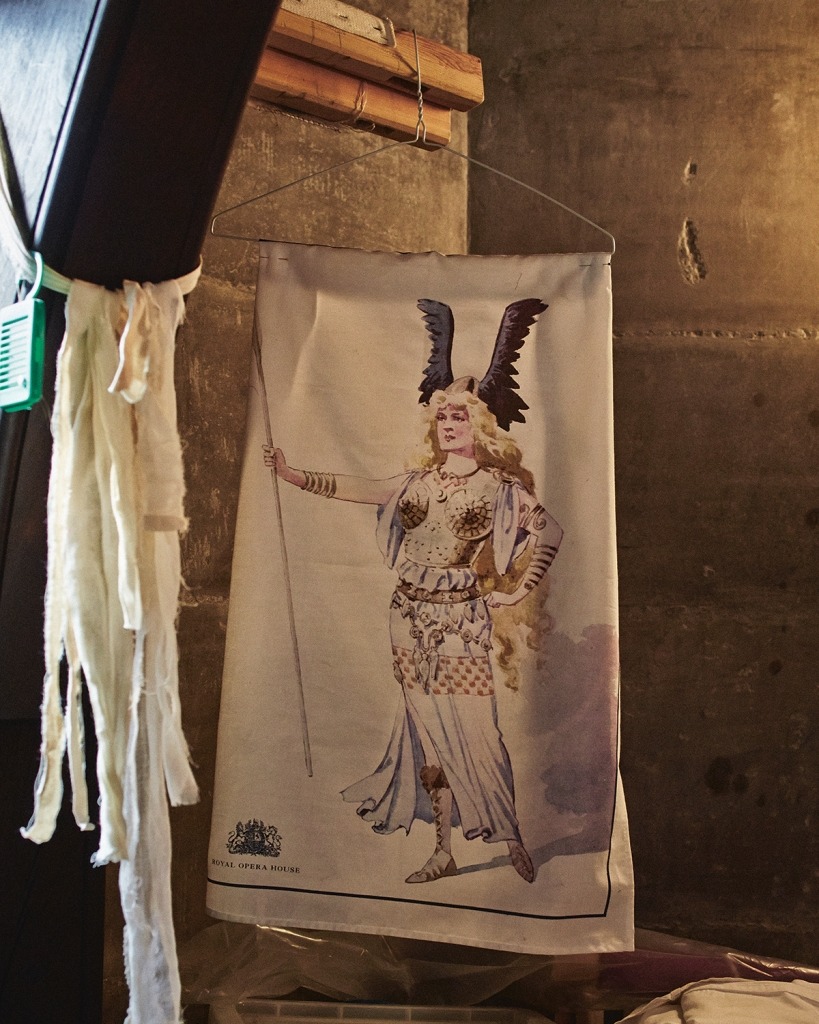 In honour of the bishop’s nickname for them, a scroll with the image of Wagner’s valkyrie Brunhilde hangs behind the Broderers’ worktables.
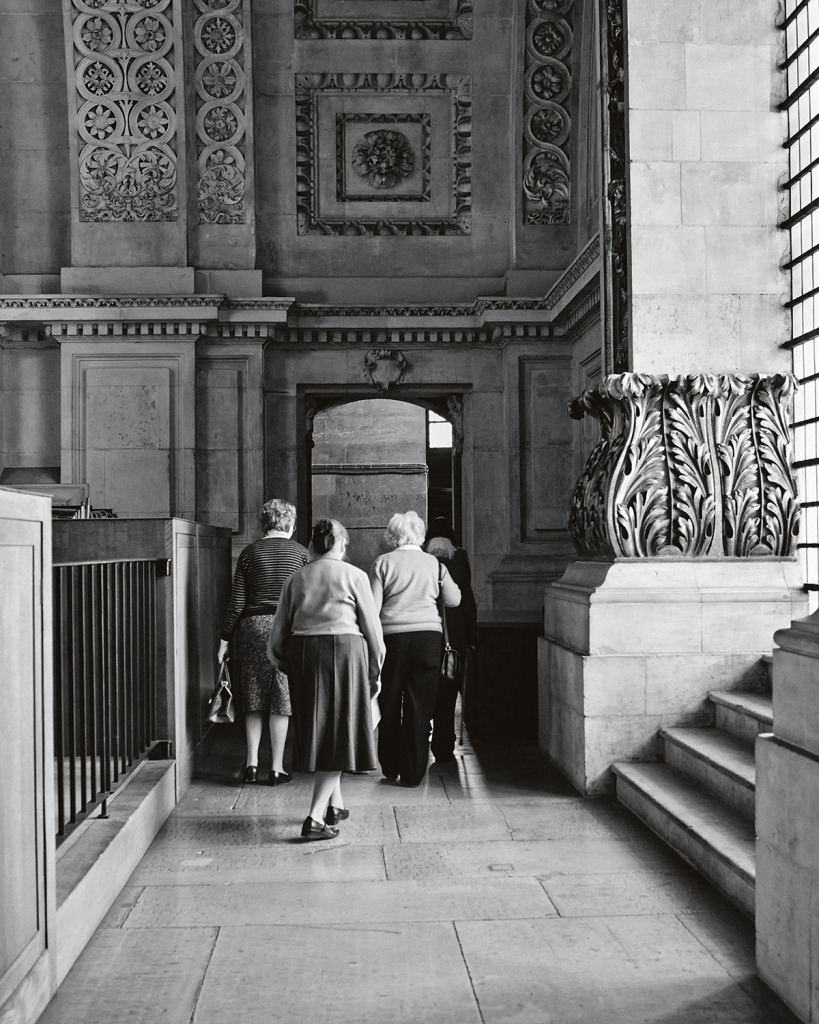 The St Paul’s Broderers go to work
Margaret Heighton, another founder member, was a journalist with the BBC for many years. When the rector of her church in Acton, West London, put a notice about St Paul’s call for embroiders in the church magazine, ‘I went along with a friend who said we should try. I said, “Oh well, they won’t take us.” I had done embroidery most of my life, but I’d never had any lessons – except from my aunt when I was a child, so I never thought they’d take me. But we went along anyway and we found we were on strength.’
Judy Hardy, ‘the lady with the scissors’ and another founder member, was a maths teacher and a lifelong dressmaker and embroiderer, famous for her wedding dresses. With couture an increasingly miniscule market, she explains, ‘Wedding dresses are the one thing people are still prepared to pay money for. I don’t make them any more, because the process is quite a lot of struggle and strain, but when I did the prices could be anything from £9,000 to £200,000. It still isn’t terribly well-paid; one still has to justify £10 an hour quite strongly, but even so it’s fun to do and it’s nice to do things that are important in people’s lives, really.’
Lianne Hart joined a year after the group was set up, at the behest of the Royal College tutor who founded it and taught her. Hart studied at Hampton Court to take her skills to a professional level, and she’s also celebrated for her mastery of embroidery and tailoring at doll’s house scales. Atherlie Colquoun was a Friend of St Paul’s, and heard about it in the newsletter. She’d originally left her native Adelaide for the UK, 54 years before, to attend her brother’s wedding, and stayed on. Because her boyfriend and her brother were both involved in the church, Colquoun wanted to make ecclesiastical stoles, and did night classes in Shepherd’s Bush with the late Beryl Dean – the ‘guru of ecclesiastical embroidery’ who designed vestments for the 1977 Jubilee and brought a modernist eye to the ancient art. She was tempted by some offers to make a living through her embroidery and tailoring skills, but thought training as a librarian was more likely to lead to viable full-time work. ‘Then, when this came up,’ she explains, ‘I thought, “Well, I haven’t been doing any of it for 40 years, so perhaps I will go in for this.” So it’s been great to come back.’
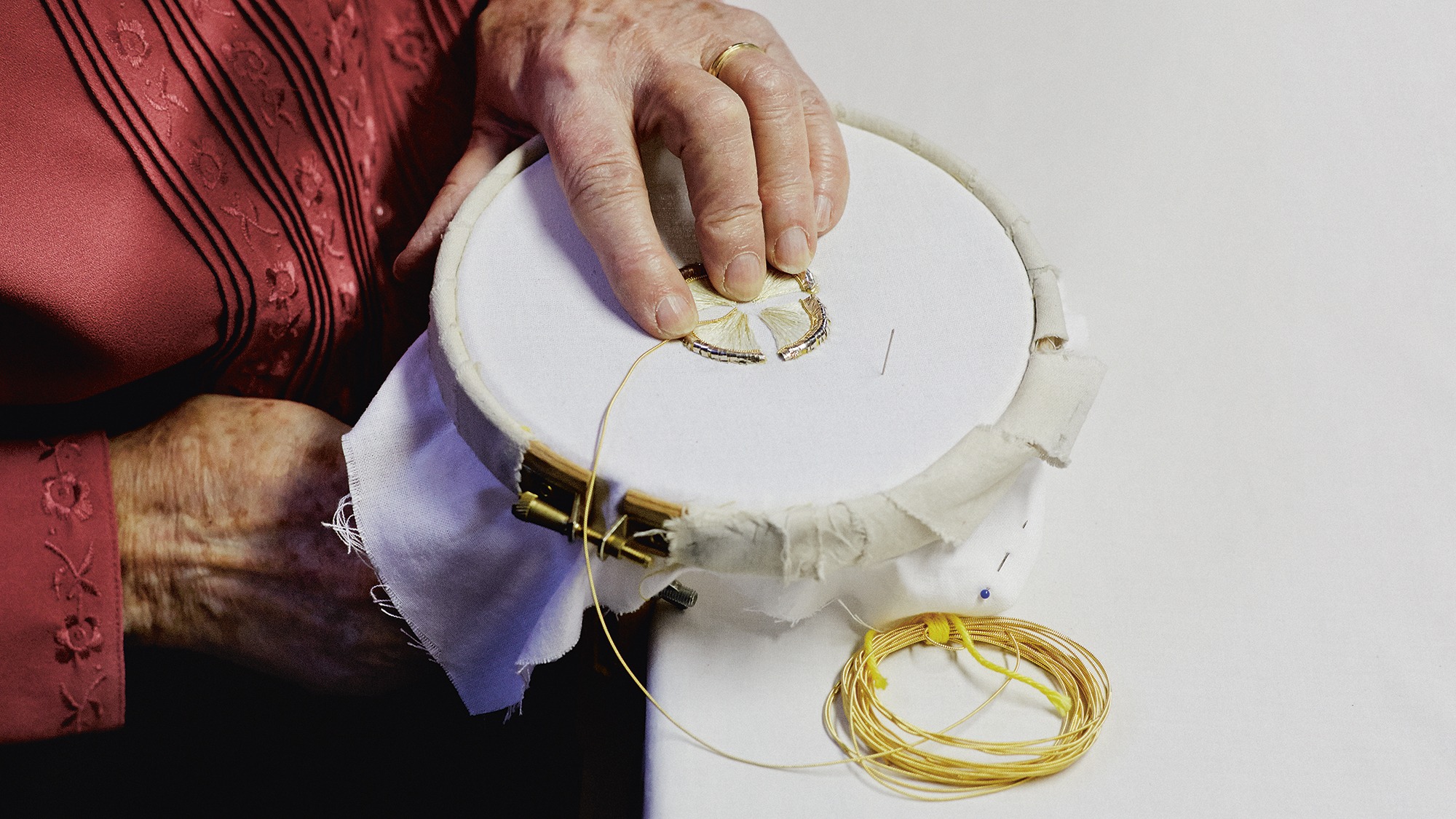
Delicate work in progress on a ring frame
Each stitch on each cross, attached to every stole, mitre, cope or chasuble, requires concentration and co-operation so that every element comes together harmoniously when the final garment is assembled. Every feathery flourish or spangled edge on a garment, every raised decoration, every one of their numerous painstaking techniques for combining threads and metals, requires several stages of preparation, conversation and forward planning. The group’s members know their way around the cathedral’s key fabric fixtures and fittings these days, but the one-off jobs always present all-new challenges.
When the newly-formed group first made the altar frontal for the anniversary, one of them had to climb under the fabric, stretched over a huge trestle frame, to complete the central stitching work, pushing the needle through from below so another embroiderer could complete the next stitch. It was so big they used to have to unfurl it in a sticky, lightly crumbled side room in the Cathedral’s crypt – the group’s original workspace – in which visiting school groups also eat their packed lunches.
Last year’s big exceptional task was another altar frontal, one that, when work on it was complete and it went on display in the cathedral, sounded a different note from the high-definition pomp of some of the UK’s First World War centennial events. It was a job that the group regarded as an unmitigated honour: a repair job on a piece of embroidery that was itself conceived as a repair job; a work designed to help people reassemble some sort of sense of piece after the ruins of war. It took six months of painstaking work, in collaboration with historians at the cathedral.
‘I had done embroidery for most of my life, but I’d never had any lessons’
This second altar frontal was first unveiled at St Paul’s in July 1919. It had been conceived by George Conway, a boy from Stepney, East London, who had joined the Royal Irish Rifles in February 1914, when he was 14 or 15. He was wounded in 1918 and, during his convalescence, got together a group of 137 injured servicemen from across all the armed forces. They spent 18 months collaborating on the great embroidered frontal – too big for the modern St Paul’s altar, which was rebuilt after the Blitz – to pay tribute to fallen friends. ‘A recovery,’ as Lianne Hart puts it.
‘It’s fascinating,’ Hardy adds, ‘and beautifully made.’
‘It was very lively, considering how old it was,’ Hart continues. ‘The colours were just… it was stunning.’
Embroidery is ‘very therapeutic,’ she explains, so the original creation must have given some solace to the wounded and bereaved young men who first worked on it.
For the uninitiated, it’s easy to forget how much men figure in the history of embroidery. Indian men still do the work there, Heighton notes, and much of that tradition must date to the Maharajas. Colquoun remembers how, at the outback Australian farm shows of her youth, powerful landowners would come to show their delicate needlework. London’s oldest embroiderers’ association, The Worshipful Company of Broderers, a city livery company, was exclusively male until last year, and the Warwickshire factory in which the group’s garments are woven before they’re embroidered also turns out masonic garments, police ribbons, MBEs and OBEs.
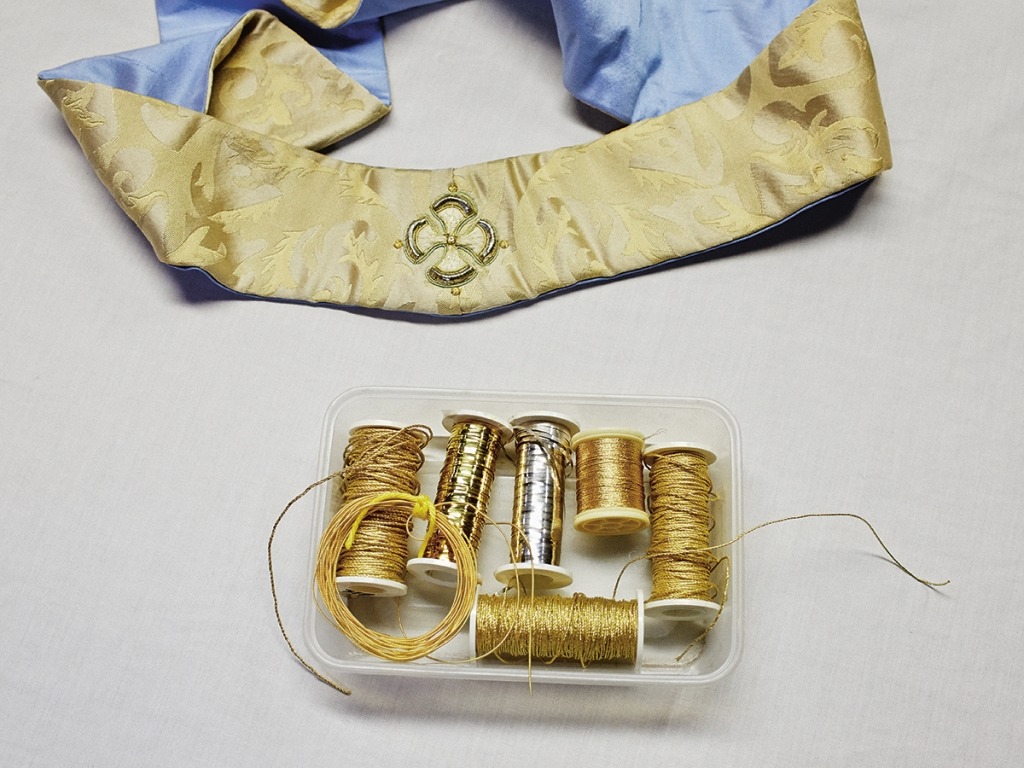 Japanese golden thread is the stock-in-trade of the St Paul’s Broderers
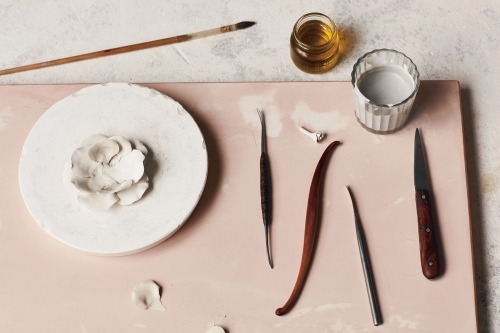
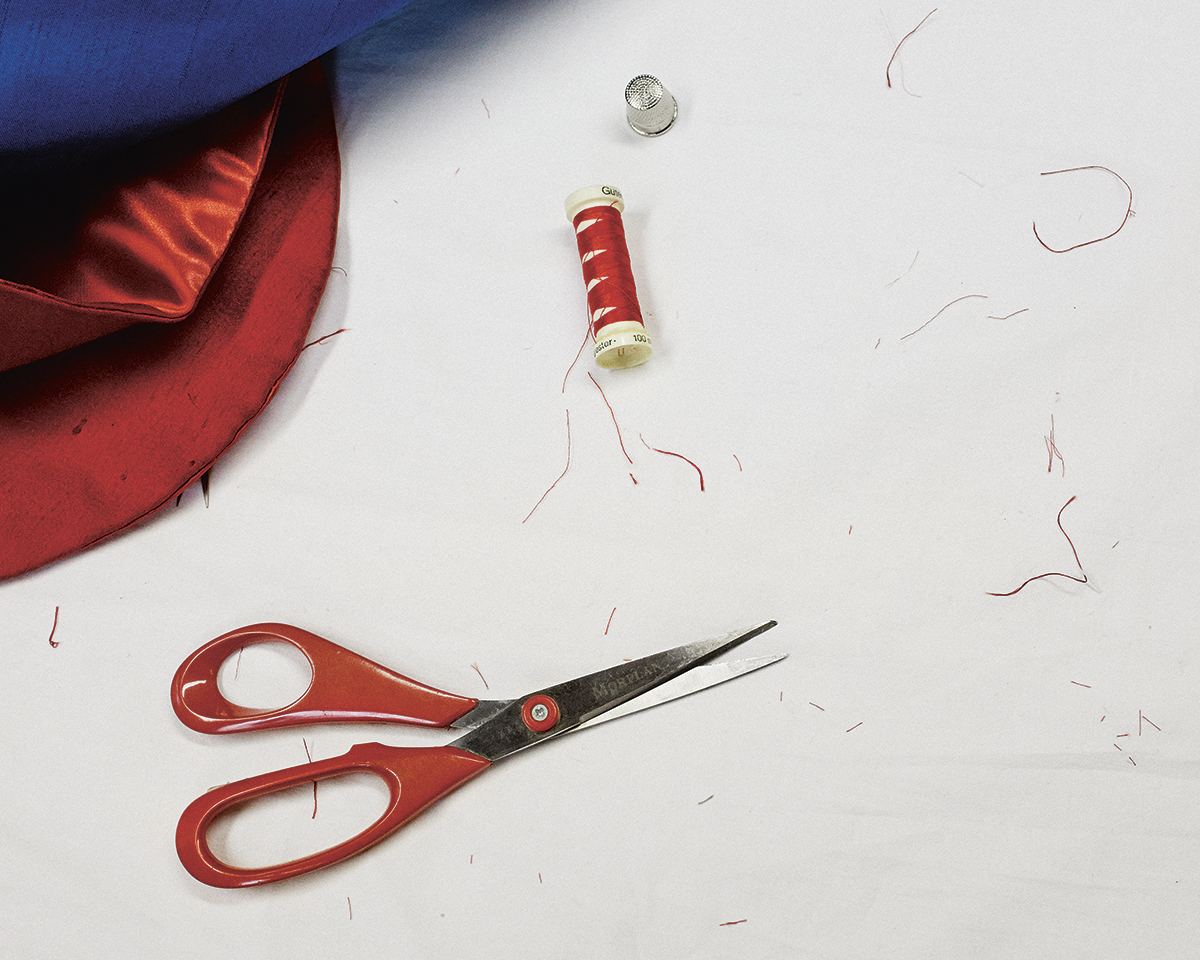
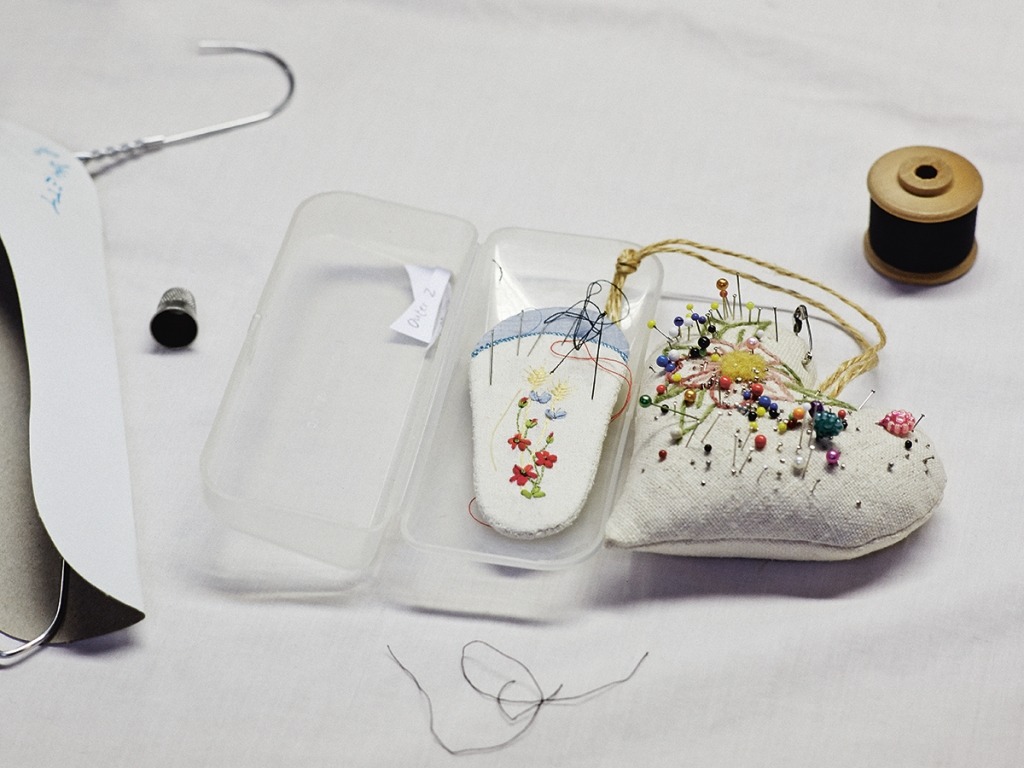 Tools of the trade include a lavender-scented pin cushion and a thimble
Though there would be fewer people popping their heads in to make half-jokes about ironing their shirts, you also imagine there’d be rather more ritual, more tool-fetishism and more grandstanding about the St Paul’s Broderers if they themselves were men, not women. They make use of old tubs for threads and old fabric conditioner bottles to collect rainwater for chemical-free steam ironing. They’ll make some curtains for your organ if you ask nicely.
They do allow themselves a couple of self-mythologising touches, though. A toy bat hangs above the worktables, and behind it hangs a scroll bearing the image of Wagner’s warrior-heroine Brunhilde. ‘The bishop calls us the valkyries,’ Heighton says. ‘He has a dry sense of humour.’