In Conversation with… Jewellery designer Sophie Bouilhet-Dumas
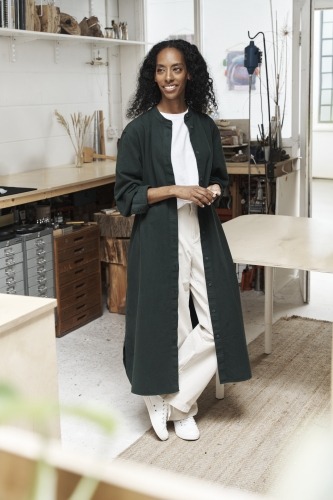
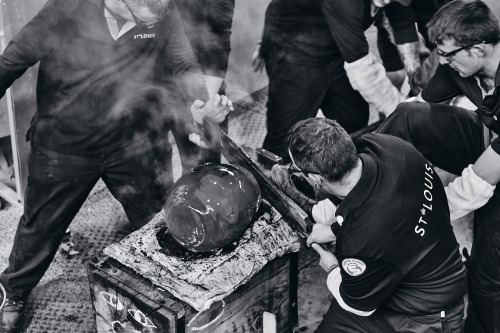
The jewellery designer Sophie Bouilhet-Dumas is inspired by her observations of nature for her fine jewellery brand Mira Stella. Her designs are handcrafted by master jewellers in a workshop in Paris using gold that is recycled or from certified mines. On the eve of an exhibition of her work at the Galerie Objet d’Emotion in Marylebone, London, Hole & Corner caught up with the designer to talk about heritage, and the alchemy of turning a seed into gold.
Please tell us a bit about yourself and what you do
I grew up in an environment where art, architecture and design played a crucial role. So, it was quite natural that after business school I quickly shifted to creating and I started designing objects as a freelancer for various brands, such as the porcelain manufacturer Thomas Goode, Paul Smith, Habitat, Christofle and Hermès.
My trajectory has often been punctuated by important encounters, or it has echoed with elements from my family history. I was born into the founding family of French silversmith company Christofle: I worked for the company, creating window displays and curating exhibitions at their gallery rue Royale in Paris, but also for the Triennale in Milan. I also happen to have family ties through my grandmother with the Italian architect and designer Gio Ponti. This is how I came to be passionate about his work and participated in curating his retrospective exhibition at the Paris Museum of Decorative Arts.
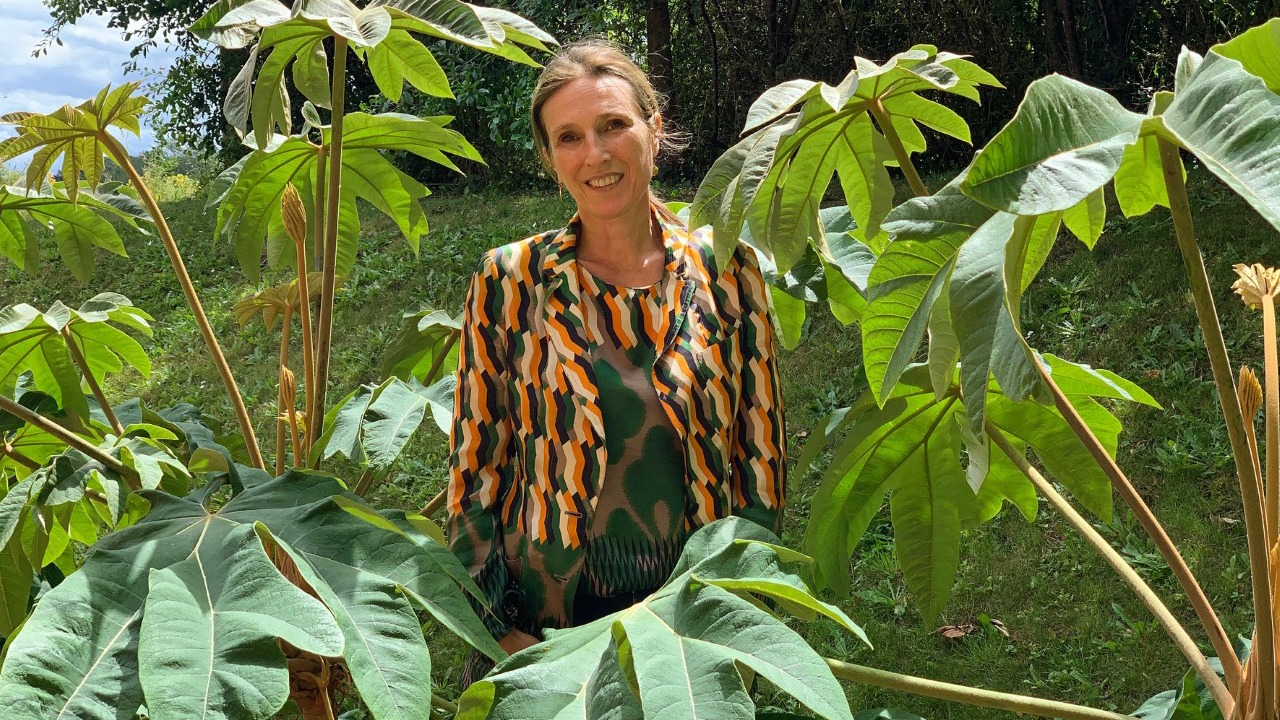
At some point in my life, I felt the need to turn to creation around living things and nature. I also wanted to work at a different pace, to enjoy more freedom to take care of my three children. This is how, in 2009, I designed a natural garden for my residence in Normandy, where wild vegetation meets locally grown plants. This project was carried out jointly with the exceptional English gardener and master botanist Mark Brown.

Ring made from recycled gold by Mira Stella
What was the inspiration behind Mira Stella?
The more my garden developed, the more I was amazed to see in plants perfect shapes for jewellery, which could be used without any intervention. As a designer, my work consists of enhancing these shapes, by pairing them with other materials such as stones or wood.
This is how this jewellery series emerged. These are life-sized, naturalist jewels made of rose gold, that take their designs from the graceful shapes of hydrangea petals, flax pods, sea kale seeds, and the fine veins of oak bark.
The name itself is very personal to you; can you explain why that is?
Mira Stella is the combination of my mother’s name, Mirabelle, and my great-grandmother’s name, Stella, both lovers of gardens and flowers. Incidentally, the combination of these two names also evokes in Italian the observation of a star. I enjoy this idea of bringing together the infinitely far and the infinitely near.
Nature is fundamental to the aesthetic and meaning of this collection, and your garden in Normandy has obviously played a huge role. Can you explain the evolution of the garden and the influence it has had on your design and any individual pieces?
I started with a plot of land where everything had to be done in harmony with the house and with the shape of the landscape. There were very few trees on the land as for a long time it was a grazing field for horses. The house was a typical Normandy house, with half-timbering for which the foundation needed to be redone. My idea was to keep the place as natural as possible, as if it were an extension of the surrounding landscape. For example, the back of the garden consists of an undergrowth that was designed as a continuation of the undergrowth of the neighbouring property. The flower beds were imagined in a chromatic relationship with the traditional red bricks of Normandy that characterise the house, or in relation with the colour of the sky and the sand in Normandy. I also found two stained glass windows in the ruined wooden chapel and from there I suggested to Mark Brown to create a stained-glass-window-coloured garden. Everything had to look as if it had always been there.
The sea kale seed inspired your first jewellery design – what attracted you to it?
It is the perfect shape to start a jewellery collection where you need a rounded shape. The sea kale seed is like a natural bead, but its slender form gives it an organic and lively quality, as opposed to a sphere, which would be too pure and ideal.
I also used this shape because of its meaning, since the seed holds a significant place in the history of civilisation. Sea kale has been cultivated for thousands of years and is completely edible, from its roots to its flower buds. Today, it has deserted the vegetable gardens and become wild. It grows naturally on the European coastline, and it is a protected species.
Likewise, your choice of stones and different materials that you have worked with – were these aesthetic choices or do your decisions transcend that?
It was more an aesthetic choice I made in order to match the shades of the stones with different complexions and hair colours. I also associated wood with precious metal. This is something I have always wanted to develop, as a tribute to the work of Suzanne Belperron, who always fascinated me as a kid. She was one of the first jewellers to have the idea of combining these two materials.
But aesthetic choices also have an ethical aspect. The gold used to craft our jewellery is either extracted from certified mines, recycled gold or “grandfathered” gold.
How would you describe your ethos behind your work?
By turning a seed into gold, I wanted to create alchemy and to show that nature is more precious than a jewel. And just like gold, seeds are eternal. We now know that plant species that have entirely disappeared can be revived by keeping just one seed.
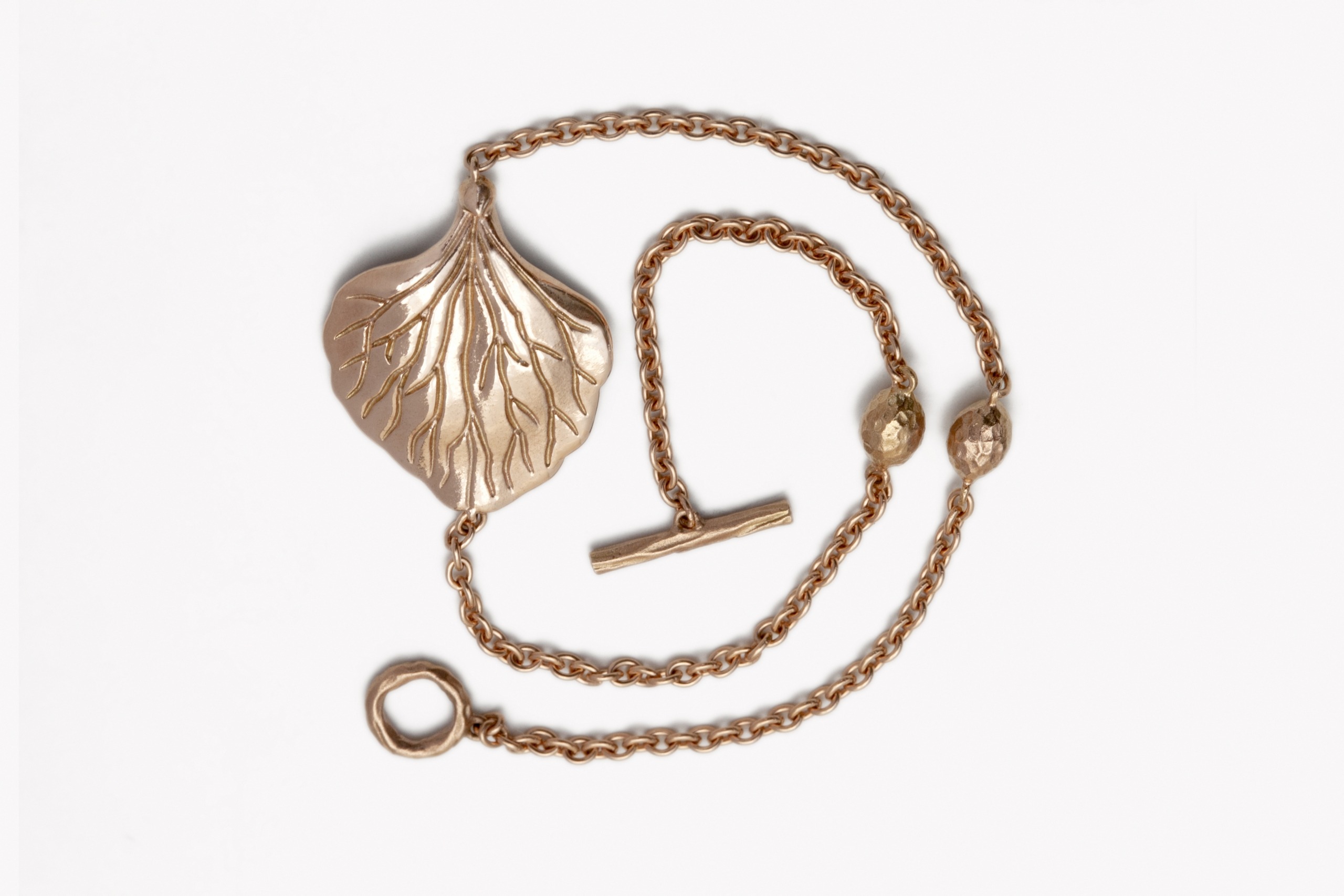
18 carat rose gold Hydrangea petal bracelet.
How important has your family heritage been in influencing your work?
It is very likely that being a silversmith’s daughter had a lot to do with my decision to realise this wonder for nature in the form of a jewellery collection. I grew up surrounded by the profound appreciation for craftsmanship, so I couldn’t imagine this project without having these pieces crafted in France, in keeping with the tradition of the Parisian master jewellers.
Describe your workspace
I share my time between my showroom in Paris and my design studio in Normandy. It is my ideal workplace because, in addition to the peacefulness favourable to creation, it is important for me to be surrounded by my garden, which is my main source of inspiration. When I arrive in my garden, I let go.
What led you from design and architecture to designing a jewellery collection?
As Gio Ponti rightly said, ‘Everything is architecture’. And in this case, nature is the architect.
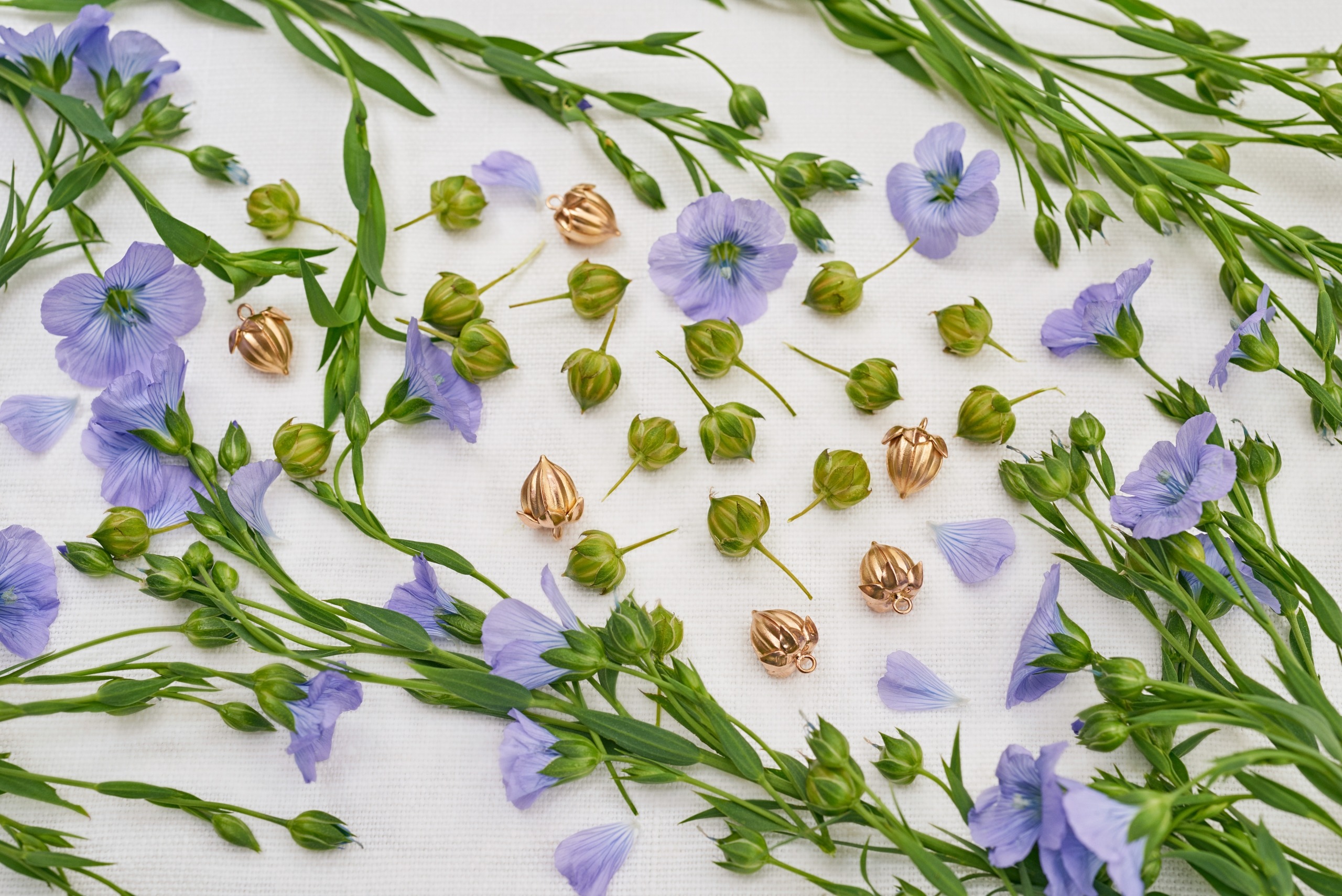
Flax pod pendants in 18 carat rose gold
Do you have a favourite piece in this collection – or one that means the most to you personally?
The flax pod earrings. They are some of the smallest pieces in the collection, but when you think that flax is one of the most useful plants in the world, as its name suggests (Linum usitatissimum), one can be dazzled: not only does it nourish, heal and dress humankind, but it has stimulated creativity: if you think that in the 15th century linseed oil replaced tempera, paving the way for the development of oil painting.
What is the best advice you have been given?
Try to do your job in the best possible way.
Mira Stella will be on display June 8-11 at Galerie Objet d’Emotion, 53 Blandford Street, London W1, open every day 11-6pm
Follow Sophie Bouilhet-Dumas @mirastella_jewellery
This story was brought to you by a valued Hole & Corner Partner.
Hole & Corner works with Partners to tell stories of dedication from makers, brands and institutions.
Our Partners allow us to continue to celebrate makers and artisans, as well as support the writers and photographers who create such impactful and beautiful work together.
To find out more about becoming a Hole & Corner Partner, email jade@holeandcorner.com