How food waste is changing the future of fashion
words meena sears
Meet the brands creating luxury designs that are almost good enough to eat
The climate crisis often seems like a problem too big to fathom. How can one person even begin to confront an issue so complicated, deep-rooted and far-reaching? Yet, with more brands placing sustainability at the forefront of their designs, it is becoming easier for us as customers to make a difference by choosing the right option.
Two brands working to provide us with more sustainable options in fashion – without skimping on quality – are Métier and Pangaia. By up-cycling food waste to create materials and dyes, they are not only tackling issues of deforestation, high carbon emissions, water usage and chemical pollution, they are also providing a solution to the alarming problem of food waste, which, according to the United Nations, contributes to around one-tenth of the world’s climate-warming gases.
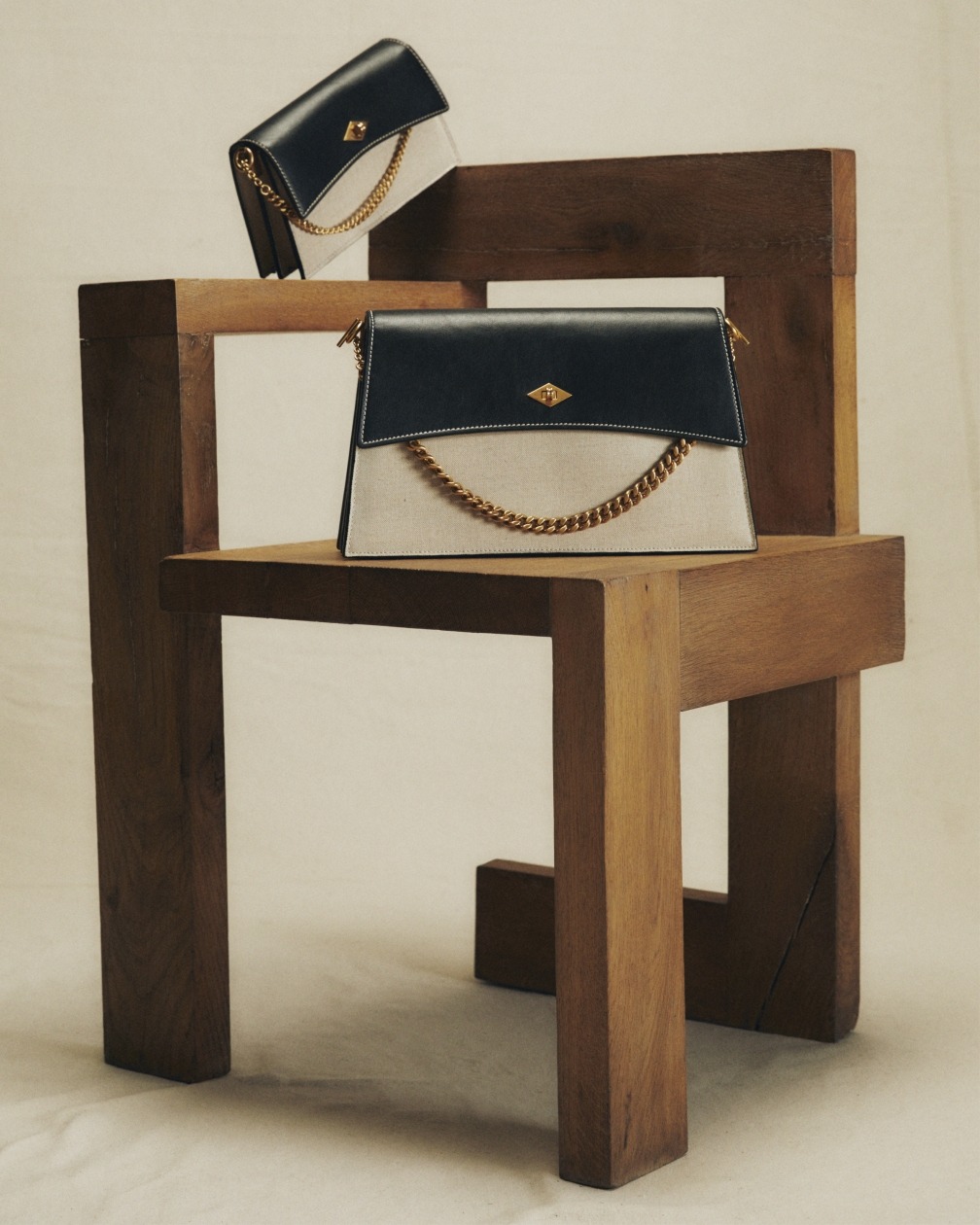
Métier has created two luxury ‘leather’ bags using apple leather, a newly innovated, plant-based alternative to both conventional leather and other vegan options made from polyurethane. Apple leather is made by taking the waste (pulp, core and peel) leftover from apple juice production on farms in South Tyrol, Italy, grinding it, and pressing it with recycled cotton and polyester. For now, the addition of polyester (which makes up 50% of the finished material) is necessary in order to ensure longevity, however, as technology progresses, Métier founder Melissa Morris is hopeful that this dependency on plastics will reduce. Nonetheless, the substitution of apple waste for polyurethane saves 5.28kg of carbon dioxide with every kilogram used while also providing a means to recycle cotton and polyester, making it a far better option (for the environment) than other artificial leathers.
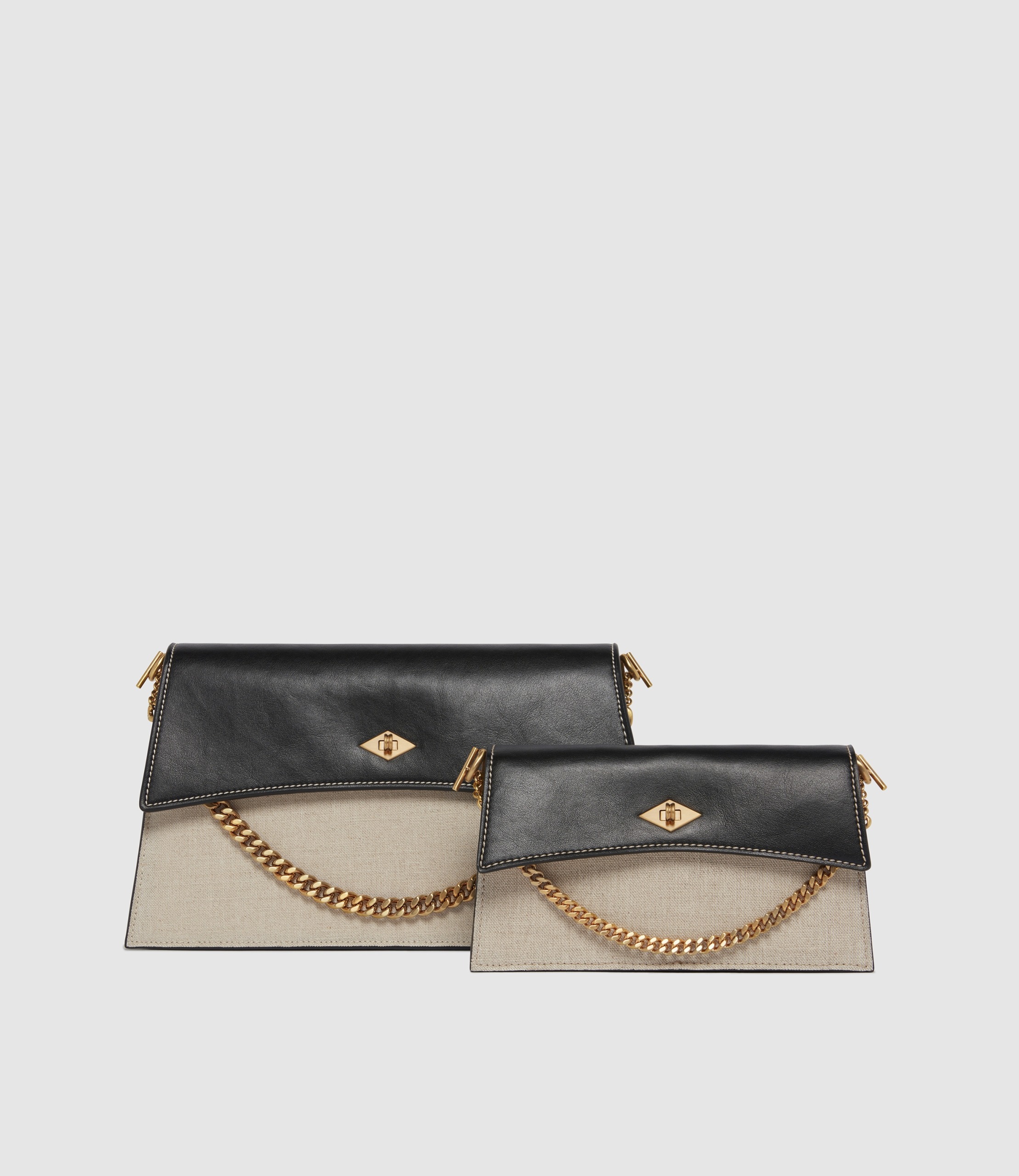
Metier’s apple leather bag comes in two sizes; Roma Shoulder Bag and Roma Mini Clutch. Photograph courtesy of Métier
While sustainability was at the forefront of Morris’s mind when designing the Roma apple leather bags, it was equally important to her that customers would not have to compromise on appearance or quality in order to make this responsible choice. Her background – studying sculpture and business at Emory University in Atlanta, Georgia, before embarking on a career working for major fashion brands Armani, Helmut Lang and Belstaff – ensured that the design of these bags was of the highest standard. ‘Design at its core should solve a problem or improve what’s already out there,’ she says. ‘The luxury version should do this in the most beautiful and perfected way.’
To ensure longevity, each Métier bag is put to the test in a machine that replicates the equivalent of 20 years’ worth of wear
The result of this design ethic, is two beautifully crafted bags, one shoulder and one clutch, that are elegant and undeniably flattering. ‘Most people,’ Morris tells me, ‘are first attracted to the bags based purely on the way they look. The fact that they are made from apple leather is simply an added bonus that seals the deal.’
Morris is also a firm believer in durability. For her, products are not meant to be discarded or replaced but should be made to get better with age. To ensure longevity, each Métier bag is put to the test in a machine that replicates the equivalent of 20 years’ worth of wear by subjecting it to wind, rain and 10kg of pressure from rocks. The fact that the apple leather bags come out of this process unscathed, means that we, as consumers, need not sacrifice quality when choosing the sustainable option.
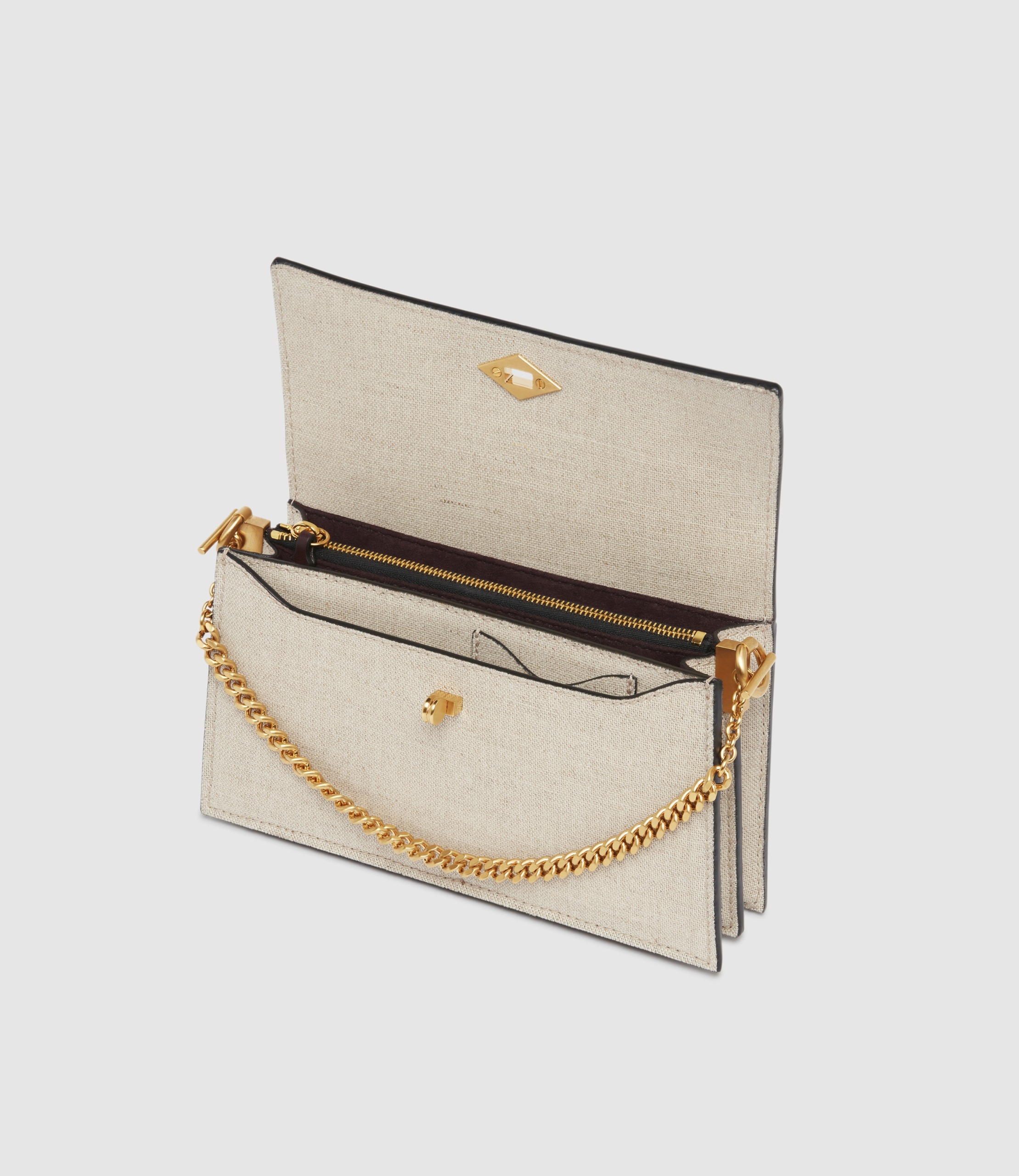
‘Most people are first attracted to the bags based purely on the way they look.’ says Métier founder Melissa Morris. Photograph courtesy of Métier
Pangaia, the tracksuit brand championing science-based solutions to environmental problems, has launched a new line that uses natural food dyes, which are less water-intensive and contain no harmful chemicals. The technology, which comes from Toyoshima & Co Ltd in Japan, utilises food waste disposed of by farms, coffee houses and food companies to create a unique dye solution. The process involves extracting the colour from matcha, blueberry and rooibos residue and applying it directly to the yarn itself, which is then spun into one of Panagaia’s classic styles.
Before the industrial revolution, all dyes were made using natural materials. The English extracted blue pigment from the woad plant, while in China saffron was used to colour clothes yellow, and Inca and Aztec societies prized the intense scarlet created by grinding up cochineal insects. There is something quite special about an item of clothing that is so directly connected to an element of nature. Knowing that the pastel yellow tone of your new hoodie comes from the very same plant that makes your favourite drink, or that the muted indigo of your tracksuit comes from the pressed juice of a blueberry, is very satisfying.
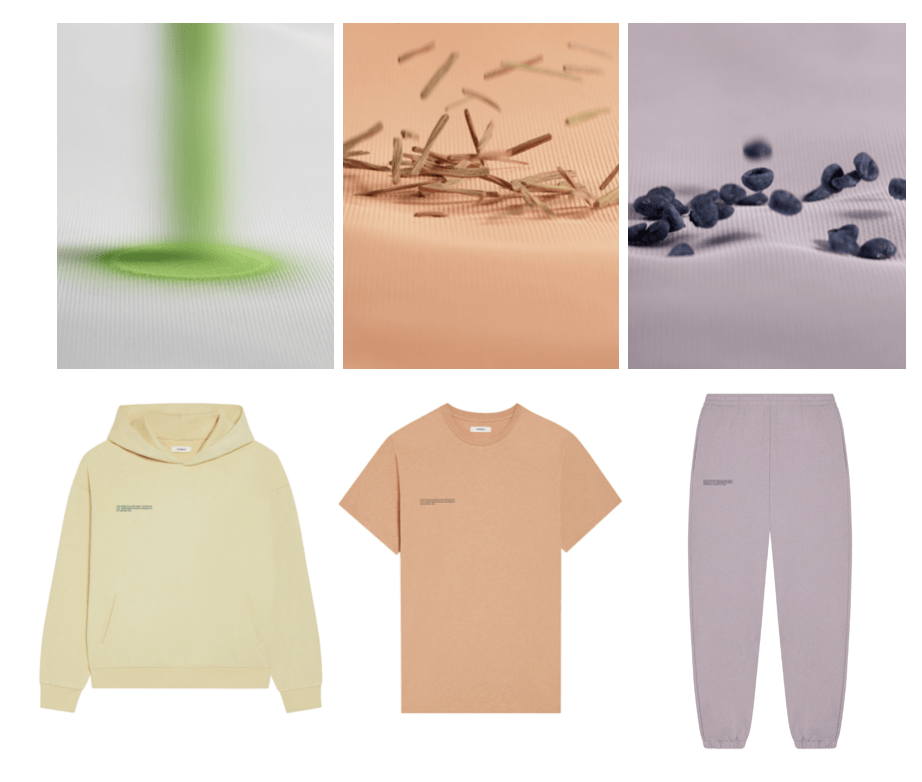
Pangaia’s new natural food dyes are made using matcha, rooibos and blueberry extract. Image courtesy of Pangaia
With a PhD in Tangible Media from MIT Media Lab, Dr Amanda Parkes, chief innovation officer at Pangaia, is the scientist behind the pioneering brand. Her mission to bridge the gap between fashion and science has resulted in Pangaia being at the forefront of some of the most innovative and cutting-edge technologies coming out of the lab and into the clothes industry. From a water-saving, bio-based material called C-fiber (a cotton substitute for T-shirts) to hemp denim, Parkes and her team are constantly working to make the future of fashion more sustainable.
Looking forward, Parkes tells us from her office in New York, Pangaia plans to further explore the possibility of using food by-products in its clothes as part of their innovation strategy to reduce waste and incorporate sustainable, natural resources. When asked what the industry should do to act more responsibly, Parkes asserts that ‘Ridding the industry of conventional, synthetic dyes will have a significant benefit for the natural environment and the future of the industry.’