Sfera Makers: Chikako Ueda, metal crafts maker
This story is part of an extraordinary portfolio of photographs taken by Alan Clarke, of artisans working with Sfera, the lifestyle brand founded by Shigeo Mashiro in 2001 and rooted in Kyoto’s heritage of traditional crafts.
Can you explain what you do?
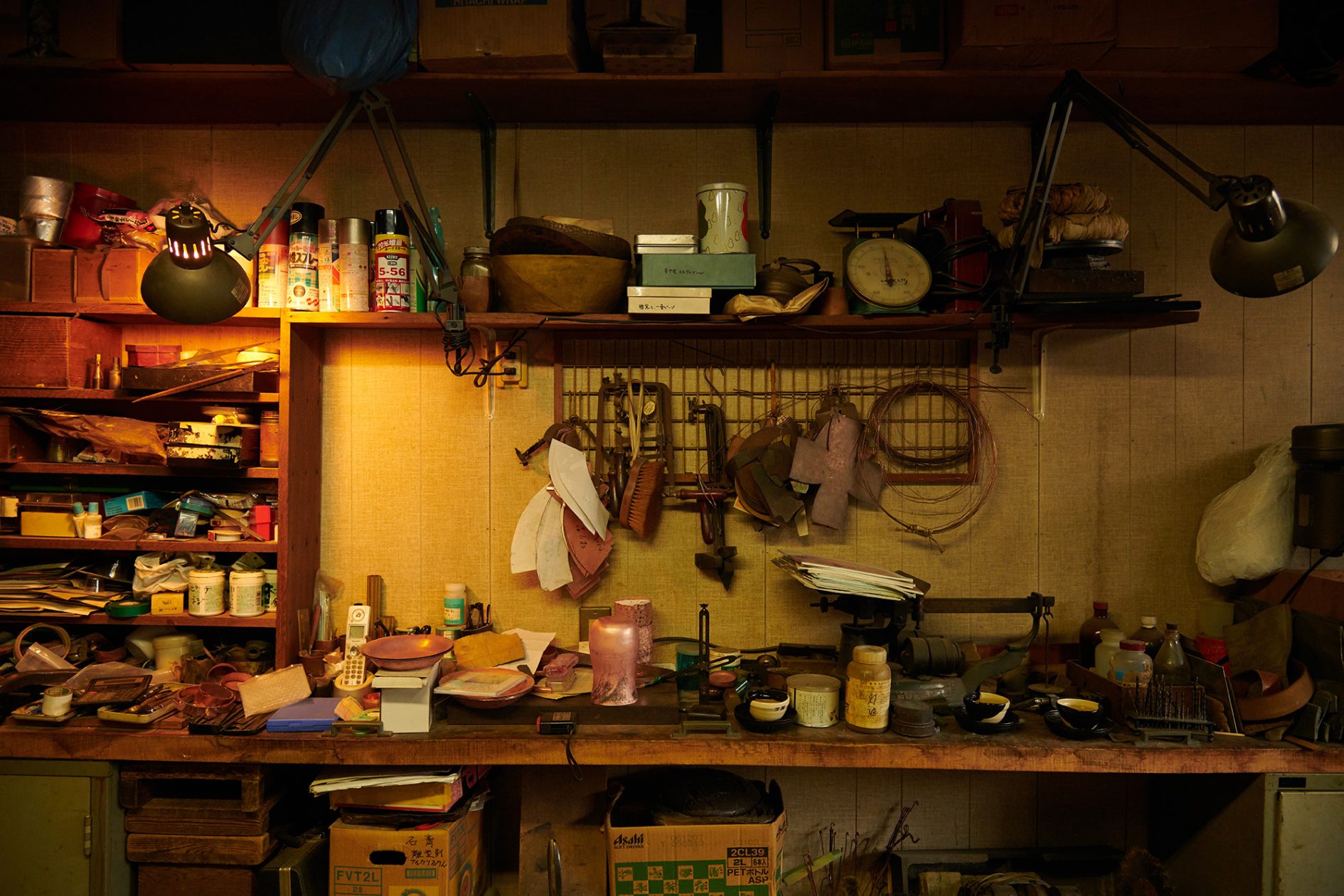
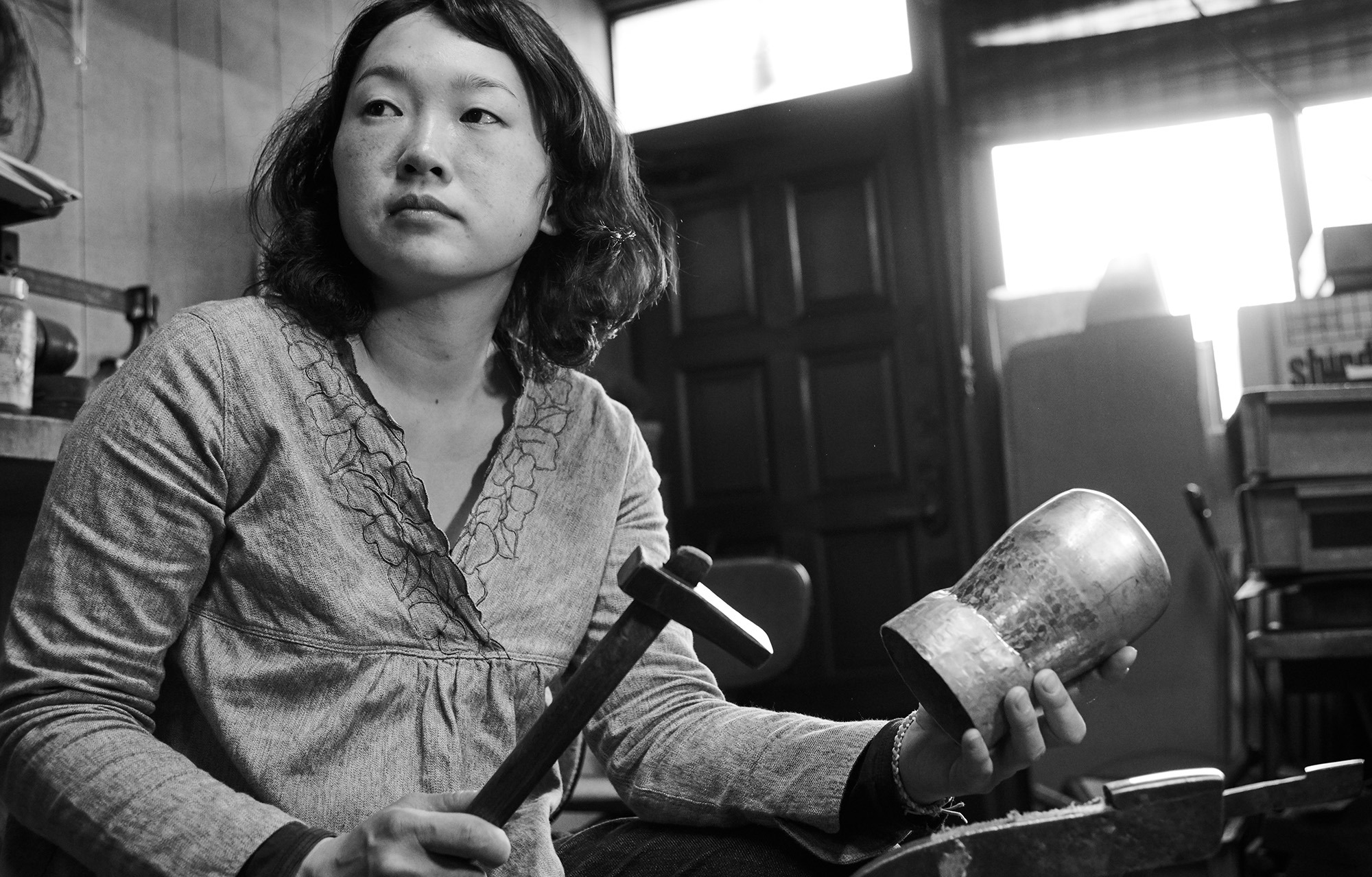
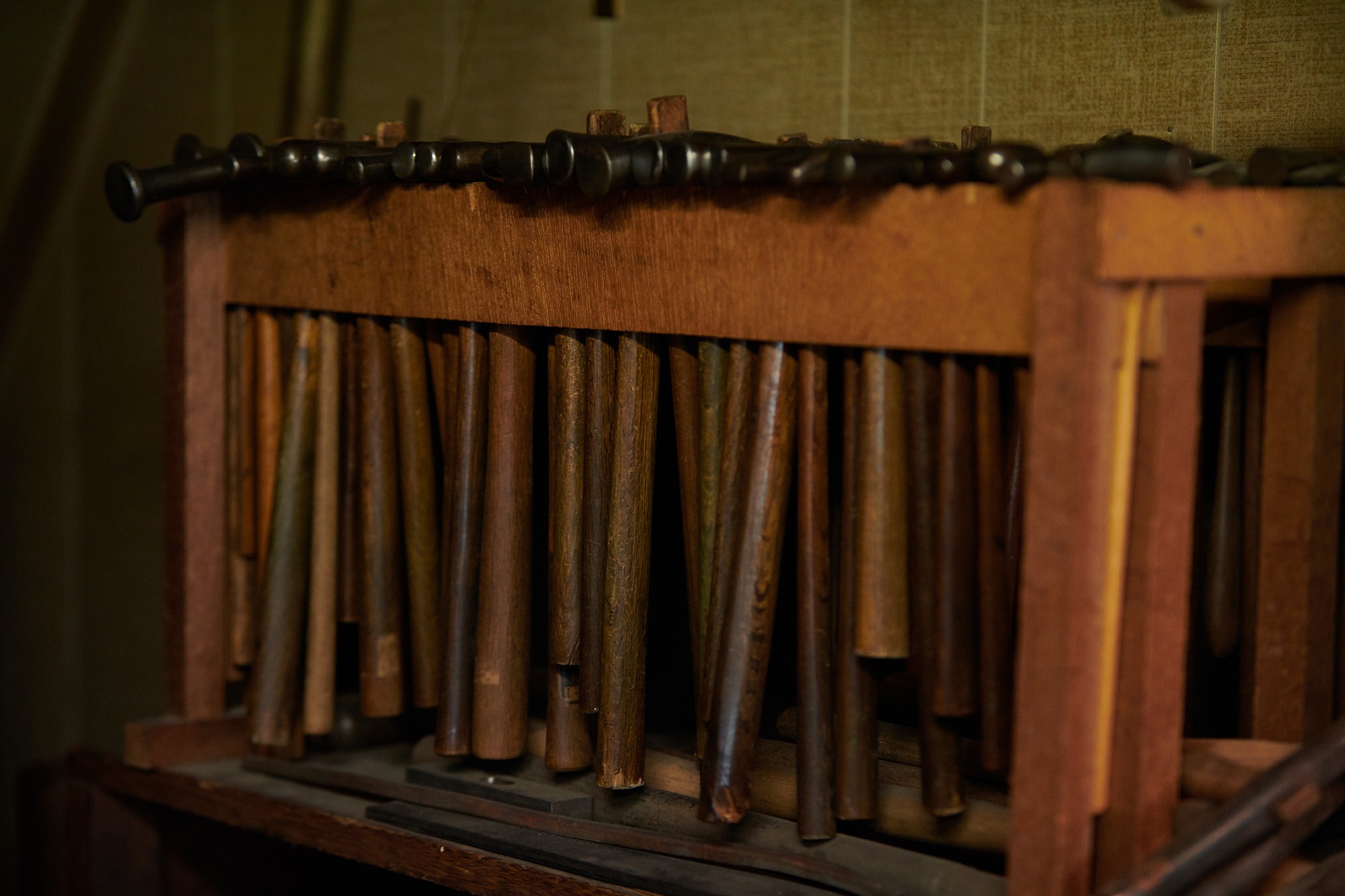
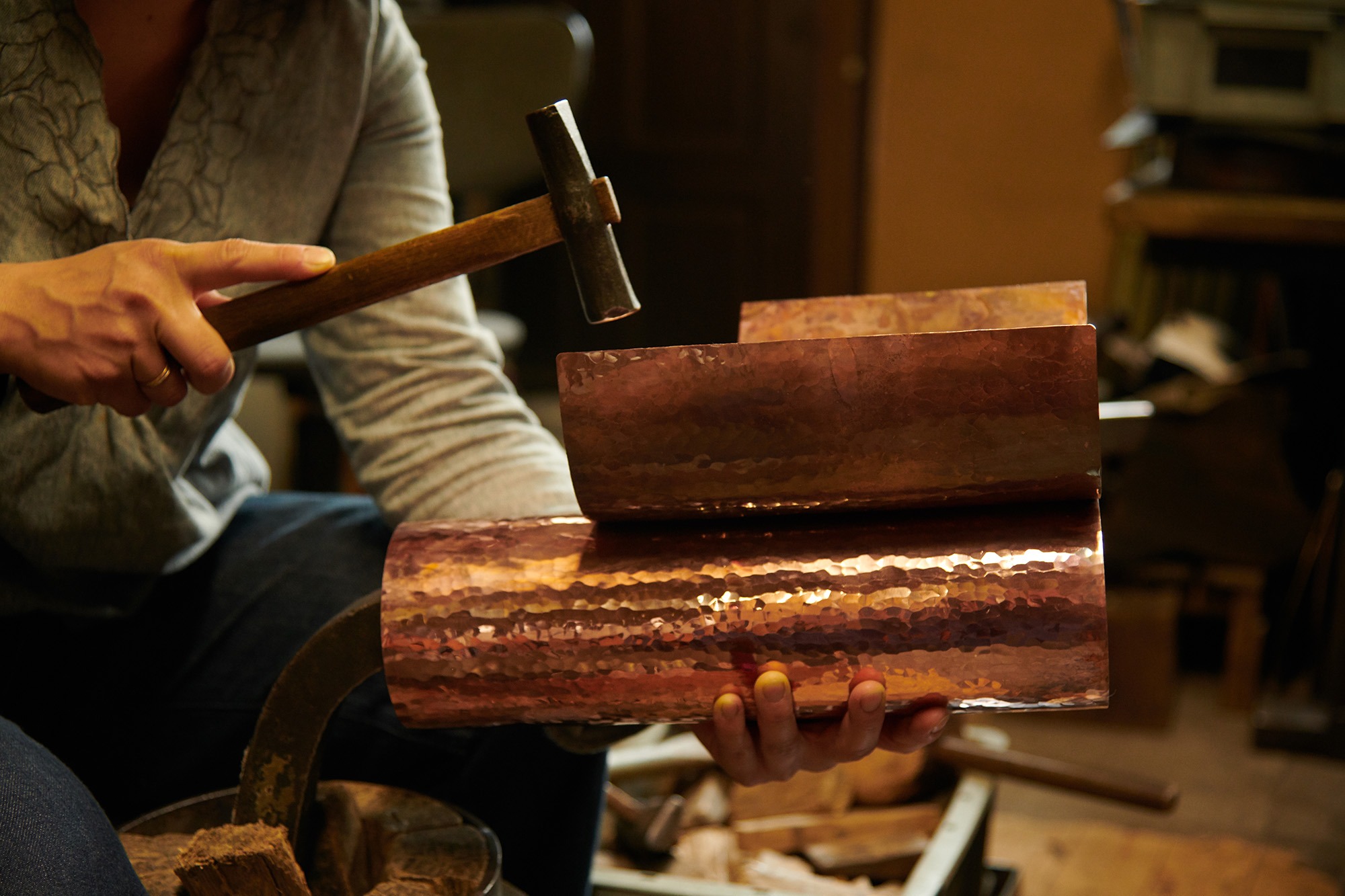
I hammer sheets of metal to create three-dimensional metal objects for use in Japanese tea ceremony or artefacts for use in Buddhist practices. I mainly work with copper, brass and silver as these are softer and more malleable for shaping with a hammer.
Do you feel there is currently a revival in craftsmanship and in its appreciation?
Yes, I definitely feel there is renewed interest generally – and I too am very interested in what’s going on around me in the world of crafts. I think for more contemporary products that are used daily around the house, there is clearly a boom going on. However, up until recently, we didn’t consider ourselves as part of that, mainly because of the kind of products we were making; objects and tools with more traditional, specific uses in tea ceremony or with a religious purpose. In the past these kinds of objects were unaffected by changing trends. However, Sfera has provided a platform for more contemporary approaches using traditional techniques – and for me personally, it has been an exciting challenge riding that wave.
Why do you think this is happening now?
In a world of easily available, almost throwaway products, people are increasingly seeking objects of real value, something they can cherish. They want an artefact that they can make a long-lasting commitment to. Dedicated workmanship and design can imbue a piece of work with such value.
What are the elements that make a successful product for you?
I often think that if I can elevate the appeal of a piece of work to a status over and above the personal and subjective, to a level where its worth speaks objectively, then I have achieved something truly successful. During the process I can’t always be sure how things will turn out. It is only on completion that I can make that judgment. The work will speak of itself if it possesses that ‘well crafted-ness’. Also, by repeatedly crafting a particular design, I can refine it, improving it with each attempt.
Do you prefer the process or the end result?
The process. I enjoy my work.
What is it about the Sfera philosophy that appeals to you?
Initially I was just interested in the range of objects, and interior accessories that were available. Later, I found out how refreshing it was to step outside this small space where I work all day long and hear new opinions and advice from a totally different perspective. It’s nice to get the thought processes that go into the work when working alone validated by others in the arts and crafts world. I also found that there were different ways of doing things as I was exposed to work in which traditional conventions had been broken. For example, when I make a copper object, it is normal practice to coat it inside with pewter. Suddenly I was seeing that these kinds of assumptions were being questioned or challenged.
What is the best lesson you have ever been taught?
My father always encouraged me to aim high at all times, to strive for something and never let those standards drop.
What do you listen to when you are working?
In the past, my father would have the radio on, but these days I don’t choose to listen to anything in particular. My work is very noisy – there is the constant sound of the hammer against metal. In between the noise, I need to listen out for my kids upstairs in case they cry. As a hobby, I play odaiko, which is a traditional form of Japanese drumming. I’m not sure if the two are connected but perhaps there’s something that attracts me to rhythm – or hitting things!
When are you most happy?
At the end of the day when all my work is done and the kids are asleep either side of me.
Can you explain the tan-kin hammering technique and what makes it unique?
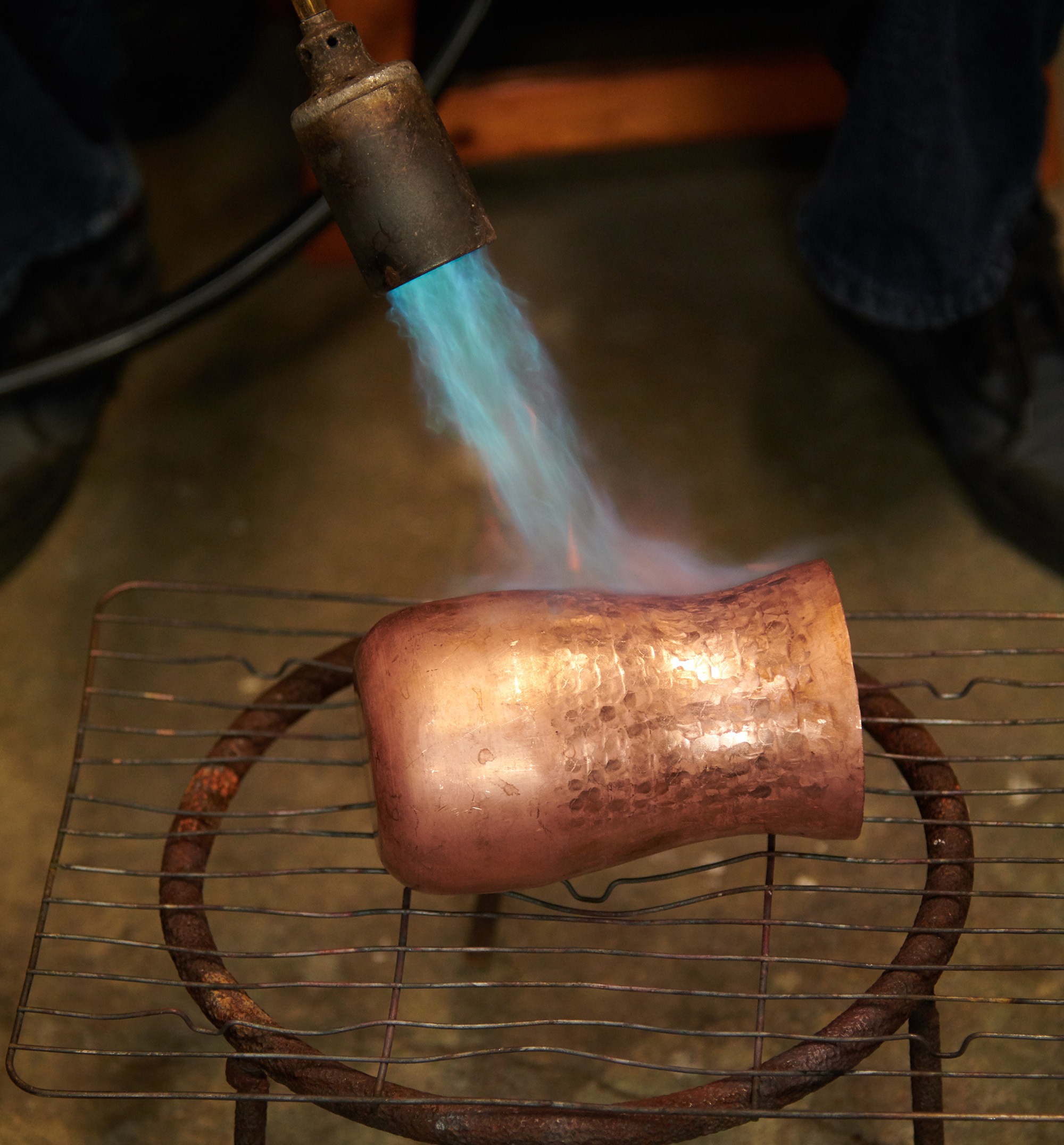
We usually have the impression that metal is hard and can’t be shaped. The tan-kin, (literally ‘hitting metal’) technique transforms the metal into something that is malleable like clay. It can be shrunk down to any shape we desire by this repeated hammering and softening.
Have you noticed a renewed interest in traditional Japanese metalcraft?
Certainly. I think the current trend for more contemporary crafts generally has led to a rekindling of interest in more traditional metalcraft. People are seeing how traditional techniques can blend with contemporary design and many of them are tracing back to see how these crafts existed in their original form. I’m fortunate enough now to be able to explore both of those avenues in parallel.
How do you keep the work relevant and contemporary for a modern audience?
Realistically, I think things have to be kept affordable if they are going to reach a wider market. As some of the metals I work with can be quite expensive, it may sometimes be necessary to carry out some of the work by machine. While the bulk of the work is done by hand, if all the products were made entirely in this way, we would be excluding a segment of the modern audience from accessing our work. Also, by collaborating with modern designers we can keep our crafts in flow with the current moods and tastes for traditional wares.
Read about Sfera Maker: Masaichi Ishida, bamboo weaving craftsman