Sfera Makers: Masaichi Ishida, bamboo weaving craftsman
This story is part of an extraordinary portfolio of photographs taken by Alan Clarke, of artisans working with Sfera, the lifestyle brand founded by Shigeo Mashiro in 2001 and rooted in Kyoto’s heritage of traditional crafts.
Can you explain what you do?
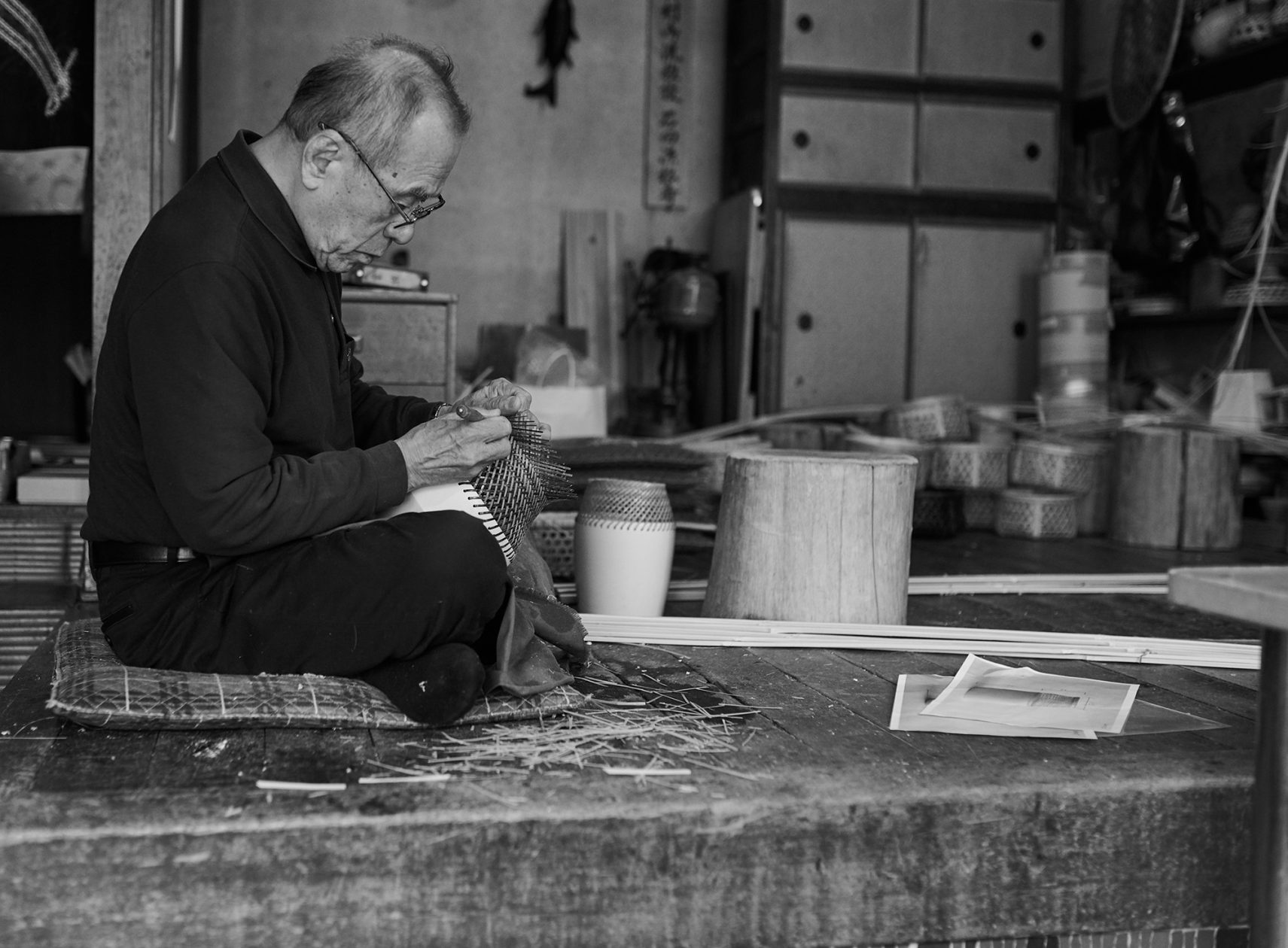
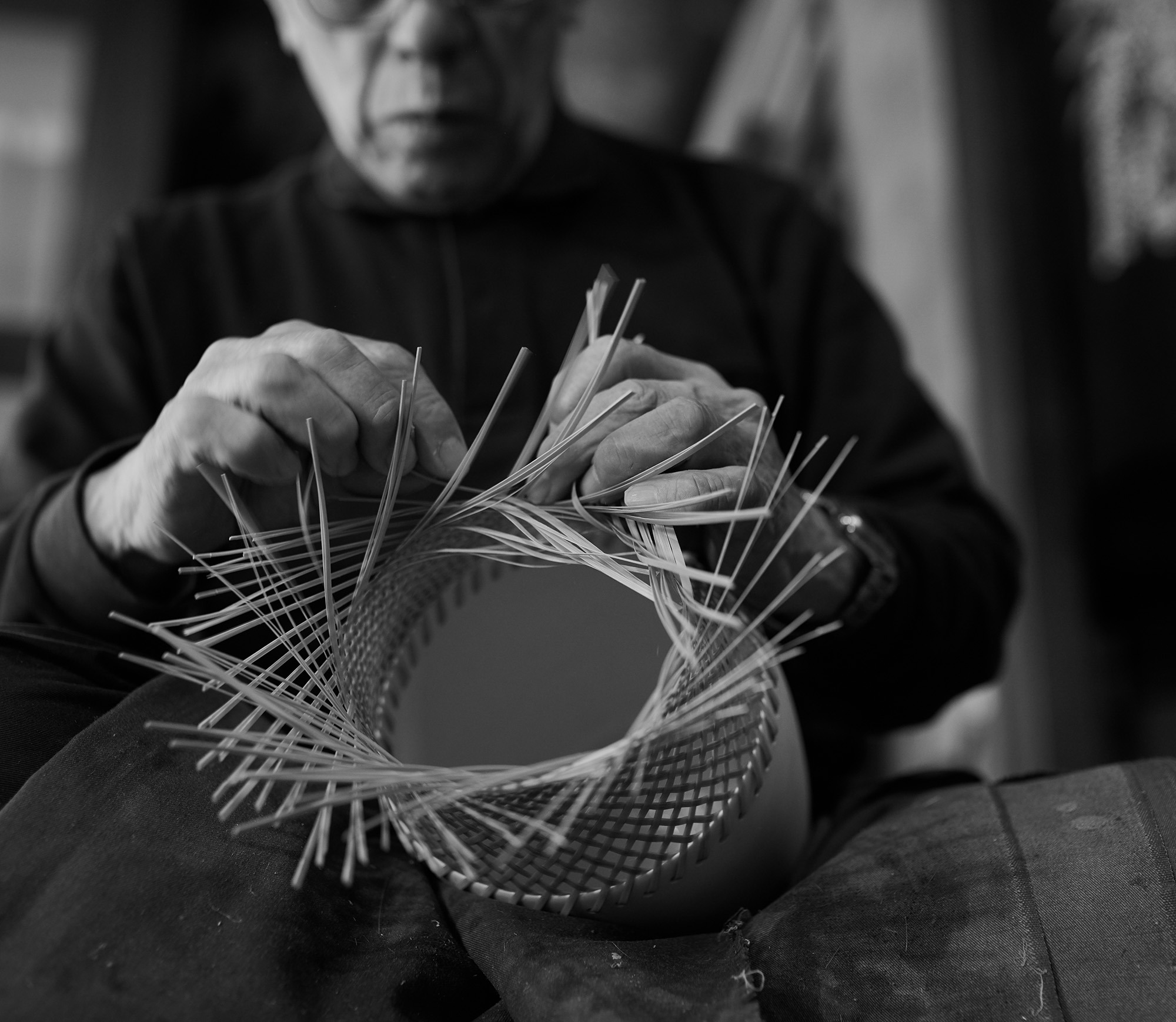
Working exclusively with bamboo, I cut, weave and craft tea ceremony utensils, and baskets for flower arrangement and the like. Recently I’ve been getting other orders for interior accessories and ornaments, decorative plates, that kind of thing.
Do you feel there is currently a revival in craftsmanship and in its appreciation?
I’m not entirely sure. I’m just a maker really, I don’t sell directly to the customers. This room here, this is my world; it’s been the same for 70 years or so.
What are the elements that make a successful product for you?
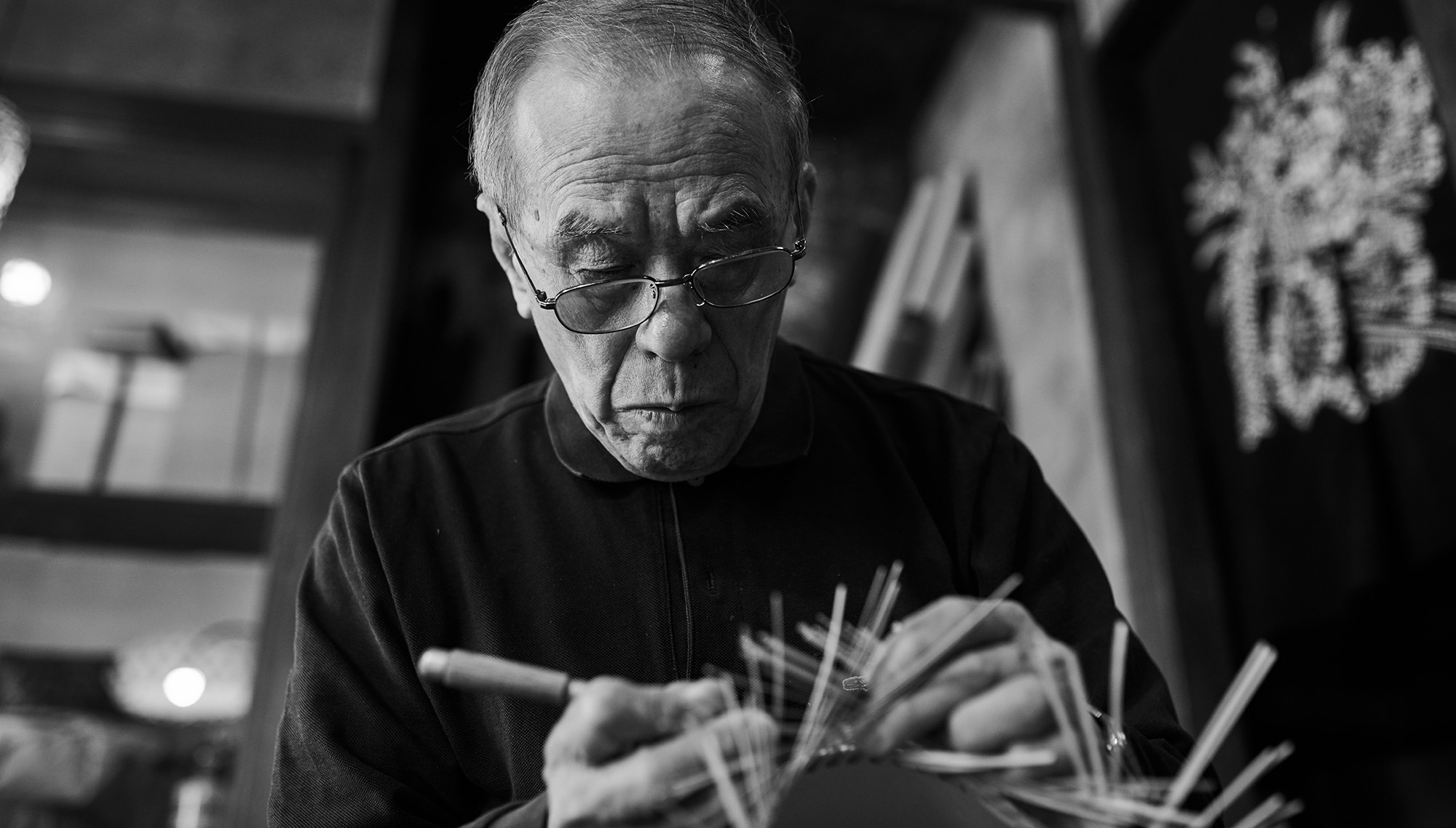
Good materials are important. I do everything myself, so if I don’t have good raw materials, who can I turn to? I need to be able to cut the bamboo down to very specific thicknesses and then it has to be woven so it needs to be of good workable quality. Each bamboo tree is unique in character. From good trees I get good wood. Then it’s up to me.
Do you prefer the process or the end result?
I like the result. If it turns out as I intended, or better, I’m happy.
What is it about the Sfera philosophy that appeals to you?
Designers don’t always understand the ins and outs of making these artefacts. They are just concerned with aesthetics. For me, I have more practical concerns – durability, or whether the idea will actually work. Design objects are different to the traditional products that I make. I see if I can work to these irregular specifications, but to be honest work is work.
What is the best lesson you have ever been taught?
My father was an old-fashioned craftsman. He never explained things to me. I just shadowed him. I had to learn by myself, by watching him.
What do you listen to when you are working?
Nothing. I just work!
When are you most happy?
I’ve never thought about it (laughs). When I make design objects I have to work to the drawings. When I make tea ceremony items, I have to stick the rules. I’m happiest when I can make what I like without worrying about either of these demands (laughs). That woven basket in the window down there, I enjoyed making that. Sometimes, when a tea ceremony school changes its master, the specifications might change. I have to be careful to go along with them!
What are the principles of traditional bamboo weaving?
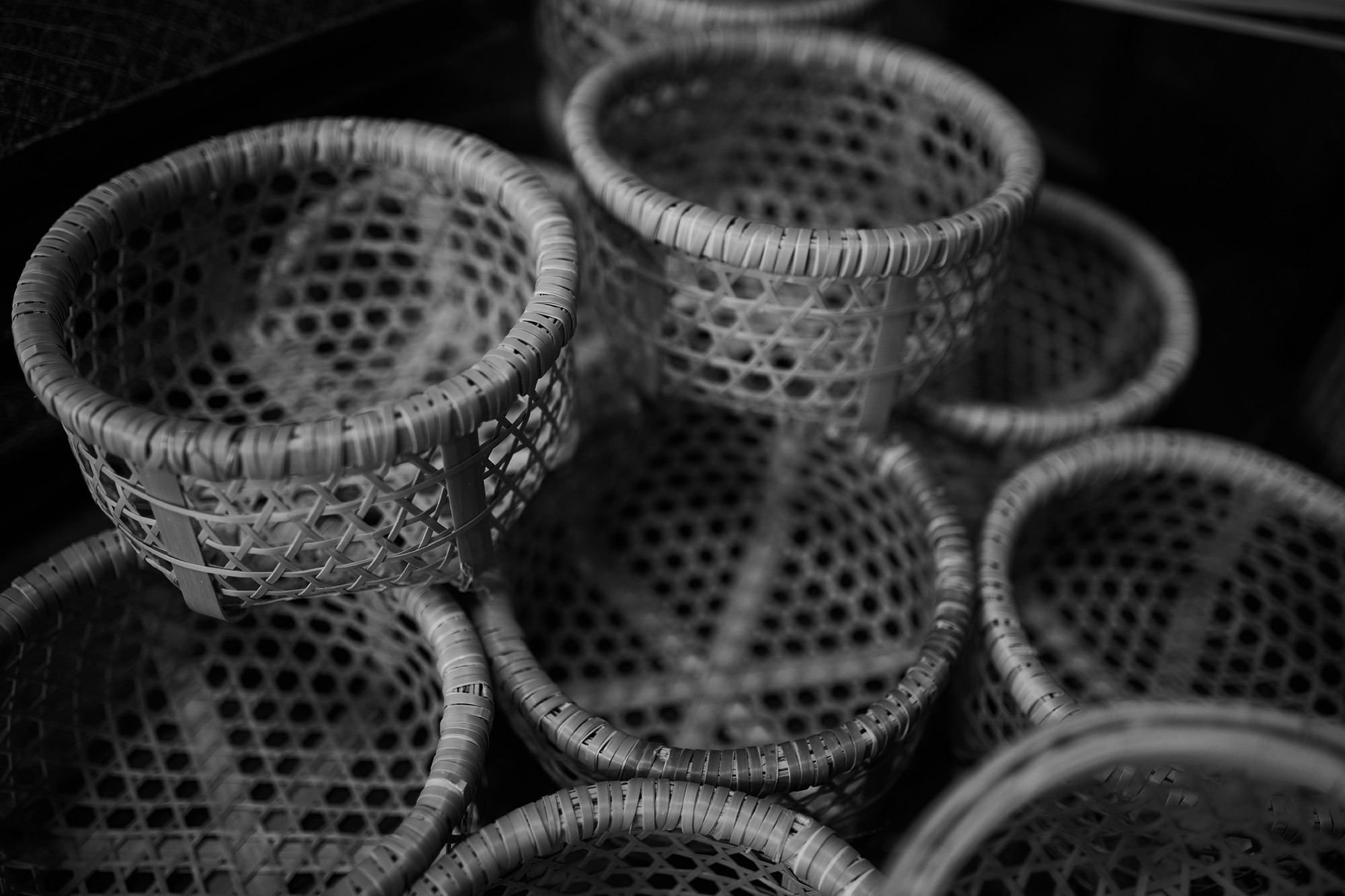
We cut and shave good quality bamboo wood by hand with a variety of knives and then use a range of weaving techniques to create lattices or woven patterns that can be shaped into baskets for ikebana (Japanese flower arrangement) and tea ceremony utensils. There are so many pattern types and combinations of plaiting and twining to suit the particular design. The bark is shaved off, along with any dirt or scratches with the large knife. We then slit the bamboo into finer and finer strips. Because the bamboo has long, vertical fibres, it can be cut quite easily into strips using a variety of knives and small hatchets. The strips can be split finer still by bending and splitting the fibres by hand, or pulling them through a metal plate with a series of holes of decreasing size. Another technique is to pull the strips between knife blades stuck into a wood block. They are trimmed, sharpened and bent accordingly, then woven and assembled. I use various tools for patterning, scoring or bending thicker strips of bamboo into rings. There are various shades of bamboo but we also stain it with natural dyes such as urushi lacquer.
What is unique about Kyoto bamboo basketry?
I think we preserve the traditional ways and methods more. There is more quality control. Kyoto is also more deeply rooted in the traditions of tea ceremony and ikebana. Personally, I just aim to produce work of the highest quality possible. Kyoto people are proud of these traditions. At the end of the day, good technique is good technique. There’s no substitute for that. You can tell when something is handmade and when it is machine made. You can’t cheat.
Is your craft under threat from the use of modern, more readily available materials?
Well, there are certainly faster and cheaper ways of weaving, but the quality isn’t there. Machine-made versions from places such as China aren’t as durable either. Those that know bamboo weaving well, the tea ceremony masters or flower arrangers and so on, they know the superior quality of a handmade item. There will always be a market for that, especially in a city like Kyoto.
Do you feel you are keeping the craft alive for the next generation?
I teach at a school but in a class of say, 10 students, only one will go on to do this kind of work professionally. The old style of having an apprentice under your wing for many years doesn’t happen as much as it used to. It’s hard to get that kind of commitment in a trade that might not carry any guarantees or job security.
Read about Sfera Maker: Keikou Nishimura, Urushi lacquerware craftsman