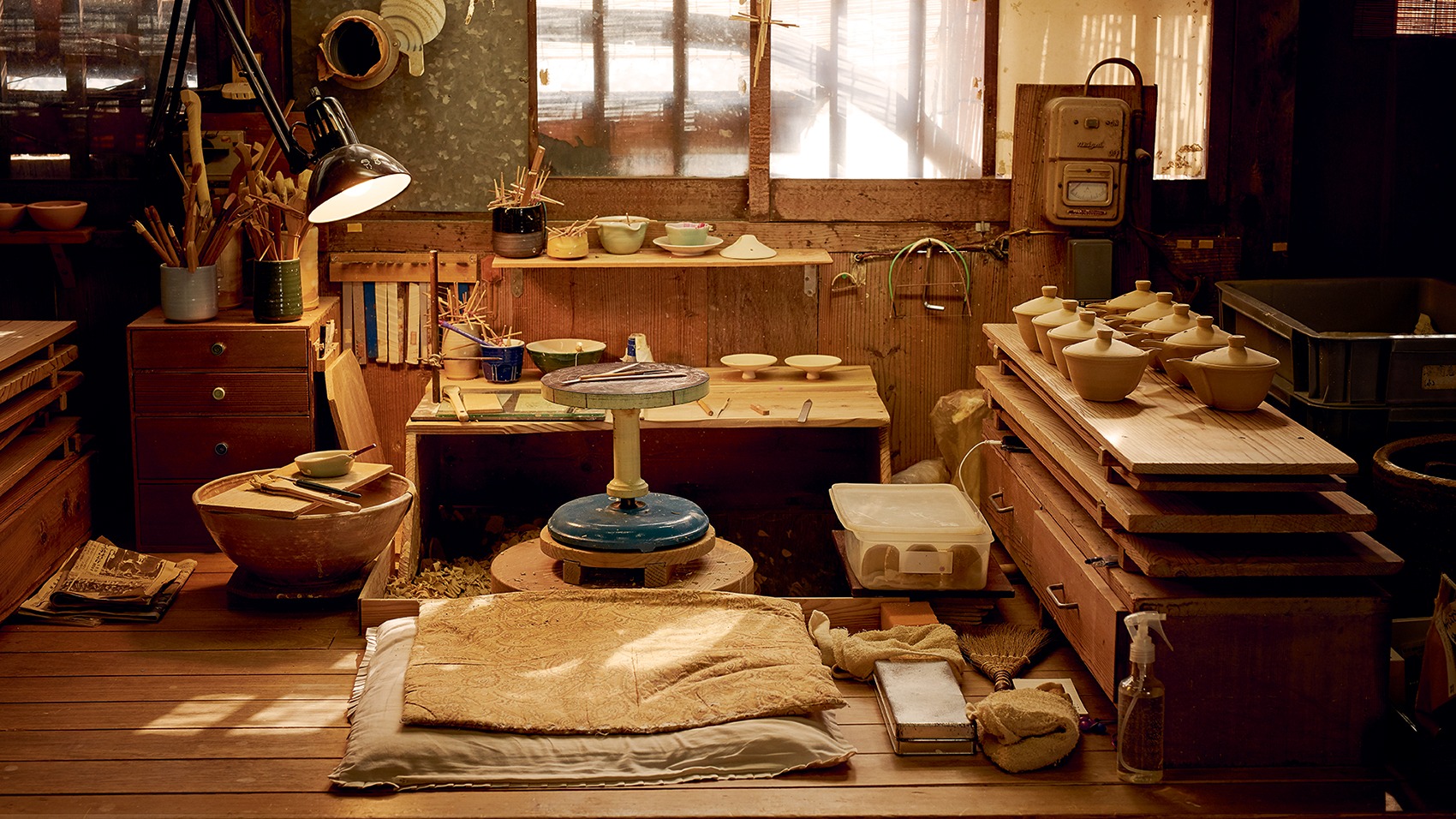
Sfera Makers: master potter Hosai Matsubayashi
Interview Julian Brennan
Photographs Alan Clarke

Hosai Matsubayashi, head potter at the 400-year old Asahiyaki pottery, which specialises in unique utensils for tea ceremony
While the focus is on Tokyo for all things sporty and competitive, we take you into the quiet and contemplative Kyoto workshop of the 400 year old Asahiyaki pottery with head potter Hosai Matsbayashi. This story is part of an extraordinary portfolio of photographs taken by Alan Clarke, of artisans working with Sfera, the lifestyle brand founded by Shigeo Mashiro in 2001 and rooted in Kyoto’s heritage of traditional crafts.
Can you explain what you do?
I’m the 16th-generation head potter at our 400-year-old pottery, Asahiyaki, in the famous tea region of Uji, making unique utensils for tea ceremony as well as crafted pottery for use in the daily enjoyment of tea. On the one hand, this incorporates tea philosophy and beauty, while on the other, there are more practical considerations such as bringing out the taste of tea.
The aesthetic ideas of transience and impermanence [wabi-sabi], or the notion that each tea ceremony is its own unique occasion; nothing happens twice [ichigo ichie], are closely tied with the changing seasons of Japan. Tea culture has a long history. On the surface, it is a tea party or ceremony to entertain guests, which in turn rests on Zen philosophies and the idea of spiritual learning that underpin it.
Do you feel there is currently a revival in craftsmanship and in its appreciation?
Yes, our ‘Go-on’ project – a collaboration of Kyoto craftspeople applying time honoured techniques of Japanese crafts to create inspiring new designs with international appeal – is an example of this, and how a global approach can breathe new life into these traditions back home.


Asahiyaki’s signature tea cup, which is specially designed for Sencha tea from Uji, and shaped so that its light green colour might be best appreciated.
Why do you think this is happening now?
In this rapidly changing world, people are simply overloaded with mass production. Although there has been more emphasis on design in the past 10 years, with brand designers benefiting from cheaper labour costs in places such as China, people are increasingly craving more humanity in their products. They can see through attempts to attain ‘easy fame’.
What are the elements that make a successful product for you?
We have seen a boom in sales of high-end teapots and this reflects the search for quality workmanship and painstaking time and effort that have clearly gone into them. A successful product for me is simply when that is correctly recognised by the user of the pots and utensils.
Another element for success in the current climate is the contemporary twist, either in design or in the way that products are exhibited. The context in which our products are shown can give more immediacy, making them somehow more attainable. New gallery spaces and outlets can widen the appeal of our work to a more forward-thinking market.
Do you prefer the process or the end result?
Both. If the result is nice but the process is bad then somehow I feel that’s not enough. We must strive to obtain a truly good result, and that end result is a reflection of an honest and true process. More importantly, even the ‘end result’ is actually still part of a wider process. That end product should be instructive in helping our endeavours towards the next piece of work. It is a benchmark by which we measure our progress in improving on it. So we are in a perpetual state of process.
 The small altar, which is surrounded by branches of Sakaki tree and talismans from the Atago Shinto shrine, contains a candle from the kiln which is lit
 Asahiyaki regards the kiln as the sacred dwelling place of the spirits of the god of fire, and they pray every morning and night for the first three days of each new year
What is it about the Sfera philosophy that appeals to you?
Another ‘eye’ is very valuable to us. Sfera is unique in that it understands European culture and has knowledge of its design and crafts, but also has a deep understanding of time-honoured Japanese traditions. Their fresh angle inspires a fresher approach.
‘The things we make are normal, everyday things. This doesn’t mean they are mundane; there’s a beauty in everyday things made well’
What is the best lesson you have ever been taught?
One thing my father always taught me was that, in a sense, the things we make aren’t supremely special – they are normal, everyday things. This doesn’t mean that they are mundane; there’s a beauty in everyday things made well. Some craftspeople may have a tendency to try to dazzle with overly ornate pieces. I have been taught to leave enough space for the users of our pottery to project their own selves onto the work, rather than to ‘overcrowd’ it with my own stamp. Of course there is a margin of ‘me’ in there, but by leaving that space, I am giving more to the user.
 His Geppakuyu Nagashi Kakebanaire hanging vase
 Hosai Matsubayashi at work at his wheel
What do you listen to when you are working?
Silence. At night I can hear the river.
When are you most happy?
Playing with my son.
You are the 16th-generation master of your family working at the pottery and keeping 400-year-old traditions alive – it must be a huge honour but do you also feel a pressure from this responsibility?
Before I succeeded the name, I saw my work simply as making pots, doing a job, focusing only on the products. When I took on the name, I never really felt pressure or responsibility, because I was resting on 400 years of experience before me. Both that and the people around me are a great support. However, I did become more aware of my wish to contribute to society in the same way that my ancestors did, and to play my part in that – do my bit.
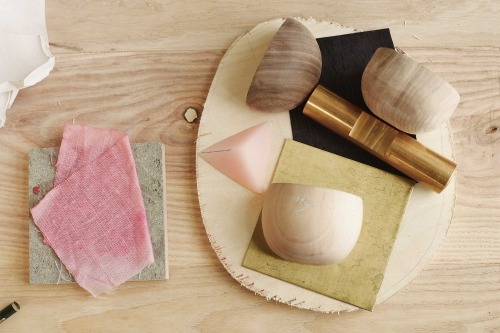
 Samples of glaze and form
 Workshop manager Toru Wada has worked with Asahiyai for more than 30 years
What is special about the local clay from the Uji River?
This high-quality clay has natural properties that, when combined with our techniques, help to imbue our work with its characteristic mottled effect.

‘Kyoto is deeply rooted in traditions. We preserve traditional ways and methods, there is quality control. There will always be a market for that… ’
Can you explain what makes your techniques unique?
Our techniques are not particularly out of the ordinary. What is special, however, is the unique way in which we fire our pottery and the old hand-built ascending kiln we use to fire it in. We combine natural properties of the clay with special firing techniques to regulate the level of oxidisation. This creates the characteristic mottling effect that is visible in much of our work.
Once the pots are in the kiln, it is up to the kiln to work its magic. Each piece will be uniquely different according to how the kiln has worked on it. We wouldn’t want to ‘over control’ this. This is another way in which wabi-sabi runs through our work. The kiln is lit from a master candle on a small altar, which is placed at the foot of the kiln. This has the blessing of the god of fire whose spirit resides on Mount Atago, Kyoto. The whole chain of events in the firing process therefore begins with the catalyst of a sacred flame.
Read about Sfera maker: Chikako Ueda, metal crafts maker