‘The Carpenters’ Line: Woodworking Heritage in Hida Takayama’ at Japan House London
words meena sears
‘When you think of wood, in Japan, you think of Hida Takayama,’ says Simon Wright as we take a seat in a small conference room at Japan House on London’s Kensington High Street, having just finished his fascinating tour of the exhibition. The Carpenters’ Line, curated by Wright, unpacks the rich history behind the vibrant and highly-reputed woodworking tradition of the Hida region in Japan.
Starting from the 8th century CE, when the skill of the Hida no Takumi (‘Masters of Hida’) was so revered that Takayama was exempt from taxation in exchange for sending its carpenters to build important structures in the imperial capital, the exhibition takes visitors on a 1,300-year journey exploring this extraordinary legacy up to the present day, where the skill of the Hida no Takumi is no less valued, and leading Japanese, as well as international, designers still turn to Hida Takayama if they want something made of wood.
Located in the Gifu Prefecture in central Japan, Takayama is a scenic four-hour drive from Tokyo through the Japanese Alps. The city is walled in by densely forested mountains that provide the 90 varieties of wood used by the Hida carpenters (and on display in the exhibition). Recalling trips to Takayama, Wright describes the beautifully preserved architecture in the historic city centre that dates back to the Edo period, built using the very same techniques and tools that thrive in Takayama today.

The densely forested mountains of the Hida region provide the 90 types of wood used by the Hida carpenters (above); Hida carpenter at work (pictured in hero image). Photographs by Igarashi Junya. Courtesy of Japan House London
‘The city,’ he says, ‘is wood. Ninety-two per cent of the region is forested, so you are always near trees.’ It was important for Wright and his team of designers (Kobayashi Hirokazu and Yamada Haruna) to convey this to the exhibition’s visitors. ‘When people look at the objects on display, we want them to be near trees, to remind them that this is always the background to what they are seeing.’ An immersive experience is achieved by the addition of a curtain, with large-scale photographs of Hida trees printed on it, that weaves throughout the space, gently encircling you as you move from one display to the next. This, along with a soundscape that tracks one day in the Japanese forest, helps to transport you from the basement room of a London gallery to the vast Hida forest. Not only can you hear the birds chirping and leaves rustling, but also the Hida craftsmen at work; their chiselling and hammering echoing through the room as you wander around, drawing you further into the exhibition and connecting you more directly to the objects.
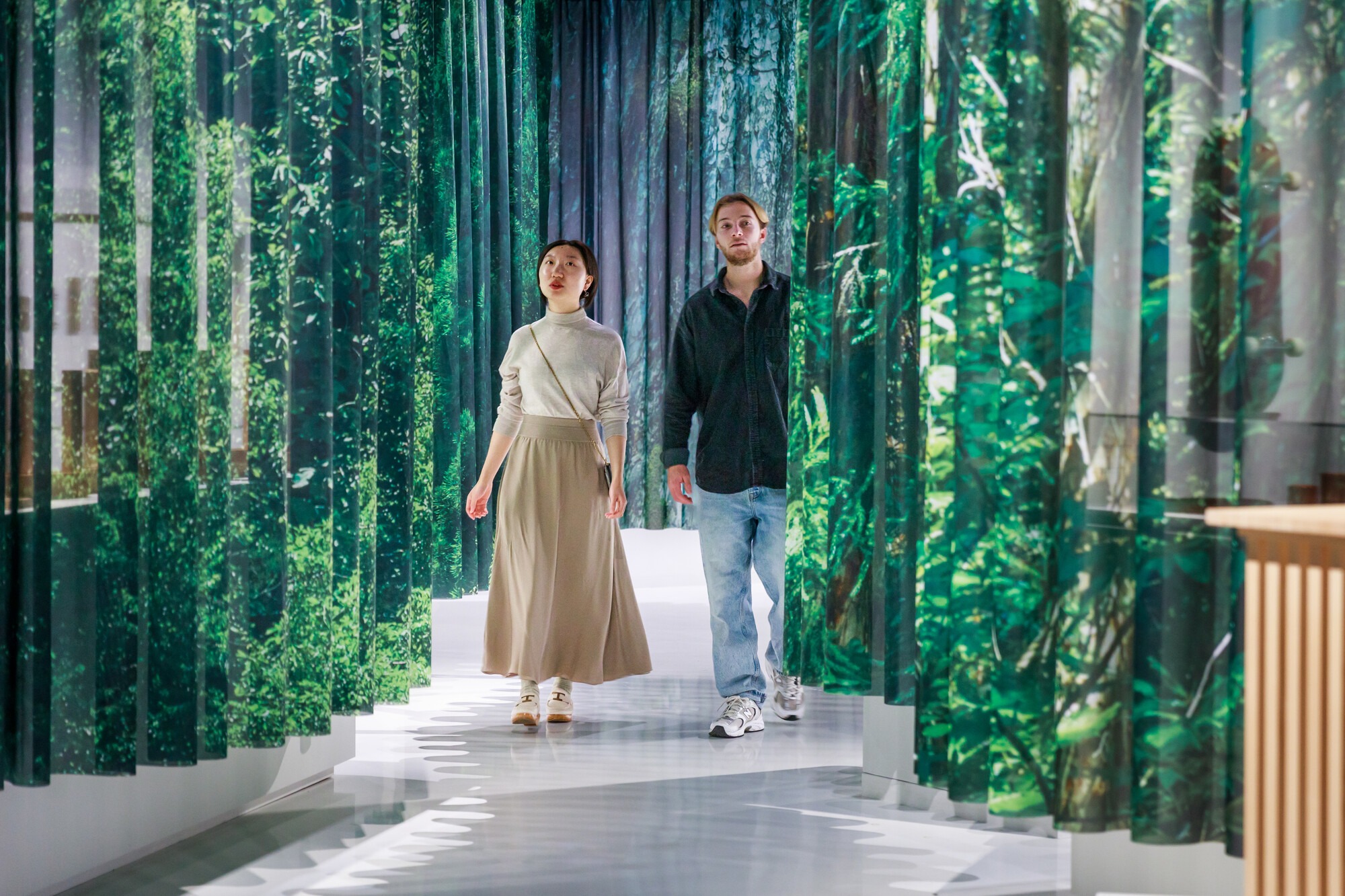
A curtain printed with large-scale photographs of the Hida forest weaves throughout the exhibition space. Photograph courtesy of Japan House London
One such object is the sumitsubo (carpenter’s line), which gave its name to the exhibition. A personal favourite of Wright’s, the sumitsubo is used to mark out straight lines across lengths of wood. While other carpenters across Japan also make use of this tool, Wright admires the simplicity of the Takayaman sumitsubo; so assured in their own reputation are the Hida woodworkers, they feel no need to decorate their sumitsubo in an effort to demonstrate their skill.
Visitors can also experience the ingenious craft of the Hida woodworkers for themselves as there are several Japanese joints on display (it is widely acknowledged that Japanese joinery has the greatest variety of joints in the world, many of which can only be made by hand with the highest degree of expertise), and a sophisticated piece of wooden latticework called a chidori-goshi. The pieces have been cut precisely using a sumitsubo and slot together like a game of Tetris.
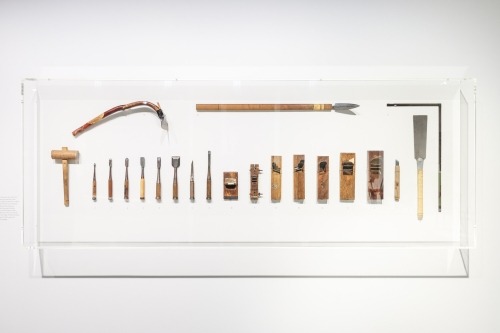 Traditional tools still used by the Hida carpenters today
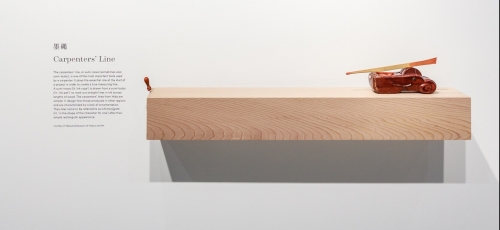 Sumitsubo (carpenter's line)
 Chidori-goshi (wooden latticework)
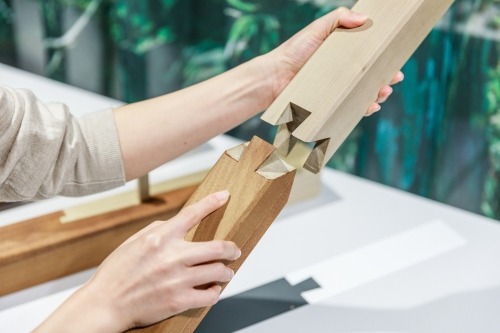 Tsugi (straight joint)
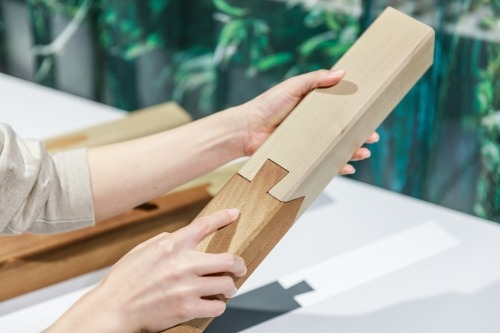 Tsugi (straight joint)
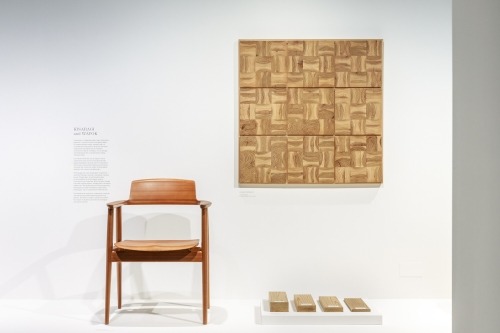 The Kisaragi chair and The Wavok series (wall and flooring material made from cryptomeria)
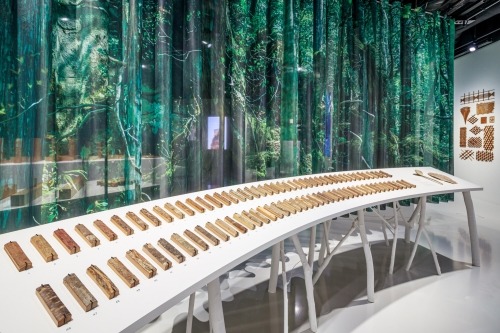 Wood varieties from the Hida region
Some of the objects on display at The Carpenters’ Line. Photographs courtesy of Japan House London
The people of the Hida region take pride in their esteemed woodworking tradition. But alongside this pride comes a great deal of appreciation for the natural environment on which this legacy is built. On one trip to Takayama, at a furniture fair in the city, Wright experienced a live rendition of the medeta, an age-old song sung by the people of the Hida region at celebrations and gatherings. The lyrics (‘To the noble young pine! May its branches flourish’) reveal the level of respect the Hida carpenters have for the trees on which their livelihoods depend, and have depended for centuries. Having experienced this ‘extraordinarily powerful’ event, Wright felt it important to include a recording of the medeta in the exhibition for visitors to listen to.
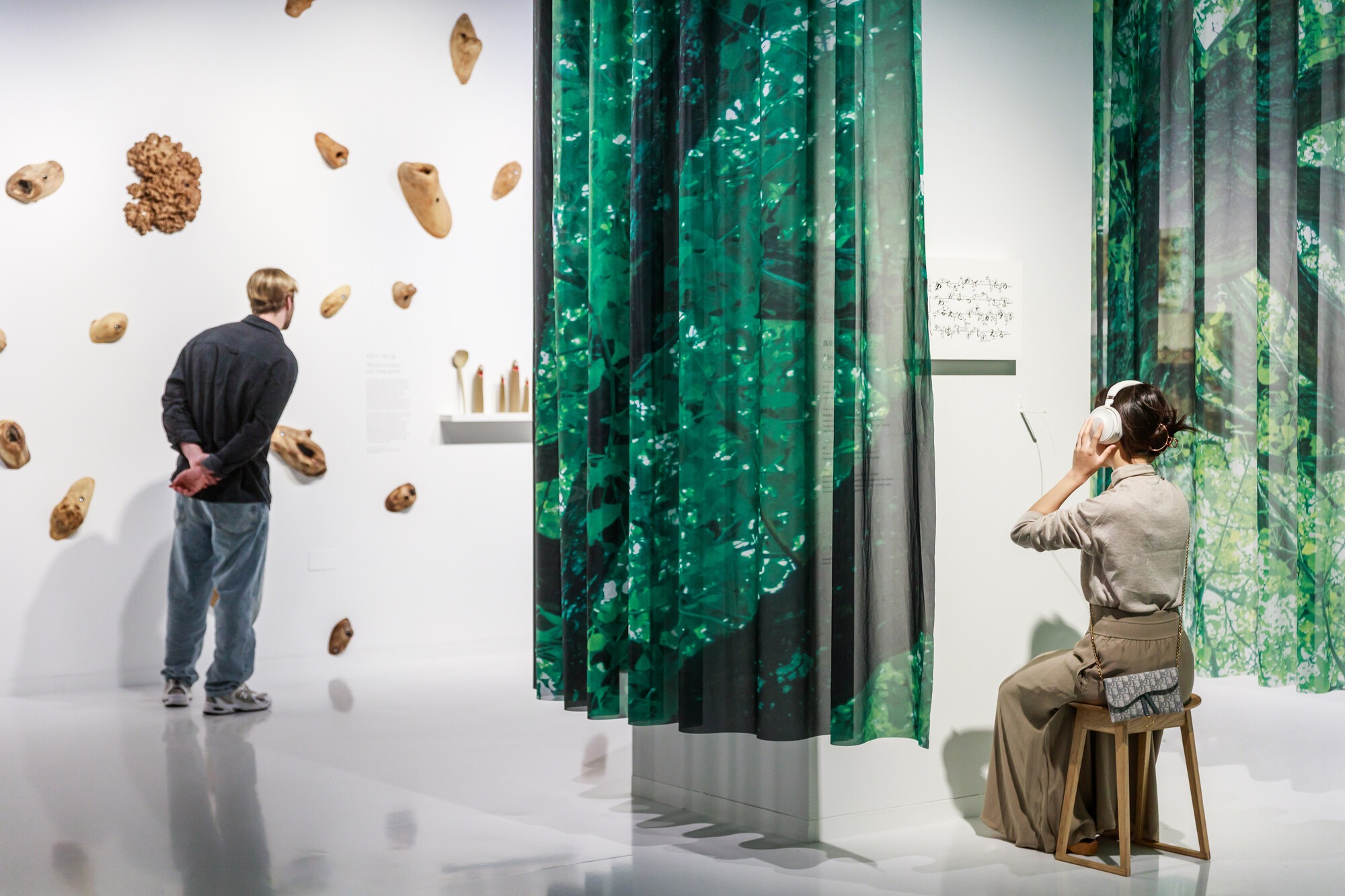
Visitors can admire the Conouré series (climbing wall made out of a variety of native broadleaf trees from the Hida region) and listen to a recording of the medeta. Photographs courtesy of Japan House London
While tradition and legacy are important to the people of Takayama today, they are simultaneously looking ahead for ways to keep their heritage alive in a contemporary context. The exhibition chronicles this evolution by showing how the traditional Hida techniques are being used in combination with modern technology by large furniture companies in Takayama such as Hida Sangyo, makers of the Kisaragi chair, which is also on display in the exhibition. Keen to foster the next generation of woodworkers and preserve Takayama’s cultural legacy, Hida Sangyo established the Hida Shokunin Gakusha (Hida Artisan School) in 2014. The exhibition ends with a photograph of its two current students; two women who are joining the end of the carpenter’s line and paving the way for the future of Hida woodworking.
‘The Carpenters’ Line’ runs until January 29 2023; Japan House London, 101-111 Kensington High Street, London, W8 5SA.
Entry is free, but booking is recommended. You can book your slot here.