More than just a restaurant
interview meena sears
Photographs steve ryan
Live fire cooking and a low-waste menu; Acme Fire Cult combines ancient techniques with modern thinking
There is something ‘deeply ancestral’ about cooking over a live fire, says chef Andrew Clarke, co-founder of Acme Fire Cult. ‘It’s primal and in our DNA as human beings. You need to be fully present and in tune with your instincts.’ Established in 2021, Acme Fire Cult is an open-fire cooking concept and restaurant set in Hackney, East London. Cooking in an outdoor kitchen year-round, Clarke and his business partner Daniel Watkins experiment with flavours from the Mediterranean, the Middle East and Asia. Their custom-built Argentinian grills are fired with hot charcoals that cook quickly and to perfection – or to akmē as Clarke explained in our interview.
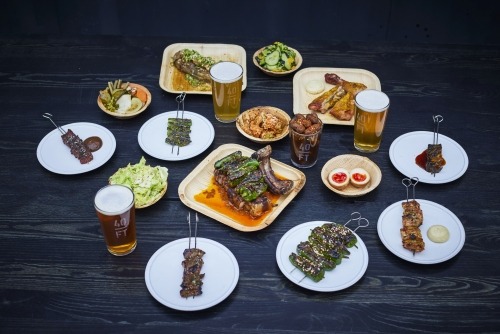
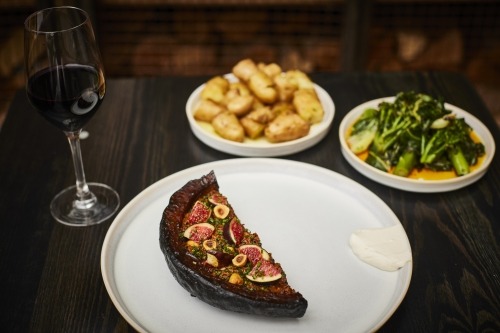
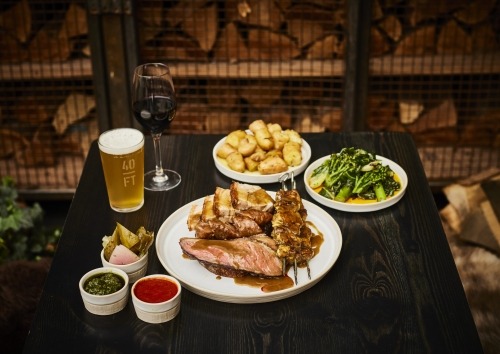
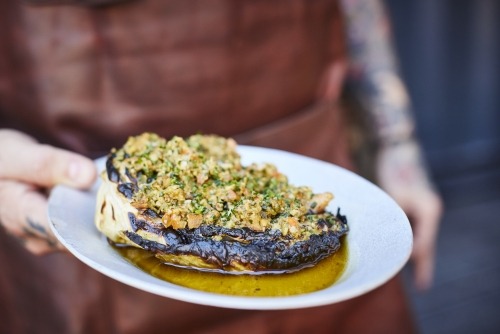
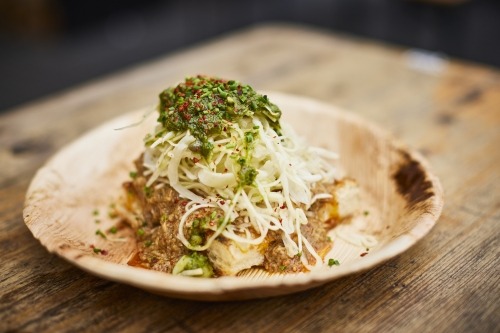
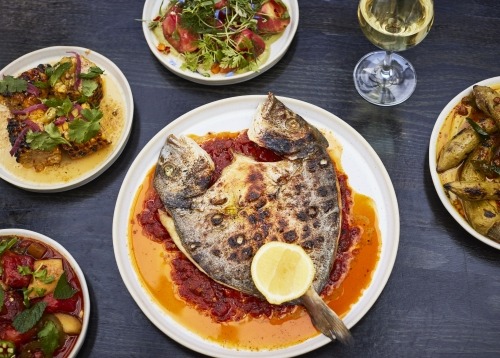
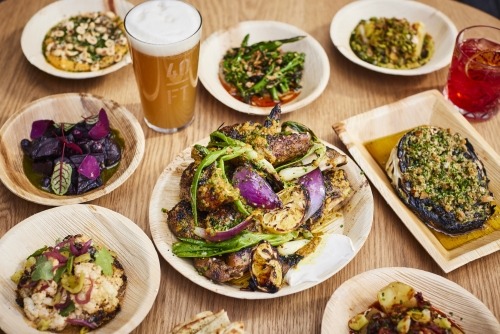
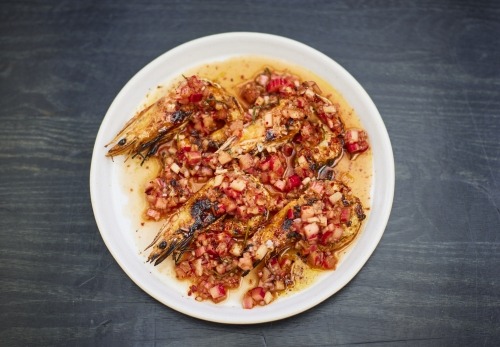
Confounding expectations of the traditional barbecue, vegetables take centre stage of this ever-changing, micro-seasonal menu, while any meat used is sourced from regenerative farms such as Lyons Hill Farm and Swaledale Butchers, and dayboat fish from sustainable suppliers such as Fin + Flounder and Bethnal Green Fish.
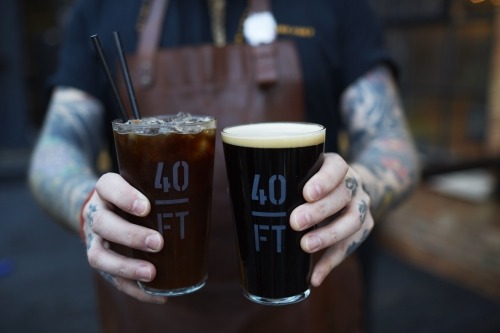
To make things even more impressive, Acme Fire Cult collaborates with its neighbours, the 40FT brewery and the Dusty Knuckle bakery, by making use of their by-products, and by giving 40FT offcuts from the kitchen to use in the beer brewing process. This innovative circular economy of waste sets a new standard for the restaurant industry by showing how we can use (or, more accurately, reuse) ingredients in a more sustainable way.
We talked to Andrew Clarke about his so-called ‘cult’ to find out a bit more about its background and the intentions behind it.

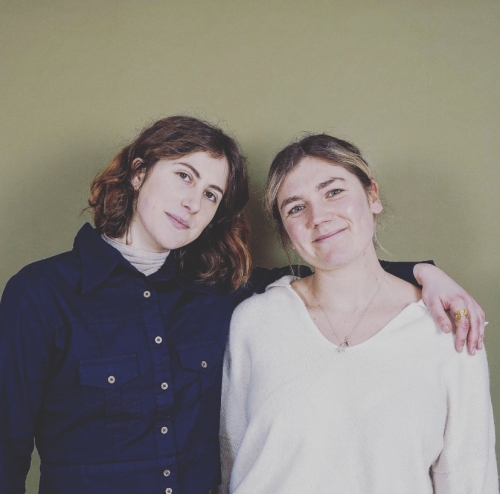
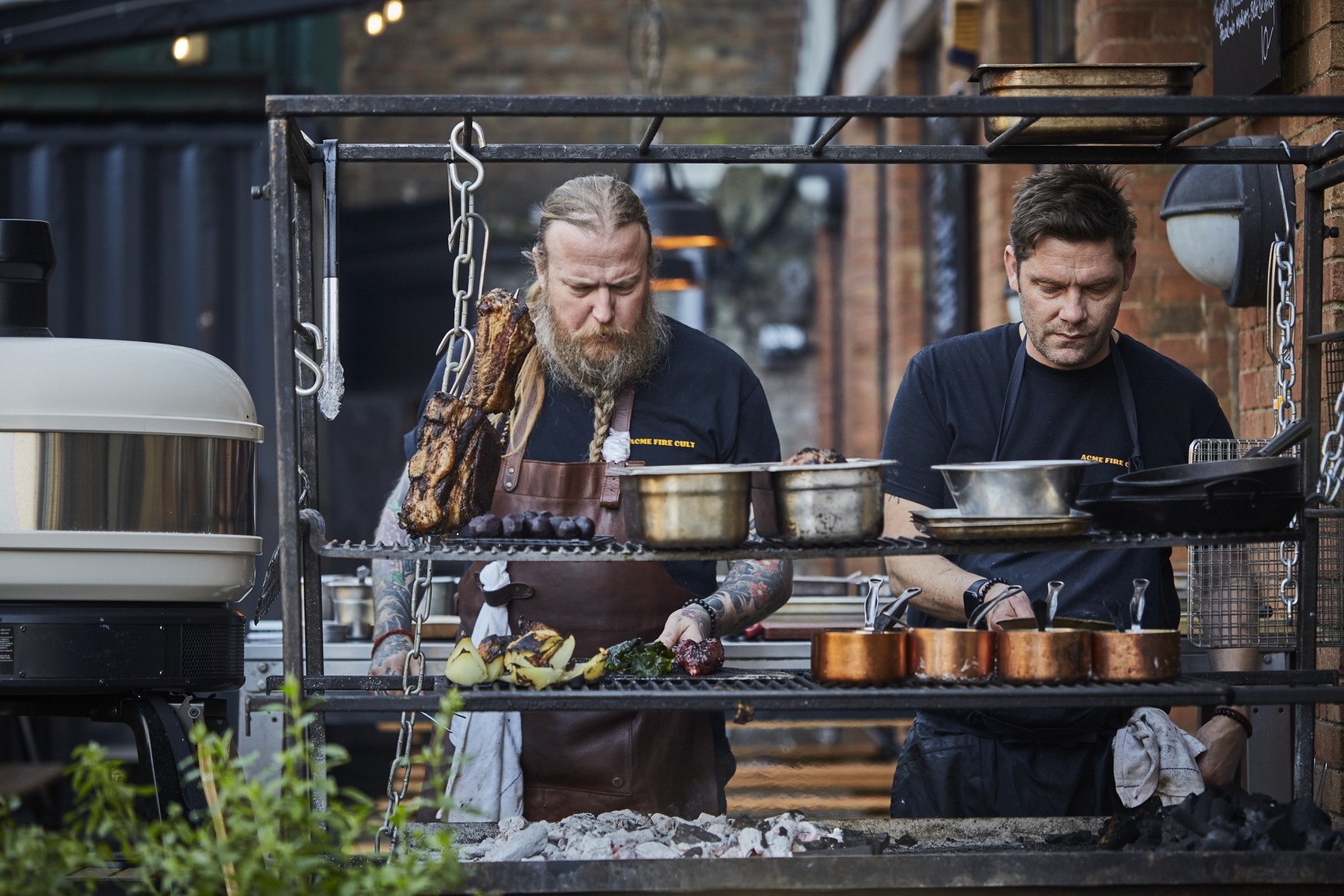
Acme Fire Cult is next to the Dusty Knuckle Bakery and 40FT Brewery, in Dalston, Hackney. Hero image: Andrew Clarke (left) and Daniel Watkins cooking on their Argentinian grill at Acme Fire Cult
Can you tell us a bit about yourself, what you do, and how you got into it?
I’ve been cooking over fire – in some form or another – for most of my 25-year-long career. I was fortunate enough to grow up with an understanding of fire and its importance in the home; we used open fires to heat the house and had weekly bonfires at which I would do my homework! Those early experiences had a strong bearing on my career and, even at that young age, I was always keen to man the grill, excited by the idea of cooking over an open flame.
I became a chef sort of by accident. Originally, I had plans of being a musician and had been touring the world with my band when I began working in a kitchen to help support my music career. Then, somehow, I never left – I still play music though!
What was the vision behind Acme Fire Cult?
A restaurant was actually the last thing on our minds when we started; at first, we wanted to create a brand that embraced food, fire and the outdoors lifestyle. We explored a few different avenues such as manufacturing, events and retail until our other business partner, Steve Ryan, showed us a site opposite his brewery.
I felt quite uncertain about opening another restaurant of my own in a post-pandemic, post-Brexit UK but, after Dan and I ended a successful seven-week residency at London Fields Courtyard during the summer of 2020, it was clear that there might be more hope than we had thought, and it looked like we’d found the perfect space to make ourselves a home.

Andrew Clarke has been cooking over fire for most of his 25-year-long career
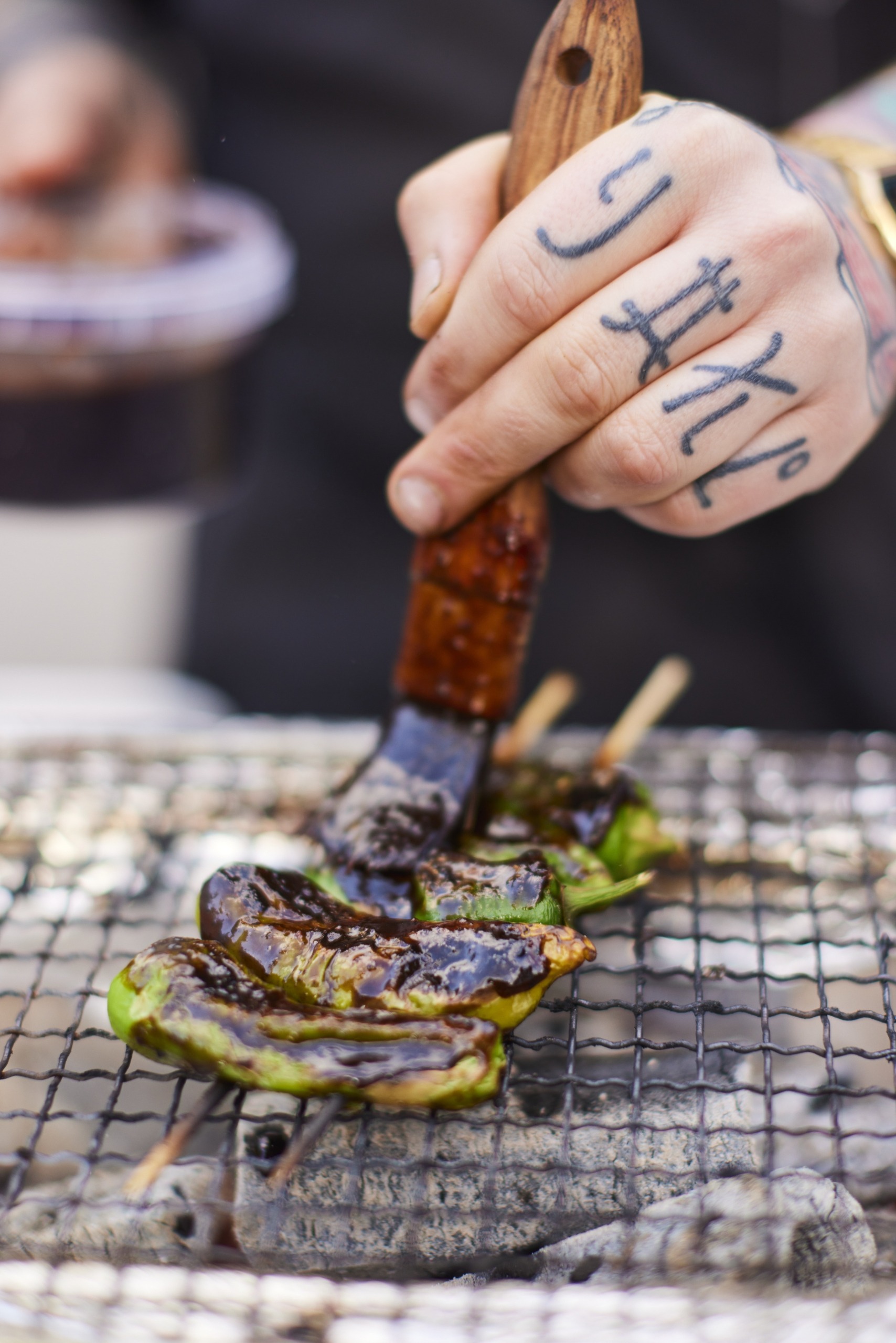
Vegetables take centre stage of the menu at Acme Fire Cult
Where does the name Acme Fire Cult come from?
‘Acme’ comes from the Greek word akmē, which means ‘highest point’ or ‘pinnacle’; basically the point at which something is at its best. It’s also a reference to the Acme Corporation in the American short film series Looney Tunes, which supplied everything from anvils and glue to bird seed and matches. With our aspirations to have multiple things going on at once, we felt like it was a suitable name! The ‘cult’ part comes from the fact that Acme is more than just a restaurant.
It’s supposed to be fun and quirky – more like the name of a band or a biker gang. And, let’s be honest, it stands out from less imaginative restaurant names.
Can you tell us about your low-waste menu – how do you make use of beer brewing and bakery by-products?
We’re just very conscientious about what ends up in the bin. Many products still have value after their initial use so, before we throw them away, we put our waste through various processes such as pickling, fermenting, making it into stocks and molasses, or dehydrating it. We want to see if we can use the waste again. If we can’t, it goes in the bin, but quite often something interesting happens and we’re left with a product that can go back on the menu.
Having the brewery and bakery as neighbours means we can explore other by-products and excess stock ingredients too. We take yeast from the brewery to make our own version of Marmite; leftover sourdough is processed as mole and miso; while spent barley and rye grain can be dried and milled as flour, or baked into dog biscuits.
Why is it important to you that your menu is low-waste?
Low waste has become a bit of a buzzword these days, but really, it’s just good business practice to get the full value out of a product – especially with the cost of ingredients rising exponentially. We’re a small business and completely self-funded, so it would be irresponsible of us to be wasteful with ingredients. Also, as chefs, any opportunity to get creative with food should be embraced.
Where do you get inspiration for your menu from?
Most dishes have a traditional reference point – even if it’s not obvious. I travel a lot and always bring ideas back from my trips. Other dishes might come from a pairing of ingredients we already know works well or just the natural evolution of something we’ve had on other menus over the years.
At least half of the menu is plant-based, so we spend a lot of time looking at the market and growing reports for fruit and vegetables, and letting the ingredients dictate the menu.
Describe your style of cooking in three words…
Bold; playful; honest.
What three ingredients are always in your kitchen at home?
I always have a good hand-pressed extra virgin olive oil, like Honest Toil or Two Fields – something I can cook with but also drizzle on everything. A jar of salted anchovies is an essential larder commodity for sauces, pasta, or even just to have on hot buttered toast. And a can of coconut milk, in case I want to make a quick curry or soup.
What does food mean to you?
Food is magic. I love what it can do beyond fuelling us; it brings people together, making friends out of strangers. Cooking has given me so much to be grateful for; it’s helped me through some rough times in my life. It can be meditative and cathartic – especially when fire is involved!
Visit Acme Fire Cult at Abbot Street, London E8 3DP; @acmefirecult; acmefirecult.com