In conversation with… Natalia Nicolau, founder of Ambar
Words Augustine Hammond and Natalia Nicolau
Hero Image Megan Gallacher
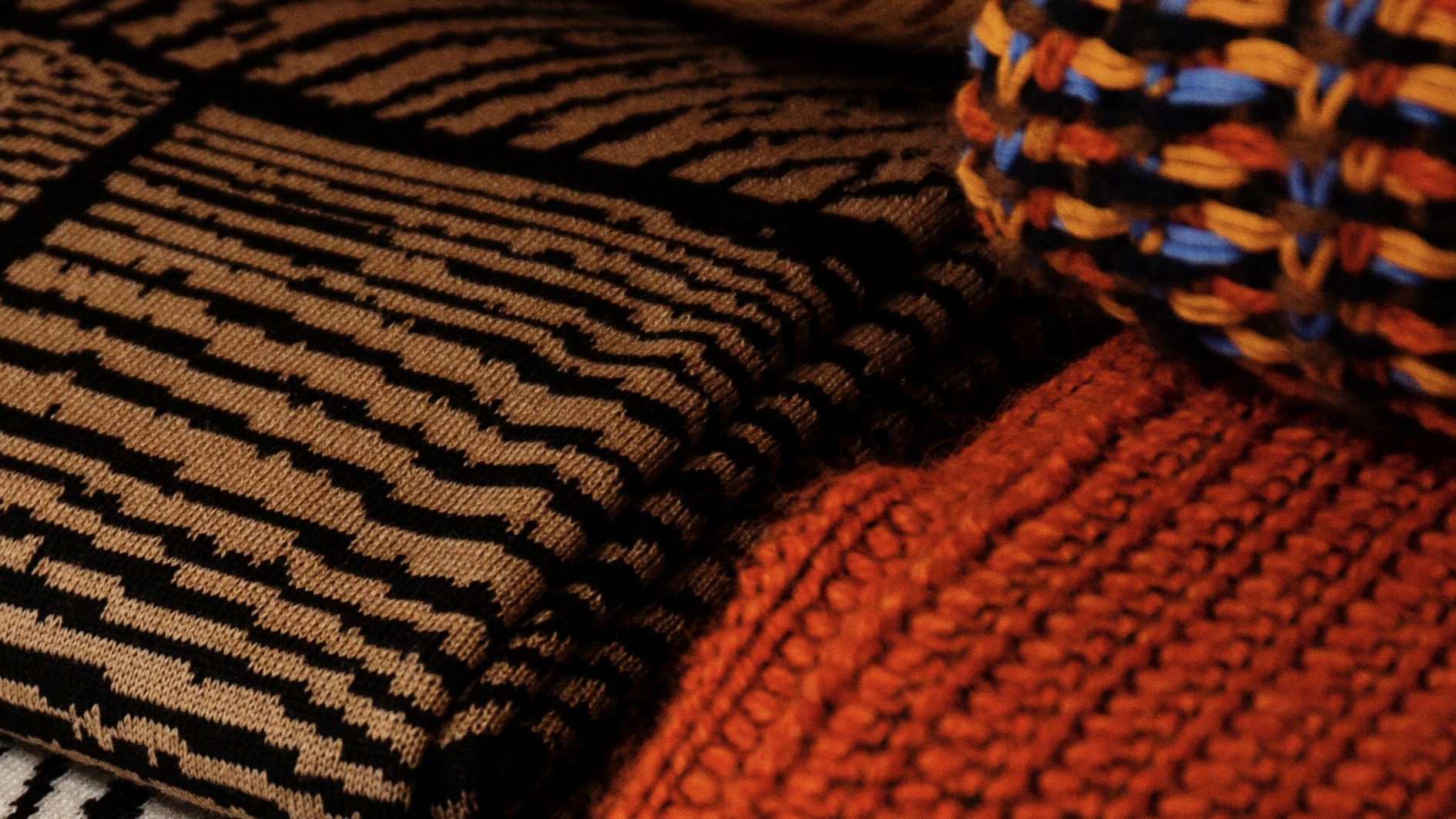
London-based lifestyle brand Ambar focuses predominantly on bespoke and collaborative projects through the versatility of knit. From cushions and throws to accessories and tableware, all designed and manufactured in the UK, Ambar taps into the tactile and graphic qualities of knit, to offer bold and bright soft furnishings for the home. For its latest collection it is introducing a range of wraps and scarves to complement its range of blankets and cushions.
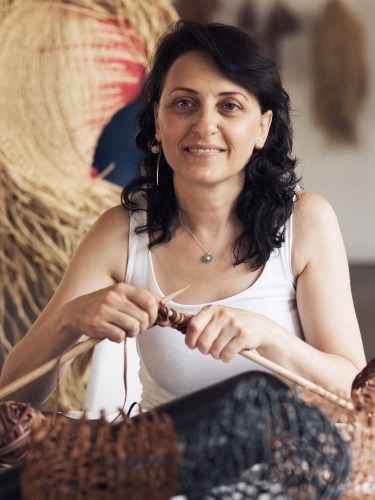
Launched by knitwear designer Natalia Nicolau – after a decade-long career in textile development and a degree in architecture – Ambar marries advanced knit technology with traditional references to create special pieces designed to last. Hole & Corner spoke to Nicolau to find out more about Ambar…
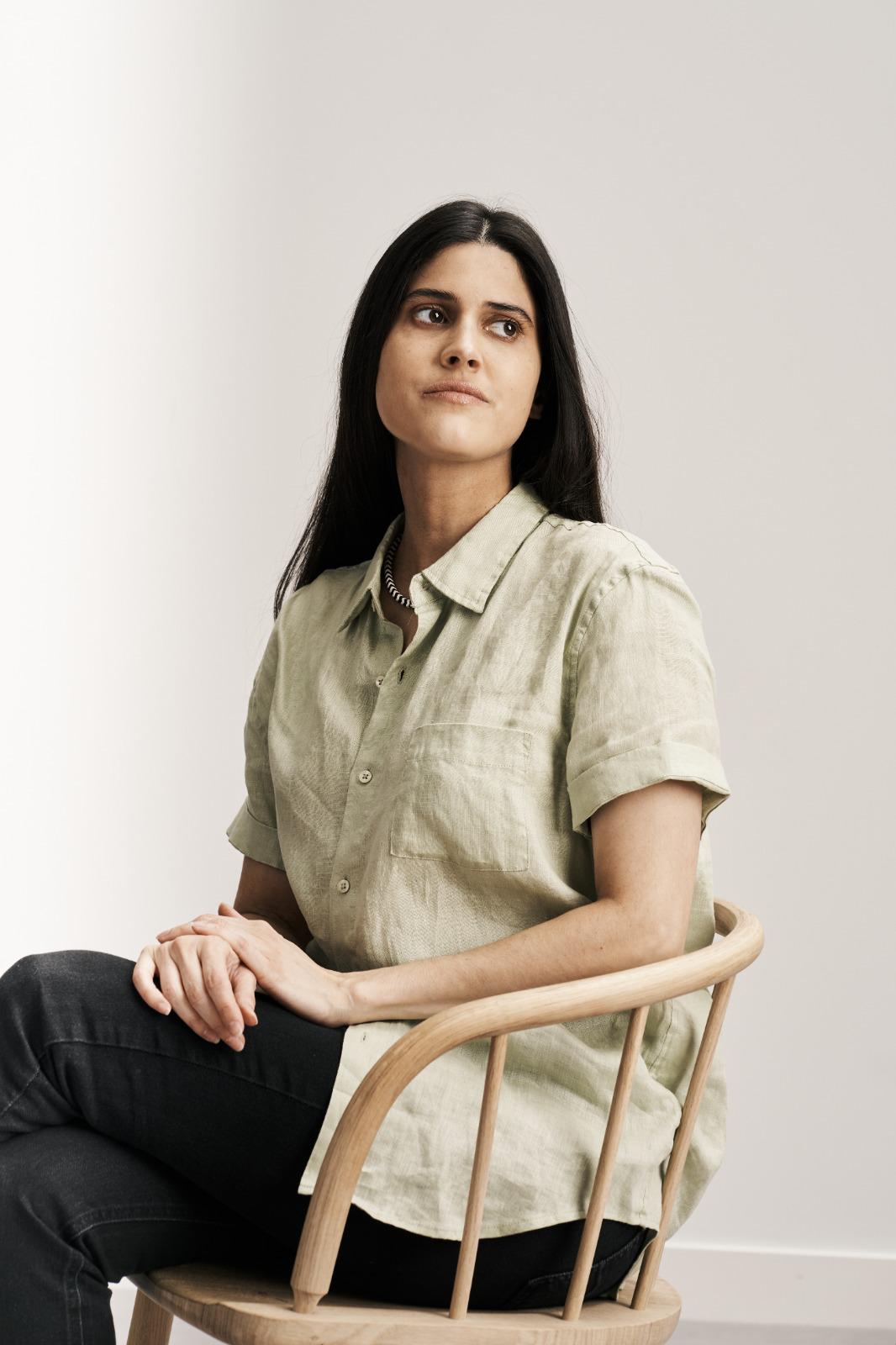
Natalia Nicolau, founder of Ambar
Tell us a bit more about Ambar, who’s it for and what is it about?
We are a textile design and development studio called Ambar, which is a lifestyle and homeware brand inspired in a large part by other disciplines of craft. Some of the designs are based on wood marquetry, which is something I really appreciate. We also look to furniture making – the curves and details inspire me to create textiles. My background in architecture means I have different interests in material textures and that is what informs the textile quality of what we’re creating.
Ambar is for people who are comfortable enough with their identities that they can look at an item and think how it can represent them in their homes. This is something that we’re so used to doing with fashion and during the pandemic people started caring a lot more about how their homes look and began appreciating how homewares can also represent identity. There is always a lot of contrast between colours in what I do and bright pieces that will bring you joy but also make a statement.
What other things inspire you when you’re designing?
I look to wood a lot, but I also focus on other textile techniques such as weaving. When I visit a museum or when I travel, I usually look for locally made textiles and then I try to understand a bit more about the techniques used and the reasoning behind them. What inspires me the most about other textile techniques is the process and history; this is what I try to reflect when creating a collection.
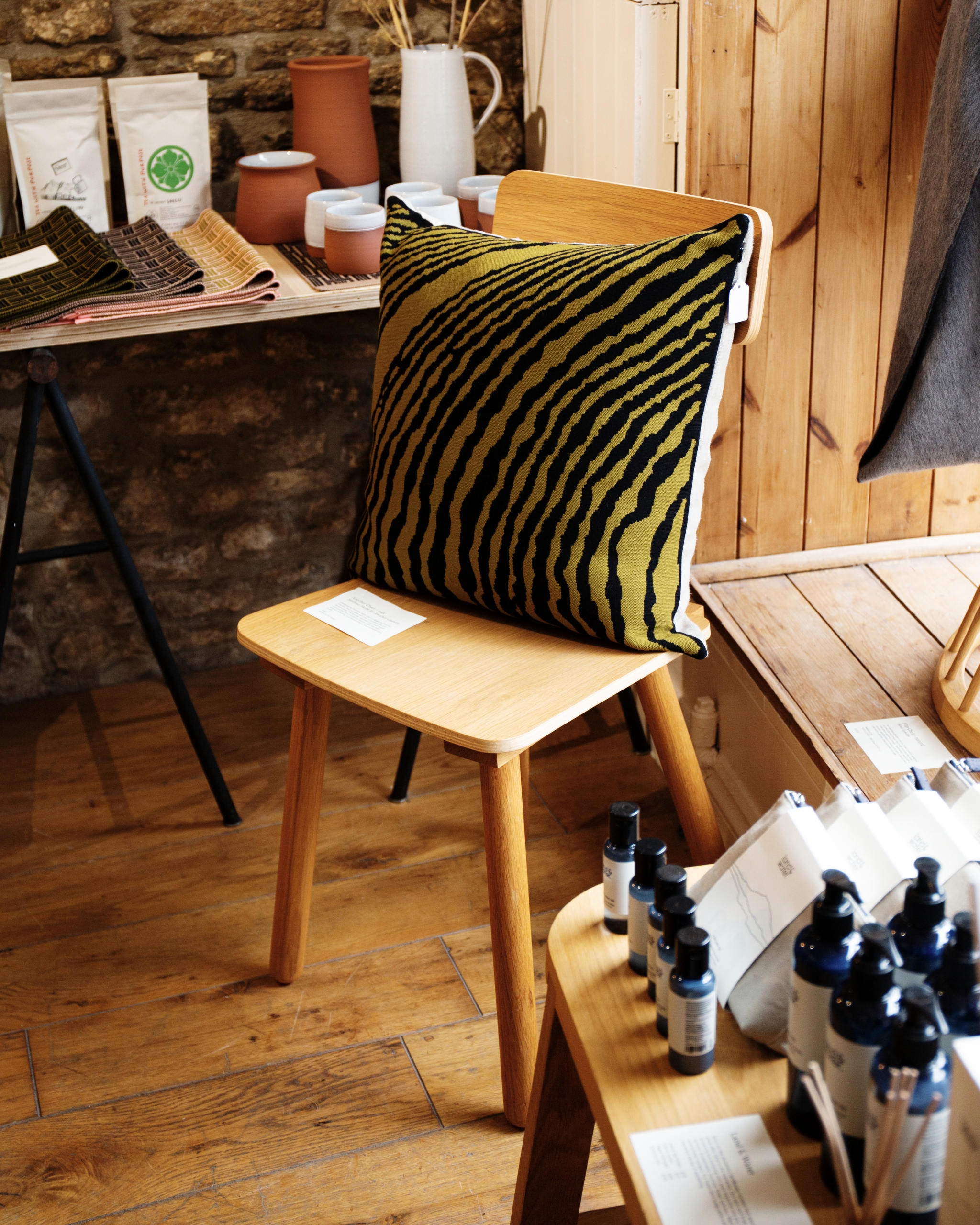
Ambar Wood Block cushion in Moss, available at the Hole & Corner Shop, Bruton
Are there any other making processes that you employ when you’re producing a collection?
Other than honouring the history behind my references, I also have to respect the materials I am using; this is also something that comes from my background in architecture and fashion. We have to do a lot of testing and prototyping beforehand because knit can sometimes be unpredictable. This helps me understand the potential of the yarn and materials I am using, and how they respond. We work mostly with wool and are hoping to work solely work with cashmere and wool as we evolve. Wool has so many interesting qualities, so the more I learn about it, the more I can push to make a better product. The fact that wool is thermal regulating and has anti-bacterial properties interests me.
How did you make the transition from fashion to homewares?
The transition came from experimentation with knit. I used to do textiles development for fashion, so I worked with different factories producing weaving, embroidery and I noticed that knitwear was the field in textiles that was presenting the most innovation. Knitwear is what brought me to the UK from Brazil actually. The jump from fashion to homewares happened because I didn’t want the textiles I was producing to fall into the cycle of fashion. I was used to working at such a fast pace and hated the idea of things being wasted. Ambar is for keeping, it’s not seasonal, gender or size-specific and it can be used by everyone in the family.
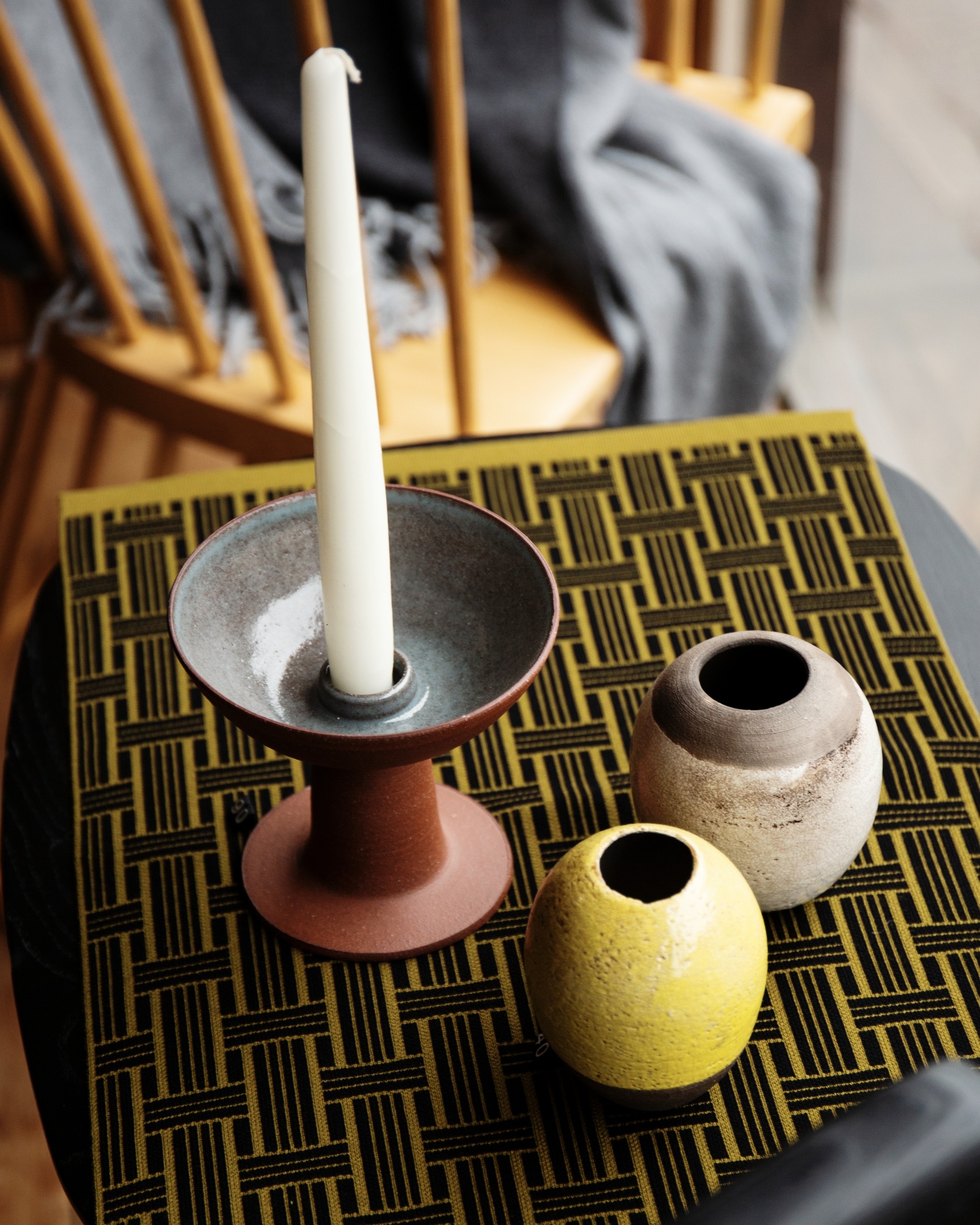
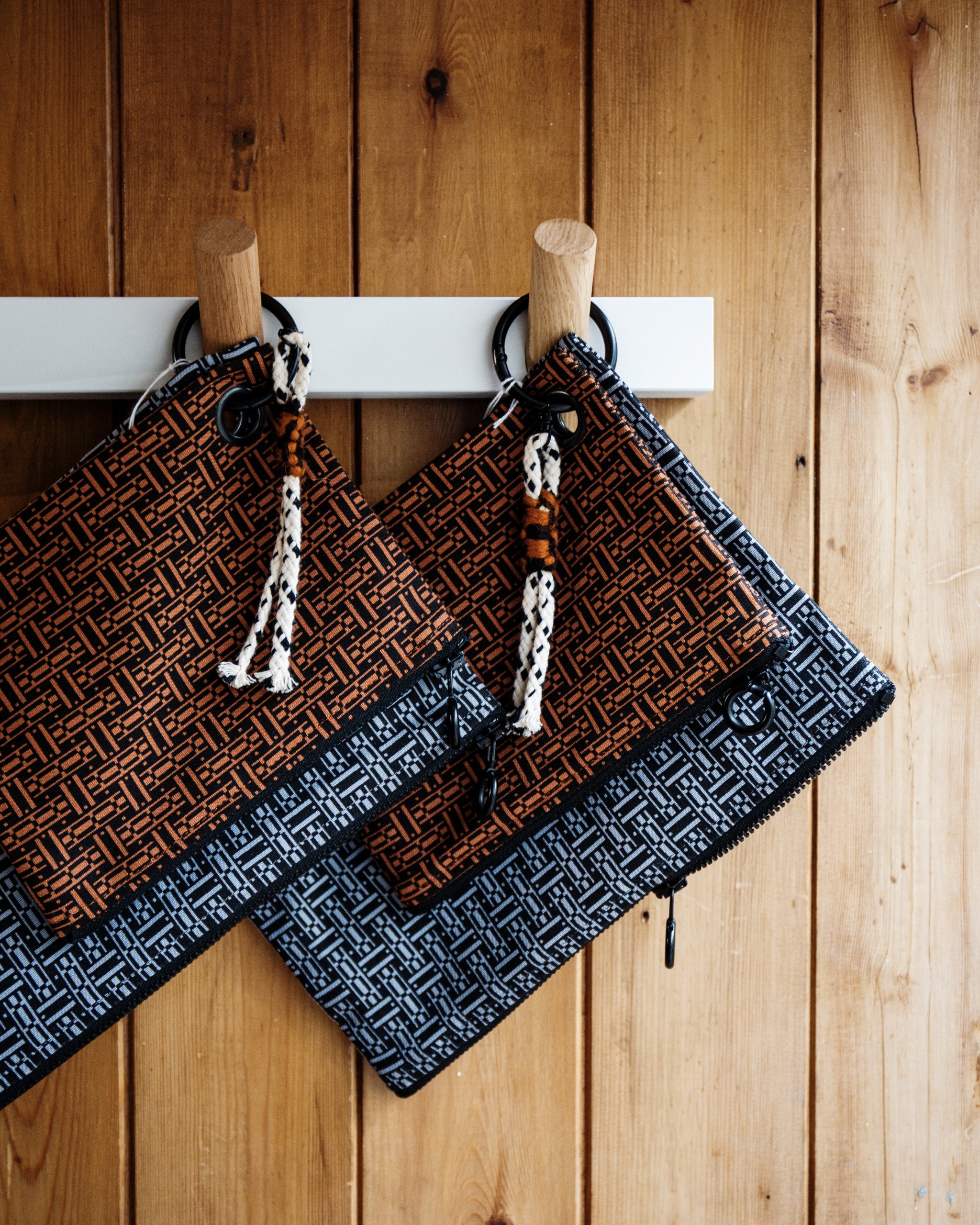
Ambar Basket placemat and storage pouch sets, available at the Hole & Corner Shop, Bruton
Tell us more about your manufacturers. What is your relationship with them like?
I was lucky to find a UK-based manufacturer that placed a bet on my products. I took some of my prototypes to them without the means, following or clientele to place a large-scale order, but they liked my project so much that they were willing to take a risk with me. They had this trust in my project that it would grow slowly but surely, and it did. I couldn’t have done it without their support because I was able to place bespoke orders that aligned with my desire to not be wasteful. They have been so welcoming and supportive of my project from its very beginnings.
I think that being crystal-clear with my manufacturers from the beginning about the small scale of my project meant that I was able to be transparent about the brand’s intentions. When you have a strong ethic from the start – from the yarn you are buying to the manufacturing process – it’s so much easier when you have nothing to hide. There is nothing to embellish here, for me the story is already beautifully knitted together.
Tell us more about your latest collection?
This is Ambar’s first collection that is focused mainly on accessories. Even though the company remains a lifestyle brand at its core, the new collection was born out of the intersection between interior design and fashion. We imagined how our fabrications would transition from an intimate sphere such as a living room to a social setting.
Composed of light and breezy scarves, knitted wraps and handbags, this range offers key pieces to express your style and individuality keeping the focus on comfort, longevity and tactility.
What are your future plans?
As a textile development studio, we are increasingly focused on exploring wool and its many amazing properties throughout our range. Our latest collection is entirely made from a variety of spun wool yarn, and we hope to do more of this moving forward.
This story was brought to you by a valued Hole & Corner Partner.
Hole & Corner works with Partners to tell stories of dedication from makers, brands and institutions.
Our Partners allow us to continue to celebrate makers and artisans, as well as support the writers and photographers who create such impactful and beautiful work together.
To find out more about becoming a Hole & Corner Partner, email jade@holeandcorner.com