In the Studio with… Emi Fujisawa
Interview meena sears
photographs courtesy of Emi Fujisawa
Emi Fujisawa is a Japanese textile artist specialising in weaving and natural dyeing. She also produces her own collection of slow fashion garments, made using vintage fabrics. Having grown up in Japan, Fujisawa is now based in the UK.
Fujisawa’s initial interest in natural dyeing was sparked on walks home from Chelsea College of Art and Design where she studied between 2009 and 2013; on these journeys, she would collect leaves and flowers to experiment with making dye samples at home. In 2022, having developed her hobby into a fully-fledged practice, Fujisawa gained a particular curiosity about indigo dyeing, and, after much research, she travelled to Tokushima in Japan, the birthplace of traditional Japanese sukumo indigo dyeing. This ancient practice involves fermenting the indigo leaves for around three months before extracting the colour, and therefore takes longer than standard indigo dyeing. Fujisawa trained as a sukumo indigo dyer in Tokushima with her master, Aisyu Yano. ‘This technique is renowned for producing the richest, and deepest, blue colour in the world’, says Fujisawa. ‘It is fairly uncommon for natural dyers to use indigo, but I like to combine it with other plant dyes.’
A few minutes with Fujisawa is enough to realise how much she cares about her craft. Researching every technique thoroughly; from its history to its materials to the various possible methods of conducting it, Fujisawa has become an expert in weaving, natural dyeing, and vintage fabrics.
Tell us about your studio… Where is it, what is it like, and how long have you been there?
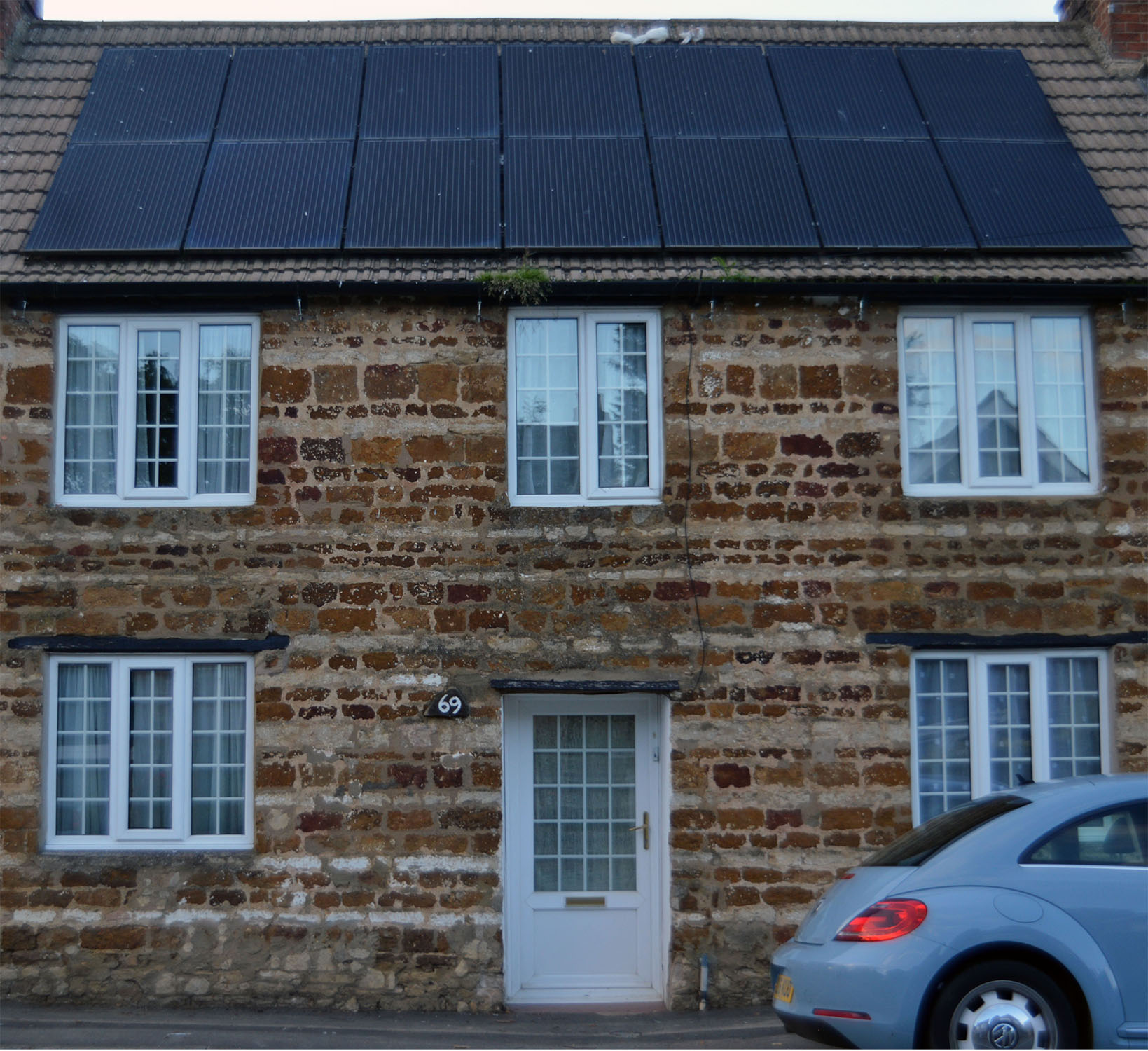
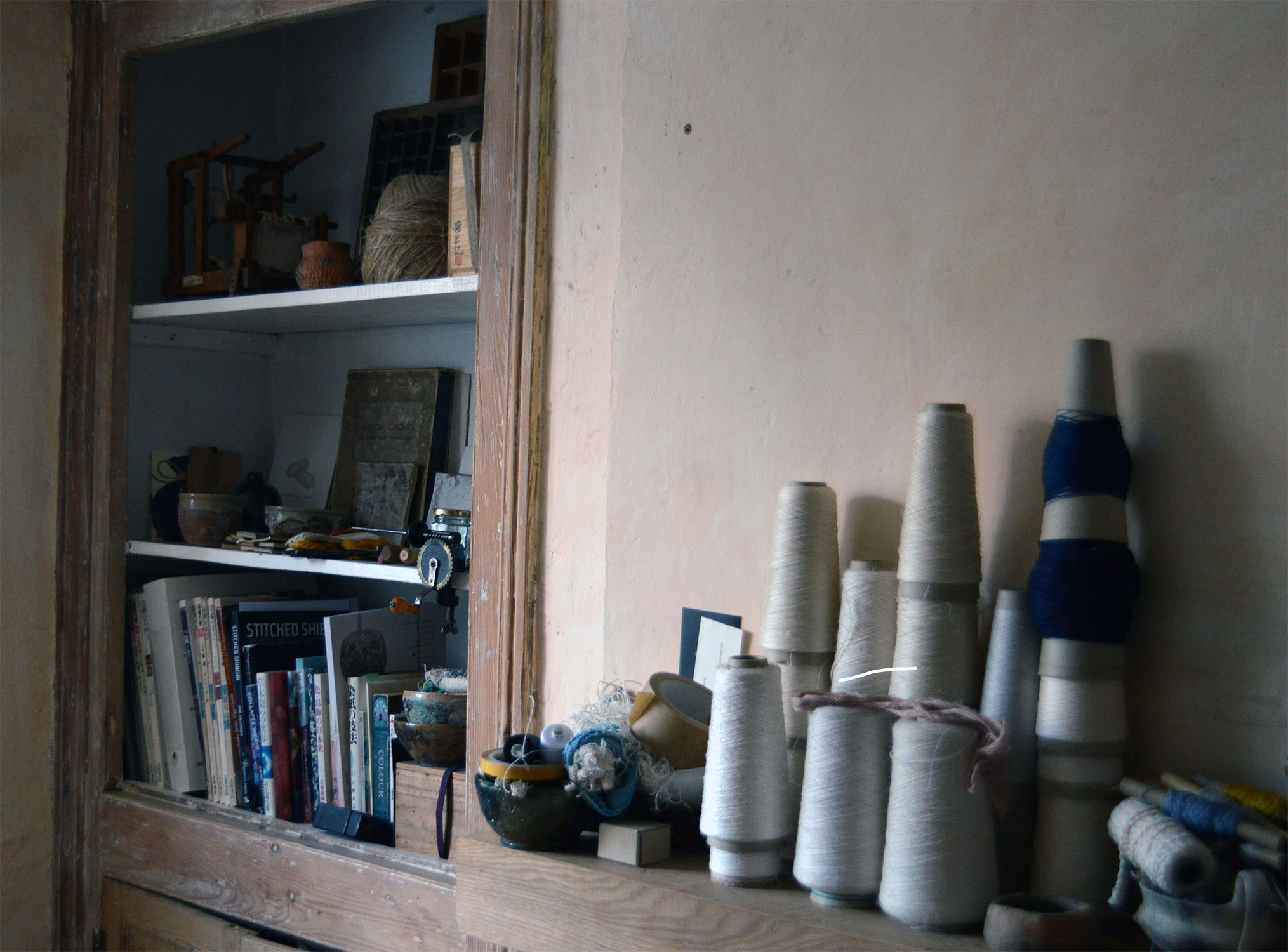
In April this year, my husband and I moved into an 18th-century cottage in Northamptonshire. Since moving in, I have started to learn more about how the property was built and the materials used to build it. I am thrilled to be part of its history by setting up my studio here.
We are still in the process of renovating a space that will be specifically for Japanese sukumo indigo dyeing; we are aiming for it to be ready by the summer of 2024. My husband and I want to preserve the cottage as best we can for the next generation to come, so we try to combine its original style with traditional Japanese embellishments and equipment.
Describe a typical day in the studio…
It depends on my workload. Currently, I am working on an order of slow fashion garments for a client, so in the morning I choose fabrics from my antique linen cloth collection and then I cut and prepare them for the following days of sewing.
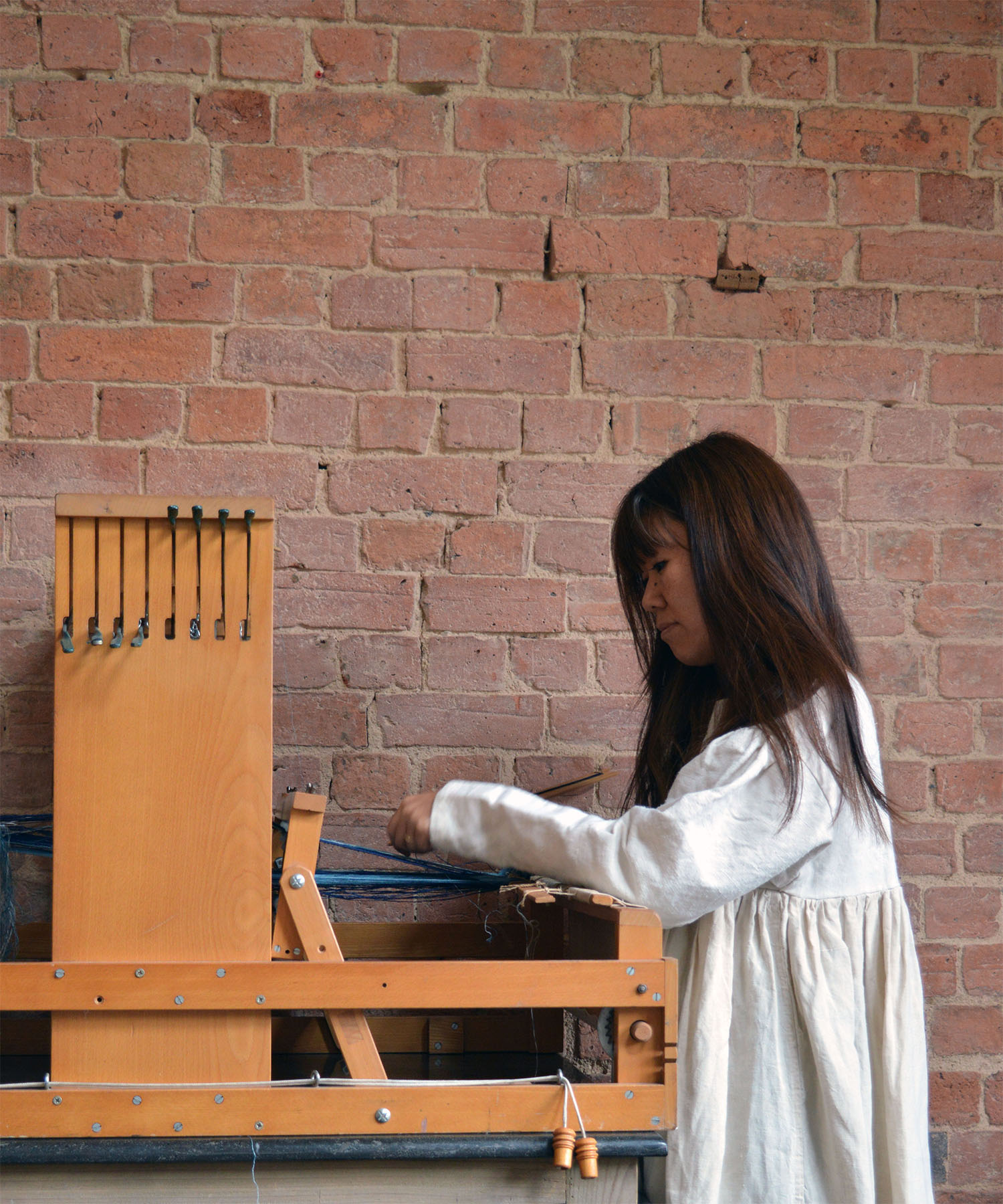
I also have some warp left on my loom from a previous project for the Aizome exhibition at the Japanese Embassy in London, so I have been doing some weaving in the afternoon.
At the end of the day, I always attend to the plants in my allotment, which I grow for natural dyes, as well as to process their fibres into yarn.
What do you listen to?
I listen to the church bells just across from my cottage. They ring every hour and it is such a good way for me to know the time.
When I weave or sew, I like to listen to instrumental music, sounds from nature, or slow jazz. I used to play the piano when I was a child, so I really enjoy piano music too.
Do you work alone, or with other people?
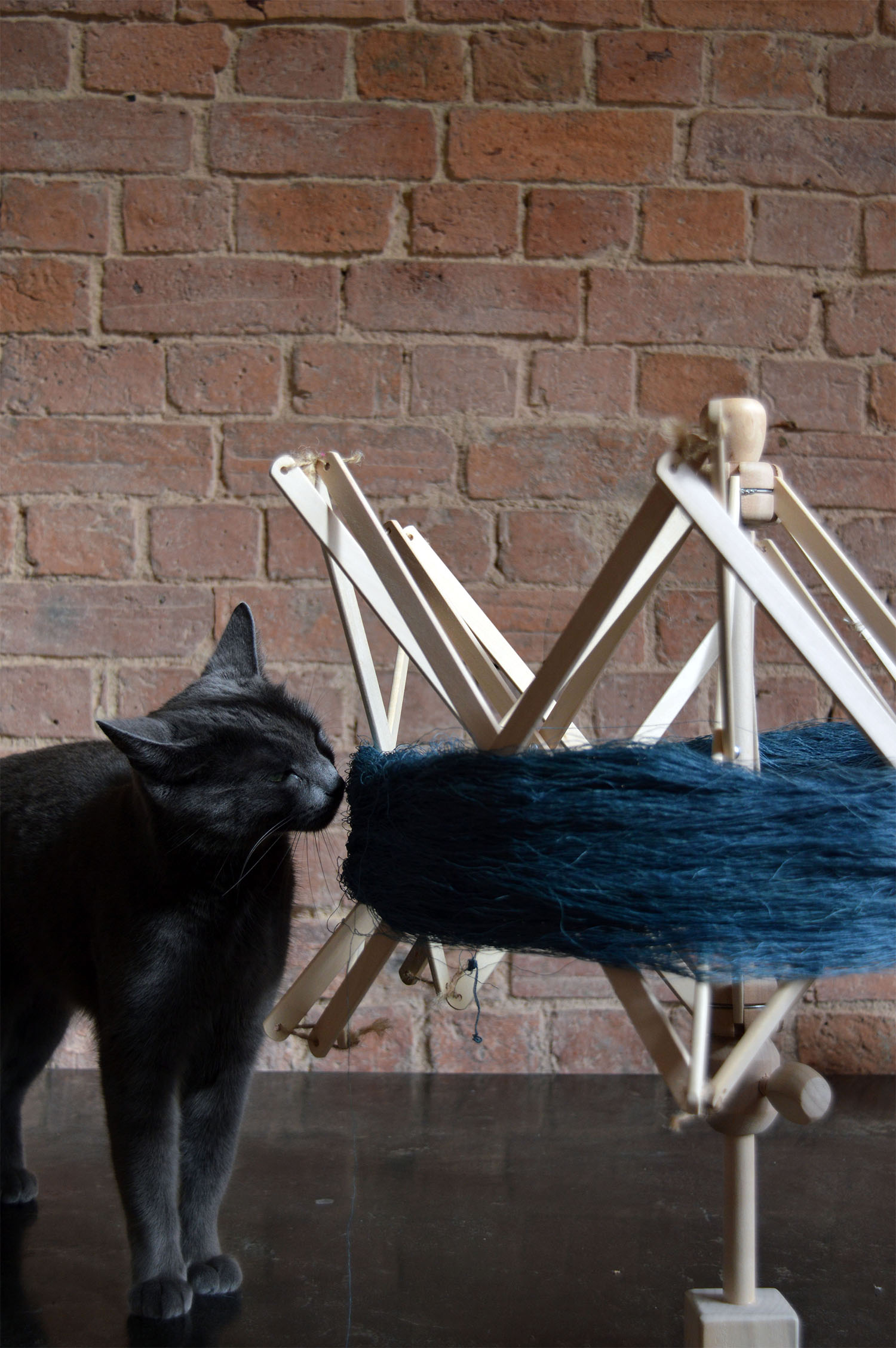
I work with my fluffy assistant, Miyako; she is a cat. She always comes to see what I am doing, plays with my umbrella yarn swift, or looks at the greenery through the windows. She sleeps on some of my textiles under the weaving loom. She is good company.
What is the view from the window?
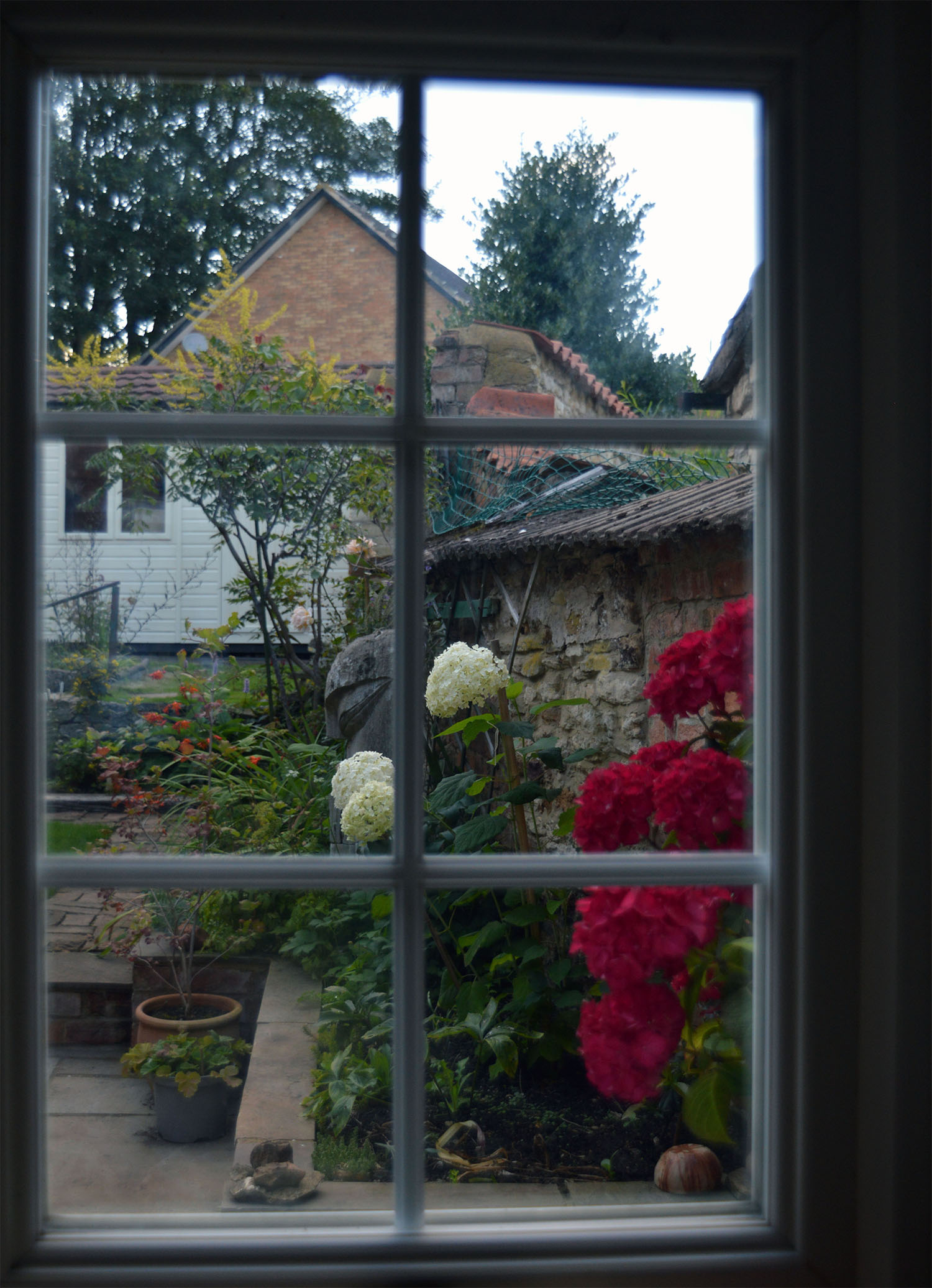
I have a view of my garden from the window. It has always been one of my dreams to have a garden filled with my favourite plants and flowers, and my husband and I have worked very hard this summer to harvest the wild garden of the previous owner. It is still a work in progress as my absolute favourite plant, wisteria, is missing. I look forward to seeing my garden next year, as the flowers and plants will be flourishing by then.
What are the most used tools in your studio?
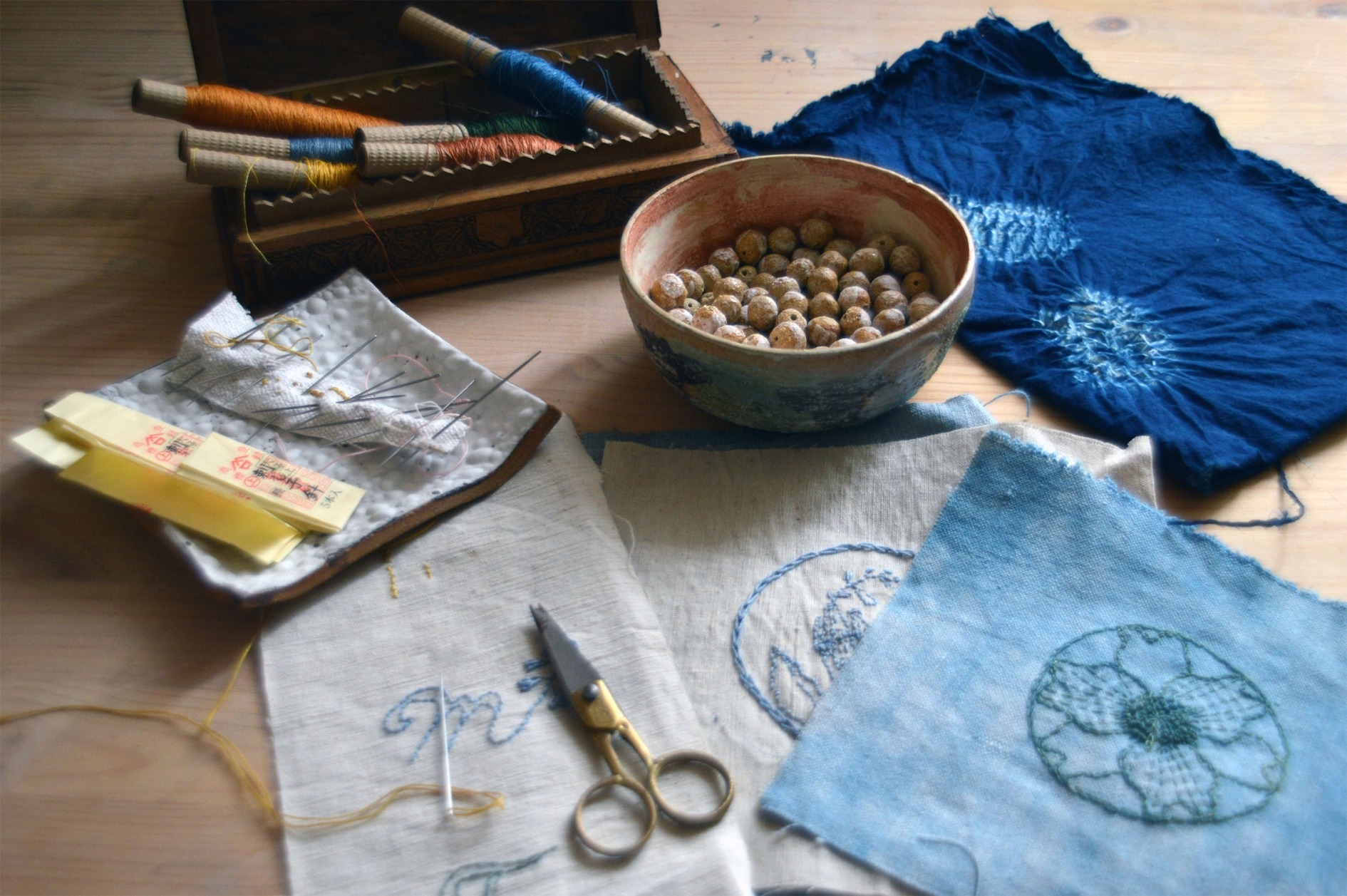
I use my sashiko needle, which is a Japanese hand sewing needle, for everything: sewing and finishing my slow fashion garments; fixing my weaving; hand embroideries; hand sewing shibori or tie-dye, and more. The sashiko needles from Misuya Chubei are of very high quality, having been made by craftsmen in Kyoto since the 14th century. Once you have used them, you cannot use other needles. They have several different lengths for different types of hand sewing, but the long ones cover all my work.
I like to use things that have a long history and that are made by skilled craftspeople; that applies to all my tools, not just the needles.
What are the most used materials in your studio?
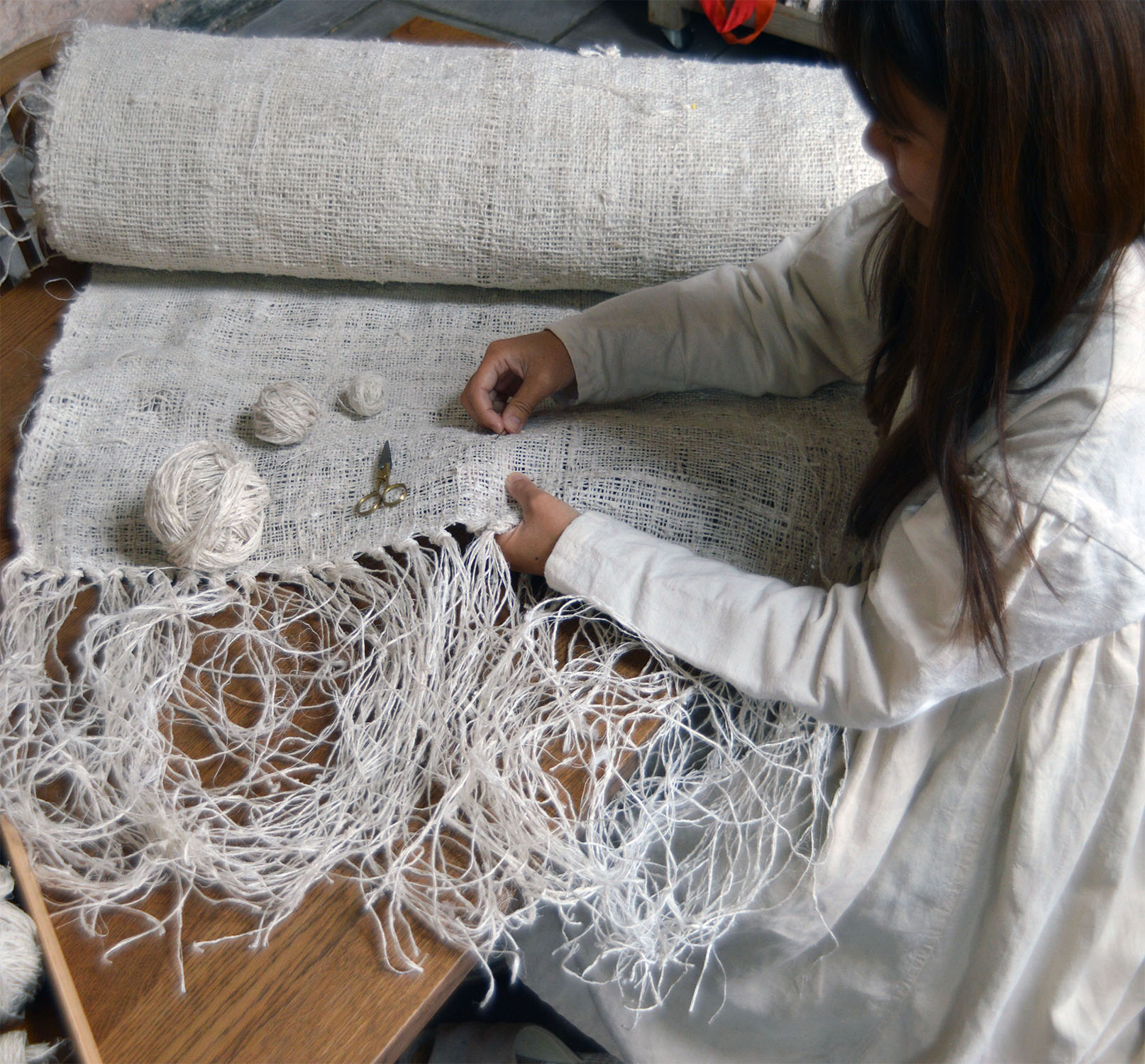
I have plenty of different yarns for weaving and plants for dyeing but I’d say my most commonly used materials are Kibiso silk, antique linen, and indigo, of course.
I have always used silk in my weaving, but one day, a few years ago, I decided to research the process of making silk yarn. I went to Japan to visit a cocoon farm as well as a spinning mill and, at the spinning mill, I found some textured silk left in a corner that turned out to be Kibiso silk. Kibiso silk is spun using the outside layer of the cocoon, which is unusual because it is hard and thick. But I just loved the texture of the Kibiso silk, as well as the story behind it. Since then, the owner of the mill saves it for me.
I collect antique linens for my slow fashion collection, and to use as design inspiration. Back in 2012, I had the opportunity of conducting a residency in Romania, Slovakia and Slovenia for two months. I had always wanted to go to Romania as I had once read an article about the importance of heirloom textiles there, and how each village has its own style of embroidery. Throughout the residency I was exposed to many different cultures within Romania: I stayed on a farm, visited different villages to learn about their textiles, and went to local markets where I started to collect fabrics. A Romanian friend gave me one of her family’s textiles, which I still treasure. Ever since then, I have collected antique, handmade textiles; I love to think of their origin stories.
I used to go to the antique markets in England to get vintage French fabrics, but since Brexit and COVID, these fabrics don’t seem to reach the English markets any longer. However, I have met a lady who lives in France and collects vintage fabrics from Europe; she brings me textiles when she comes to England to visit her family, which I love because it enriches the fabric with her story too.
I also grow my own flax and process the fibre into linen yarn, a technique I learnt in Slovenia when I was invited to exhibit at their national folk festival. So I use my own homegrown linen, as well as antique.
Do you ever work outside?
Yes, since I grow indigo plants and flax I spend quite a lot of time in the allotment between spring and autumn. I prepare the beds and sow the seeds in March, and then there is never-ending weeding and watering until it is time to harvest the plants in late summer/early autumn.
It is harvest season for indigo right now, so I am currently picking the leaves and taking them into the greenhouse to dry. This year, I am going to try making sukumo indigo balls, which is the fermentation technique used to make Japanese sukumo indigo dye.
What are you inspired by?
I am influenced by traditional textiles; by their designs, techniques, and materials. The ancient Chinese philosopher Confucius said that ‘We can learn new things from the past.’ These words inspire me to continue using natural materials, sustainable processes, and ancient techniques.
Since moving to England, I have realised how strongly I identify with some Japanese philosophies – especially wabi-sabi, which is a worldview centred on the acceptance of transience, and finding beauty in imperfection. It is about observing the effects that time and the elements have on nature and objects, in giving them an imperfect beauty.
I believe that, through years of living in England, I have developed my own style of self-expression, based on Japanese principles, but with European influences.
Emi Fujisawa is currently exhibiting at the Japanese Embassy until September 29; ‘Aizome – The Craft of Japanese Indigo dyeing’ brings together highly skilled indigo practitioners based both in Japan and Britain. The works on display vary from linen to leather to paper to pearl.
Visit ‘Aizome – The Craft of Japanese Indigo dyeing’ at the Japanese Embassy, 101-104 Piccadilly, W1J 7JT between 10 am and 5pm on weekdays; admission is free with a photo ID
On August 30, between 3.30 pm and 5 pm, Emi Fujisawa will be discussing her practice with fellow exhibitor and indigo practitioner Erna Janine at the Japanese Embassy
Reserve your spot for free