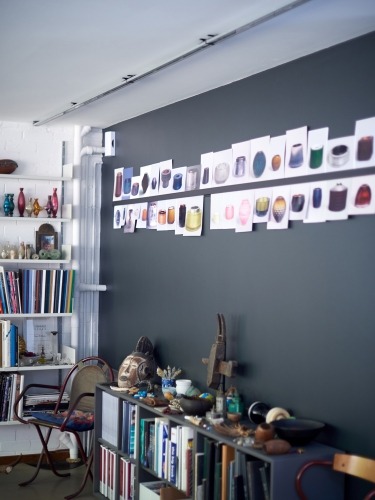
In the Studio with… Forest + Found
Interview by Verity Elliott
Photographs Courtesy of Forest + Found
Beginning their artistic journeys together at Chelsea College of Art, artists Max Bainbridge and Abigail Booth founded their studio practice Forest + Found six years ago while living and working in London. Practising both individually and collaboratively, their work spans a multitude of disciplines, always embodying a strong sense of craftsmanship. Working on projects as a team allows them to explore many different dialogues, giving them space for experimentation in both material and concept.
Continuously involved in exciting projects and exhibitions, Forest + Found were recently awarded recognition as part of the Jerwood Makers Open in 2019.
We caught up with Max and Abigail for another adaptation of ‘In the studio’ to learn all about their idyllic new studio in the heart of Somerset…
Somerset Studio
Tell us a little bit about your studio (where is it located, how long have you been there etc)?
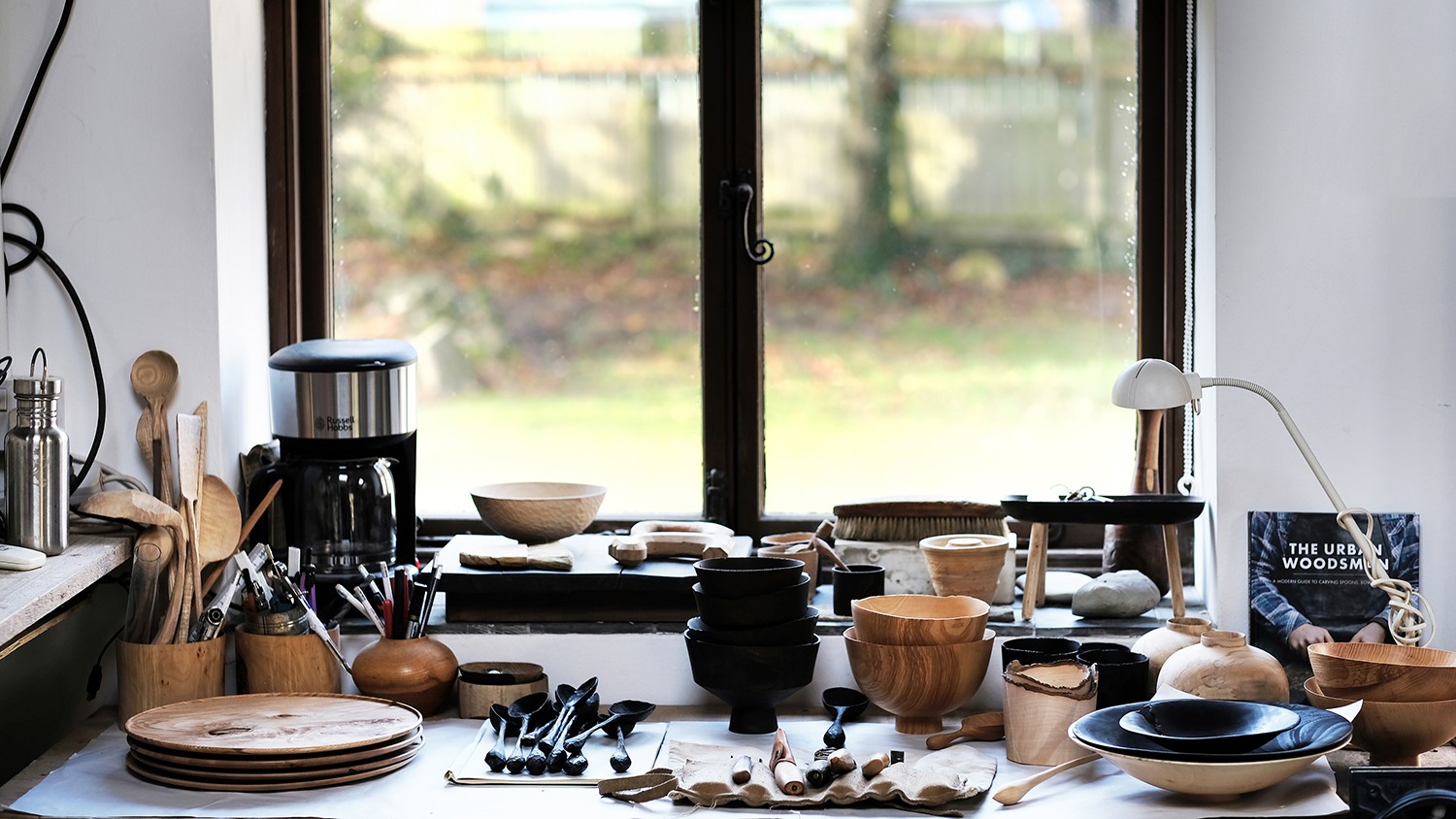
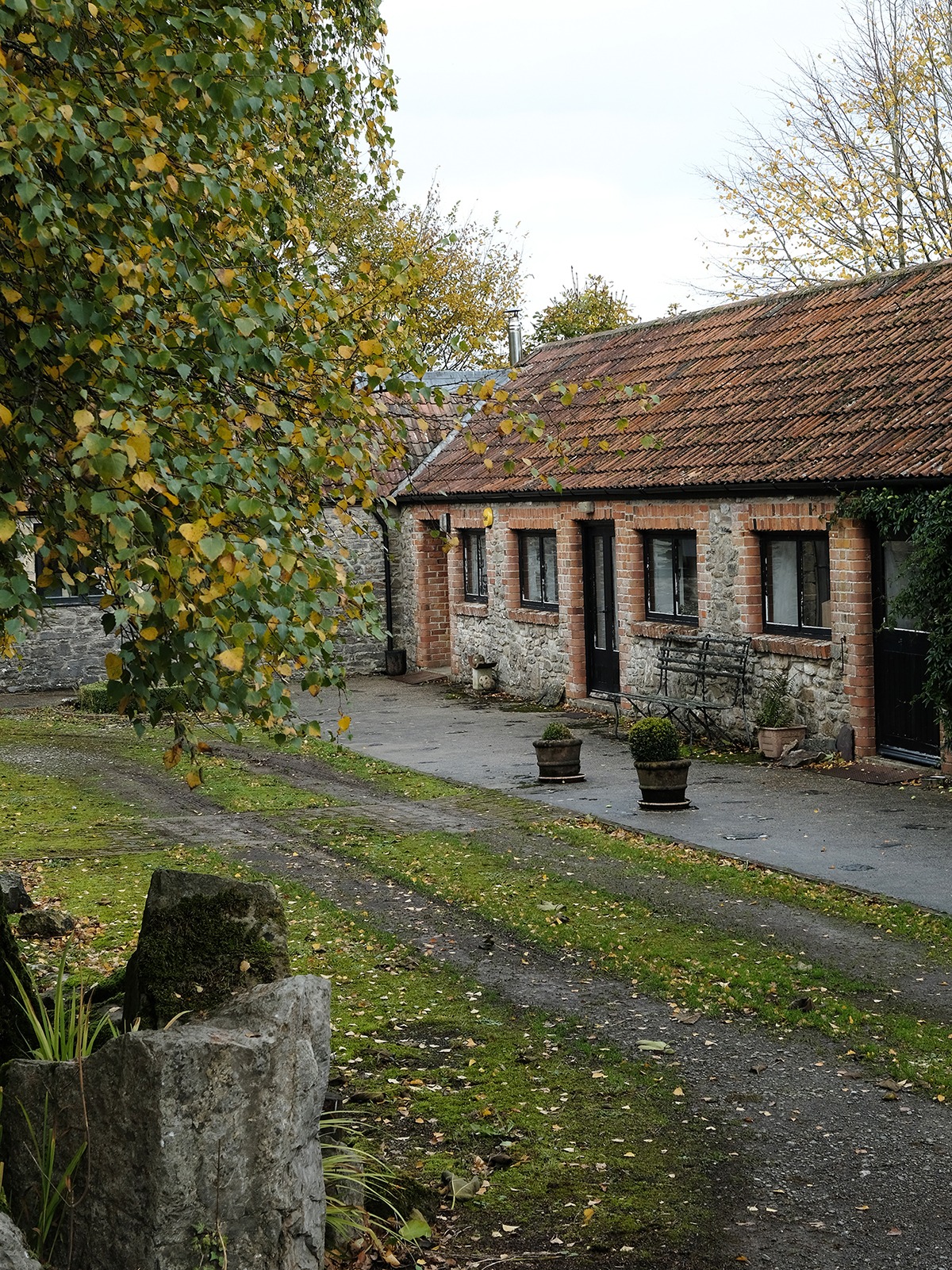
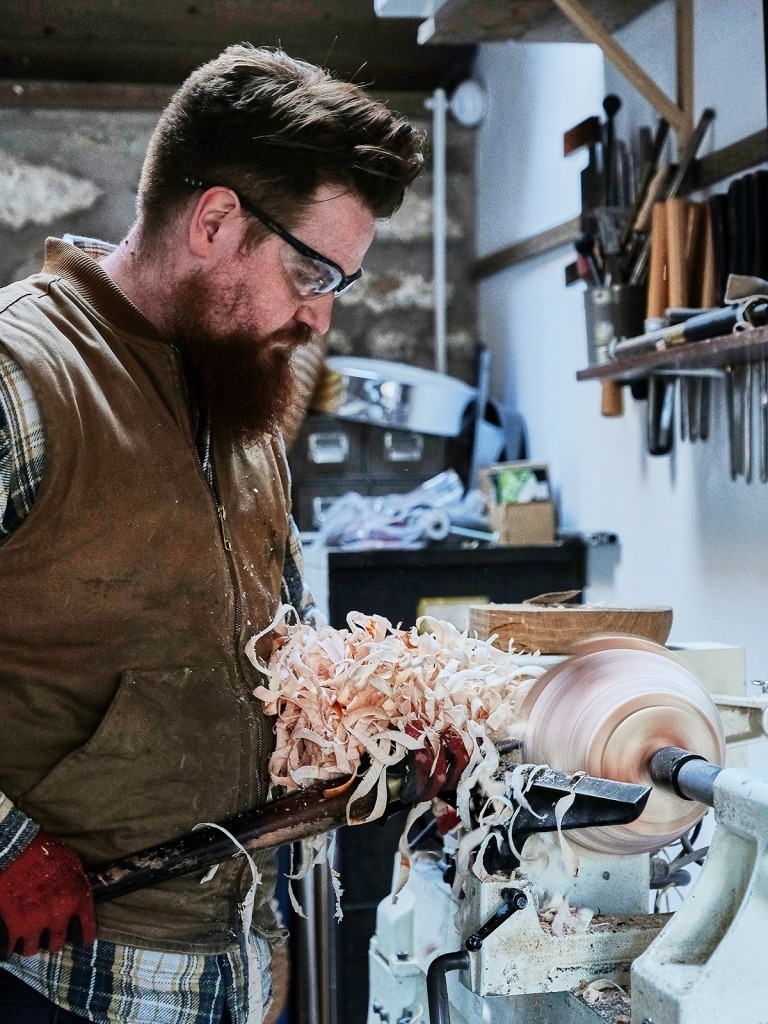
We have recently made the move from London to Somerset, and have taken on two new studio spaces that were originally part of a working farm that had been converted into a school several decades ago. Located on the Mendips, our spaces sit next to each other, but have their own entrances and are very much defined by our individual practices. Max’s space is set up with the main focus on his wood lathes, the largest of them sited in the middle of the space. Inside, the walls are made from the original stone of the old barns with large windows in the roof to let the light in. The wood burner heats the vaulted space, which leads out onto a covered terrace at the back that is used for working on larger carved pieces and preparing sections of tree.
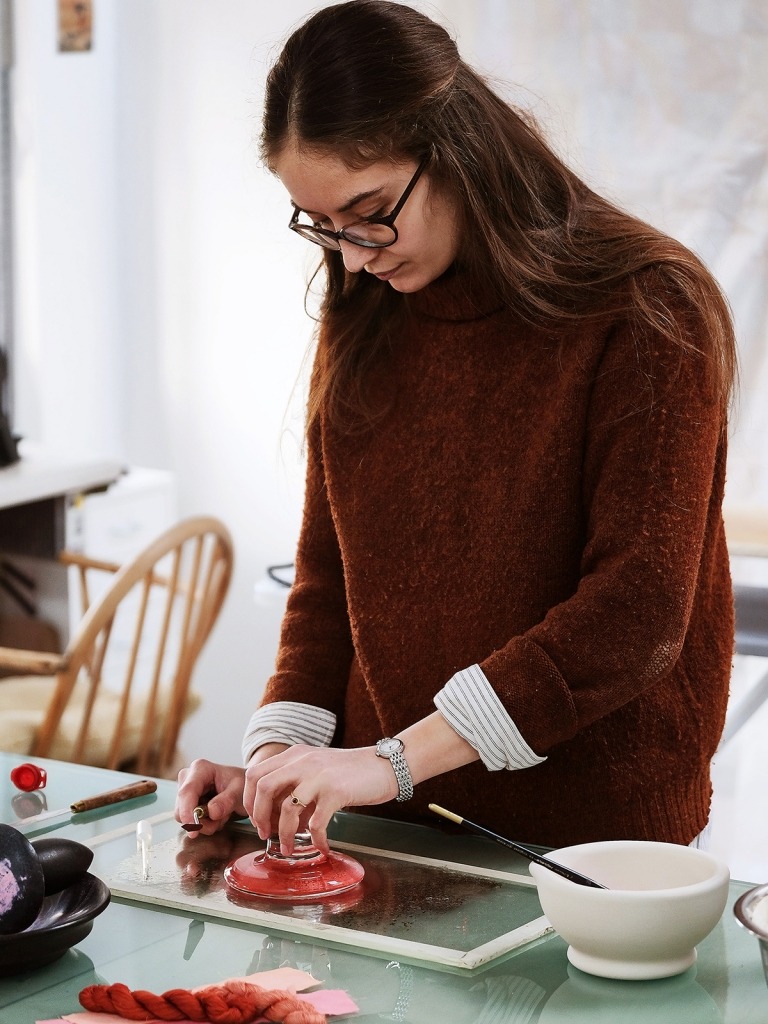
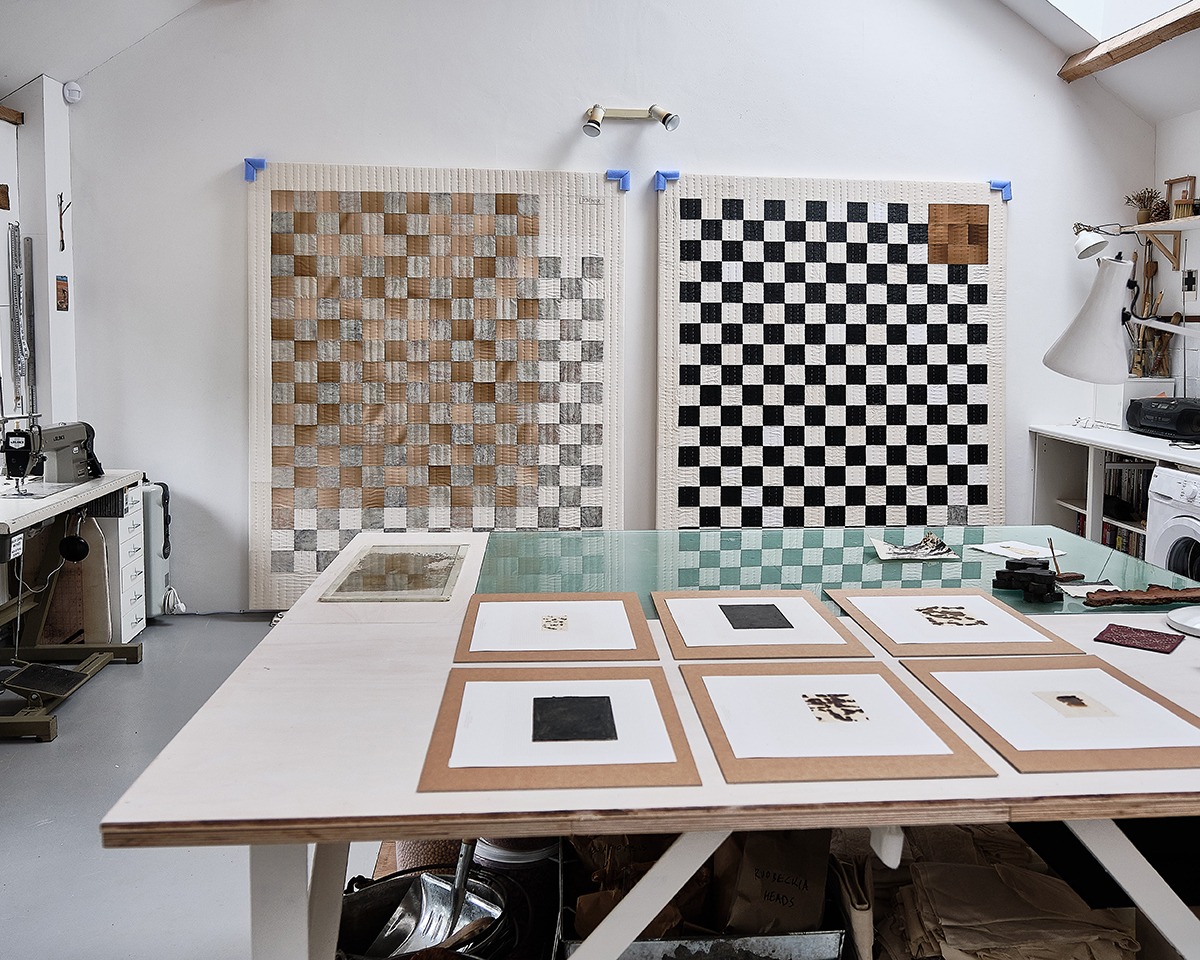
Abigail’s space is a large double-height room flooded with natural light with double doors opening out onto the grassy courtyard. In the centre of the space, a large custom-built work table is flanked by a full run of worktops with sinks, an oven and hob, and washing machine. Created out of the old kitchen, it has retained its atmosphere of quiet domesticity while being pared back to white walls and warm wood of the beams to instil a sense of peace and calm to work in.
 Abigail Booth
Paint us a picture – what sounds and scents would we expect to experience when visiting your studio?
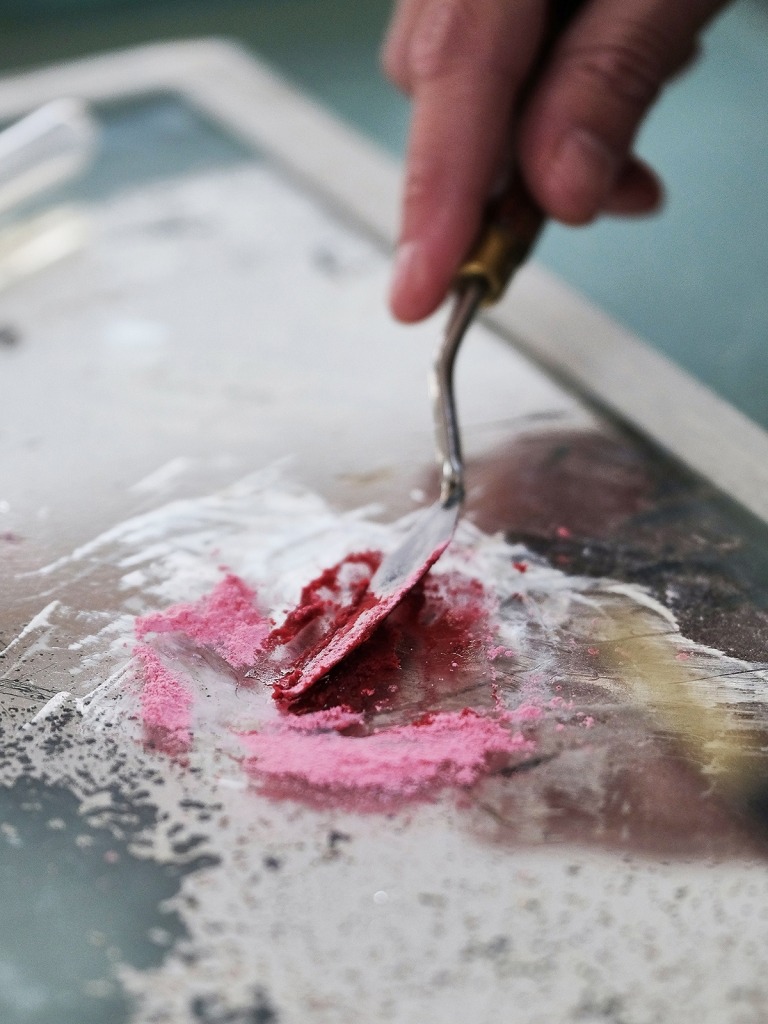
On arrival you will probably be greeted by two pet pigs, Tilly and Churchill, who live in the field next to the studio. They particularly like a good scratch behind the ears. Surrounded by fields full of sheep and cows and backing onto a working quarry, the studio feels very rooted in a working landscape, yet it has its own distinct magic with established specimen trees and gardens planted years ago. As you enter Max’s space you are greeted by the smell of freshly cut wood, smoke from the wood burner and the gentle hum of the lathe. Meanwhile Abigail’s studio has an ever-changing aroma of different dye vats, pigments and wood tannins, usually smelling sweet, earthy and aromatic all at once. Both spaces are simultaneously active and calm. The beauty of having moved to rural Somerset is the time and space it allows for us to experiment and evolve in more ambitious ways as we look toward to the next couple of years.
Which 3 words would best describe your studio?
Space, Energy, Experimentation
 Max Bainbridge
Is it a shared space? If so with whom?
We are very lucky to have our own distinct spaces. We were actively looking for somewhere that we could have the time and headspace to really get to work. However, there is always a sense of activity as the surrounding farms and neighbours are busy throughout the day, so despite being very rural there is a sense of community and familiar working faces that come and go.
Somerset Studio Space
What’s the most used item in your studio?
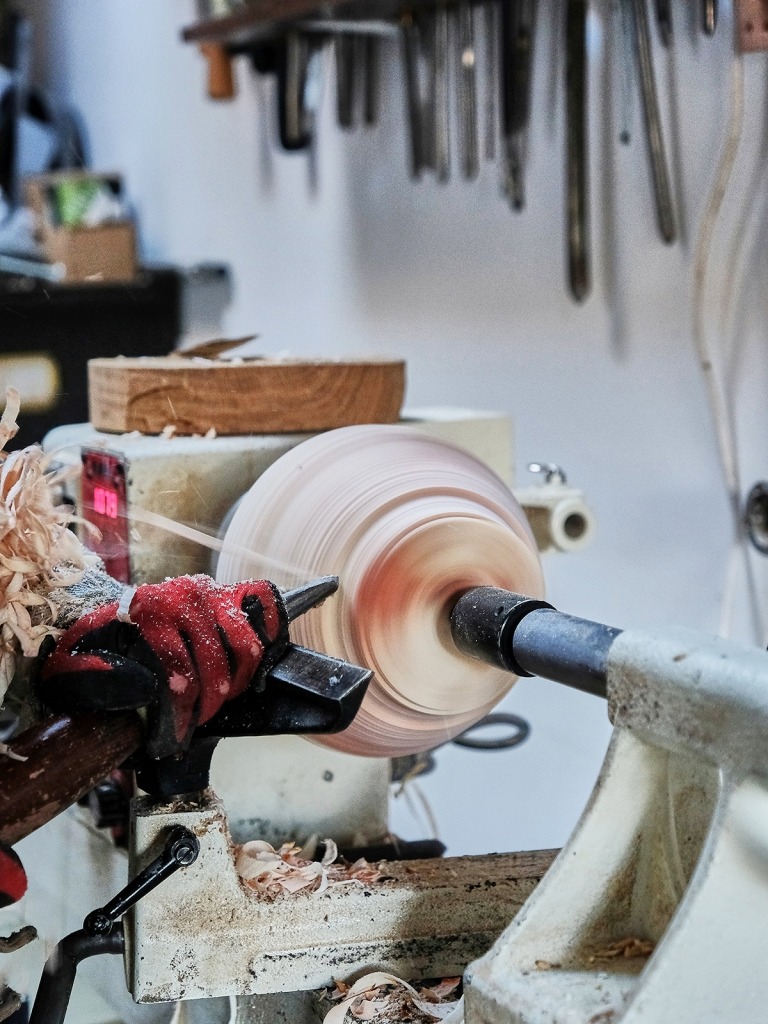
Max: My wood lathes are definitely what I use most and are constantly running. I have three different styles of lathe with each set up for making different kinds of work. I’ve made a lot of modifications to them over the years to maximise their capacity for working on larger sculptures. With the help of YouTube, friends and some engineering knowledge from close family, through trial and error I’ve managed to get them the best they can be for making my work.
Abigail: I am a real butterfly when it comes to tools. There are so many different processes that go into making my work that I have many different tools and utensils for very specific tasks. Although not necessarily the most used, my favourite objects are my pestle and mortars used for grinding pigment. They are such tactile physical objects in their own right.
What are you working on right now?
We are currently working on a series of new sculptural vessels and quilted paintings for upcoming shows throughout the year. Navigating scheduling with galleries during the pandemic has been like walking on shifting sand, so we’ve learnt to let go of certainty for a while and decided to just really knuckle down to making this winter, so that when the time comes, work will be ready. Hopefully the intensity of this period in time will allow us to produce even more exciting work than we would otherwise have done.