In the Studio with Lucy Whitford
Interview meena sears
Photographs Guy Lockwood
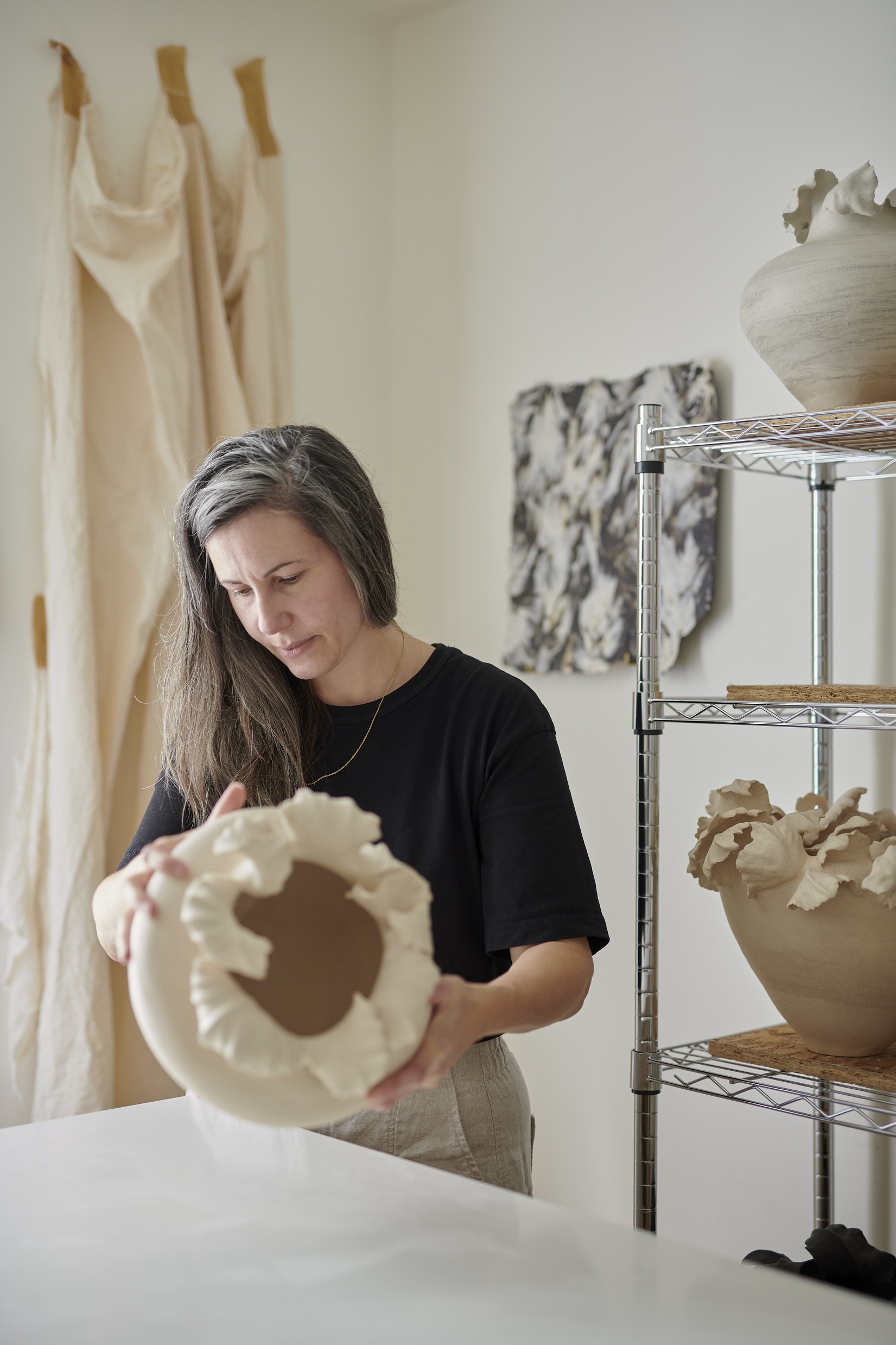
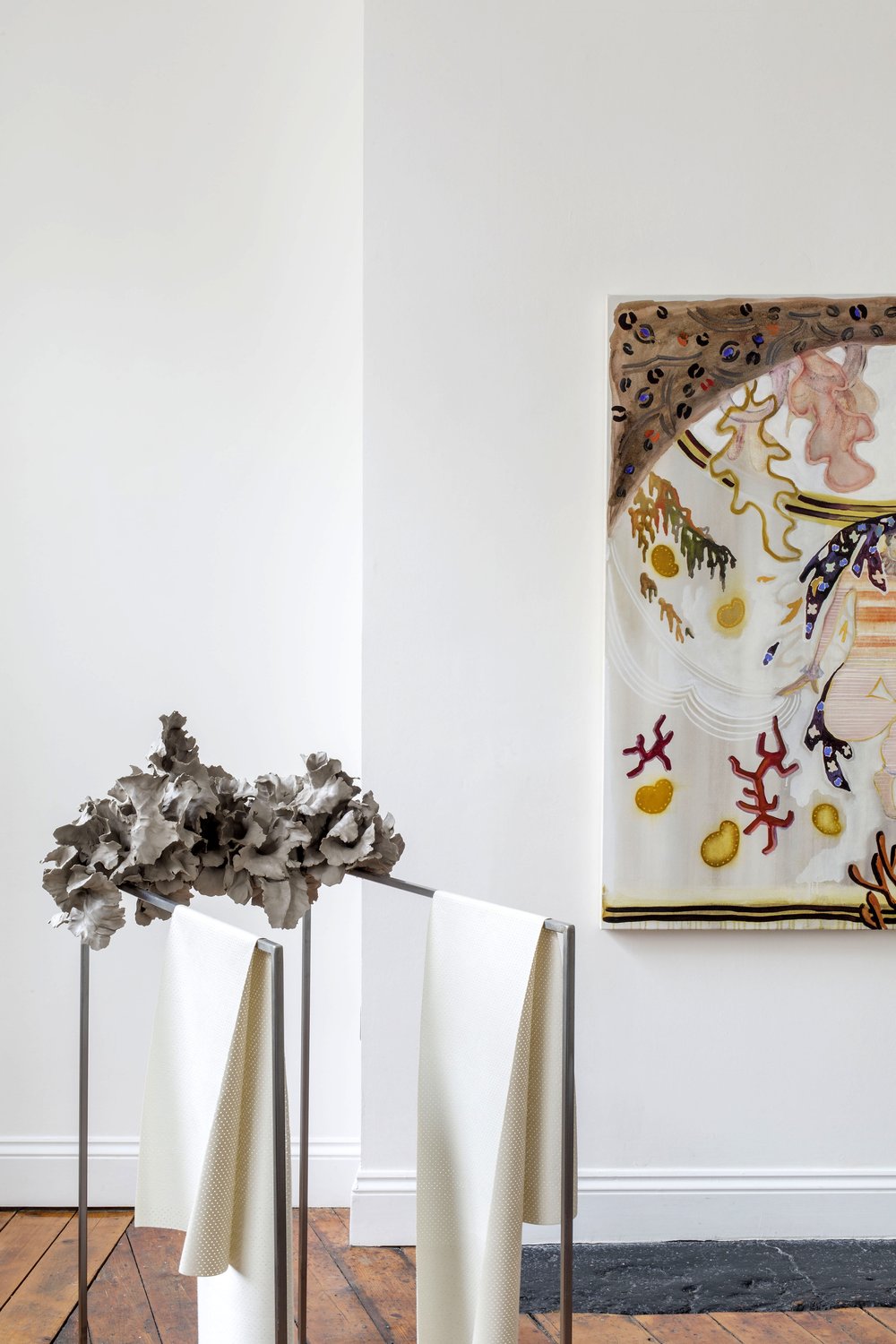
Lucy Whitford is an artist working in the medium of ceramics. Her vessels, which can be found in the Zabludowicz Collection, Soho House, and a number of private collections in London, Paris and New York, appear to unfurl from within, forming fragile, organic shapes that look like brittle leaves or soft petals. It is as if they might crumble at any minute in spite of their gritty, industrial texture – a juxtaposition that gives Whitford’s work its unique aesthetic.
Unusually, Whitford has been known to work in unfired clay, relishing the potential of the unstable material to crack, dry, and change over the course of an exhibition. For her new collection, however, she has been ‘deepening [her] understanding of how clay behaves in the kiln’. Having won The Artisan Collab’s Rising Creator Fellowship award earlier this year, Whitford is currently part of its exhibition at the 45 Park Lane hotel in Belgravia, alongside seven other international artisans; she is showing the works that have resulted from her deepened exploration of fired clay.
We talked to Whitford about how she balances work life with family life from her home studio in south London.
Tell us about your studio… Where is it, what is it like, and how long have you been there?
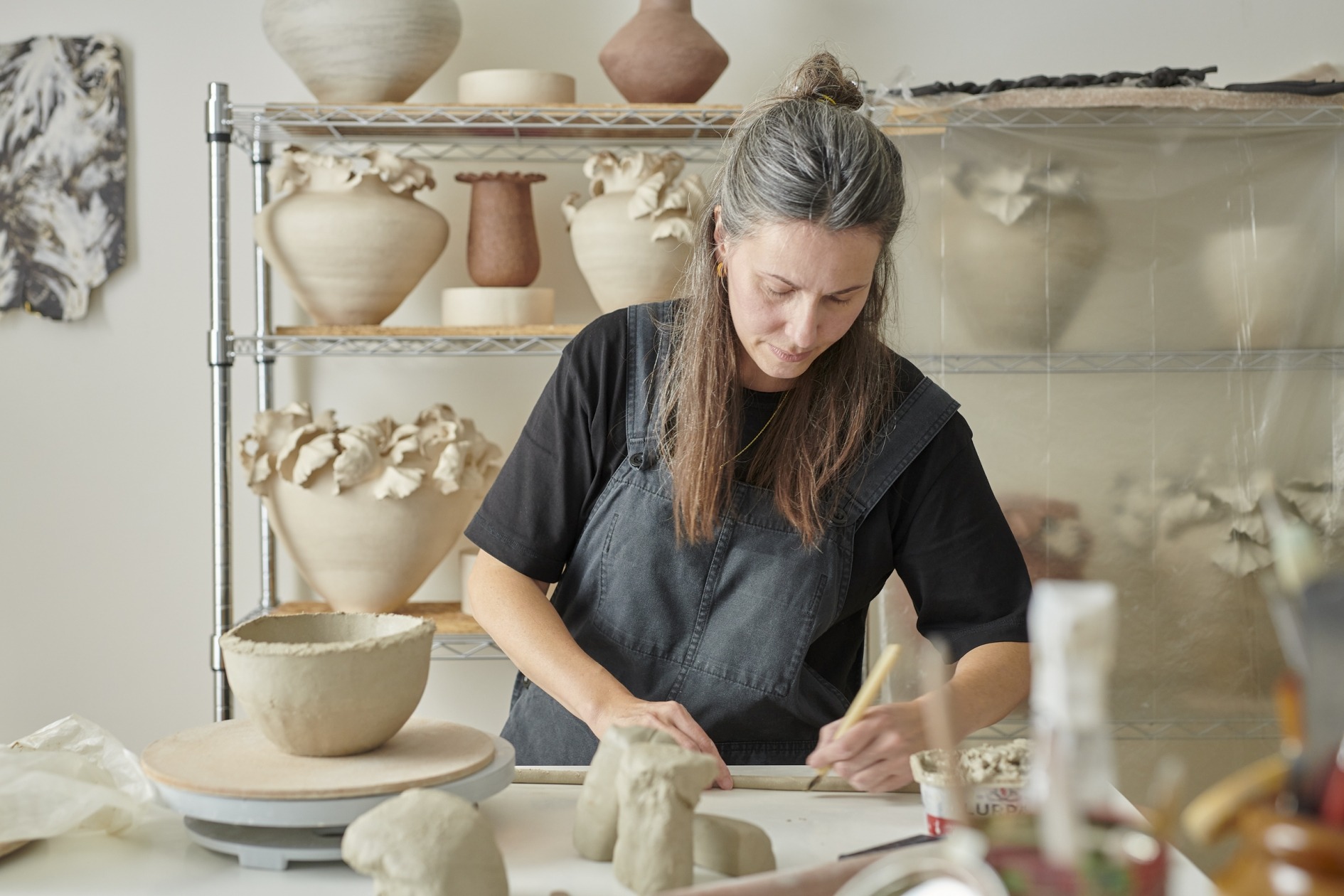
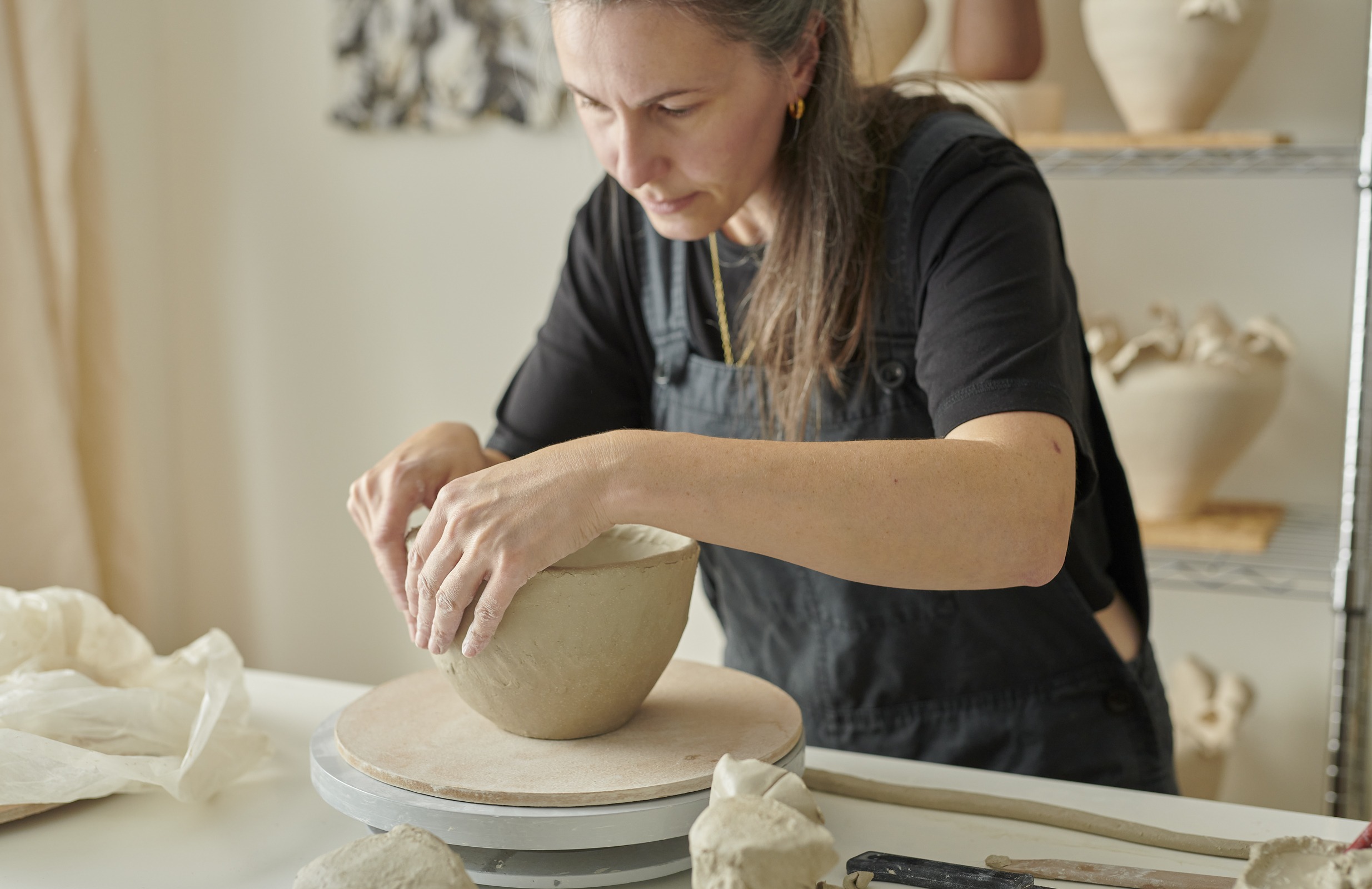
I am a Londoner, born and bred, and I have been living and working in South East London for the past 11 years. I have a home studio at the back of my house overlooking my small but very floriferous garden. It’s a relatively small, calm, light-filled space – by far the quietest room in the house.
Everything in my studio is on wheels: my workbench, my drying shelves, my toolboxes, and even the clay. It makes the logistics of making in the studio so much better – in spite of the sloping Victorian floor – because I can move all of the furniture around very easily, which allows the space to be adaptable for things like photographing my work.
Have you always worked from home?
After graduating from my MA in Fine Art at Chelsea College of Art, I always worked outside of my home, often sharing spaces with friends from art school. The move to a home studio is very recent, but in the short time that I’ve been here, I have noticed so many benefits; it’s been life-changing for me. I have the time and flexibility I need to be present with my young family and for my practice to grow without the worry of rent, security and travel costs. Here, I can pop my head around the door and have a think about something I’m working on whenever I want. Also, my husband often works from home so when we want company or a break from work we trade tea, coffee, and updates on how our days are going.
My mum was an artist and maker with a home studio, so this way of working seems very familiar to me. My twin girls often join me in the studio; they love making fantastical creatures from air-drying clay and spinning around on my stool – which usually results in their swift exit.
Describe a typical day in the studio…
Family life dictates my daily routine. Usually, I start with a cup of tea and a quick look in the studio to check the work I’m currently making and think about what I want to achieve that day.
Once the madness of the school run is over I take my tools out to the garden for a good clean and lose myself in the plants and insects for a bit before heading back to the studio. My studio is west-facing so I like to work in the relative cool of the morning and early afternoon; I don’t enjoy making in the heat as I find the clay dries too quickly while I’m working. So, as the afternoon sun reaches my workbench, I start photographing my work, putting it on the drying shelves, or wrapping it up and putting it into storage.
Then, I prepare my studio for the next day – although it’s likely I’ll be back again after dark! Ideally, I’ll make time for admin before the school pick-up and try not to work again until the kids are in bed.
What do you listen to while you work?
I usually work with the window wide open and take in the sounds of the birds, the crickets, and the city. There’s a make-shift birdbath in my garden (my great aunt’s 100-year-old galvanised bathtub) and I love to listen to the birds splashing about in it. If I need company, I’ll pop the radio on or listen to a podcast.
Which three words best describe your studio?
Calm, quiet, contemplative.
How do you get into the creative zone?
I feel like I’m always in some kind of creative zone; my brain doesn’t really switch off. I’m always observing, questioning, and planning. It’s just the time that I have available to form these ideas that is limited.
What are you inspired by?
My work is constantly evolving, as are the things that inspire and inform it, but fundamentally I think my practice has always been rooted in a personal exploration of human connection.
The acanthus is one of the inspirations behind my current work; I’m interested in the rich history and mythology of this leaf. It has been used consistently as an architectural and decorative motif since its first known appearance in ancient Greek architecture. It was believed to be the inspiration behind the Corinthian column, which has made it a symbol of rebirth, immortality and resurrection.
Do you think your studio is a physical representation of the inside of your mind?
No, I think my studio is a reflection of how I’d like the inside of my mind to be. I’ve made a comfortable space that supports my creative process; there is very little clutter or visual noise as that’s how I need it to be in order to focus on creating.
Is it important for you to have somewhere to escape from the hustle and bustle of daily life?
Absolutely; while I love the hustle and bustle of a rather hectic family life in London, I know I need spaces that offer an escape. My studio and garden provide that.
What’s the best advice you’ve ever been given?
There isn’t one standout piece of advice, there are just many things that I have learnt along the way; previous experiences that have shaped my decision-making.
However, the best studio-related piece of advice I’ve ever been given was from Tatiana Baskakova, co-founder of the Ceramics Co-op in Deptford where I fire my work. She was the person who told me to put everything in my studio on wheels; it’s been an absolute game changer.
lucywhitford.com
Lucy Whitford is exhibiting with The Artisan Collab at the 45 Park Lane hotel in Belgravia until November 5; 45 Park Lane, London W1