In Conversation with... Jonathan Baldock
Words Meena Sears
Photographs Mark Blower
Jonathan Baldock’s craft-based art deals with the often-dark issues of trauma, mortality and sexuality, in a unique blend of sculpture, installation, performance – and his particular brand of humour
I sat down with Jonathan Baldock on a sunny morning in August at one of his two east London studios. Strange, mythical faces made out of clay stared out at us from the walls, as if listening to our conversation. This was Baldock’s ceramics studio. Later, we would venture to his textiles studio, just 10 minutes down the road.
Baldock is a contemporary artist working in the craft mediums of textiles and ceramics – although he occasionally incorporates other techniques such as basketry and glassmaking into his work. After taking a more traditional route, studying Fine Art Painting at Winchester School of Arts (2000-2003) and taking a Master’s in Painting at the Royal College of Art (2003-2005), Baldock reverted to skills he had learnt as a child, and crafts he had learnt outside of his degrees, for a career that has seen him exhibit nationally at the Stephen Friedman Gallery and the Hayward, as well as internationally at the Kunstverein Göttingen in Germany and La Casa Encendida in Madrid.
Spanning sculpture, installation, and performance, Baldock’s craft-based work tackles hard-hitting issues such as trauma, mortality and sexuality and their relationship to the body, through a lens that is sometimes humorous, sometimes grotesque – and sometimes humorous because it is grotesque.
Baldock’s natural air of informality – I immediately felt at ease in his presence – seemed appropriate for an artist who had chosen to express himself, and the deep meaning behind his work, through mediums more commonly associated with domesticity and the everyday, and less so with the art world. I was intrigued to find out more about this choice, as well as uncovering some of the particular ideas that had shaped Baldock’s upcoming solo exhibition, Touch Wood, at the Yorkshire Sculpture Park, near Wakefield.

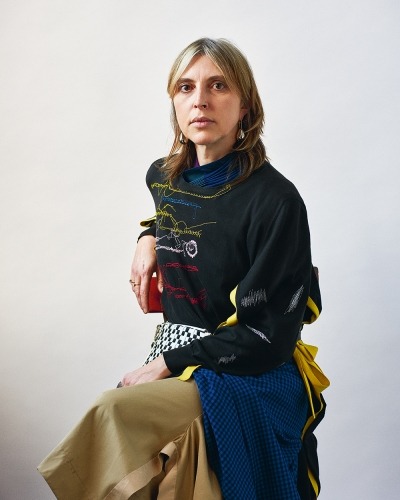
Jonathan Baldock at CAC Residency in 2018. Photograph Damian Griffiths. Feature and hero image: ‘You I are Earth’, 2023
What draws you, as a contemporary artist, to craft mediums?
My work is largely about the body, and I feel that there’s a particular energy about handcrafts that speaks well to that because they are, literally, a product of the body and thus, in a way, an extension of the body.
I’m also really drawn to the fact that craft materials have an association with working people’s histories. I think that’s very important to me. First and foremost, they have always been used to make functional objects, which subsequently might have been embellished or decorated to make them more personal. I think that’s a very human thing to do. So there’s an honesty about crafts; they relate to the human experience on a level that other mediums can’t.
I guess you could say there’s something a little ‘rough around the edges’ about craft but I try to elevate it by putting these mediums centre stage of an art exhibition. I like challenging the common connotations attached to the techniques I use; making people see them in a different light.
In terms of your creative process, how does it all start? Does the idea come first, or does the idea materialise as you’re working?
I would say that my practice is research-based; there’s always an idea before I start a project, always an intention. Having said that, the materials do inform the work. I think of it as a coming together of head and hand.
The initial idea will often change and evolve as I work because I’m always thinking of things as I go. I have learnt to be very open to that because I think it’s a key part of the process; it means that the work I produce can take on multiple meanings. To ignore that, and allow only the initial idea to materialise, would be a very different way of working.
In other words, with craft, the idea and intention behind the work does not have to be acknowledged to the same extent as it does in conceptual art, where an artist is fabricating a very clear idea. I would say there’s space for more ideas to work at once; it’s not just an illustration of the concept because you take on the language of the medium itself as you work.
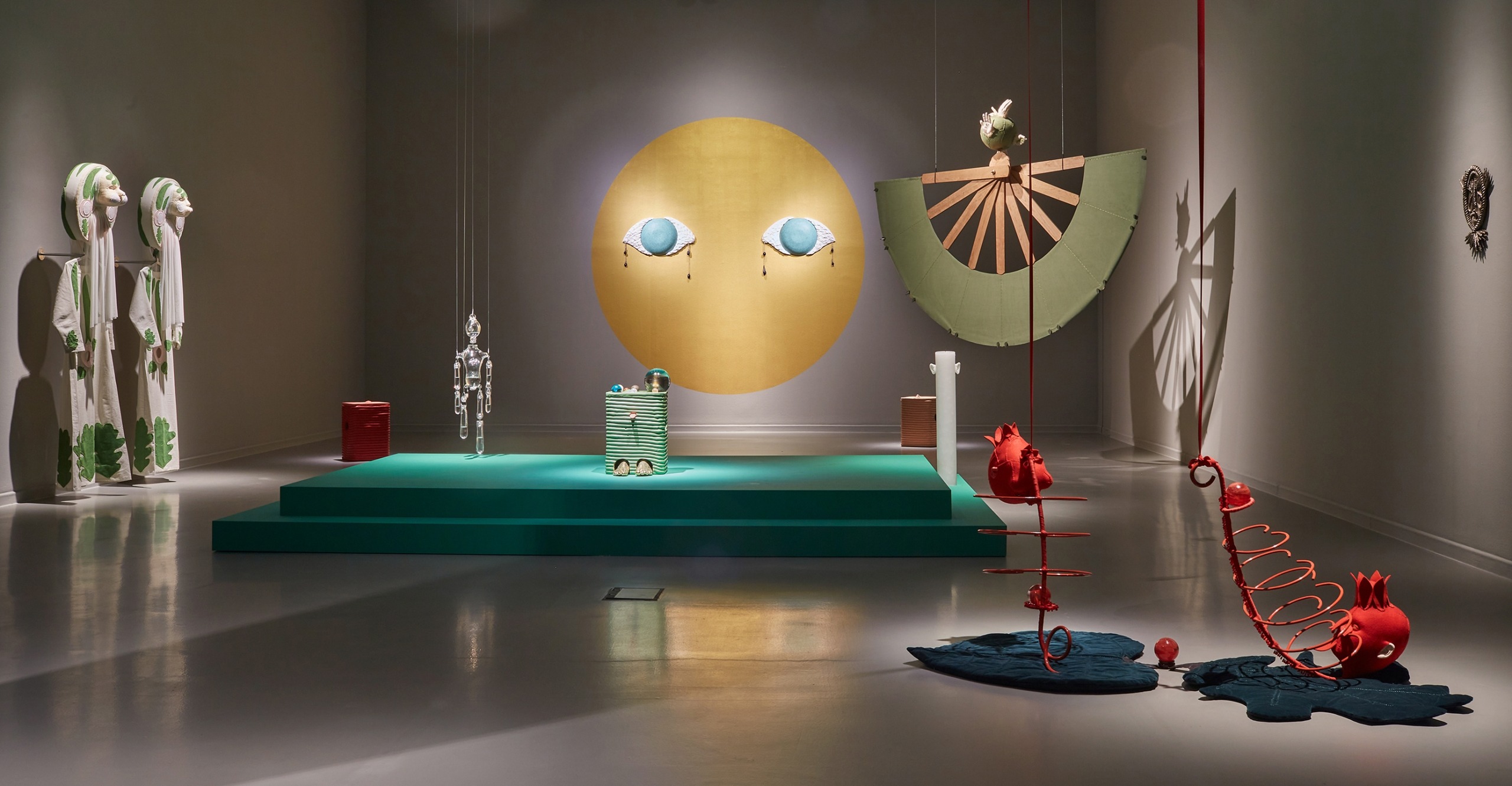 Installation view of Baldock’s ‘I’m Still Learning’ at La Casa Encendida, Madrid, 2021
I think that’s why your work is so interesting…
I hope so because it really does come from a place of love for these materials. My practice is an amazing thing to have in my life and I hope that’s evident in the work; the joy of it. That’s not to deny it can also be a lot of hard work.
But that’s also part of it, isn’t it?
Totally, especially with something like ceramic, which has a will of its own. To begin with, when you’re in the making process and you sink your hands into the clay, it can be really therapeutic – you can see why there are so many creation stories that come from the idea of moulding clay.
But later, when it gets to the firing and the glazing stage, things get a bit more complicated; there’s the possibility of it cracking or exploding in the kiln, or even just toppling over in the studio. So it’s a double-edged sword; I love it, but I can also really hate it.
What is the meaning behind the title of your upcoming exhibition,‘Touch Wood’?
At the beginning of every exhibition, I have an idea of what it is going to be about, and I often like to make a little nod to the area in which the show is taking place – if I can. So, for the show at Yorkshire Sculpture Park, I initially thought that I could borrow materials from the landscape because the gallery is set in the beautiful rolling hills of West Yorkshire – I thought I could use local clay, or wool from nearby sheep. Anyway, after several site visits, nothing was clicking.
Then, one day, on the way to the gallery, I stopped off in Wakefield because I’d heard there was a beautiful cathedral there; I’m a sucker for gargoyles so if I go to a city, I always check out the church. Although it didn’t throw up any gargoyles, I found these amazing wooden carvings in the quire. There was a particularly unusual one of a figure bent over exposing his buttocks; it was really funny. I was amazed that these slightly rude and un-Christian figures had existed for so long right where the clergy would have stood.
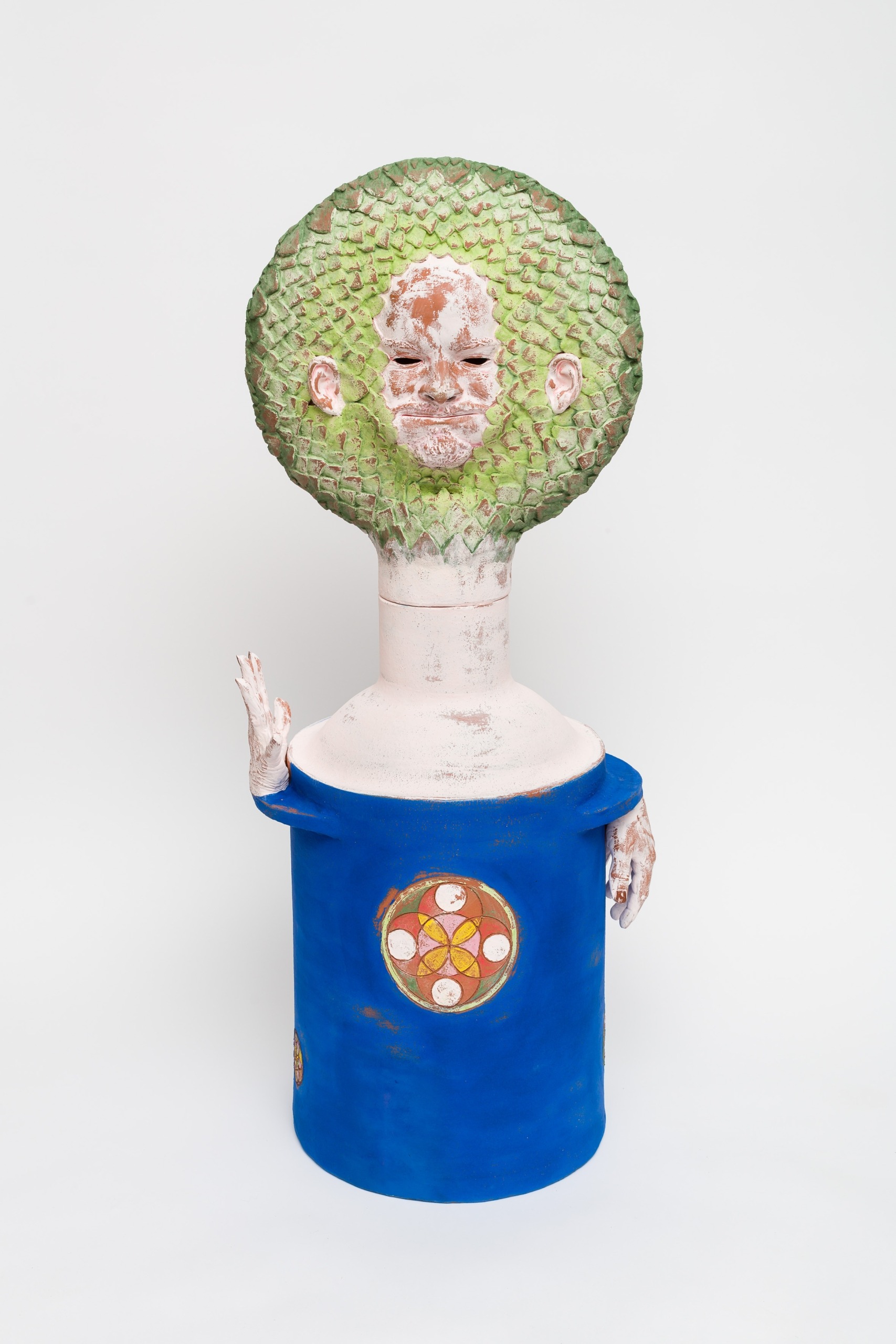
‘Becoming Plant (A hop)’, 2023
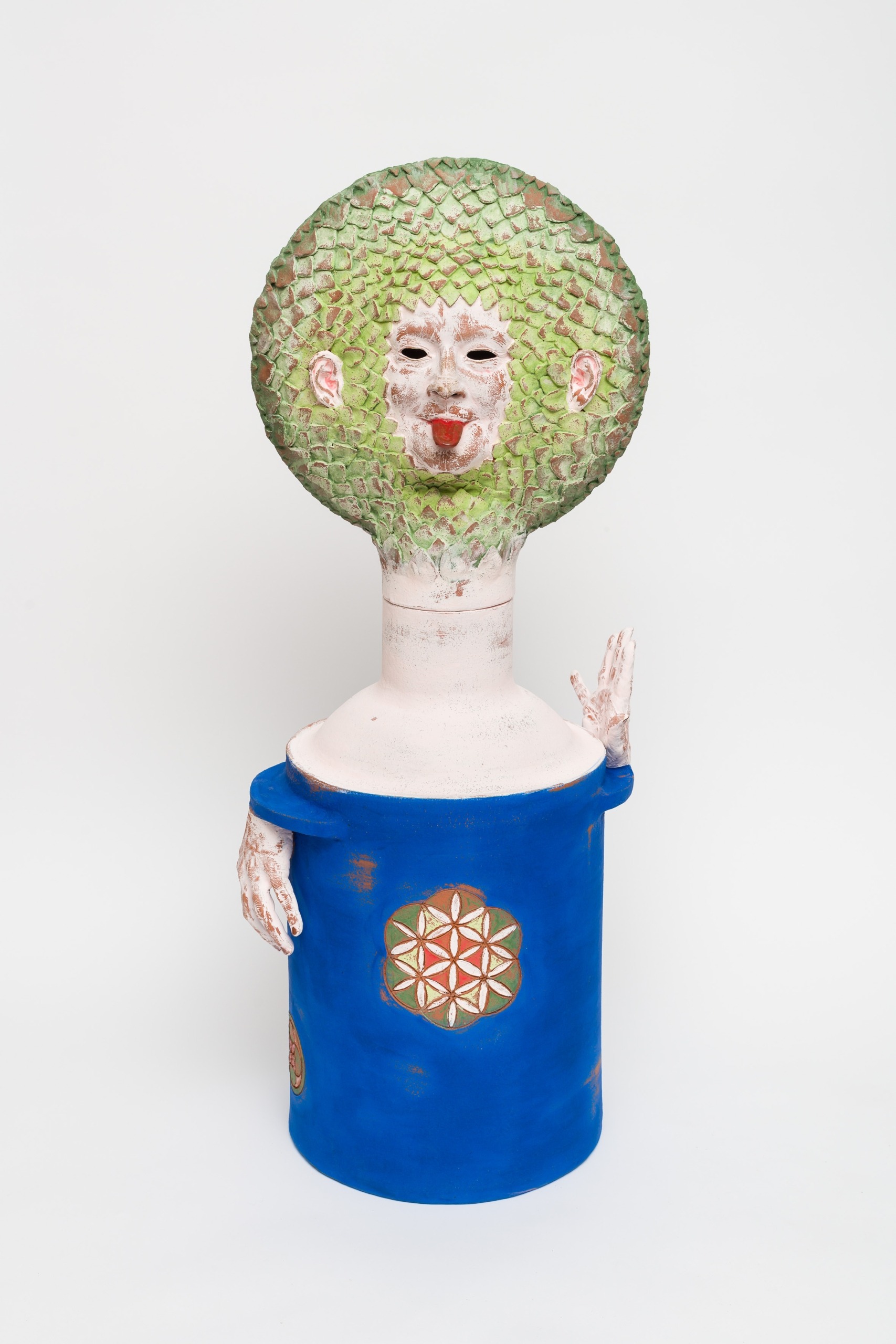
‘Becoming Plant (A hop)’, 2023
I later found out that they are called misericords; they are located just under the stools in the quire so that when you lift up the seat to lean on, you see these wooden carvings. They’re all of pagan, mythological figures, or hybrid characters; so there’s lots of Green Men, animals and bodily motifs. They really spoke to me because I thought, these are objects that were obviously made by working craftspeople who had been given an opportunity for self-expression; so I felt connected to them as a craftsperson myself.
But also, I felt connected to them from a queer perspective in the sense that these figures existed very much outside of the status quo, but had survived all these years right at the centre of it. It sort of threw me and I felt it would make a great starting point for an exhibition. (I should also point out that I grew up in quite a Christian household, so I’ve always had a bit of a weird feeling about religion, on one level really loving the spaces, but then also feeling very outside of them.)
Oddly enough, there is no wood in the exhibition, but I’ve called the show Touch Wood because it was brought about by these wooden carvings. And then, of course, it works on multiple levels because there’s the ancient pagan idea of trees containing spirits (hence it being lucky to ‘touch wood’), and there’s the innuendo too, which I thought was quite funny.
In terms of the actual pieces that you’ve made, how might we see the influence of the misericords in your work?
Sometimes it’s very direct; there are three large textile works that are almost exact copies of three of the wooden sculptures in the quire: one of them is the Green Man, one is a Sphinx, and I’ve also replicated the bare-buttock figure (a sort of ‘two fingers up to authority’). Then there are lots of other works that mirror the imagery, or the humour, of the misericords; so it kind of ripples throughout the exhibition.
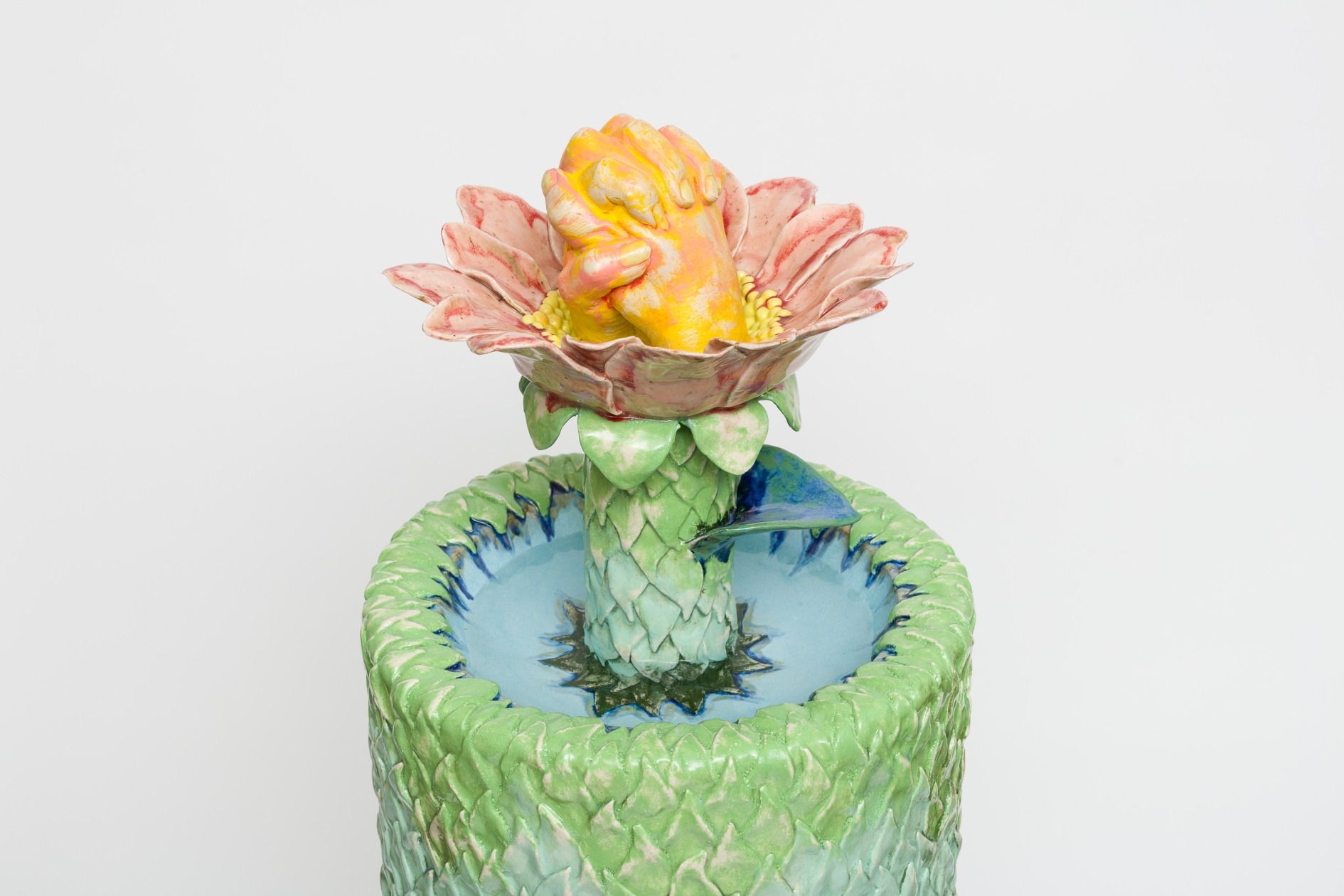
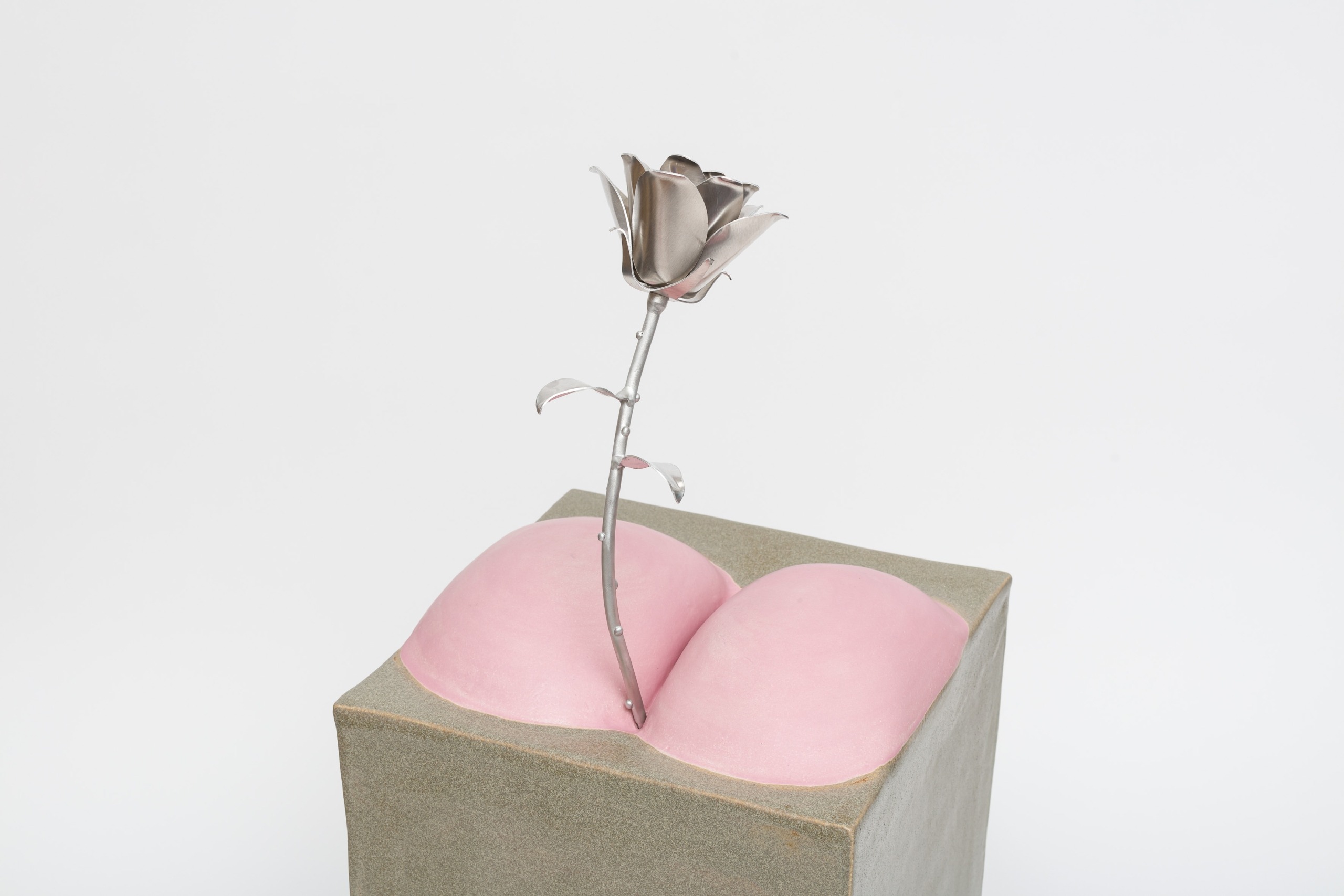 Top half of ‘Kiss from a Rose’, 2023
Folklore and paganism often inspire your work; what draws you to these themes?
I think, very simply, it’s a world I relate to. Historically, it is a world that has existed outside of the accepted ‘norm’, so it’s very easy to place queer narratives within that domain. There’s also this equal playing field of men, women, and everyone in between, and that, for me, feels very liberating.
Also, a lot of those tales are set in nature, not in the common sense of nature as a place of beauty and wonderment, but often framing it as a frightening place. I think it’s very easy to romanticise nature, but you have to acknowledge that, for a lot of people, nature can be very tough, especially for working people.
Ultimately nature will have the upper hand; at the end of human civilisation the planet will carry on living and life will exist, it just won’t exist with us in it. In a way, that gives me a lot of comfort; I like the idea – not of people dying – but of existence being related to something bigger than us.
It’s humbling, isn’t it?
Yes, it is; and I think about these things a lot more as I get older.
What do you want the effect of the exhibition to be on the viewer, especially the more grotesque, bodily aspects of it?
For me, the audience is one of the biggest considerations when I’m making. Obviously there’s a lot of me in the show, I’m not denying that, but the viewer experience is always number one.
For this exhibition, I’ve played with the architecture of the space; there’s an embroidered textile cylinder in the centre, which will play with how the works are revealed to the viewer. I like the idea that, as a viewer, you can’t take in everything with your eye, so it’s going to be a multi-sensory exhibition with scent, sound, and you’re going to have a physical response to the pieces as well – a bodily experience.
The grotesque aspect comes from the fact that I love humour; I’m not interested in presenting a ‘cutesy’ version of craft, which I think is what some people think of when they think of things like ceramics, textiles and basketry. I think there’s no reason why these materials can’t be used to reflect life in all its complexity. But to do that, you have to have levels of humour, darkness and the abject in order to create a full experience – and there’s beauty in those aspects of life as well.
I want you to be able to engage with the work even if you are not from the art world and you don’t really understand what the exhibition is about. I think that is made easier through the medium of craft because people’s guard really comes down when they see these sorts of materials – maybe it is because we all have a connection to them.
I like to play with that as well; drawing people in with these handmade objects, and then throwing them off with the subject matter or imagery.
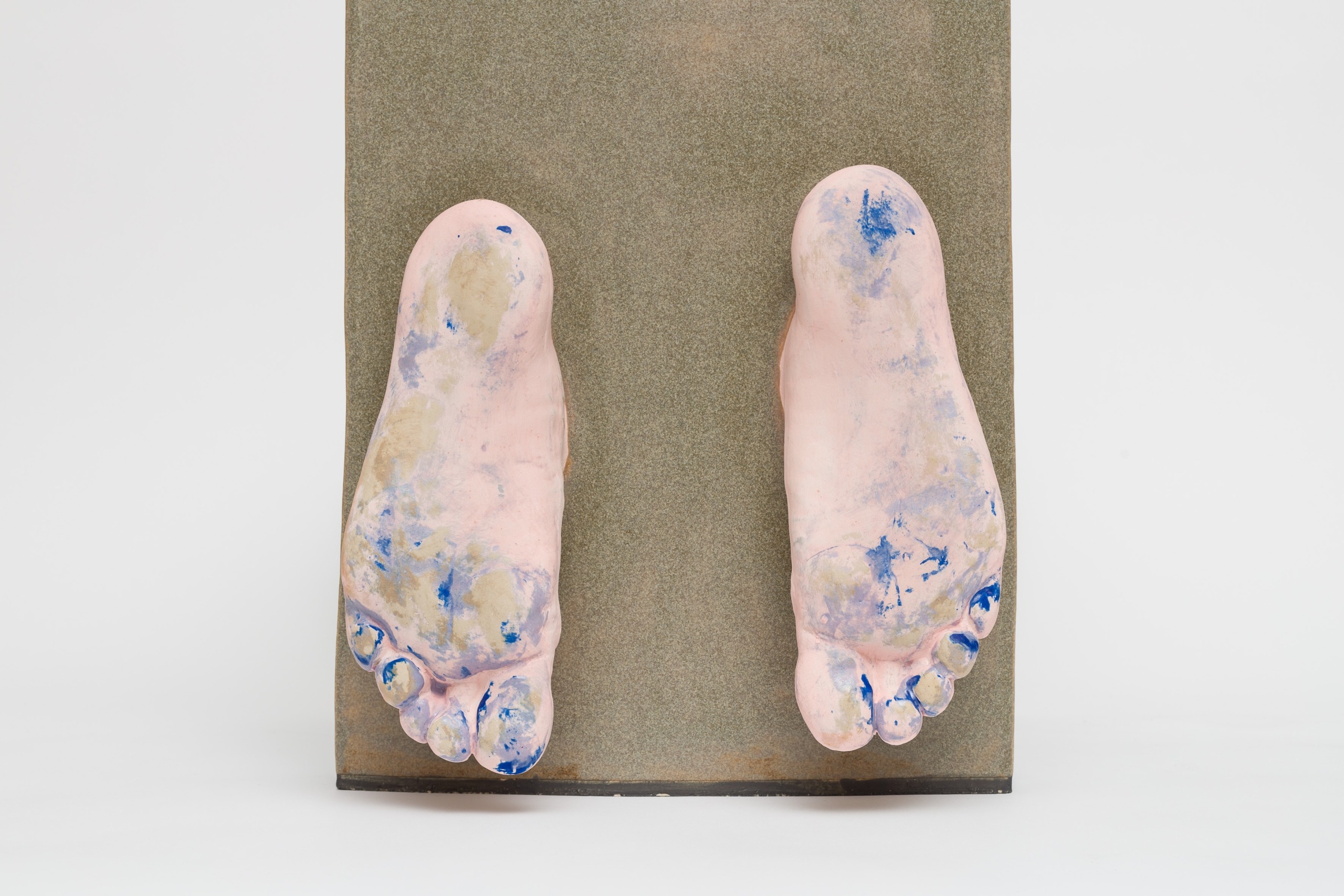
Bottom half of ‘Kiss from a Rose’, 2023
Your work is often highly personal, or even autobiographical, exploring themes such as trauma or your relationship with your mother. Does it take a certain amount of bravery to expose yourself in this way?
I come from a generation that would never say art could be therapy. But actually, I think it is. Exposing these personal issues certainly requires a certain amount of vulnerability, but I think that’s the ultimate way to make a connection with people.
My intention is not to make it so personal that it’s self-indulgent, I try to do it in a way that people can draw from their own experiences and reflect on things that may have happened to them. I think it’s an amazing thing to be able to connect with each other, because yes, we are all completely unique, but we are also all human, and I think that’s sometimes an important thing to remember. To have that in common can be really beautiful.
The references to my family are more of a love letter to the women who have helped shape my practice. I don’t come from a particularly ‘artsy’ family but I was taught to knit, crochet, and sew by my nan, while my mum was at work. I think it was a way of occupying me. Then, early on in my career, when I wanted to do these really ambitious projects on a tiny budget that would take hours and hours, my mum would come along and help me – she was retired by this point. So the work goes beyond me, I’m not just somebody existing in isolation when I create these things, I have people helping me and that has to be acknowledged.
So the textile processes that I employ in my work are a nod to my mum and my nan, not just in credit, but by physically putting them in some of the works as a way of immortalising them. Since losing my nan, I’ve started to think more about existence; it makes you want to cling to the people you care about. It’s a bit cheesy, but I don’t really care. The younger version of me would never have had the confidence to express these things; he would have been like, ‘Oh no, that’s not what you should do as an artist.’ I think my ability to be vulnerable in this way has come with a certain amount of confidence.
And that’s actually the thing that anyone would relate to…
Exactly, we’ve all experienced loss. Sometimes it’s the most basic things, and the most obvious things, that are the most important things.
‘Touch Wood’ runs until July 7 2024 at Yorkshire Sculpture Park, West Bretton, Wakefield, WF4 4LG