Path Finders
Words Mark Hooper
Photographs Sam Walton
A deep dive into the landscape with artist Jo Sweeting and writer Louisa Thomsen Brits reveals the deeply-felt connection between art, words and nature…
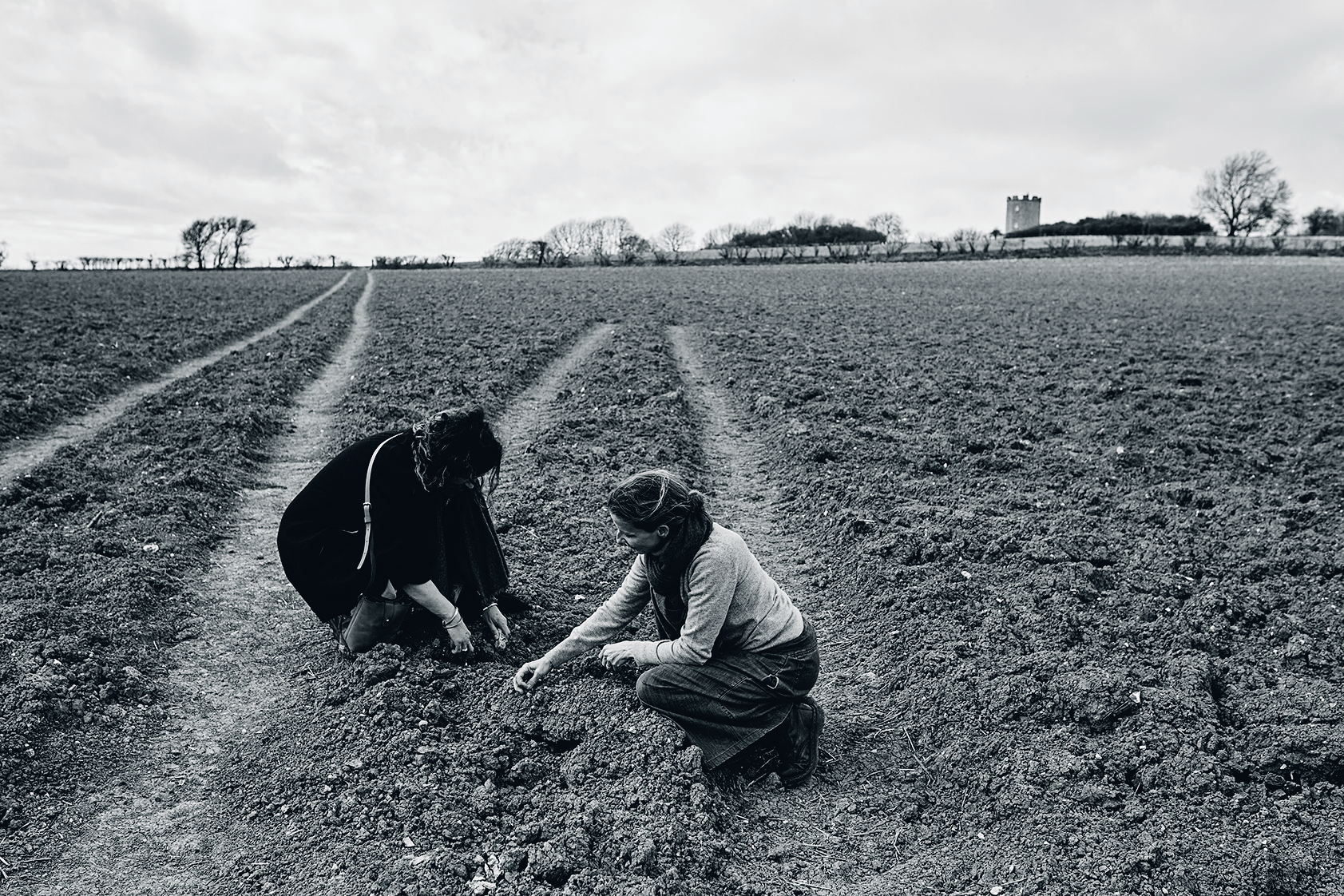
We’re walking through the gently rolling hills under the lee of Firle Beacon in the South Downs when Louisa Thomsen Brits pauses at the entrance to a ploughed-up field. A fragment of what looks like chalk has caught her eye. Rubbing the soil off, she holds it up to reveal an oyster shell. Suddenly the path seems to be littered with them. Which is exactly right – this is, Thomsen Brits reveals, most likely the detritus left by Romans, who introduced oyster farming to this country in the First Century AD. Too far inland – and on the wrong side of the hills – for them to have been washed up from the coastline at Seahaven, some five kilometres to the south, the most likely explanation is that Roman Britons following the South Downs Way (the major thoroughfare in these parts until the A27 came along), discarded them here from their packed lunches.
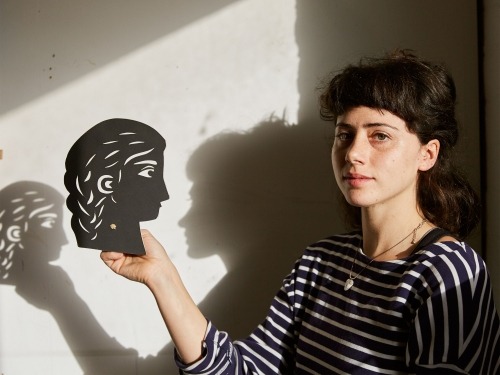
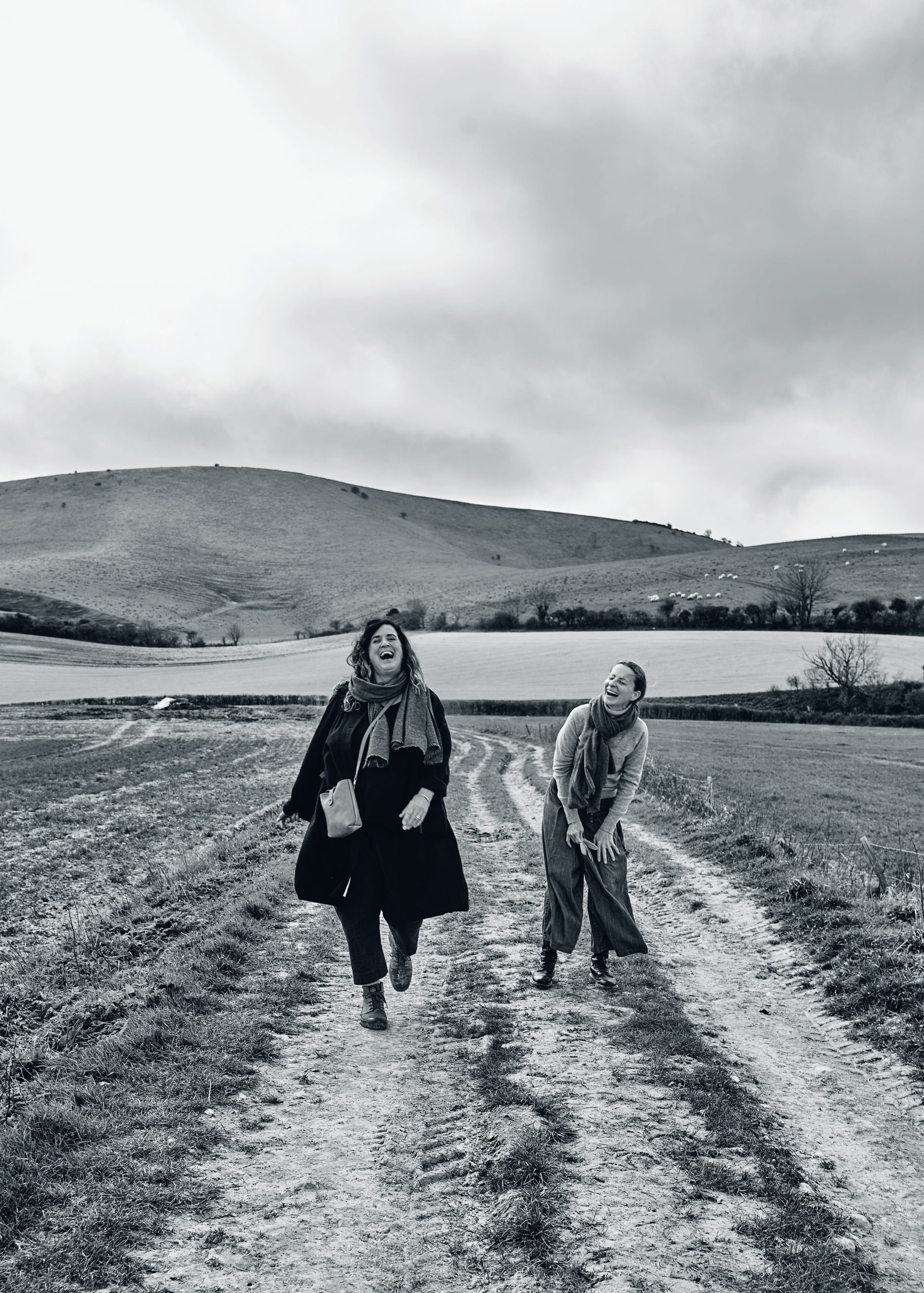
This is just one of the many digressions and tangential routes we take during a morning accompanying Thomsen Brits – an author specialising in landscape – and sculptor, printmaker and lettercarver Jo Sweeting, on one of their regular walks through the Sussex countryside – gathering both stones and words along the way.
‘A lot of my work is about place and memory – in fact mainly it’s about shul, which is a Tibetan word, this concept of the mark left behind once something has gone,’ explains Sweeting, whose practice involves engaging with local landscapes through walking and wild swimming, often with Thomsen Brits. From here, they investigate words associated with the land – particularly from local dialect – which are then returned to the earth, sometimes by carving them into the same stones discovered during their walks.
The titles of Sweeting’s various projects hint at this process: ‘Re-wilding the Wordhoard’; ‘Foundle’ and – for our latest excursion – ‘Away’.
‘I’m not an adventurer. “Away” for me is doing this,’ says Sweeting as we are about to depart for the South Downs. ‘I don’t travel, so I return to similar places over and over again. Lou has done a lot of travelling: I have not left these islands in nearly 30 years. That sense of “Away” for us is we walk very locally and we find lots of things, and that idea of returning with something could come from having a conversation, or it could be finding a flint or an ammonite. You’re left with that marker, bringing it back over the threshold.’
This exploration of our local environment, of seeing it through new eyes and coming to appreciate what we have come to take for granted, is one of the positives that many people have discovered over the period of the Covid pandemic.
‘It’s unlikely, I think, that people will travel in the same way for a long time,’ says Sweeting. ‘Obviously there have been terrible losses, and I’m not suggesting it’s a good thing what’s happened, but actually as we’ve seen, nature has thrived.”
This impermanence is something Sweeting embraces in her work.
‘There’s this notion of stepping over the threshold to a new way of being,’ adds Thomsen Brits. ‘We’ve witnessed profound vulnerability, and my hope is that we recognise the degree to which we have inflicted the same kind of habitat degradation and vulnerability on all living things for decades.’
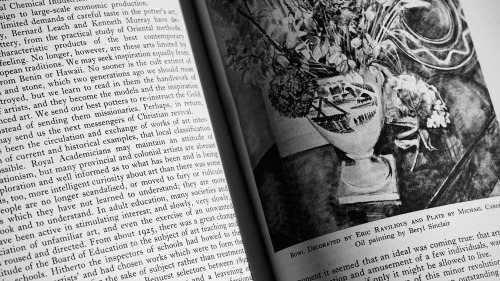
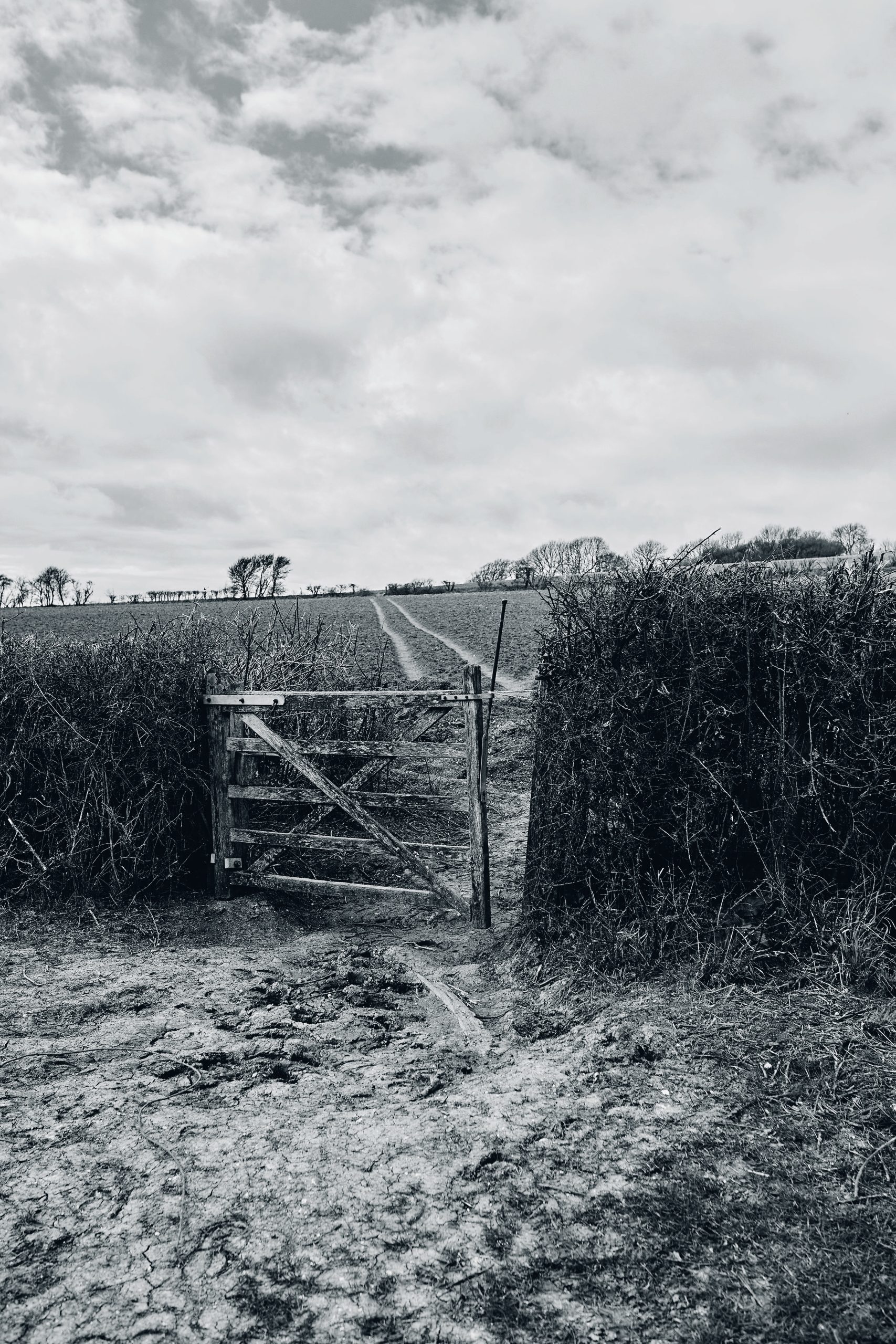
Her thinking lends a deeper meaning to the ancient words associated with this duo’s endeavours. The word ‘palsh’ – ‘to walk slowly while looking’ – is a good description of our own ramble, on a crisp spring morning, watching the ground around our feet as well as admiring the wider countryside, which resembles an Eric Ravilious painting come to life. (This isn’t coincidence – Ravilious lived fora period near Glynde, a few miles away on the opposite side of the A27, and often painted the distinctive landscape.) ‘In Sussex, the word for flint is “starky”, which is such a beautiful word. It really suggests a stark, grey, hard sharpness,’ says Sweeting. ‘So does “flint” of course, but when I walk on it now, I think of it as starky ground.
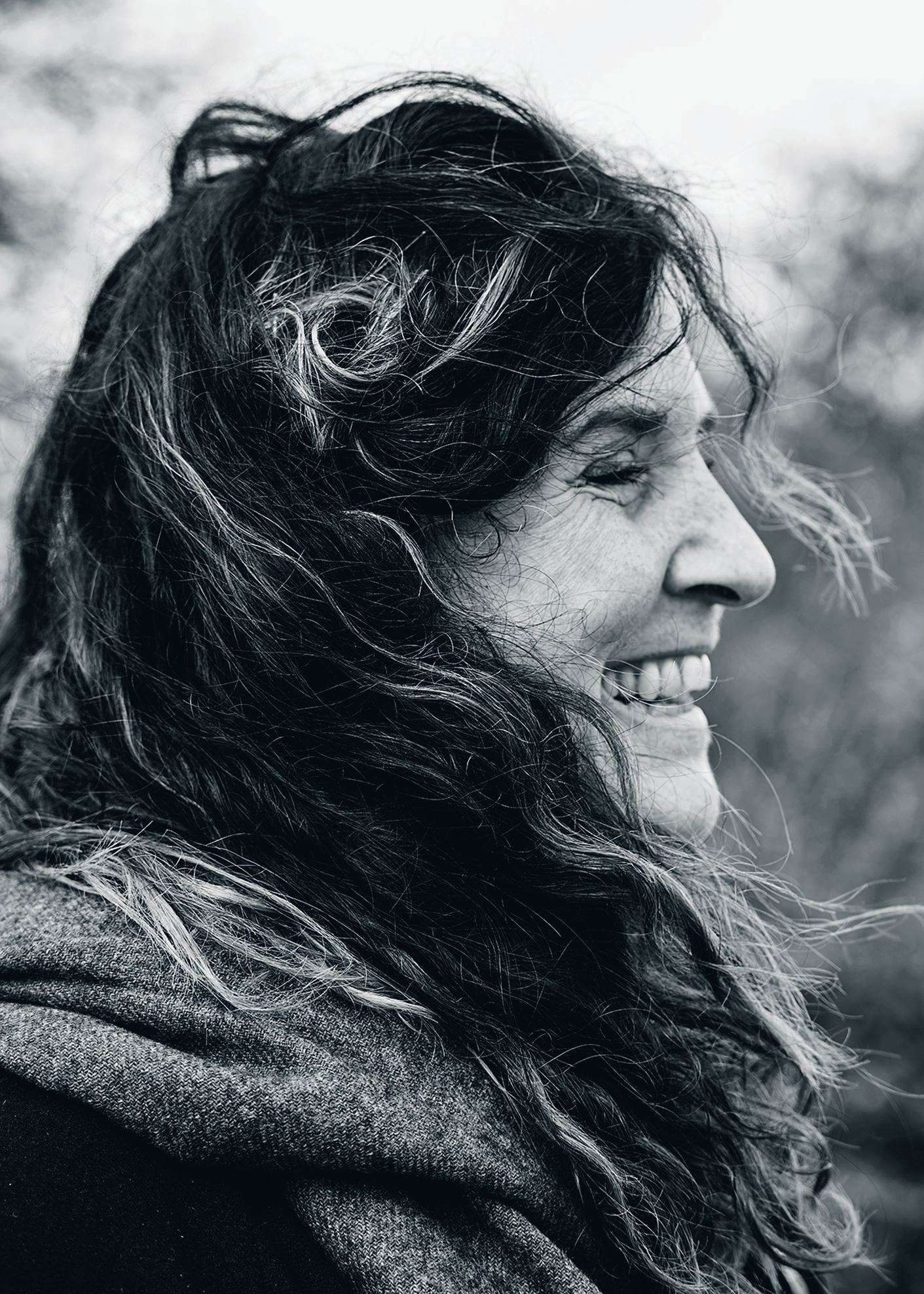
‘One of the major things we’re working towards with the Wordhoard is paying attention to the “slowtime”,’ says Sweeting. ‘Along with the Palsh is this little symbol I’ve been using. In carving, there’s a thing called the stopcut, which is used at the beginning and end of every word or letter. And I’ve been carving them into small stones and pebbles.’ At this point she demonstrates how, when you hold the stone in your hand, your thumb naturally rests in the depression of the carved symbol, subconsciously tracing its lines. ‘It’s that thing of actually holding something and pausing – they go leathery through the constant touch.’
Another word, resonant with its locale, emerges from one of Sweeting’s projects at Bucks Mills in North Devon, near Bideford. The etymology of that particular town’s name also speaks of the land: ‘Bide’ as in ‘biding one’s time’ – so Bideford literally means ‘the waiting place by the river’.
‘Bucks Mills is a deep, V-cut valley where, after October, you hardly get any light – all fern-clad,’ says Sweeting. ‘Of course, being in lockdown it suits very well – we are biding. And we need to.’
Here, Sweeting identified two boulders near the beach and set to work. ‘I carved the word “Palsh” [into one], which got buried by the tide, but someone dug it up again, and then I carved the word “Bide”, which is still there. And it’s lovely because they’re not permanent: they get wrecked by storm tides.’
By carving those words, Sweeting describes how she established fixed points of reference during the time she was in Devon. ‘It was the first time I realised how much the beach changed, because they were the only static things – but then even those have been rolled away.’
This impermanence is something Sweeting embraces in her work. ‘Initially I was concerned that if I left something on that beach – which is not “my” beach and I don’t want ownership over it – then it would be like a cat scenting a spot and I don’t want that. It’s been brilliant watching their demise.’
‘That change and flux is what it’s about really,’ she continues. ‘Not going into the landscape like a lot of monumental art – that masterful “This is me!” statement, which I’m afraid is often to do with the patriarchy. Of which we’re not!’
These words are delivered with laughter, but there is a serious point here. There is something undeniably female in the way Sweeting and Thomsen Brits work and interact with nature. And while they both praise the ‘gentle intervention’ of landscape installation artists Andy Goldsworthy and Richard Long, these are exceptions to the male impulse to impose one’s will upon the wilderness.
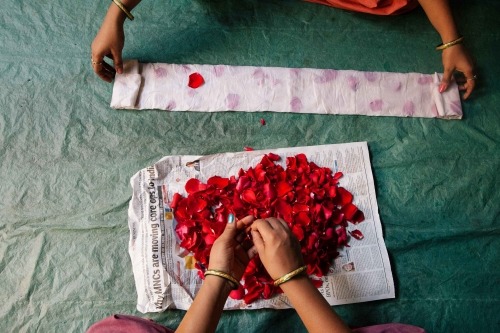
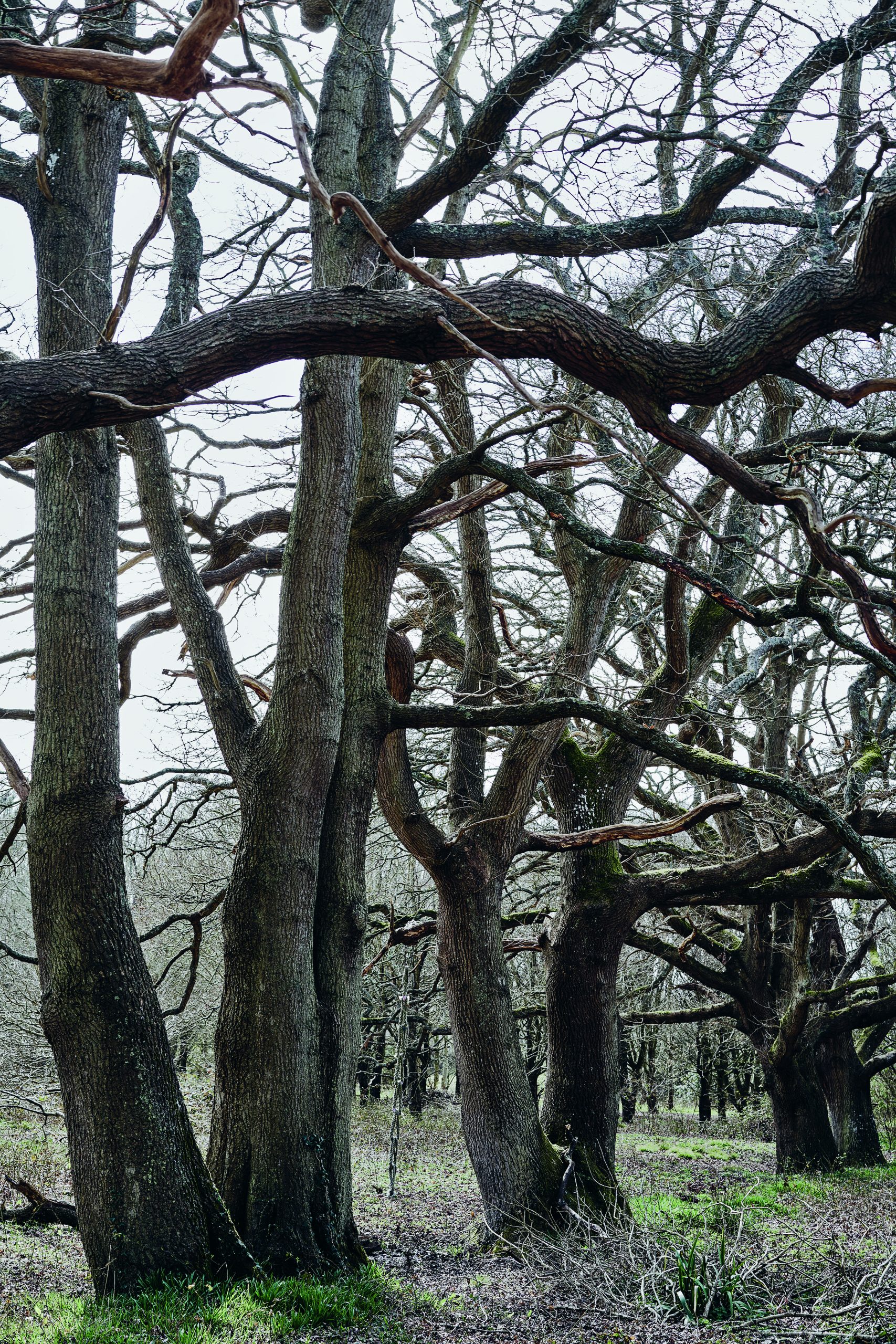
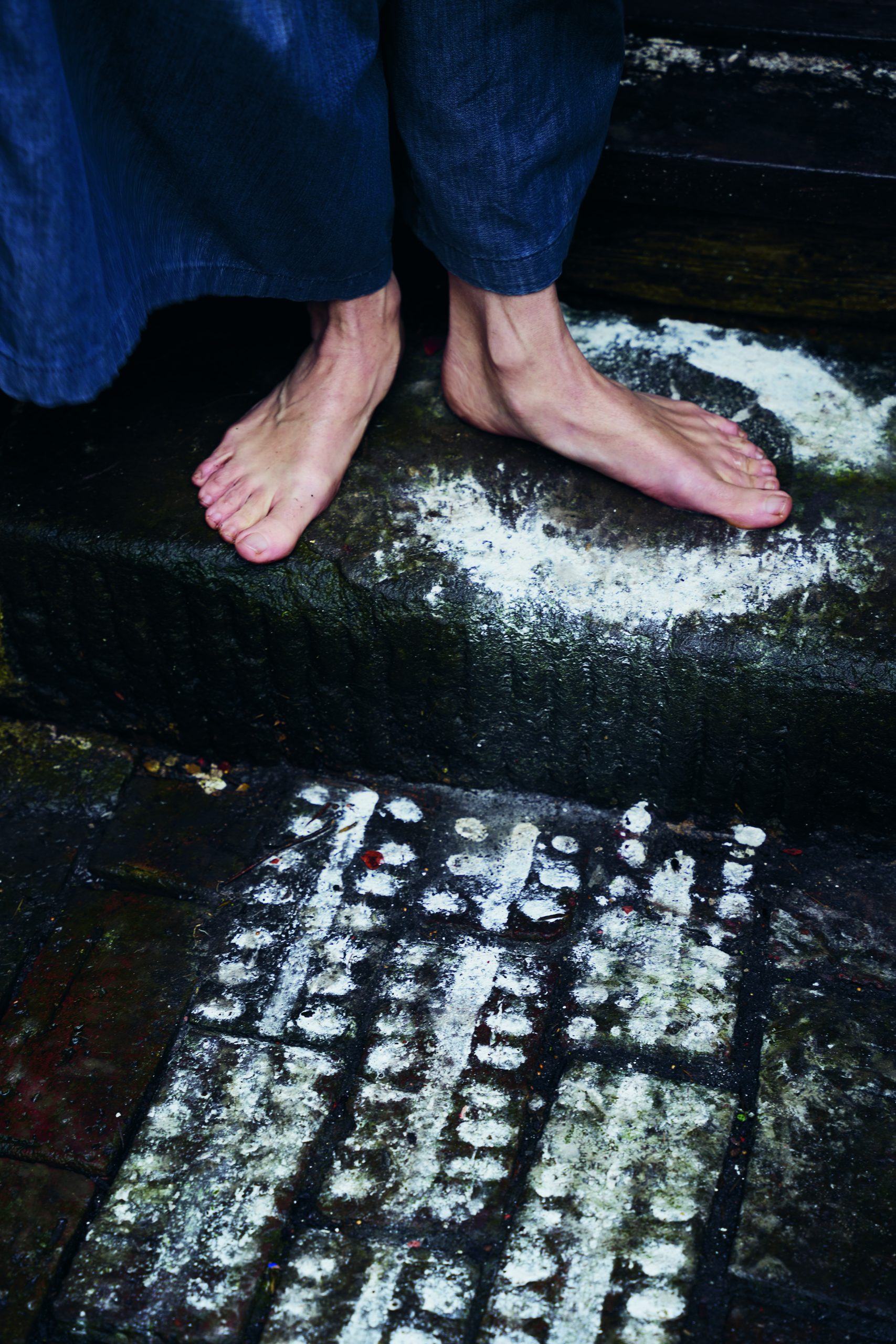
This brings us neatly to the kolam. Traditionally painted by Indian women at the threshold of their home, using chalk, natural pigments or rice flour, the kolam is a geometric design, created at sunrise each morning. For our walk, the two women have each prepared a kolam. We start by stepping over the threshold of Thomsen Brits’ house in the Sussex countryside: a treasure trove of found items backed by woods, for coffee before our walk. As well as ornamentation, the kolam is a symbol of social interaction – of welcoming guests – and, most importantly, of making a secular space sacred. ‘I love that notion of how, as you step over that liminal space, you move in or out of different ways of being,’ says Thomsen Brits. ‘From the domestic to the wild, or from the physical to the subtle, or the sacred to the secular.’
‘Although I love the idea that there are no unsacred spaces,’ adds Sweeting. Because the kolam is usually created while you’re kneeling on the ground, there’s this element of humility,’ continues Thomsen Brits. ‘Plus, part of the pleasure of using rice flour is that it lures insects out of the house. But also the fact that it can feed animals, represents how women are considered very much part of nature. They bleed and lactate and give birth, and in India the women uphold this spiritual aspect of life, and the animals that they feed through creating these kolams. This idea that they represent that interconnection.’
‘The threshold is always important isn’t it,’ interjects Sweeting. ‘I don’t invite many people into my studio for instance, because it’s my working space. That idea of who comes into your home is interesting… some people love full houses, other people don’t. I’m fairly reclusive and so is Lou, I don’t think she’ll mind me saying.’
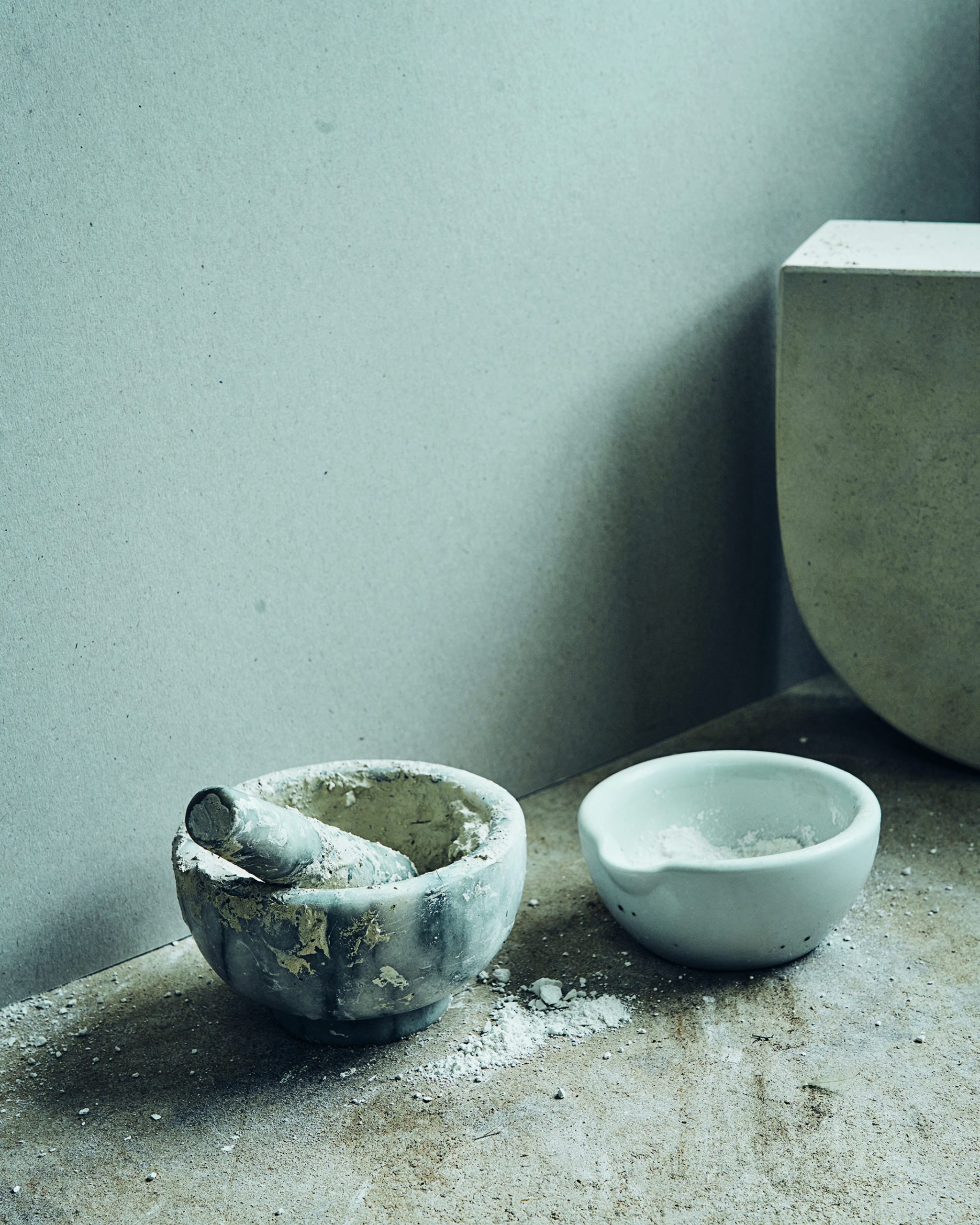
Each kolam has been prepared using their own chalk, gathered from the Sussex hills and ground into a paste. Again, it talks of our interaction with the land – the chalk of the South Downs holds a translucence that seems magical to those that witness it. ‘At night sometimes the paths are absolutely singing,’ says Sweeting. ‘It’s extraordinary how luminous the chalk is, because you have such a thin layer of soil.’ magical to those that witness it. ‘At night sometimes the paths are absolutely singing,’ says Sweeting. ‘It’s extraordinary how luminous the chalk is, because you have such a thin layer of soil.’
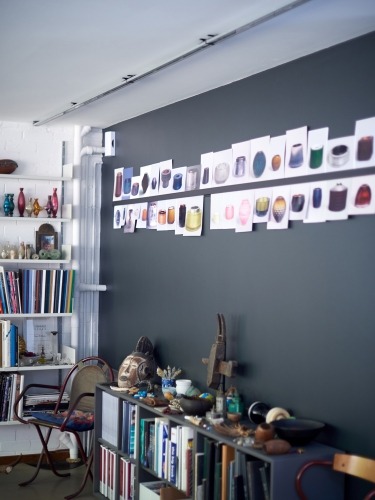
Our route takes us through the chalk-rich soil surrounding the picture-postcard perfection of West Firle village, picking up oyster shells, fossils and round pebbles en route, before heading to Sweeting’s home on the outskirts of Brighton for lunch, greeted by another kolam at the entrance to her garden studio, to see how her sculpture and carvings are shaped by nature – and how she carves the natural objects she gathers themselves.
Sweeting’s kolam is made up of 365 thumbprints, representing the anniversary of lockdown, which falls on the day of our visit. (‘I wish it had only been a week now I’ve done it,’ she deadpans.) The distinctive pattern echoes the lines carved into the South Downs by tractors – while Thomsen Brits draws parallels between the dots and Seamus Heaney’s concept of how the ‘omphalos’ represent the still point in the ever-moving universe – the source of being.
‘It isn’t cultural appropriation,’ Thomsen Brits points out. ‘We haven’t lifted the aesthetic from what the Indian women create. But the idea that we’ve all been contained and confined to our home, and then to be in the position where we can step over our threshold – it felt important to mark it in some way.’
Back at Sweeting’s house, she pulls out a cardboard box containing a collection for another project: a Wunderkammer or Cabinet of Curiosities, made up of meaningful objects sent to her from all over the world in response to an appeal via social media. Unwrapping the packages of deeply personal items gathered and treasured over the years (a more intimate form of ‘unboxing’) is a strangely moving experience. Each comes with a handwritten note explaining its significance to the owner, lovingly tied with twine, sealed in envelopes or brown paper: ‘a box of sun yellow periwinkles, gathered over many years, each one symbolises a sunny day on the beach’; ‘a travel case for a flight feather’ (‘A whole world in a tiny feather, they speak of loss and new beginnings’); a ball of plaited grass that still smells of the meadow from where it was picked; a crux stone from Minnesota; a huge piece of smoked honeycomb removed from someone’s chimney; numerous pebbles, shells and sea glass; and half a fossilised sea urchin, its pattern coincidentally echoing that of a kolam.
‘A lot of my work is about paying attention to small things, so I just put a post on Instagram saying, “I’m collecting things for this cabinet of curiosities” – not really knowing what it would be,’ says Sweeting. ‘I think we feel a real kinship with nature, rather than a guardianship over it, which is why we all collect things. There are commonalities showing up in the notes about how hard it is to give things away, about the memory and the power of that moment that’s being held in that object.
Her eventual aim is to post all the objects back out, but not to the original owners, so that everyone who has contributed to the project will receive something new and wondrous – a touching, personal version of ‘paying it forward’ through found treasures.
It’s a beautiful summary of Sweeting’s holistic approach to art – but also to words. ‘It’s good to have more rather than less language,’ she concludes. ‘And obviously language travels on – as do the pebbles and erratics and boulders. And it changes. It’s one of the things Robert Macfarlane says: dialects, like pebbles, change over time.’