Soul Sisters
Words Diana Woolf
Photographs Emma Hardy
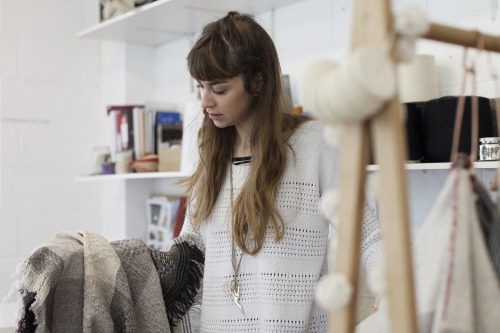
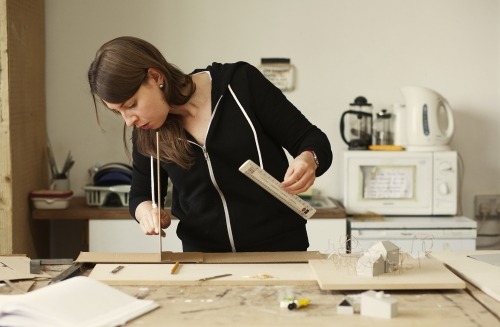
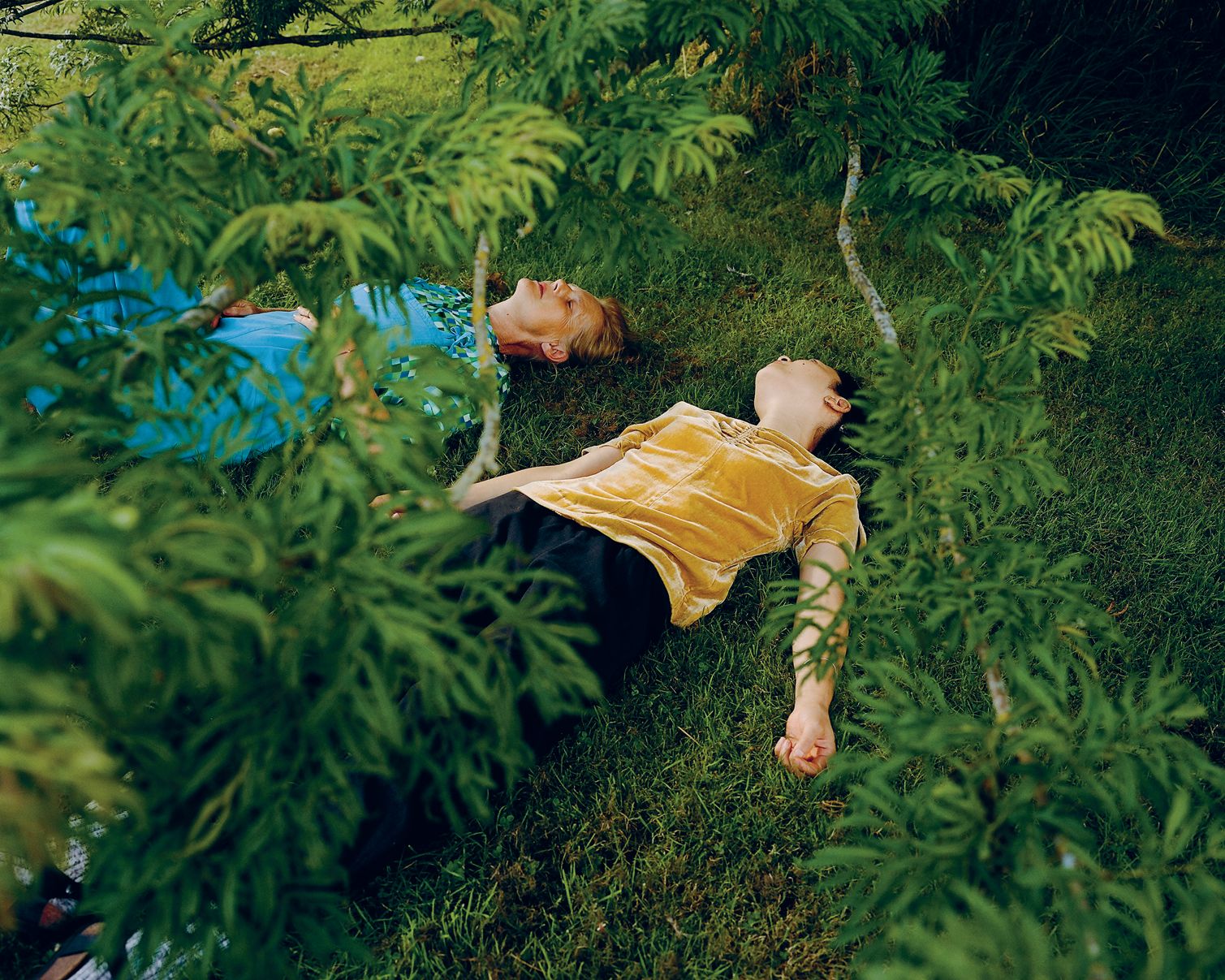
Photographer Emma Hardy spent a weekend recording the garden designer and natural dye enthusiast Tania Compton and the ceramicist Kaori Tatebayashi at work and at leisure in Compton’s Wiltshire garden. H&C joined the pair in conversation about how they bond through their creative practices – and a special kind of jam
Diana Woolf: Emma, can you outline why you think Kaori and Emma make such an interesting creative pairing?
Emma Hardy: I have known Tania for nearly 40 years, and Tania told me I must go and see Kaori’s show at Tristan Hoare Gallery (The Walled Garden April-May 2021). I was completely blown away by her work and, as a result, asked if I could photograph her in her studio as I was really fascinated by her process. It was then that I started understanding the common ground between Tania and Kaori and became curious about their relationship and how their work overlaps. They both know each other, love each other’s work and find constant inspiration from each other.
DW: Tania, how did you first meet Kaori?
Tania Compton: I met Kaori through another friend of ours (the ceramicist) Phoebe Cummings and I immediately recognised her as a kindred spirit. Then I visited her in her studio and it was like a coup de foudre – meeting someone who understands nature in that extraordinary way. Botanical art is so hard to get right, there are so few people who are not just copying nature, but are feeling nature and re-engaging with it, a sorting of honouring of it rather than a representation of it.
EH: I sense that so strongly from both your work in its different ways.
Kaori Tatebayashi: Yes, it was Tania’s appreciation of nature and plants that drew me to her. We talked the same language.
DW: You first met more than five years ago and since then you have become good friends. Kaori, I know that you have spent a lot of time with Tania in Wiltshire and have enjoyed exploring her garden. Has her garden and her way of looking at nature inspired you?
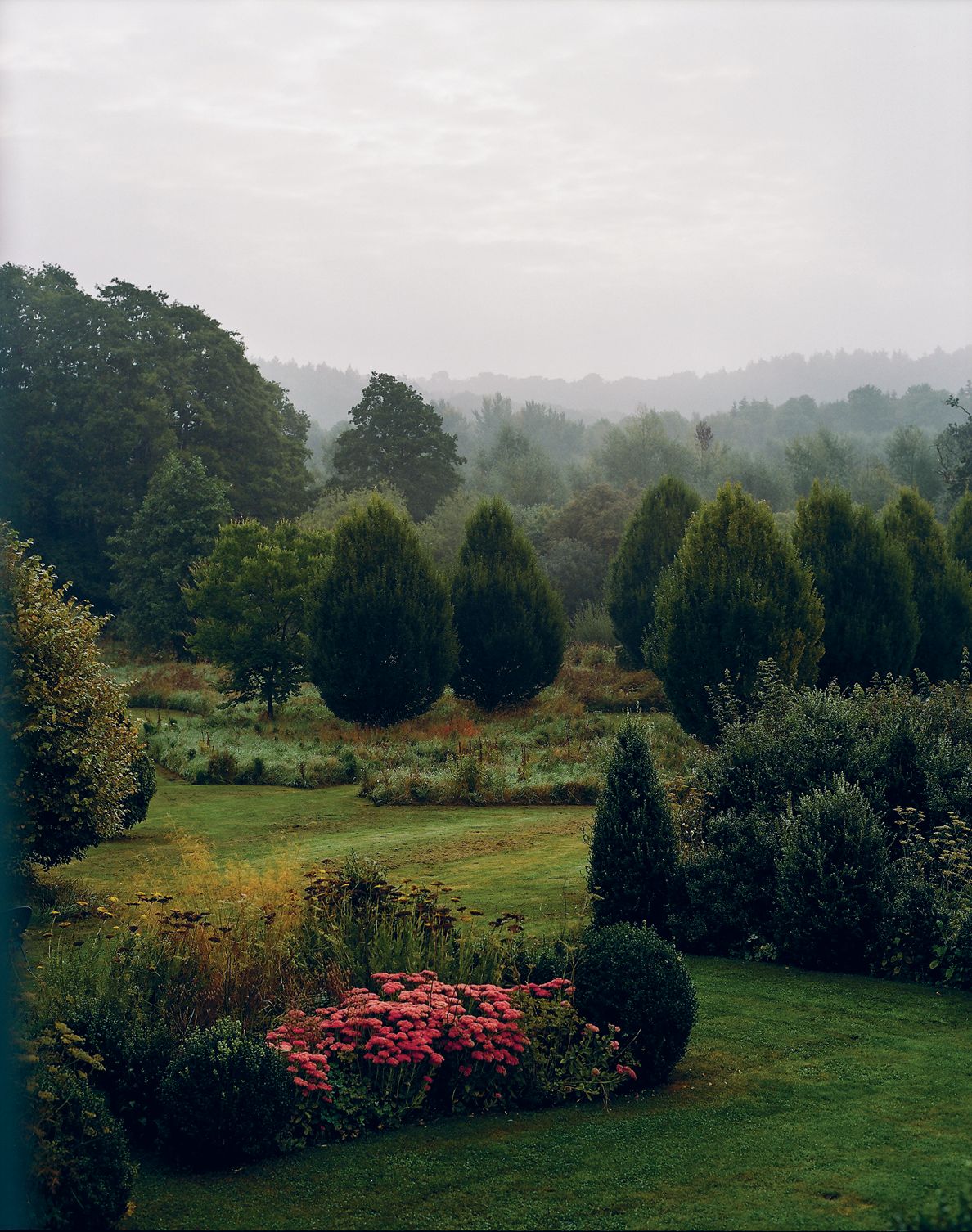
KT: Yes definitely! I always come home full of ideas and can’t wait to go back to the studio. Spending time together is so magical. The way that Tania planted this garden is, to me, very naturalistic. Last time I came I saw many different varieties of roses and I thought, this is how I want my roses to be. One was growing over a huge tree and that so inspired me, I thought, one day I want to create a rose like Tania’s.
DW: And Tania, how does Kaori inspire you?
TC: It’s about the bigger picture, recognising and understanding someone with a similar attitude and respect to nature and appreciation of it. I am much more in gratitude than necessarily inspiration, as I have no aspiration to be a ceramist, but finding someone who knows what I do, as in what I really do and what I feel about what I do, that is priceless. I have placed her poppies (the sculpture Tania purchased from Kaori when they first met) by my drawing board, so they are in a very important place.
DW: It seems that you have formed a creative sisterhood, united by a mutual love of nature, but I believe your biological families have also played a big influence on your creative journeys? How did your family influence you, Kaori?
KT: There were a lot of creative people in my family; my mother was a china painter. My grandparents lived in Arita and my grandfather was a passionate gardener. There was a local mountain where there were wild orchids and my grandfather used to climb it to collect orchids – I think he named some of the species. He wasn’t a professional botanist, he was a ceramics merchant. From his little village, he took orders from hotels and restaurants all over Japan and then the ceramics would come to our warehouse and the whole family were involved in packaging it – something I used to watch as a small child.
DW: So were you always going to be a ceramist, was it in your DNA?
KT: No, I loved art in general and went to art high school, but it was much later that I realised that ceramics were my medium. It was such a natural medium for me as I was always surrounded by tableware and I was very curious about what else the clay could do.
DW Tania, did your family have a similar impact on you?
TC: Yes, my grandmother was very influential. Everything I have done from the beginning has linked bizarrely back to her. She was a herbalist and an organic pioneer and she ended up as the president of the Society of Herbalists [now the Herb Society]. She had a sewing workshop and my summers were spent threading the needles for her sewing ladies and looking at her silk swatches. Now it’s as though I’m re-creating her silk swatches with my dyeing.
DW: The dyes you create from plants are stunning. When and why did you originally start working with natural dyes?
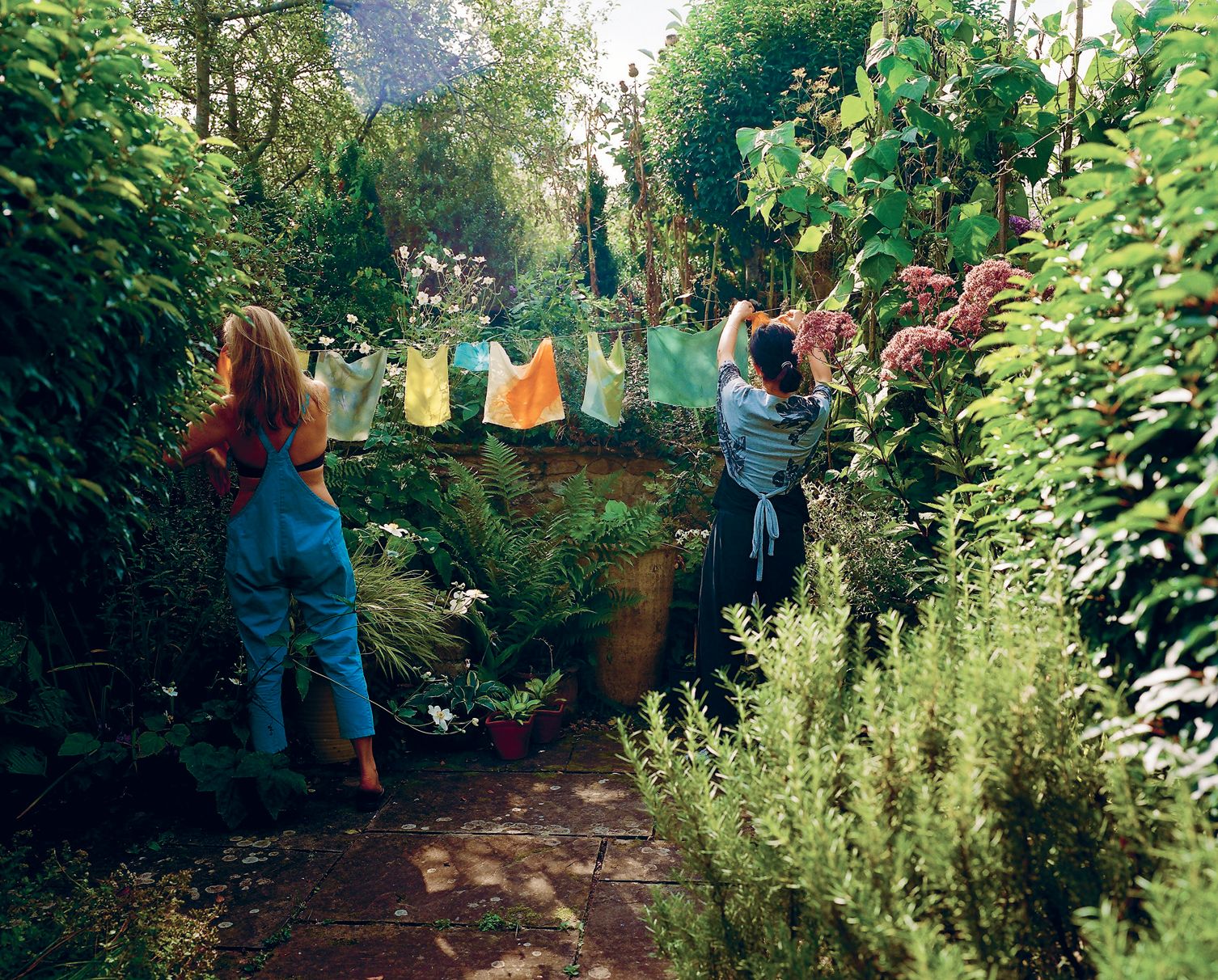
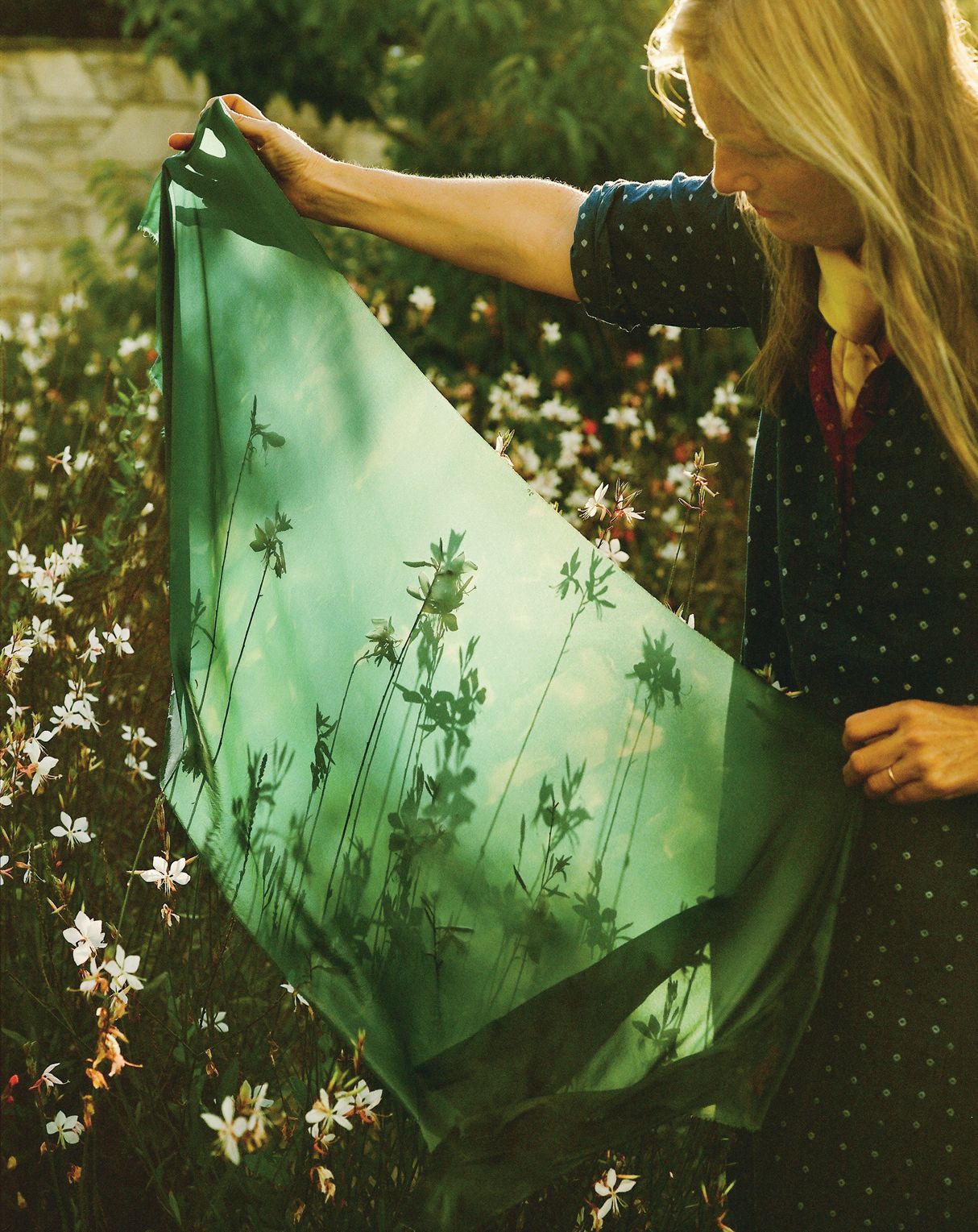
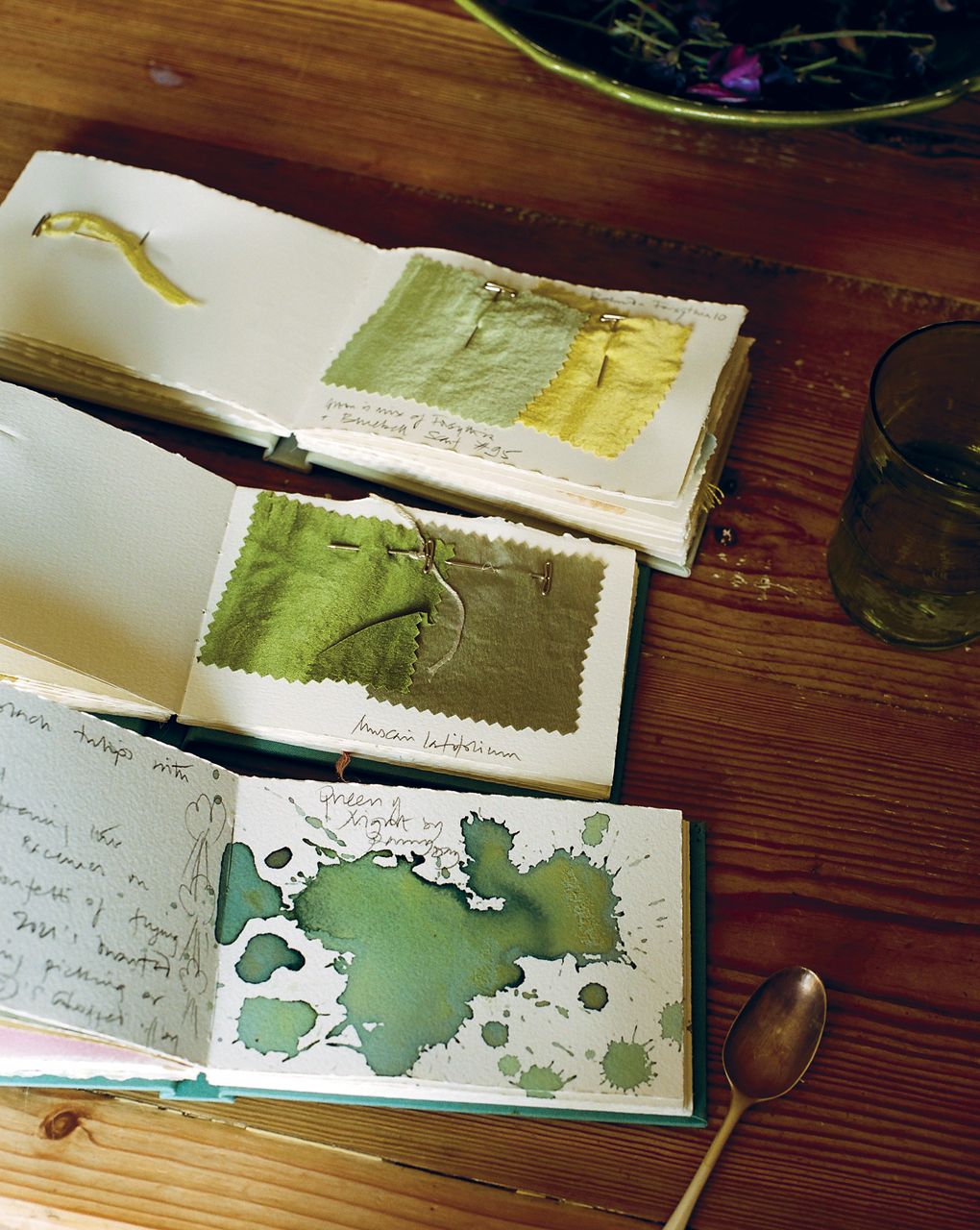
TC :It was about three or four years ago. I had some beautiful bearded irises in a vase, which were dropping ink on to the table. I picked up a paint brush and some watercolour paper and it absolutely blew my mind that you could get this unbelievable purple colour, just from the juice of an iris. Then I thought, I wonder if this would go on to fabric and started investigating and realised that there is a whole world of dyeing out there.
DW: Can you tell us more about your differing dyeing projects?
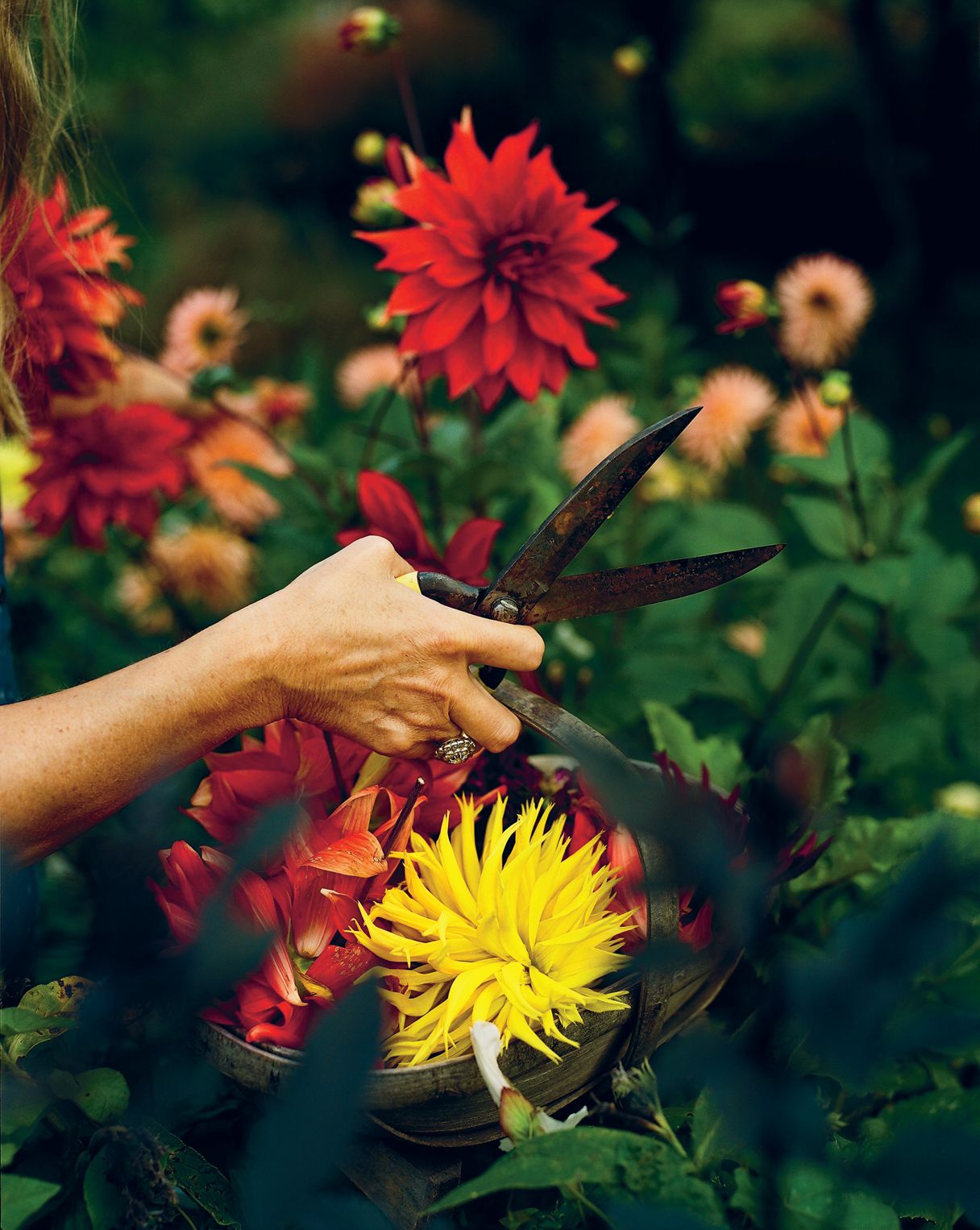
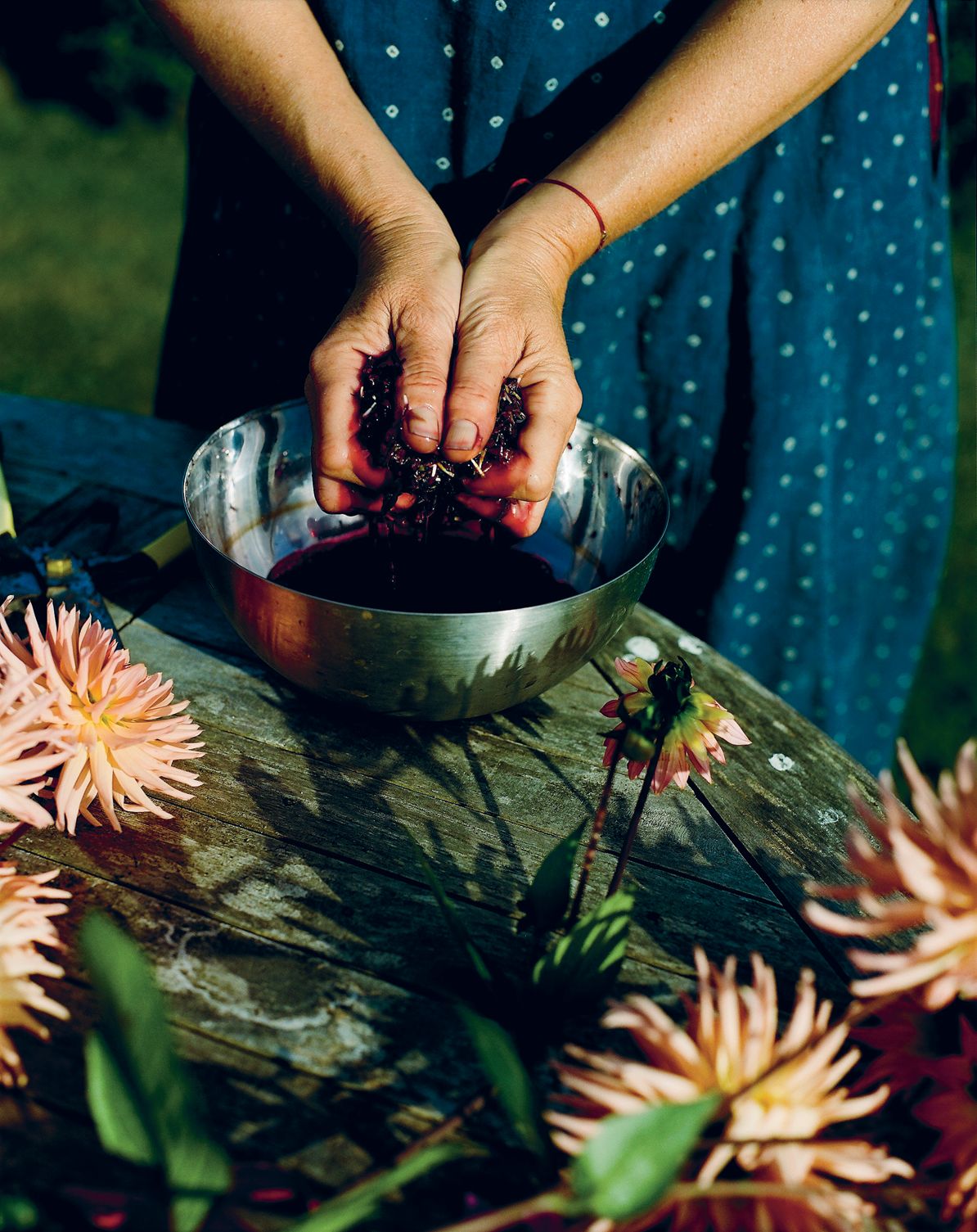
TC: I dye scarves made out of organic silk and I am gradually building up a kaleidoscopic herbarium of scarves, dyed with different plants. I use plants from the garden and from local woodlands; such as poppies, dahlia and cosmos. Last spring, I used bluebells to colour a scarf, which came out the most beautiful sky blue. One of my favourite colours is a coral pink which comes from a salvia. I am really experimenting; at the moment I am at stage one, which is working on colours, but, bit by bit, the scarves will become more complex as I start to add pattern to the colour. I also dye silk threads which I use for embroidery.
DW: What originally attracted you to working with dye?
TC: It’s as close as I can get to ‘doing a Kaori’, which is a homage and representation of the spirit of a plant. I am encapsulating a moment in the life of that plant.
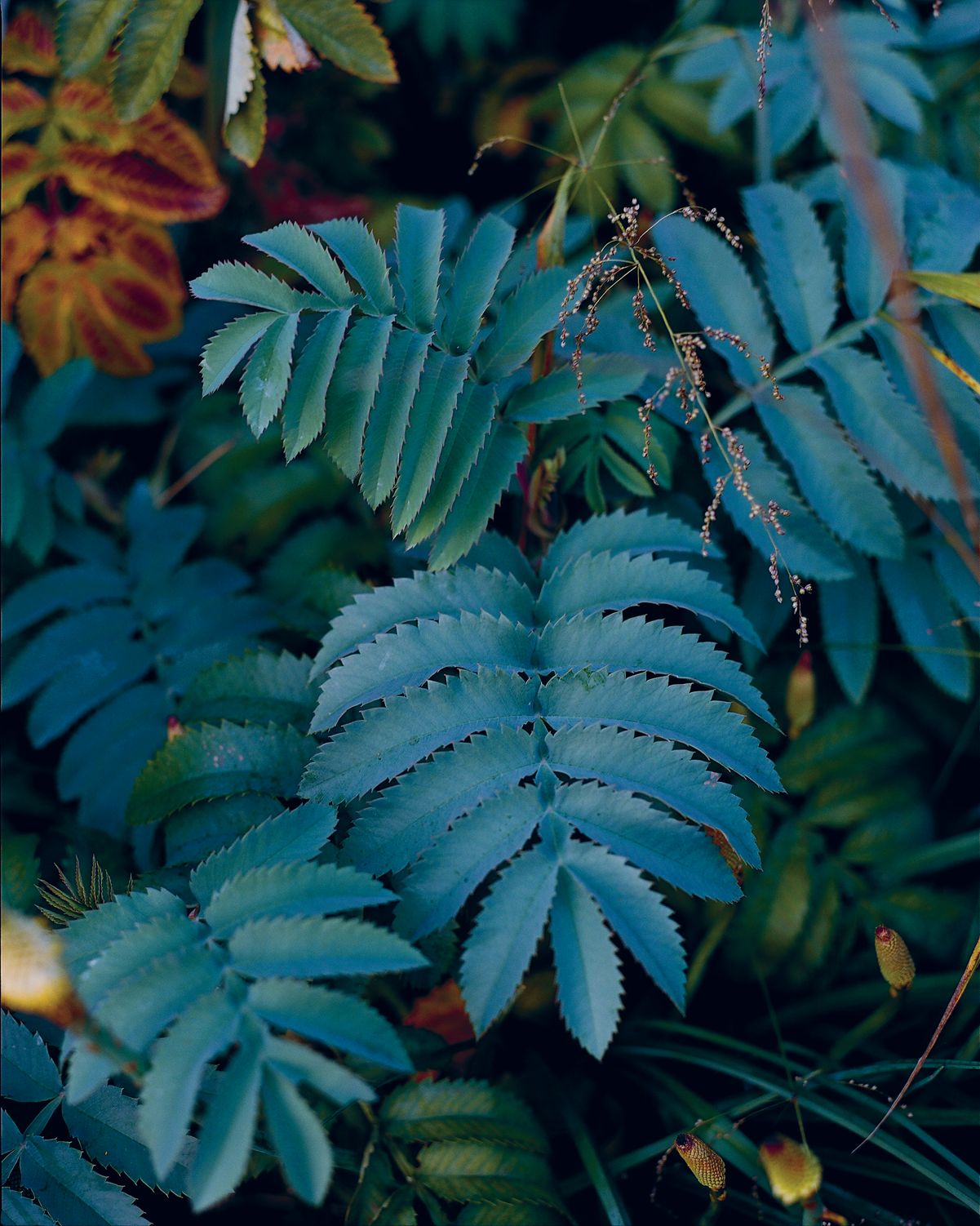
DW: This desire to capture a moment in a plant’s life seems to be something that you both share, as Kaori, I think this is an important aspect of your work too?
KT: Yes, my basic theme is to capture the moment, like photography. I also want to capture the feel of the seasons. For example, my hollyhocks, which I first made in 2018, were about the late summer, so the flowers weren’t depicted at their peak. There were a lot of seed heads, so they could capture that moment of late summer, when even the light and air feels different. Hollyhocks have become one of my favourite flowers to model. I like having the contrast in my work – the paper-thin flower petals, the sturdy stems and large palm-like leaves. The seed heads also add interest.
DW: It’s interesting that although your sculptures capture the essence of each plant form so vividly, they are made of white stoneware. Is colour secondary to form in your practice?
KT: I think if I colour my ceramics, it would be a distraction. For me it’s the clay which comes first. My work is about the form and how I can transform what I am looking at through my fingers, extracting things from flowers, plants and nature and making it into the object.
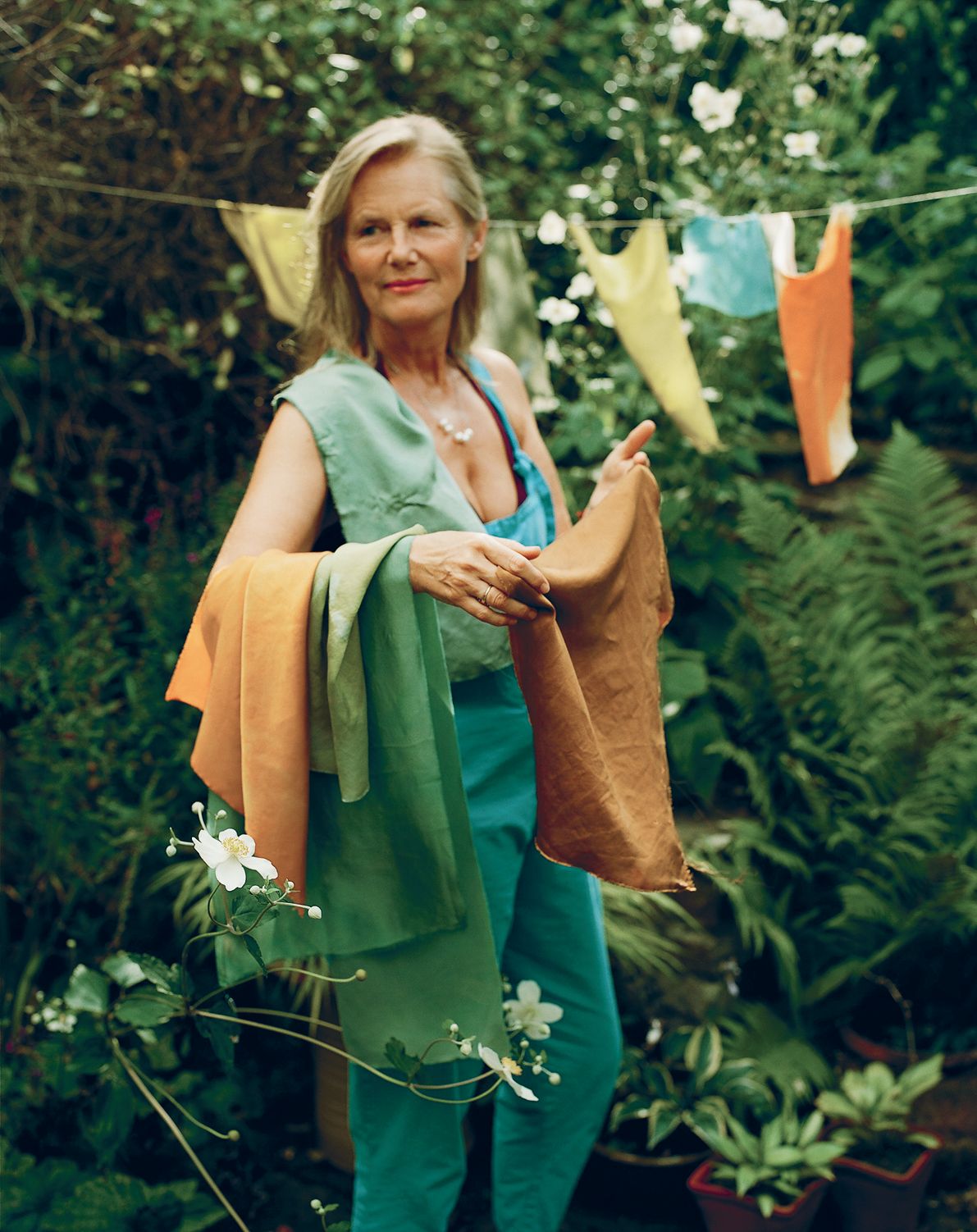
DW: Tania, as a dyer, your work is the opposite of Kaori’s, in that it is all about creating colour, but perhaps what is common to both your processes is the need to look at – and the joy of looking at – nature in almost microscopic detail?
TC: Dyeing has given me a new way of looking at plants and getting closer to them. I had probably exhausted my seeing and looking and the dyeing has made me very inquisitive again. Picking things apart to understand their structure is such a privilege to be engaged in; the investigative moments of really coming to understand the complexity of a single flower gets better and better. We are both very hungry for information and anything that will enlarge our knowledge about nature and deepen our awe.
DW: And you both share a love of gardening…
KT: Although I am growing lots of my models, I don’t really think of gardening as part of my work as gardening itself gives me pleasure and I just enjoy it. Planting is one of the best parts. I plant bulbs, including hyacinths, narcissus and daffodils in the hope of modelling them in the spring. I grow as many flowers and plants as possible to model from, including lilies, bearded irises, hollyhocks and daisies, but I also use the weeds that are there, like brambles, dandelions and bindweed. What I am looking for from the real plant is the imperfection, not the perfect. I buy flowers from the florist when I am desperate, but as much as possible, I want to grow them myself.
TC: Gardening is so giving of hope and growing things from seeds is one of life’s great privileges.
DW: This particular weekend your shared love of gardening, plant knowledge and joy in the creative process, has come together in a pot of jam, can you explain how?
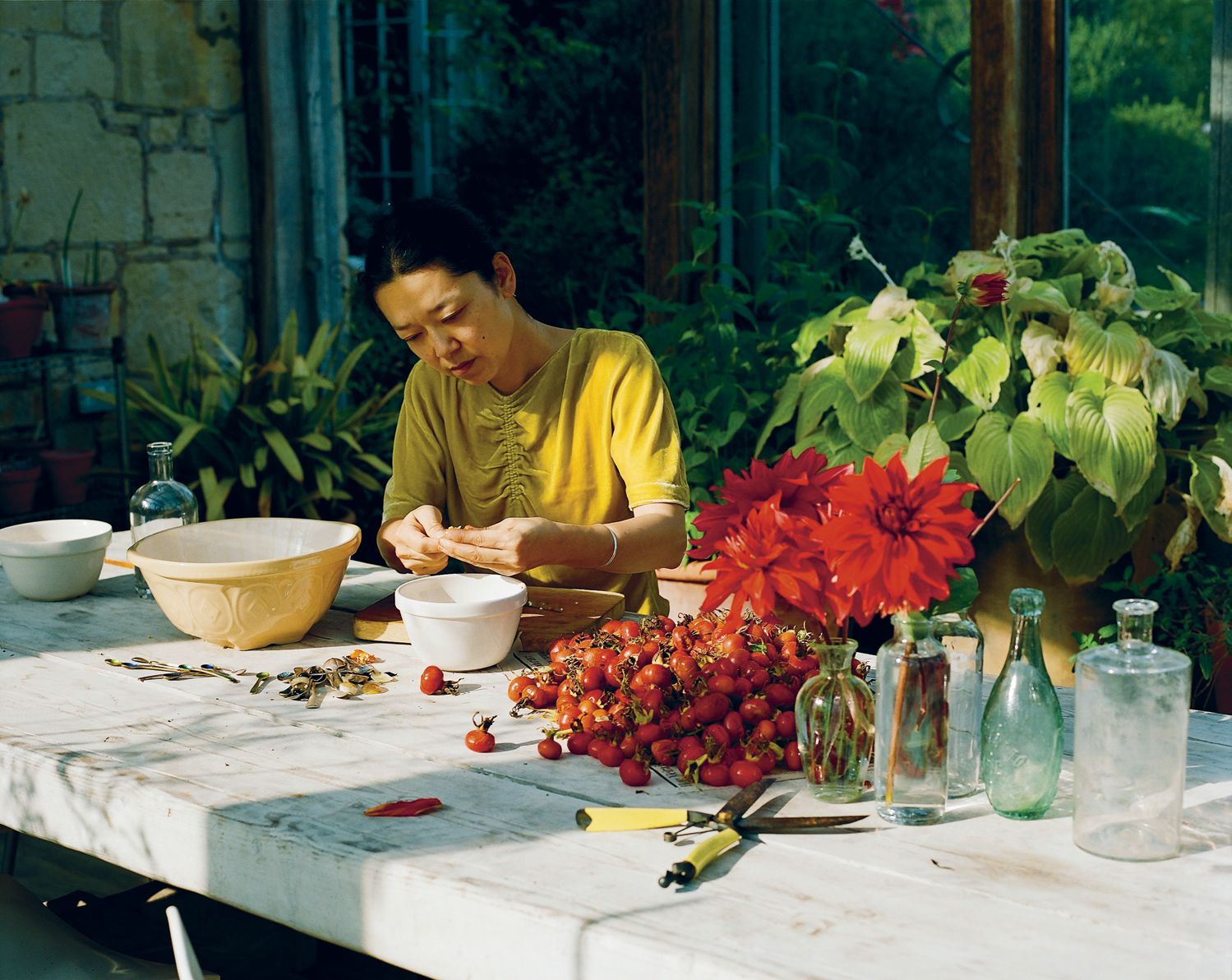
TC: Kaori saw all the Rosa rugosa hips in the garden and said, ‘Do you make jam?’ I said ‘no’, so she said, ‘Can I have some?’ so we ended up picking them and making her famous jam.
KT: I first came across rosehip jam when I lived in Denmark. The recipe was given to me by a fellow ceramist and I quickly decided it was my favourite of all the jams in the world. The recipe is very simple but the preparation is a labour of love.
EH: The jam-making was like a conflation of Tania and Kaori’s symbiotic existence, with one not being able to happen without the other. It was such a beautiful process – from hedge to toast!
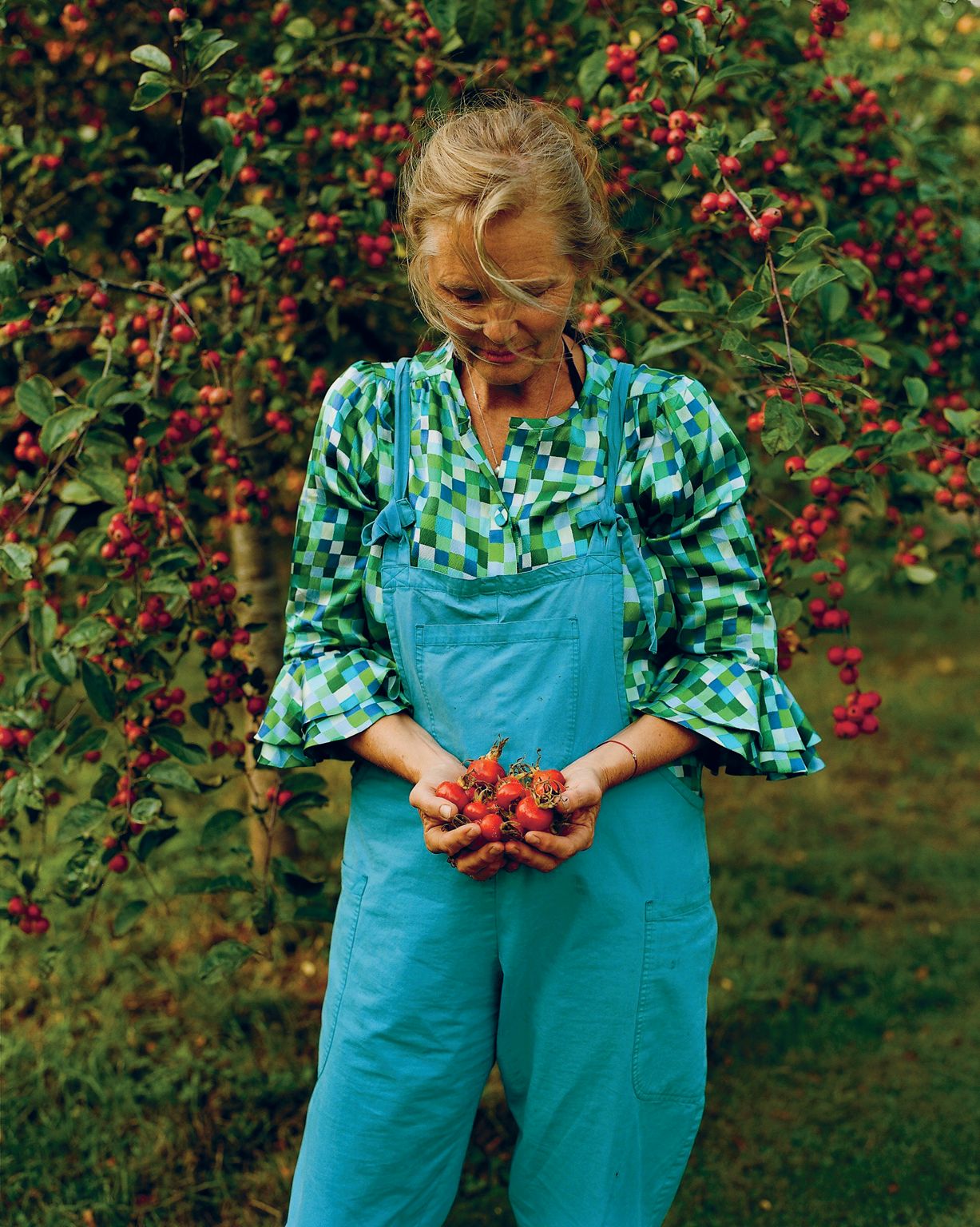
Kaori’s Rugosa rosehip jam recipe:
Rugosa rose is something you can find everywhere in Denmark, in hedges and by the sea, but not so common in Japan or in London, so I haven’t made it again until I visited Tania’s garden last year. So you can tell how excited I was. And the result was as good as I remembered.
Pick Rugosa rosehips preferably after the first frost.
Cut off top and tail of the hips and then cut into half.
Discard all the seeds (you will get more seeds than the actual fruit ) using a tiny spoon.
Weigh the hips and put aside 70%-100% sugar of the fruit weight.
Put rose hips in a heavy based pan, add water just enough to cover, not too much as the water from the hips will come out with the heat.
Cook gently until the fruit softens and add sugar at this point.
Cook for further 30 minutes or so until you get desired consistency.
Add some lemon juice, I would allow half a lemon per 800g rose hips.
Ladle into sterilised glass jars and it’s ready for the winter months.
(Great source of Vitamin C!)