In the Studio with... Martyn Simpson
Photos Sam Walton
Martyn Simpson studied Fine Art at Goldsmiths and has worked as a photographer, painter and sculptor, as well as curating art exhibitions, for more than 30 years. More recently however, having noticed an emerging presence of utilitarian forms such as shelves and cabinets in his sculptural work, Simpson has turned his hand to furniture design, with wonderful results.
Influenced by his interest in Brutalist architecture, Simpson’s designs are sleek and contemporary, formed of clean lines and geometric shapes. While the collection can be taken as a series, with each piece representing a variation on a theme, each piece can also be appreciated in its own right, as a stand-alone artifact.
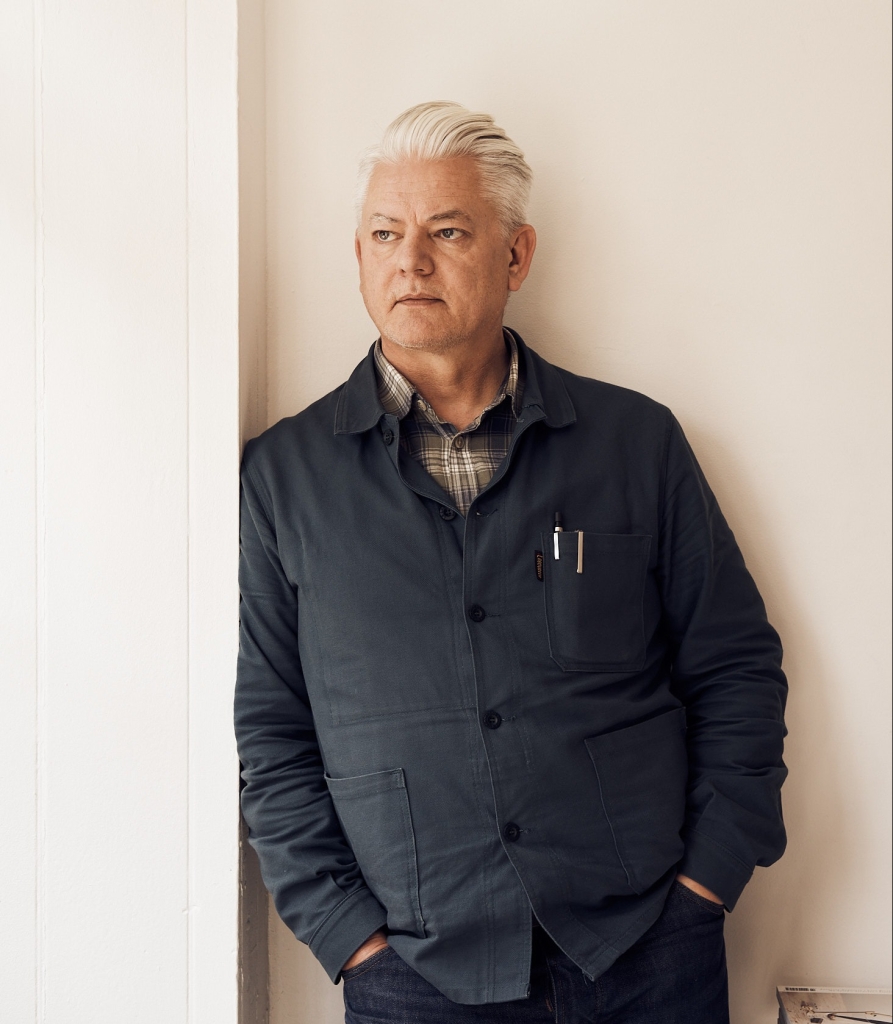
Simpson, who studied Fine Art at Goldsmiths, has recently turned his hand to furniture design
While Simpson may have moved further away from his artistic roots for this project, his method of design remains highly creative as some of the pieces in the collection were improvised as he worked. We talked to Simpson about his studio and how his Studio Furniture – so-called after a brand of furniture design that originated in America and centered around one-of-a-kind or limited number production – as well as his design and making processes.
Tell us about your studio…
My studio is part of a stone-built stable block just five minutes from the village of Chilmark in Wiltshire, where I live. I’ve only had the studio for about a month so I’m still working out the best layout for workflow. Before this, I was working out of my very small single-car garage. It feels fantastic to be in a space that allows me to expand the scope of what I’m making because there are fewer limits to scale or complexity. I can’t wait to see where it takes me!
Describe a typical day
I’m not sure if there is a typical day. I currently have two careers: one as a maker and another as Associate Dean at University of the Arts, London, working across Camberwell, Chelsea and Wimbledon Colleges of Arts. I balance my hours in the studio with my UAL responsibilities, so I must be very efficient with my time, while granting myself the freedom to improvise and exploit happy accidents.
A typical day in my studio includes the modest ritual of putting on my workshop clothes and shifting into ‘making mode’, which entails focus, patience and attention to detail. Every process must be prepared for and rehearsed carefully because small errors in measurements can undo everything that has gone before. There’s a healthy degree of ‘being in the moment’ as a piece comes together.
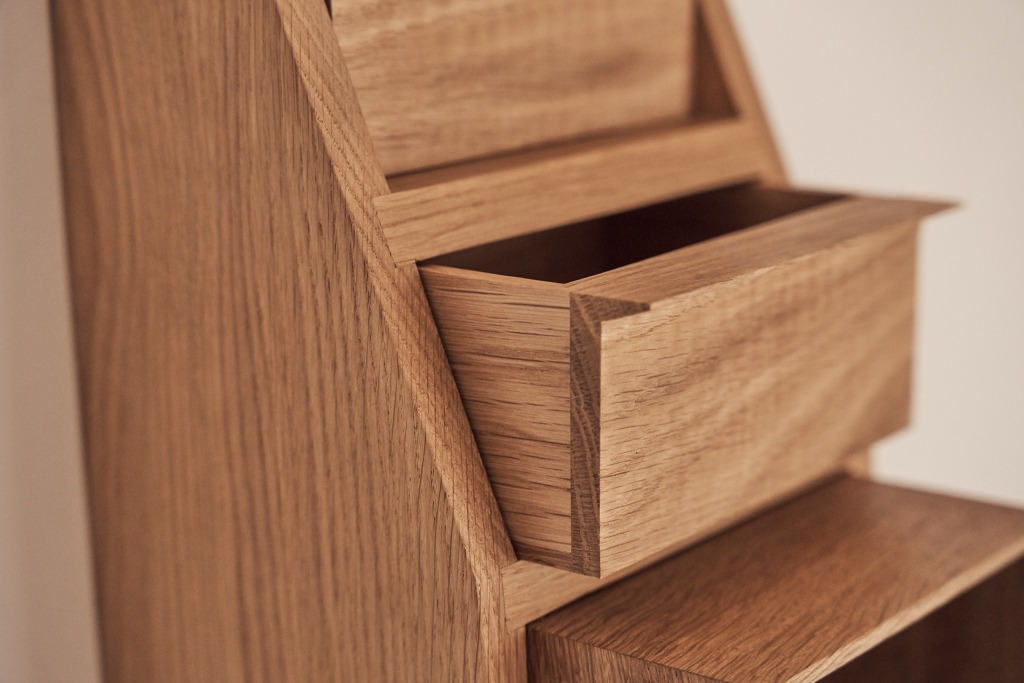
Simpson’s designs are influenced by his interest in Brutalist architecture – Martyn Simpson, Number Seven, pictured above, and Number Eight, pictured in hero image
What do you listen to?
Music is my other passion, so it’s always crucial that I select the right music for the day’s session. I have a broad, and often quite niche, taste, although I tend to choose mostly instrumental music while in the studio. At the moment I’m listening to a lot of jazz – Thelonious Monk and Ornette Coleman. I’m particularly enjoying the various projects of Shabaka Hutchings who is an amazing British saxophonist and composer.
Oh, and Radio 4 when I need the news.
What is the view from the window?
Beautiful Wiltshire farmland and, frequently, amazing skies – sunsets and cloudscapes.
Which three words would best describe your studio?
Rustic, spacious, dusty
What are the most used items in your studio?
I’d have to say the work benches and assembly tables are my most used, and most important, items. It is on these surfaces that the butting up or slotting together of two planes happens, or the bringing together of forms and voids. Above any machine or hand-held tool, it is while using these surfaces that most of my creative discovery happens.
Tell us about your series of studio furniture and how it came about…
The concept behind my studio furniture came to me when I realised that most of us, to different degrees, like to collect things, and that we often make meaning in our lives by holding on to these objects that have become precious to us. Each piece in this current series is composed of several small dedicated ‘chambers’ in which an artifact can be displayed and celebrated in its own space and light.
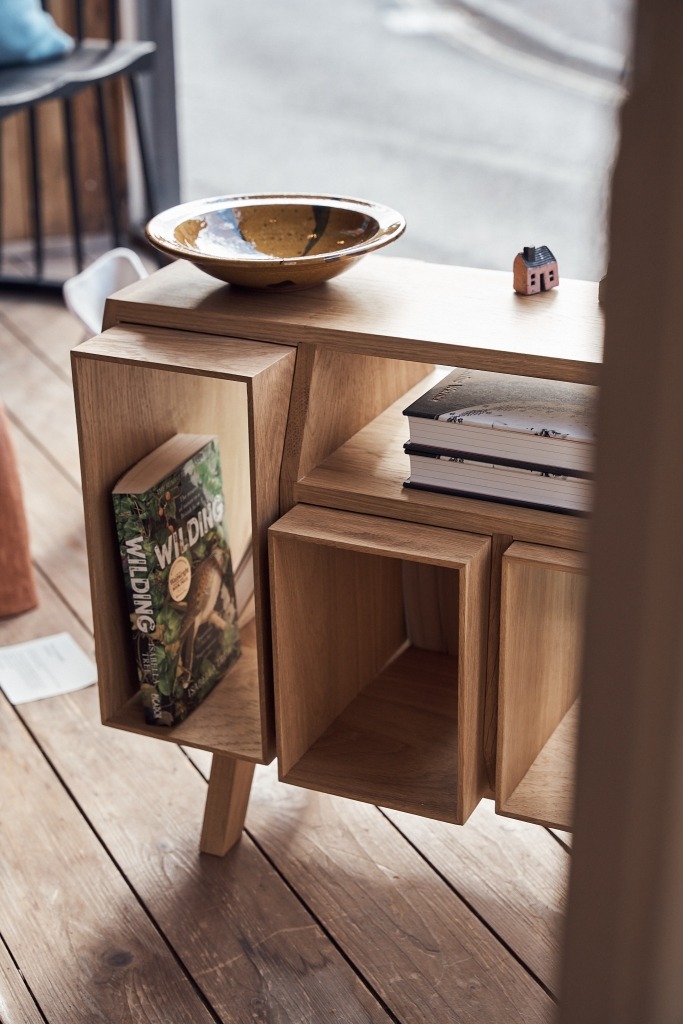
‘We often make meaning in our lives by holding on to objects that have become precious to us.’ Martyn Simpson, Number Ten – Book Donkey, above
What are you working on today?
I’m starting another free-standing piece based on the recent Number Ten – Book Donkey, which is currently in The Hole & Corner Shop. This piece is my reinterpretation of the Isokon Penguin Donkey Mk 2 by Ernest Race and, making it has helped me to generate several new ideas for floor-standing or tabletop pieces that I want to explore.
My design process involves quite a lot of testing things out as I work. Each piece is a kind of prototype and has a relationship to the last and the next in the series.
What has been your favourite recent design?
My recent piece, Number Nine, takes the basic ‘frame and box’ idea and sets up a slightly more complex relationship between each component. I’ve enjoyed seeing how well it is animated by Richard Pomeroy’s porcelain vessels in The Hole & Corner shop and how it changes as the light moves across it throughout the day.
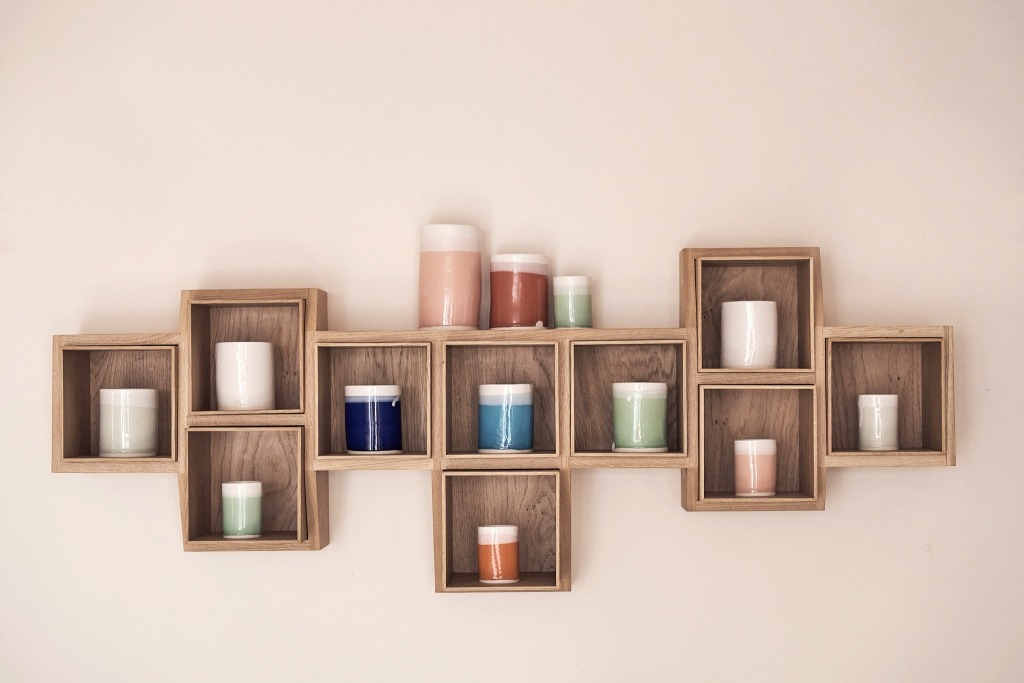
Martyn Simpson, Number Nine
Explore the Brutalist architecture Martyn’s taken inspiration from for his work here.