Material solutions for a healthier planet
Words Tamsin Blanchard
I remember the summer of 1976 well. It was hot for weeks on end. Water was rationed because of the drought, and in parts of the south west, there was no rain for 45 days. There was a plague of ladybirds, which swarmed all over the white walls of our house. Everyone was irritable and fractious; that was the year my parents split up. I was only seven, but I don’t recall anyone talking about global warming back then. It was, of course, a warning for what was to come.
Forty-six years later, Portugal has been enduring temperatures of 46 degrees and the UK faced its first red weather warning as temperatures reached 40 degrees. Enjoying a hot, sunny day on the British coast increasingly feels like a guilty pleasure as it’s become more important than ever to do so in ways that don’t add to the problem.
Several positive solutions – which help to clean up and reduce impact – have come to our attention. ‘Surf Wood for Good’ is a great idea which encourages sustainable surf and sea fun with free wooden bellyboard hire, from Poldhu Cove in Cornwall to Grimsby in Yorkshire. Set up by Cornwall-based surf company Dick Pearce Bellyboards, with the support of the charity Surfers Against Sewage, the project aims to reduce the shocking number of polystyrene boards discarded on British beaches each year. Keep Britain Tidy estimates there are more than 16,000 low-quality polystyrene bodyboards discarded annually. Their poor quality means they break up and create devastating microplastic balls in the ocean, endangering sea life. A well-made board from sustainably sourced wood makes so much more sense.
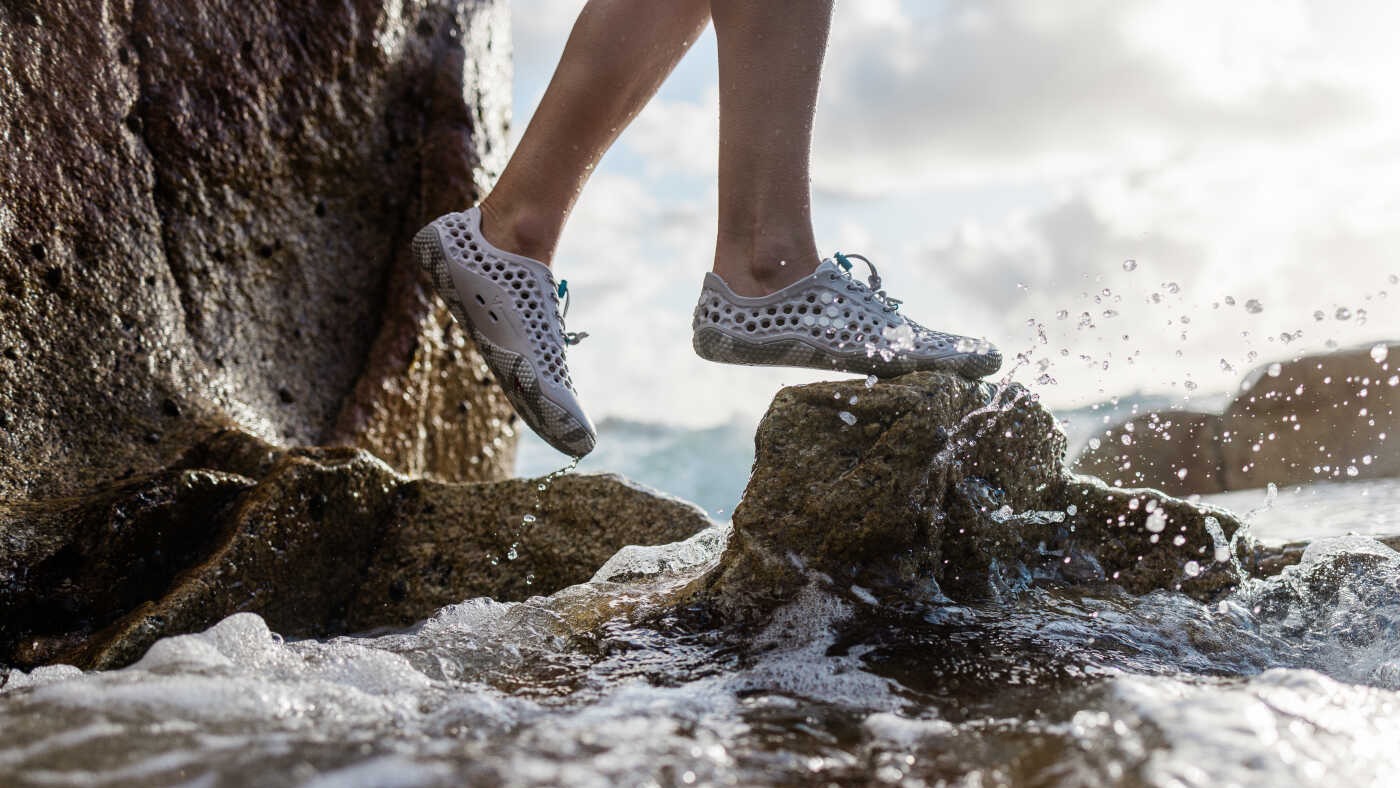
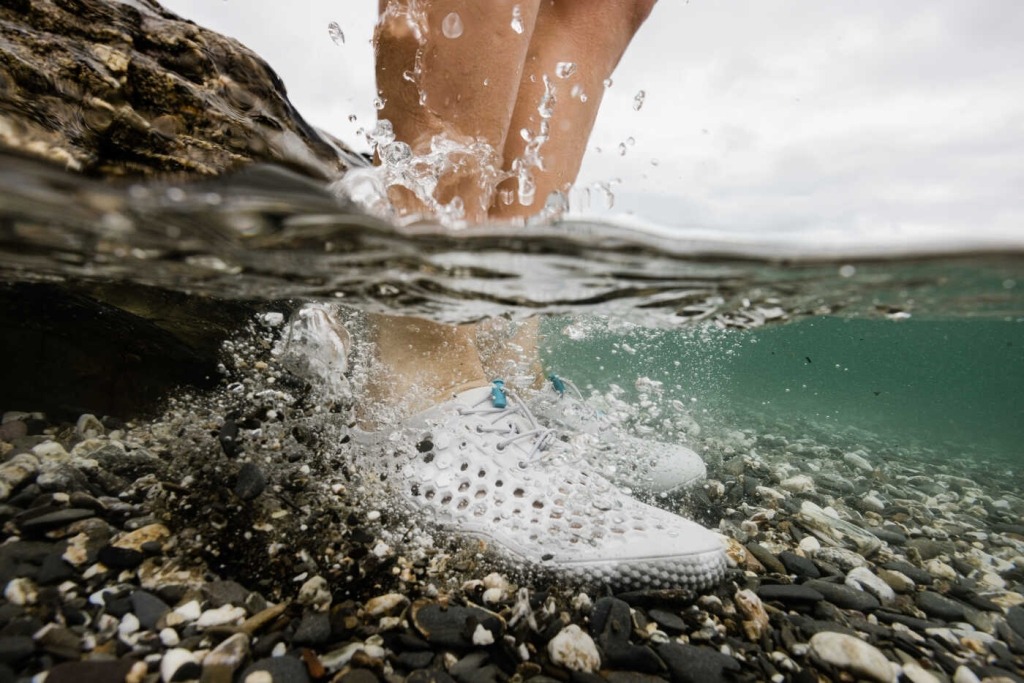 The Vivo Ultra Bloom III, contains foam made from the harmful algae bloom that pollutes our waters, making it the perfect shoe to wear for rockpooling.
As we all know, microplastics are a global problem, while our waterways are also being polluted by untreated run-off from industry and fertilisers. Algae bloom – the nasty foam that wreaks havoc in water systems around the world – is caused by excess phosphorous and ammonia. One clever company, Bloom Sustainable Materials, based in Meridian, Mississippi, has found a way to harvest the algae and make it into a bioplastic that it is using for a project called Tread Well.
The company claims to have cleaned up over 1 billion litres of water, and sequestered 138,877 kilograms of carbon dioxide into a plastic substitute to make shoes, which has resulted in our other favourite beach clean-up solution for this summer, the Vivo Ultra Bloom III, perfect water shoes for rockpooling and negotiating pebbly beaches.
Vivo Barefoot, the innovative British shoe brand, was the first to partner with Bloom and is so optimistic that material solutions like these are the way forward, it is investing in a prize to encourage research into biotechnology.
In June, in partnership with the American foundation, Innovation 4.4, Vivo Barefoot launched the 2022 Ocean Prize, which will award $50,000 to the best development of a 3-D printing biodegradable, nature-based material.
This innovation will form a core part of Vivo’s VivoBiome project: to create localised shoe production hubs by connecting indigenous cobblers with social entrepreneurs and technology, to find a way to slow down the production of shoes – currently 22 billion pairs a produced a year globally (for a population of just eight billion people).
The solution, they believe, lies in material innovations and 3-D scanning, used on a small, localised scale. While 3-D printing is a great way to slow down over-production – by enabling individuals to print what they need, when they need it – most of the materials currently used in this process are plastic and not biodegradable. Applications are now open, until March 2023.