Lost in Space
Words Tom Horan
Photographs Chris Brooks
At Toe Rag Studios, they offer not just a distinct, pre-digital sound but a value system: one built on owner Liam Watson’s hunch that musicians would want a place that put the humanity back into the recording process.
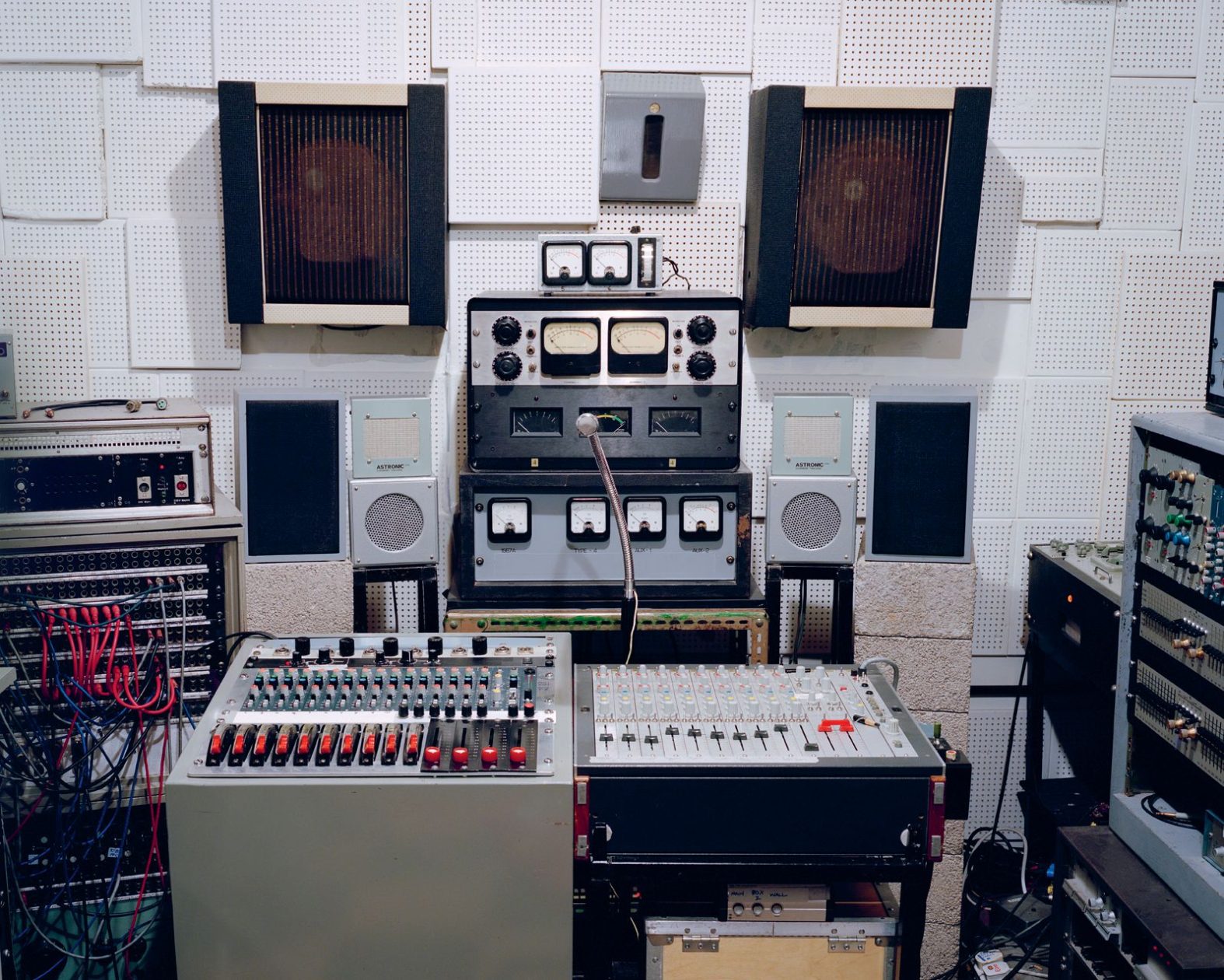
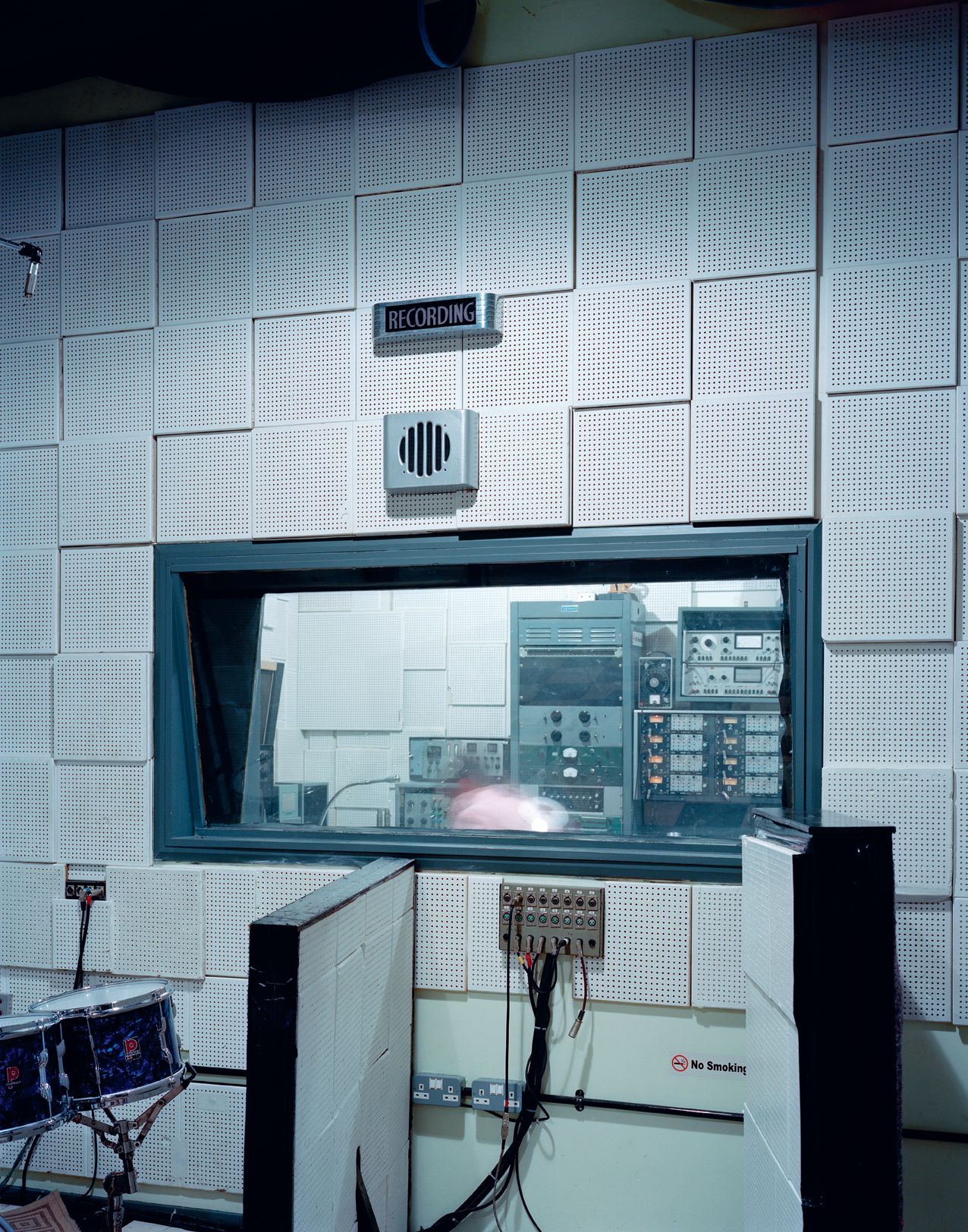
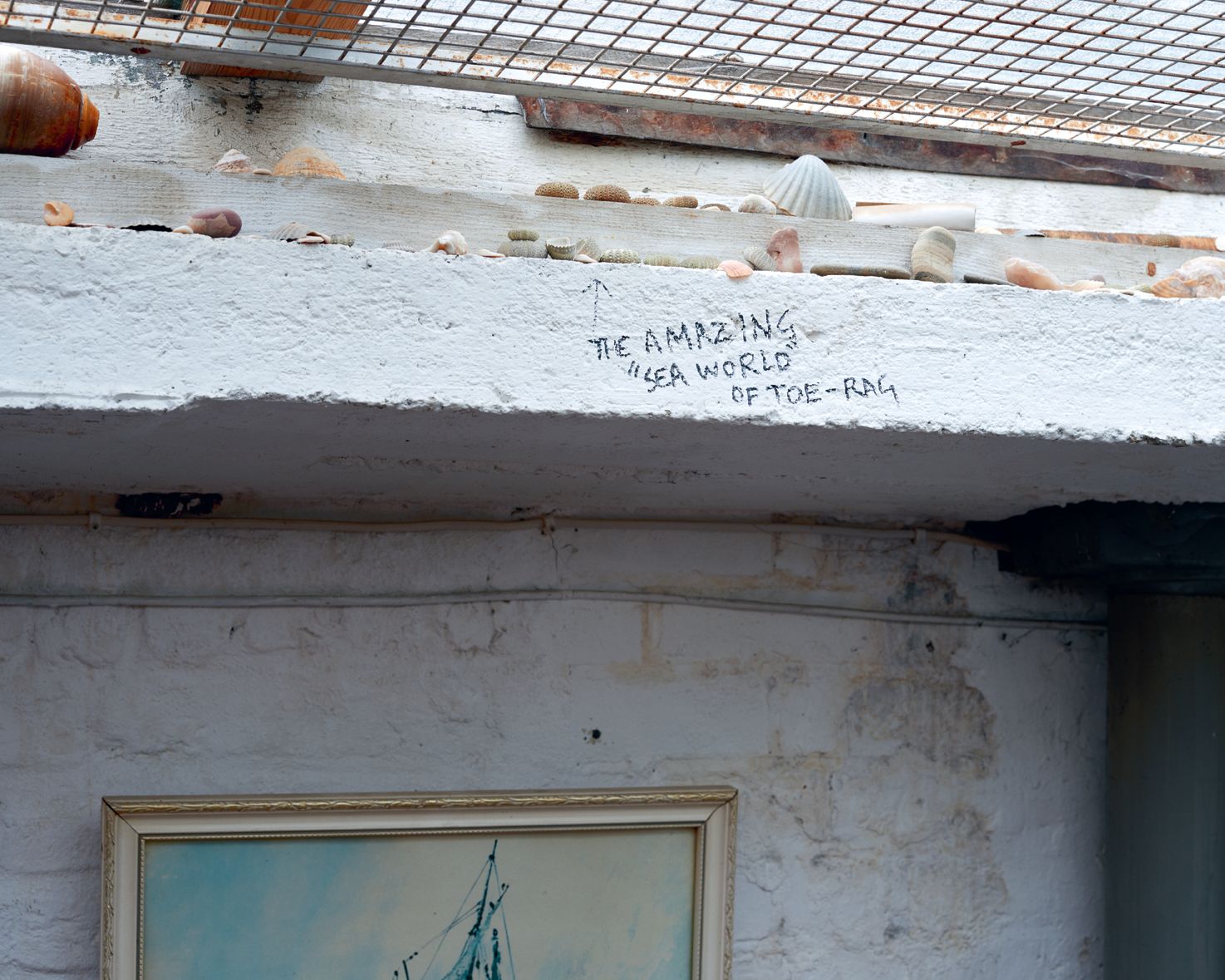
The furniture is of the battered variety found at car boot sales in non-descript shades of brown. The staircase boasts the finest chipboards and plywoods, with finishing touches applied from a roll of yellow and black trip-hazard tape. In some areas, assorted lino patterns of the past 40 years are available for clients to stand on. Air conditioning comes in the form of a rotary fan in the corner, which may or may not work. It looks as if they could probably find you a biro. Subjected to the unsparing gaze of the camera, as in these images, Toe Rag Studios does not perhaps look like a place where a piece of modern history was made. But in this no-nonsense corner of Hackney in East London, a seven-note melody was first captured on tape that has since become the most popular and influential tune of the millennium. Tiny Toe Rag incubated a monster. You may not know its name – but you can definitely hum it.
In a city in thrall to the construction of ‘luxury modern flats’, ‘luxury modern office space’ and ‘luxury modern hotels’, the unluxury offered by Toe Rag was certainly part of what drew Detroit blues refusenik Jack White to the studio in 2002. With partner Meg White, over a two-week stint in April of that year he recorded Elephant, the White Stripes’ fourth and most influential album. And as part of the process, he laid down the riff that ate the world, the seven-note repetition that drives forward the hit single ‘Seven Nation Army’: ‘dow, dut da-na, dut da, dow / dow, dut da-na, dut da, dow’. Thirteen years after it was recorded, its modest YouTube tally of 75 million views barely does justice to its adoption as the rallying cry of the 21st century – chanted along to by billions at mass gatherings from football matches to the civil uprisings of the Arab Spring.
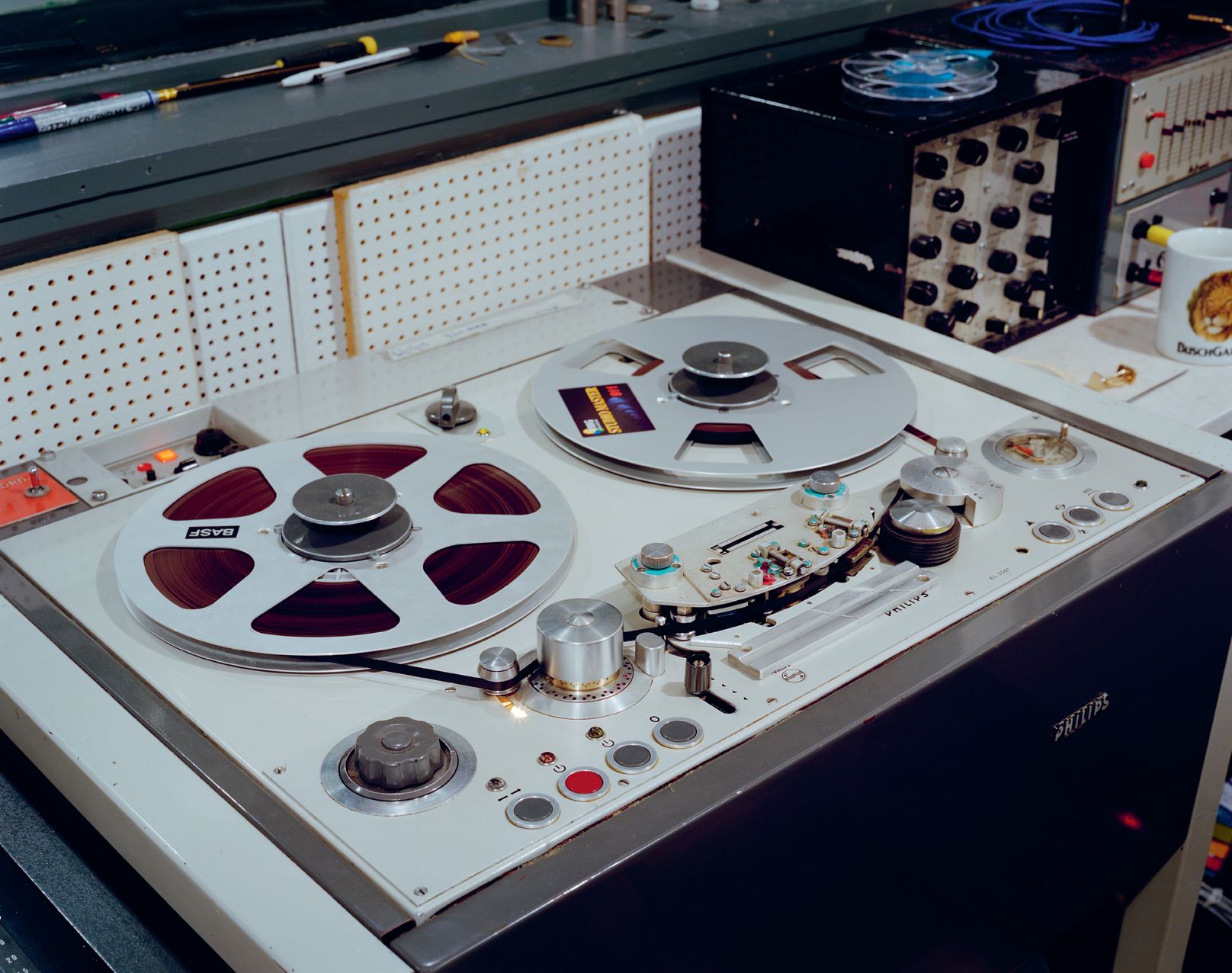
There’s no doubt that Toe Rag played a significant part in giving White’s tune its special and enduring qualities. The studio is owned and run by Liam Watson, who played at the time in a band that supported the White Stripes on their first UK tour. If the ascetic White was partly drawn by the no-frills set-up that Watson described to him, Watson’s collection of vintage, non-digital recording equipment also piqued his interest. Toe Rag is a living museum of the recording process, a space stacked high with analogue machinery, each piece affording its user a gateway to the musical past. At its heart is a mixing desk that offers just eight tracks to play with. The modern digital studio has 64 tracks and infinite sonic possibilities, the chance to tweak and edit even the flimsiest artistic effort into something apparently perfect; stripped of that tyranny of unlimited choice, an artist at Toe Rag falls back on the quality and immediacy of what they play. And it is the dramatic intensity of White’s performance – captured by Watson on old-school magnetic tape – which makes ‘Seven Nation Army’ the melodic line that still fires the global imagination.
It’s fascinating that this song – named after White’s childhood mishearing of ‘Salvation Army’ – has been the one the world has chosen. Firstly, it isn’t the lyrics that are sung. It’s not a catchy chorus that people chant – ‘Seven Nation Army’ has no chorus. Instead they have adopted the gravelly lick that White plucked from the air in those stripped-down sessions at Toe Rag, playing his 1950s Kay Hollowbody guitar, modified through one of Watson’s vintage effects pedals. More significant though, is that the 13-year period since it was released has seen an explosion in the amount of music made on computers. The music that sells today is almost entirely made this way. Perhaps it’s not so strange then that what touched the global consciousness was something visceral and raw, the particular live performance of one man, laid down for posterity by means of ancient machines twice his age. What makes it exceptional is not so much what he played, but the way he played it – and the way that Toe Rag made it sound.
White has watched the vast, unceasing reach of his Hackney analogue moment with pride. ‘Nothing is more beautiful than when people embrace a melody and allow it to enter the pantheon of folk music,’ he has said. ‘As a songwriter it is something impossible to plan, especially in modern times. I love that most people who are chanting it have no idea where it came from. That’s folk music.’ For studio chief Watson, his engineering and mixing work on the song – and on Elephant as a whole – won him a Grammy in 2004 for Best Alternative Music Album. More than that, it sprinkled a magical dust over Toe Rag, which he had originally founded in Shoreditch in 1991, at a time when the music business was embracing the rise of digital recording. It was a resounding vindication of his decision to pursue the more human feel of the analogue equipment that he had lovingly collected over the years.
‘My favourite records are from the Fifties and Sixties,’ Watson told music-technology bible Sound on Sound. ‘When we were setting up, I said to my business partner that what I’d really like to do would be to make a studio like an old studio was – with old analogue stuff …That kind of sound wasn’t really being achieved any more. I didn’t want to build another bog-standard 24-track studio.’ He saw it as ‘a bit of an experiment’ but that certain people would understand his pre-digital mission. ‘You’re basically working on performances. You know when the feel’s right, and if the feel isn’t right, then you just do it again.’
People often talk about the ‘magic’ of recordings studios. You only have to see the pilgrims gathered at Abbey Road in North London – perhaps the most famous of them all – to see that there is a fascination with these physical structures that take moments of musical inspiration and anchor them in a particular place. Brian Eno, producer of best-selling U2 and Coldplay albums as well as countless arthouse projects, describes the process like this: ‘Recording makes repeatable what was otherwise transient and ephemeral. Music, until about 1900, was an event that was perceived in a particular situation, and that disappeared when it was finished. There was no way of actually hearing a piece again, identically. The piece disappeared when it was finished, so it was something that only existed in time. The effect of recording is that it takes music out of the time dimension and puts it in the space dimension. As soon as you do that, you’re in a position of being able to listen again and again to a performance, to become familiar with details you almost certainly had missed the first time.’
The alteration of the time dimension gives a studio a charged and heightened atmosphere. Time inside it is radically different to time in the outside world, of which almost all signifiers are removed. There are no windows. The comings and goings of routine lives, the transition between day and night, are expelled. The famous ‘clock’ that managers keep an eye on is focused entirely on minutes spent in the studio, not the outside world. Here is a place where ideas, thoughts and emotions first sensed elsewhere are brought inside to be focused, honed and crystallized. The light tends to be low, the LEDs of the mixing desk glowing like that other capsule of removal from everyday life, the cockpit of an airliner. The sound-proofing baffles and convoluted foam tiles that line the walls dampen the acoustics to a point that feels like being on the sea bed. Rackets may be made in it, but in its resting state, a studio has the hushed aura of the sacred place.
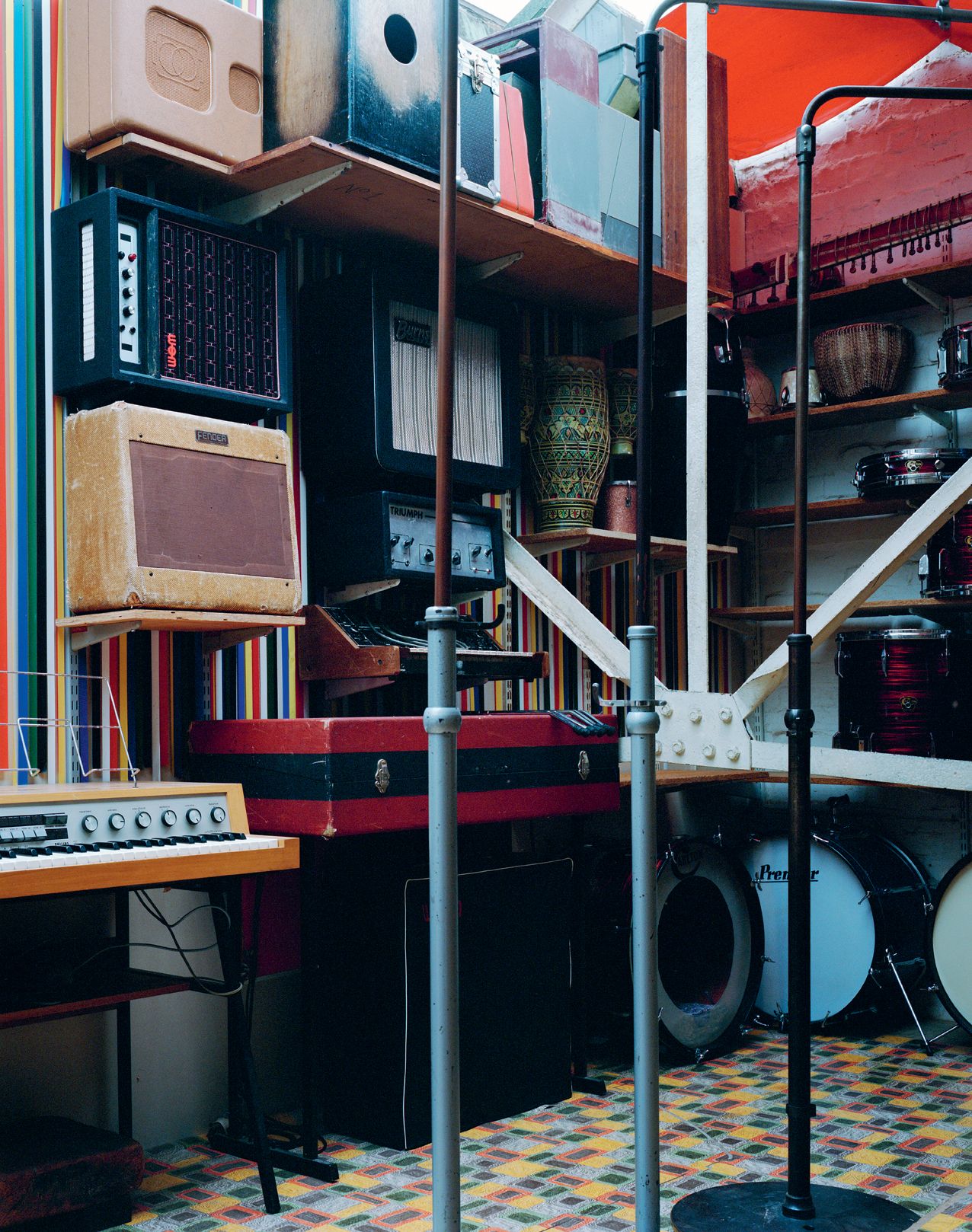
As if that’s not enough intensity, it’s a building crammed to the rafters with ways to make music, the king of languages. A studio is a building practically humming with latency, with creative potential, with might-bes and could-bes waiting to be realised. Every guitar and drum, maraca and bassoon, microphone and keyboard is just vying to show what it can do. All that’s needed is to add people. And this is where the magic ceases being a possibility and moves into a more exciting realm: it’s actually going to happen – right here, right now. Because collaboration is the magic that takes place in a studio; it’s an agreed meeting place for it, and the possibilities are limitless.
Much has been made of Liam Watson’s collection of classic equipment: the vintage EMI REDD 17-valve desk from Abbey Road, the mid-Sixties one-off console built by an ex-BBC engineer. But while they may have their appeal, it was surely not just these objects that led Jack White to Toe Rag, and the golden moment that will probably define his career. What Watson offered was a value system – a way of doing things that corresponded with White’s own, and a space in which to do those things that he could share with likeminded people. As technology gained ascendancy in the primal human activity of music making, so it was Watson’s hunch that a place that put the humanity back into the process would become desirable. White’s hunch was equally good: his kind of music became desirable too – and gave Toe Rag a cachet that for Watson has been priceless.
While more would-be music producers than ever hunch over screens at night a few feet from their duvets, Toe Rag today is a thriving business. Of course fantastic music is made all the time with digital technology, and it feels both democratic and liberating that with a bit of cheap software anyone, anywhere can have a recording studio in their laptop. Certainly, Watson is not a purist: ‘People can make great records in their bedroom on a computer, and they make better records than some rich rock star who’s just bought an EMI desk and a load of Fairchild limiters. It doesn’t really matter what you use as long as it does the job.’ What has sustained his recording studio – and all those that have survived the revolution in the music industry brought on by tech and the internet – is that no amount of bandwidth can replicate the human electricity of people playing together in the same place at the same time. Watson and the plywood charms of Toe Rag provide that space, and the chance that somewhere in it, the ghost of Jack White’s seven-note masterpiece is waiting to inspire you.