Shrine of the Times
Words Danielle Demetriou
Photograohs Alan Clarke
It is perhaps unexpected to find the words ‘innovation’ and ‘Buddhist altar’ in the same sentence. Yet Wakabayashi Butsugu, a Kyoto company founded nearly two centuries ago, is a master at balancing its heritage with modern times.

Around fifty specialist artisans derive inspiration from generations of highly specialised craftsmanship techniques in order to produce Buddhist altars for homes as well as ancient temples and historic cultural properties.
The art of altar making is, perhaps unsurprisingly, as complex as it is traditional: the process at Wakabayashi navigates a delicate pathway through 20 specialist stages, bringing together as many as 3,000 components.
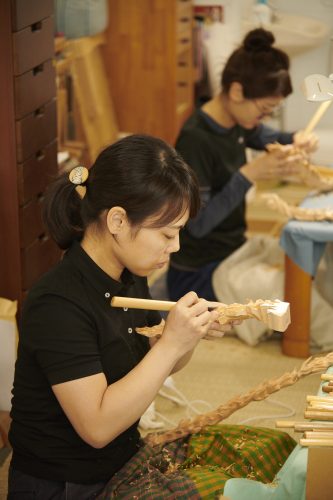
From gold leaf paperers, colourists and wax mould casters, to precious metal carvers, lacquer artisans and Buddha sculptors, a network of meticulously trained artisans, each with their own specialty, brings to life Wakabayashi’s famed altars.
It is generally a perilous time for Japan’s long treasured craftsmanship landscape, with tapering demand for traditional products, combined with ageing artisans, creating an uncertain future across the spectrum.

Yet Wakabayashi Butsugu is emerging as something of a paradigm for the survival of traditional crafts. Key to its drive to adjust to modern times is charismatic Tomoyuki Wakabayashi, the seventh-generation president since its establishment in 1830 and the mastermind behind a raft of innovations.
Once upon a time, there were few Japanese households that did not have a butsudan or Buddhist home altar, where families would pray to the spirits of their ancestors. Typically the size of a small cabinet with two opening doors plus images of Buddhas and calligraphic scrolls, it generally sits alongside candles, incense and offerings (from tea to fruit) in a tokonoma alcove at the heart of the home.
Younger generation Japanese tend not to have altars in their compact homes, and so the company now produces a contemporary line of altars, by designers including Naoto Fukasawa, which are designed to fit easily into 21st century lifestyles.
Examples include Keita Shimizu’s minimalist Kakehashi series, with its wood frames in light ash or walnut, complemented by a palette of textiles in sky blue and maroon, alongside traditional paper lanterns, with a clean-lined modern edge.
The company has also spearheaded a series of projects such as Raison d’Etre, a design exhibition featuring altar-inspired pieces by artists, architects and designers, brought to life by its artisans (Paris-based Ronan Bouroullec is next in line, collaborating with Wakabayashi on interior products).
Other measures include the opening four years ago of a sleek Kyoto flagship, its minimal white façade inspired by a lotus flower; plus a growing catalogue of lifestyle products, including the recently launched hito/toki home incense range.
Yet for all its diversification, it’s clear that the heart of Wakabayashi Butsugu has remained unchanged through the generations: namely, its unwavering commitment to sustaining its timeless heritage of high-quality traditional craftsmanship – albeit balanced with the shifting demands of a modern society.
‘Up until now, Wakabayashi has been involved in the production of Buddhist altars for home use and Buddhist altar fittings for temples, with 20 different categories of craftsmanship,’ explains Wakabayashi.
‘Everything is done professionally by hand, with a division of labour between different roles. The products produced are therefore the result of a complex combination of these processes.
‘Because of our handiwork, we excel at small-scale production. We have earned the trust of our customers, by using our skills to respond to their detailed requests and express them beautifully.
‘However, due to the changing consumer consciousness of modern society there are fewer and fewer opportunities for artisans to demonstrate their skills. In a society that seeks cost effectiveness and efficiency, the value of the handcrafted is becoming less understood.
‘The role of Wakabayashi is to continue to nurture and pass on many traditional craftsmanship techniques to future generations and I believe that demand for this will never disappear.’

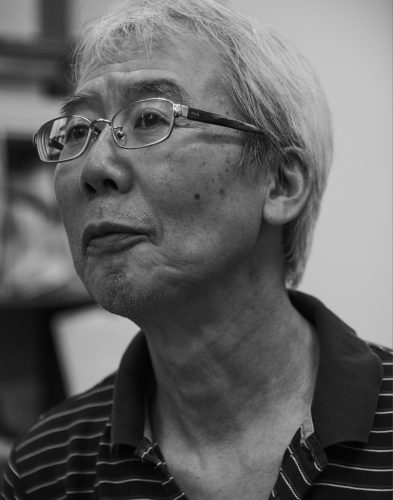
Artisan 1: Masaki Shimada
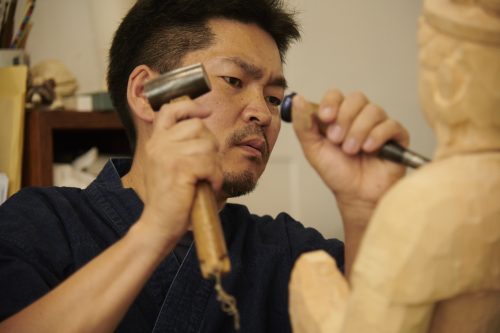
When Masaki Shimada, master of the centuries-old art of gold carving, is asked about the most difficult elements of his work, he is quick to respond: ‘The biggest challenge? It’s inheritance of techniques.’
This statement carries serious weight, bearing in mind the technical intricacies of his specialist area of expertise as a choukinshi (gold carver) – and casts light on concerns over the future of Japan’s heritage-rich craftsmanship.
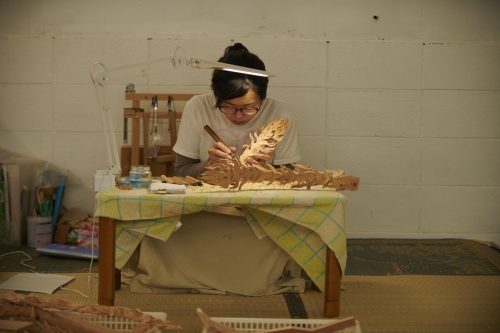
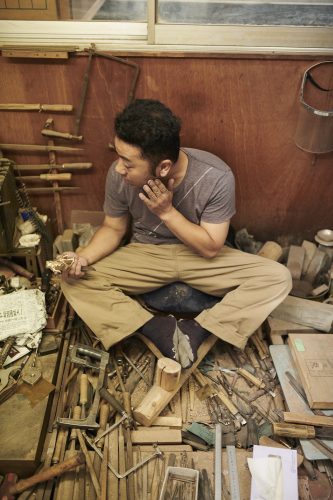
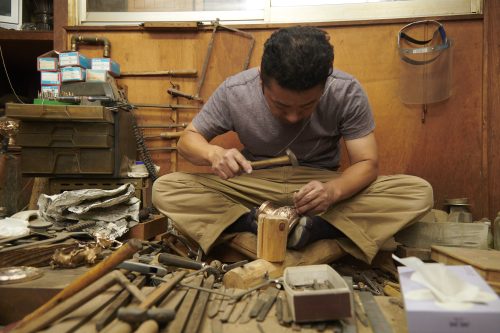
Gold carving is an artform that Shimada, now 43, has practised for more than 23 years, creating countless decorative ornaments in precious metals for historic temples and shrines. ‘It took around 10 years to learn this area of expertise – but I’m still in the middle of training myself.’
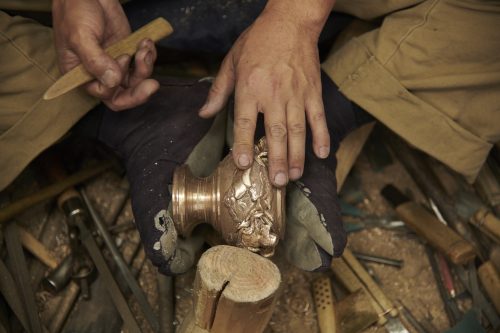
Kneeling on the floor at a low table, the materials he handles on a daily basis range from copper and silver to gold, which he then embosses using special tools, including a chisel known as a tagane.
Like many Japanese crafts, it’s an ever-evolving exercise in patience, with his unwavering commitment to excellence resulting in some projects taking as long as a year to complete.
For Shimada, his biggest concern, however, is the future of traditional crafts across Japan, which, he says, are in decline. ‘I want to attract people from all over the world to the amazing techniques of contemporary craftsmanship in Japan – just as it was when traditional crafts surprised the world in the Edo period, 1603-1867.’
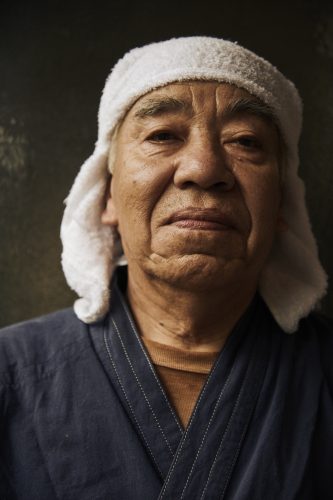
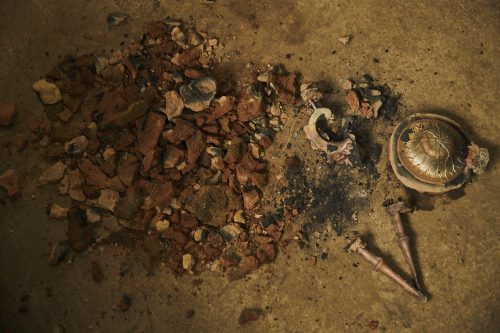
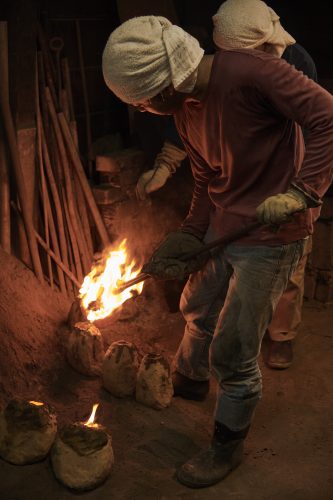
Artisan 2: Seiichi Yamazaki
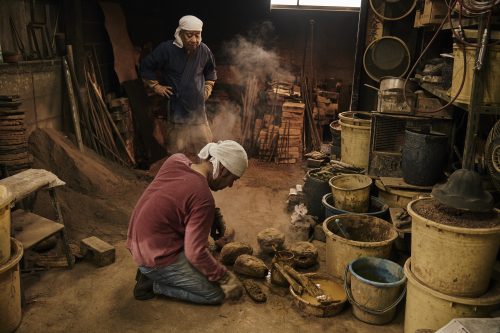
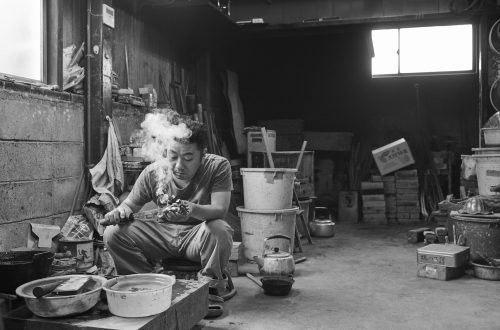
Mixing, drying, melting, pouring, polishing: it’s all about metal casting for third-generation artisan Seiichi Yamazaki.
Like many Kyoto artisans, Yamazaki, 46, first spent at least 10 years mastering the basic techniques of his craft, today producing mainly Buddhist altar fittings and traditional metalworks.
It’s a creative path that runs in his family: his grandfather first started working with Wakabayashi Butsugu seven decades ago and today, Yamazaki continues the tradition, alongside his 77-year-old father, Teichii.
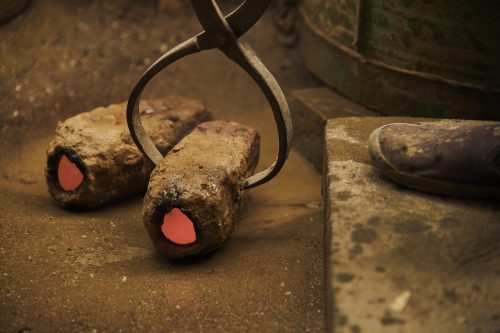
The metal casting process begins with the creation of a model using a special wax, which is painstakingly covered in a mixture of drying soil and clay.
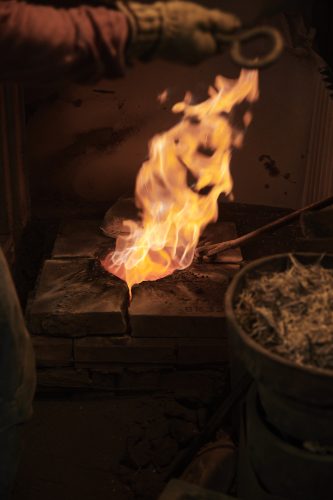
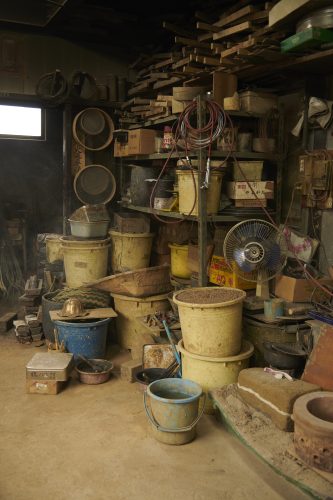
The model is then fired in pine charcoal known as matsu-zumi and chopped pine, matsu-waraki – before the wax is emptied and replaced with molten metal.
After the metal has cooled, the next step for Yamazaki is breaking the model and releasing the product – before painstakingly carrying out the kisage ‘hand scraping’ step, polishing the surface with whetstone and finally, a charcoal brick.
The process is as time-consuming as it is meticulous: it takes a month to make a set of gogusoku, which is a set of five fittings for Buddhist altars in temples, including two bases, an incense burner and two candle stands.
A highlight for Yamazaki? ‘What I enjoy most is finding a way to prevent the casting from failing.’
Exploring ways to keep the craft alive in modern times is another preoccupation for both Yamazaki and his father: ‘We seriously worry about the decline in demand for products made using this traditional technique. We want this technique to continue to future generations so we need to make it known to people using SNS and websites.’
Artisan 3: Takashi Sudo
The timeless pursuit of perfection and an altruistic commitment to creating, have fuelled Japan’s famed shokunin craftsmen for centuries – and Takashi Sudo is no exception.
Modestly reflecting on how long it took him to master his own craft, Sudo says: ‘Five, ten, 15, 20 years…. I’m still not satisfied with my knowledge and techniques.’
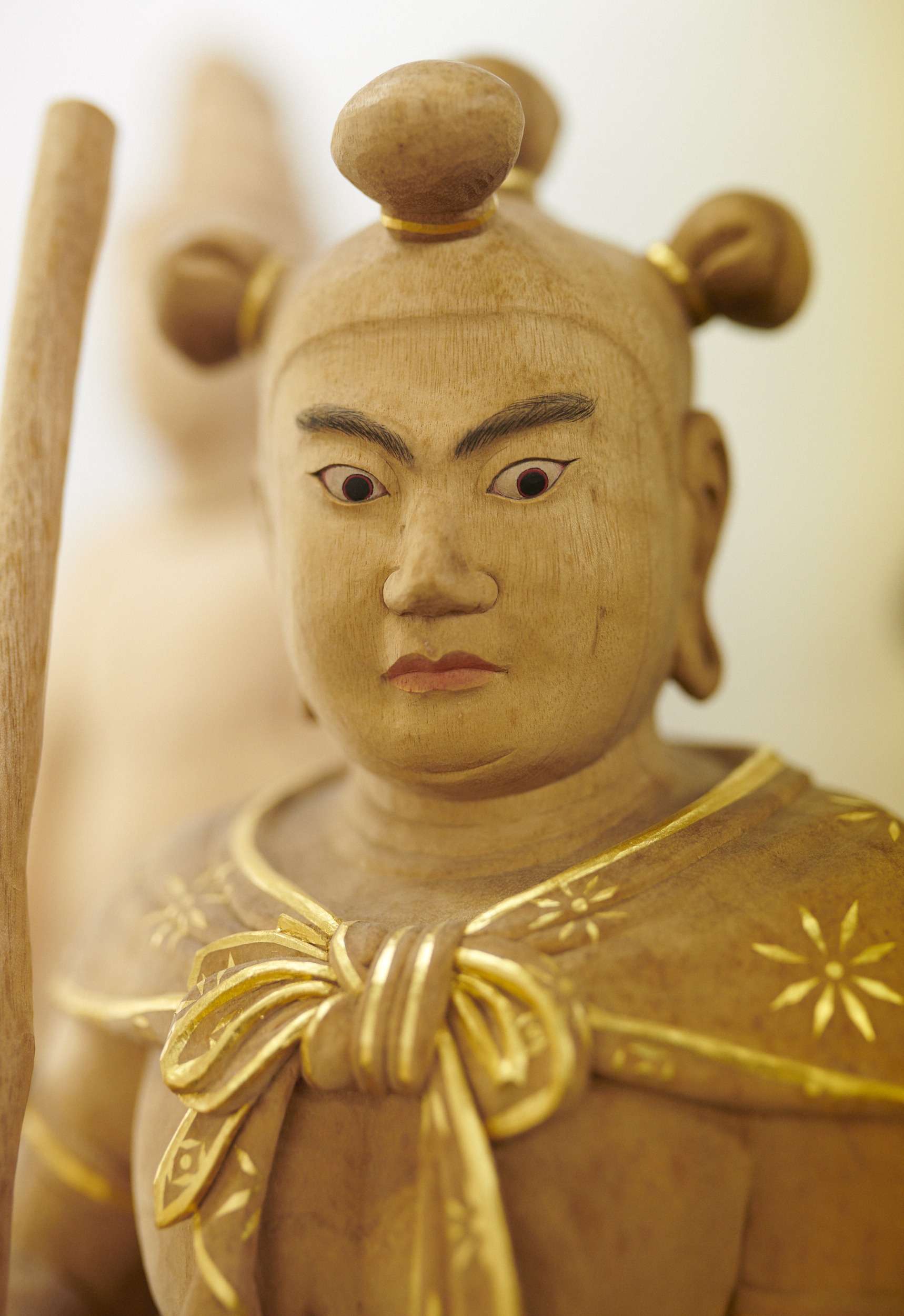
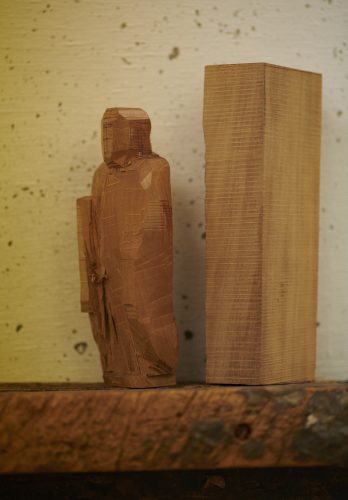
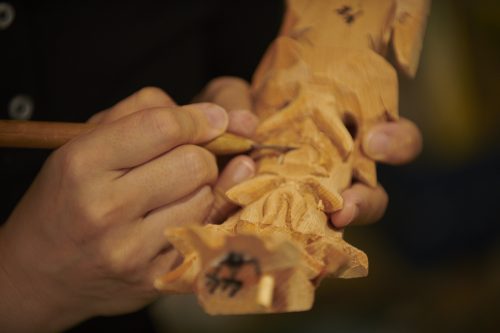
Sudo is an esteemed Busshi – a sculptor specialising in intricate wood statues of Buddha, a near-sacred craft that has barely changed for more than 1,400 years and remains deeply tied to Japan’s Buddhist heritage.
Today, he spends his days carving the figure of Buddha into an array of special woods – from Kiso Hinoki, a high-quality Japanese cypress, often used in temple architecture, to red pine and sandalwood.
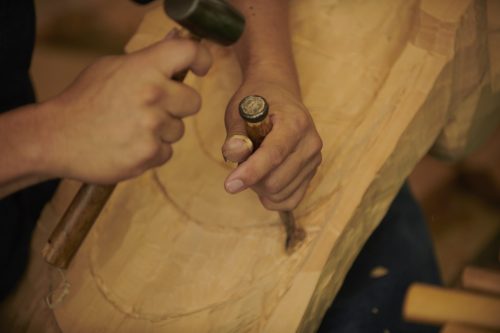
His expertise ranges from ichiboku-zukuri – the art of carving a sculpture from a single piece of wood – to yosegi-zukuri, which involves the use of multiple pieces of wood.
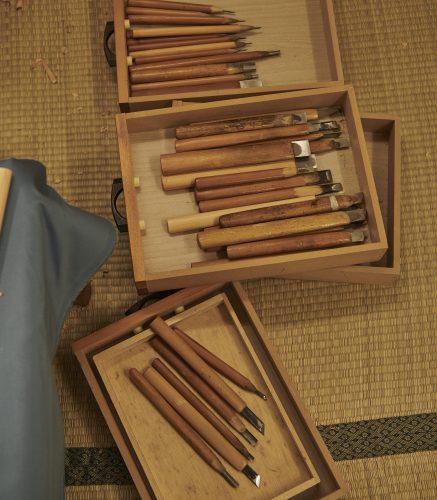
As is often the case in traditional Japanese craftsmanship, the mastery of a raft of highly specialised tools, play a pivotal role – from a catalogue of chisels, including the nomi and the chokoku tou, to a plane called a kanna.
For Sudo – a second-generation artisan, whose father started working at Wakabayashi around 30 years ago – the future survival of the deeply respected world of Busshi is a key concern.
Highlighting the challenges, he says: ‘Year after year, it is becoming increasingly difficult to source the materials and tools needed to do this work.’
Artisan 4: Takashi Nakazawa
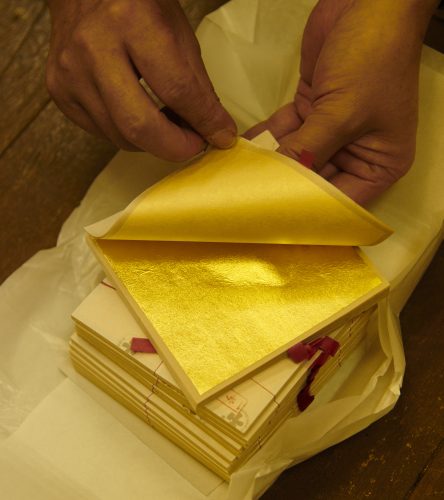
For Takashi Nakazawa, life revolves, quite literally, around all things gold. The 67-year-old artisan is one of Japan’s esteemed hakuoshi-shi – a master of the art of gold-leaf stamping.
Long considered a symbol of eternity in Buddhist culture, high quality gold craftsmanship is widely spotted across Japan’s ancient shrines and temples, from altars and sliding screens to sacred statues.
For Nakazawa, the starting point is gold leaf of the finest variety. He works using ultra-fine sheets of gold leaf, which have been painstakingly flattened – at times as thin as 1/10,000mm (so thin, it disappears if rubbed on your hand).
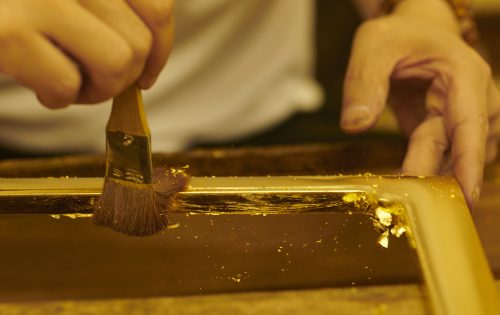
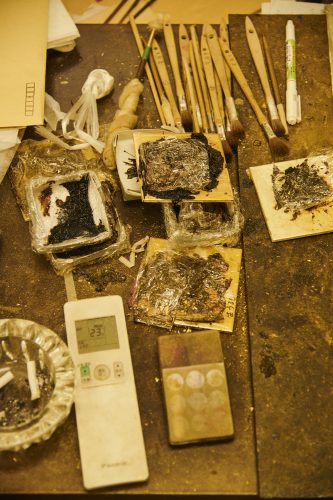
Nakazawa – who has his own studio and has worked with Wakabayashi for 37 years – begins the creative process by painstakingly applying urushi lacquer to a surface, wiping off excess amounts to ensure a perfectly minimum amount remains.
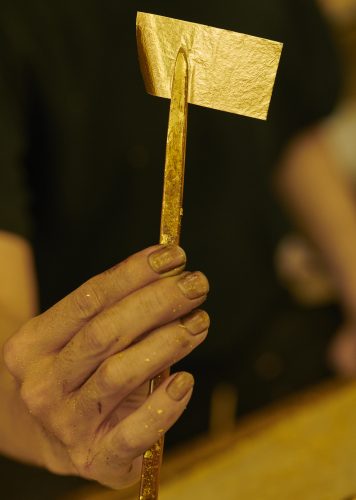
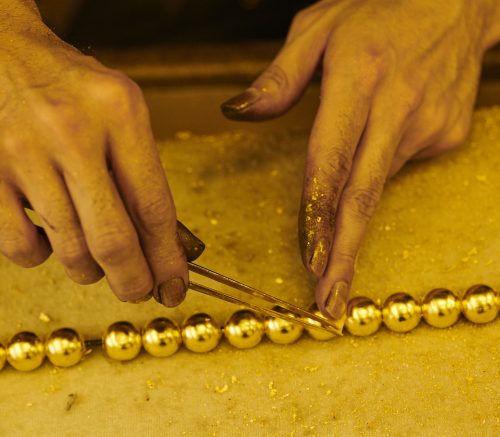
He then begins the delicate task of applying the gold leaf – lifting a feather-light, square-shaped leaf of fine gold leaf, using a tweezer-like tool and gently lowering it into place.
When all the sheets are positioned, the craftsman removes excess gold leaf by gently wiping the surface using a soft cloth and brush.
It’s an expertly acquired artform – one that again, takes years to master – with craftsmen traditionally learning to apply the gold leaf not only to flat surfaces, but also to the curved form of sculptures.
One of the biggest technical challenges for Nakazawa and other gold leaf artisans? Perhaps surprisingly, it’s not the handling of super-fine gold leaf: it is managing the variables that surround the urushi that holds the gold in place, in terms of how it dries, humidity levels, surface qualities and atmospheric temperatures.