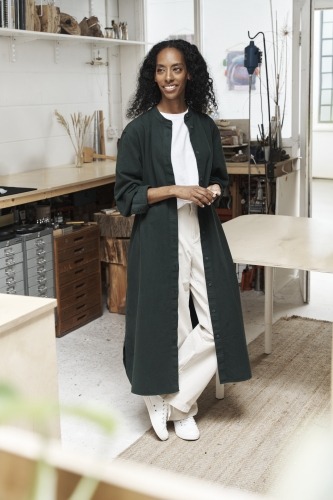
In Conversation with... Joke Amusan
This conversation is part of an Autumn/Winter series created in partnership with MUJI
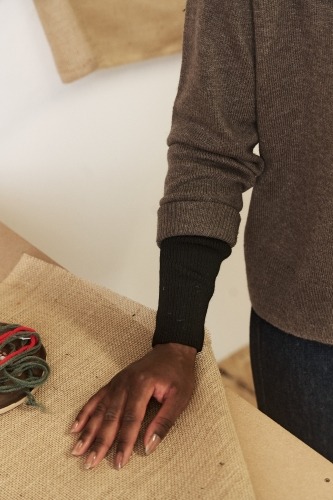
This conversation is part of an Autumn/Winter series created in partnership with MUJI
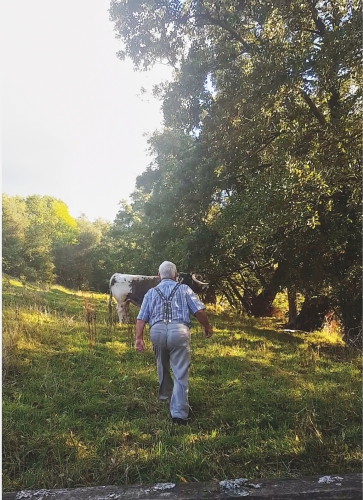
As a student at the Royal College of Art, Alice V Robinson’s quest to make a handbag took her right back to the farm. Here, Alice, the co-founder of British Pasture Leather, explains the extraordinary lengths she then went to, to explore the relationship between agriculture and fashion In the beginning, I just wanted to make a handbag. But, after questioning what connections this simple item could hold, I became aware that I needed to see the bigger picture. So, on 9 October 2018, I bought a bullock.

Photographs Sam Walton Taken from our book Make Well! – celebrating 10 years of Hole & Corner
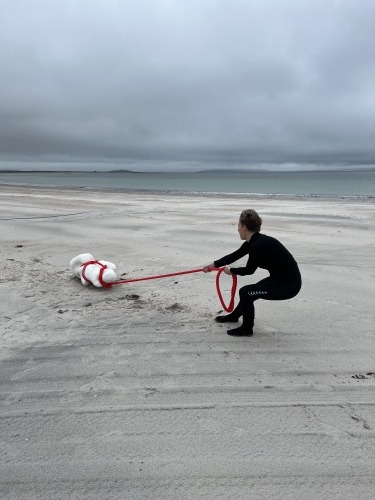
This week it was announced that ceramics artist Mella Shaw has been awarded a £10,000 prize by the British Ceramics Biennial, one of the biggest accomplishments in the craft world, for her powerful work on the devastating effects of sonar pollution at sea.
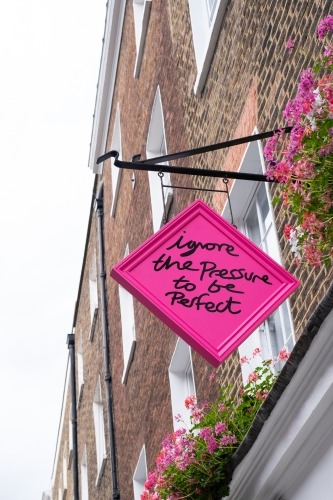
There is something uniquely powerful in the way that street art can access an audience that conventional art cannot, an audience that might not usually see art. Plastered on walls or painted on buses, you can make your name, image or message see by anyone – even those who don’t want to see it. This is the essential concept to the work of Brixton-based street artist Andy Leek, who writes positive messages on posters and leaves them around the city in the hope that it might make a small difference to someone’s day – even those who didn’t know they needed it.
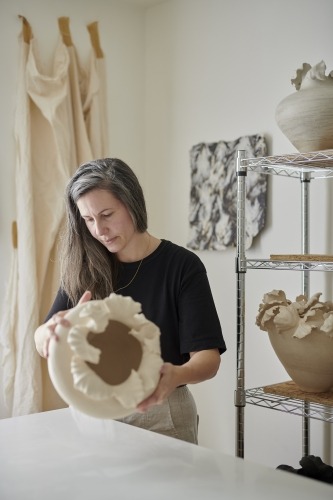
Lucy Whitford is an artist working in the medium of ceramics. Her vessels, which can be found in the Zabludowicz Collection, Soho House, and a number of private collections in London, Paris and New York, appear to unfurl from within, forming fragile, organic shapes that look like brittle leaves or soft petals. It is as if they might crumble at any minute in spite of their gritty, industrial texture – a juxtaposition that gives Whitford’s work its unique aesthetic.
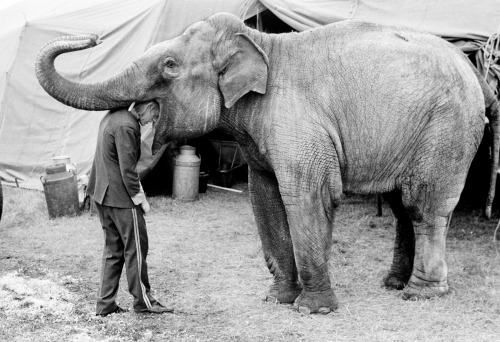
Still in its first year of opening, the Centre for British Photography will be switching its focus from its summer theme of landscape and the environment to look at the photographic documentation of communities. Two leading exhibitions will occupy the lower ground floor and main gallery.
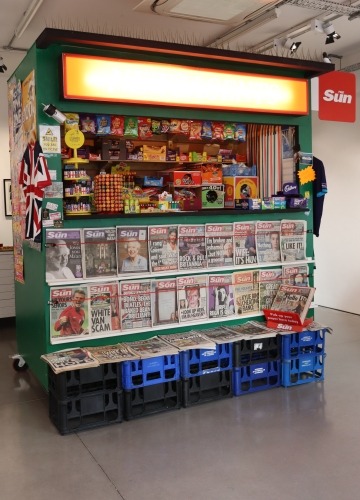
I arrived at Corbin Shaw’s solo show, The People Fled When The Sun went Down in Shoreditch on a drizzly grey evening, and was greeted by the beaming neon lights of a classic newsagent’s shop that had taken centre stage. Jealous Gallery in Shoreditch was rammed with east London’s molst stylish: mod hair cuts, flared trousers and leather jackets. I managed to grab a pocket Negroni and weave my way through the crowd to see some of Shaw’s show.
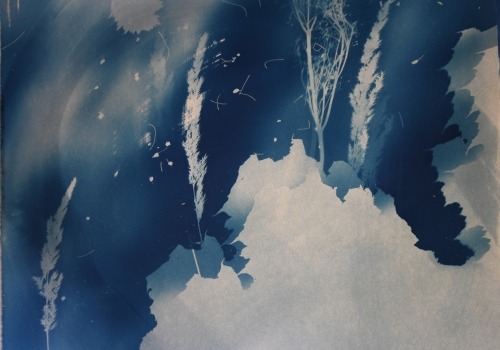
Set among the hustle and bustle of a busy London high road lined with Turkish restaurants and Asian supermarkets is one of the oldest houses in Hackney. Built in 1697 as a grand country house, 195 Mare Street is large and double-fronted, with abundant white-framed windows – not unlike a typical doll’s house. Between 1860 and 1913, the property was home to the Elizabeth Fry Refuge and housed thousands of young women recently released from prison, before becoming a Working Men's Club in the 20th century. More recently, squatters moved in and use the space for free bike repair services and welding workshops, as well as hosting art events and political meetings.

Raft
Raft
Interviews
Long Reads
Recommends
Raft