Sfera Makers: Keikou Nishimura, Urushi lacquerware craftsman
This story is part of an extraordinary portfolio of photographs taken by Alan Clarke, of artisans working with Sfera, the lifestyle brand founded by Shigeo Mashiro in 2001 and rooted in Kyoto’s heritage of traditional crafts.
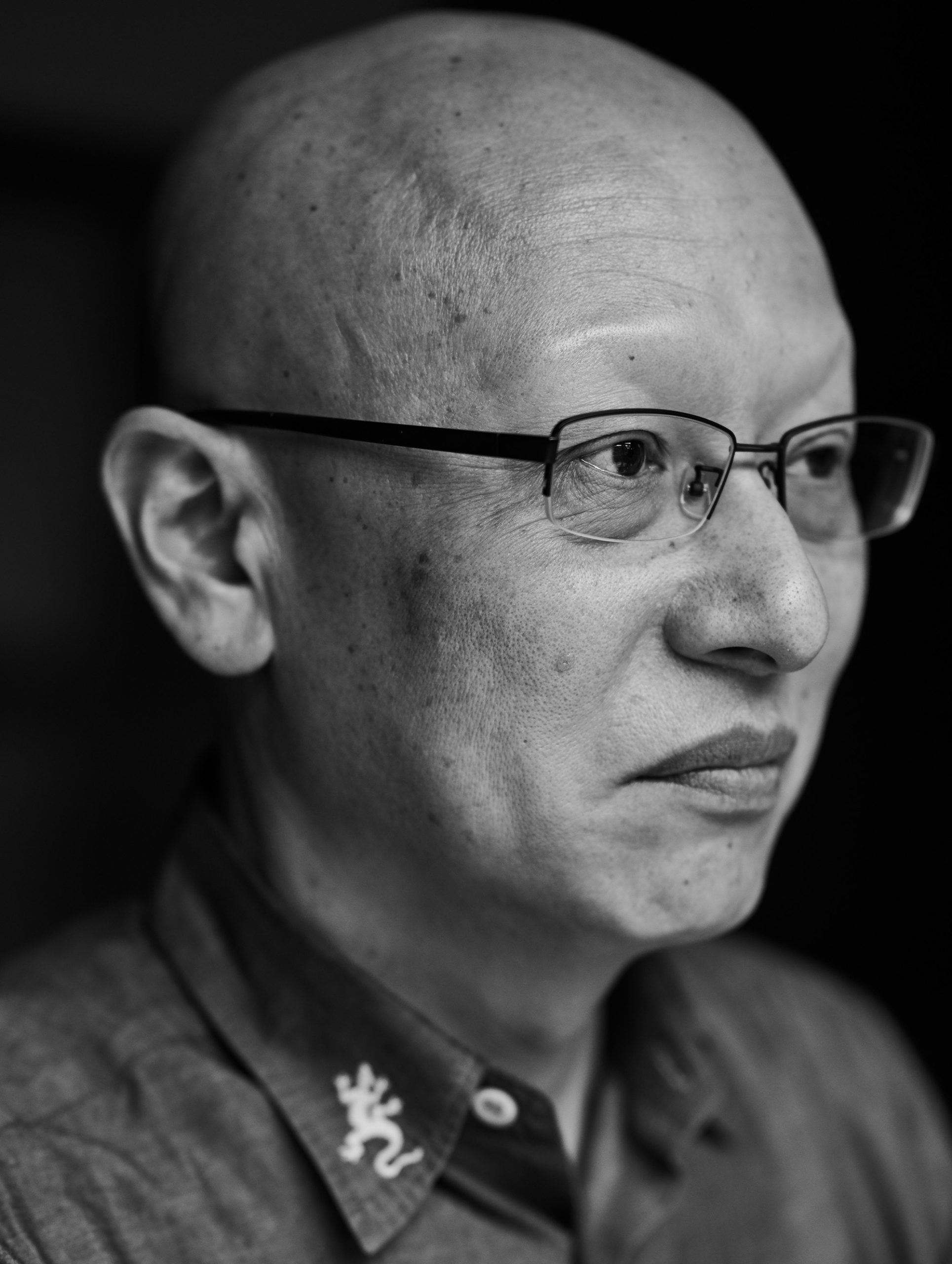
Can you explain what you do?
I make Japanese lacquerware items for use in traditional Japanese tea ceremony as well as more contemporary art pieces. I specialise in finishing, but at our workshop we perform the entire coating process by hand. I succeeded the business from my great-grandfather, grandfather and father. At that time they focused on high-quality finishing, (uwanurishi) but I wanted to perform all the stages, except the woodwork itself which we are supplied with by wood craftsman.
Do you feel there is currently a revival in craftsmanship and in its appreciation?
Yes, I feel a certain movement, but it doesn’t directly come to me as such because I’m at the deep end of the spectrum so to speak. These products are a lot more accessible than they used to be – department stores are full of lacquerware of varying qualities and authenticities. This is evident in popular lifestyle magazines and fashionable interior stores and so on – there is clearly a huge wave of interest. However, from that main thrust of mass interest, only the more discerning customers will filter down to discover the more traditionally rooted, less commercial makers. But there has even been a steady increase in the numbers of these connoisseurs. I tend to deal with the high-end, order-made market, which is a lot more specialised. It may be a request from a tea master, for example. My gallery isn’t actually open to the public. In true Kyoto style, my customers are known or introduced by people we already deal with.

Why do you think this is happening now?
People are looking for the human touch: things with more soul and meaning, artefacts that have a story, a natural narrative. Consumers today, quite rightfully, want to establish how authentic what they’re buying is, not just in arts and crafts but also in food for example. This represents a general worldwide shift – and producers are responding to this by offering a guarantee, a seal of quality if you will.


What are the elements that make a successful product for you?
I seek out the very best materials, from the trees and quality of the wood, to the tools I use. Different woods and lacquers have distinct characteristics for which clients who request made-to-order utensils also develop a taste. I also insist on quality craftsmanship at every step of the process. There is absolutely no corner-cutting. No compromises are made with regard to time or using modern techniques. Basically I oversee the entire process because any drop in standards reflects not only on my name but the family tradition. Our customers expect only the best and by guaranteeing that, I can be sure that the end result is will be an item to treasure.
Do you prefer the process or the end result?
I enjoy the process, specifically the layering process. With each layer, one edges closer to the finished work, and as you can imagine, adding the finishing layer is a process full of anticipation, but there is an intense nervousness too. This can be quite agonising, but the agony is replaced by satisfaction once it’s done.
What is it about the Sfera philosophy that appeals to you?
I’m enjoying this collaboration enormously. It is an exciting challenge to work to designs that are beyond the way I normally approach things. Although I use highly traditional methods, I am quite open-minded generally and I see no reason why I should close any doors to newer approaches simply based on principle. It hasn’t meant that I have to compromise my standards in any way, rather it has added a dimension of design that has allowed me to re-engage as I strive to bring those designs to fruition. A considerable part of my work before these collaborations has been crafting 11 standard design templates for tea ceremony utensils first introduced by Sen no Rikyū, who is widely considered to be the founder of tea ceremony in Japan. These designs have remained unchanged for some 450 years, so it isn’t hard to imagine that my collaborative work is a welcome diversion from that which is set in stone.

What is the best lesson you have ever been taught?
It is through my study of woodcraft and the tawame pieces, a technique I learnt from master wood craftsman, Mutsumi Suzuki. Basically the tawame pieces involve shaving the wood down to an almost paper-thin thickness. The wood can then turned to form exquisite shapes, which lend themselves admirably to a fine lacquered coating. The lessons were not direct, but simply by observing his work I have been inspired to see lacquerware craft in new ways. Kyoto itself has been a good teacher due to its rich heritage. This ancient capital is very much a living, breathing source of inspiration for artists and crafts people.
What do you listen to when you are working?
I find having the radio on in the background quite conducive. That old wooden radio you can see up on the shelf there, I inherited that from my father, so it’s part of the whole succession package I suppose; another way in which I have completely inhabited the traditions before me.

When are you most happy?
When a piece surpasses the expectations of my customers after such a long painstaking process of crafting the work, I feel such a satisfying sense of relief and satisfaction. A wave of happiness.
Can you explain the process of harvesting sap for urushi and its importance?
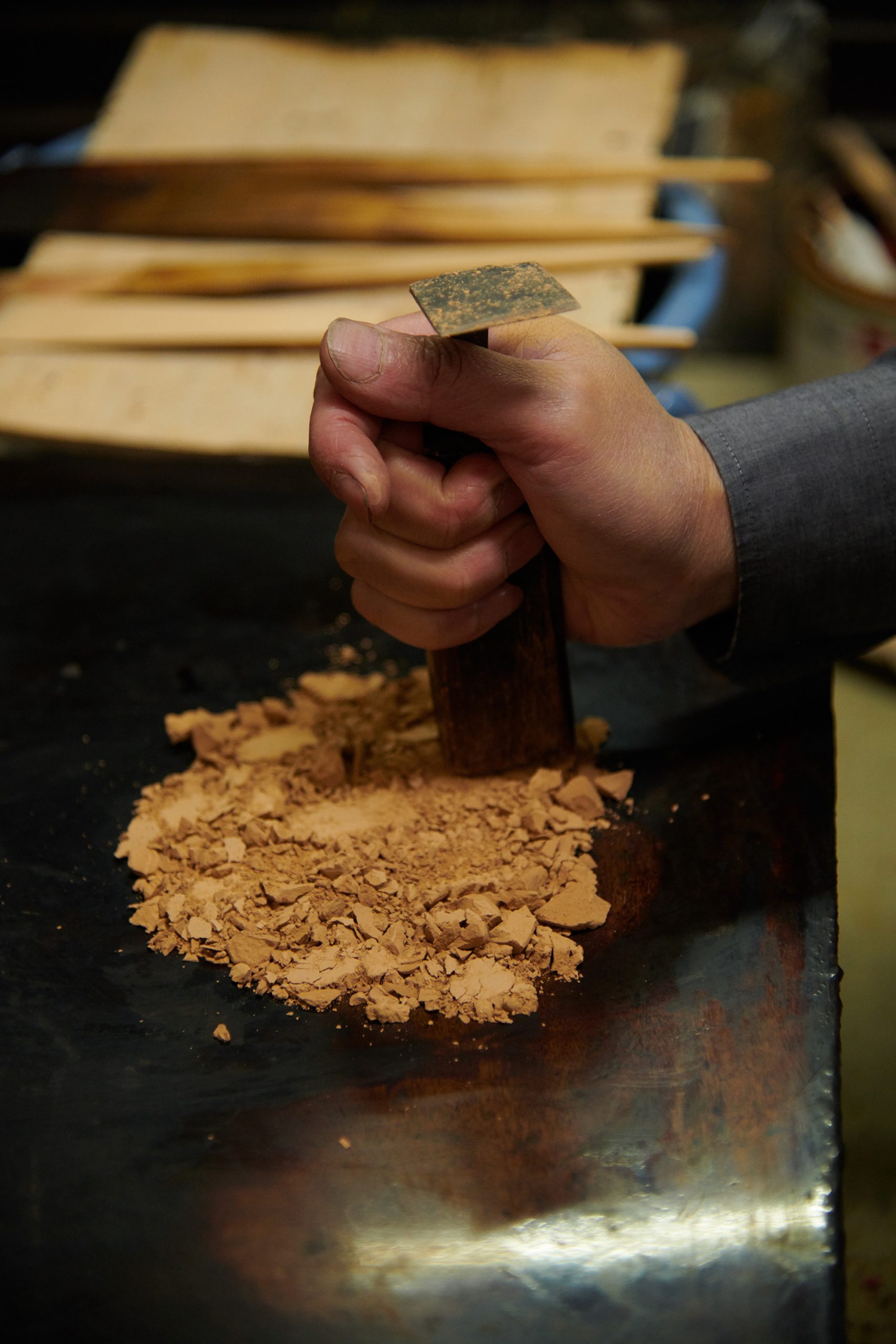
To take lacquer from the lacquer tree, the surface of the tree must be cut in a very specific way. Only expert cutters know when and how this is done. The depth and angle are important and one must have an in-depth knowledge of when the trees are ripe for harvesting. The sap is then processed and purified by the sap dealers and distributors.
The sap from the lacquer tree is rather like human blood, in the sense that when we cut ourselves and bleed, the blood is the healer, and it needs to harden to form a scab. The same goes for sap; it can only harden and heal the tree in forest-like conditions.
The tools and furniture that you see around you were all purpose-built by my great grandfather. These feathers stripped of their quills are the only tools that we can use to pick out impurities from the lacquer, nothing else can perform that task. Swan feathers and eagle feathers work well. Nature has all the answers.